Tardigrade
The water bear: a microscopic animal that survives vacuum, radiation and drought by almost stopping its own biology.
Tardigrades are microscopic animals of the phylum Tardigrada, first described in 1773 and commonly called water bears. About 1,500 species are known. They are among the most resilient animals known, able to survive extreme temperatures and pressures, air deprivation, radiation, dehydration and starvation. In 2007 the FOTON-M3 mission exposed them to the vacuum of low Earth orbit for 10 days and they revived on rehydration, protected in part by Dsup proteins.
In this article
- 1Overview
- 2Naming and Discovery
- 3Classification and Diversity
- 4Anatomy and Reproduction
- 5Habitat and Distribution
- 6Resistant Stages and Dispersal
- 7Survival Capabilities
- 8Behaviour and Learning
- 9Evolutionary History
- 10Tardigrades in Space
- 11Space Research and Human Applications
- 12Key Facts
- 13Timeline
- 14Frequently asked questions
- 15Knowledge graph
Overview
Tardigrades are the animals of the phylum Tardigrada, a segmented micro-animal with eight legs that is also known by the common names water bear and moss piglet. They are among the most resilient animals known.
1. Naming and Discovery
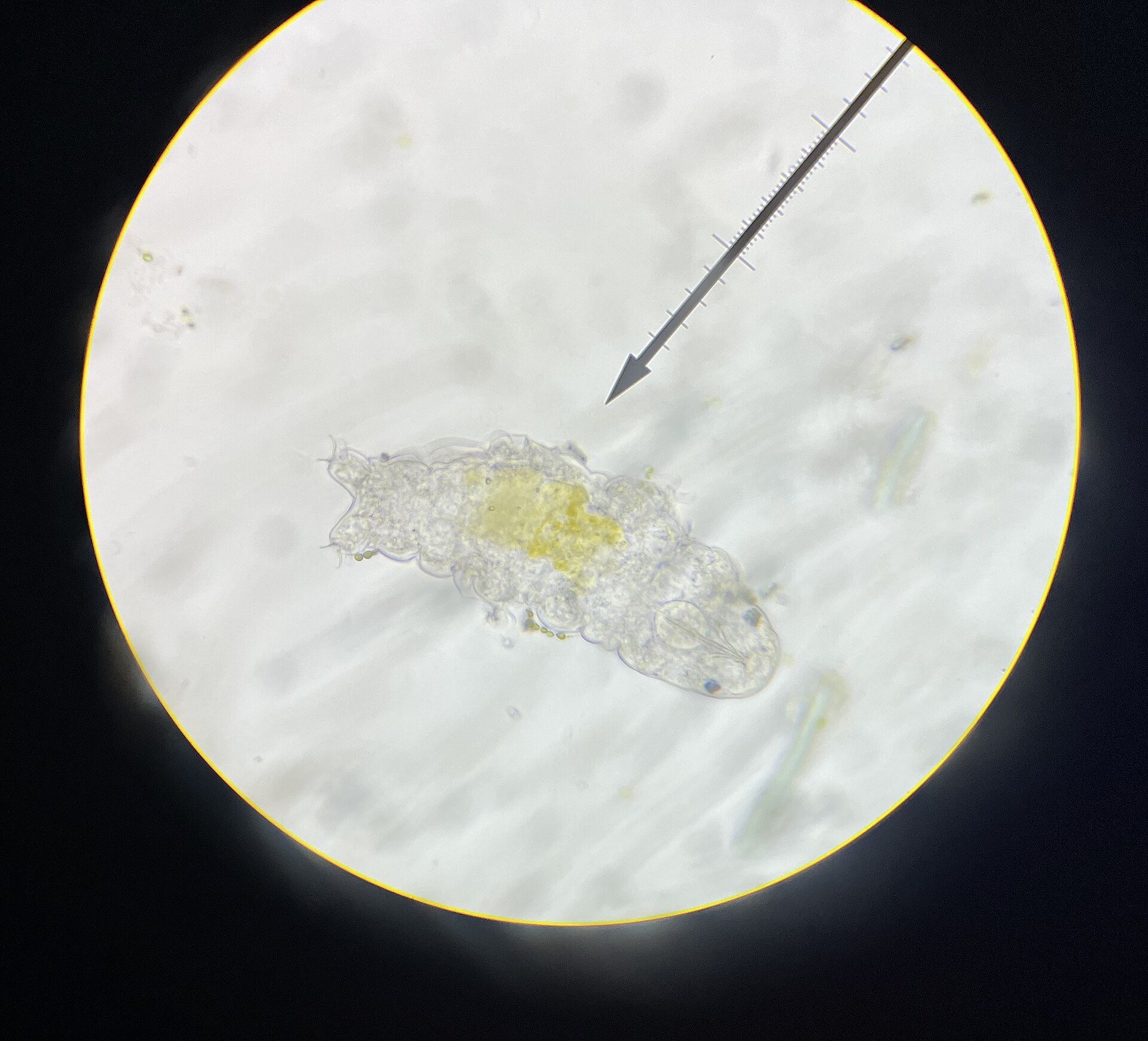
The tardigrade was first described in 1773 by Johann August Ephraim Goeze. The common names water bear and moss piglet are alternative designations for the animal. Tardigrades can be collected from mosses and lichens and viewed under a low-power microscope. Mosses, lichens, liverworts, soil and leaf litter are among their main habitats.
2. Classification and Diversity
Tardigrades constitute the phylum Tardigrada, which is placed within the superphylum Ecdysozoa. Published counts of the phylum's species vary: one estimate places the number of known species at about 1,500 while another gives about 1,300 identified species. The earliest known tardigrade fossil dates from the Cambrian some 500 million years ago.
Individual tardigrade species often have specialised distributions, many being both regional and limited to a single habitat type such as mountains. In soil the animals can reach densities of up to 300,000 per square metre. Among the named species is Milnesium tardigradum.
3. Anatomy and Reproduction
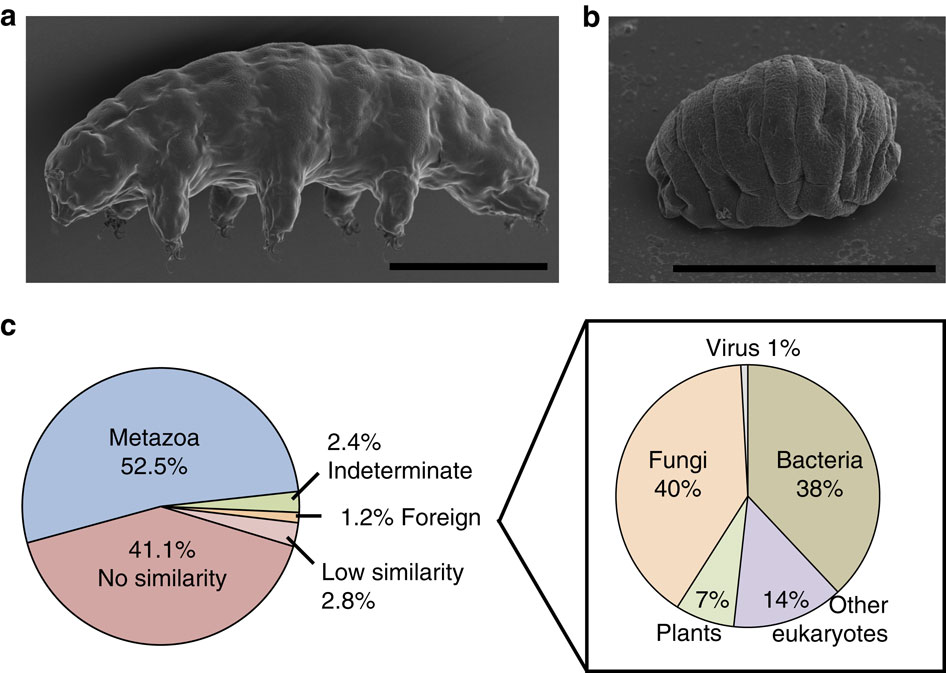
The tardigrade body is a segmented micro-animal with eight legs, each leg terminating in one or more claws whose number and form vary by species; in some species the claws are modified into sticky pads. Marine species bear telescopic legs, whereas non-marine species possess excretory Malpighian tubules at the junction of the intestine and the hindgut. The group also occupies specialised habitats including hot springs and the bodies of marine invertebrate hosts.
Reproductive modes are mixed across the group: some species are hermaphroditic and self-fertilizing, others maintain both males and females, and still others lack males altogether, a condition that suggests parthenogenesis. The eggs of Austeruseus faeroensis are spherical and measure 80 micrometres in diameter, with a knobbled surface.
4. Habitat and Distribution
Most tardigrade species occupy damp habitats, living among lichens, liverworts and mosses, and directly in soil and leaf litter. More specialised habitats include hot springs and positions as parasites or commensals of marine invertebrates. Individual species often have specialised distributions, many being both regional and limited to a single habitat type such as mountains.
5. Resistant Stages and Dispersal
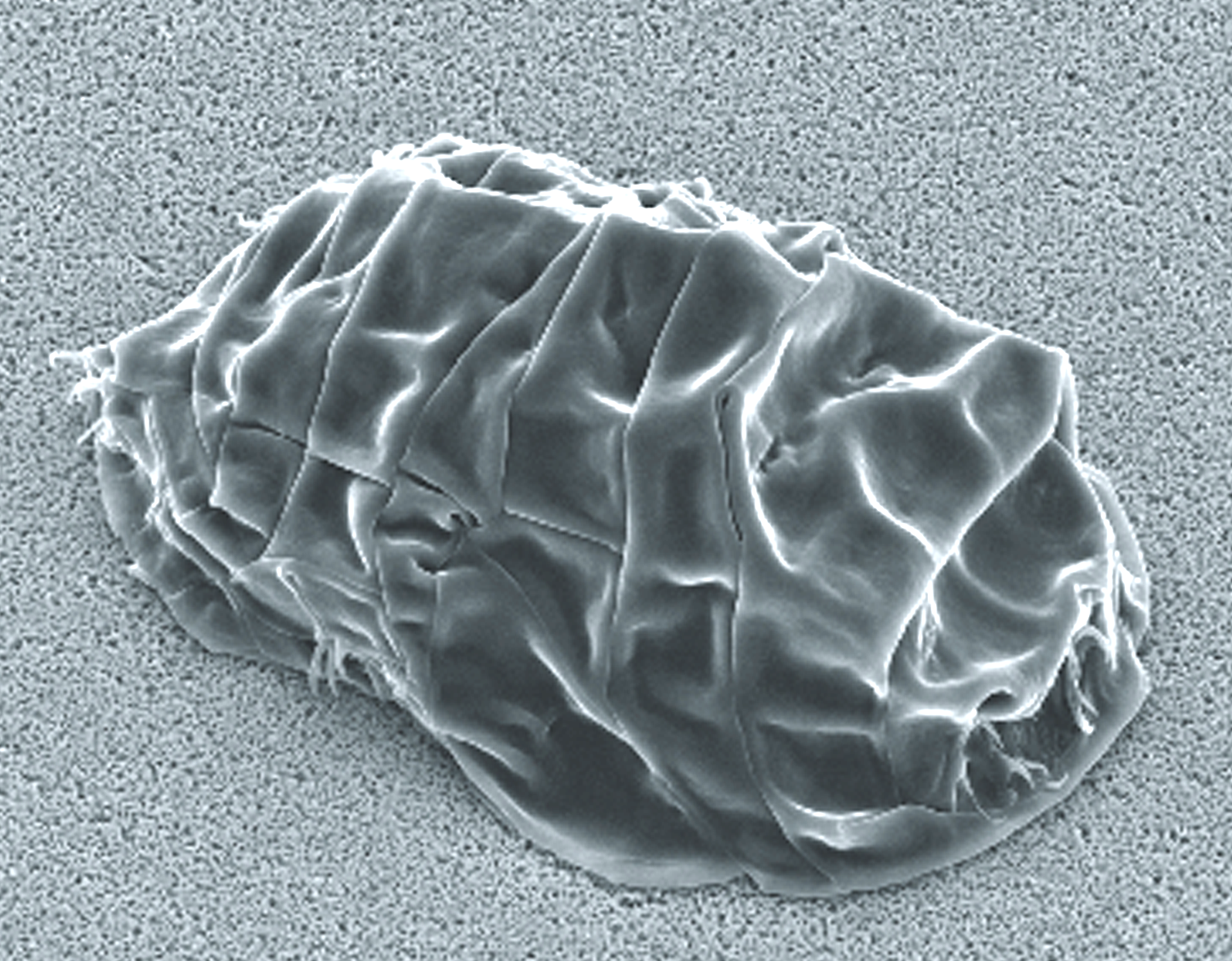
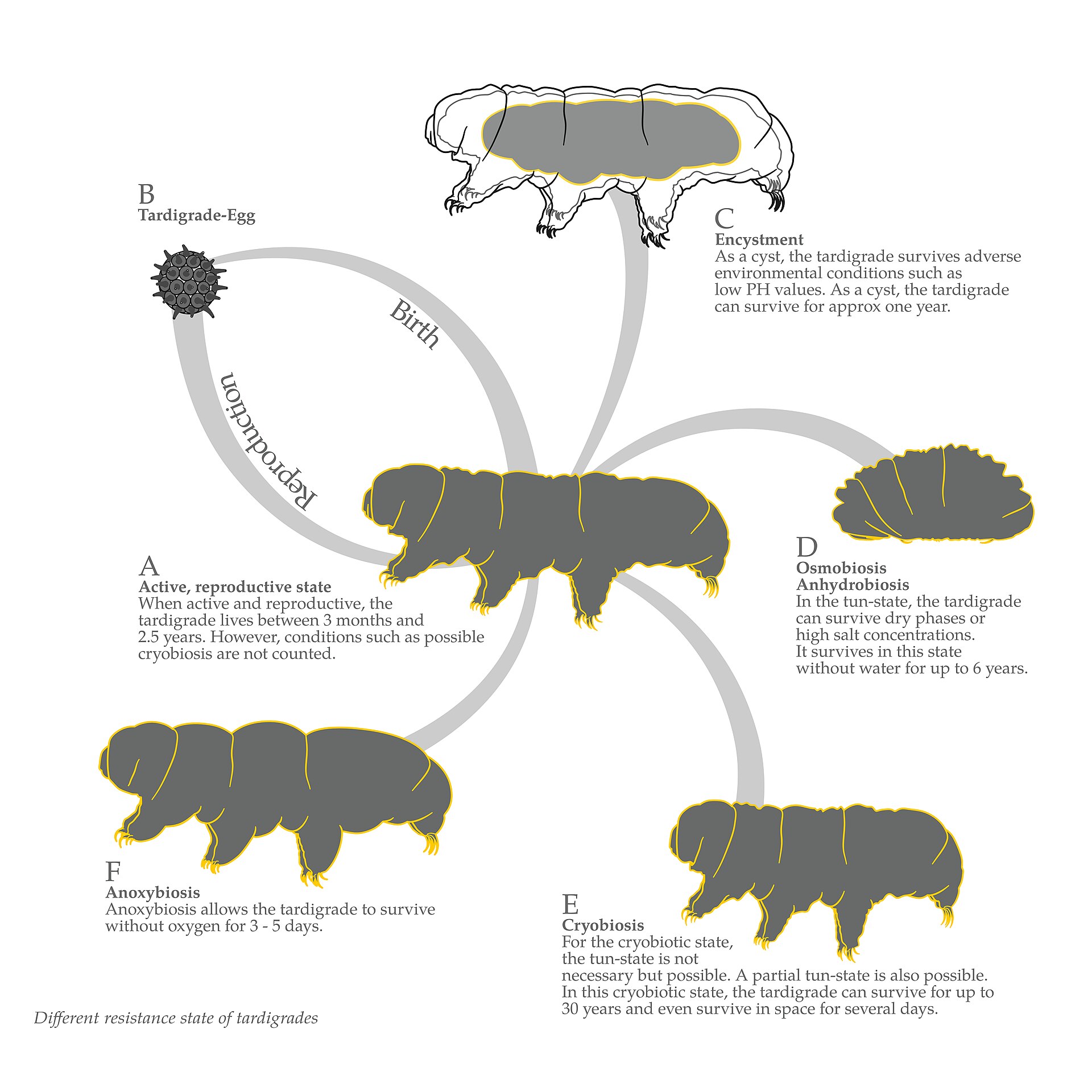
Tardigrades pass through resistant life-cycle stages known as cysts and tuns. In the tun form the animal becomes a dried-out little ball and its metabolism almost stops, with revival occurring only when conditions are better. The eggs and these resistant stages are small and durable enough to permit long-distance transport by wind or on the feet of other animals.
6. Survival Capabilities
Tardigrades rank among the most resilient animals known, capable of enduring extreme temperatures, extreme pressures, air deprivation, radiation, dehydration and starvation. Their DNA is shielded from damage such as radiation by Dsup proteins, a protection that holds even during the extreme conditions of space. Antioxidant overproduction has been identified as a possible protective strategy underlying this tolerance.
The space environment offers a direct test of these limits: the animals have survived vacuum exposure lasting 10 days. Their radiation tolerance was notable enough to prompt a space proposal in 1964.
7. Behaviour and Learning
Tardigrades are not merely passive survivors; at least one species has been shown capable of learning. The tardigrade Dactylobiotus dispar can be trained by classical conditioning to curl into the defensive tun state in response to a blue light paired with a small electric shock. The tun is the same resistant life-cycle stage that, together with the cysts and eggs, is small and durable enough to enable long-distance transport by wind or on the feet of other animals.
8. Evolutionary History
The earliest known tardigrade fossil comes from the Cambrian some 500 million years ago. The lineage is accordingly dated to about half a billion years. Over that span water bears have survived all five mass extinctions on Earth.
9. Tardigrades in Space
Space research on tardigrades rests on two biological traits: their tolerance of radiation and their capacity to enter resistant states. The use of tardigrades in space began in 2007 with the FOTON-M3 mission in low Earth orbit, where they were exposed to vacuum for 10 days and reanimated by rehydration. The species Milnesium tardigradum demonstrated its ability to survive the vacuum and ultraviolet radiation of space in the TARDIS experiment.
-
2007FOTON-M3 exposureTardigrades in low Earth orbit were exposed to vacuum for 10 days and revived by rehydration 4Tardigrades in space · Wikipedia ↗.
-
TARDIS experimentMilnesium tardigradumThe species demonstrated survival of space vacuum and ultraviolet radiation 4.
-
2019Beresheet lunar missionThe lunar lander carried cryptobiotic tardigrades and crashed on the Moon 4.
10. Space Research and Human Applications
Tardigrades offer a model for understanding how living systems endure conditions that would challenge humans in orbit. Microgravity and elevated radiation are among the extreme environments the animals tolerate, and clarifying how they do so can guide research into protecting humans during long-duration space travel. An experiment aboard the International Space Station called Cell Science-04 investigates how tardigrades survive these conditions. Within that work researchers will examine which tardigrade genes are turned on or off in response to short-term and long-term spaceflight.
11. Key Facts
| Attribute | Value |
|---|---|
| Scientific classification | Phylum Tardigrada, within the superphylum Ecdysozoa 1Tardigrade · Wikipedia ↗ |
| Known species | About 1,500 1 |
| Earliest fossil | Cambrian, some 500 million years ago 3Water bear · Wikipedia ↗ |
| Space research | Use of tardigrades in space first proposed in 1964, on account of their extreme radiation tolerance 4 |
12. Timeline
- 1773First describedJohann August Ephraim Goeze describes the animals and calls them Kleiner Wasserbar, little water bear.
- 1964Proposed for space researchResearchers first propose using tardigrades in space experiments because of their extreme radiation tolerance.
- 2007FOTON-M3 exposes them to vacuumThe TARDIS experiment exposes tardigrades to the vacuum and ultraviolet radiation of low Earth orbit for 10 days; they revive on rehydration.
- 2019Beresheet crashes on the MoonThe Israeli lunar lander Beresheet carried a capsule of cryptobiotic tardigrades and crashed on the Moon.
- 2021Cell Science-04 begins on the ISSAn experiment aboard the International Space Station studies how tardigrades survive microgravity and elevated radiation, to inform human spaceflight.
13. Frequently asked questions
What does the name "water bear" actually translate from?
The German zoologist Johann August Ephraim Goeze called the animals Kleiner Wasserbar, meaning little water bear 1.
How many tardigrades can live in a patch of moss?
On mosses their density can exceed 2 million per square metre 1.
Which tardigrade species flew on the FOTON-M3 mission?
The species carried on that mission was Milnesium tardigradum 4.
Did any tardigrades reach the Moon?
In 2019 a capsule holding tardigrades in a cryptobiotic state was aboard the Israeli lunar lander Beresheet, which crashed on the Moon 4.
How long have tardigrades existed, and what have they outlasted?
Water bears first evolved about half a billion years ago and have survived all five mass extinctions on Earth 2Tardigrades: Facts about one of the hardiest animals on Earth · Live Science ↗.
Can tardigrades be conditioned to respond to a stimulus?
Dactylobiotus dispar can be trained by classical conditioning to curl into the defensive tun state when a blue light is paired with a small electric shock 1.
References (5)
- 1Tardigrade — Wikipedia Web↩View source
- 2Tardigrades: Facts about one of the hardiest animals on Earth — Live Science Web↩View source
- 3Water bear — Wikipedia Web↩View source
- 4Tardigrades in space — Wikipedia Web↩View source
- 5Microscopic Superheroes to Help Protect Astronaut Health in Space — NASA WebView source