Christ the Redeemer (statue)
A 30-metre statue on a granite peak, and the engineering that carried it there.
Overview
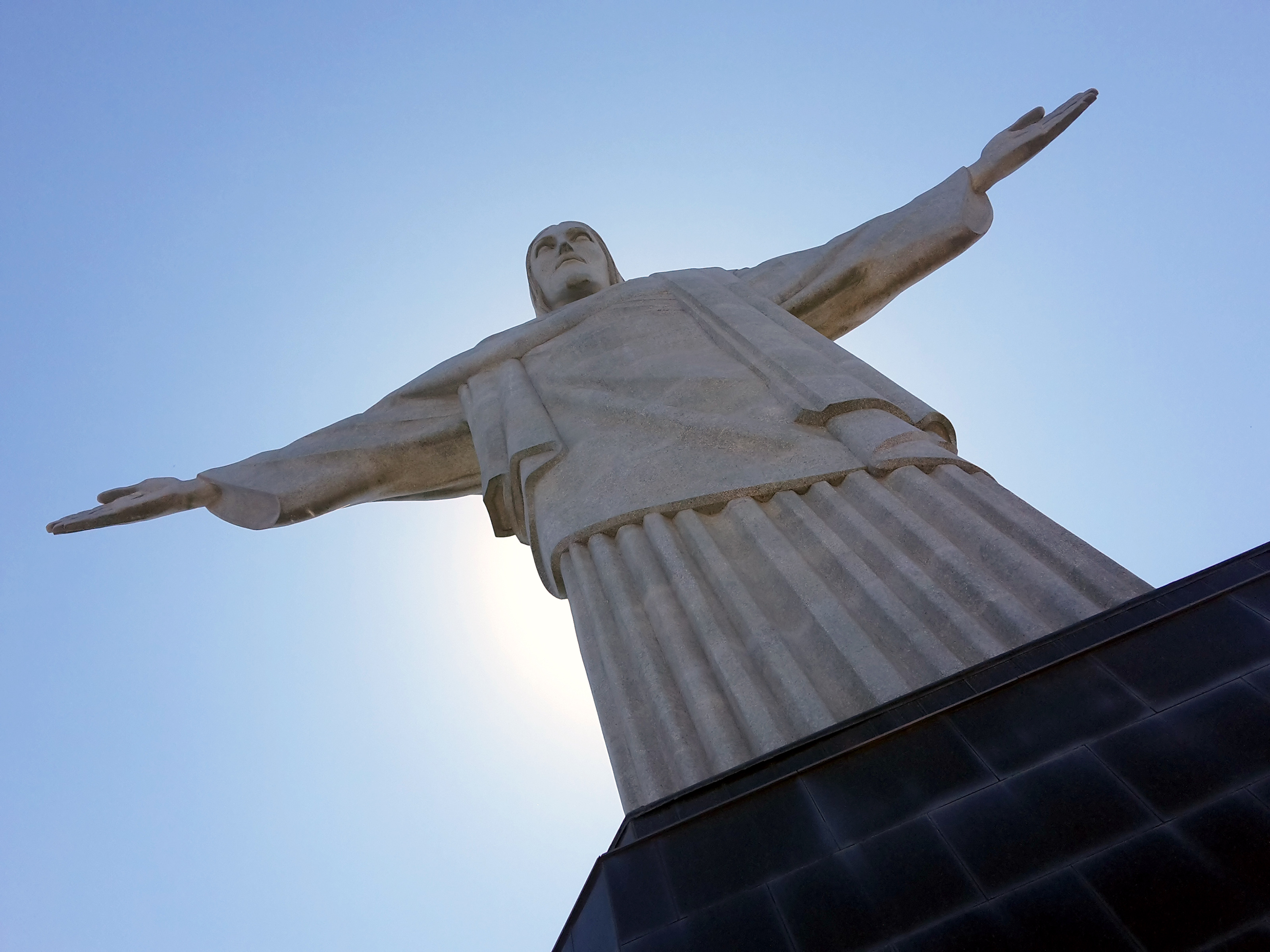
Christ the Redeemer is an Art Deco statue of Jesus in Rio de Janeiro, Brazil, created by the French-Polish sculptor Paul Landowski and built by the Brazilian engineer Heitor da Silva Costa, in collaboration with the French engineer Albert Caquot and the Romanian sculptor Gheorghe Leonida, who sculpted the face. The statue stands at the peak of the 700-metre (2,300 ft) Corcovado mountain in the Tijuca National Park, overlooking the city. Corcovado is a mountain in central Rio de Janeiro whose name means "Hunchback". Rio de Janeiro, also known simply as Rio, is the capital and largest city of the state of Rio de Janeiro.
Constructed between 1922 and 1931, the statue is 30 metres (98 ft) high, excluding its 8-metre (26 ft) pedestal, and faces east. It weighs 635 metric tons (625 long, 700 short tons). The peak is known worldwide for the statue of Jesus atop it, entitled Christ the Redeemer.
The peak and statue can be reached via a narrow road, by the 3.8 km (2.4 mi) Corcovado Rack Railway, which was opened in 1884 and refurbished in 1980, or by the walking trail on the south side of the mountain that starts from Parque Lage.
The idea of a Christian monument on Mount Corcovado was first suggested by the Vincentian priest Pedro Maria Boss in the mid-1850s, to honor Princess Isabel. The monument later proved an inspiration abroad: the Sanctuary of Christ the King in Almada, Portugal, was inspired by the Christ the Redeemer statue of Rio de Janeiro after the Cardinal Patriarch of Lisbon visited that monument. That idea had originated earlier on a visit of the Cardinal Patriarch of Lisbon to Rio de Janeiro in 1934, soon after the inauguration of the statue of Christ the Redeemer in 1931.
Corcovado hill lies just west of the city center but is wholly within the city limits and visible from great distances. In 2003 a set of escalators, walkways, and elevators were installed to facilitate access to the platform surrounding the statue. More work on the statue and its environs was conducted in 2003 and early 2010.
The Sanctuary of Christ the King (Portuguese: Santuário de Cristo Rei) is a Catholic monument and shrine dedicated to the Sacred Heart of Jesus Christ overlooking the city of Lisbon, situated in Almada, in Portugal. The Cristo Rei of Dili (Christ the King of Dili) statue (Portuguese: Estátua do Cristo Rei de Díli, Tetun: Estátua Cristo Rei Dili) is a 27.0-metre-high (88.6 ft) colossal statue of Jesus Christ situated atop a globe at Cape Fatucama in Dili, Timor-Leste. The statue was designed, and its construction supervised, by Mochamad Syailillah.
The Pontifical Catholic University of Rio de Janeiro (Portuguese: Pontifícia Universidade Católica do Rio de Janeiro; PUC-Rio) is a Jesuit, Catholic, pontifical university in Rio de Janeiro, Brazil. It is the joint responsibility of the Catholic Archdiocese of São Sebastião do Rio de Janeiro and the Society of Jesus. The Paço Imperial, or Imperial Palace, previously known as the Royal Palace of Rio de Janeiro and Palace of the Viceroys, is a historic building in the center of the city of Rio de Janeiro, Brazil. It is located in the Praça XV de Novembro in central Rio. Villegagnon Island, formerly Serigipe Island, also known in English as Villegaignon Island, Island of Villegagnon or Island of Villegaignon, is located near the mouth of the large Guanabara Bay, in the city of Rio de Janeiro, Brazil.
The Statue of Liberty (Liberty Enlightening the World, French: La Liberté éclairant le monde; colloquially known as Lady Liberty) is a colossal neoclassical sculpture of a robed and crowned woman on Liberty Island, part of New York City, in New York Harbor.
1. Design and Dimensions
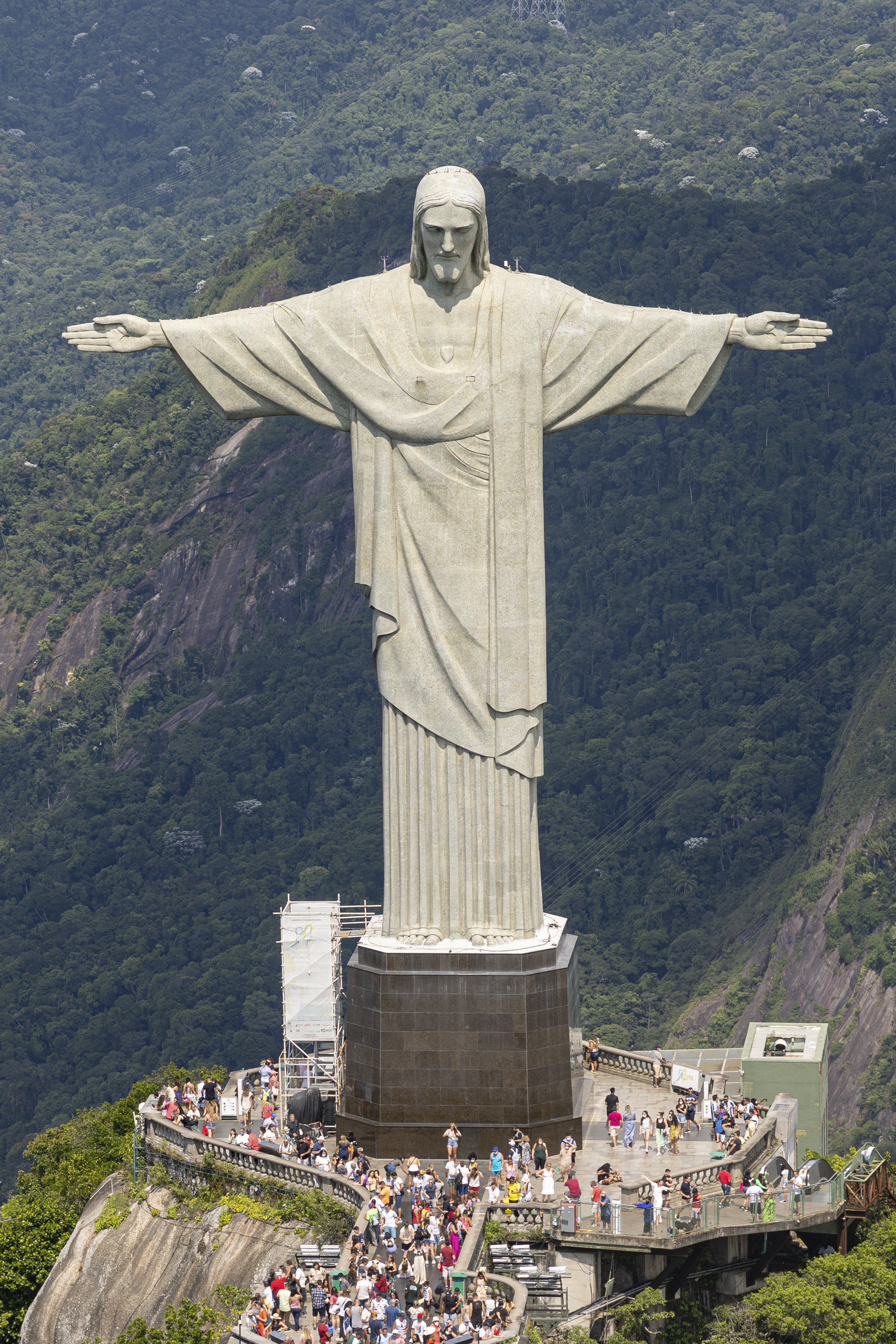
The statue stands 30 metres (98 ft) high excluding its 8-metre (26 ft) pedestal and faces east. Its final form departs considerably from the original design, which envisaged a large Christ holding a globe in one hand and a cross in the other. Although the project organizers originally accepted that design, it was later changed to the statue of today, with the arms spread out wide.
The statue was constructed between 1922 and 1931. It is an Art Deco figure of Jesus created by the French-Polish sculptor Paul Landowski and built by the Brazilian engineer Heitor da Silva Costa, working in collaboration with the French engineer Albert Caquot and the Romanian sculptor Gheorghe Leonida, who sculpted the face.
The monument stands on Corcovado, a mountain in central Rio de Janeiro whose name means "Hunchback". The idea of a Christian monument on the peak was first raised by the Vincentian priest Pedro Maria Boss in the mid-1850s, as a tribute to Princess Isabel, regent of Brazil and daughter of Emperor Pedro II, but the project was not approved.
Later interventions altered the site and its surroundings. In 2003 a set of escalators, walkways and elevators was installed to ease access to the platform around the statue, and further work on the statue and its environs was carried out in 2003 and early 2010.
2. Location and Setting
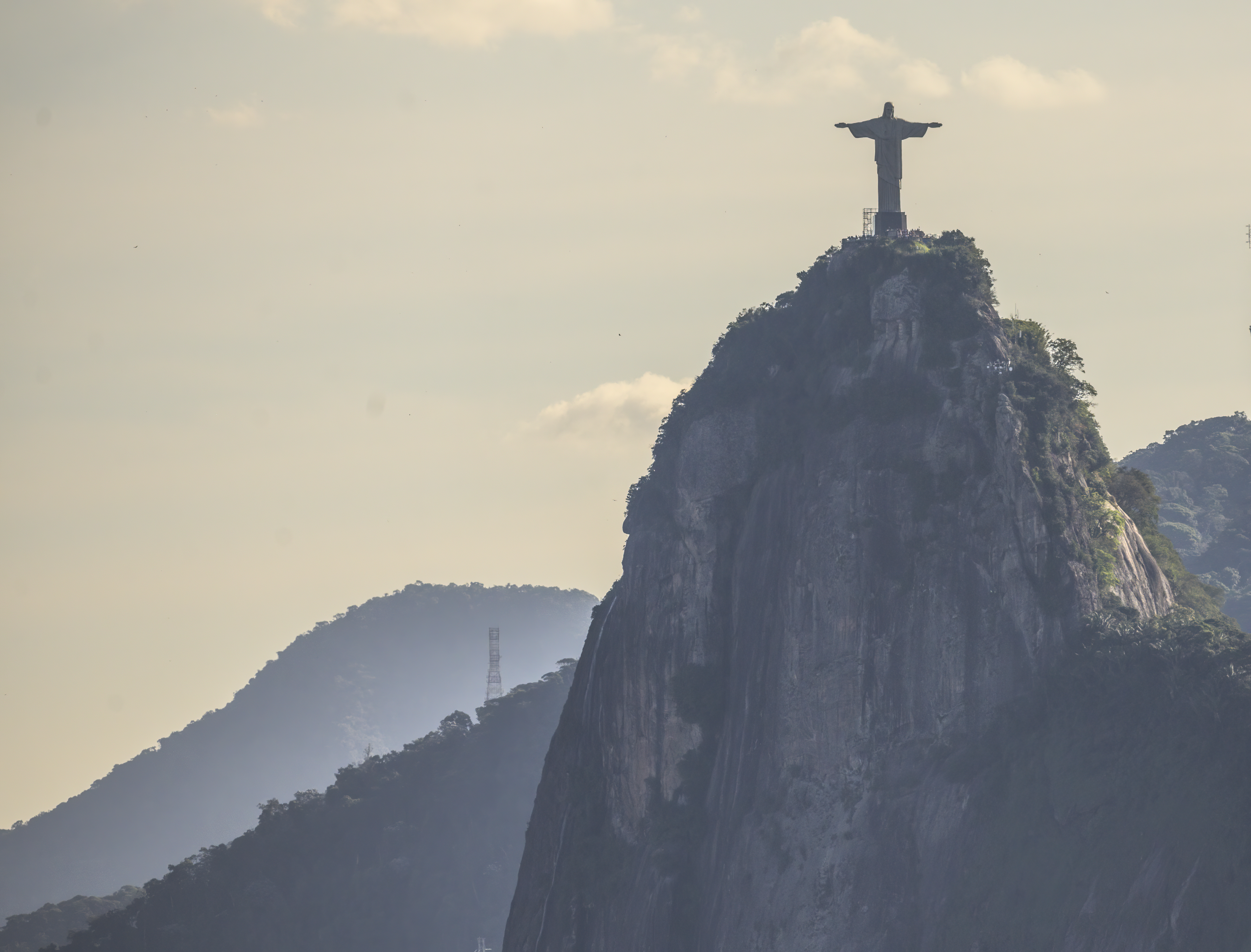
Corcovado hill lies just west of the city center but is wholly within the city limits and visible from great distances. The peak is known worldwide for the statue that stands upon it.
The setting belongs to a city whose colonial and imperial past shaped its central districts. In 1763 as the seat of the colonial government of Brazil was transferred from Salvador to Rio de Janeiro the building that became the Paço Imperial was turned into the Viceroy's Palace (Paço dos Vice-Reis), used by the Viceroy of Brazil as administrative center. The Paço Imperial is located in the Praça XV de Novembro in central Rio. In 1808 when the Portuguese Royal Court moved to Brazil Rio de Janeiro became the seat of the court of Queen Maria I of Portugal. The Palace became a Royal Palace (Paço Real) in 1808 when the court of prince regent John of Braganza arrived in Rio, escaping the invasion of Portugal by Napoleon. Rio remained as the capital of the pluricontinental monarchy until 1822 when the Brazilian War of Independence began.
The current Paço Imperial building was constructed by the order of Gomes Freire de Andrade, governor of the Capitania (colonial administrative region) of Rio de Janeiro.
Elsewhere in the city the Pontifical Catholic University of Rio de Janeiro (Portuguese: Pontifícia Universidade Católica do Rio de Janeiro; PUC-Rio) is a Jesuit, Catholic, pontifical university in Rio de Janeiro, Brazil. The neighborhood of the university contains more shops, banks, the Rio Planetarium, specialized bookstores, restaurants, and a mall.
The statue itself is an Art Deco figure of Jesus in Rio de Janeiro, Brazil, created by the French-Polish sculptor Paul Landowski and built by the Brazilian engineer Heitor da Silva Costa, in collaboration with the French engineer Albert Caquot and the Romanian sculptor Gheorghe Leonida, who sculpted the face. Constructed between 1922 and 1931 it stands 30 metres (98 ft) high, excluding its 8-metre (26 ft) pedestal, and faces east.
Corcovado, whose name means "Hunchback", is a mountain in central Rio de Janeiro, Brazil. Rio de Janeiro, also known simply as Rio, is the capital and largest city of the state of Rio de Janeiro. The peak was photographed before the construction, between 1880 and 1900, and again with the statue under construction.
The idea of a Christian monument on Mount Corcovado was first put forward in the mid-1850s by the Vincentian priest Pedro Maria Boss, who proposed it to honor Princess Isabel, regent of Brazil and daughter of Emperor Pedro II, but the project was not approved. Later work on the statue and its environs was conducted in 2003 and early 2010. In 2003 a set of escalators, walkways and elevators were installed to facilitate access to the platform surrounding the statue.
The Paço Imperial, or Imperial Palace, previously known as the Royal Palace of Rio de Janeiro and Palace of the Viceroys, is a historic building in the center of the city of Rio de Janeiro, Brazil. The Pontifical Catholic University of Rio de Janeiro (Portuguese: Pontifícia Universidade Católica do Rio de Janeiro; PUC-Rio) is a Jesuit, Catholic, pontifical university in Rio de Janeiro, Brazil, located in Gávea in the south of Rio, at the edge of Tijuca National Forest. It is the joint responsibility of the Catholic Archdiocese of São Sebastião do Rio de Janeiro and the Society of Jesus.
Villegagnon Island, formerly Serigipe Island and also known in English as Villegaignon Island, Island of Villegagnon or Island of Villegaignon, lies near the mouth of the large Guanabara Bay, in the city of Rio de Janeiro, Brazil. The Cristo Rei of Dili (Christ the King of Dili) statue, in Portuguese Estátua do Cristo Rei de Díli and in Tetun Estátua Cristo Rei Dili, is a 27.0-metre-high (88.6 ft) colossal statue of Jesus Christ situated atop a globe at Cape Fatucama in Dili, Timor-Leste; the statue, and the globe on which it rests, are mounted on the peak of Cape Fatucama at the end of the Fatucama peninsula, and it was designed, and its construction supervised, by Mochamad Syailillah.
The Sanctuary of Christ the King (Portuguese: Santuário de Cristo Rei) is a Catholic monument and shrine dedicated to the Sacred Heart of Jesus Christ overlooking the city of Lisbon, situated in Almada, in Portugal. It was inspired by the Christ the Redeemer statue of Rio de Janeiro, in Brazil, after the Cardinal Patriarch of Lisbon visited that monument. The Statue of Liberty (Liberty Enlightening the World, French: La Liberté éclairant le monde; colloquially known as Lady Liberty) is a colossal neoclassical sculpture of a robed and crowned woman on Liberty Island, part of New York City, in New York Harbor.
3. History
The idea of a Christian monument crowning Mount Corcovado originated in the mid-1850s with the Vincentian priest Pedro Maria Boss, who proposed the work as an honor to Princess Isabel, regent of Brazil and daughter of Emperor Pedro II. The project did not receive approval at that time.
The question returned in a different political climate. In 1889 the country became a republic, and the separation of church and state that followed led the proposed statue to be dismissed.
A second initiative came from the Catholic Circle of Rio, which in 1920 put forward its own proposal for a landmark statue on the mountain.
Construction of the monument took place between 1922 and 1931.
The statue is an Art Deco figure of Jesus created by the French-Polish sculptor Paul Landowski and built by the Brazilian engineer Heitor da Silva Costa, in collaboration with the French engineer Albert Caquot and the Romanian sculptor Gheorghe Leonida, who sculpted the face. It stands 30 metres (98 ft) high, excluding its 8-metre (26 ft) pedestal, and faces east.
Photographs record the peak of Corcovado before the construction, between 1880 and 1900, and again with the statue under construction.
Later work on the statue and its surroundings was carried out in 2003 and early 2010. In 2003 a set of escalators, walkways and elevators were installed to ease access to the platform around the statue.
4. Restoration and Access
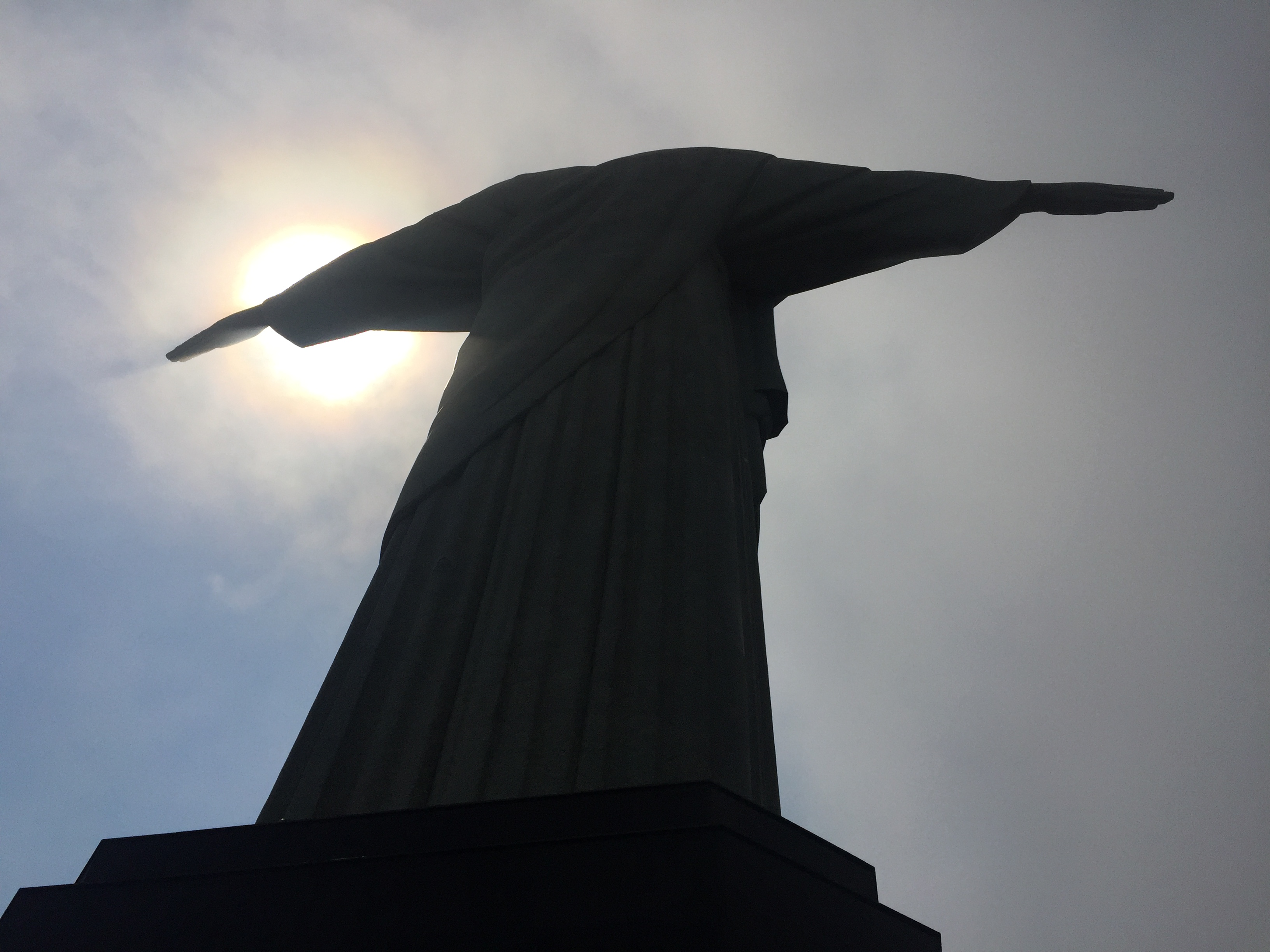
A major restoration of the statue drew on the labor of one hundred people and incorporated more than 60,000 pieces of stone taken from the same quarry as the original statue. The lightning rods located in the statue's head and arms were also repaired during the work. New lighting fixtures were installed at the foot of the statue.
Further work on the monument was carried out in 2003 and in early 2010. In 2003 escalators, walkways and elevators were installed to carry visitors to the platform.
The peak and statue can be reached by a narrow road. A second route is the 3.8 km (2.4 mi) Corcovado Rack Railway, which was opened in 1884 and refurbished in 1980. A walking trail on the south side of the mountain starts from Parque Lage.
5. Related Monuments
The Sanctuary of Christ the King is a Catholic monument and shrine dedicated to the Sacred Heart of Jesus Christ overlooking the city of Lisbon situated in Almada, in Portugal. Its construction was approved in a Portuguese Episcopate conference held in Fatima on 20 April 1940. The approval was framed as a plea to God to release Portugal from entering World War II and to celebrate the 50th anniversary of the act of consecration of the world to the Sacred Heart of Jesus.
The Cristo Rei of Dili is a colossal statue of Jesus Christ situated atop a globe at Cape Fatucama in Dili, Timor-Leste. The statue stands 27.0 metres high (88.6 ft). In Portuguese it is known as the Estátua do Cristo Rei de Díli and in Tetun as the Estátua Cristo Rei Dili.
The Cristo Rei of Dili was designed, and its construction supervised, by Mochamad Syailillah. The Sanctuary of Christ the King in Almada drew its inspiration from the Christ the Redeemer statue of Rio de Janeiro, in Brazil, after the Cardinal Patriarch of Lisbon visited that monument.
The Rio de Janeiro statue itself is an Art Deco figure of Jesus created by French-Polish sculptor Paul Landowski and built by Brazilian engineer Heitor da Silva Costa, in collaboration with French engineer Albert Caquot and Romanian sculptor Gheorghe Leonida who sculpted the face. Constructed between 1922 and 1931, the statue is 30 metres (98 ft) high, excluding its 8-metre (26 ft) pedestal, and faces east. In the mid-1850s Vincentian priest Pedro Maria Boss first suggested placing a Christian monument on Mount Corcovado to honor Princess Isabel, regent of Brazil and the daughter of Emperor Pedro II, but the project was not approved. In 2003 a set of escalators, walkways, and elevators were installed to facilitate access to the platform surrounding the statue, and more work on the statue and its environs was conducted in 2003 and early 2010.
The monument stands on Corcovado, a mountain in central Rio de Janeiro, Brazil, whose name means "Hunchback". Corcovado hill lies just west of the city center but is wholly within the city limits and visible from great distances. Rio de Janeiro, also known simply as Rio, is the capital and largest city of the state of Rio de Janeiro.
Among other landmarks of the city, the Paço Imperial, or Imperial Palace, previously known as the Royal Palace of Rio de Janeiro and Palace of the Viceroys, is a historic building in the center of Rio de Janeiro, Brazil, located in the Praça XV de Novembro in central Rio. The Pontifical Catholic University of Rio de Janeiro (Pontifícia Universidade Católica do Rio de Janeiro; PUC-Rio) is a Jesuit, Catholic, pontifical university in Rio de Janeiro, Brazil, and is the joint responsibility of the Catholic Archdiocese of São Sebastião do Rio de Janeiro and the Society of Jesus. Villegagnon Island, formerly Serigipe Island, also known in English as Villegaignon Island, Island of Villegagnon or Island of Villegaignon, is located near the mouth of the large Guanabara Bay, in the city of Rio de Janeiro, Brazil.
Comparable colossal works elsewhere include the Statue of Liberty (Liberty Enlightening the World; French: La Liberté éclairant le monde; colloquially known as Lady Liberty), a colossal neoclassical sculpture of a robed and crowned woman on Liberty Island, part of New York City, in New York Harbor.
6. Key Facts
| Attribute | Value |
|---|---|
| Height | 30 metres |
| Pedestal | 8 metres |
| Weight | 635 metric tons |
| Mountain height | 700 metres |
| Railway length | 3.8 km |
| Restoration stone pieces | more than 60,000 |
| Restoration personnel | one hundred |
Christ the Redeemer stands 30 metres (98 ft) high, excluding its 8-metre (26 ft) pedestal, and faces east 1Christ the Redeemer (statue) · Wikipedia ↗. The statue was constructed between 1922 and 1931 1. It weighs 635 metric tons (625 long, 700 short tons) 1.
The monument is located at the peak of the 700-metre (2,300 ft) Corcovado mountain in the Tijuca National Park overlooking the city of Rio de Janeiro 1. A later restoration involved one hundred people and used more than 60,000 pieces of stone taken from the same quarry as the original statue 6Christ the Redeemer (statue) · Wikipedia ↗.
The statue is an Art Deco figure of Jesus created by the French-Polish sculptor Paul Landowski and built by the Brazilian engineer Heitor da Silva Costa, working in collaboration with the French engineer Albert Caquot and the Romanian sculptor Gheorghe Leonida, who sculpted the face 1.
The idea of a Christian monument on the mountain is older than the statue itself: the Vincentian priest Pedro Maria Boss first proposed placing one on Mount Corcovado in the mid-1850s, to honour Princess Isabel, regent of Brazil and daughter of Emperor Pedro II, but the project was not approved 4Christ the Redeemer (statue) · Wikipedia ↗.
Corcovado, whose name means "Hunchback", is a mountain in central Rio de Janeiro 2Corcovado · Wikipedia ↗. The hill lies just west of the city center yet wholly within the city limits, and it is visible from great distances 2. Rio de Janeiro, known simply as Rio, is the capital and largest city of the state of Rio de Janeiro 3Rio de Janeiro · Wikipedia ↗.
Access to the monument was reshaped in 2003, when a set of escalators, walkways and elevators were installed to ease the climb to the platform surrounding the statue 6. Further work on the statue and its environs followed in 2003 and early 2010 6.
The Rio monument has served as a model abroad: the Santuário de Cristo Rei, a Catholic monument and shrine dedicated to the Sacred Heart of Jesus overlooking Lisbon from Almada in Portugal, was inspired by the Christ the Redeemer statue of Rio de Janeiro after the Cardinal Patriarch of Lisbon visited that monument 5Christ the King (Almada) · Wikipedia ↗. A separate colossal figure, the Cristo Rei of Dili, a 27.0-metre-high (88.6 ft) statue of Jesus Christ set atop a globe at Cape Fatucama in Dili, Timor-Leste, was designed and its construction supervised by Mochamad Syailillah 7Cristo Rei of Dili · Wikipedia ↗.
7. Key dates
- 1565Founded in 1565, the city was initially the seat of the Captaincy of Rio de Ja…Founded in 1565, the city was initially the seat of the Captaincy of Rio de Janeiro, a domain of the Portuguese Empire.
- 1763In 1763, as the seat of the colonial government of Brazil was transferred from…In 1763, as the seat of the colonial government of Brazil was transferred from Salvador to Rio de Janeiro, the building was turned into the Viceroy’s Palace (Paço dos Vice-Reis), used by the Viceroy of Brazil as administrative center.
- 1808In 1808, when the Portuguese Royal Court moved to Brazil, Rio de Janeiro becam…In 1808, when the Portuguese Royal Court moved to Brazil, Rio de Janeiro became the seat of the court of Queen Maria I of Portugal.
- 1822Rio remained as the capital of the pluricontinental monarchy until 1822, when…Rio remained as the capital of the pluricontinental monarchy until 1822, when the Brazilian War of Independence began.
- 1880History A view of Corcovado before the construction, between 1880 and 1900 The…History A view of Corcovado before the construction, between 1880 and 1900 The peak of Corcovado with the statue under construction, c.
- 1884== Access == The peak and statue can be reached via a narrow road, by the== Access == The peak and statue can be reached via a narrow road, by the 3.8 km (2.4 mi) Corcovado Rack Railway, which was opened in 1884 and refurbished in 1980, or by the walking trail on the south side of the mountain that starts from Parque Lage.
- 1889In 1889, the country became a republic, and owing to the separation of church…In 1889, the country became a republic, and owing to the separation of church and state , the proposed statue was dismissed.
- 1920The Catholic Circle of Rio made a second proposal for a landmark statue on the…The Catholic Circle of Rio made a second proposal for a landmark statue on the mountain in 1920.
8. Frequently asked questions
What did the organizers do to raise money for the monument?
The group organized an event called Semana do Monumento ("Monument Week") to attract donations and collect signatures to support the building of the statue.4
What did the statue look like before the design was changed?
The initial plan was a large Christ with a globe in one hand and a cross in the other.1
How tall is the Cristo Rei of Dili and where does it stand?
The Cristo Rei of Dili is a 27.0-metre-high (88.6 ft) colossal statue of Jesus Christ situated atop a globe at Cape Fatucama in Dili, Timor-Leste.7
How do visitors climb to the Cristo Rei of Dili?
The statue is accessible from the car park at Cristo Rei Beach, on the south side of the cape, inside the Bay of Dili, via a 570-step concrete staircase shaded by trees.7
Who designed the Cristo Rei of Dili?
The statue was designed, and its construction supervised, by Mochamad Syailillah.7
Why was the Christ the King monument in Almada erected?
The giant statue was erected to express gratitude because the Portuguese were spared the direct destructive effects of World War II.5
References (13)
- 1Christ the Redeemer (statue) — Wikipedia Web↩View source
- 2Corcovado — Wikipedia Web↩View source
- 3Rio de Janeiro — Wikipedia Web↩View source
- 4Christ the Redeemer (statue) — Wikipedia Web↩View source
- 5Christ the King (Almada) — Wikipedia Web↩View source
- 6Christ the Redeemer (statue) — Wikipedia Web↩View source
- 7Cristo Rei of Dili — Wikipedia Web↩View source
- 8Pontificia Universidade Católica do Rio de Janeiro — Wikipedia WebView source
- 9Pontificia Universidade Católica do Rio de Janeiro — Wikipedia WebView source
- 10Paço Imperial — Wikipedia WebView source
- 11Villegagnon Island — Wikipedia WebView source
- 12Statue of Liberty — Wikipedia WebView source
- 13Christ the Redeemer (statue) — Wikipedia WebView source