CRISPR
The bacterial immune system that became gene editing, and what it still cannot do safely.
CRISPR-Cas9 is a gene-editing tool derived from a bacterial immune system, published as a programmable scissors in 2012 and awarded the Nobel Prize in Chemistry in 2020. It works by directing the Cas9 nuclease to a sequence specified by a guide RNA and cutting both DNA strands, after which the cell's own repair machinery produces insertions or deletions that cannot be specified in advance. Base and prime editors were developed to make exact changes without double-strand breaks, and in 2023 the first CRISPR-based drug, Casgevy, was approved for sickle-cell disease and beta thalassaemia.
Overview
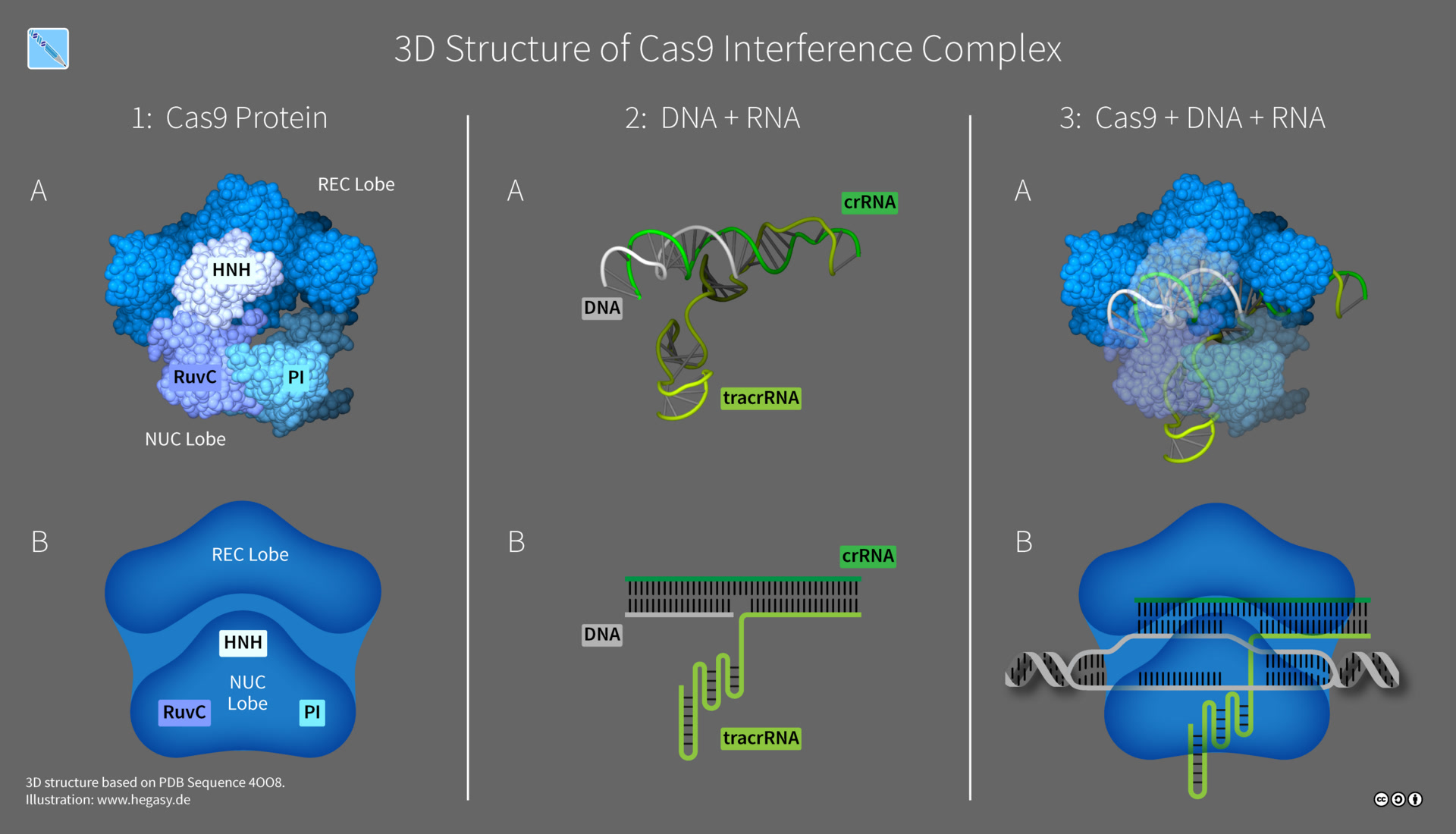
The system that made the technology possible was assembled from bacterial immunity. In 2002 Emmanuelle Charpentier, then starting her own research group at the University of Vienna, turned her attention to Streptococcus pyogenes, one of the bacteria that cause humanity the greatest harm. She later moved to Umea University in northern Sweden, where the research opportunities were better. Her work established that the RNA molecule known as trans-activating crispr RNA, or tracrRNA, is indispensable: the long RNA transcribed from the CRISPR array cannot mature into its active form without it. Jennifer Doudna, for her part, had been studying a CRISPR/Cas system of class 1, a complex machinery that requires many different Cas proteins to disarm a virus. Class 2 systems are significantly simpler because they need fewer proteins.
The collaboration between Doudna and Charpentier to understand the bacterial CRISPR system began in March 2011. Once Cas9 had access to tracrRNA the DNA molecule was cleaved into two parts. The researchers then changed the CRISPR part of the scissors so that its code matched the code where the cuts were to be made. The result was one of gene technology's sharpest tools: the CRISPR/Cas9 genetic scissors. With CRISPR/Cas9 it became possible to change the code of life in the course of a few weeks, and since the scissors were discovered in 2012 their use has exploded. The 2020 Nobel Prize in Chemistry, awarded for the discovery, was 10 million Swedish kronor, shared equally between the laureates.
Mechanistically, Cas nucleases such as Cas9 or Cas12 stimulate target DNA modification by making a double-strand DNA break at a sequence specified by a guide RNA. Non-homologous end joining or microhomology-mediated end joining repair that break to yield a mixture of insertion and deletion outcomes. Because most of those indel outcomes cause frameshifts in coding sequences, Cas nucleases are well suited to gene disruption. The sequence of indels, however, cannot be specified by the researcher or precisely controlled. Base editors address a different problem: they consist of a programmable DNA-binding protein, such as a catalytically impaired Cas nuclease or a TALE repeat array, fused to a deaminase that converts one base into a different base. Cytosine base editors and adenine base editors carry deaminases that catalyse C-G to T-A and A-T to G-C changes respectively.
Ownership of the technology became contested almost immediately. Doudna, Charpentier, Martin Jinek and Krzysztof Chylinski filed the first patent application for CRISPR-Cas9 gene editing in all environments, including bacteria, plants, animals and human cells. On 12 December 2012 the Broad Institute, a collaboration between Harvard and MIT, filed a patent application for CRISPR-Cas9 use in plants, animals and human cells, and on 15 April 2014 the Broad Institute received the first patent for CRISPR-Cas9, specific to plant and animal cells. On 10 May 2017 the European Patent Office granted the University of California team the first CRISPR-Cas9 patent in the European Union, covering more than 35 countries. On 10 September 2018 the US Court of Appeals affirmed the USPTO, concluding that the Broad Institute patent for CRISPR-Cas9 in plant and animal cells is separately patentable from the UC invention of its use in any environment.
Clinical translation is already under way. Researchers are running trials to test whether CRISPR/Cas9 can treat blood diseases such as sickle cell anaemia and beta thalassaemia, as well as inherited eye diseases.
1. Discovery of CRISPR/Cas9 as a gene-editing tool
The route to the scissors ran through basic bacteriology. In 2002 Emmanuelle Charpentier, starting her own research group at the University of Vienna, turned her attention to Streptococcus pyogenes, one of the bacteria that cause humanity the greatest harm. Working on that organism she established that the RNA molecule called trans-activating crispr RNA, or tracrRNA, has a decisive function: it is necessary for the long RNA transcribed from the CRISPR array to mature into its active form. In March 2011 Jennifer Doudna and Charpentier began their collaboration to understand the bacterial CRISPR system.
The two laboratories brought different systems to the partnership. The CRISPR/Cas system Doudna studied belongs to class 1, a complex machinery requiring many different Cas proteins to disarm a virus, whereas class 2 systems require fewer proteins, often only Cas9. Once Cas9 had access to tracrRNA the DNA molecule was cleaved into two parts, and the researchers then changed the CRISPR part of the scissors so that its code matched the code where the cuts were to be made. The result, reported in 2012, was one of gene technology's sharpest tools: the CRISPR/Cas9 genetic scissors.
What followed was rapid uptake and a contested patent landscape. Since Charpentier and Doudna discovered the CRISPR/Cas9 scissors in 2012 their use has exploded, and with CRISPR/Cas9 it became possible to change the code of life in the course of a few weeks. Doudna, Charpentier, Martin Jinek and Krzysztof Chylinski filed the first patent application for CRISPR-Cas9 gene editing in all environments, including bacteria, plants, animals and human cells. On 12 December 2012 the Broad Institute, a collaboration between Harvard and MIT, filed a patent application for CRISPR-Cas9 use in plants, animals and human cells; in 2014 Feng Zhang of the Broad Institute of MIT and Harvard and nine others were awarded US patent 8,697,359 over the use of CRISPR-Cas9 gene editing in eukaryotes, and on 15 April 2014 the Broad Institute received the first patent for CRISPR-Cas9, specific to plant and animal cells. On 10 May 2017 the European Patent Office granted the University of California team the first CRISPR-Cas9 patent in the European Union, covering more than 35 countries. On 10 September 2018 the US Court of Appeals affirmed the USPTO, concluding that the Broad Institute patent for CRISPR-Cas9 in plant and animal cells is separately patentable from the UC invention of its use in any environment.
Clinical and regulatory translation came next. In 2023 the first drug based on CRISPR gene editing, exagamglogene autotemcel, sold as Casgevy, was approved to cure sickle-cell disease and beta thalassaemia, with the UK MHRA the first regulator to approve a CRISPR drug in November 2023. Researchers are already running clinical trials to test whether CRISPR/Cas9 can treat blood diseases such as sickle cell anaemia and beta thalassaemia, as well as inherited eye diseases. In July 2018 the Court of Justice of the European Union ruled that gene editing for plants was a sub-category of GMO foods, so CRISPR in the EU is regulated under GMO rules.
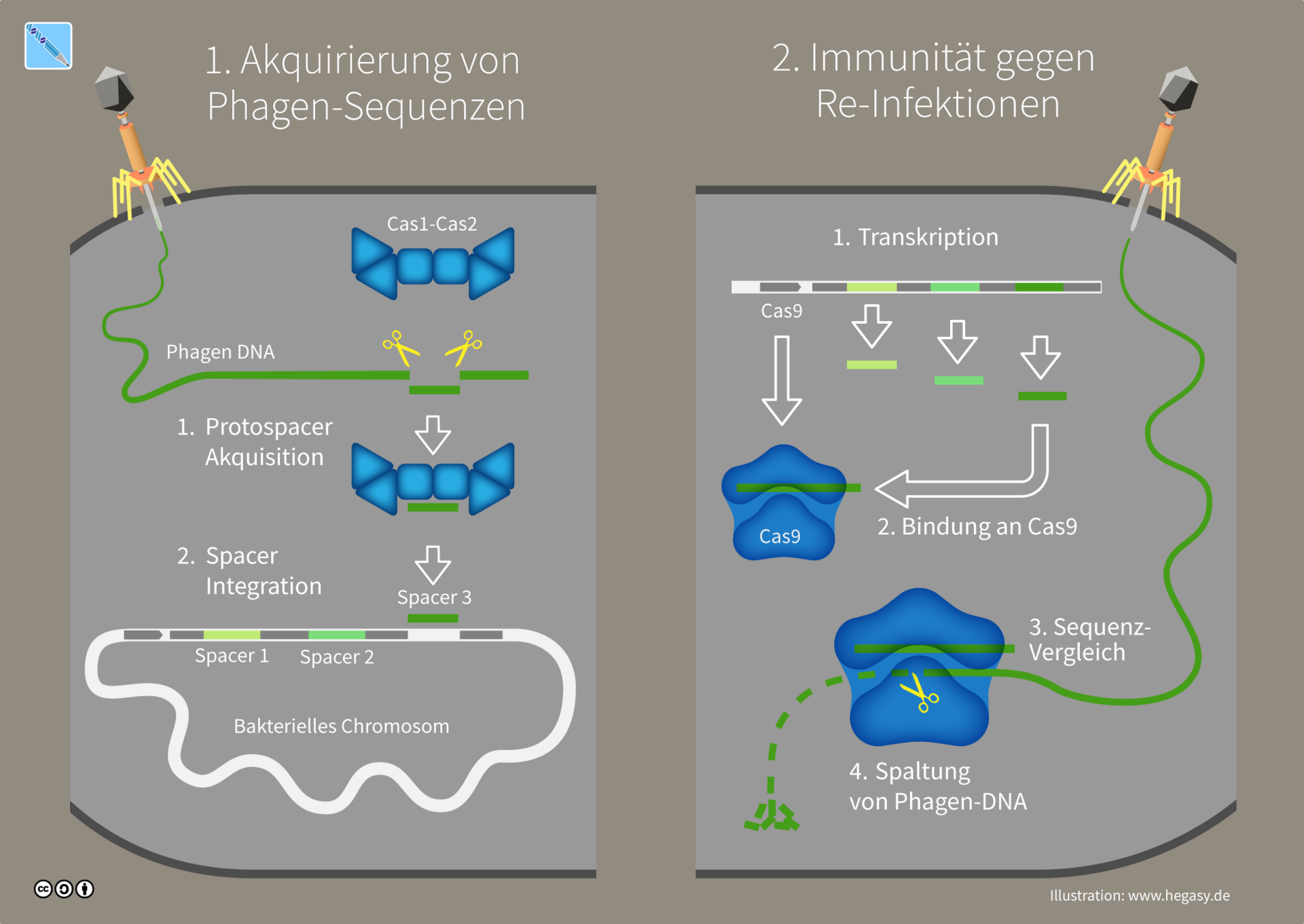
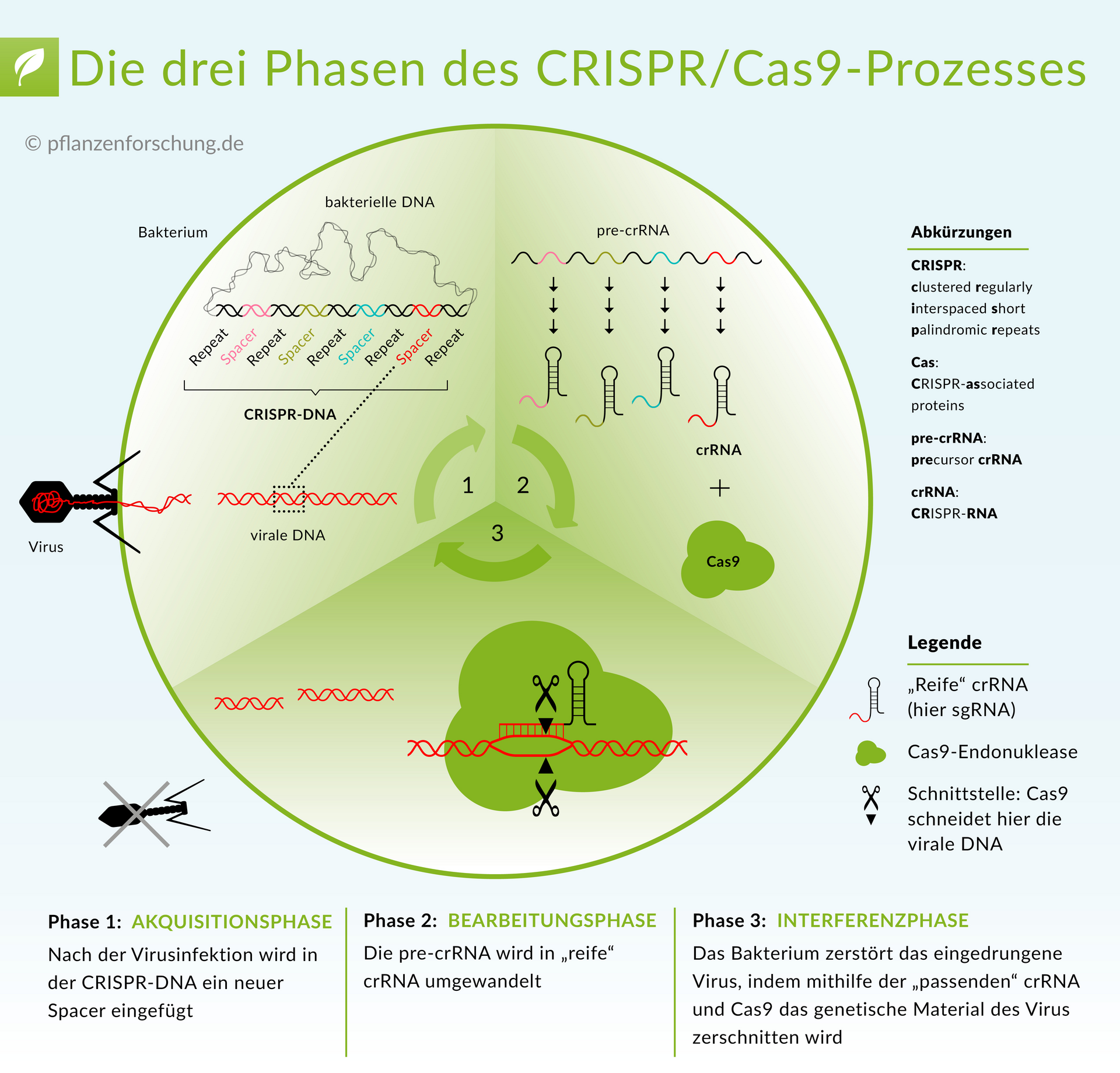
The underlying biology remains the source of the tool's reach. Among the systems found in prokaryotes, only CRISPR-Cas provides adaptive immunity against foreign genetic elements, and CRISPR-Cas systems provide resistance against foreign mobile genetic elements and underpin a wide range of genome editing and biotechnological applications. Structural work has advanced understanding of the molecular structures and mechanisms of the enzymes that make up bacterial RNA-guided CRISPR-Cas immune systems and that are deployed for genome editing, while prime editing expanded the CRISPR base-editing toolkit to all twelve possible transition and transversion mutations, as well as small insertions and deletions. A major concern for CRISPR-Cas9 applications is off-target effects, meaning unexpected or adverse alterations deposited elsewhere in the genome; genome-related adverse events, including off-target edits, are an inherent risk of CRISPR genetic therapies.
2. Patents and legal disputes
3. Editing mechanisms
Structural biology has clarified how the enzymes of bacterial RNA-guided CRISPR-Cas immune systems are built and how they act, both in their natural defensive role and in their repurposed form as genome-editing tools. These systems naturally resist foreign mobile genetic elements and now underpin a broad range of genome editing and biotechnological applications.
Beyond cutting, two template-free strategies avoid the double-strand break altogether. Base editing installs point mutations directly in cellular DNA without inducing a double-strand DNA break, and base editing together with prime editing constitutes the non-DSB, template-free editing systems applicable in bacteria and plants. Prime editing widened the base-editing toolkit to all twelve possible transition and transversion mutations, as well as small insertions and deletions. Both approaches still face open challenges in PAM specificity, editing efficiency, off-targeting, sequence specification and editing window.
For delivery, adeno-associated vectors have emerged as the leading platform for viral delivery of genome-editing agents, owing to their broad tropism, well-studied serotypes and reduced immunogenicity.
Ownership of the underlying technology has been contested. Doudna, Charpentier, Martin Jinek and Krzysztof Chylinski filed the first patent application for CRISPR-Cas9 gene editing in all environments, including bacteria, plants, animals and human cells. In 2014 Feng Zhang of the Broad Institute of MIT and Harvard and nine others were awarded US patent 8,697,359 over the use of CRISPR-Cas9 gene editing in eukaryotes. In July 2018 the Court of Justice of the European Union ruled that gene editing for plants was a sub-category of GMO foods, so CRISPR in the EU is regulated under GMO rules. Clinically, in 2023 the first drug based on CRISPR gene editing, exagamglogene autotemcel, sold as Casgevy, was approved to cure sickle-cell disease and beta thalassaemia.
4. Risks and limitations
The safety profile of Cas nucleases such as Cas9 or Cas12 follows directly from how they act: they stimulate modification of the target DNA by making a double-strand DNA break at a sequence specified by a guide RNA. Repair of that break proceeds through non-homologous end joining or microhomology-mediated end joining, yielding a mixture of insertion and deletion outcomes. Because most of those indel outcomes cause frameshifts in coding sequences, the enzymes are well suited to gene disruption, but the sequence of the resulting indels cannot be specified by the researcher or precisely controlled.
At the chromosomal level the consequences of nuclease-driven double-strand breaks extend beyond the intended site, with large deletions, translocations, chromothripsis and p53 activation documented as risks.
Base editors were developed as an alternative architecture that avoids the double-strand break altogether. They consist of a programmable DNA-binding protein, such as a catalytically impaired Cas nuclease or a TALE repeat array, fused to a deaminase that converts one base into a different base. Cytosine base editors and adenine base editors carry deaminases that catalyse C-G to T-A and A-T to G-C changes respectively.
5. Clinical and agricultural applications
The editing reaction itself is straightforward in outline. Cas nucleases such as Cas9 or Cas12 stimulate target DNA modification by making a double-strand DNA break at a sequence specified by a guide RNA. The cell then repairs that break by non-homologous end joining or microhomology-mediated end joining, yielding a mixture of insertion and deletion outcomes. Because most of those indel outcomes cause frameshifts in coding sequences, Cas nucleases are well suited to gene disruption. The sequence of indels, however, cannot be specified by the researcher or precisely controlled.
A major concern for CRISPR-Cas9 applications is off-target effects, meaning unexpected or adverse alterations deposited elsewhere in the genome. More broadly, CRISPR-Cas systems provide resistance against foreign mobile genetic elements and underpin a wide range of genome editing and biotechnological applications.
In the clinic, researchers are already running clinical trials to test whether CRISPR/Cas9 can treat blood diseases such as sickle cell anaemia and beta thalassaemia, as well as inherited eye diseases.
6. Timeline: from repeat sequences to approved medicine
- December 1987The repeats are first describedIshino and colleagues publish the first description of what would later be called CRISPR.
- April 2000Mojica characterises the repeatsFrancisco Mojica studies the function of repeated sequences in Haloferax and Haloarcula.
- 2002Charpentier starts her group in ViennaEmmanuelle Charpentier begins her own research group at the University of Vienna and focuses on Streptococcus pyogenes.
- March 2011Doudna and Charpentier begin collaboratingThe two researchers start working together to understand the bacterial CRISPR system.
- December 2012CRISPR-Cas9 editing is demonstratedSix teams publish the first use of CRISPR-Cas9 editing in living cells, and the Broad Institute files its eukaryote patent application.
- 15 April 2014First CRISPR patent grantedThe Broad Institute receives the first patent for CRISPR-Cas9, specific to plant and animal cells.
- 10 May 2017First European CRISPR patentThe European Patent Office grants the UC team the first CRISPR-Cas9 patent in the EU, covering more than 35 countries.
- July 2018The EU regulates CRISPR as GMOThe Court of Justice of the European Union rules that plant gene editing falls under GMO regulation.
- October 2020Nobel Prize in ChemistryCharpentier and Doudna receive the Nobel Prize for the CRISPR/Cas9 genetic scissors.
- November 2023First CRISPR drug approvedThe UK MHRA becomes the first regulator in the world to approve Casgevy.
7. Frequently asked questions
Who first described the genetic repeats that later became known as CRISPR?
The first description of what would later be called CRISPR was published by Ishino and colleagues, with the landmark description of the repeats appearing in December 1987 12CRISPR · Wikipedia ↗.
Which bacterium did Emmanuelle Charpentier focus on in 2002?
In 2002, when she started her own research group at the University of Vienna, she focused on Streptococcus pyogenes, one of the bacteria that cause humanity the greatest harm 1Popular information: The Nobel Prize in Chemistry 2020 · NobelPrize.org ↗. In 2009 she moved to a position with good research opportunities at Umea University in northern Sweden 1.
When did Doudna and Charpentier begin working together?
In March 2011 Jennifer Doudna and Emmanuelle Charpentier began their collaboration to understand the bacterial CRISPR system 2CRISPR timeline · UC Berkeley News ↗.
What did the Broad Institute file and when?
Which European patent did the University of California team receive?
On 10 May 2017 the European Patent Office granted the University of California team the first CRISPR-Cas9 patent in the European Union, EP2800811, covering more than 35 countries 2.
Who studied the function of the repeats in archaea?
The Spanish microbiologist Francisco Mojica studied the function of repeats in the archaeal genera Haloferax and Haloarcula 12.
References (12)
- 1Popular information: The Nobel Prize in Chemistry 2020 — NobelPrize.org 2020 Web↩View source
- 2CRISPR timeline — UC Berkeley News 2019 Web↩View source
- 3Press release: The Nobel Prize in Chemistry 2020 — NobelPrize.org 2020 WebView source
- 4Programmable gene editing: base and prime editing — Nature Reviews Genetics (PMC) WebView source
- 5CRISPR gene editing — Wikipedia WebView source
- 6CRISPR-Cas immunity in bacteria — Nature JournalView source
- 7CRISPR-Cas systems: a review — Nature Reviews Microbiology JournalView source
- 8Prime editing: advances and prospects — PMC / NIH WebView source
- 9Off-target effects in CRISPR/Cas9 gene editing — Frontiers in Bioengineering and Biotechnology 2023 JournalView source
- 10Off-target effects of CRISPR-Cas genome editing — PMC / NIH WebView source
- 11Base editing: precision chemistry on the genome — PMC / NIH WebView source
- 12CRISPR — Wikipedia Web↩View source