Nineveh
The Assyrian capital whose library preserved the flood story.
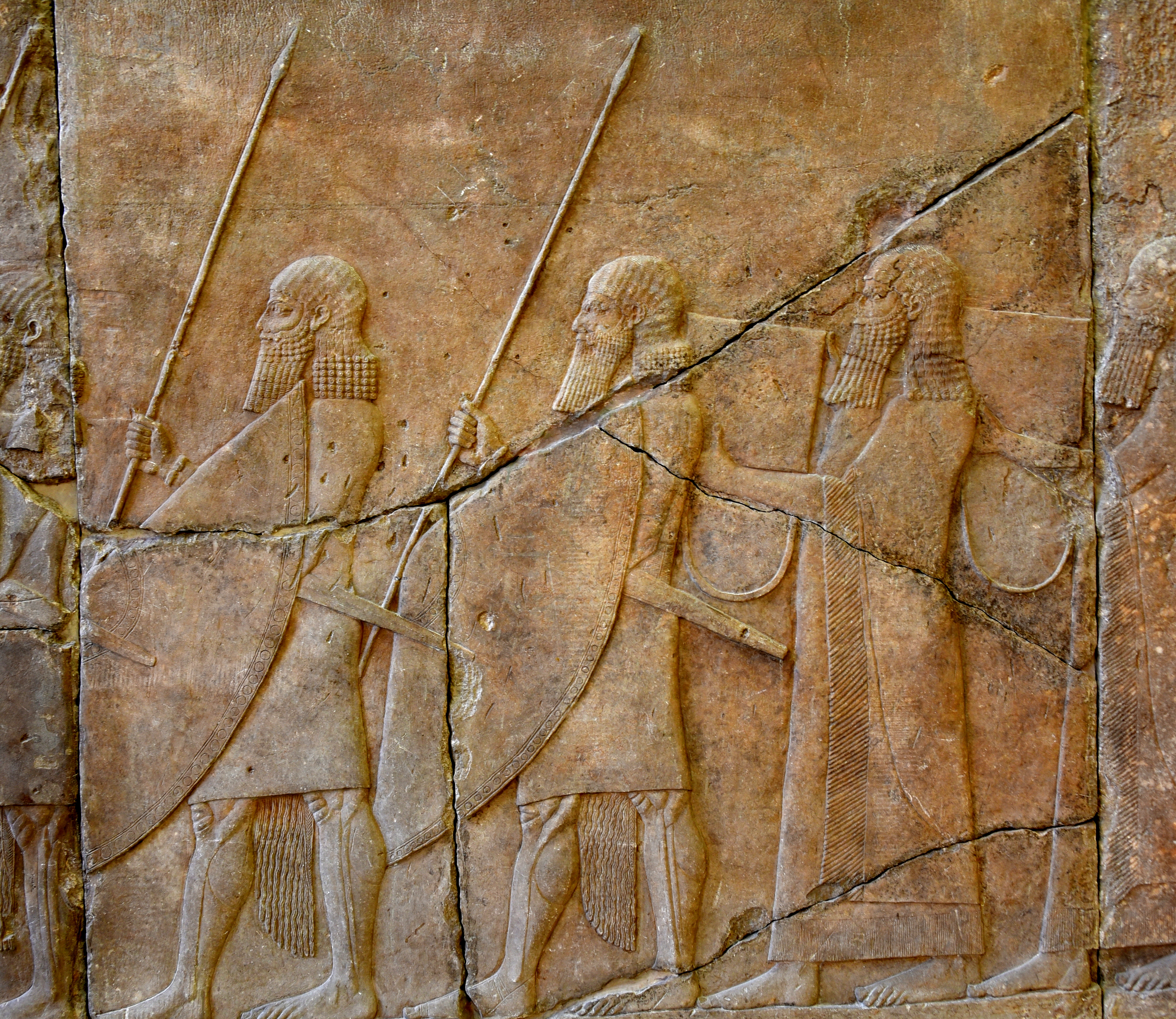
Overview
Nineveh was an ancient Near Eastern city of Upper Mesopotamia, located in the modern-day city of Mosul in northern Iraq1Nineveh — wiki · Wikipedia ↗. It was one of the oldest and most significant cities in antiquity and was settled as early as 6000 BC2Nineveh — mosul · Reference ↗. Today the name is a common designation for the half of Mosul that lies on the eastern bank of the Tigris, and the country's Nineveh Governorate takes its name from it1.
Nineveh was founded as early as 6000 BC during the late Neolithic period3Nineveh — sec3 · Wikipedia ↗. Deep soundings at the site uncovered soil layers dated to early in the era of the Hassuna archaeological culture3, and the development and culture of the settlement paralleled Tepe Gawra and Tell Arpachiyah a few kilometers to the northeast3. In 5000 BC Nineveh transitioned from a Halaf village to an Ubaid village4Nineveh — sec5 · Wikipedia ↗, and during the Late Chalcolithic period it was one of the few Ubaid villages in Upper Mesopotamia that became a proto-city4.
The remains of ancient Nineveh, the areas of Kuyunjiq and Nabī Yūnus with their mounds, lie on a level part of the plain at the junction of the Tigris and the Khosr Rivers, within an area of 750 hectares (1,900 acres) circumscribed by a 12-kilometre (7.5 mi) fortification wall5Nineveh — sec2 · Wikipedia ↗. South of the Khosr the urbanized area is called Nebi Yunus, also known as Ghazliya, Jezayr and Jammasa, and includes Tell Nebi Yunus, where the mosque of the Prophet Jonah stands above a palace of Esarhaddon and Ashurbanipal5. The site was called Kuyunjiq by the Turks and Armousheeah by the Arabs6Nineveh — sec1 · Wikipedia ↗, and a view of the village of "Nunia" or "Ninive" was published by Carsten Niebuhr in 17785.
Ancient records in some instances use "Babylon" as a name for other cities, including Borsippa within Babylon's sphere of influence, and Nineveh for a brief period after the Assyrian sack of Babylon7Nineveh — babylon · Reference ↗. The empire waned under Hammurabi's son Samsu-iluna, and Babylon spent long periods under Assyrian, Kassite and Elamite domination7. The city declined relative to Mosul during the Middle Ages and was mostly abandoned by the 14th century AD after the massacres and dispersal of Assyrian Christians by Timur1.
Mosul, a major city in northern Iraq that serves as the capital of Nineveh Governorate2, is situated on the banks of the Tigris, with the ruins of Nineveh on its east side2. Together with the Nineveh Plains, Mosul is a historical center of the Assyrians2. The ruins of the city were found within one kilometre (1,100 yd) of the modern-day Assyrian village of Noomanea in Nineveh Governorate, Iraq8Nineveh — nimrud · Reference ↗. Tell Arpachiyah, a prehistoric ancient Near East archaeological site just outside modern Mosul in Nineveh Governorate, takes its name from a more recent village located about 4 miles (6.4 km) from Nineveh9Nineveh — arpachiyah · Reference ↗.
The temple of the local Assyrian god Shamash was officially called Beit ʾElāhāʾ, "House of God", in Mesopotamian Aramaic inscriptions, and the city was recorded as "Enclosure of Shamash" on a coin10Nineveh — hatra · Reference ↗. The city was famed for its fusion of Greek, Assyrian, Canaanite, Aramean and Arabian pantheons, known in Aramaic as Beiṯ Ĕlāhā ("House of God")10.
1. Geography and Site
The remains of Nineveh lie on a level plain at the junction of the Tigris and Khosr Rivers, where the site is divided between the mounds known as Kuyunjiq and Nabī Yūnus 6. South of the Khosr the urbanized area is called Nebi Yunus, also known as Ghazliya, Jezayr or Jammasa, and it includes Tell Nebi Yunus, where the mosque of the Prophet Jonah stands and a palace of Esarhaddon or Ashurbanipal lies beneath it 5. The same southern district is likewise recorded under the names Ghazliya, Jezayr and Jammasa in the description of Tell Nebi Yunus and the palace below it 1.
The site's position on the Tigris gave it strategic weight in early exchange networks: British Museum Nineveh IV became a trade colony of Uruk during the Uruk Expansion because of its location as the highest navigable point on the Tigris 4. The same advantage of situation is recorded for the colony in the parallel account of the site's development 3. The development and culture of Nineveh ran parallel to those of Tepe Gawra and Tell Arpachiyah a few kilometers to the northeast 3.
The city's long occupation is reflected in the sequence of its material remains, which begin with a Halaf village that became an Ubaid village in 5000 BC 4. The same transition from Halaf to Ubaid settlement is recorded in the site's culture history 3. In the late 3rd millennium BC Nineveh was part of the Akkadian Empire 11Nineveh — sec8 · Wikipedia ↗. An Akkadian period bronze statue head found at Nineveh was later determined to be a 7th century addition 11.
It is mentioned in the Old Assyrian Empire (2025–1750 BC) and during the reign of Shamshi-Adad I (1809–1776 BC) it was listed as a center of worship of the goddess Ishtar, remaining so during the Middle Assyrian Empire (1365–1056 BC) 2. Kassite Babylon eventually became subject to the Middle Assyrian Empire (1365–1053 BC) to the north, and Elam to the east, with both powers vying for control of the city 7.
The location of Nineveh was known, to some, continuously through the Middle Ages 1. It declined relative to Mosul during the Middle Ages and was mostly abandoned by the 14th century AD after the massacres and dispersal of Assyrian Christians by Timur 1. In the mid 19th century biblical archaeologists proposed the Assyrian name Kalḫu, the Biblical Calah, based on a description of the travels of Nimrod 8. Large numbers of Assyrian sculptures and other artifacts have been excavated from the ruins of Nineveh and are now located in museums around the world 1. In 2015 the terrorist organization Islamic State announced its intention to destroy the site because of its "un-Islamic" Assyrian nature 8.
The ancient remains of Nineveh, comprising the areas of Kuyunjiq and Nabī Yūnus with their mounds, occupy a level part of the plain at the junction of the Tigris and the Khosr Rivers 1. The settled area is circumscribed by a fortification wall running 12 kilometres (7.5 mi) and encloses 750 hectares (1,900 acres) 1. The same dimensions and the same riverside setting are recorded in the parallel account of the site 5.
A view of the village of "Nunia" or "Ninive" was published by Carsten Niebuhr in 1778 5. The village at the site was still photographed in 2019 5.
In 2015 the terrorist organization Islamic State announced its intention to destroy the site because of its "un-Islamic" Assyrian nature 8. Layla Salih, head of antiquities for Nineveh Governorate, stated that most of the buildings were intact and that the destruction did not compare with that of other archaeological sites of Iraq 10.
Tell Arpachiyah, also written Tall Arpachiyah, is a prehistoric ancient Near East archaeological site just outside modern Mosul in Nineveh Governorate (Iraq) 9.
2. Early Settlement and Prehistory
Nineveh belonged to the ancient Near East as a city of Upper Mesopotamia, and its remains lie within the modern city of Mosul in northern Iraq1. Mosul itself is a major city of northern Iraq and serves as the capital of Nineveh Governorate2. The ancient ruins, comprising the areas of Kuyunjiq and Nabī Yūnus with their mounds, occupy a level stretch of plain at the junction of the Tigris and the Khosr Rivers, within an area of 750 hectares (1,900 acres) circumscribed by a 12-kilometre (7.5 mi) fortification wall5. South of the Khosr the urbanized area is called Nebi Yunus, also known as Ghazliya, Jezayr and Jammasa, and includes Tell Nebi Yunus, where the mosque of the Prophet Jonah stands above a palace of Esarhaddon or Ashurbanipal5.
After the Late Uruk period the regional influence of Nineveh became particularly pronounced, in the phase known as the Early Bronze Age Ninevite 5 period11. In the late 3rd millennium BC the city was part of the Akkadian Empire11. It ranked as a major Assyrian city between approximately 1350 BC and 610 BC8. Ancient records sometimes use the name of one city for another, and Nineveh served as a name for Babylon for a brief period after the Assyrian sack of Babylon7.
The site declined relative to Mosul during the Middle Ages and was mostly abandoned by the 14th century AD, after the massacres and dispersal of Assyrian Christians by Timur1. Today the name is a common designation for the half of Mosul on the eastern bank of the Tigris, and the country's Nineveh Governorate takes its name from it1. Mosul is situated on the banks of the Tigris, with the ruins of the ancient Assyrian city on the east side of the city2.
Tell Arpachiyah, also written Tall Arpachiyah, is a prehistoric ancient Near East archaeological site just outside modern Mosul in Nineveh Governorate9. It takes its name from a more recent village located about 4 miles (6.4 km) from Nineveh9. The ruins of Nineveh were found within one kilometre (1,100 yd) of the modern-day Assyrian village of Noomanea in Nineveh Governorate, Iraq8.
3. Ninevite 5 and the Bronze Age
The city is mentioned in the Old Assyrian Empire (2025–1750 BC) 2. During the reign of Shamshi-Adad I (1809–1776 BC) it was listed as a center of worship of the goddess Ishtar, remaining so during the Middle Assyrian Empire (1365–1056 BC) 2.
An Akkadian period bronze statue head found at Nineveh was later determined to be a 7th century addition 11.
In the late 3rd millennium BC Nineveh was part of the Akkadian Empire 11.
The ceramic record associated with the Ninevite 5 horizon includes a painted jar and a painted bowl, alongside material assigned to the Uruk-Nineveh 5 transition, Jemdet Nasr ware and Proto-Elamite ware 11. A pottery jar dated to 3100 BC from Tepeyatagi, in the Khudat district, belongs to the Kura-Araxtes culture 11.
The remains of ancient Nineveh, comprising the areas of Kuyunjiq and Nabī Yūnus with their mounds, lie on a level part of the plain at the junction of the Tigris and the Khosr Rivers, within an area of 750 hectares (1,900 acres) circumscribed by a 12-kilometre (7.5 mi) fortification wall 5. The ruins of the city were found within one kilometre (1,100 yd) of the modern-day Assyrian village of Noomanea in Nineveh Governorate, Iraq 8.
4. Assyrian City and Later History
Kassite Babylon eventually became subject to the Middle Assyrian Empire (1365–1053 BC) to the north, and Elam to the east, with both powers vying for control of the city7. In some instances ancient records use "Babylon" as a name for other cities, including Borsippa within Babylon's sphere of influence, and Nineveh for a brief period after the Assyrian sack of Babylon7.
It declined relative to Mosul during the Middle Ages and was mostly abandoned by the 14th century AD after the massacres and dispersal of Assyrian Christians by Timur1.
Nineveh was an ancient Near Eastern city of Upper Mesopotamia, located in the modern-day city of Mosul in northern Iraq1. Mosul is a major city in northern Iraq, serving as the capital of Nineveh Governorate2. Mosul is situated on the banks of Tigris and the ruins of the ancient Assyrian city of Nineveh, once the largest city in the world, are on the east side of the city2. On the city's eastern side are the ruins of the ancient city of Nineveh, and Assyrians still call the entire city Nineveh (or Ninweh)2. Together with the Nineveh Plains, Mosul is a historical center of the Assyrians2.
Nineveh itself was founded as early as 6000 BC during the late Neolithic period3. During the Late Chalcolithic period Nineveh was one of the few Ubaid villages in Upper Mesopotamia which became a proto-city4. The city is mentioned in the Old Assyrian Empire (2025–1750 BC) and during the reign of Shamshi-Adad I (1809–1776 BC) it was listed as a center of worship of the goddess Ishtar, remaining so during the Middle Assyrian Empire (1365–1056 BC)2.
The ruins of the city were found within one kilometre (1,100 yd) of the modern-day Assyrian village of Noomanea in Nineveh Governorate, Iraq8. Large numbers of Assyrian sculptures and other artifacts have been excavated from the ruins of Nineveh, and are now located in museums around the world1. An Akkadian period bronze statue head found at Nineveh was later determined to be a 7th century addition11. In the mid 19th century, biblical archaeologists proposed the Assyrian name Kalḫu (the Biblical Calah), based on a description of the travels of Nimrod in Genesis 108. In 2015 the terrorist organization Islamic State announced its intention to destroy the site because of its "un-Islamic" Assyrian nature8.
5. Identification and Archaeology
In the mid 19th century biblical archaeologists proposed the Assyrian name Kalḫu (the Biblical Calah) for the site, a proposal grounded in a description of the travels of Nimrod in Genesis 108.
Large numbers of Assyrian sculptures and other artifacts have been excavated from the ruins of Nineveh1. These finds are now located in museums around the world1.
In 2015 the terrorist organization Islamic State announced its intention to destroy the site because of its "un-Islamic" Assyrian nature8.
The remains of ancient Nineveh, comprising the areas of Kuyunjiq and Nabī Yūnus with their mounds, lie on a level part of the plain at the junction of the Tigris and the Khosr Rivers, within an area of 750 hectares (1,900 acres) circumscribed by a 12-kilometre (7.5 mi) fortification wall5. South of the Khosr the urbanized area is called Nebi Yunus, also known as Ghazliya, Jezayr and Jammasa, and includes Tell Nebi Yunus, where the mosque of the Prophet Jonah stands above a palace of Esarhaddon or Ashurbanipal5. The site is also recorded under the names Kuyunjiq, used by the Turks, and Armousheeah, used by the Arabs6.
Deep sounding at Nineveh uncovered soil layers dated to early in the era of the Hassuna archaeological culture3. The city itself was founded as early as 6000 BC during the late Neolithic period3, and its development and culture paralleled Tepe Gawra and Tell Arpachiyah a few kilometers to the northeast3. In 5000 BC Nineveh transitioned from a Halaf village to an Ubaid village4, and during the Late Chalcolithic period it was one of the few Ubaid villages in Upper Mesopotamia that became a proto-city4.
Ancient records sometimes use "Babylon" as a name for other cities, including Borsippa within Babylon's sphere of influence and Nineveh for a brief period after the Assyrian sack of Babylon7. The city declined relative to Mosul during the Middle Ages and was mostly abandoned by the 14th century AD after the massacres and dispersal of Assyrian Christians by Timur1. Today the name is a common designation for the half of Mosul on the eastern bank of the Tigris, and the country's Nineveh Governorate takes its name from it1.
Mosul, a major city in northern Iraq and the capital of Nineveh Governorate, is situated on the banks of the Tigris, with the ruins of ancient Nineveh on its east side2. Together with the Nineveh Plains, Mosul is a historical center of the Assyrians2. Tell Arpachiyah, a prehistoric ancient Near East archaeological site, lies just outside modern Mosul in Nineveh Governorate and takes its name from a more recent village located about 4 miles (6.4 km) from Nineveh9. The ruins of the city were found within one kilometre (1,100 yd) of the modern-day Assyrian village of Noomanea in Nineveh Governorate, Iraq8.
A view of the village of "Nunia" or "Ninive" was published by Carsten Niebuhr in 17785. The temple of the local Assyrian god Shamash was officially called Beit ʾElāhāʾ, "House of God", in Mesopotamian Aramaic inscriptions, and the city was recorded as "Enclosure of Shamash" on a coin10. The city was famed for its fusion of Greek, Assyrian, Canaanite, Aramean and Arabian pantheons, known in Aramaic as Beiṯ Ĕlāhā, "House of God"10.
6. Nineveh in Scripture and Tradition
According to the Hebrew Bible and the Quran, Jonah was a prophet who preached to Nineveh1. The city's association with him is preserved in its topography: south of the Khosr the urbanized area is called Nebi Yunus, also known as Ghazliya, Jezayr and Jammasa5. This district includes Tell Nebi Yunus, where the mosque of the Prophet Jonah stands5. Beneath the tell lies a palace of Esarhaddon and Ashurbanipal5.
The remains of ancient Nineveh, comprising the areas of Kuyunjiq and Nabī Yūnus with their mounds, lie on a level stretch of plain at the junction of the Tigris and the Khosr Rivers5. The site is circumscribed by a fortification wall running 12 kilometres (7.5 mi) and encloses an area of 750 hectares (1,900 acres)5. The ruins were found within one kilometre (1,100 yd) of the modern-day Assyrian village of Noomanea in Nineveh Governorate, Iraq8. Today the name serves as a common designation for the half of Mosul on the eastern bank of the Tigris, and the country's Nineveh Governorate takes its name from it1. Mosul itself is situated on the banks of the Tigris, with the ruins of the ancient Assyrian city on its east side2, and together with the Nineveh Plains the city is a historical center of the Assyrians2. Assyrians still call the entire city Nineveh, or Ninweh2.
Nineveh was one of the oldest and most significant cities in antiquity and was settled as early as 6000 BC2. It was founded as early as 6000 BC during the late Neolithic period3, and a deep sounding at the site uncovered soil layers dated to early in the era of the Hassuna archaeological culture3. In 5000 BC the settlement transitioned from a Halaf village to an Ubaid village4, and during the Late Chalcolithic period it was one of the few Ubaid villages in Upper Mesopotamia to become a proto-city4. Its development and culture paralleled Tepe Gawra and Tell Arpachiyah a few kilometers to the northeast3. The greater Nineveh area is notable in the diffusion of metal technology across the Near East as the first location outside of Anatolia to smelt copper4.
The ceramic repertoire associated with this horizon includes a painted jar and a painted bowl, together with Uruk-Nineveh 5 transition material, Jemdet Nasr ware and Proto-Elamite ware11. In the late 3rd millennium BC Nineveh was part of the Akkadian Empire11, and an Akkadian period bronze statue head found at the site was later determined to be a 7th century addition11. Ancient records in some instances use "Babylon" as a name for other cities, including Borsippa within Babylon's sphere of influence and Nineveh for a brief period after the Assyrian sack of Babylon7.
Tell Arpachiyah, also written Tall Arpachiyah, is a prehistoric ancient Near East archaeological site just outside modern Mosul in Nineveh Governorate, Iraq9. It takes its name from a more recent village located about 4 miles (6.4 km) from Nineveh9.
7. Key dates
- 1053Kassite Babylon eventually became subject to the Middle Assyrian Empire (1365–…Kassite Babylon eventually became subject to the Middle Assyrian Empire (1365–1053 BC) to the north, and Elam to the east, with both powers vying for control of the city.
- 1056The city is mentioned in the Old Assyrian Empire (2025–1750 BC) and during the…The city is mentioned in the Old Assyrian Empire (2025–1750 BC) and during the reign of Shamshi-Adad I (1809–1776 BC) it was listed as a center of worship of the goddess Ishtar, remaining so during the Middle Assyrian Empire (1365–1056 BC).
- 1350It was a major Assyrian city between approximately 1350 BC and 610 BC.It was a major Assyrian city between approximately 1350 BC and 610 BC.
- 1778Geography View of the village of "Nunia" or "Ninive", published by Carsten Nie…Geography View of the village of "Nunia" or "Ninive", published by Carsten Niebuhr in 1778 Village in Nineveh in 2019 The remains of ancient Nineveh, the areas of Kuyunjiq and Nabī Yūnus with their mounds, are located on a level part of the plain at the junction of the Tigris and
- 1849^ "Nineveh - ܢܝܢܘܐ", https://syriaca.org/place/144 ^ Layard, 1849, p.xxi, "...…^ "Nineveh - ܢܝܢܘܐ", https://syriaca.org/place/144 ^ Layard, 1849, p.xxi, "...called Kuyunjiq by the Turks, and Armousheeah by the Arabs" ^ "Koyundjik" , E.
- 1936104-110, 1936 ^ Westenholz, Joan Goodnick, "The Old Akkadian Presence in Ninev…104-110, 1936 ^ Westenholz, Joan Goodnick, "The Old Akkadian Presence in Nineveh: Fact or Fiction", Iraq, vol.
- 2015427 ^ Polish-Syrian Expedition to Tell Arbid 2015 ^ Charvát, Petr, "The Backs…427 ^ Polish-Syrian Expedition to Tell Arbid 2015 ^ Charvát, Petr, "The Backs of Some Sealings from Nineveh 5", Iraq, vol.
8. Frequently asked questions
Where exactly were the ruins of Nineveh found?
The ruins of the city were found within one kilometre (1,100 yd) of the modern-day Assyrian village of Noomanea in Nineveh Governorate, Iraq8.
How large was the walled area of ancient Nineveh?
The remains of ancient Nineveh, the areas of Kuyunjiq and Nabī Yūnus with their mounds, are located on a level part of the plain at the junction of the Tigris and the Khosr Rivers within an area of 750 hectares (1,900 acres) circumscribed by a 12-kilometre (7.5 mi) fortification wall5.
What was the earliest culture attested in the soil layers beneath the city?
Deep sounding at Nineveh uncovered soil layers that have been dated to early in the era of the Hassuna archaeological culture3.
Which pottery styles are associated with the Ninevite 5 period?
Styles related to Nineveh 5 include a painted jar, a painted bowl, the Uruk-Nineveh 5 transition, Jemdet Nasr ware and Proto-Elamite ware11.
How is Nineveh remembered in the Hebrew Bible and the Quran?
According to the Hebrew Bible and the Quran, Jonah was a prophet who preached to Nineveh1.
What did Islamic State say about the site in 2015?
In 2015 the terrorist organization Islamic State announced its intention to destroy the site because of its "un-Islamic" Assyrian nature8.
References (11)
- 1Nineveh — wiki — Wikipedia Web↩View source
- 2Nineveh — mosul — Reference Web↩View source
- 3Nineveh — sec3 — Wikipedia Web↩View source
- 4Nineveh — sec5 — Wikipedia Web↩View source
- 5Nineveh — sec2 — Wikipedia Web↩View source
- 6Nineveh — sec1 — Wikipedia Web↩View source
- 7Nineveh — babylon — Reference Web↩View source
- 8Nineveh — nimrud — Reference Web↩View source
- 9Nineveh — arpachiyah — Reference Web↩View source
- 10Nineveh — hatra — Reference Web↩View source
- 11Nineveh — sec8 — Wikipedia Web↩View source