Valley of the Kings
Sixty-three tombs cut into desert rock for the pharaohs.
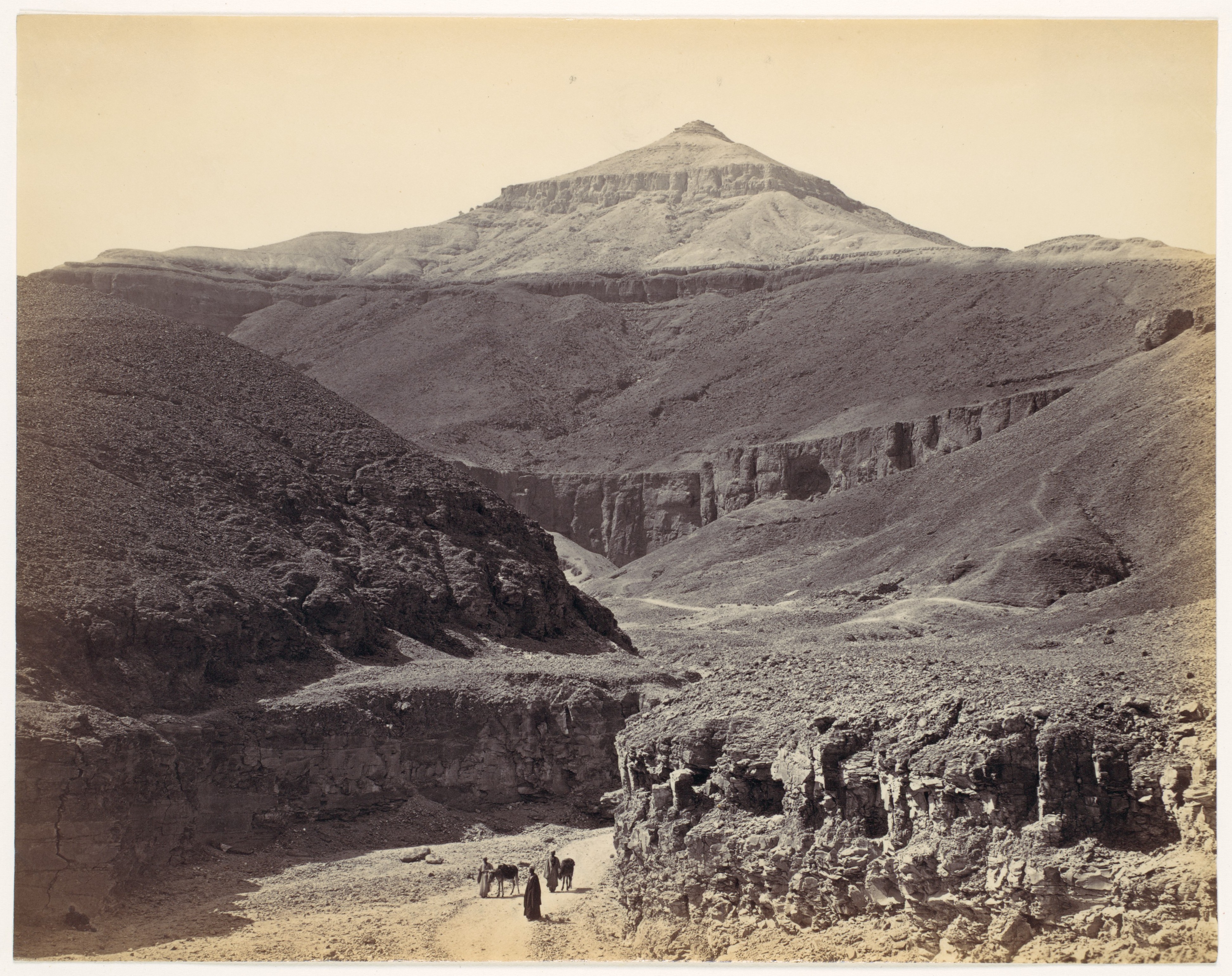
Overview
The Valley of the Kings is a wadi on the west bank of the Nile, opposite Thebes (modern-day Luxor) and within the heart of the Theban Necropolis 1Valley of the Kings — wiki · Wikipedia ↗. In ancient times the site bore the official name The Great and Majestic Necropolis of the Millions of Years of the Pharaoh, Life, Strength, Health in The West of Thebes, or Ta-sekhet-ma'at (the Great Field) 2Valley of the Kings — sec4 · Wikipedia ↗. It is divided into two main sections: the East Valley, where the majority of the royal tombs are situated, and the West Valley, otherwise known as the Valley of the Monkeys 1. The valley is one of the most famous archaeological sites in the world 1.
Also known as the Valley of the Gates of the Kings, the site is an area in Egypt where, for a period of nearly 500 years from the Eighteenth Dynasty to the Twentieth Dynasty, rock-cut tombs were excavated for pharaohs and powerful nobles under the New Kingdom of ancient Egypt 1. The Valley was used for primary burials from approximately 1539 BC to 1075 BC 3Valley of the Kings — sec3 · Wikipedia ↗. At the start of the Eighteenth Dynasty only kings were buried within the valley in large tombs 2. The first royal tombs in the Valley of the Kings were those of Amenhotep I (although this identification is also disputed), and Thutmose I, whose advisor, Ineni, notes in his tomb that he advised the king to place his tomb in the desolate valley (the identity of this actual tomb is unclear, but it is probably KV20 or KV38) 3.
The Valley of the Kings is situated over 1,000 feet of limestone and other sedimentary rock, which form the cliffs in the valley and the nearby Deir el-Bahari, interspersed with soft layers of marl 4Valley of the Kings — sec1 · Wikipedia ↗. The area of the Theban hills is subject to infrequent, violent thunderstorms causing flash floods in the valley 5Valley of the Kings — sec2 · Wikipedia ↗. Recent studies have shown that there are at least seven active flood stream beds leading down into the central area of the valley 5. The tombs KV55, KV62, and KV63 are dug into the actual wadi bedrock rather than the debris, showing that the level of the valley was five meters below its present level 5.
With the 2005 discovery of a new chamber and the 2008 discovery of two further tomb entrances, the Valley of the Kings is known to contain 65 tombs and chambers 1. The valley has been a major focus of modern Egyptological exploration for the last two centuries 6Valley of the Kings — sec5 · Wikipedia ↗. In 1799 members of Napoleon's expedition to Egypt (especially Vivant Denon) drew maps and plans of the known tombs, and for the first time noted the Western Valley (where Prosper Jollois and Édouard de Villiers du Terrage located the tomb of Amenhotep III, WV22) 6. In 1830 John Gardner Wilkinson established the numbering system for the tombs, which remains in use today 6.
The Valley of the Kings garnered significant attention following the discovery of the tomb of Tutankhamun in 1922 1. Previously considered the longest tomb in the valley until the discovery of the Tomb of the Sons of Ramesses II, at 137.19 meters (450.10 feet) the Tomb of Seti I is one of the most decorated tombs in the valley, and is one of the largest and deepest tombs in the Valley of the Kings 7Valley of the Kings — i · Reference ↗.
During the Pleistocene the valley was carved out of the plateau by steady rains 4. The earliest tombs were located in cliffs at the top of scree slopes, under storm-fed waterfalls, as at KV34 and KV43 8Valley of the Kings — sec6 · Wikipedia ↗. The usual tomb plan consisted of a long inclined rock-cut corridor, descending through one or more halls (possibly mirroring the descending path of the sun god into the underworld) to the burial chamber 9Valley of the Kings — sec8 · Wikipedia ↗. Its isolated position also resulted in reduced access, and special tomb police (the Medjay) were able to guard the necropolis 3.
The tomb of Seti I, also known by its tomb number KV17, is the tomb of Pharaoh Seti I of the Nineteenth Dynasty 7. Located in Egypt's Valley of the Kings, it is also known by the names "Belzoni's tomb", "the Tomb of Apis", and "the Tomb of Psammis, son of Nechois" 7. The tomb also known by its tomb number KV62 consists of four chambers and an entrance staircase and corridor 10Valley of the Kings — kv62 · Reference ↗. It is smaller and less extensively decorated than other Egyptian royal tombs of its time, and it probably originated as a tomb for a non-royal individual that was adapted for Tutankhamun's use after his premature death 10. Tomb KV1, located in the Valley of the Kings in Egypt, was used for the burial of Pharaoh Ramesses VII of the Twentieth Dynasty 11Valley of the Kings — kv1 · Reference ↗. The single corridor tomb is located in Luxor's West Bank, and is small in comparison to other tombs of the Twentieth Dynasty 11.
The Royal Cache, technically known as TT320 (previously referred to as DB320), is an Ancient Egyptian tomb located next to Deir el-Bahari, in the Theban Necropolis, opposite the modern city of Luxor 12Valley of the Kings — db320 · Reference ↗. It contains an extraordinary collection of mummified remains and funeral equipment of more than 50 kings, queens, and other royal family members of the New Kingdom, as it was used as a cache for royal mummies during the Twenty-first Dynasty 13Valley of the Kings — cache · Reference ↗.
1. Geology and Hydrology
The valley was carved out of the plateau during the Pleistocene by steady rains4. The quality of the rock in the Valley is inconsistent, ranging from finely grained to coarse stone, the latter with the potential to be structurally unsound4. The problems of tomb construction can be seen with the tombs of Ramesses III and his father Setnakhte4.
As these locations were filled, burials descended to the valley floor, gradually moving back up the slopes as the valley bottom filled with debris8. This explains the location of the tombs KV62 and KV63 buried in the valley floor8. The tomb's low position, dug into the floor of the valley, allowed its entrance to be hidden by debris deposited by flooding and tomb construction10. After this event, later dynasties levelled the floor of the valley, making the floods deposit their load further down the valley, and the buried tombs were forgotten and only discovered in the early 20th century5.
The valley lies over more than 1,000 feet of limestone and other sedimentary rock, the material that forms the cliffs in the valley and at the nearby Deir el-Bahari, interspersed with soft layers of marl4. The area of the Theban hills is subject to infrequent, violent thunderstorms that cause flash floods in the valley5. The earliest tombs were placed in cliffs at the top of scree slopes, beneath storm-fed waterfalls, as at KV34 and KV438.
2. History of Use
The valley served as a primary burial ground across a long span of dynastic history, and its tombs are catalogued under designations running from KV1 through KV34 and beyond, together with the western-valley series WV22 to WV25 8. At the outset of the Eighteenth Dynasty the distinction between royal and non-royal burial was sharply drawn: only kings received large tombs, while non-royal persons were laid in small rock-cut chambers close to their master's tomb. The earliest royal tombs in the valley are those of Amenhotep I, whose identification remains disputed, and of Thutmose I, for whom the location is probably KV20 or KV38. Thutmose I's advisor Ineni records that he advised the king to place his tomb in the desolate valley. The isolated position of the site reduced access, and special tomb police known as the Medjay were able to guard the necropolis 3.
The earliest tombs were cut into the cliffs at the top of scree slopes beneath storm-fed waterfalls, a placement exemplified by KV34 and KV43. As these positions filled, burials descended to the valley floor and then gradually moved back up the slopes as the valley bottom accumulated debris, which accounts for the situation of KV62 and KV63 on the valley floor. Amenhotep III's tomb lies in the Western Valley, and the unfinished WV25 was possibly intended for Akhenaten.
Tomb architecture itself changed over time. The early layout is known as "Bent Axis", and after burial the upper corridors were meant to be filled with rubble and the entrance to the tomb hidden 9. After the Amarna Period the layout gradually straightened, passing through an intermediate "Jogged Axis" of which the tomb of Horemheb, KV57, is typical 9. The design of the tomb of Seti I, known by its number KV17, follows this joggled axis style, its entry's descending line interrupted by a "wiggle" that changes to a sharper angle of descent when entering the tomb following the first chamber 7.
Evidence of adaptation and of later disturbance survives in individual tombs. In KV1 there is evidence that the burial chamber was expanded from its original design as a corridor, and work on a subsequent room at the end of the tomb was halted 11. Robbers entered the tomb of Tutankhamun twice in the years immediately following the burial, yet his mummy and most of the burial goods remained intact 10.
The valley's use extended beyond primary interment to the reburial and caching of the dead. One tomb is thought to be one of the first caches, having originally been used as the last resting place of the High Priest of Amun Pinedjem II, his wife Neskhons, and other close family members 13.
The valley is a wadi on the west bank of the Nile, opposite Thebes, the modern city of Luxor, and lies within the heart of the Theban Necropolis 1. In ancient times the site bore the official name The Great and Majestic Necropolis of the Millions of Years of the Pharaoh, Life, Strength, Health in The West of Thebes, or Ta-sekhet-ma'at, the Great Field 2. Its tombs were excavated for pharaohs and powerful nobles over a period of nearly 500 years, from the Eighteenth Dynasty to the Twentieth Dynasty, under the New Kingdom 1. The valley is also known as the Valley of the Gates of the Kings 1.
The site rests over 1,000 feet of limestone and other sedimentary rock, which form the cliffs in the valley and at the nearby Deir el-Bahari, interspersed with soft layers of marl 4. The valley itself was carved out of the plateau by steady rains during the Pleistocene 4. The Theban hills are subject to infrequent, violent thunderstorms that cause flash floods in the valley 5.
The usual tomb plan consisted of a long inclined rock-cut corridor, descending through one or more halls to the burial chamber, possibly mirroring the descending path of the sun god into the underworld 9. The tomb of Seti I, KV17, belongs to a pharaoh of the Nineteenth Dynasty and is also known as "Belzoni's tomb", "the Tomb of Apis", and "the Tomb of Psammis, son of Nechois" 7. KV1 was used for the burial of Pharaoh Ramesses VII of the Twentieth Dynasty; it is a single-corridor tomb on Luxor's West Bank, small in comparison with other tombs of that dynasty 11. The tomb of Tutankhamun, KV62, consists of four chambers together with an entrance staircase and corridor, and it is smaller and less extensively decorated than other Egyptian royal tombs of its time, probably having originated as a tomb for a non-royal individual that was adapted for the king's use after his premature death 10.
The Royal Cache, technically TT320 and previously referred to as DB320, is an Ancient Egyptian tomb located next to Deir el-Bahari, in the Theban Necropolis, opposite Luxor 12. It holds an extraordinary collection of mummified remains and funeral equipment belonging to more than 50 kings, queens and other royal family members of the New Kingdom, having served as a cache for royal mummies during the Twenty-first Dynasty 12.
Modern study of the valley has continued for the last two centuries 6. In 1799 members of Napoleon's expedition to Egypt, especially Vivant Denon, drew maps and plans of the known tombs and for the first time noted the Western Valley, where Prosper Jollois and Édouard de Villiers du Terrage located the tomb of Amenhotep III, WV22 6. John Gardner Wilkinson's numbering system for the tombs, introduced in 1830, remains in use today 6.
3. Tomb Development and Architecture
The usual tomb plan consisted of a long inclined rock-cut corridor, descending through one or more halls to the burial chamber 9. This descent may have been intended to mirror the descending path of the sun god into the underworld 8.
After the Amarna Period the layout gradually straightened 9. An intermediate form, the Jogged Axis, is typified by the tomb of Horemheb, KV57, which is one of the tombs sometimes open to the public 9. The late Nineteenth and Twentieth Dynasty tombs reached the generally Straight Axis, as in the tombs of Ramesses III and Ramesses IX, KV11 and KV6 respectively 9.
In the earlier tombs the corridors turn 90 degrees at least once, as in KV43, the tomb of Thutmose IV, and the earliest ones had cartouche-shaped burial chambers, again exemplified by KV43 9. The joggled axis takes its name from a break in the entry's descending line, a wiggle that shifts to a sharper angle of descent once the first chamber is passed 7.
Seti I's tomb, KV17, was long considered the longest in the valley until the discovery of the Tomb of the Sons of Ramesses II, which measures 137.19 meters 7. It ranks among the most decorated tombs in the valley and among its largest and deepest 7. The tomb is also known as "Belzoni's tomb", "the Tomb of Apis", and "the Tomb of Psammis, son of Nechois" 7.
The valley is known to contain 65 tombs following the 2005 discovery of a new chamber and the 2008 discovery of two further tomb entrances 1. KV55, KV62, and KV63 are dug into the actual wadi bedrock rather than the debris, showing that the level of the valley was five meters below where it stood in antiquity 5. Tutankhamun's tomb, KV62, consists of four chambers and an entrance staircase and corridor, and is smaller and less extensively decorated than other royal tombs of its time, probably having originated as a tomb for a non-royal individual adapted for his use after his premature death 10.
The earliest tombs were placed in cliffs at the top of scree slopes, under storm-fed waterfalls, at KV34 and KV43 8. At the start of the Eighteenth Dynasty only kings were buried within the valley, in large tombs 2. The first royal tombs there were those of Amenhotep I, an identification that is disputed, and Thutmose I, whose advisor Ineni notes in his own tomb that he advised the king to place his tomb in the desolate valley, though the identity of the actual tomb is unclear and is probably KV20 or KV38 3.
In 1799 members of Napoleon's expedition to Egypt, especially Vivant Denon, drew maps and plans of the known tombs and for the first time noted the Western Valley, where Prosper Jollois and Édouard de Villiers du Terrage located the tomb of Amenhotep III, WV22 6. John Gardner Wilkinson's numbering system for the tombs, introduced in 1830, remains in use today 6.
4. Tombs and Numbering
The tombs of the Valley of the Kings are catalogued under a designation system whose entries run from KV1 through KV63 and include the Western Valley series WV22 to WV25 8. Following the 2005 discovery of a new chamber and the 2008 discovery of two further tomb entrances the valley is known to contain 65 tombs and chambers 1. These range in size from the simple pit that is KV54 to the complex tomb that is KV5 which alone has over 120 chambers for the sons of Ramesses II 1.
The earliest tombs were located in cliffs at the top of scree slopes under storm-fed waterfalls and this placement is represented by KV34 and KV43 8. Survey of the known tombs began with the work of the scholars accompanying Napoleon's expedition to Egypt in 1799 whose members drew maps and plans of the tombs then known 6. Vivant Denon is singled out among that group and the Western Valley was noted for the first time during the same work 6. There Prosper Jollois and Édouard de Villiers du Terrage located the tomb of Amenhotep III designated WV22 6.
| Tomb designation | Notable association or feature |
|---|---|
| KV1 | Ramesses VII |
| KV5 | Over 120 chambers for the sons of Ramesses II |
| KV17 | Seti I |
| KV43 | Thutmose IV; situated in cliffs at the top of scree slopes under storm-fed waterfalls |
| KV54 | Simple pit |
| KV55 | — |
| KV57 | Horemheb |
| KV62 | Tutankhamun |
| KV63 | — |
| WV22 | Amenhotep III; located in the Western Valley by Prosper Jollois and Édouard de Villiers du Terrage |
| WV25 | Possibly intended for Akhenaten |
The numbering under which the tombs are catalogued derives from a system devised by John Gardner Wilkinson in 1830 which remains in use today 6.
The first royal tombs in the valley were those of Amenhotep I whose identification is disputed and of Thutmose I whose advisor Ineni records in his own tomb that he advised the king to place his tomb in the desolate valley while the identity of the actual tomb remains unclear and is probably KV20 or KV38 3. At the start of the Eighteenth Dynasty only kings were buried within the valley in large tombs 2.
In the earlier tombs the corridors turn 90 degrees at least once as in KV43 the tomb of Thutmose IV and the earliest ones had cartouche-shaped burial chambers for example KV43 the tomb of Thutmose IV 9. After the Amarna Period the layout gradually straightened through an intermediate Jogged Axis of which the tomb of Horemheb KV57 is typical and which is one of the tombs sometimes open to the public to the generally Straight Axis of the late Nineteenth and Twentieth Dynasty tombs Ramesses III's and Ramesses IX's tombs KV11 and KV6 respectively 9.
The tombs KV55 KV62 and KV63 are dug into the actual wadi bedrock rather than the debris showing that the level of the valley was five meters below its present level 5. This explains the location of the tombs KV62 and KV63 buried in the valley floor 8. Later dynasties levelled the floor of the valley making the floods deposit their load further down the valley and the buried tombs were forgotten and only discovered in the early 20th century 5.
5. Notable Tombs
The tomb of Seti I, designated KV17, was previously considered the longest tomb in the valley until the discovery of the Tomb of the Sons of Ramesses II, at 137.19 meters (450.10 feet) 7. It contains well preserved reliefs in all but two of its seventeen chambers and side rooms 7.
The tomb of Tutankhamun, KV62, is smaller and less extensively decorated than other Egyptian royal tombs of its time 10. It probably originated as a tomb for a non-royal individual that was adapted for Tutankhamun's use after his premature death 10.
Robbers entered the tomb twice in the years immediately following the burial, but Tutankhamun's mummy and most of the burial goods remained intact 10.
The valley is known to contain 65 tombs and chambers, a count that reflects the 2005 discovery of a new chamber and the 2008 discovery of two further tomb entrances 1. These range in size from the simple pit that is KV54 to the complex tomb that is KV5, which alone has over 120 chambers for the sons of Ramesses II 1. The tomb of Seti I is one of the most decorated in the valley and ranks among its largest and deepest 7.
The first royal tombs in the valley were those of Amenhotep I, although this identification is also disputed, and of Thutmose I, whose advisor Ineni notes in his own tomb that he advised the king to place his tomb in the desolate valley; the identity of that actual tomb is unclear, but it is probably KV20 or KV38 3. At the start of the Eighteenth Dynasty only kings were buried within the valley in large tombs 2. The earliest tombs were located in cliffs at the top of scree slopes, under storm-fed waterfalls, as at KV34 and KV43 8.
Tomb layout changed over time. In the earlier tombs the corridors turn 90 degrees at least once, as in KV43, the tomb of Thutmose IV, and the earliest ones had cartouche-shaped burial chambers 9. After the Amarna Period the layout gradually straightened, passing through an intermediate Jogged Axis, of which the tomb of Horemheb, KV57, is typical and which is sometimes open to the public, to the generally Straight Axis of the late Nineteenth and Twentieth Dynasty tombs, such as Ramesses III's and Ramesses IX's tombs, KV11 and KV6 respectively 9. The problems of tomb construction can be seen with the tombs of Ramesses III and his father Setnakhte 4.
The tombs KV55, KV62 and KV63 are dug into the actual wadi bedrock rather than the debris, showing that the level of the valley was five meters below its present level 5. This explains the location of the tombs KV62 and KV63 buried in the valley floor 8. After this event later dynasties levelled the floor of the valley, making the floods deposit their load further down the valley, and the buried tombs were forgotten and only discovered in the early 20th century 5.
In 1799 members of Napoleon's expedition to Egypt, especially Vivant Denon, drew maps and plans of the known tombs and for the first time noted the Western Valley, where Prosper Jollois and Édouard de Villiers du Terrage located the tomb of Amenhotep III, WV22 6. The valley has two main sections: the East Valley, where the majority of the royal tombs are situated, and the West Valley, otherwise known as the Valley of the Monkeys 1.
6. The Royal Cache
The Royal Cache is an Ancient Egyptian tomb situated next to Deir el-Bahari in the Theban Necropolis, on the west bank of the Nile opposite Luxor12. It is designated TT320 and was previously known as DB32012. The tomb was originally used as the last resting place of the High Priest of Amun Pinedjem II, his wife Neskhons, and other close family members12. It is thought to be one of the first caches13.
During the Twenty-first Dynasty the tomb was used as a cache for royal mummies12. It contains an extraordinary collection of mummified remains and funeral equipment belonging to more than 50 kings, queens, and other royal family members of the New Kingdom12.
The valley's ancient designation was The Great and Majestic Necropolis of the Millions of Years of the Pharaoh, Life, Strength, Health in The West of Thebes, also rendered as Ta-sekhet-ma'at, the Great Field2. The site divides into two main sections: the East Valley, which holds the majority of the royal tombs, and the West Valley, otherwise called the Valley of the Monkeys1.
The earliest royal tombs in the valley were those attributed to Amenhotep I, an identification that remains disputed, and to Thutmose I3. Thutmose I's advisor Ineni records in his own tomb that he advised the king to place his tomb in the desolate valley, though the identity of the actual tomb is unclear and is probably either KV20 or KV383. Where a non-royal person was buried, the grave took the form of a small rock-cut chamber close to the tomb of their master2.
Modern Egyptological exploration of the valley has continued for the last two centuries6. John Gardner Wilkinson's numbering system for the tombs, introduced in 1830, remains in use today6.
7. Scholarship and Legacy
The valley has been a major focus of modern Egyptological exploration for the last two centuries 6. European exploration continued in the area around Thebes during the nineteenth century 6. The valley garnered significant attention following the discovery of the tomb of Tutankhamun in 1922 and is one of the most famous archaeological sites in the world 1.
The valley is a wadi on the west bank of the Nile, opposite Thebes — modern-day Luxor — at the heart of the Theban Necropolis 1. In antiquity the site bore the official name The Great and Majestic Necropolis of the Millions of Years of the Pharaoh, Life, Strength, Health in The West of Thebes, or Ta-sekhet-ma'at, the Great Field 2. It is also called the Valley of the Gates of the Kings 1. Al-Qurn dominates the valley 3.
Rock-cut tombs were excavated there for pharaohs and powerful nobles of the New Kingdom over a period of nearly 500 years, from the Eighteenth Dynasty to the Twentieth Dynasty 1. At the start of the Eighteenth Dynasty only kings were buried within the valley, in large tombs 2. The usual plan was a long inclined rock-cut corridor descending through one or more halls — possibly mirroring the descending path of the sun god into the underworld — to the burial chamber 9. The earliest tombs were placed in cliffs at the top of scree slopes, under storm-fed waterfalls, as at KV34 and KV43 8. The valley's isolated position reduced access, and special tomb police, the Medjay, were able to guard the necropolis 3.
The site lies over 1,000 feet of limestone and other sedimentary rock, which form the cliffs in the valley and at the nearby Deir el-Bahari, interspersed with soft layers of marl 4. During the Pleistocene the valley was carved out of the plateau by steady rains 4. The Theban hills are subject to infrequent, violent thunderstorms that cause flash floods in the valley 5.
In 1799 members of Napoleon's expedition to Egypt, especially Vivant Denon, drew maps and plans of the known tombs and for the first time noted the Western Valley, where Prosper Jollois and Édouard de Villiers du Terrage located the tomb of Amenhotep III, WV22 6. Richard Pococke had published the "Sepulchres of the Kings of Thebes" in 1743 3. Belzoni's survey of the valley dates to 1820, and in 1830 John Gardner Wilkinson introduced the numbering system for the tombs, which remains in use today 6.
Among the numbered tombs, KV62, the tomb of Tutankhamun, consists of four chambers and an entrance staircase and corridor 10. It is smaller and less extensively decorated than other Egyptian royal tombs of its time, and it probably originated as a tomb for a non-royal individual that was adapted for Tutankhamun's use after his premature death 10. KV17 is the tomb of Pharaoh Seti I of the Nineteenth Dynasty, also known as "Belzoni's tomb", "the Tomb of Apis", and "the Tomb of Psammis, son of Nechois" 7. KV1 was used for the burial of Pharaoh Ramesses VII of the Twentieth Dynasty; its single corridor lies on Luxor's West Bank and is small in comparison to other tombs of the Twentieth Dynasty 11.
The Royal Cache, technically TT320 and previously referred to as DB320, is an Ancient Egyptian tomb next to Deir el-Bahari in the Theban Necropolis, opposite the modern city of Luxor 12. It holds an extraordinary collection of mummified remains and funeral equipment of more than 50 kings, queens, and other royal family members of the New Kingdom, having been used as a cache for royal mummies during the Twenty-first Dynasty 13.
8. Key dates
- 1075The Valley was used for primary burials from approximately 1539 BC to 1075 BC.The Valley was used for primary burials from approximately 1539 BC to 1075 BC.
- 1743History The "Sepulchres of the Kings of Thebes", Richard Pococke , 1743 Al-Qur…History The "Sepulchres of the Kings of Thebes", Richard Pococke , 1743 Al-Qurn dominates the valley.
- 1799In 1799, members of Napoleon's expedition to Egypt (especially Vivant Denon )…In 1799, members of Napoleon's expedition to Egypt (especially Vivant Denon ) drew maps and plans of the known tombs, and for the first time noted the Western Valley (where Prosper Jollois and Édouard de Villiers du Terrage located the tomb of Amenhotep III , WV22 ).
- 1820Exploration of the valley Main article: Exploration of the Valley of the Kings…Exploration of the valley Main article: Exploration of the Valley of the Kings 1820: Belzoni's Valley of the Kings 1830: John Gardner Wilkinson 's numbering system for the tombs, which remains in use today Entrance to a royal tomb, drawn in 1821 The valley has been a major focus
- 1922The Valley of the Kings garnered significant attention following the discovery…The Valley of the Kings garnered significant attention following the discovery of the tomb of Tutankhamun in 1922, and is one of the most famous archaeological sites in the world.
- 2005With the 2005 discovery of a new chamber and the 2008 discovery of two further…With the 2005 discovery of a new chamber and the 2008 discovery of two further tomb entrances, the Valley of the Kings is known to contain 65 tombs and chambers, ranging in size from the simple pit that is KV54 to the complex tomb that is KV5, which alone has over 120 chambers fo
9. Frequently asked questions
What does the tomb of Tutankhamun contain?
The tomb, also known by its tomb number KV62, consists of four chambers and an entrance staircase and corridor 10. Like other pharaohs, Tutankhamun was buried with a wide variety of funerary objects and personal possessions, such as coffins, furniture, clothing and jewelry, though in the unusually limited space these goods had to be densely packed 10.
What other names has the tomb of Seti I been given?
What is the tomb KV1 like?
How were the earliest tombs in the valley laid out?
In the earlier tombs, the corridors turn 90 degrees at least once (such as KV43, the tomb of Thutmose IV), and the earliest ones had cartouche-shaped burial chambers (for example, KV43, the tomb of Thutmose IV) 9.
How much material on Thebes did the Description de l'Égypte include?
The Description de l'Égypte contains two volumes (out of a total of 24) on the area around Thebes 6.
Who was the Royal Cache originally prepared for?
The tomb is thought to have initially been the last resting place of High Priest of Amun Pinedjem II, his wife Nesikhons, and other close family members 12.
References (13)
- 1Valley of the Kings — wiki — Wikipedia Web↩View source
- 2Valley of the Kings — sec4 — Wikipedia Web↩View source
- 3Valley of the Kings — sec3 — Wikipedia Web↩View source
- 4Valley of the Kings — sec1 — Wikipedia Web↩View source
- 5Valley of the Kings — sec2 — Wikipedia Web↩View source
- 6Valley of the Kings — sec5 — Wikipedia Web↩View source
- 7Valley of the Kings — i — Reference Web↩View source
- 8Valley of the Kings — sec6 — Wikipedia Web↩View source
- 9Valley of the Kings — sec8 — Wikipedia Web↩View source
- 10Valley of the Kings — kv62 — Reference Web↩View source
- 11Valley of the Kings — kv1 — Reference Web↩View source
- 12Valley of the Kings — db320 — Reference Web↩View source
- 13Valley of the Kings — cache — Reference Web↩View source