Delphi
The oracle that every state consulted before war.
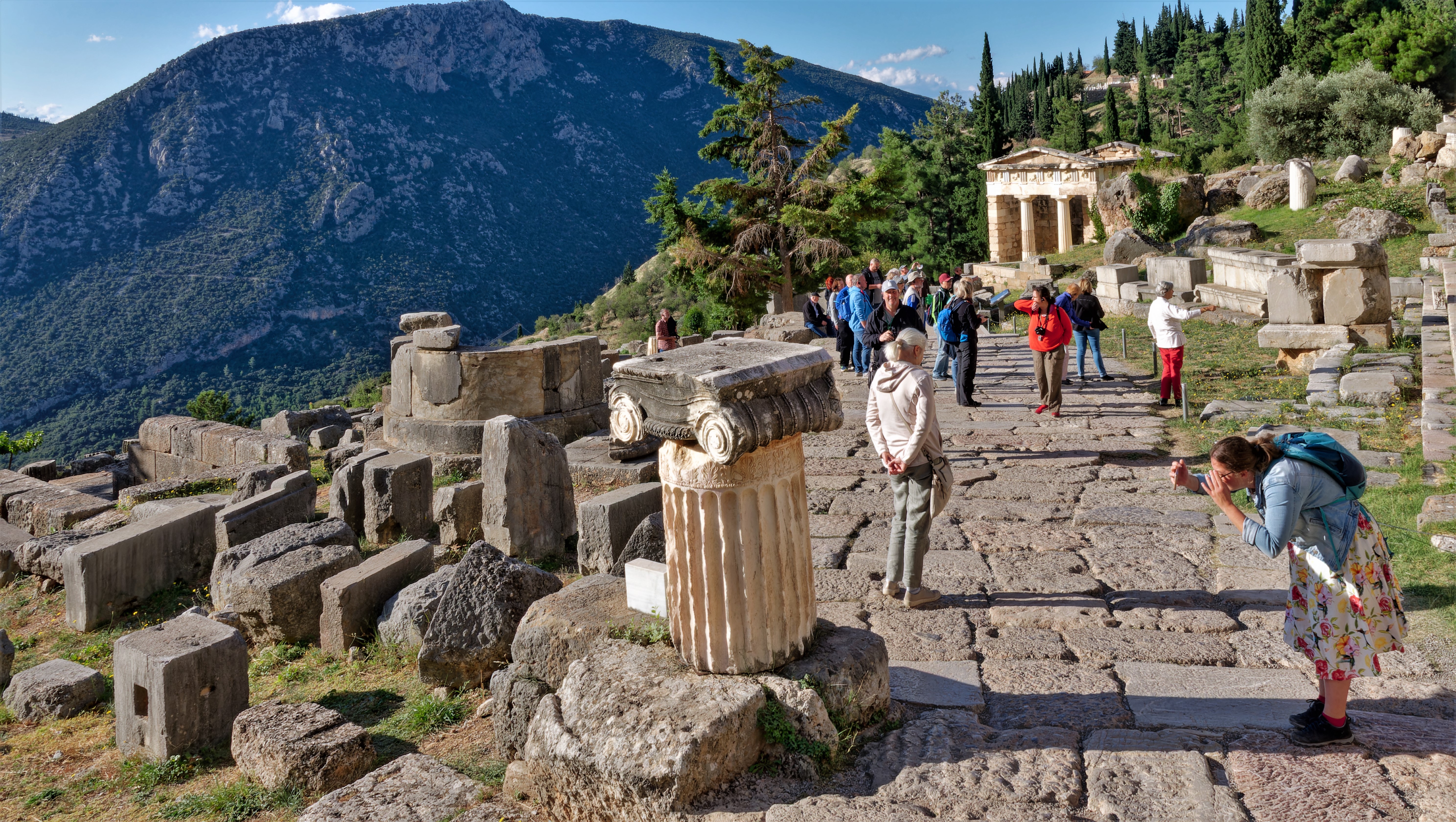
Overview
Delphi was an ancient sacred precinct in central Greece, in legend previously called Pytho 1Delphi — wiki · Wikipedia ↗. It was the seat of Pythia, the major oracle who was consulted about important decisions throughout the ancient classical world 2Delphi — delphi · Reference ↗. The ancient Greeks considered the centre of the world to be in Delphi, marked by the stone monument known as the Omphalos of Delphi 1. Today Delphi is a municipality of Greece as well as a modern town adjacent to the ancient precinct 3Delphi — sec3 · Wikipedia ↗.
Pythia was the title of the high priestess of the Temple of Apollo at Delphi in central Greece 4Delphi — pythia · Reference ↗. During antiquity the temple was home to the famous Greek prophetess the Pythia, or the Oracle of Delphi, making the Temple of Apollo and the sanctuary at Delphi a major Panhellenic religious site as early as the 8th century B.C.E. and a place of great importance at many different periods of ancient Greek history 5Delphi — delphi · Reference ↗. The Pythian priestess emerged as pre-eminent by the end of the 7th century BC and continued to be consulted until the late 4th century AD 4. During this period the Delphic Oracle was the most prestigious and authoritative oracle among the Greeks, and she was among the most powerful women of the classical world 4.
The Temple of Apollo, also known as Apollonion, was a major part of the Panhellenic religious sanctuary located in Central Greece at Delphi 5. There have been several temples built at Delphi throughout the history of the site, though the visible ruins seen in modernity are those of the temple built in the 4th century B.C.E. 5. Ancient tradition refers to a succession of mythical temples on the site 6Delphi — sec7 · Wikipedia ↗.
The most important oracles of Greek antiquity were Pythia, priestess to Apollo at Delphi, and the oracle of Dione and Zeus at Dodona in Epirus 7Delphi — oracle · Reference ↗. Situated in a remote region away from the main Greek poleis, Dodona was considered second only to the Oracle of Delphi in prestige 8Delphi — dodona · Reference ↗. More than 500 supposed oracular statements have survived from various sources referring to the oracle at Delphi 9Delphi — d · Reference ↗.
The term omphalos was the Greek word for "navel" 1. According to the Suda, Delphi took its name from the Delphyne, the she-serpent (drakaina) who lived there and was killed by the god Apollo, in other accounts the male serpent (drakon) Python 1. The name Delphi came from the Oracle of Delphi, which was anciently accepted as a purveyor of truth revealed by the god Apollo 10Delphi — town · Reference ↗.
The site was first briefly excavated in 1880 by Bernard Haussoullier 11Delphi — sec4 · Wikipedia ↗. From the entrance of the upper site, continuing up the slope on the Sacred Way almost to the Temple of Apollo, are a large number of votive statues and numerous so-called treasuries 12Delphi — sec8 · Wikipedia ↗. The Stadium of Delphi is the best preserved ancient stadium in Greece 13Delphi — delphi · Reference ↗.
Delphi is a town in Phocis, Greece, situated immediately west of the archaeological site of the same name 10. It was created as a home for the population of Kastri, which was relocated to allow for the excavation of the site of ancient Delphi 10.
The Pythia was established at the latest in the 8th century BC, though some estimates date the shrine to as early as 1400 BC, and she was widely credited for her prophecies uttered under divine possession (enthusiasmos) by Apollo 4. The word oracle comes from the Latin verb ōrāre, "to speak", and properly refers to the priest or priestess uttering the prediction 7. An oracle is a person or thing considered to provide insight, wise counsel or prophetic predictions, most notably including precognition of the future, inspired by deities 7.
The temple and sanctuary at large were dedicated to one of the major Greek deities, Apollo, the god of archery, music, light, prophecy, the arts, and healing 5. Apollo is one of the Olympian deities in ancient Greek religion and mythology 14Delphi — apollo · Reference ↗. As the patron deity of Delphi (Apollo Pythios), Apollo is an oracular god—the prophetic deity of the Delphic Oracle and the deity of ritual purification 14. Ancient tradition refers to a succession of mythical temples on the site: first one built of olive branches from Tempe, then one built of beeswax and wings by bees, and thirdly one built by Hephaestus and Athena 6.
Dodona in Epirus in northwestern Greece was the oldest Hellenic oracle, possibly dating to the 2nd millennium BCE according to Herodotus 8. The liberation of Argos was mythologized by the Argives themselves in inscriptions that attributed the city's freedom to divine intervention, notably from Apollo, while omitting Demetrius entirely 15Delphi — peloponnese · Reference ↗.
The site was first briefly excavated in 1880 by Bernard Haussoullier on behalf of the French School at Athens, of which he was a sometime member 11. The Stadium of Delphi lies on the highest spot of the Archaeological Site of Delphi 13.
1. Name and Mythic Origins
The term omphalos was the Greek word for "navel"2. According to the Suda, Delphi took its name from the Delphyne, the she-serpent (drakaina) who lived there2.
Ancient tradition refers to a succession of mythical temples on the site: first one built of olive branches from Tempe, then one built of beeswax and wings by bees, and thirdly one built by Hephaestus and Athena6.
The temple and sanctuary at large were dedicated to one of the major Greek deities, Apollo, the god of archery, music, light, prophecy, the arts, and healing5. Apollo is one of the Olympian deities in ancient Greek religion and mythology14. As the patron deity of Delphi (Apollo Pythios), Apollo is an oracular god—the prophetic deity of the Delphic Oracle and the deity of ritual purification14. Medicine and healing are associated with Apollo, whether through the god himself or mediated through his son Asclepius14.
The Pythia was established at the latest in the 8th century BC (though some estimates date the shrine to as early as 1400 BC), and was widely credited for her prophecies uttered under divine possession (enthusiasmos) by Apollo4. The Pythian priestess emerged as pre-eminent by the end of the 7th century BC and continued to be consulted until the late 4th century AD, when the Christian emperor Theodosius I destroyed the Temple of Apollo4.
The word oracle comes from the Latin verb ōrāre, "to speak" and properly refers to the priest or priestess uttering the prediction7. In extended use, oracle may also refer to the site of the oracle, and the oracular utterances themselves, are called khrēsmoí (χρησμοί) in Greek7. There are more than 500 supposed oracular statements which have survived from various sources referring to the oracle at Delphi9.
These were built by many of the Greek city-states to commemorate victories and to thank the oracle for her advice, which was thought to have contributed to those victories12. The liberation of Argos was mythologized by the Argives themselves in inscriptions that attributed the city’s freedom to divine intervention, notably from Apollo, while omitting Demetrius entirely15.
Dodona in Epirus in northwestern Greece was the oldest Hellenic oracle, possibly dating to the 2nd millennium BCE according to Herodotus8. According to Nicholas Hammond, Dodona was an oracle devoted to a Mother Goddess (identified at other sites with Rhea or Gaia, but here called Dione) who was joined and partly supplanted in historical times by the Greek deity Zeus8. These early dates are comparable to the earliest dates at Delphi, suggesting Delphi was appropriated and transformed by Phocians from ancient Krisa3.
The name Delphi derives from the Oracle of Delphi, which was anciently accepted as a purveyor of truth revealed by the god Apollo10. In the account given by the Suda, the place took its name from the Delphyne, the she-serpent (drakaina) who lived there and was killed by the god Apollo, though in other accounts the serpent was the male serpent (drakon) Python1.
2. The Pythia and the Oracle
The Pythia was the title of the high priestess of the Temple of Apollo at Delphi, presiding over the Oracle of Apollo. The Pythia was established at the latest in the 8th century BC (though some estimates date the shrine to as early as 1400 BC), and was widely credited for her prophecies uttered under divine possession (enthusiasmos) by Apollo.4 The Pythian priestess emerged as pre-eminent by the end of the 7th century BC and continued to be consulted until the late 4th century AD, when the Christian emperor Theodosius I destroyed the Temple of Apollo.4 During this period the Delphic Oracle was the most prestigious and authoritative oracle among the Greeks, and she was among the most powerful women of the classical world.4
An oracle is a person or thing considered to provide insight, wise counsel or prophetic predictions, most notably including precognition of the future, inspired by deities.7 The word comes from the Latin verb ōrāre, 'to speak', and properly refers to the priest or priestess uttering the prediction.7 In extended use oracle may also refer to the site of the oracle, and the oracular utterances themselves are called khrēsmoí in Greek.7 The most important oracles of Greek antiquity were Pythia (priestess to Apollo at Delphi) and the oracle of Dione and Zeus at Dodona in Epirus.7
More than 500 supposed oracular statements have survived from various sources referring to the oracle at Delphi; several are ambiguously phrased, apparently in order to show the oracle in a good light regardless of the outcome.9 The following list presents some of the most prominent and historically significant prophecies of Delphi.9
The temple itself housed the prophetess during antiquity, and her presence made the Temple of Apollo and the sanctuary at Delphi a major Panhellenic religious site as early as the 8th century B.C.E. and a place of great importance at many different periods of ancient Greek history.5 As the patron deity of Delphi under the name Apollo Pythios, Apollo is an oracular god, the prophetic deity of the Delphic Oracle and the deity of ritual purification.14 The Pythia was consulted about important decisions throughout the ancient classical world.1
The rival sanctuary at Dodona in Epirus in northwestern Greece was the oldest Hellenic oracle, possibly dating to the 2nd millennium BCE according to Herodotus.8 Situated in a remote region away from the main Greek poleis, it was considered second only to the Oracle of Delphi in prestige.8 The oracle was first under the control of the Thesprotians before it passed into the hands of the Molossians.8 According to Nicholas Hammond, Dodona was an oracle devoted to a Mother Goddess, identified at other sites with Rhea or Gaia but here called Dione, who was joined and partly supplanted in historical times by the Greek deity Zeus.8
The treasures built at the sanctuary by many of the Greek city-states commemorated victories and thanked the oracle for her advice, which was thought to have contributed to those victories.12 The name Delphi itself came from the Oracle of Delphi, which was anciently accepted as a purveyor of truth revealed by the god Apollo.10
3. Temple of Apollo
The Temple of Apollo formed a major part of the Panhellenic religious sanctuary at Delphi. The temple and the sanctuary at large were dedicated to Apollo, the god of archery, music, light, prophecy, the arts, and healing 5. During antiquity the temple was home to the famous Greek prophetess the Pythia, or the Oracle of Delphi, which made the Temple of Apollo and the sanctuary at Delphi a major Panhellenic religious site as early as the 8th century B.C.E. and a place of great importance at many different periods of ancient Greek history 5.
Several temples were built at Delphi throughout the history of the site, though the visible ruins seen in modernity are those of the temple built in the 4th century B.C.E. 5. In 1893 the French Archaeological School removed vast quantities of soil from numerous landslides to reveal both the major buildings and structures of the site 11.
Ancient tradition holds that a succession of mythical temples stood on the site before any historical building: the first made of olive branches brought from Tempe, the second of beeswax and wings fashioned by bees, and the third built by Hephaestus and Athena 6. The ruins visible today belong to a peripteral Doric building 6.
The Pythia was the title of the high priestess of the temple 4, the priestess presiding over the Oracle of Apollo at Delphi 9. She was established at the latest in the 8th century BC, though some estimates date the shrine to as early as 1400 BC, and she was widely credited for prophecies uttered under divine possession, or enthusiasmos, by Apollo 4. The Pythian priestess emerged as pre-eminent by the end of the 7th century BC and continued to be consulted until the late 4th century AD, when the Christian emperor Theodosius I destroyed the Temple of Apollo 4.
Apollo, one of the Olympian deities in ancient Greek religion and mythology 14, was the patron deity of Delphi as Apollo Pythios, an oracular god and the prophetic deity of the Delphic Oracle as well as the deity of ritual purification 14. Medicine and healing are associated with him, whether through the god himself or mediated through his son Asclepius 14; he delivered people from epidemics, yet could also bring ill health and deadly plague with his arrows 14.
Approaching the temple along the Sacred Way from the entrance of the upper site are a large number of votive statues and numerous so-called treasuries 12. These buildings held the offerings made to Apollo, frequently a tithe or tenth of the spoils of a battle 12. The excavation of 1893 also brought to light the sanctuary of Apollo and the temple to Athena, the Athena Pronoia, along with thousands of objects, inscriptions, and sculptures 11.
4. Architecture of the Precinct
From the entrance of the upper site, continuing up the slope on the Sacred Way almost to the Temple of Apollo, are a large number of votive statues and numerous so-called treasuries 12. Among these buildings are the Athenian Treasury, the Boeotian Treasury, the Cnidian Treasury, the Sicyonian Treasury, the Siphnian Treasury, the Theban Treasury, the Treasury of the Acanthians and the Treasury of the Massaliots 16Delphi — sec6 · Wikipedia ↗. These were built by many of the Greek city-states to commemorate victories and to thank the oracle for her advice, which was thought to have contributed to those victories 12.
The precinct's archaeology begins with a brief campaign in 1880 conducted by Bernard Haussoullier on behalf of the French School at Athens, of which he was a sometime member 11. The polygonal wall stands among the features recorded in that early work 11.
Above the treasuries the sanctuary culminates in the Temple of Apollo, also called the Apollonion (Greek: Ἀπολλώνιον, romanized: Apollṓnion), a major part of the Panhellenic religious sanctuary at Delphi 5. Ancient tradition refers to a succession of mythical temples on the site: first one built of olive branches from Tempe, then one built of beeswax and wings by bees, and thirdly one built by Hephaestus and Athena 6. The temple and sanctuary at large were dedicated to Apollo, the god of archery, music, light, prophecy, the arts, and healing 5. As the patron deity of Delphi (Apollo Pythios), Apollo is an oracular god—the prophetic deity of the Delphic Oracle and the deity of ritual purification 14.
The oracle served by this architecture was the Pythia, the title of the high priestess of the Temple of Apollo at Delphi 4, the priestess presiding over the Oracle of Apollo at Delphi 9. Delphi was the seat of Pythia, the major oracle who was consulted about important decisions throughout the ancient classical world 1. The Pythia was established at the latest in the 8th century BC, though some estimates date the shrine to as early as 1400 BC, and was widely credited for her prophecies uttered under divine possession (enthusiasmos) by Apollo 4. More than 500 supposed oracular statements have survived from various sources referring to the oracle at Delphi 9.
The highest point of the Archaeological Site of Delphi is occupied by the Stadium of Delphi 13. Delphi itself, in legend previously called Pytho (Πυθώ), was an ancient sacred precinct in central Greece 1. Today Delphi is a municipality of Greece as well as a modern town adjacent to the ancient precinct 3; the town in Phocis lies immediately west of the archaeological site of the same name 10, and was created as a home for the population of Kastri, which was relocated to allow for the excavation of the site of ancient Delphi 10.
5. Excavation and Archaeology
British and French travelers who visited the site came to suspect that it was ancient Delphi. The first brief excavation was undertaken in 1880 by Bernard Haussoullier on behalf of the French School at Athens, of which he was a sometime member11.
In 1893 the French Archaeological School removed vast quantities of soil from numerous landslides to reveal both the major buildings and structures of the sanctuary of Apollo and of the temple to Athena, the Athena Pronoia, along with thousands of objects, inscriptions, and sculptures11.
During the Great Excavation architectural members from a fifth-century Christian basilica were discovered that date to when Delphi was a bishopric11.
6. Delphi and the Delphic Region
Delphi is a town in Phocis, Greece, situated immediately west of the archaeological site of the same name 10. The name Delphi came from the Oracle of Delphi, which was anciently accepted as a purveyor of truth revealed by the god Apollo 10. The importance of the twin locations grew to the point where Delphi has also been made the name of the modern-day municipality, which includes the communities of the Pleistos valley system as far south as the Gulf of Corinth 10.
In legend the place was previously called Pytho 1. The Suda derives the name Delphi from Delphyne, the she-serpent (drakaina) said to have lived there 1. The ancient Greeks held the centre of the world to lie at Delphi, marked by the stone monument known as the Omphalos of Delphi 1; omphalos was the Greek word for "navel" 1.
The Temple of Apollo, also called the Apollonion, was a major part of the Panhellenic religious sanctuary at Delphi 5. In antiquity the temple housed the prophetess known as the Pythia, or the Oracle of Delphi 5; Pythia was the title of the high priestess presiding over the Oracle of Apollo there 4. As Apollo Pythios, the god was the patron deity of Delphi and an oracular god, the prophetic deity of the Delphic Oracle and the deity of ritual purification 14. The Delphic Oracle was the most prestigious and authoritative oracle among the Greeks, and the Pythia was among the most powerful women of the classical world 4. More than 500 supposed oracular statements have survived from various sources referring to the oracle at Delphi 9.
Several temples were built at Delphi over the history of the site, though the ruins visible in modernity are those of the temple built in the 4th century B.C.E. 5. Ancient tradition refers to a succession of mythical temples: first one built of olive branches from Tempe, then one built of beeswax and wings by bees, and thirdly one built by Hephaestus and Athena 6.
The site was first briefly excavated in 1880 by Bernard Haussoullier on behalf of the French School at Athens, of which he was a sometime member 11. British and French travelers visiting the site had suspected it was ancient Delphi 11. The modern town was created as a home for the population of Kastri, which was relocated to allow for the excavation of the site of ancient Delphi 10.
From the entrance of the upper site, continuing up the slope on the Sacred Way almost to the Temple of Apollo, are a large number of votive statues and numerous so-called treasuries 12. The Stadium of Delphi lies on the highest spot of the Archaeological Site of Delphi, overlooking the sanctuary of Apollo with a view to the Delphic landscape 13.
7. Relations with Other Sanctuaries
Dodona in Epirus in northwestern Greece was the oldest Hellenic oracle, possibly dating to the 2nd millennium BCE according to Herodotus 8. Situated in a remote region away from the main Greek poleis, it was considered second only to the Oracle of Delphi in prestige 8. The oracle was first under the control of the Thesprotians before it passed into the hands of the Molossians 8. According to Nicholas Hammond, Dodona was an oracle devoted to a Mother Goddess (identified at other sites with Rhea or Gaia, but here called Dione) who was joined and partly supplanted in historical times by the Greek deity Zeus 8.
The liberation of Argos was mythologized by the Argives themselves in inscriptions that attributed the city's freedom to divine intervention, notably from Apollo, while omitting Demetrius entirely 15.
Delphi itself was an ancient sacred precinct in central Greece, called Pytho in legend 1. Its sanctuary was dedicated to Apollo, one of the Olympian deities of Greek religion and mythology, and honoured there as Apollo Pythios, patron of the site and prophetic deity of the Delphic Oracle 14. The Temple of Apollo, also known as the Apollonion, formed a major part of the Panhellenic sanctuary 5. Ancient tradition records a succession of mythical temples on the site: one built of olive branches from Tempe, a second of beeswax and wings made by bees, and a third built by Hephaestus and Athena 6.
The oracle's mechanism rested on the Pythia, the high priestess who presided over the Oracle of Apollo and served as its major oracle, consulted about important decisions throughout the ancient classical world 4. She was established at the latest in the 8th century BC, though some estimates date the shrine to as early as 1400 BC, and was widely credited for prophecies uttered under divine possession, or enthousiasmos, by Apollo 4. The word oracle derives from the Latin verb ōrāre, meaning to speak, and properly refers to the priest or priestess uttering the prediction 7. More than 500 supposed oracular statements have survived from various sources referring to the oracle at Delphi 9.
The site was first briefly excavated in 1880 by Bernard Haussoullier on behalf of the French School at Athens, of which he was a sometime member 11. From the entrance of the upper site, continuing up the slope on the Sacred Way almost to the Temple of Apollo, stand a large number of votive statues and numerous so-called treasuries 12. The Stadium of Delphi lies on the highest spot of the archaeological site 13.
Delphi today is a municipality of Greece as well as a modern town adjacent to the ancient precinct 3. The town stands in Phocis, immediately west of the archaeological site of the same name, and was created as a home for the population of Kastri, which was relocated to allow for the excavation of ancient Delphi 10.
8. Key dates
- 1400 BCEThe Pythia was established at the latest in the 8th century BC (thoughThe Pythia was established at the latest in the 8th century BC (though some estimates date the shrine to as early as 1400 BC), and was widely credited for her prophecies uttered under divine possession (enthusiasmos) by Apollo.
- 1400The Pythia was established at the latest in the 8th century BC (though some es…The Pythia was established at the latest in the 8th century BC (though some estimates date the shrine to as early as 1400 BC), and was widely credited for her prophecies uttered under divine possession (enthusiasmos) by Apollo.
- 1880Archaeology of the precinct Main article: Excavations at Delphi The polygonal…Archaeology of the precinct Main article: Excavations at Delphi The polygonal wall, 1902 The site was first briefly excavated in 1880 by Bernard Haussoullier on behalf of the French School at Athens , of which he was a sometime member.
- 1893In 1893, the French Archaeological School removed vast quantities of soil from…In 1893, the French Archaeological School removed vast quantities of soil from numerous landslides to reveal both the major buildings and structures of the sanctuary of Apollo and of the temple to Athena, the Athena Pronoia along with thousands of objects, inscriptions, and sculp
9. Frequently asked questions
What does the name Delphi mean, and where does the word omphalos come from?
Why was the modern town of Delphi created?
It was created as a home for the population of Kastri, which was relocated to allow for the excavation of the site of ancient Delphi 10.
Where is the Stadium of Delphi, and what survives of it?
What did the treasuries at Delphi hold?
These buildings held the offerings made to Apollo; these were frequently a "tithe" or tenth of the spoils of a battle 12.
What kind of building are the visible ruins of the Temple of Apollo?
The ruins of the Temple of Apollo that are visible today date from the fourth century BC, and are of a peripteral Doric building 6.
How did Apollo's role extend to sickness and health?
Apollo delivered people from epidemics, yet he is also a god who could bring ill health and deadly plague with his arrows 14.
References (16)
- 1Delphi — wiki — Wikipedia Web↩View source
- 2Delphi — delphi — Reference Web↩View source
- 3Delphi — sec3 — Wikipedia Web↩View source
- 4Delphi — pythia — Reference Web↩View source
- 5Delphi — delphi — Reference Web↩View source
- 6Delphi — sec7 — Wikipedia Web↩View source
- 7Delphi — oracle — Reference Web↩View source
- 8Delphi — dodona — Reference Web↩View source
- 9Delphi — d — Reference Web↩View source
- 10Delphi — town — Reference Web↩View source
- 11Delphi — sec4 — Wikipedia Web↩View source
- 12Delphi — sec8 — Wikipedia Web↩View source
- 13Delphi — delphi — Reference Web↩View source
- 14Delphi — apollo — Reference Web↩View source
- 15Delphi — peloponnese — Reference Web↩View source
- 16Delphi — sec6 — Wikipedia Web↩View source