Saqqara
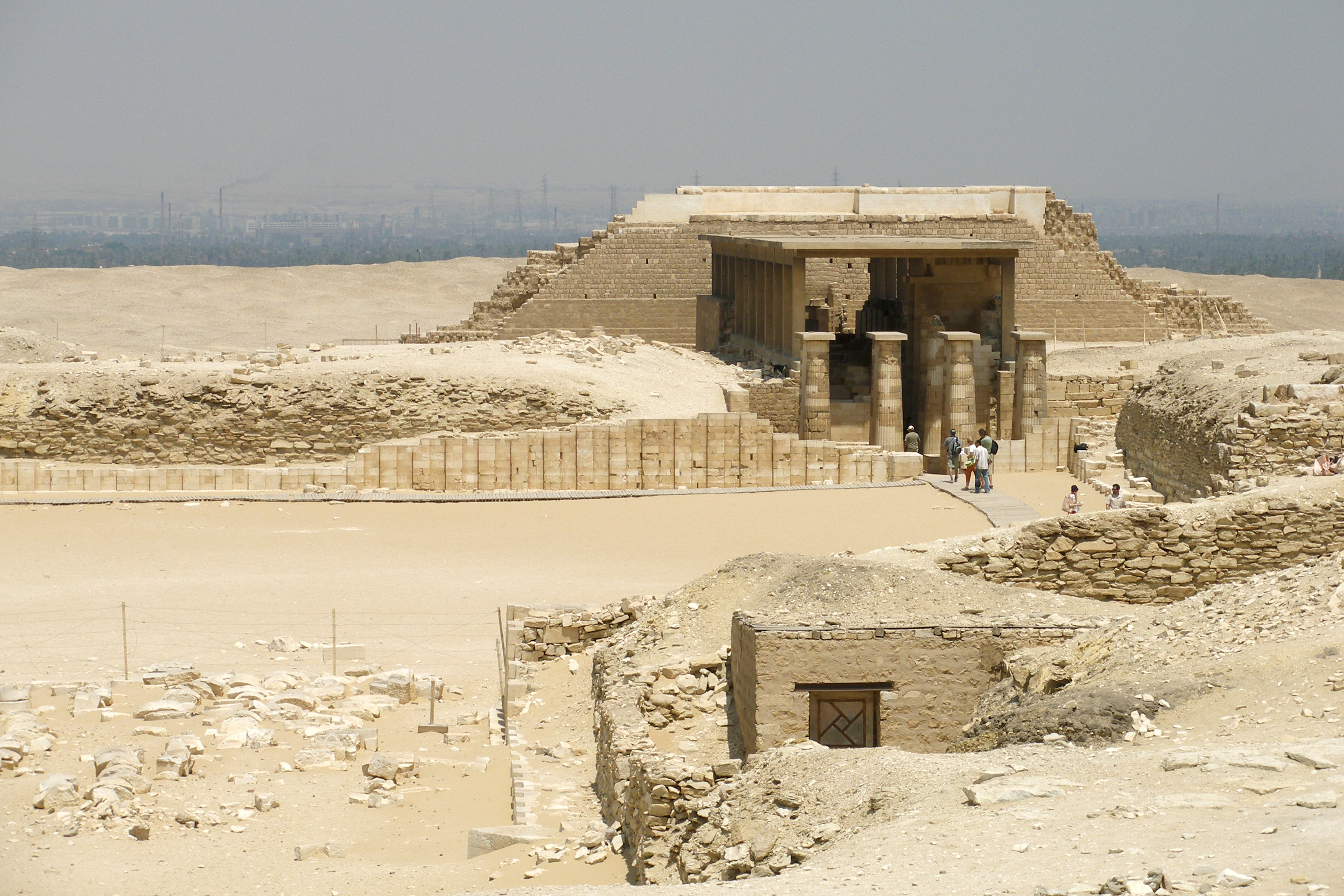
The step pyramid that started the entire form.
In this article
Overview
Saqqara is a necropolis containing numerous pyramids, among them the Pyramid of Djoser, sometimes referred to as the Step Pyramid, together with a number of mastaba tombs 1Saqqara — wiki · Wikipedia ↗. It lies some 30 km (19 mi) south of modern-day Cairo and covers an area of around 7 by 1.5 km (4.3 by 0.9 mi) 1. North of the site lies the Abusir pyramid complex and to its south the Dahshur pyramid complex, which together with the Giza Pyramid complex to the far north comprise the Pyramid Fields of Memphis, or the Memphite Necropolis, designated as a World Heritage Site by UNESCO in 1979 1.
The pyramid fields stretch across a desert plateau for more than 30 kilometres (19 mi) on the west of the site, and include the famous Pyramids of Giza; Memphis and its necropolis have been listed as a World Heritage Site 2Saqqara — egypt · Reference ↗. Saqqara contains the oldest complete stone building complex known in history, the Pyramid of Djoser, built during the Third Dynasty 1. Imhotep is credited with being the first Egyptian to build a monumental structure out of stone: Pharaoh Djoser's step pyramid located at Saqqara, which was built during the 3rd Dynasty 3Saqqara — museum · Reference ↗.
The Pyramid of Djoser, sometimes called the Step Pyramid of Djoser or Step Pyramid of Horus Netjerikhet, is an archaeological site in the Saqqara necropolis, northwest of the ruins of Memphis 4Saqqara — djoser · Reference ↗. The pyramid originally stood 62.5 m (205 ft; 119 cu) tall, with a base of 109 m × 121 m (358 ft × 397 ft; 208 cu × 231 cu) and was clad in polished white limestone 4. As of 1997 the step pyramid, or proto-pyramid, was considered to be the earliest large-scale cut stone construction made by man, although the nearby enclosure wall "Gisr el-Mudir" is suggested by some Egyptologists to predate the complex, and the South American pyramids at Caral are contemporary 4.
Djoser's funerary complex, built by the royal architect Imhotep, further comprises a large number of dummy buildings and a secondary mastaba, the so-called 'Southern Tomb' 5Saqqara — sec1 · Wikipedia ↗. The complex of Djoser of the Third Dynasty, located in the ancient necropolis at Saqqara, would then be the royal funerary chamber, housing all the elements necessary to royalty: temples, shrines, ceremonial courts, palaces, and barracks 2. The earliest burials of nobles can be traced back to the First Dynasty, at the northern side of the Saqqara plateau 5.
Another sixteen Egyptian kings built pyramids at Saqqara, which are now in various states of preservation 1. During the Old Kingdom it was customary for courtiers to be buried in mastaba tombs close to the pyramid of their king 6Saqqara — sec4 · Wikipedia ↗. Clusters of private tombs were thus formed in Saqqara around the pyramid complexes of Unas and Teti 6.
Userkaf's pyramid is located in the pyramid field at Saqqara, on the north-east of the step pyramid of Djoser 7Saqqara — userkaf · Reference ↗. Constructed in dressed stone with a core of rubble, the pyramid is now ruined and resembles a conical hill in the sands of Saqqara 7. Userkaf's pyramid complex could be a manifestation of the profound changes in the ideology of kingship that took place between the 4th and 5th dynasties 7.
Pepi I sited his pyramid complex in South Saqqara, approximately 2.4 km (1.5 mi) north of Djedkare Isesi's pyramid 8Saqqara — i · Reference ↗. It is unclear why he relocated to South Saqqara, but perhaps he had moved the royal palace south and away from the city, or no viable sites remained in North and Central Saqqara after Teti built his pyramid there 8. As in the pyramids of his predecessors, Pepi I's substructure was filled with vertical columns of hieroglyphic texts: Pyramid Texts 8.
The Imhotep Museum is an archaeological museum located at the foot of the Saqqara necropolis complex, near Memphis in Lower Egypt 3. Among the Early Dynastic monuments of the site are the tomb of king Hotepsekhemwy and Nebra, the tomb of king Nynetjer, the Buried Pyramid, the funerary complex of king Sekhemkhet, and Gisr el-Mudir, the funerary complex of a Second Dynasty king, possibly Nynetjer or Khasekhemwy 5. The wooden statue of the scribe Kaaper, of the 4th or 5th dynasty of the Old Kingdom, comes from Saqqara 5.
The Pyramid of Djoser was built in the 27th century BC during the Third Dynasty for the burial of Pharaoh Djoser 4. The pyramid is the central feature of a vast mortuary complex in an enormous courtyard surrounded by ceremonial structures and decoration 4.
The first royal burials at Saqqara, comprising underground galleries, date to the early Second Dynasty reigns of Hotepsekhemwy, Raneb and Nynetjer 5. Khasekhemwy may nonetheless also have built a funerary monument at Saqqara consisting of a large rectangular enclosure, known as Gisr el-Mudir, although this enclosure could also belong to Nynetjer 5.
During the second half of the Old Kingdom, under the Fifth and Sixth Dynasties, Saqqara was again the royal burial ground 6. The wooden statue of the scribe Kaaper, of the 4th or 5th dynasty of the Old Kingdom, comes from Saqqara 6.
It was in Pepi I's pyramid that the Pyramid Texts were initially discovered in 1880 by Gaston Maspero, though they originated in the pyramid of Unas 8. According to a text of the First Intermediate Period, the site was known as Djed-Sut ("everlasting places"), which is the name of the pyramid of Teti 2. Some scholars maintain that this name was that of an area that contained a sacred tree, the western district of the city that lay between the great Temple of Ptah and the necropolis at Saqqara 2.
Userkaf's pyramid, ruined and resembling a conical hill in the sands, is known locally as El-Haram el-Maharbish, the "Heap of Stone", and was recognized as a royal pyramid by western archaeologists in the 19th century 7.
The Imhotep Museum, named for the ancient Egyptian architect Imhotep, was opened on April 26, 2006 by Suzanne Mubarak and Bernadette Chirac 3.
1. Location and Setting
The name Memphis is the Greek adaptation of the name given to the pyramid of Pepi I, which lies west of the city2. Some scholars maintain that this name belonged to an area containing a sacred tree, the western district of the city that lay between the great Temple of Ptah and the necropolis at Saqqara2. According to a text of the First Intermediate Period the place was known as Djed-Sut, meaning "everlasting places", which is the name of the pyramid of Teti2.
The Early Dynastic monuments of the site include the tomb of king Hotepsekhemwy and Nebra, the tomb of king Nynetjer, the Buried Pyramid, the funerary complex of king Sekhemkhet, and the Gisr el-Mudir5. The Gisr el-Mudir probably inspired the monumental enclosure wall around the Step Pyramid complex5.
The Step Pyramid is the central feature of a vast mortuary complex set in an enormous courtyard surrounded by ceremonial structures and decoration4. The pyramid originally stood 62.5 m (205 ft; 119 cu) tall, with a base of 109 m × 121 m (358 ft × 397 ft; 208 cu × 231 cu) and was clad in polished white limestone4. It went through several revisions and redevelopments of the original plan4. In March 2020 the pyramid was reopened for visitors after a 14-year restoration4.
Userkaf's pyramid is part of a larger mortuary complex comprising a mortuary temple, an offering chapel and a cult pyramid, as well as a separate pyramid and mortuary temple for Userkaf's wife, queen Neferhetepes7. The mortuary temple and cult pyramid are today completely ruined and difficult to recognize7. The pyramid of the queen is no more than a mound of rubble, with its funerary chamber exposed by stone robbers7. For this reason the king's pyramid is known locally as El-Haram el-Maharbish, the "Heap of Stone", and was recognized as a royal pyramid by western archaeologists in the 19th century7. The complex could be a manifestation of the profound changes in the ideology of kingship that took place between the 4th and 5th dynasties, changes that may have started during the reign of Userkaf's likely immediate predecessor, Shepseskaf7.
Unas, the last ruler of the Fifth Dynasty, was the first king to adorn the chambers in his pyramid with Pyramid Texts6. It was in Pepi I's pyramid that these texts were initially discovered in 1880 by Gaston Maspero, though they originated in the pyramid of Unas8. The pyramid and substructure of Pepi I replicated the basic design of Djedkare Isesi's and is proportionally very similar8. Excavation work at the causeway has only extended out to a few metres, and the valley temple and pyramid town remain unexcavated8.
The site museum project at Saqqara was conceived of in 1990, but it was not launched until 1997 after the authorities had identified a suitable location on the plateau where the museum could sit unobtrusively and not disturb the natural landscape3. The museum has six large halls in which one may admire masterpieces from Saqqara, such as a Ptolemaic mummy discovered by Zahi Hawass during the excavation of the Pyramid of Teti complex and a large double statue that was found near the causeway of the Unas complex3.
Saqqara lies some 30 km (19 mi) south of modern-day Cairo and covers an area of around 7 by 1.5 km (4.3 by 0.9 mi)1. The site holds numerous pyramids, among them the Pyramid of Djoser, sometimes referred to as the Step Pyramid, together with a number of mastaba tombs1. The Step Pyramid itself stands in the Saqqara necropolis, northwest of the ruins of Memphis4. It was built in the 27th century BC during the Third Dynasty for the burial of Pharaoh Djoser4. Imhotep is credited with being the first Egyptian to build a monumental structure out of stone, namely that step pyramid3.
Memphis and its necropolis have been listed as a World Heritage Site, together with the pyramid fields that stretch across a desert plateau for more than 30 kilometres (19 mi) on the city's west, including the famous Pyramids of Giza2. The earliest burials of nobles at the site can be traced back to the First Dynasty, at the northern side of the Saqqara plateau5. The first royal burials, comprising underground galleries, date to the early Second Dynasty reigns of Hotepsekhemwy, Raneb and Nynetjer5. Khasekhemwy may nonetheless also have built a funerary monument at Saqqara consisting of a large rectangular enclosure known as Gisr el-Mudir, although this enclosure could also belong to Nynetjer5. During the second half of the Old Kingdom, under the Fifth and Sixth Dynasties, Saqqara was again the royal burial ground6.
Userkaf's pyramid is located in the pyramid field at Saqqara, on the north-east of the step pyramid of Djoser7. Constructed in dressed stone with a core of rubble, it is now ruined and resembles a conical hill in the sands of Saqqara7. Pepi I sited his pyramid complex in South Saqqara, approximately 2.4 km (1.5 mi) north of Djedkare Isesi's pyramid8. As in the pyramids of his predecessors, Pepi I's substructure was filled with vertical columns of hieroglyphic texts, the Pyramid Texts8.
The Imhotep Museum is an archaeological museum located at the foot of the Saqqara necropolis complex, near Memphis in Lower Egypt3. Named for the ancient Egyptian architect Imhotep, it was opened on April 26, 2006 by Suzanne Mubarak and Bernadette Chirac3.
2. Early Dynastic Burials
The earliest burials of nobles at Saqqara are traced to the First Dynasty and lie on the northern side of the plateau. Royal interment on the site began with underground galleries rather than with built monuments, and these galleries belong to the early Second Dynasty, under the reigns of Hotepsekhemwy, Raneb and Nynetjer 5. The same sequence of early royal burials, comprising underground galleries, is dated to those three reigns 9Saqqara — sec2 · Wikipedia ↗.
A later funerary monument at Saqqara may also be attributed to Khasekhemwy: a large rectangular enclosure known as Gisr el-Mudir 5. The attribution is not secure, since the enclosure could equally belong to Nynetjer 9.
The Gisr el-Mudir enclosure has been considered a possible inspiration for the enclosure wall of the Step Pyramid complex. That complex was built in the 27th century BC during the Third Dynasty for the burial of Pharaoh Djoser 4. The earliest signs of the ceremonies associated with such monuments were found in the chambers of Djoser 2.
Royal burial at Saqqara was not continuous. During the second half of the Old Kingdom, under the Fifth and Sixth Dynasties, Saqqara was again the royal burial ground 6. The site also yielded the Old Kingdom wooden statue of the scribe Kaaper, of the 4th or 5th dynasty 6.
Among the Early Dynastic monuments of the site are the tombs of king Hotepsekhemwy and Nebra and the tomb of king Nynetjer 5. The Buried Pyramid, the funerary complex of king Sekhemkhet, also belongs to this group 5. Gisr el-Mudir is recorded as the funerary complex of a Second Dynasty king, possibly Nynetjer or Khasekhemwy 5.
The Step Pyramid is likewise listed as the funerary complex of king Djoser 5. The wooden statue of the scribe Kaaper, dated to the 4th or 5th dynasty of the Old Kingdom, comes from Saqqara 5.
3. The Pyramid of Djoser
The site museum project at Saqqara was conceived of in 1990 but was not launched until 1997 after the authorities had identified a suitable location3. The museum was named for the ancient Egyptian architect Imhotep and was opened on April 26 2006 by Suzanne Mubarak and Bernadette Chirac3. Constructed as part of the strategic site management program of the Supreme Council of Antiquities the air-conditioned Imhotep Museum provides a more secure storage space than the traditional storehouses located at archaeological sites3.
The Pyramid of Djoser, also called the Step Pyramid of Djoser or the Step Pyramid of Horus Netjerikhet, stands in the Saqqara necropolis northwest of the ruins of Memphis4. It was built in the 27th century BC during the Third Dynasty for the burial of Pharaoh Djoser4. Imhotep is credited with being the first Egyptian to build a monumental structure out of stone, and that structure was Djoser's step pyramid at Saqqara3. Saqqara contains the oldest complete stone building complex known in history, the Pyramid of Djoser, built during the Third Dynasty1.
The pyramid originally stood 62.5 m (205 ft; 119 cu) tall, with a base of 109 m × 121 m (358 ft × 397 ft; 208 cu × 231 cu) and was clad in polished wh4. It went through several revisions and redevelopments of the original plan4. The pyramid is the central feature of a vast mortuary complex in an enormous courtyard surrounded by ceremonial structures and decoration4. As of 1997 the step pyramid (or proto-pyramid) was considered to be the earliest large-scale cut stone construction made by man, although the nearby 4.
In March 2020 the pyramid was reopened for visitors after a 14-year restoration4. Saqqara contains numerous pyramids, including the Pyramid of Djoser, sometimes referred to as the Step Pyramid, and a number of mastaba tombs1. The earliest burials of nobles can be traced back to the First Dynasty, at the northern side of the Saqqara plateau5. Among the Early Dynastic monuments are the tomb of king Hotepsekhemwy and Nebra, the tomb of king Nynetjer, the Buried Pyramid, the funerary complex of king Sekhemkhet, and the Gisr el-Mudir, a funerary complex of a Second Dynasty king, possibly Nynetjer or Khasekhemwy5.
North of the Saqqara site lies the Abusir pyramid complex, and to its south lies the Dahshur pyramid complex, which together with the Giza Pyramid com1. Along with the pyramid fields that stretch across a desert plateau for more than 30 kilometres (19 mi) on its west, including the famous Pyramids of G2. Memphis and its necropolis have been listed as a World Heritage Site2.
4. Later Old Kingdom Royal Burials
During the second half of the Old Kingdom, under the Fifth and Sixth Dynasties, Saqqara was again the royal burial ground6. The return of royal burials to the site marks the later phase of its use as a necropolis for kings. This renewed role followed the earlier prominence of the site as a royal cemetery.
Unas was the first king to inscribe the Pyramid Texts in his burial chambers8. These texts were initially discovered in the pyramid of Pepi I in 1880 by Gaston Maspero, though they originated in the pyramid of Unas8. The find at Pepi I's monument thus brought to light a composition first attested in the chambers of his predecessor.
Pepi I sited his pyramid complex in South Saqqara, approximately 2.4 km (1.5 mi) north of Djedkare Isesi's pyramid8. The complex replicated the design of that earlier monument8. The reason for the relocation remains uncertain8.
The earliest royal burials at Saqqara, comprising underground galleries, date to the early Second Dynasty reigns of Hotepsekhemwy, Raneb and Nynetjer5. The earliest burials of nobles can be traced back to the First Dynasty, at the northern side of the Saqqara plateau5. During the Old Kingdom, it was customary for courtiers to be buried in mastaba tombs close to the pyramid of their king6.
Saqqara contains the oldest complete stone building complex known in history, the Pyramid of Djoser, built during the Third Dynasty1. Djoser's funerary complex, built by the royal architect Imhotep, further comprises a large number of dummy buildings and a secondary mastaba, the so-called 'Southern Tomb'5. The complex of Djoser of the Third Dynasty, located in the ancient necropolis at Saqqara, would then be the royal funerary chamber, housing all the elements necessary to royalty: temples, shrines, ceremonial courts, palaces, and barracks2.
Among the monuments of the site are the Tomb of king Hotepsekhemwy and Nebra, the Tomb of king Nynetjer, the Buried Pyramid, the funerary complex of king Sekhemkhet, and the Gisr el-Mudir, a funerary complex of a Second Dynasty king, possibly Nynetjer or Khasekhemwy5. The Step Pyramid is the funerary complex of king Djoser5. A wooden statue of the scribe Kaaper, of the 4th or 5th dynasty of the Old Kingdom, comes from Saqqara6. A view of the necropolis takes in Djoser's step pyramid at the centre, the Pyramid of Unas on the left and the Pyramid of Userkaf on the right5.
The Pyramid of Userkaf is known locally as El-Haram el-Maharbish, the "Heap of Stone", and was recognized as a royal pyramid by western archaeologists in the 19th century7.
It is unclear why Pepi I relocated to South Saqqara, but perhaps he had moved the royal palace south and away from the city, or no viable sites remained in North and Central Saqqara after Teti built his pyramid there8.
5. The Pyramid of Userkaf
The pyramid of Userkaf stands northeast of Djoser's step pyramid within the sands of Saqqara. Constructed in dressed stone with a core of rubble, it is now ruined and resembles a conical hill. For this reason it is known locally as El-Haram el-Maharbish, the "Heap of Stone", and it was recognized as a royal pyramid by western archaeologists in the 19th century.7
The pyramid is part of a larger mortuary complex comprising a mortuary temple, an offering chapel and a cult pyramid, as well as a separate pyramid and mortuary temple for Userkaf's wife, queen Neferhetepes.7
The pyramid's mortuary temple and cult pyramid are today completely ruined and difficult to recognize.7 Because of this configuration the complex may be read as a manifestation of the profound changes in the ideology of kingship that took place between the 4th and 5th dynasties, changes that may have begun during the reign of Userkaf's likely immediate predecessor, Shepseskaf.7
6. Private Tombs and the Necropolis Landscape
The burial landscape of Saqqara was shaped in part by an Old Kingdom custom: courtiers were laid to rest in mastabas near the pyramid of the king they had served. Over time this practice produced clusters of private tombs formed in Saqqara around the pyramid complexes of Unas and Teti6.
The material record of these burials includes the wooden statue of the scribe Kaaper, dated to the 4th or 5th dynasty of the Old Kingdom and recovered from Saqqara6.
The earliest burials of nobles at the site can be traced back to the First Dynasty, on the northern side of the Saqqara plateau5. Saqqara as a whole contains numerous pyramids, among them the Pyramid of Djoser, sometimes referred to as the Step Pyramid, together with a number of mastaba tombs1.
The Pyramid of Djoser, sometimes called the Step Pyramid of Djoser or Step Pyramid of Horus Netjerikhet, is an archaeological site in the Saqqara necropolis, northwest of the ruins of Memphis4. The complex of Djoser of the Third Dynasty, located in the ancient necropolis at Saqqara, would then be the royal funerary chamber, housing all the elements necessary to royalty: temples, shrines, ceremonial courts, palaces, and barracks2.
North of the Saqqara site lies the Abusir pyramid complex, and to its south lies the Dahshur pyramid complex, which together with the Giza Pyramid complex to the far north comprise the Pyramid Fields of Memphis, or the Memphite Necropolis, designated as a World Heritage Site by UNESCO in 19791. Along with the pyramid fields that stretch across a desert plateau for more than 30 kilometres (19 mi) on its west, including the Pyramids of Giza, Memphis and its necropolis have been listed as a World Heritage Site2.
The Imhotep Museum is an archaeological museum located at the foot of the Saqqara necropolis complex, near Memphis in Lower Egypt3. The site museum project at Saqqara was conceived of in 1990, but it was not launched until 1997 after the authorities had identified a suitable location on the plateau where the museum could sit unobtrusively and not disturb the natural landscape3.
On the question of the name itself, some scholars maintain that it was that of an area containing a sacred tree, the western district of the city that lay between the great Temple of Ptah and the necropolis at Saqqara2.
7. The Imhotep Museum
The Imhotep Museum serves the Saqqara necropolis as its principal site museum. The project was conceived of in 1990 but was not launched until 1997 after the authorities had identified a suitable location on the plateau where the museum could sit unobtrusively and not disturb the natural landscape 3. It was constructed as part of the strategic site management program of the Supreme Council of Antiquities 3. The building is air-conditioned and provides a more secure storage space than the traditional storehouses located at archaeological sites 3.
The museum holds six large halls in which visitors may admire masterpieces from Saqqara 3. Among them is a Ptolemaic mummy discovered by Zahi Hawass during the excavation of the Pyramid of Teti complex 3. A large double statue found near the causeway of the Unas complex is likewise displayed 3.
The museum stands at the foot of the Saqqara necropolis complex, near Memphis in Lower Egypt 3. It takes its name from the ancient Egyptian architect Imhotep 3. Imhotep is credited with being the first Egyptian to build a monumental structure out of stone: Pharaoh Djoser's step pyramid at Saqqara, raised during the 3rd Dynasty 3. Djoser's funerary complex, built by the royal architect, further comprises a large number of dummy buildings and a secondary mastaba known as the 'Southern Tomb' 5.
The museum was opened on April 26, 2006 by Suzanne Mubarak and Bernadette Chirac 3.
8. Key Monuments
The monuments of Saqqara span the earliest dynastic burials and the great royal funerary complexes of the Old Kingdom. The site preserves tombs of Early Dynastic kings, the enclosure of a Second Dynasty ruler, and the pyramid complex of Djoser, alongside later royal pyramids.5
| Monument | Associated king or figure | Period/dynasty | Notes |
|---|---|---|---|
| Tomb of Hotepsekhemwy and Nebra | Hotepsekhemwy and Nebra | Early Dynastic | Royal tomb at the site |
| Tomb of Nynetjer | Nynetjer | Early Dynastic | Royal tomb at the site |
| Buried Pyramid | Sekhemkhet | Early Dynastic | Funerary complex of the king |
| Gisr el-Mudir | A Second Dynasty king, possibly Nynetjer or Khasekhemwy | Second Dynasty | Funerary complex |
| Step Pyramid complex | Djoser | Early Dynastic | Funerary complex of the king |
| Pyramid of Unas | Unas | Old Kingdom | Royal pyramid |
| Pyramid of Teti | Teti | Old Kingdom | Royal pyramid |
| Pyramid of Pepi I | Pepi I | Old Kingdom | Royal pyramid |
| Pyramid of Userkaf | Userkaf | Old Kingdom | Royal pyramid |
The earliest burials of nobles at the site can be traced back to the First Dynasty, on the northern side of the Saqqara plateau.5
Among the Early Dynastic monuments are the tomb of king Hotepsekhemwy and Nebra and the tomb of king Nynetjer.5 The Buried Pyramid is the funerary complex of king Sekhemkhet.5 Gisr el-Mudir is the funerary complex of a Second Dynasty king, possibly Nynetjer or Khasekhemwy.5
The Step Pyramid is the funerary complex of king Djoser.5 A view of the Saqqara necropolis shows Djoser's step pyramid at the centre, with the Pyramid of Unas to the left and the Pyramid of Userkaf to the right.5
The site also holds the wooden statue of the scribe Kaaper, dated to the 4th or 5th dynasty of the Old Kingdom.5
The first royal burials at the site, comprising underground galleries, date to the early Second Dynasty reigns of Hotepsekhemwy, Raneb and Nynetjer.5 Khasekhemwy may nonetheless also have built a funerary monument at Saqqara consisting of a large rectangular enclosure, known as Gisr el-Mudir, although this enclosure could also belong to Nynetjer.5
The Pyramid of Djoser, sometimes called the Step Pyramid of Djoser or Step Pyramid of Horus Netjerikhet, is an archaeological site in the Saqqara necropolis, Egypt, northwest of the ruins of Memphis.4 It was built in the 27th century BC during the Third Dynasty for the burial of Pharaoh Djoser.4 The pyramid is the central feature of a vast mortuary complex in an enormous courtyard surrounded by ceremonial structures and decoration.4
The Pyramid of Userkaf is located in the pyramid field at Saqqara, on the north-east of the step pyramid of Djoser.7 Constructed in dressed stone with a core of rubble, the pyramid is now ruined and resembles a conical hill in the sands of Saqqara.7 For this reason it is known locally as El-Haram el-Maharbish, the "Heap of Stone", and was recognized as a royal pyramid by western archaeologists in the 19th century.7
During the second half of the Old Kingdom, under the Fifth and Sixth Dynasties, Saqqara was again the royal burial ground.6 Pepi I sited his pyramid complex in South Saqqara, approximately 2.4 km (1.5 mi) north of Djedkare Isesi's pyramid.8 As in the pyramids of his predecessors, Pepi I's substructure was filled with vertical columns of hieroglyphic texts: Pyramid Texts.8 It was in Pepi I's pyramid that these texts were initially discovered in 1880 by Gaston Maspero, though they originated in the pyramid of Unas.8
Saqqara contains numerous pyramids, including the Pyramid of Djoser, sometimes referred to as the Step Pyramid, and a number of mastaba tombs.1 Located some 30 km (19 mi) south of modern-day Cairo, Saqqara covers an area of around 7 by 1.5 km (4.3 by 0.9 mi).1 Along with the pyramid fields that stretch across a desert plateau for more than 30 kilometres (19 mi) on its west, including the famous Pyramids of Giza, Memphis and its necropolis have been listed as a World Heritage Site.2 According to a text of the First Intermediate Period, the site was known as Djed-Sut ("everlasting places"), which is the name of the pyramid of Teti.2
The Imhotep Museum is an archaeological museum located at the foot of the Saqqara necropolis complex, near Memphis in Lower Egypt.3 Named for the ancient Egyptian architect Imhotep, it was opened on April 26, 2006 by Suzanne Mubarak and Bernadette Chirac.3
9. Name and Identity of the Site
The site's earliest recorded designation is Djed-Sut ("everlasting places") which a text of the First Intermediate Period applies to the pyramid of Teti2. The name thus attaches first to a royal monument rather than to the burial ground as a whole2.
A separate line of interpretation holds that the name belonged to an area containing a sacred tree2. On this view the name designated the western district of the city lying between the great Temple of Ptah and the necropolis at Saqqara2.
The toponym Memphis (Μέμφις) belongs to the same naming complex2. It is the Greek adaptation of the name that had been given to the pyramid of Pepi I which stands west of the city2.
The earliest burials of nobles at the site can be traced back to the First Dynasty, on the northern side of the Saqqara plateau5. The necropolis is flanked by other pyramid fields: the Abusir complex lies to its north and the Dahshur complex to its south, and these together with the Giza complex to the far north make up the Pyramid Fields of Memphis, or the Memphite Necropolis, designated a World Heritage Site by UNESCO in 19791.
Pepi I placed his pyramid complex in South Saqqara, approximately 2.4 km (1.5 mi) north of Djedkare Isesi's pyramid8. Why he moved south is unclear; one possibility is that he had shifted the royal palace south and away from the city, another that no viable sites remained in North and Central Saqqara after Teti built his pyramid there8.
The Imhotep Museum, named for the ancient Egyptian architect, was conceived of in 1990 but not launched until 1997, after the authorities had identified a suitable location on the plateau where the building could sit unobtrusively and not disturb the natural landscape3. Constructed as part of the strategic site management program of the Supreme Council of Antiquities, its air-conditioned halls provide more secure storage than the traditional storehouses found at archaeological sites3. It was opened on April 26, 2006 by Suzanne Mubarak and Bernadette Chirac3.
10. Key dates
- 1880It was in Pepi I's pyramid that these texts were initially discovered in 1880…It was in Pepi I's pyramid that these texts were initially discovered in 1880 by Gaston Maspero, though they originated in the pyramid of Unas.
- 1979North of the Saqqara site lies the Abusir pyramid complex, and to its south li…North of the Saqqara site lies the Abusir pyramid complex, and to its south lies the Dahshur pyramid complex, which together with the Giza Pyramid complex to the far north comprise the Pyramid Fields of Memphis, or the Memphite Necropolis, which was designated as a World Heritage
- 1990The site museum project at Saqqara was conceived of in 1990, but it was not la…The site museum project at Saqqara was conceived of in 1990, but it was not launched until 1997 after the authorities had identified a suitable location on the plateau where the museum could sit unobtrusively and not disturb the natural landscape.
- 1997As of 1997, the step pyramid (or proto-pyramid) was considered to be the earli…As of 1997, the step pyramid (or proto-pyramid) was considered to be the earliest large-scale cut stone construction made by man, although the nearby enclosure wall "Gisr el-Mudir" is suggested by some Egyptologists to predate the complex, and the South American pyramids at Caral
- 2006== History == The museum, which was named for the ancient Egyptian architect I…== History == The museum, which was named for the ancient Egyptian architect Imhotep, was opened on April 26, 2006 by Suzanne Mubarak and Bernadette Chirac.
- 2020In March 2020, the pyramid was reopened for visitors after a 14-year restorati…In March 2020, the pyramid was reopened for visitors after a 14-year restoration.
- 2021( August 2021 ) ( Learn how and when to remove this message ) Early Dynastic( August 2021 ) ( Learn how and when to remove this message ) Early Dynastic Map of the site View of Saqqara necropolis, including Djoser 's step pyramid (centre), the Pyramid of Unas (left) and the Pyramid of Userkaf (right) The earliest burials of nobles can be traced back to t
11. Frequently asked questions
How large is the site of Saqqara?
Saqqara covers an area of around 7 by 1.5 km (4.3 by 0.9 mi) 1.
When did the authorities settle on a location for the site museum?
The site museum project was conceived of in 1990, but it was not launched until 1997 after the authorities had identified a suitable location on the plateau where the museum could sit unobtrusively and not disturb the natural landscape 3.
Who opened the Imhotep Museum, and when?
The museum, which was named for the ancient Egyptian architect Imhotep, was opened on April 26, 2006 by Suzanne Mubarak and Bernadette Chirac 3.
What did Gaston Maspero find in 1880?
It was in Pepi I's pyramid that the Pyramid Texts were initially discovered in 1880 by Gaston Maspero, though they originated in the pyramid of Unas 8.
Which kings' reigns do the first royal burials at Saqqara belong to?
The first royal burials at Saqqara, comprising underground galleries, date to the early Second Dynasty reigns of Hotepsekhemwy, Raneb and Nynetjer 5.
What is the local name of Userkaf's pyramid, and when did western archaeologists recognize it as royal?
It is known locally as El-Haram el-Maharbish, the "Heap of Stone", and was recognized as a royal pyramid by western archaeologists in the 19th century 7.
References (9)
- 1Saqqara — wiki — Wikipedia Web↩View source
- 2Saqqara — egypt — Reference Web↩View source
- 3Saqqara — museum — Reference Web↩View source
- 4Saqqara — djoser — Reference Web↩View source
- 5Saqqara — sec1 — Wikipedia Web↩View source
- 6Saqqara — sec4 — Wikipedia Web↩View source
- 7Saqqara — userkaf — Reference Web↩View source
- 8Saqqara — i — Reference Web↩View source
- 9Saqqara — sec2 — Wikipedia Web↩View source