Whale Fall
When a whale sinks to the abyss it becomes a decades-long oasis, feeding a succession of scavengers, bone worms and chemosynthetic microbes.
A whale fall is the ecosystem that forms when a dead whale's carcass reaches the deep seafloor, usually below 1,000 m. Scavengers strip the soft tissue within months to a year and a half, enrichment opportunists work the sediments for up to four and a half years, and sulfur-loving bacteria then break down bone lipids for 50 years or more, supporting mussels and clams that run on chemosynthesis rather than sunlight. Bone-eating Osedax worms, discovered only in 2002, bore into skeletons with secreted acid, while dwarf males live on the females. Whale falls are now understood as evolutionary stepping stones between hydrothermal vents and cold seeps.
Definition and Setting
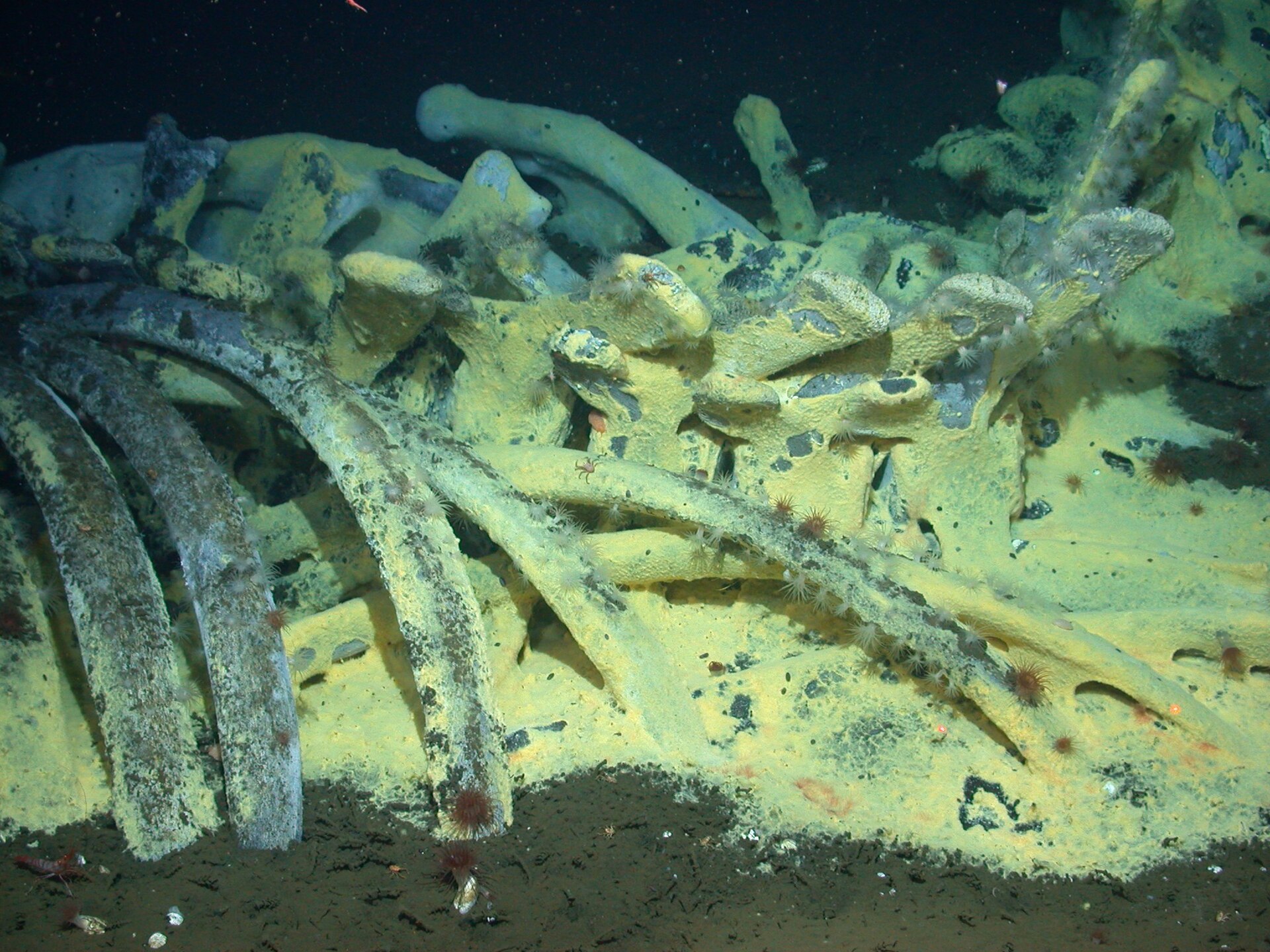
A whale fall is an ecosystem built on a whale carcass that has sunk to the ocean floor. Such falls typically lie at a depth greater than 1,000 m in the bathyal or abyssal zones. They can also occur at shallower depths in cold water, with at least one natural instance recorded at 150 m and experimental cases between 30 and 382 m. On the sea floor these carcasses create complex localized ecosystems that supply sustenance to deep-sea organisms for decades.
Because the lungs deflate on death, whale carcasses can reach the seafloor quickly and relatively intact, since there are few whale-fall scavengers in the water column. When whales die and sink, their carcasses provide a sudden, concentrated food source and a bonanza for organisms in the deep sea. Whale carcasses take decades to decompose and can feed an entire ecosystem on the dark ocean floor. Large biomass falls in the form of whale carcasses or sunken wood decompose and provide energy for a variety of microbial and invertebrate communities.
The carbon in a typical 40-tonne whale carcass, about two tonnes, is roughly equal to the carbon exported to a hectare of abyssal seafloor in 100 to 200 years. Carbon stored in a whale carcass that sinks is sequestered in seafloor sediment for hundreds to thousands of years instead of returning to the atmosphere. It has been suggested that removing large whales through whaling cut deep-sea biomass by more than 30 percent and reduced the ocean's carbon sequestration.
At whale fall sites it is common to see between three and five trophic levels, and adult carcasses can house up to five while juveniles typically have three. There are four stages of ecological succession at a whale fall, which vary in duration and overlap depending on carcass size, water depth and tidal flow. That estimate implies an average spacing of 12 km, and as little as 5 km along migration routes, close enough for larvae to disperse between carcasses.
Whale falls are now seen as stepping stones letting chemosynthetic animals disperse between cold seeps and hydrothermal vents across a mostly barren seafloor. Deep-sea whale falls are thought to be hotspots of adaptive radiation for specialized fauna, and new species including whale-fall specialists have been discovered there. Osedax, a genus of deep-sea polychaete worms, acts as an ecosystem engineer by excreting acid to erode whale bones and absorb the nutrients trapped within.
The first indication that carcasses could host specialized communities came in 1854, when a new mussel species was extracted from a piece of floating whale blubber. Whale falls were first observed in the late 1970s with the development of deep-sea robotic exploration, and have since been monitored by submersibles and ROVs. The first recorded abyssal whale fall was found by bathyscaphe Trieste II pilots on 19 February 1977, with an intact skeleton west of Santa Catalina. The first whale fall ecosystem, with a chemoautotrophic assemblage living on anaerobic breakdown of bone material, was found by Craig Smith's team in 1987. Craig Smith of the University of Hawaii identified entire ecosystems with hundreds of animals around a single whale fall, some sustained for decades by oil-saturated bone.
Most whale falls studied by scientists are dead stranded whales deliberately sunk for research, because natural falls are rarely observed. After MBARI sank five whale carcasses in Monterey Canyon, most animals found were ordinary deep-sea species rather than whale-fall specialists, though bone specialists included 15 Osedax species.
1. Formation and Carbon Significance
A single fall can therefore deliver as much organic material as thousands of years of marine snow drifting down from surface waters.
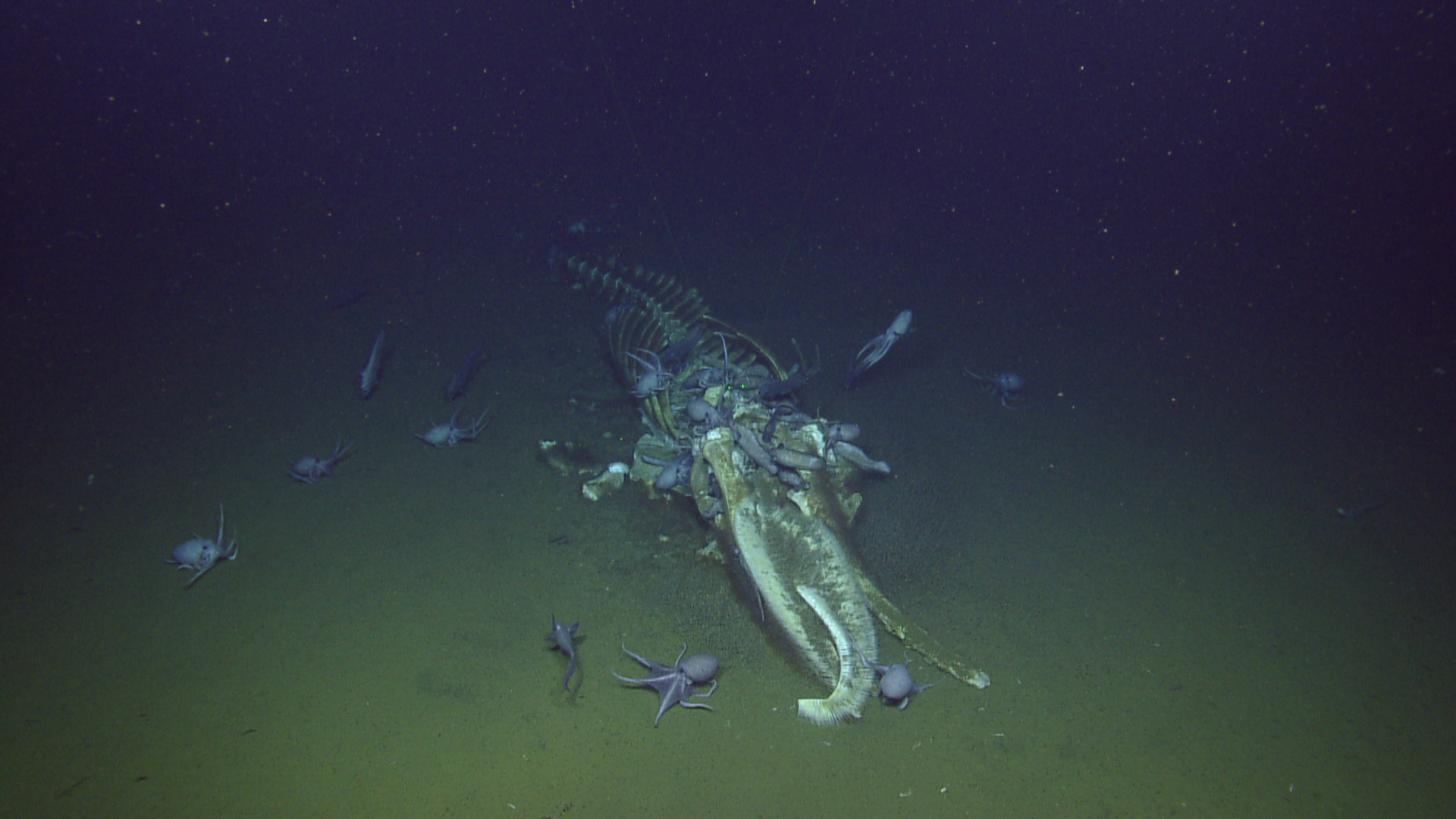
The arrival of a carcass sets off a succession of communities. In the first stage mobile scavengers such as hagfish and sleeper sharks consume soft tissue at 40 to 60 kilograms per day, a phase lasting months up to 1.5 years. Crabs, lobsters and other scavengers join in eating the blubber and muscles down to the bone, and a single whale can sustain such animals for up to two years during this initial scavenging. Scavengers strip the soft tissue within a matter of months, after which organic detritus enriches the surrounding sediments for over a year. In the second stage enrichment opportunists colonize the bones and the contaminated sediments, and this phase can last from months up to 4.5 years.
The skeleton then becomes the foundation of a chemosynthetic ecosystem. For 10 to 50 years the fall supports a more specialised set of feeders, as bacteria in the bones produce hydrogen sulphide that chemoautotrophic animals use. Mussels and vesicomyid clams found at whale falls belong to groups harbouring chemosynthetic bacteria able to draw energy from inorganic chemicals such as sulfur. The skeleton serves both as a hard substrate for invertebrates and as a source of sulfides from decaying bone, supporting rich communities for years to decades. Small scavengers can spend as long as 10 years harvesting the remains, while Osedax worms accumulate in large numbers on the bones.
The final stage is governed by the lipid content of bone. Whale bones are rich in lipids representing 4 to 6 percent of body weight, so the last digestion stage can last between 50 and possibly 100 years. Some scientists postulate a fourth reef stage, entered once organic compounds are exhausted and the remaining bone minerals serve as hard substrate for filter feeders.
Field observations have traced these stages in detail. A submersible unexpectedly found whale bones and ancient fossils concentrated in the Diamantina Fracture Zone, with hundreds of fossils and animals living on the bones; the oldest fossil in that deep whale graveyard was dated to more than 5 million years, and another represented an unknown extinct beaked whale species.
Whale falls also carry evolutionary and historical weight. DNA analysis linked the whale-fall worms to the tube worms of hydrothermal vents and cold seeps and put their common ancestor at roughly 42 million years ago. Researchers from the Monterey Bay Aquarium Research Institute first found Osedax in Monterey Bay in February 2002, on a decaying grey whale in Monterey Canyon at 2,893 m, and the genus and its dwarf males were described in Science on 30 July 2004 from a Monterey Canyon carcass. The oldest trace fossils attributed to Osedax come from a plesiosaur humerus in England, likely from late Albian sediments around 100 million years old.
The carbon significance of whale falls is inseparable from the abundance of whales themselves. Commercial whaling cut whale populations by more than 80 percent worldwide, and NOAA notes that whales probably boosted ocean carbon storage before that depletion.
2. Stages of Ecological Succession
A whale carcass on the seafloor passes through four stages of ecological succession. The first stage belongs to mobile scavengers such as hagfish and sleeper sharks, which strip soft tissue at a rate of 40-60 kg of soft tissue per day.
The third stage is driven by sulfophilic bacteria, which anaerobically break down bone lipids, reducing dissolved sulfate and excreting hydrogen sulfide that only resistant chemosynthetic bacteria tolerate. Whale bones are rich in lipids, which represent 4 to 6 percent of body weight, so this final digestion stage can last between 50 and possibly 100 years. Microbes live off the energy released by these chemical reactions and form the basis of ecosystems for as long as the food source lasts.
Smaller cetaceans such as porpoises and dolphins do not pass through the same successional stages because of their small size and lower lipid content.
3. Osedax: The Bone-Eating Worms
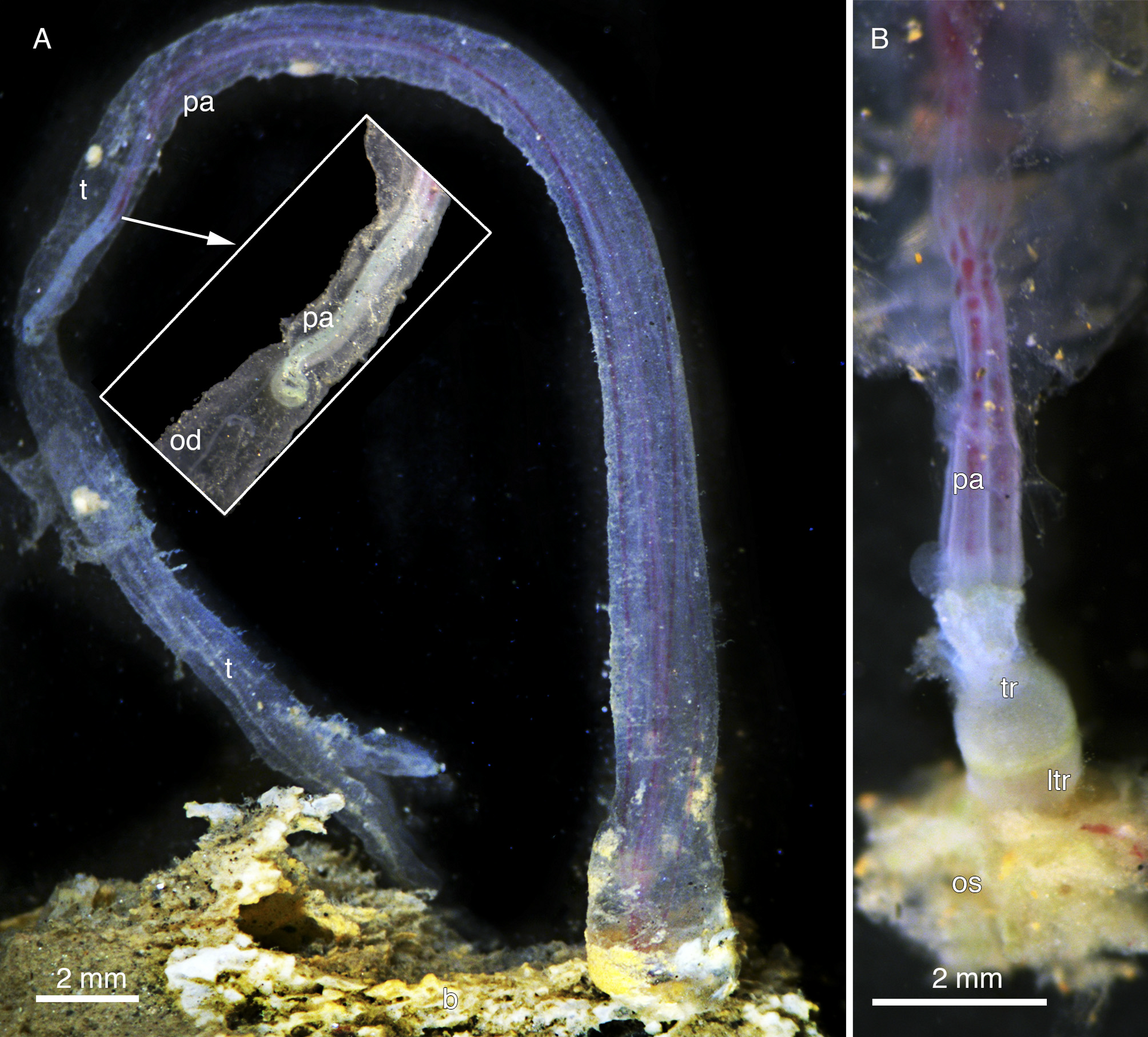
Osedax is a genus of siboglinid polychaetes known by several common names, among them snot worms, bone-eating worms and zombie worms; the name itself derives from the Latin for bone devourer. Like other siboglinids it lacks a mouth, a gut and an anus, and instead depends on endosymbiont microbes housed in a trophosome that in this genus forms a root system penetrating bone.
The worms settle on bone and secrete acid through specialised root tissues, dissolving the outer bone layers to reach the lipids held within. Through this activity they act as ecosystem engineers. The borings they leave raise local biodiversity, but they also compromise the structure of the bone, so the habitats the worms create are temporary.
The genus is marked by extreme sexual dimorphism: females are more than 20,000 times larger than the males. The males are paedomorphic and microscopic, living on the female's trunk.
Osedax is not restricted to whales; it has since been found on teleost and bird bones, shark teeth, reptile skeletons, cow bones and even human remains. The oldest trace fossils attributed to the genus come from a plesiosaur humerus in England, likely from late Albian sediments around 100 million years old.
The first indication that carcasses could host specialized communities came in 1854 when a new mussel species was extracted from a piece of floating whale blubber. Whale falls were first observed in the late 1970s with deep-sea robotic exploration and have since been monitored by submersibles and ROVs.
4. Timeline of Key Discoveries
- 1854Mussel from floating blubberA mussel recovered from floating blubber marks the earliest dated item in the record of whale-fall study.
- 19 February 1977First recorded abyssal whale fallPilots of the bathyscaphe Trieste II found an intact skeleton west of Santa Catalina, the first abyssal whale fall on record.
- 1977Alvin at the Galapagos RiftThe submersible Alvin made its hydrothermal vent dive at the Galapagos Rift in the same year.
- 1987First chemosynthetic whale-fall communityCraig Smith's team found the first chemosynthetic whale-fall community in Catalina Basin at 1,240 m.
- 1998Grey whale implanted in Santa Cruz BasinA grey whale was implanted at 1,674 m in Santa Cruz Basin.
- February 2002Osedax found in Monterey CanyonOsedax was discovered in Monterey Canyon at 2,893 m.
- 30 July 2004Osedax described in ScienceThe genus Osedax and its dwarf males were described in Science from a Monterey Canyon carcass.
- 2019Deep fall near Davidson SeamountResearchers discovered a whale fall at 10,623 feet below the surface near Davidson Seamount in Monterey Bay National Marine Sanctuary.
5. Abundance and Distribution
Researchers estimate that 690,000 carcasses of the nine largest whale species lie in one of the four stages of succession at any one time. That estimate implies an average spacing of 12 km between carcasses, and as little as 5 km along migration routes. Such distances are close enough for larvae to disperse between carcasses.
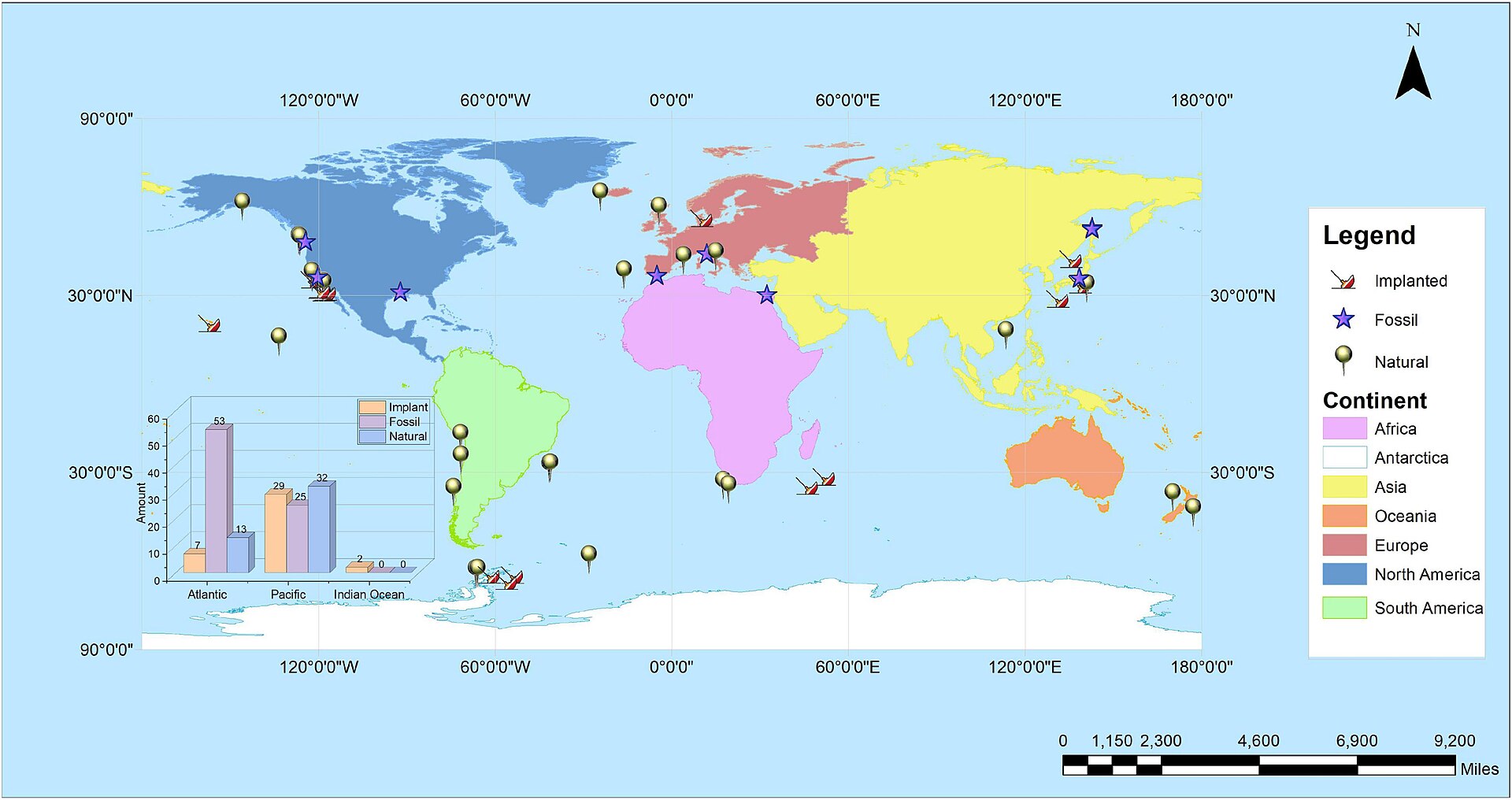
A 2022 study identified 45 known natural whale falls, 38 implanted ones and 78 fossil ones. These sites lie mostly in the Pacific, though many fossil sites are found in the Atlantic.
A submersible unexpectedly found whale bones and ancient fossils concentrated in the Diamantina Fracture Zone. Hundreds of fossils and animals were living on the bones. The oldest fossil in that deep whale graveyard was dated to more than 5 million years, and another represented an unknown extinct beaked whale species.
Deep-sea whale falls are thought to be hotspots of adaptive radiation for specialized fauna, and new species including whale-fall specialists have been discovered there.
It has been suggested that removing large whales through whaling cut deep-sea biomass by more than 30 percent and reduced the ocean's carbon sequestration.
Commercial whaling cut whale populations by more than 80 percent worldwide. NOAA notes that whales probably boosted ocean carbon storage before that depletion.
6. Summary of Recorded Whale Falls
The three categories differ in how they enter the record.
| Category | Count | Notes |
|---|---|---|
| Natural whale falls | 45 | Known instances identified in a 2022 study 1Whale fall · Wikipedia ↗ |
| Implanted whale falls | 38 | Deliberately placed by researchers 1 |
| Fossil whale falls | 78 | Mostly in the Pacific, with many fossil sites in the Atlantic 1 |
| Estimated carcasses on seafloor at any one time | 690,000 | Carcasses of the nine largest whale species, each in one of the four stages of succession 1 |
7. Timeline
- 1854First clue: a mussel in whale blubberA new mussel species is extracted from a piece of floating whale blubber, the earliest indication that whale remains host specialized animals.
- 19 February 1977First abyssal whale fall seenPilots of the bathyscaphe Trieste II find an intact, tissue-free whale skeleton west of Santa Catalina and recover a jawbone and phalanges.
- 1987First chemosynthetic community describedCraig Smith's team uses Alvin at 1,240 m in the Catalina Basin to photograph and sample a chemoautotrophic assemblage living on whale bones.
- 1998Grey whale implanted in Santa Cruz BasinA 35-ton grey whale carcass is placed at 1,674 m and monitored; six years later it still hosts bacteria mats, vesicomyid clams and galatheid crabs.
- February 2002Osedax discoveredMBARI researchers find bone-eating worms on a decaying grey whale in Monterey Canyon at 2,893 m; the genus is named Osedax in 2004.
- 30 July 2004Osedax described in ScienceRouse, Goffredi and Vrijenhoek name the genus Osedax and two species with dwarf males from a whale carcass nearly three kilometres down in Monterey Canyon.
- 2019Whale fall near Davidson SeamountA NOAA expedition finds a whale fall at 10,623 feet below the surface in Monterey Bay National Marine Sanctuary.
- May 2022Global inventory of known fallsA study counts 45 known natural whale falls, 38 implanted ones and 78 fossil ones, concentrated in the Pacific.
- 2023Scripps sonar surveyA Scripps survey finds at least 7 whale falls in 135 square miles off California, with sonar hints of up to 60 in the area.
- June 2026Whale necropolis in the Diamantina ZoneA Nature report describes a submersible discovery of whale bones and hundreds of fossils, some over 5 million years old, concentrated in the Diamantina Fracture Zone.
8. Frequently asked questions
How much of a whale fall's soft tissue can scavengers remove in a single day?
Mobile scavengers such as hagfish and sleeper sharks consume soft tissue at 40-60 kg of soft tissue per day1.
Where and at what depth was the first chemosynthetic whale-fall community observed?
Alvin observed those remains at 1,240 m in the Catalina Basin using scanning sonar, and collected the first photographs and samples from the community1.
How many Osedax species turned up among the bone specialists at MBARI's sunken carcasses?
Bone specialists at those carcasses included 15 Osedax species7Fleshing out the life histories of dead whales · Monterey Bay Aquarium Research Institute ↗.
What do the worms' bodies lack, and how do they feed?
The newly described bone worms have no eyes, legs, mouths or stomachs, but have colourful feathery plumes and green roots that infiltrate whale bones10Whale carcass yields bone-devouring worms · Monterey Bay Aquarium Research Institute ↗.
How do the worms' symbiotic bacteria differ from those of vent animals?
The lipid-degrading bacteria symbiotic in Osedax worms were the first such symbiosis observed, an entirely different strategy from sulfide-eating vent symbionts6Whale Carcass Yields Bone-devouring Worms · ScienceDaily (from MBARI) ↗.
Why might the Monterey Canyon carcass have yielded animals never seen before?
The Monterey Canyon whale fall, at 2,891 metres, was the deepest studied at the time, which may explain why some of its animals had never been seen before6.
References (10)
- 1Whale fall — Wikipedia Web↩View source
- 2What is a whale fall? — NOAA National Ocean Service WebView source
- 3Whale fall: What happens when whales die? — Natural History Museum, London WebView source
- 4Expedition to the Deep Slope: One Piece at a Time (May 16, 2006 log) — NOAA Ocean Exploration 2006 WebView source
- 5Whales and Carbon Sequestration: Can Whales Store Carbon? — NOAA Fisheries WebView source
- 6Whale Carcass Yields Bone-devouring Worms — ScienceDaily (from MBARI) 2004 Web↩View source
- 7Fleshing out the life histories of dead whales — Monterey Bay Aquarium Research Institute Web↩View source
- 8Osedax — Wikipedia WebView source
- 9Whale graveyard discovered 7km under the sea — Nature JournalView source
- 10Whale carcass yields bone-devouring worms — Monterey Bay Aquarium Research Institute Web↩View source