The Immortal Jellyfish
Turritopsis dohrnii can rewind its own life cycle from adult back to polyp — a trick that beats ageing but not death.
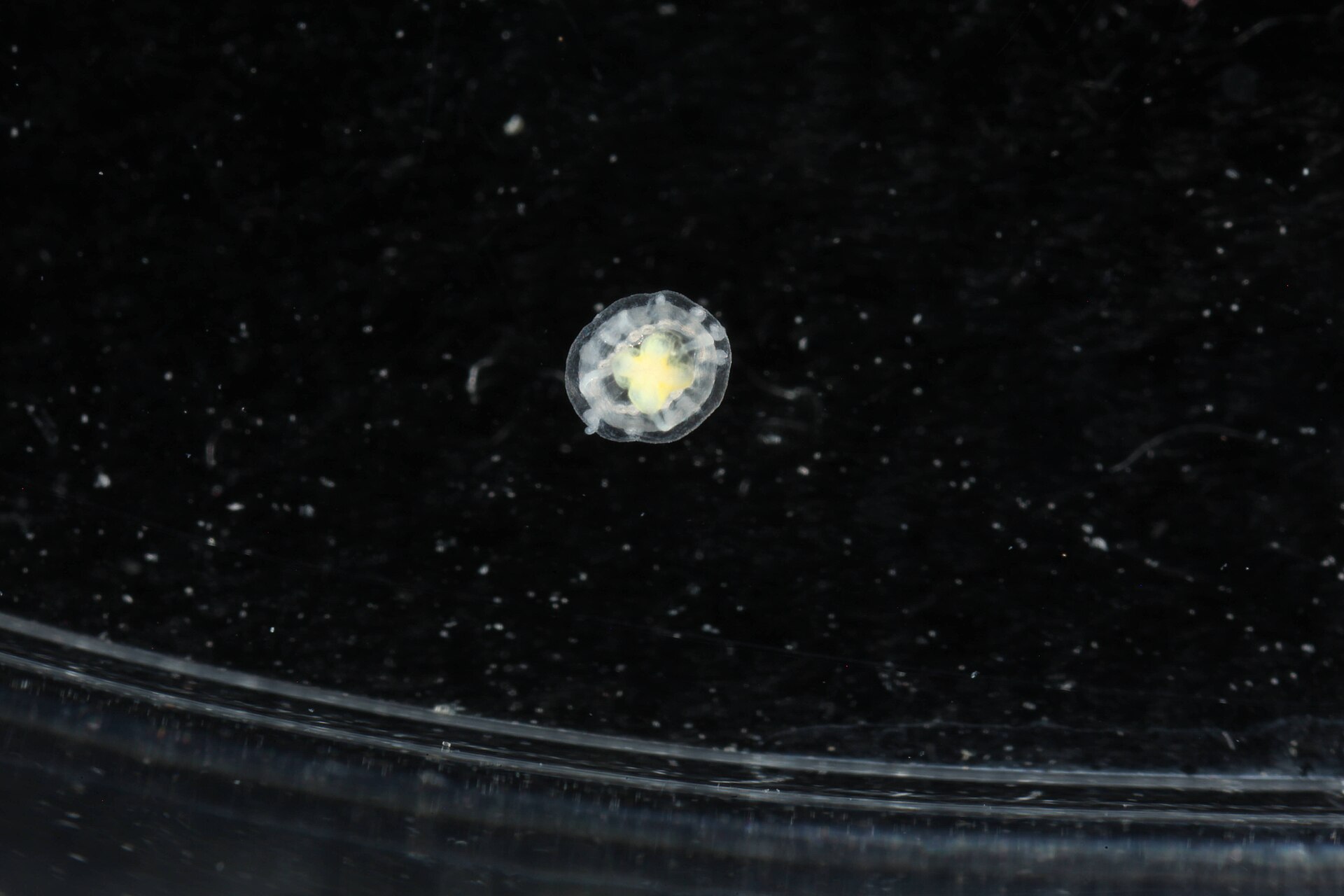
Turritopsis dohrnii is a hydrozoan no wider than a pinky nail that, when starving or damaged, shrinks into a cyst and rebuilds itself as a juvenile polyp colony. First described in 1883 and discovered to reverse its life cycle only in the 1980s, the species earned the nickname 'immortal jellyfish' because it can repeat that cycle indefinitely. Ecologists are careful with the label: individuals are still eaten by fish, turtles and sea slugs and killed by disease, so the immortality is biological rather than literal — it removes old age, not mortality. The mechanism, called transdifferentiation, is now studied for its lessons about ageing and tissue repair.
In this article
- 1Overview
- 2Description
- 3Life Cycle
- 4Reversal and Transdifferentiation
- 5Discovery and Research History
- 6Genetics and Cellular Mechanisms
- 7Related Species and Reverse Development
- 8Distribution and Spread
- 9Mortality and the Limits of Immortality
- 10Key Figures
- 11Taxonomy
- 12Timeline
- 13Frequently asked questions
- 14Knowledge graph
Overview
Turritopsis dohrnii, commonly called the immortal jellyfish, is a small hydrozoan rather than a true jellyfish, and it occurs in temperate to tropical waters around the world. The species is notable among animals for reverting completely to a sexually immature, sedentary colonial polyp after it has already matured as a free-living individual. That capacity for reversal, rather than any exemption from being eaten or killed, is what the name commemorates.
1. Description
The adult medusa is a small animal, its bell reaching about 4.5 mm (0.18 in) across and standing roughly as tall as it is wide. A bright red cruciform stomach shows through the body, and up to 90 white tentacles run along the bell margin. The adult tentacle count is given as 80–90. Newly released young medusae carry far fewer, about eight tentacles, and the full complement develops as the animal matures.
2. Life Cycle
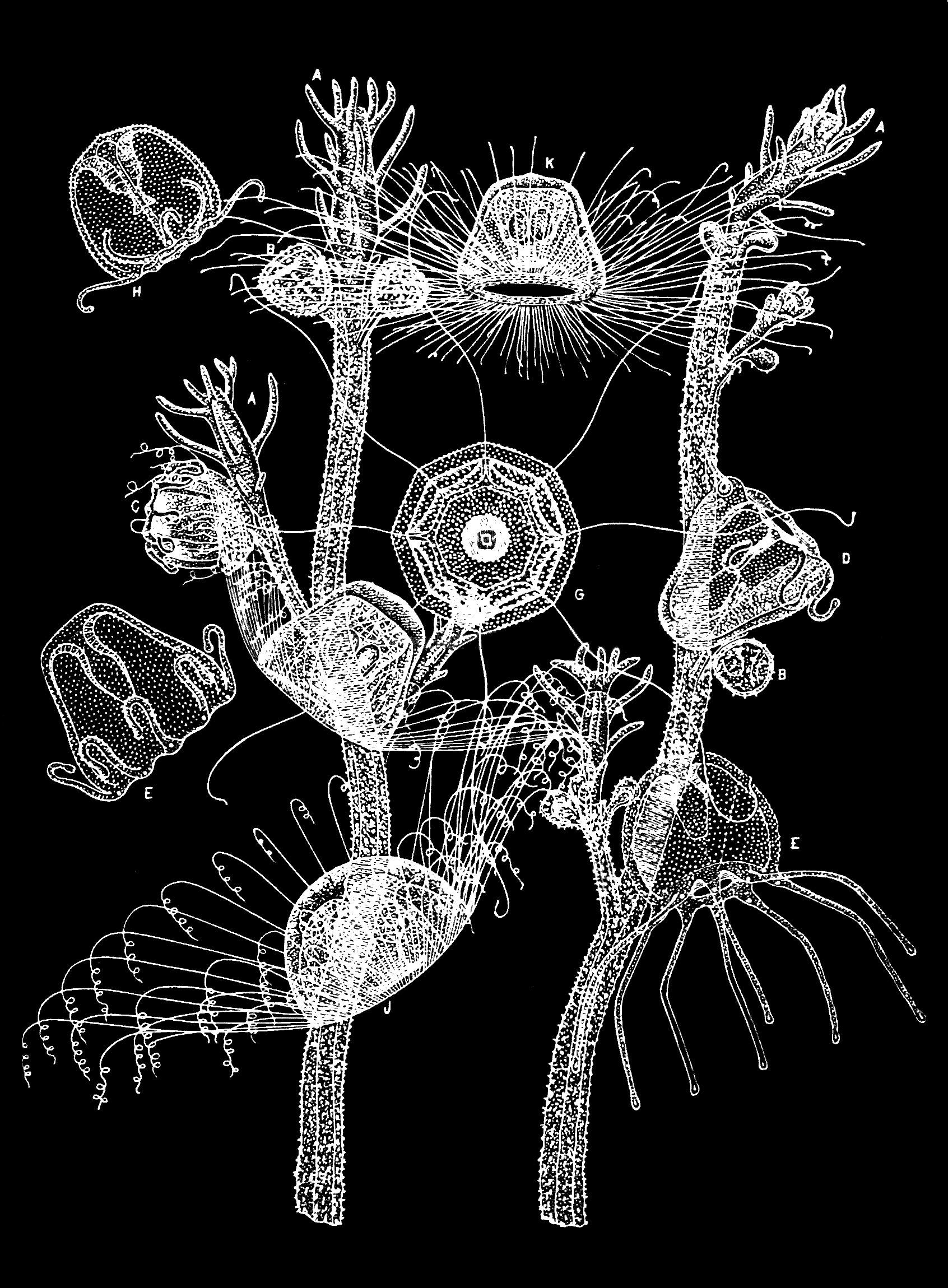
The life cycle of the immortal jellyfish proceeds from a settled planula to a branching polyp colony that can stand up to 35 mm tall, and these colonies bud one-millimetre medusae. The medusa buds in 3 to 4 weeks, taking up to 30 days at 20 degrees Celsius and as little as 18 days at 22 degrees Celsius. Sexual maturity is reached in 18–30 days depending on temperature. The species survives in water of 14–25 °C (57–77 °F).
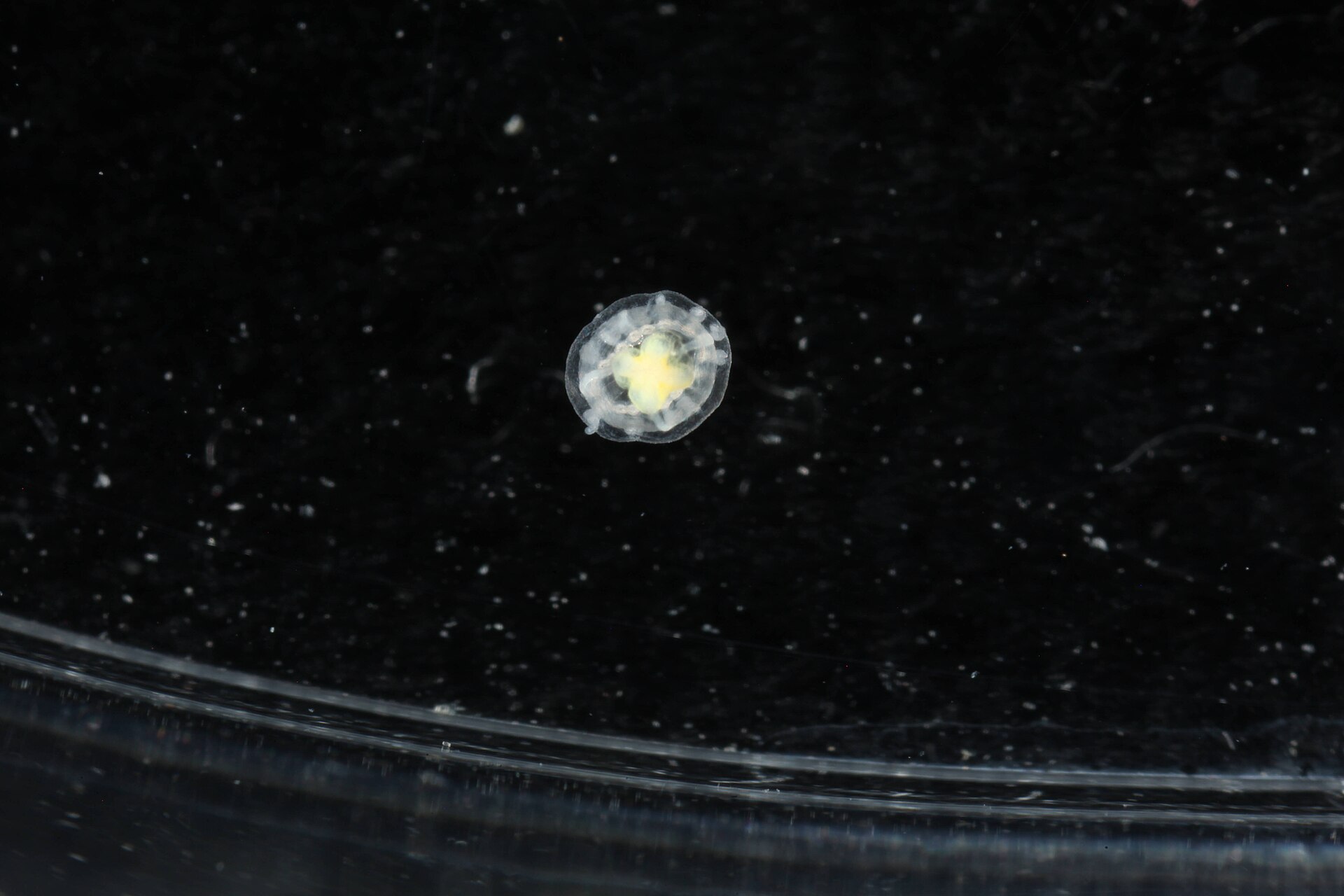
Reversal to the polyp form can be triggered by low food, sudden temperature or salinity change, or physical damage. The medusa maintains telomere length during its life-cycle reversal, effectively resetting cellular ageing. Sequencing of polyp, medusa and cyst stages yielded tens of thousands of contigs each and implicated telomerase and DNA repair in the reversal. Tissue lacking interstitial cells can still revert, so the process depends on transdifferentiation rather than a dedicated stem-cell pool.
A companion transcriptome study found the cyst stage enriched for genes tied to ageing control, transposable elements, DNA repair and ubiquitin processes. In the related Xiamen species, cutting the medusa into upper and lower parts showed the two halves differ significantly in their ability to become polyps. The reverse-development literature dates the concept to a paper on Turritopsis published in the Biological Bulletin in 1996 by Piraino and colleagues. Britannica stresses the escape from ageing depends on favourable conditions and the individual not being eaten or falling to disease.
A co-author cautioned it is a mistake to think people will share this jellyfish's immortality, though the work may inform age-related disease 7'Immortal Jellyfish' Could Spur Discoveries About Human Aging · Smithsonian Magazine ↗.
3. Reversal and Transdifferentiation
Under stress the medusa absorbs its tentacles, loses the ability to swim and sinks as a cyst, which becomes a new polyp within two days once stolons have fed. Starvation, sudden temperature change, lowered salinity or cut bells all trigger the transformation, and every medusa stage can revert.
Transcriptome work shows that tissue lacking interstitial cells can still revert, so the process depends on transdifferentiation rather than on a dedicated stem-cell pool.
4. Discovery and Research History
The scientific record of the species begins with August Weismann, whose 1883 monograph described it as Dendroclava dohrnii and remains the original description. The capacity for which the animal is now known entered the literature by a different route entirely: in the 1980s the British students Christian Sommer and Giorgio Bavestrello observed the reversal by accident, when stressed medusae held in a jar turned into polyps without passing through larvae.
A 2008 study in Biological Invasions examined Turritopsis populations from Spain, Italy, Japan, Florida and Panama and found them genetically identical, a pattern implying transport by ship rather than drift. Genetic work on the animal continued into the following decade, with a 2022 genome study published in PNAS 119(36): e2118763119.
-
1883Original descriptionAugust Weismann describes the species as Dendroclava dohrnii in a monograph that remains the original description8Turritopsis dohrnii (Weismann, 1883) · World Register of Marine Species ↗.
-
1980sAccidental discovery of reversalChristian Sommer and Giorgio Bavestrello observe stressed medusae in a jar turning into polyps without larvae9Alan Turing · Natural History Museum ↗.
-
2008Genetic uniformity across oceansA study in Biological Invasions finds Turritopsis from Spain, Italy, Japan, Florida and Panama genetically identical, implying ship transport rather than drift10"Immortal" Jellyfish Swarm World's Oceans · National Geographic ↗.
-
2022Genome studyA genome study appears in PNAS 119(36): e21187631197.
5. Genetics and Cellular Mechanisms
Sequencing of the polyp, medusa and cyst stages yielded tens of thousands of contigs for each and implicated telomerase and DNA repair in the reversal. A co-author cautioned that it is a mistake to think people will share this jellyfish's immortality, though the work may inform age-related disease.
6. Related Species and Reverse Development
Reverse development is not unique to Turritopsis: earlier work described it in the scyphozoan Chrysaora and in several hydrozoans under adverse conditions. At least three Turritopsis species show inverted metamorphosis, turning pelagic medusae back into benthic polyps.
7. Distribution and Spread
The species is now seen as an aggressive hitchhiker, carried across oceans in ship ballast water and now found worldwide. It is a hydrozoan rather than a true jellyfish, and it likely spread worldwide from the Mediterranean in the early twenty-first century via ballast water. Populations differ in form as they spread, with tropical swarms having about 8 tentacles and temperate ones 24 or more.
8. Mortality and the Limits of Immortality
Immortal jellyfish still die: fish and turtles eat the medusae, and sea slugs and crustaceans prey on the practically defenceless polyps. In nature most individuals die before ever reverting, so 'immortality' means evading old age rather than escaping death. Immortality only kicks in as an emergency response to starvation, damage or other crisis; most of the time the animals reproduce and die conventionally.
9. Key Figures
| Attribute | Value |
|---|---|
| Bell diameter (adult) | about 4.5 mm (0.18 in) |
| Adult tentacle count | 80-90 |
| Young medusa tentacles | about 8 (8-12 in immatures) |
| Time to sexual maturity | 18-30 days depending on temperature |
| Survivable water temperature | 14-25 °C (57-77 °F) |
| Polyp colony height | up to 35 mm (1.38 in) |
| Reversion time (cyst to polyp) | 24-36 hours |
| Captive record | Kubota: 11 rebirths in a two-year period |
The medusa begins life with roughly eight tentacles, while the adult form carries 80 to 90 along the bell margin 1Turritopsis dohrnii · Wikipedia ↗. Sexual maturity arrives quickly: planulae settle and grow into branching polyp colonies, which bud one-millimetre medusae that mature in weeks rather than years 1. When stressed, the medusa absorbs its tentacles, loses the ability to swim and sinks as a cyst, becoming a new polyp within two days once stolons have fed 1. The longest documented captive record is Kubota's observation of 11 rebirths in a two-year period 1.
10. Taxonomy
Turritopsis dohrnii (Weismann, 1883) in family Oceaniidae, with a small hydrozoan polyp colony from Italy as reference 8.
Original description as Dendroclava dohrnii in Weismann's 1883 monograph 8.
The immortal jellyfish is classified as Turritopsis dohrnii, a small hydrozoan occurring in temperate to tropical waters around the world 1. WoRMS records the accepted name as Turritopsis dohrnii (Weismann, 1883) within the family Oceaniidae, with a small hydrozoan polyp colony from Italy serving as the reference 8. The species was first described as Dendroclava dohrnii by Weismann, whose 1883 monograph remains the original description 8.
11. Timeline
- 1883Turritopsis dohrnii describedAugust Weismann named the species Dendroclava dohrnii in his monograph on hydrozoan sexual cells; it was discovered in the Mediterranean Sea and is now placed in the family Oceaniidae.
- 1980sThe reversal is found by accidentStudents Christian Sommer and Giorgio Bavestrello kept Turritopsis polyps and found that stressed medusae dropped to the bottom of the jar and became polyps without fertilisation or a larval stage.
- 1996Reverse development formally describedPiraino, Boero, Aeschbach and Schmid published in the Biological Bulletin that medusae of Turritopsis can transform back into polyps through cell transdifferentiation, the paper still cited as the foundation of the field.
- 2006Species boundaries clarifiedA molecular study by Miglietta, Piraino, Kubota and Schuchert separated Turritopsis dohrnii from T. nutricula and T. rubra, showing that the famous 'immortal jellyfish' had been merged with several species.
- 2008The silent worldwide invasion documentedMiglietta and Lessios compared mitochondrial genes of jellyfish from Spain, Italy, Japan, Florida and Panama and found identical sequences, pointing to ballast-water transport rather than ocean currents.
- 2019Transcriptomes of the reversal publishedMatsumoto, Piraino and Miglietta sequenced the polyp, medusa and cyst stages, finding that telomerase activity and DNA repair networks are over-expressed in the cyst that precedes the polyp.
- 2022Genome comparison finds rejuvenation genesA University of Oviedo team compared the genomes of Turritopsis dohrnii and the mortal T. rubra, reporting expanded DNA repair, telomere-maintenance and stem cell genes behind the rejuvenation.
12. Frequently asked questions
How long does the jellyfish take to turn back into a polyp?
The Natural History Museum puts the whole cyst-to-polyp conversion at 24 to 36 hours 9. Britannica describes adult cells vanishing into an undifferentiated mass of stem cells in the cyst and then differentiating into polyp cells over that same span 2Immortal jellyfish | Life Cycle, Habitat, Size, & Facts · Encyclopaedia Britannica ↗.
Does the reversal need any particular part of the body?
When was the reversal itself first described in print?
The first description of the reversal appeared in 1996, by Piraino et al. in Biological Bulletin 190: 302–312 4Transcriptome Characterization of Reverse Development in Turritopsis dohrnii · G3 (Bethesda) via PubMed Central ↗. Immortality was not recognised until the 1990s, although the animal itself was discovered in the Mediterranean in 1883 and only scrutinised a century later 10.
What did the 2022 genome study actually compare?
What does the reversal look like in cellular terms?
The New York museum describes the reversal as hitting a reset button, producing genetically identical medusae from the regrown polyp colony 3The "Immortal" Jellyfish That Resets When Damaged · American Museum of Natural History ↗. Miglietta describes the transformation as converting all of the animal's existing cells into a younger state rather than dying 10.
Is Turritopsis dohrnii the only species known to do this?
No: Turritopsis nutricula, a separate species, is significant as the first metazoan observed to mature sexually and then return to its juvenile colonial stage 11Turritopsis nutricula · Wikipedia ↗. Transdifferentiation is also called a rare process with medical potential, since it lets a specialised adult cell become a different specialised cell type 3.
References (12)
- 1Turritopsis dohrnii — Wikipedia Web↩View source
- 2Immortal jellyfish | Life Cycle, Habitat, Size, & Facts — Encyclopaedia Britannica Web↩View source
- 3The "Immortal" Jellyfish That Resets When Damaged — American Museum of Natural History Web↩View source
- 4Transcriptome Characterization of Reverse Development in Turritopsis dohrnii — G3 (Bethesda) via PubMed Central Web↩View source
- 5Cellular Reprogramming and Immortality: Expression Profiling in Turritopsis dohrnii — PubMed Central WebView source
- 6Ontogeny reversal and phylogenetic analysis of Turritopsis sp.5 — PeerJ WebView source
- 7'Immortal Jellyfish' Could Spur Discoveries About Human Aging — Smithsonian Magazine Web↩View source
- 8Turritopsis dohrnii (Weismann, 1883) — World Register of Marine Species 1883 Web↩View source
- 9Alan Turing — Natural History Museum Web↩View source
- 10"Immortal" Jellyfish Swarm World's Oceans — National Geographic Web↩View source
- 11Turritopsis nutricula — Wikipedia Web↩View source
- 12Immortal jellyfish: The secret to cheating death — Natural History Museum, London WebView source