Wolfgang Amadeus Mozart
The life of Wolfgang Amadeus Mozart, from his birth in Salzburg in 1756 and the prodigy tours of his childhood through the Vienna years, the great operas and concertos, the Requiem left unfinished at his death in 1791, and the museums and editions that preserve his legacy.
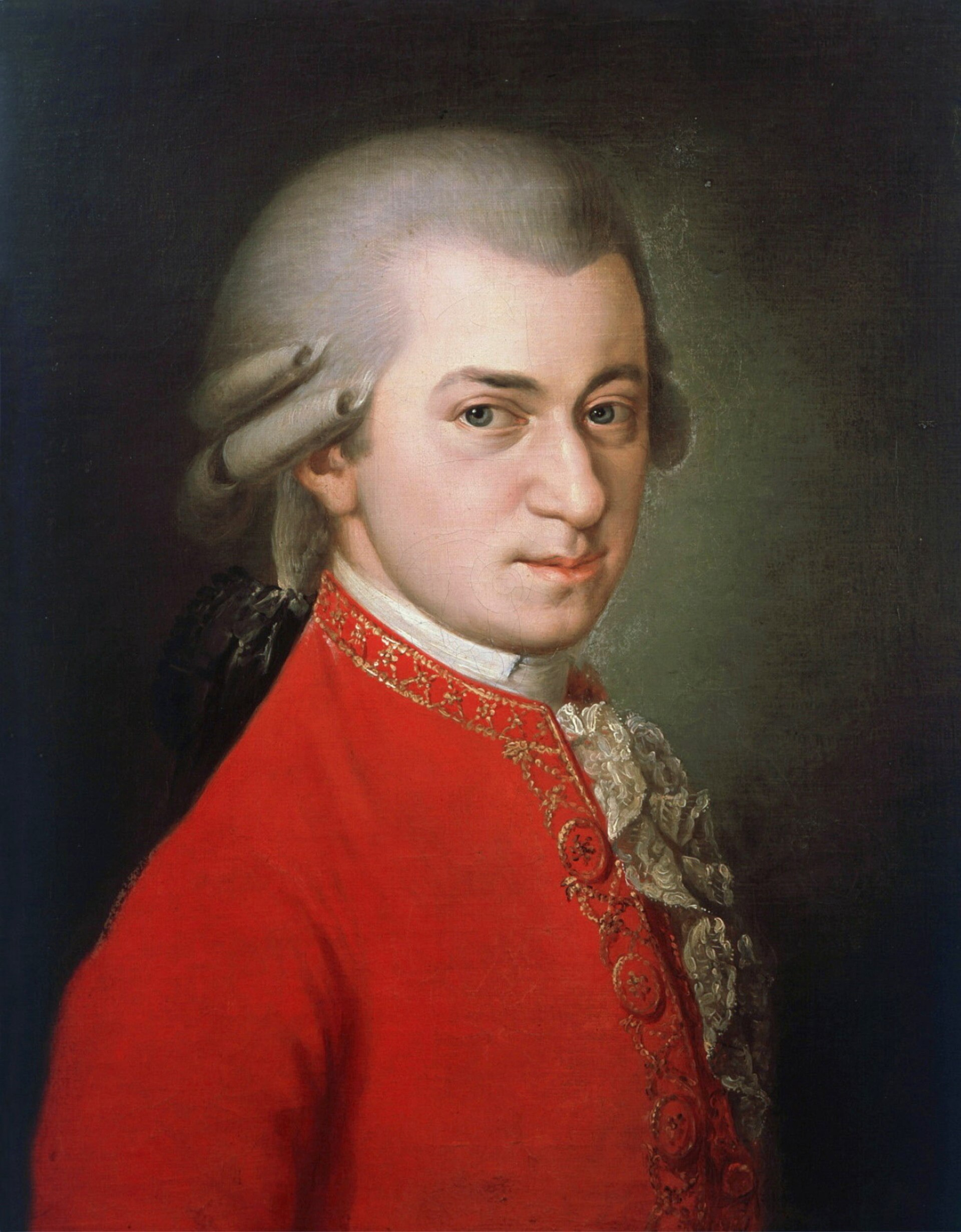
Wolfgang Amadeus Mozart was born in Salzburg on 27 January 1756, the seventh and last child of Leopold and Anna Maria Mozart, and was presented as a keyboard prodigy at the courts of Europe while still a child. He left the Salzburg court service in 1781 after a final breach with the archbishop, settled in Vienna, married Constanze Weber in 1782 and produced the operas, piano concertos and symphonies on which his reputation rests. He died in Vienna on 5 December 1791 at the age of 35, leaving the Requiem K. 626 unfinished; his widow preserved the estate and his pupil Franz Xaver Süssmayr completed the score.
In this article
- 1Overview
- 2Family and Birth
- 3Leopold Mozart
- 4Childhood Prodigy and Early Tours
- 5Italy and Salzburg Service
- 6The Paris Journey and the Break with Salzburg
- 7Marriage and Vienna
- 8Mature Works and Career in Vienna
- 9Residences and Museums
- 10Illness, Death and Burial
- 11The Requiem
- 12Catalogue and Numbering
- 13Selected Works
- 14Reception and Legacy
- 15Timeline: from Salzburg in 1756 to the Requiem of 1791
- 16Knowledge graph
Overview
Wolfgang Amadeus Mozart was a composer born in Salzburg on 27 January 1756 who died in Vienna on 5 December 1791 at the early age of 35 years. His works are numbered K. 626 in the chronological-thematic catalogue compiled under Ludwig von Köchel's name, a range that runs from his earliest pieces to the Requiem and takes in his operas, symphonies and piano concertos.
1. Family and Birth
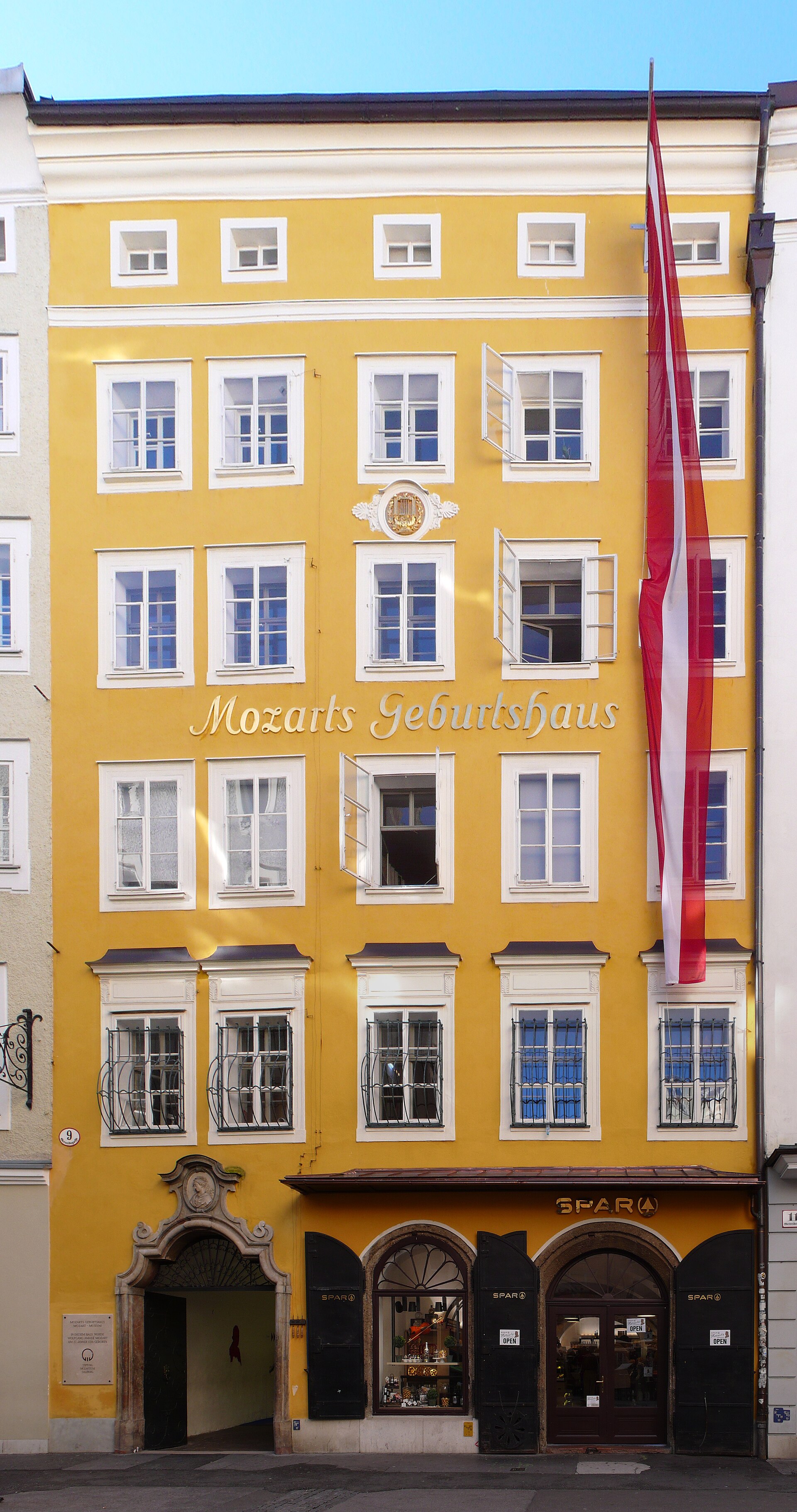
Wolfgang Amadeus Mozart was born in the Hagenauer Haus on the Getreidegasse in Salzburg, the house where the Mozart family lived for 26 years from 1747 and occupied an apartment on the third floor. At baptism he received the names Joannes Chrysostomus Wolfgangus Theophilus. He was the seventh and last child of Leopold and Anna Maria Mozart, whose maiden name was Pertl. His mother Anna Maria Pertl lived from 1720 to 1778.
Leopold Mozart had married Anna Maria Pertl on 21 November 1747 and the marriage lasted until her death in 1778 during the journey to Paris.
2. Leopold Mozart
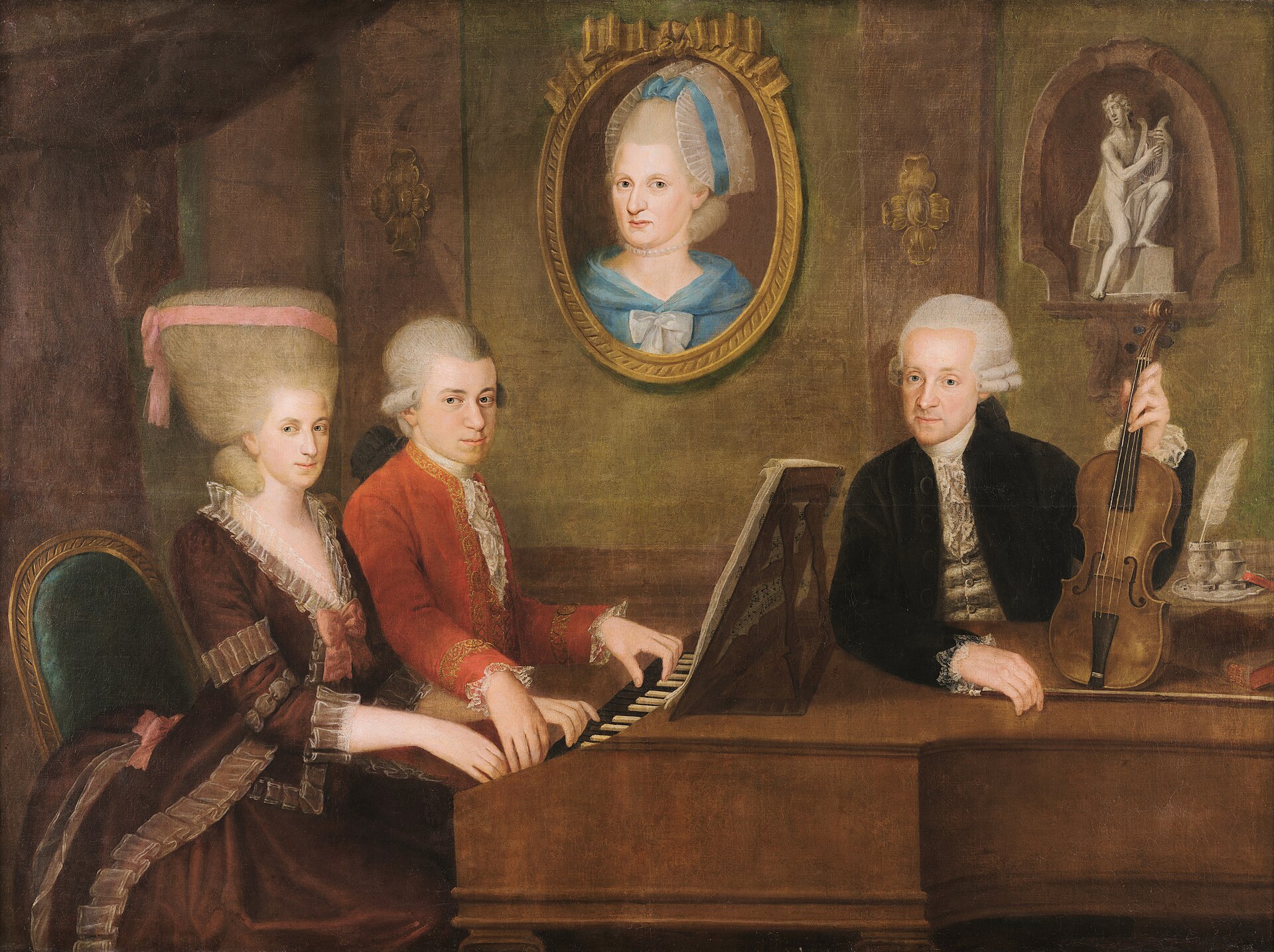
Leopold Mozart was born in Augsburg on 14 November 1719 and died in Salzburg on 28 May 1787. He worked as a violinist, composer and Kapellmeister, and he was also active as a violin teacher.
His Versuch einer gründlichen Violinschule was published by Lotter in Augsburg in 1756. He also compiled a music notebook for his children.
In 1768 he drew up a catalogue of Wolfgang's works in answer to an accusation concerning their authorship.
3. Childhood Prodigy and Early Tours
Leopold Mozart began his son's instruction at the keyboard when the boy was four and added composition to the lessons at six, as the notebook begun for Maria Anna in 1759 shows. The family's first documented appearance in Vienna came in 1762 and brought the child before Maria Theresa on 13 October 1762. The impressions of that visit survive in the diary entries of Zinzendorf from October 1762, which describe the six-and-a-half-year-old performer.
A grand tour followed between 1763 and 1766, taking the family through Germany, Switzerland, Paris, London and Holland with Nannerl sharing the programme. In London the journey brought the children into contact with Johann Christian Bach, who influenced the boy decisively.
4. Italy and Salzburg Service
The Italian journeys that shaped Mozart's theatrical education ran from December 1769 to March 1773, and in that time he wrote three operas for the Teatro Regio Ducale in Milan, among them Mitridate re di Ponto and Lucio Silla. In 1770 Pope Clement XIV awarded him the cross of the Order of the Golden Spur, and in the same year the Accademia Filarmonica in Bologna admitted him among its magistri compositores.
In the Salzburg court chapel, where his father had been vice-Kapellmeister since 1763, Mozart was appointed third concertmaster without salary in 1769, at the age of thirteen, and received a salaried post as second concertmaster in 1772.
5. The Paris Journey and the Break with Salzburg
Between September 1777 and January 1779 Mozart travelled to Munich, Mannheim and Paris, the last of these then generally regarded as the only city where a musician could win reputation and income. The journey did not yield the standing he sought: despite individual successes as a pianist and composer he obtained neither a post nor an opera commission. On 3 July 1778 his mother died in Paris.
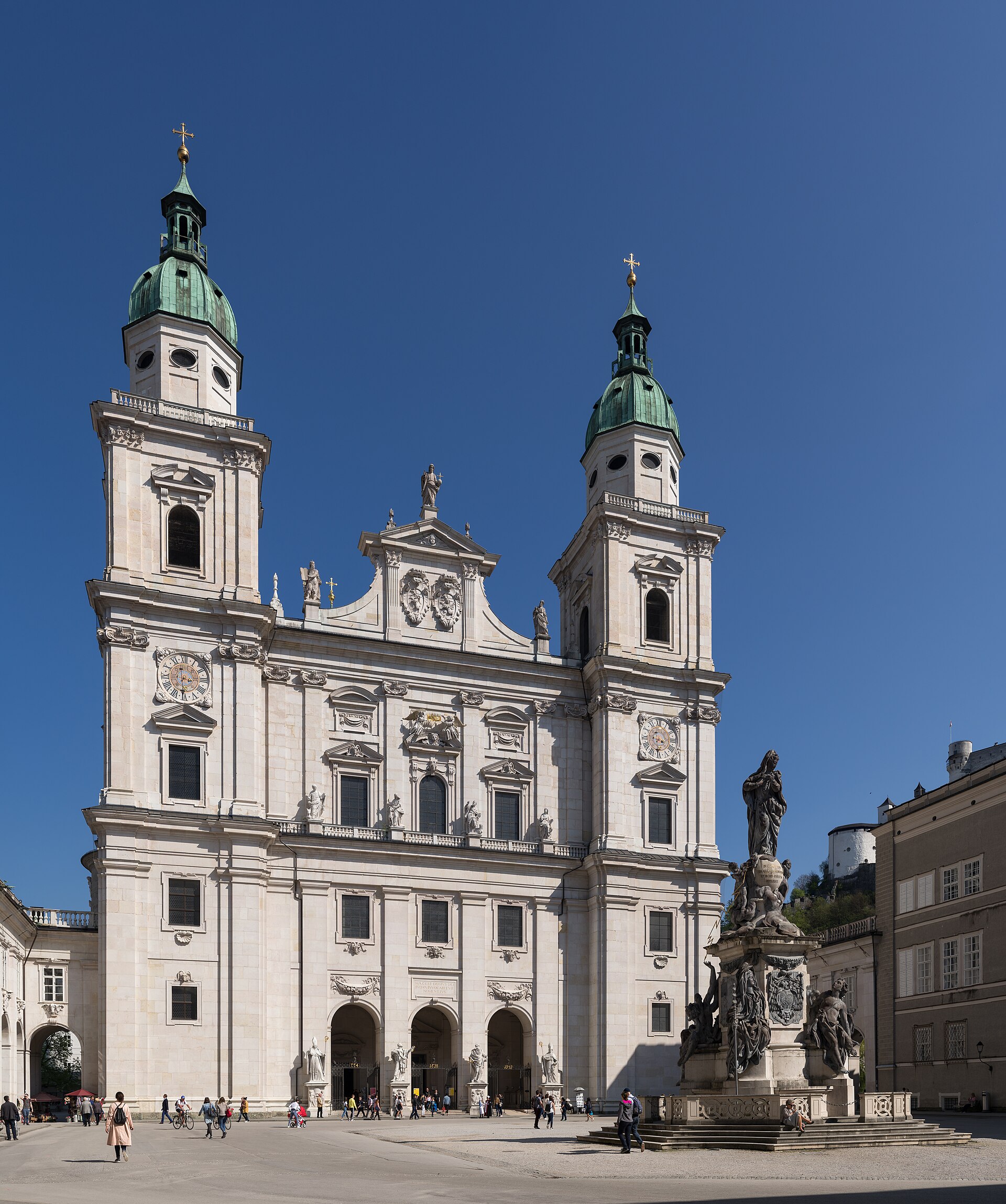
Long disagreements with the Salzburg archbishop preceded a final breach in early June 1781, after which Mozart remained in Vienna.
6. Marriage and Vienna
Constanze Weber was born in Zell im Wiesental, the second-youngest of the four daughters of Franz Fridolin and Cäcilia Weber; the composer Carl Maria von Weber was her cousin. Despite Leopold Mozart's open rejection, Constanze Weber and Wolfgang Amadeus Mozart married on 4 August 1782 in St Stephen's Cathedral. In July 1782 Die Entführung aus dem Serail was performed under Joseph II's promotion of German Singspiel and, despite intrigues, became Mozart's most successful stage work in his lifetime.
Six children were born to the couple, but only the sons Carl Mozart and Franz Xaver Wolfgang Mozart reached adulthood.
7. Mature Works and Career in Vienna
Between February 1784 and March 1786 Mozart composed eleven piano concertos alongside numerous chamber works, among them the quintet for piano and winds K. 452 that he prized highly. In the same span from 1784 to 1786 he gave successful subscription concerts in Lent and Advent and produced several symphonies and string quartets.
In 1789 and 1790 Mozart turned increasingly to opera and wrote Così fan tutte (KV 588), which was composed in 1789 and 1790 and first performed on 26 January 1790 in Vienna's Burgtheater. In 1791 he wrote La clemenza di Tito (KV 621) for the coronation of Leopold II as King of Bohemia and travelled to Prague in September with his pupil Franz Xaver Süssmayr.
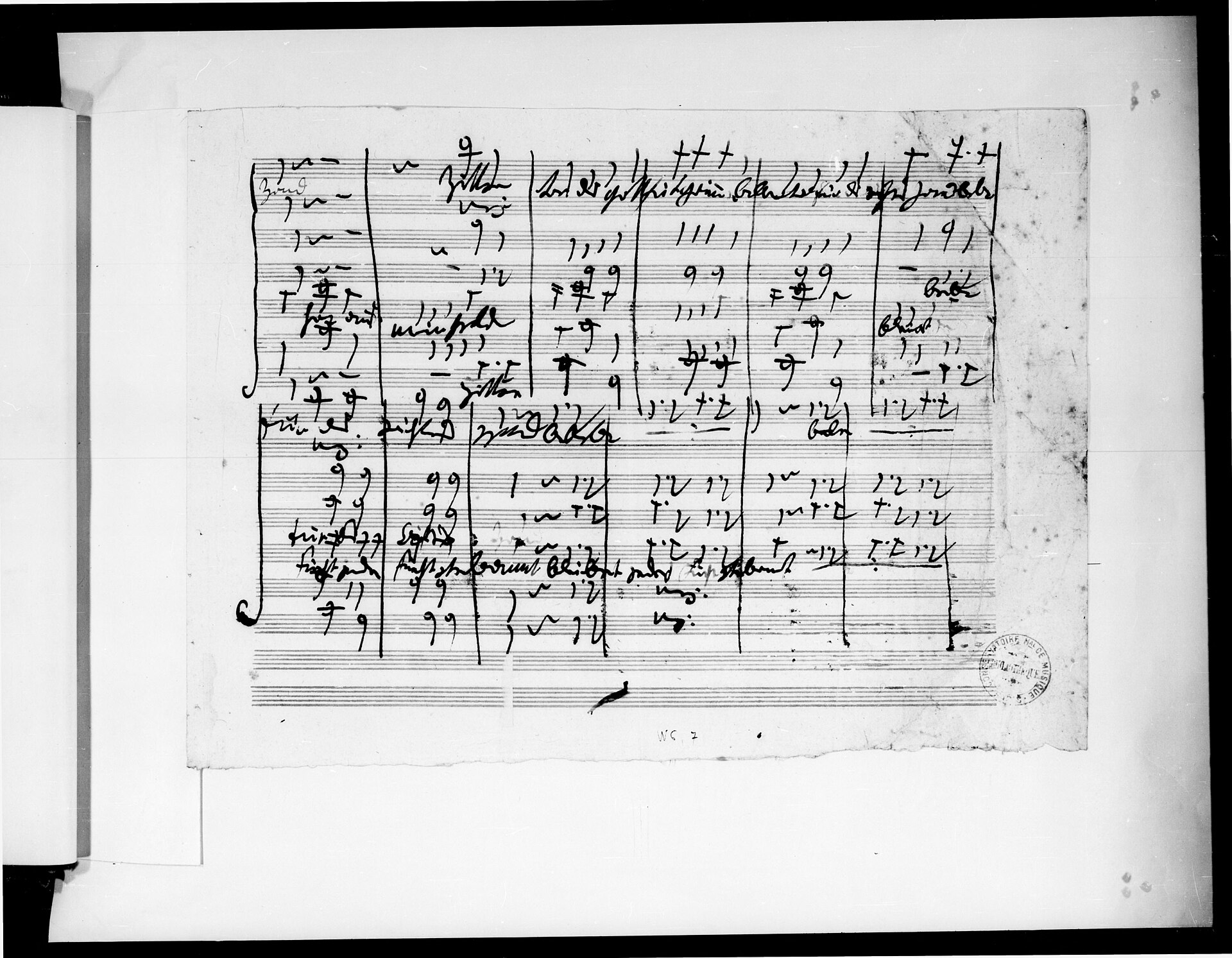
On 7 December 1787 Mozart was appointed imperial chamber musician with a salary of 800 gulden a year. Le nozze di Figaro had been given for the first time on 1 May 1786 in Vienna's Burgtheater, to a libretto by Lorenzo da Ponte after Beaumarchais, and Don Giovanni followed on 29 October 1787 at the Estates Theatre in Prague, conducted by Mozart himself.
8. Residences and Museums
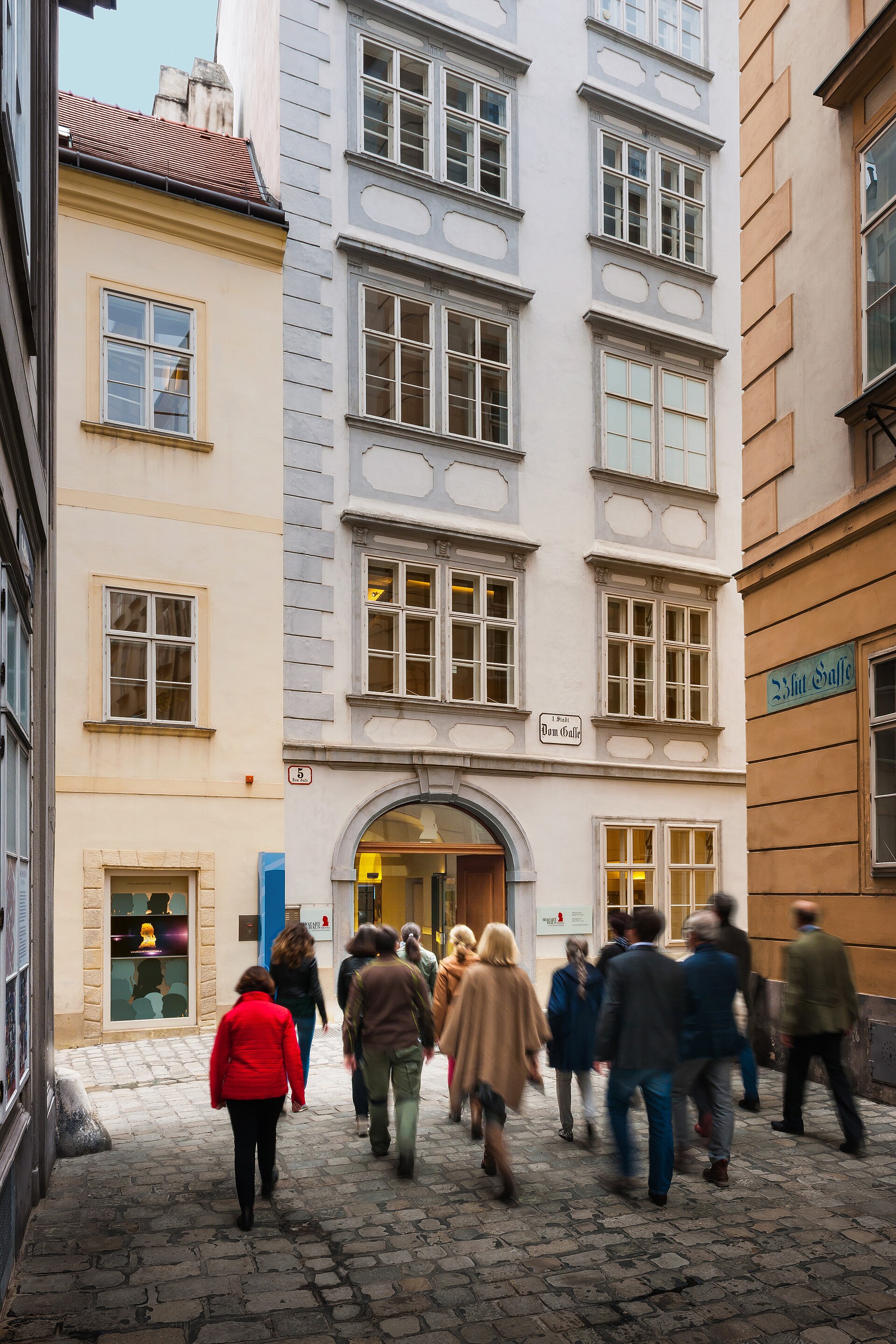
Of Mozart's Viennese dwellings only one survives: the apartment in the Domgasse, where he lived and worked from 1784 to 1787 at the height of his creative power12Das Museum · Mozarthaus Vienna ↗. Leopold Mozart saw the rooms for himself in February 1785 and noted that his son had a fine apartment for which he paid 460 gulden in rent13Figarohaus · Wien Geschichte Wiki, City of Vienna ↗. The building is now the Mozarthaus Vienna, which opened on 27 January 2006 after a thorough renovation prompted by Mozart's 250th birthday, with about 1,000 square metres devoted to his ten years in Vienna12. It was the largest, finest and most expensive dwelling he ever occupied, with four rooms, two cabinets and a kitchen 12.
| Place | Address | Period | Notes |
|---|---|---|---|
| Getreidegasse birthplace | Getreidegasse | birthplace | museum since 1880; most visited |
| Tanzmeisterhaus (Mozart Residence) | Tanzmeisterhaus | from 1773 to end of 1780 | eight rooms; rebuilt after WWII and reopened 1996; autograph vault |
| Figarohaus (Mozarthaus Vienna) | Domgasse 5 | 1784 to 1787 | Beethoven's 1787 visit |
9. Illness, Death and Burial
Around 20 November 1791 Mozart fell seriously ill and could no longer work on the Requiem (KV 626). He died in Vienna on 5 December 1791 and was buried in the city's St Marx cemetery. The monument created for him in St Marx in 1859 was moved to the Vienna Central Cemetery in 1891 where he now has an honorary grave.
10. The Requiem
The Requiem was composed in 1791 and left unfinished. Mozart received the commission in the summer of 1791 through an intermediary who kept the identity of the donor, Count Walsegg-Stuppach, secret. He left the work as a fragment, and his pupil Franz Xaver Süssmayr completed it in February of the following year.
The first completed version of the Requiem reflects the contributions of Mozart's pupils in the years 1791 and 1792 on the commission of his widow Constanze, in the order Franz Jakob Freystädtler, Joseph Eybler and Franz Xaver Süssmayr. The Introitus and Kyrie were performed at Mozart's memorial service in St Michael's Church in Vienna on 10 December 1791, while the complete work followed on 2 January 1793 at a benefit for Constanze Mozart.
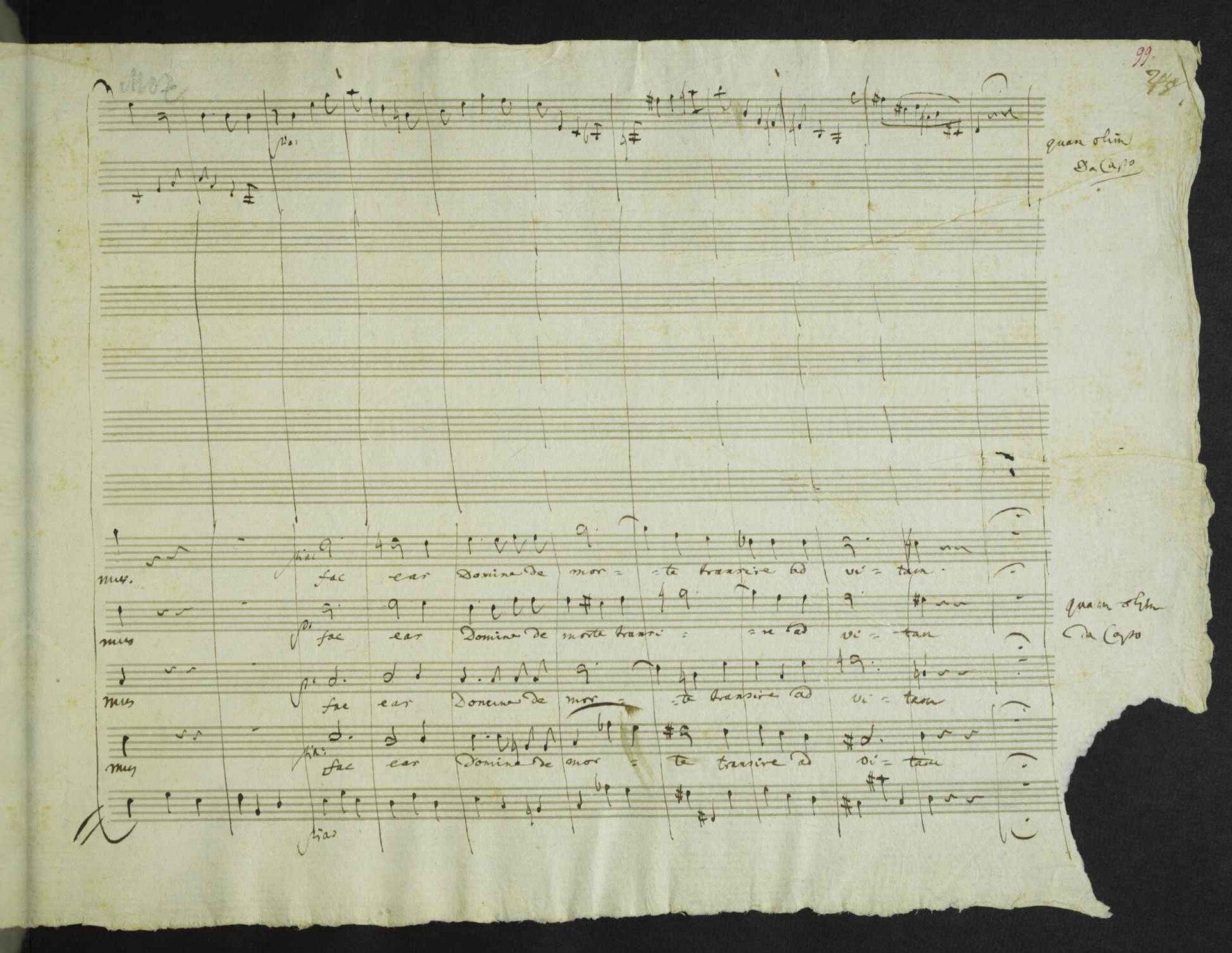
The work is scored for four vocal soloists, mixed chorus and an orchestra of basset horns, bassoons, trumpets, trombones, timpani, strings and organ, and the score was first published in 1800 by Breitkopf und Härtel in Leipzig.
11. Catalogue and Numbering
The standard list of Mozart's works follows the K numbers of the first edition of Ludwig von Köchel's chronological-thematic catalogue, published in Leipzig in 1862 under Köchel's name. A second numbering in the same list follows the sixth edition of the Köchel catalogue, published in Wiesbaden in 1964 and labelled K6.
Among the numbered works are the symphonies, of which the last three were composed in 1788 and include the Jupiter Symphony (KV 551).
The numbered piano concertos come to 27, the last of them K.
12. Selected Works
| Work | Catalogue | Year | First performance | Notes |
|---|---|---|---|---|
| Le nozze di Figaro | K. 492 | 1 May 1786 Burgtheater | da Ponte after Beaumarchais | |
| Don Giovanni | K. 527 | 1787 | 29 October 1787 Estates Theatre Prague | da Ponte; conducted by Mozart |
| Così fan tutte | K. 588 | 1789 and 1790 | 26 January 1790 Burgtheater | da Ponte |
| La clemenza di Tito | K. 621 | 1791 | Prague, September 1791 | coronation of Leopold II as King of Bohemia |
| Die Zauberflöte | K. 620 | 1791 | 30 September 1791 Theater auf der Wieden | Schikaneder; conducted by Mozart |
| Symphony No. 41 | K. 551 | 1788 | four movements; published in parts 1793 | |
| Piano Concerto No. 21 | K. 467 | 1785 | three movements; 30 minutes |
13. Reception and Legacy
Distorting views of Mozart's life and works proved so tenacious that scholars still find it remarkably difficult to assert their findings against portrayals such as Hildesheimer's Mozart or Shaffer's Amadeus. As Mozart's widow and the administrator of his estate Constanze made it her task to preserve his memory and sang his music in European cities.
A clavichord that belonged to Mozart came to the Dommusikverein in 1844 with the bequest of his younger son Franz Xaver Wolfgang.
The Digital Mozart Edition aims to make Mozart's entire output available in digital form free of charge for scholarly, private and educational use, while the Bibliotheca Mozartiana, founded in 1841, holds about 35,000 literature titles and more than 6,000 music items.
14. Timeline: from Salzburg in 1756 to the Requiem of 1791
- 27 January 1756Birth in SalzburgWolfgang Amadeus Mozart was born in the Hagenauer Haus at No. 9 Getreidegasse in Salzburg, the house in which his family had lived since 1747.
- 13 October 1762First audience with Maria TheresaThe Mozarts were received for the first time by Empress Maria Theresa in Vienna, and Leopold began to build the network of aristocratic patrons that supported the family's later visits.
- 1769-1773Three journeys to ItalyMozart travelled to Italy with his father on three journeys and wrote operas for the Teatro Regio Ducale in Milan, among them Mitridate re di Ponto and Lucio Silla.
- September 1777Departure for Munich, Mannheim and ParisMozart left the Salzburg court service and travelled through Munich and Mannheim to Paris, where he hoped for a post or an opera commission.
- 3 July 1778Death of Mozart's mother in ParisAnna Maria Mozart died in Paris during the journey she had undertaken with her son, while Mozart had won neither a permanent post nor an opera commission.
- early June 1781Break with the Salzburg archbishopAfter long disagreements with Archbishop Hieronymus von Colloredo a final breach came in early June, and Mozart remained in Vienna as a freelance composer and pianist.
- July 1782Die Entführung aus dem SerailMozart's Singspiel Die Entführung aus dem Serail was performed in Vienna under Joseph II's promotion of German opera and became his most successful stage work during his lifetime.
- 4 August 1782Marriage to Constanze WeberConstanze Weber and Wolfgang Amadeus Mozart married in St Stephen's Cathedral despite the open rejection of the match by Mozart's father Leopold.
- 29 September 1784Move to the Domgasse apartmentMozart moved into a representative first-floor apartment at Domgasse 5, where he lived with Constanze until 1787 and where he wrote Le nozze di Figaro and three of the Haydn quartets.
- 1 May 1786Premiere of Le nozze di FigaroLe nozze di Figaro, with a libretto by Lorenzo Da Ponte after Beaumarchais, was first performed in Vienna's Burgtheater under Mozart's direction.
- 29 October 1787Premiere of Don Giovanni in PragueDon Giovanni was first performed at Prague's Estates Theatre with Mozart conducting, during his second stay in the city.
- summer 1788The last three symphoniesMozart composed the symphonies in E flat, G minor and C major in rapid succession; whether they were performed in his lifetime cannot be established from the surviving sources.
- 26 January 1790Così fan tutteCosì fan tutte, Mozart's third and last opera buffa on a text by Lorenzo Da Ponte, was first performed at the Burgtheater in Vienna.
- 30 September 1791Premiere of Die ZauberflöteDie Zauberflöte, with a libretto by Emanuel Schikaneder, was first performed at the Theater auf der Wieden in Vienna with Mozart conducting.
- 5 December 1791Death in ViennaMozart died in Vienna at the age of 35, leaving the Requiem K. 626 unfinished; he was buried in the St Marx cemetery.
- February 1792Süssmayr completes the RequiemMozart's pupil Franz Xaver Süssmayr completed the Requiem in February 1792, after earlier work on the score by Franz Jakob Freystädtler and Joseph Eybler.
References (18)
- 1Mozart, Wolfgang Amadeus — Deutsche Biographie (Neue Deutsche Biographie / Allgemeine Deutsche Biographie) WebView source
- 2Mozart Residence — International Mozarteum Foundation WebView source
- 3List of works by Wolfgang Amadeus Mozart — IMSLP / Petrucci Music Library WebView source
- 4Requiem in D minor, K.626 (Mozart, Wolfgang Amadeus) — IMSLP / Petrucci Music Library WebView source
- 5Mozart's Birthplace — Tourismus Salzburg GmbH WebView source
- 6Wolfgang Amadeus Mozart — Wien Geschichte Wiki, City of Vienna WebView source
- 7Leopold Mozart — Wien Geschichte Wiki, City of Vienna WebView source
- 8Constanze Mozart — Wien Geschichte Wiki, City of Vienna WebView source
- 9Così fan tutte, K.588 (Mozart, Wolfgang Amadeus) — IMSLP / Petrucci Music Library WebView source
- 10Le nozze di Figaro, K.492 (Mozart, Wolfgang Amadeus) — IMSLP / Petrucci Music Library WebView source
- 11Don Giovanni, K.527 (Mozart, Wolfgang Amadeus) — IMSLP / Petrucci Music Library WebView source
- 12Das Museum — Mozarthaus Vienna Web↩View source
- 13Figarohaus — Wien Geschichte Wiki, City of Vienna Web↩View source
- 14Piano Concerto No.21 in C major, K.467 (Mozart, Wolfgang Amadeus) — IMSLP / Petrucci Music Library WebView source
- 15Mozart's Birthplace — International Mozarteum Foundation WebView source
- 16Digitale Mozart-Edition (DME) — Internationale Stiftung Mozarteum WebView source
- 17Symphony No.41 in C major, K.551 (Mozart, Wolfgang Amadeus) — IMSLP / Petrucci Music Library WebView source
- 18Die Zauberflöte, K.620 (Mozart, Wolfgang Amadeus) — IMSLP / Petrucci Music Library WebView source