Buddha
The life, teaching and legacy of Siddhartha Gautama, the historical Buddha: the dating problem, the birth at Lumbini, the renunciation and awakening, the first sermon at Sarnath, the forty-five years of teaching, the parinirvana at Kushinagar, the doctrines of the four noble truths and the eightfold path, the Pali canon, and the pilgrimage sites inscribed by UNESCO.
Siddhartha Gautama, known as the Buddha or awakened one, is the historical founder of Buddhism, a wandering teacher in the Gangetic plain of northern India whose life is placed by tradition in the sixth and fifth centuries BCE and by much modern scholarship in the fifth century BCE. Nothing was written down in his lifetime: the discourses attributed to him were transmitted orally for centuries before being committed to writing, and the full life stories are later compositions that blend remembered teaching with legend. His teaching of the four noble truths, the eightfold path and the middle way between indulgence and self-mortification spread across Asia under royal patronage, above all that of the Mauryan emperor Ashoka, whose pillar inscription of the third century BCE still identifies Lumbini as his birthplace.
In this article
- 1Overview
- 2Sources and the Problem of Chronology
- 3Birth and Early Life
- 4The Four Signs and the Search
- 5Enlightenment at Bodh Gaya
- 6The Teaching
- 7Ethics and Karma
- 8Refusal of Metaphysics
- 9Ministry, First Sermon and Death
- 10Lumbini
- 11Legacy and the Buddhist World
- 12Key Dates
- 13Timeline: from Lumbini in the fifth century BCE to the World Heritage listings
- 14Knowledge graph
Overview
The title Buddha means awakened, and it is conferred on a person who discovers the path to nirvana and teaches that discovery to others. The historical Buddha is also called Gotama Buddha and Siddhartha Gautama.
1. Sources and the Problem of Chronology
What can be known of the teaching rests on texts set down centuries after his death, composed in languages he probably did not speak, and they disagree among themselves. He wrote none of his teachings, which were carried orally for at least three centuries. A large collection of Buddhist texts may have been committed to writing for the first time in Sri Lanka during the first century BCE.
The chronology is equally unsettled. Earlier scholarship placed him at approximately 560 to 480 BCE, while many scholars now hold a death around 405 BCE. The Theravada school preserves its own reckoning of 623 to 543 BCE, and the prevailing current view places him in around the fifth century BCE. No date can be conclusively established.
The first complete biography of the Buddha in Pali is the Nidanakatha, an introduction to the Jataka verses of the fifth Nikaya.
2. Birth and Early Life
The figure known as the Buddha belonged to the Shakya clan. His father was Suddhodana, and in later life he married Yasodhara and had a son named Rahula. In the traditional account of the conception a white elephant circled Maya three times and entered her womb from her right side. Because the Shakya political system was an oligarchy rather than a monarchy, Suddhodana was most likely a high-caste elected official rather than a king.
Siddhartha's father, fearing the boy would become a spiritual leader, shielded him from anything unpleasant for the first 29 years of his life. According to the legend Siddhartha lived among the luxuries of the palace, married, had a son and lacked nothing as his father's heir until the encounter with the four signs.
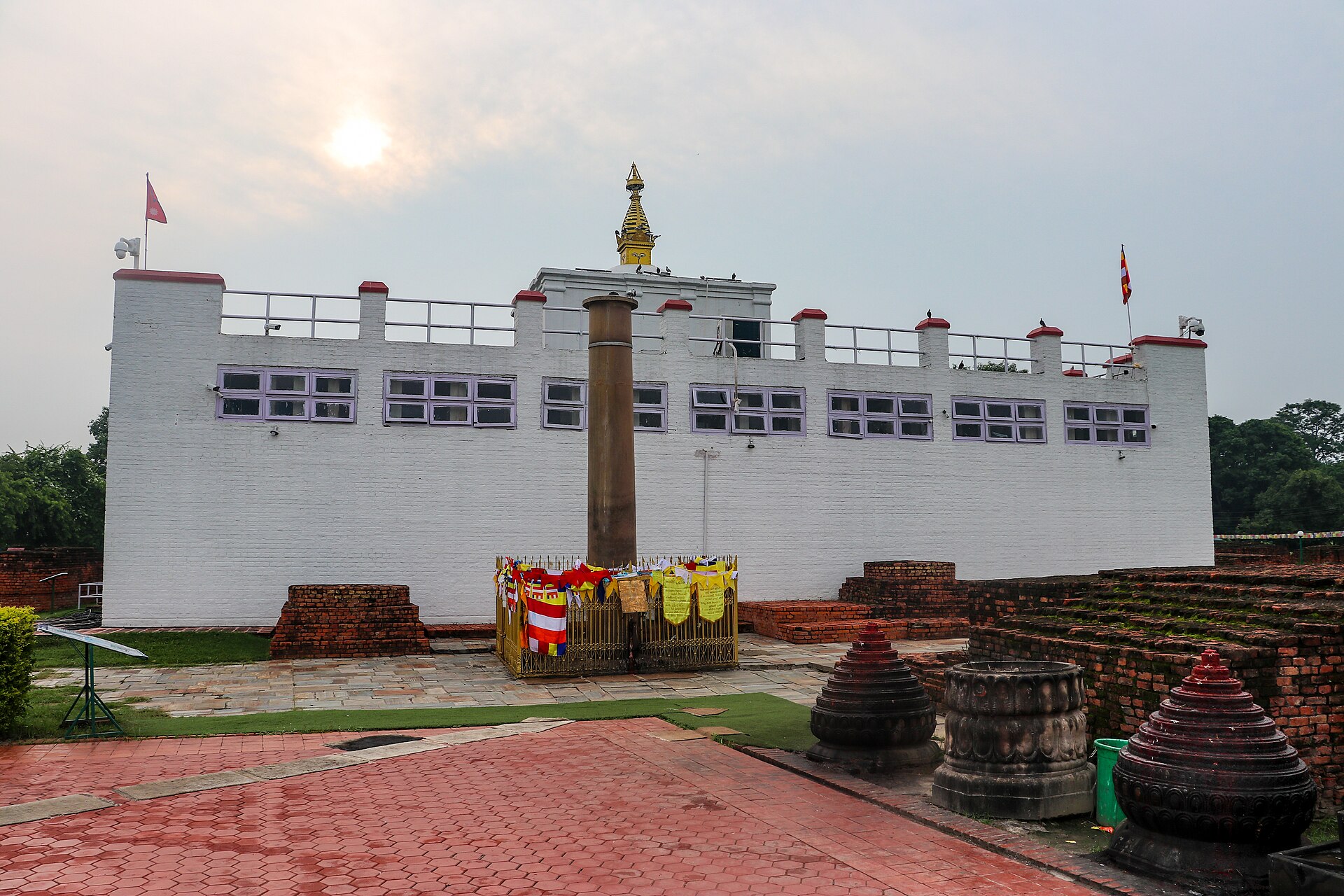
The historical Buddha, also called Gotama Buddha and Siddhartha Gautama, was born at Lumbini in the Nepalese Terai near the Indian border. Siddhartha is described as born into the royal family of Kapilavastu, a small kingdom in the Himalayan foothills.
3. The Four Signs and the Search
The encounter with an aged man, a sick man, a dead man and a religious ascetic gave Siddhartha the four signs that turned his life toward renunciation. From them he drew the conclusion that he too would grow old, sicken and die.
He first took up the practice of yogic meditation under Alara Kalama and Uddaka Ramaputta, and later departed from these teachers. The popular story tells of the milkmaid Sujata offering him rice milk in the woods.
4. Enlightenment at Bodh Gaya
Beneath the Bodhi tree at Bodh Gaya he vowed to attain enlightenment there or to die in the attempt, and in a flash of illumination he understood the Four Noble Truths.
The site marks the moment Prince Siddhartha became the Buddha, an event of central importance in Buddhist history. The Mahabodhi Temple Complex preserves this memory through its 50 m high temple, the Vajrasana, the sacred Bodhi Tree and six other sacred sites.
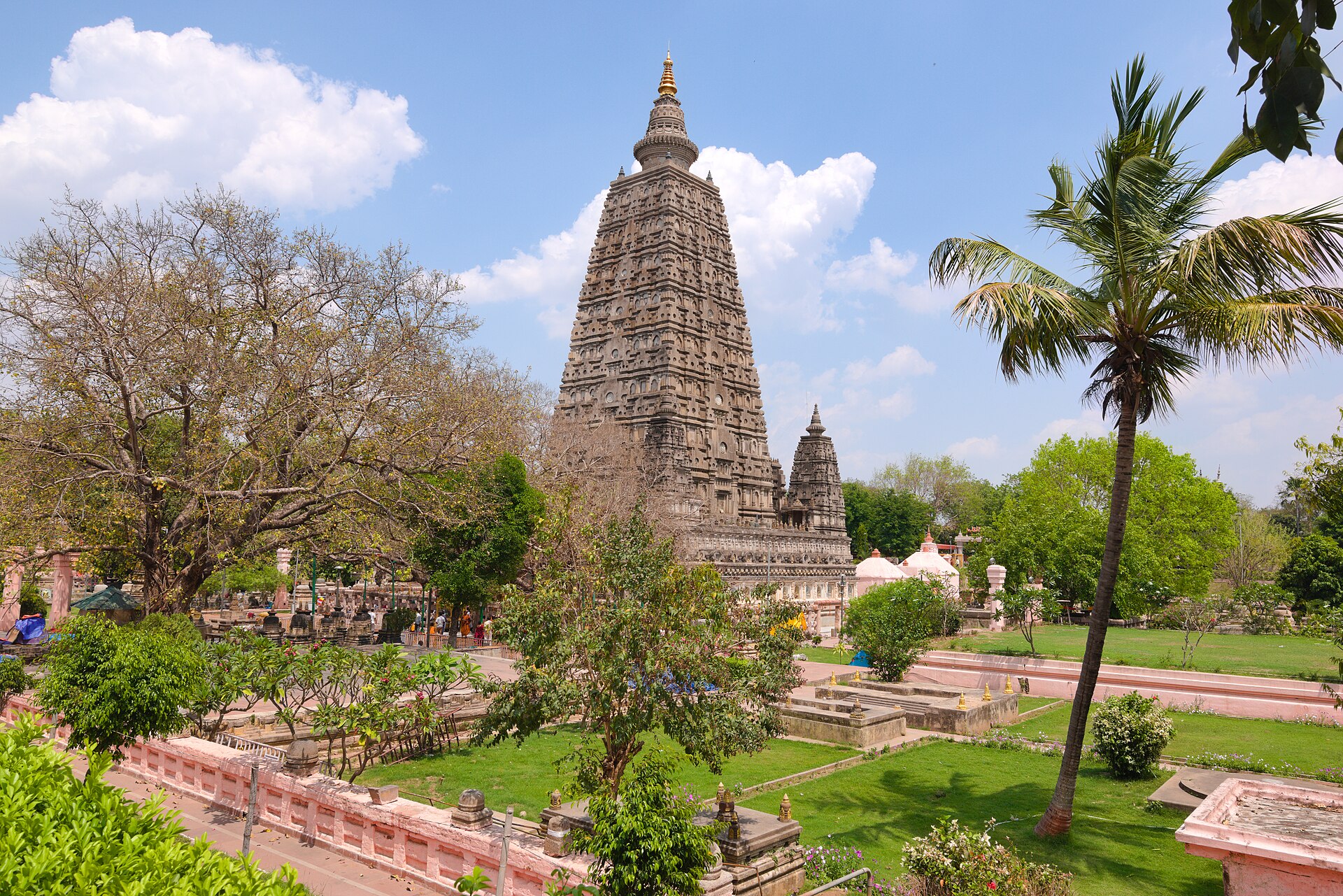
Emperor Ashoka built the first temple at Bodh Gaya in 260 BCE when he came to worship the Bodhi Tree. The complex received World Heritage listing in 2002.
5. The Teaching
After his awakening the Buddha devoted the remaining 45 years of his life to teaching the insights and practices that had led him there. The teaching centers on the four noble truths: dukkha, its origin, its cessation and the path to its cessation. The first truth defines dukkha as birth, aging, death, sorrow, lamentation, pain, grief and despair, and also as separation from the loved and not getting what is wanted. Asked what the noble truth of dukkha is, the text replies that it is the six internal sense media, and it lists the five clinging-aggregates — form, feeling, perception, fabrications and consciousness — as stressful. A canonical passage holds that it is through not realizing and not penetrating these four truths that the long course of birth and death has been undergone.
The origin of dukkha is the craving that makes for further becoming, accompanied by passion and delight. The third truth is the remainderless fading and cessation of that craving, with its renunciation, relinquishment, release and letting go. The goal is described as peace, the stilling of all fabrications, the relinquishment of all acquisitions, the ending of craving and dispassion.
The fourth truth is the Noble Eightfold Path — right view, right resolve, right speech, right action, right livelihood, right effort, right mindfulness and right concentration — the way to the cessation of dukkha. An analysis attributed to the nun Dhammadinna places the path under the three aggregates of virtue, concentration and discernment. Virtue, or sila, is the cornerstone, defined by right speech, right action and right livelihood.
This path is the middle way, avoiding both sensual indulgence and self-affliction, and leading to calm, direct knowledge, self-awakening and liberation. A simile likens it to an ancient path travelled by earlier self-awakened ones, and the teaching concludes that if monks dwell rightly the world will not be empty of arahants.
Sariputta compared the four noble truths to an elephant's footprint, which encompasses all other footprints. Modern scholarship, however, argues from grammatical anomalies in the Pali that the expression noble truth is a later addition. It likewise treats the twelve-link chain of dependent origination as a later compilation, since the texts preserve differing formulations of the list.
6. Ethics and Karma
Rebirth is governed by karma, understood as a kind of cosmic justice in which fortunate births reward good deeds and unhappy births follow evil ones.
Those who take the Five Precepts commit themselves to refraining from killing, stealing, sexual misconduct, lying and drunkenness. Observing them is said to produce rebirth as a human being and to prevent rebirth in one of the lower realms of suffering, and the amount of good or bad karma an action generates is said to depend strongly on the motivation behind it. Lay people observe the Five Precepts, lay people undertaking intensive meditation observe the Eight Precepts, and novice monks and nuns observe the Ten Precepts.
The Buddha opposed animal sacrifice without qualification, holding that it produces bad karma rather than religious merit.
7. Refusal of Metaphysics
When the question turns to the condition of an arhat after death the Buddha is offered four positions — that the arhat exists, that the arhat does not exist, that the arhat both exists and does not exist, and that the arhat neither exists nor does not exist — and he declines every one of them. To make the point he draws a simile: a man struck by an arrow insists on learning who shot it before he will accept treatment.
8. Ministry, First Sermon and Death
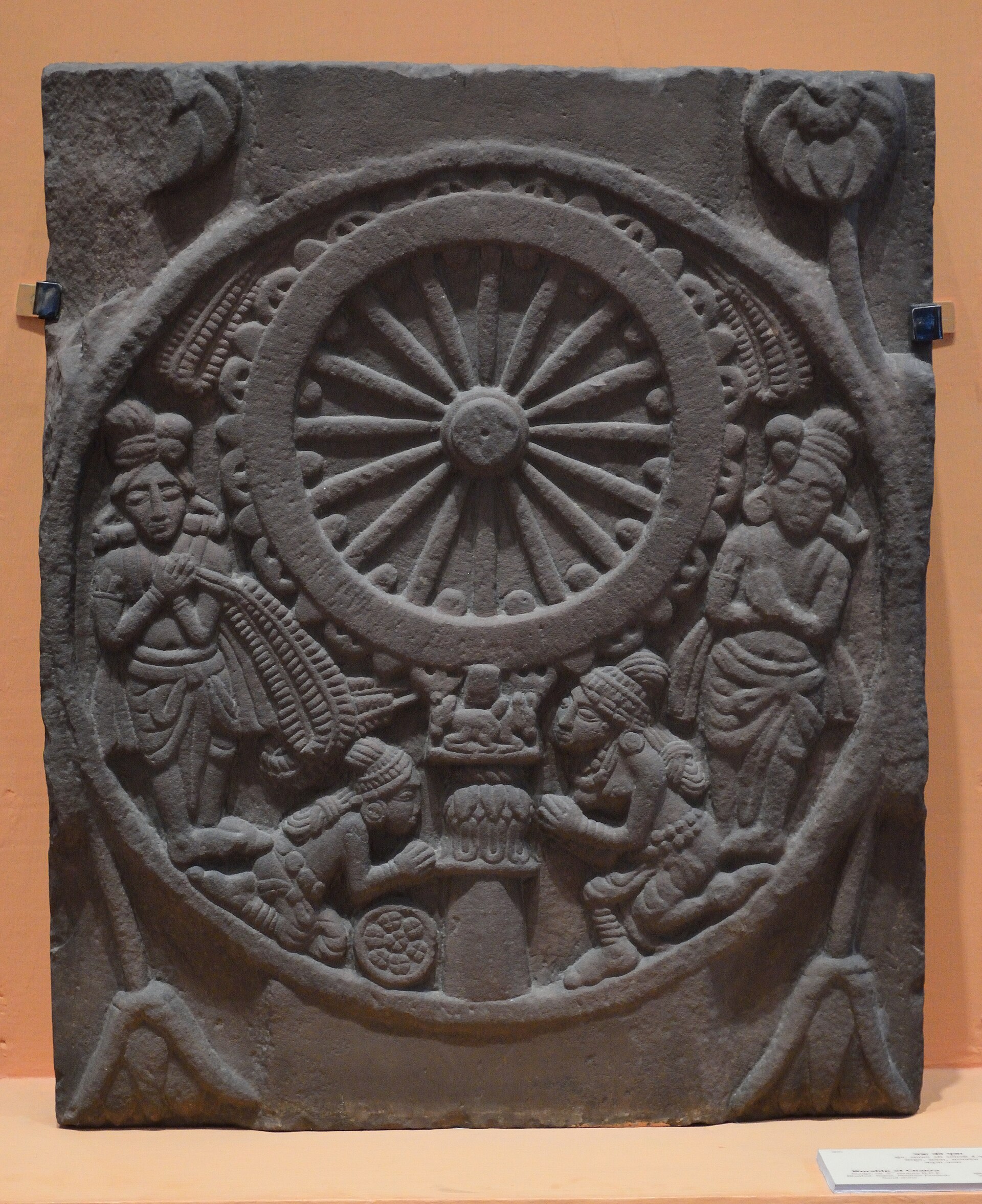
The first sermon was addressed to the group of five monks at the Deer Park at Isipatana near Varanasi, and while it was being given Kondanna attained the dustless, stainless eye of the Dhamma: whatever is subject to origination is subject to cessation. The middle way is precisely the Noble Eightfold Path, from right view and right resolve through right mindfulness and right concentration. The Buddha concludes that his release is unprovoked, that this is his last birth and that there is now no further becoming.
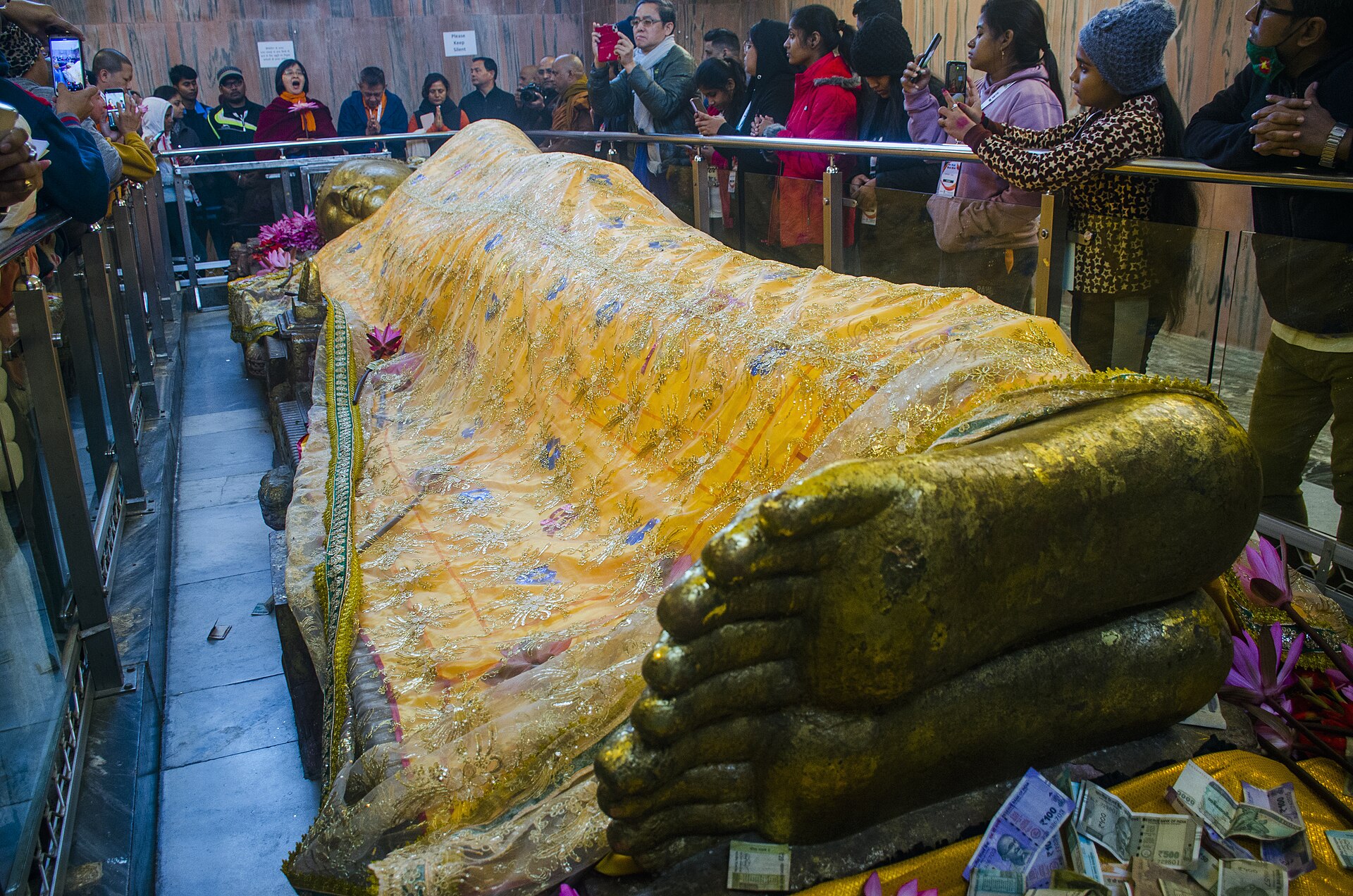
The Buddha attained mahaparinirvana at Kushinagar, a Buddhist pilgrimage centre. He told his disciples that after his death they should have no leader and that he did not wish to be venerated. The Buddha asked that his remains be placed in a stupa at a crossroads, but his disciples divided them among eight or ten stupas marking important sites in his life. At the Second Council in 383 BCE a dispute over monastic discipline produced the first schism, between the Sthaviravada and the majority Mahasanghika school. The schism eventually produced three major schools of thought: Theravada, Mahayana and Vajrayana Buddhism.
9. Lumbini
Lumbini is a village, archaeological site and place of pilgrimage in Nepal's Rupandehi District, honoured as the birthplace of Siddhartha Gautama. Tradition holds that he was born there while his mother was travelling to her parents' home.
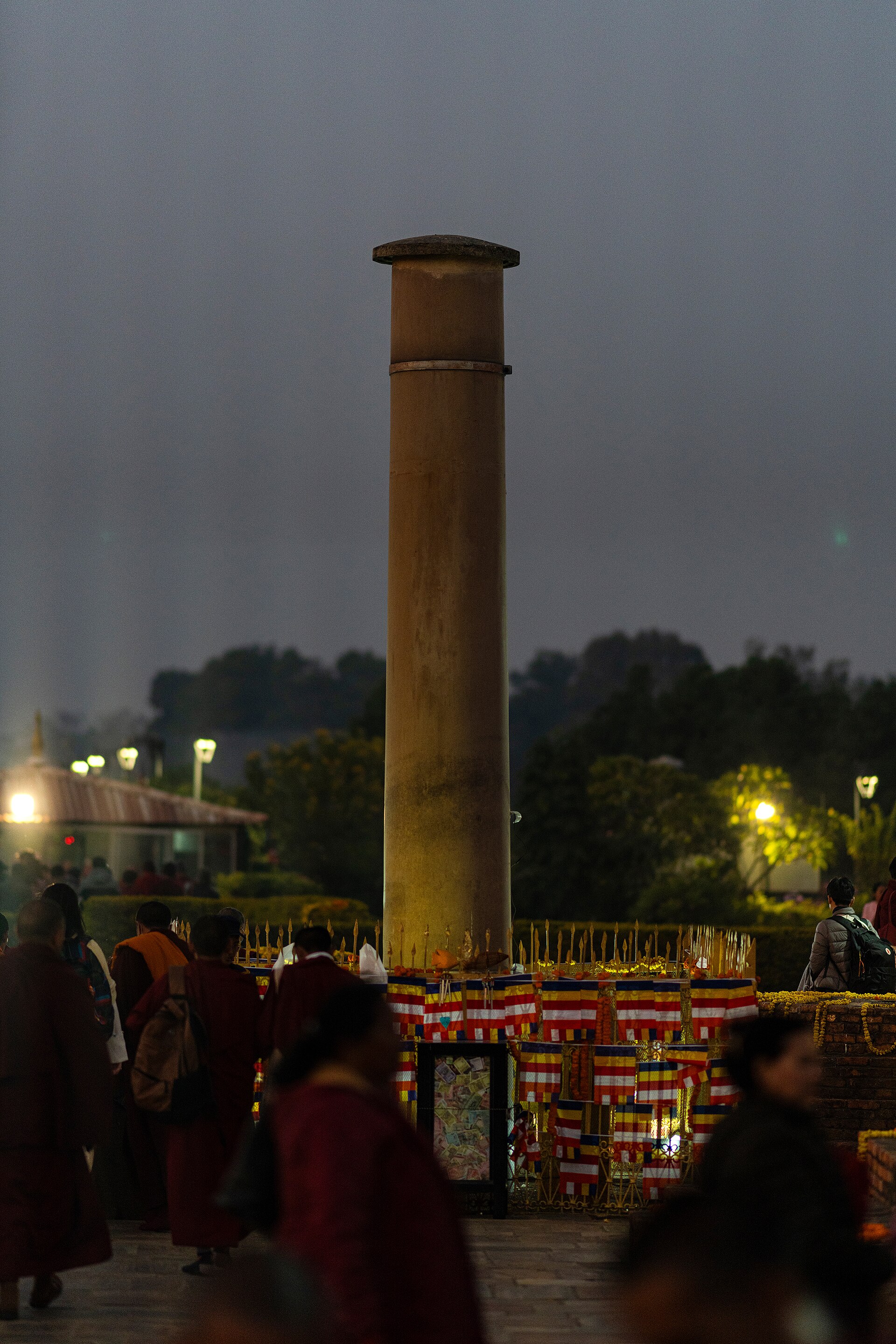
The conserved area includes the Shakya Tank, the brick remains of the Maya Devi Temple and the sandstone Ashoka pillar with its Pali inscription in Brahmi script. The inscription on the 22-foot pillar, in Brahmi and Pali script, records that King Piyadasi came in person to do homage because the Buddha was born there. UNESCO's statement of Outstanding Universal Value places the birth at Lumbini in the Terai plains of southern Nepal in 623 BC. Excavations have uncovered Buddhist monasteries from the third century BC to the fifth century AD and stupas from the third century BC to the fifteenth century AD.
10. Legacy and the Buddhist World
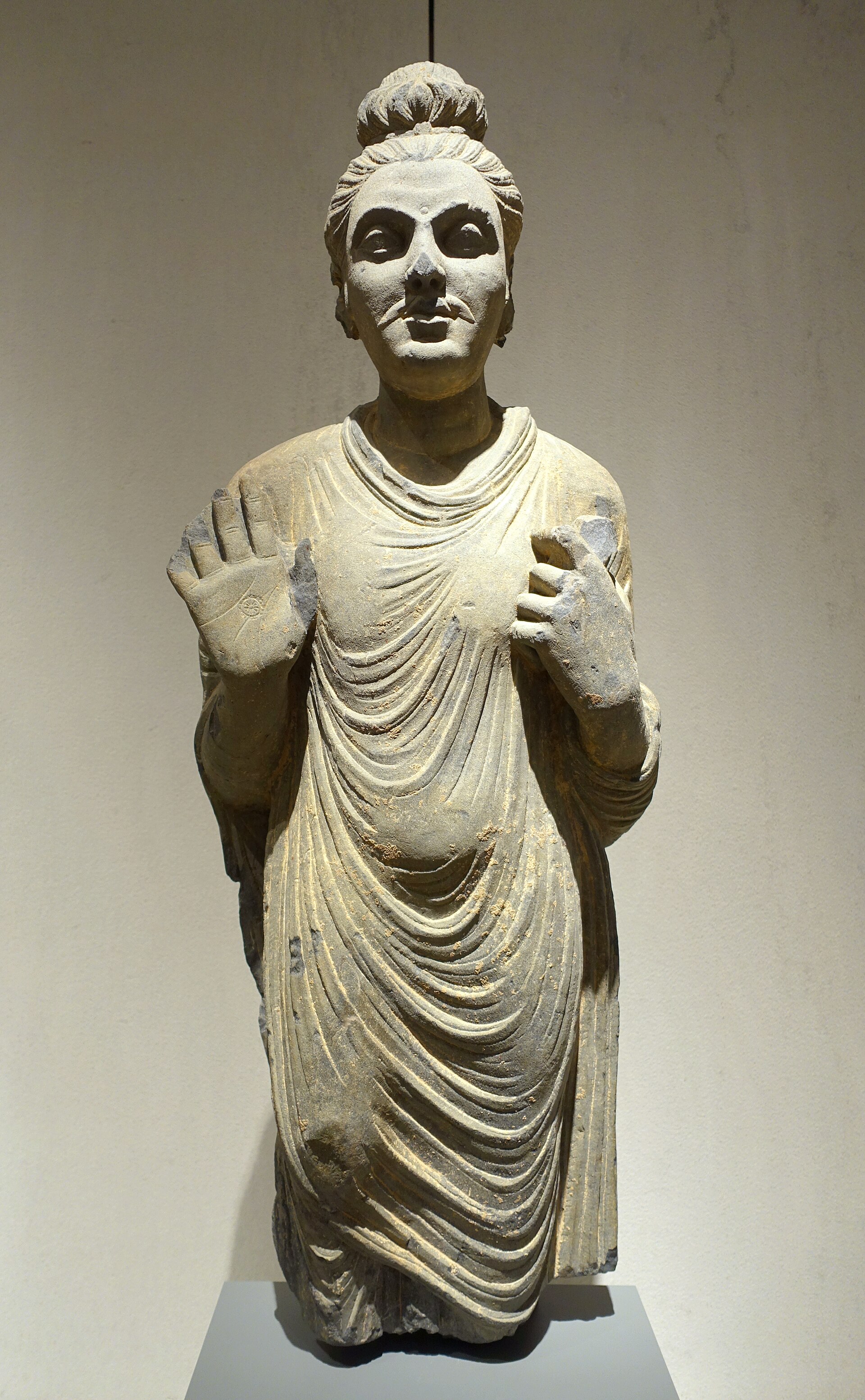
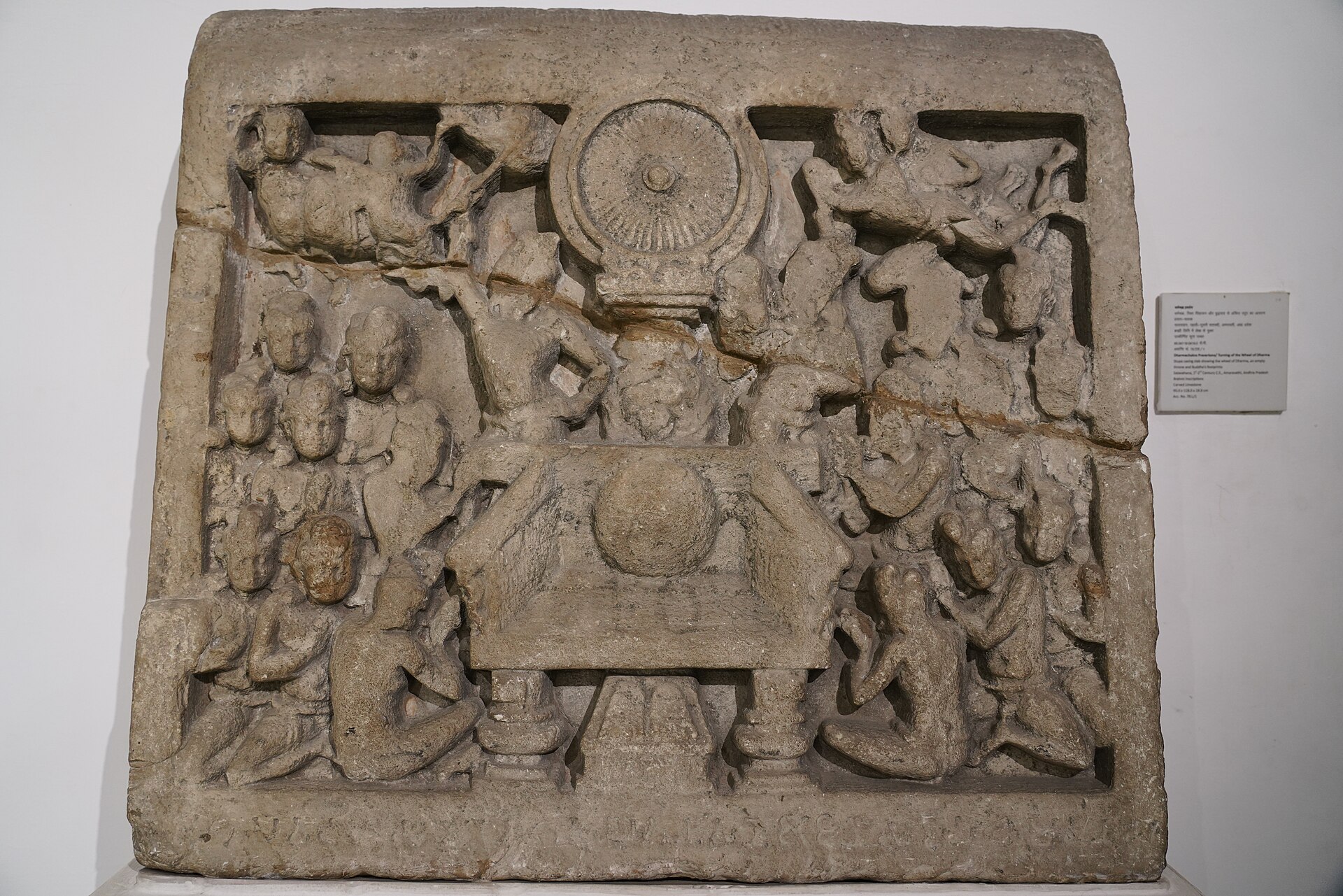
In the earliest Buddhist art of India the Buddha was not shown in human form; his presence was indicated by signs such as footprints or an empty seat. In the first century AD the human image came to dominate Buddhist art, and one of the earliest sites of this imagery lay on India's north-western frontier.
Ashoka, third king of the Mauryan Empire, reigned from 268 to 232 BCE and is best known for renouncing war and promoting Buddhism. His turning came with the Kalinga campaign of about 260 BCE and the conversion that followed it. He had edicts engraved in stone throughout his empire and disinterred and reinterred the relics in 84,000 stupas. He also sent Buddhist missionaries to Sri Lanka, China, Thailand and Greece, establishing Buddhism as a major world religion.
The Tipitaka, whose name means three baskets, is the Pali canon, the collection of primary texts that form the doctrinal foundation of Theravada Buddhism. It comprises the Vinaya, Sutta and Abhidhamma Pitaka. The Vinaya Pitaka sets out the rules of conduct for the monastic community, while the suttas are divided among five nikayas: the long, middle-length, grouped, further-factored and little-text collections.
11. Key Dates
-
c. 563 BCEBirthTraditional chronology places the Buddha's birth in this period.
-
c. 483 BCEDeath at KushinagarThe Buddha dies at Kushinagar according to traditional dating.
-
268 to 232 BCEReign of AshokaThe Mauryan king Ashoka rules during this span.
-
about 260 BCEKalinga campaignAshoka's Kalinga campaign falls in this period.
-
1896Ashoka pillar discoveredThe Ashoka pillar is discovered.
-
1997Lumbini World Heritage listingLumbini is inscribed as a World Heritage site.
-
2002Bodh Gaya World Heritage listingBodh Gaya is inscribed as a World Heritage site.
12. Timeline: from Lumbini in the fifth century BCE to the World Heritage listings
- c. 563 BCEBirth at LumbiniBuddhist tradition places the birth of Siddhartha Gautama in the gardens of Lumbini, in the Terai plains of what is now southern Nepal; the traditional chronology dates it to about 563 BCE.
- c. 534 BCEThe four sights and the renunciationIn the traditional chronology, which dates the birth to about 563 BCE, Siddhartha encountered an aged man, a sick man, a dead man and an ascetic, and left the palace at the age of 29.
- c. 528 BCEAwakening at Bodh GayaAfter six years of ascetic practice, the traditional chronology places his awakening beneath a Bodhi tree at Bodh Gaya at about the age of 35, when he became the Buddha.
- c. 528 BCEFirst sermon at Sarnath and the founding of the sanghaThe Buddha preached his first sermon in the Deer Park at Sarnath, setting out the middle way, the four noble truths and the eightfold path, and Kondanna was the first to understand.
- c. 483 BCEParinirvana at KushinagarThe Buddha died at Kushinagar at the age of 80; the district's own account describes the place as the site of his mahaparinirvana.
- c. 483 BCEFirst Council at RajagahaBuddhist tradition holds that five hundred disciples gathered shortly after the Buddha's death to compile his teachings, with Ananda reciting the discourses and Upali the monastic discipline.
- c. 383 BCESecond Council and the first schismA dispute over monastic discipline at the Second Council led to the first schism, between the Sthaviravada and the Mahasanghika school.
- c. 260 BCEAshoka's Kalinga war and conversionThe carnage of the Kalinga campaign moved the Mauryan emperor Ashoka to renounce war and embrace the Buddha's teaching, which he then promoted across his empire.
- c. 249 BCEAshoka's pillar at LumbiniAshoka visited Lumbini and had a sandstone pillar erected there; its inscription records that he came in person to do homage because the Buddha was born at the site.
- c. 350-375 CESeng-Tsai's description of LumbiniThe Chinese monk Seng-Tsai left the first detailed foreign account of Lumbini, describing the sculpture of Maya giving birth and the slab marking the Buddha's first steps.
- 1896Rediscovery of the Ashoka pillar at LumbiniAn ancient pillar was found mostly buried in the earth at Lumbini, was reported to the Indologist Vincent Arthur Smith, and excavations followed at the site.
- 1972-1978Master plan for LumbiniA master plan for the development of Lumbini was drawn up with the United Nations and carried out by the architect Kenzo Tange between 1972 and 1978.
- 1988Symposium at Göttingen on the date of the BuddhaAn international symposium held at Göttingen in 1988 reopened the question of the Buddha's dates, after which the older consensus of about 560 to 480 BCE no longer held.
- 1997Lumbini inscribed as a World Heritage SiteLumbini, the birthplace of the Buddha, was added to the UNESCO World Heritage List in 1997 under criteria iii and vi.
- 2002Mahabodhi Temple inscribed as a World Heritage SiteThe Mahabodhi Temple Complex at Bodh Gaya was inscribed on the World Heritage List in 2002 under five cultural criteria.
References (18)
- 1Buddha — Stanford Encyclopedia of Philosophy WebView source
- 2Buddha — Internet Encyclopedia of Philosophy WebView source
- 3Lumbini — World History Encyclopedia WebView source
- 4Siddhartha Gautama — World History Encyclopedia WebView source
- 5Buddhism and Buddhist Art — The Metropolitan Museum of Art (Heilbrunn Timeline of Art History) WebView source
- 6Mahabodhi Temple Complex at Bodh Gaya — UNESCO World Heritage Centre WebView source
- 7The First Noble Truth: The Noble Truth of dukkha — Access to Insight (Barre Center for Buddhist Studies) WebView source
- 8Four Noble Truths: cattari ariya saccani — Access to Insight (Barre Center for Buddhist Studies) WebView source
- 9Ethics in Indian Buddhism — Stanford Encyclopedia of Philosophy WebView source
- 10Virtue: sila — Access to Insight (Barre Center for Buddhist Studies) WebView source
- 11Dhammacakkappavattana Sutta: Setting the Wheel of Dhamma in Motion (SN 56.11) — Access to Insight (Barre Center for Buddhist Studies) WebView source
- 12Setting the Wheel of Dhamma in Motion (SN 56:11) — Dhamma Talks (Thanissaro Bhikkhu) WebView source
- 13Kushinagar: About District — District Kushinagar, Government of Uttar Pradesh WebView source
- 14Buddhism — World History Encyclopedia WebView source
- 15Lumbini, the Birthplace of the Lord Buddha — UNESCO World Heritage Centre WebView source
- 16Ashoka the Great — World History Encyclopedia WebView source
- 17Tipitaka: The Pali Canon — Access to Insight (Barre Center for Buddhist Studies) WebView source
- 18The Fourth Noble Truth: The Noble Truth of the Path Leading to the Cessation of dukkha — Access to Insight (Barre Center for Buddhist Studies) WebView source