Maya Civilization
The pre-Columbian Maya civilization of Mesoamerica — its cities, hieroglyphic writing, astronomy and calendars, the Classic-period collapse debate, and the Maya peoples of today.
The Maya are an Indigenous people of Mesoamerica whose civilization built cities such as Tikal, Calakmul, Palenque and Chichén Itzá, developed a hieroglyphic script and highly accurate calendars including the Long Count, and reached its height in the Classic period before the central lowland cities were largely abandoned in the ninth and tenth centuries CE. Postclassic centers such as Chichén Itzá, Uxmal and Mayapán flourished until the Spanish conquest, and more than seven million Maya live today across southern Mexico, Guatemala, Belize, Honduras and El Salvador.
In this article
- 1Geography and Environment
- 2Chronology
- 3Political Organization
- 4Major Cities and Centers
- 5Writing and Decipherment
- 6Calendars, Mathematics and Astronomy
- 7Society, Economy and Daily Life
- 8Art, Architecture and Belief
- 9Decline and Transformation
- 10Legacy and Modern Maya
- 11Timeline: from the first villages to the Spanish conquest
- 12Knowledge graph
Geography and Environment
The origins of Maya culture are thought to lie between 7000 and 2000 BCE, when hunter-gatherers abandoned nomadic habits and created more permanent settlements; recent analyses suggest the first settlers came from South America and developed maize by 4000 BCE. As early as 1500 BCE the Maya had settled in villages and developed an agriculture based on the cultivation of corn (maize), beans and squash, and by 600 CE cassava was also grown.
1. Chronology
The Maya past is conventionally divided into three broad periods. The Preclassic period spans roughly 1500 to 200 BCE.
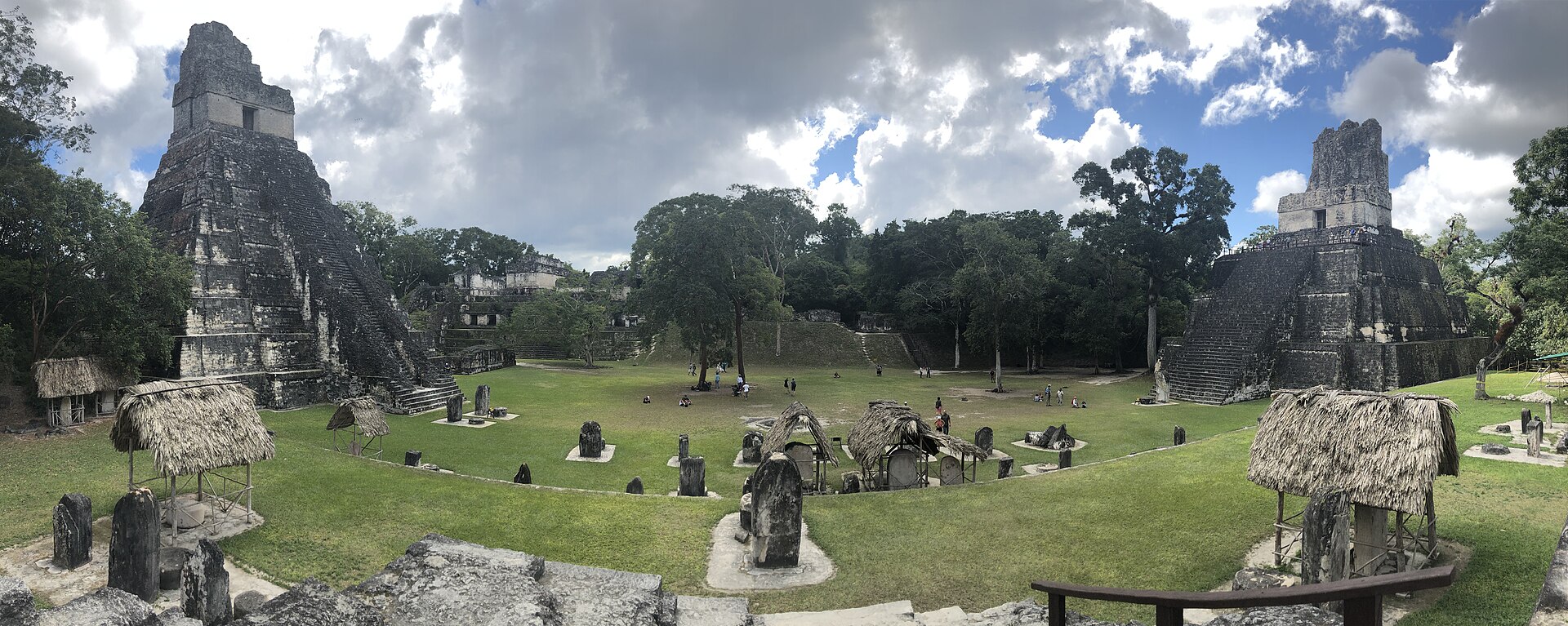
The oldest date recorded in the Classic era is on Stela 29 at Tikal in 292 CE.
In about 378 CE the ninth recorded ruler of Tikal, Chak Toh Ich'ak I, died on the day a foreign warrior named K'ak Sih (Fire-Born), thought to be from Teotihuacan, arrived.
By about 1250 Mayapan was the political capital of a confederation of provinces in northwestern Yucatan, with about 12,000 inhabitants spread over some two square miles and surrounded by a defensive wall over five miles long.
-
July 292 CEStela 29 at TikalStela 29 at Tikal bears a Long Count date falling in July 292 CE — the first in the lowlands 4Maya Area, 1–500 A.D. | Chronology · The Metropolitan Museum of Art, Heilbrunn Timeline of Art History ↗.
-
about 378 CEDeath of Chak Toh Ich'ak IThe ninth recorded ruler of Tikal, Chak Toh Ich'ak I, died on the day a foreign warrior named K'ak Sih (Fire-Born), thought to be from Teotihuacan, arrived 4.
-
about 790 CEClassic decline beginsThe Classic decline begins about 790 CE 6The collapse of Classic Maya civilization (Pre-Columbian civilizations) · Encyclopaedia Britannica ↗.
-
January 15, 909 CELast Long Count monument at TonináThe last Long Count monument at Toniná 7Maya Area, 500–1000 A.D. | Chronology · The Metropolitan Museum of Art, Heilbrunn Timeline of Art History ↗.
-
about 1250Mayapan as political capitalBy about 1250 Mayapan was the political capital of a confederation of provinces in northwestern Yucatan, with about 12,000 inhabitants spread over some two square miles and surrounded by a defensive wall over five miles long 5Maya Area, 1000–1400 A.D. | Chronology · The Metropolitan Museum of Art, Heilbrunn Timeline of Art History ↗.
-
1519Arrival of Hernan CortesThe Postclassic terminates with the arrival of Hernan Cortes in 1519 or his conquest of the Aztec in 1521 CE 6.
2. Political Organization
The Maya were not an empire. Their political landscape comprised more than sixty kingdoms, each ruled by a k'uhul ajaw, or divine lord. City-states and local rulers vacillated between peaceful coexistence and wrestling for control. Kings and queens of powerful city-states such as Tikal, Calakmul, Palenque and Copan commissioned artworks to cover their royal court buildings and their regal bodies.
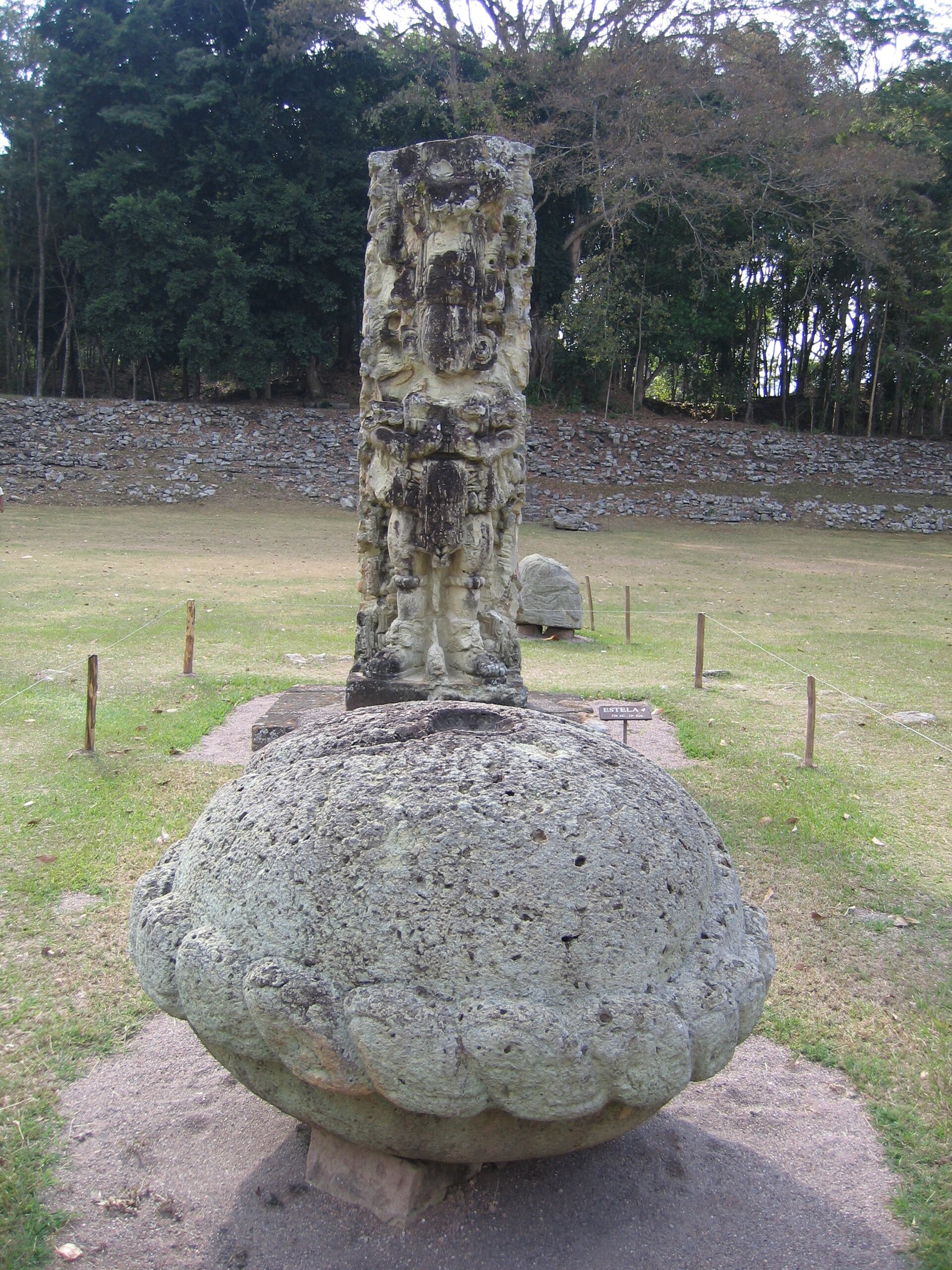
A very significant advance in following dynastic histories and plotting political territoriality was the discovery in 1958 of emblem glyphs, symbols standing for royal lineages and their domains. For many years specialists believed that the Maya inscriptions recorded little more than the passage of time and that the Maya were time worshipers, but it has been shown that certain inscriptions recorded the birth, accession, marriage and military victories of ruling dynasties.
3. Major Cities and Centers
Among the most important of these cities were Palenque, Chichén Itzá, Tikal, Copán and Calakmul 1Who were the Maya? · National Geographic ↗. At the height of the Classic Period, the Maya world consisted of more than forty cities, each housing between five thousand and fifty thousand inhabitants 2Maya | Dates, Collapse, Facts, Religion, People, Language, & Civilization · Encyclopaedia Britannica ↗.
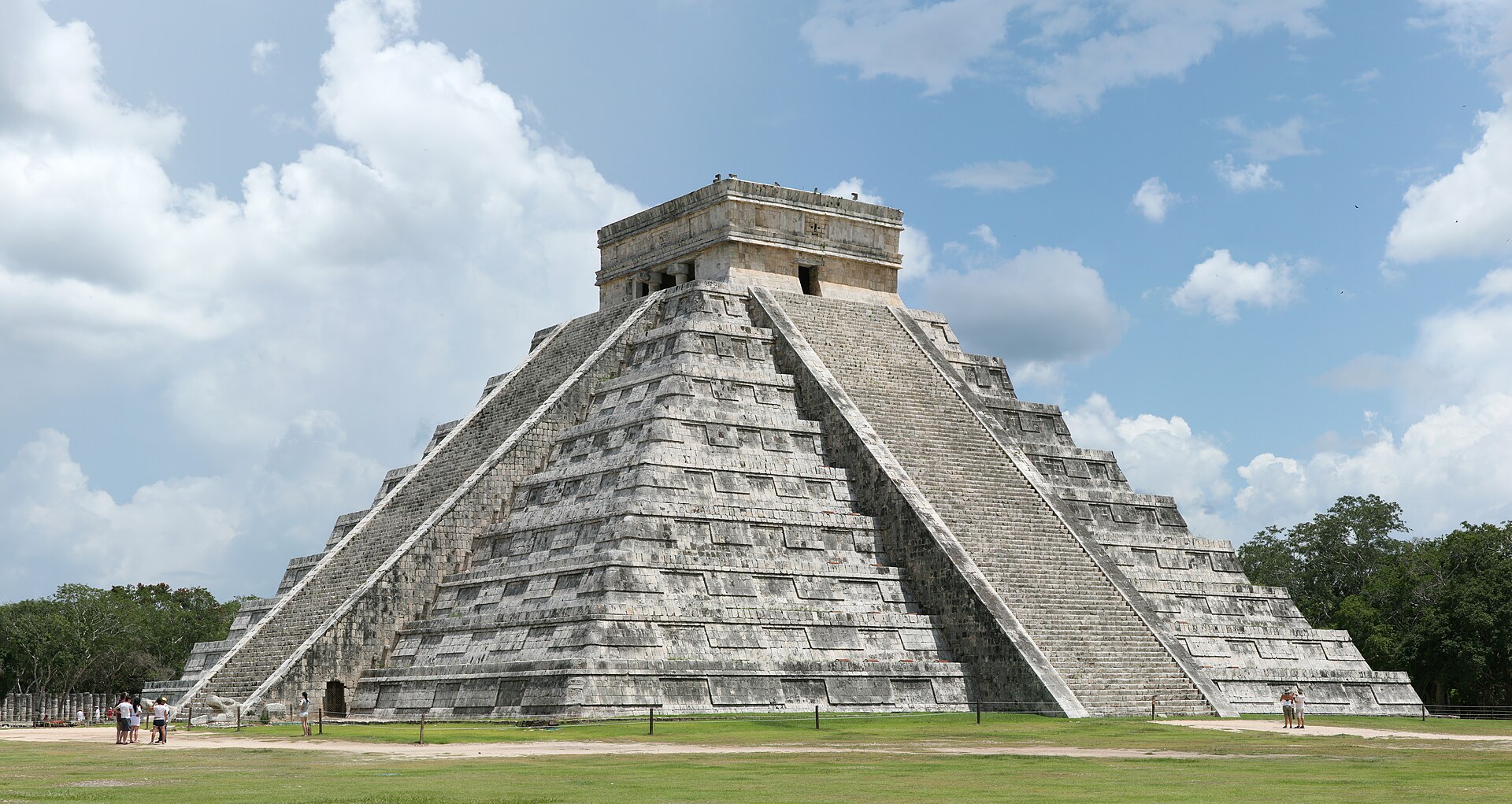
In the Postclassic Period, centers such as Chichén Itzá, Uxmal and Mayapán continued to flourish in the Yucatán Peninsula for several centuries after the great lowland cities had been depopulated 2. Chichén Itzá was one of the greatest Mayan centres of the Yucatán peninsula, and throughout its nearly thousand-year history different peoples left their mark on the city 10Pre-Hispanic City of Chichen-Itza · UNESCO World Heritage Centre ↗. Its architecture fuses Mayan construction techniques with new elements from central Mexico, making it one of the most important examples of the Mayan-Toltec civilization in Yucatán 10. Surviving buildings at the site include the Warriors' Temple, El Castillo and the circular observatory known as El Caracol 10.
Palenque stands as a prime example of a Mayan sanctuary of the classical period, reaching its height between 500 and 700 CE, when its influence extended throughout the basin of the Usumacinta River 11Pre-Hispanic City and National Park of Palenque · UNESCO World Heritage Centre ↗. Calakmul, set deep in the tropical forest of the Tierras Bajas of the Yucatán Peninsula, played a key role in the history of its region for more than twelve centuries and is characterized by well-preserved structures 12Ancient Maya City and Protected Tropical Forests of Calakmul, Campeche · UNESCO World Heritage Centre ↗. Tikal National Park lies in the heart of the jungle and contains one of the major sites of Mayan civilization, inhabited from the sixth century BCE to the tenth century CE, with a ceremonial centre of temples and palaces and public squares accessed by ramps 13Tikal National Park · UNESCO World Heritage Centre ↗. The park was inscribed by UNESCO in 1979 and covers 57,600 hectares 13.
| City or center | Period or role | Notes |
|---|---|---|
| Tikal | Classic major city | The great pyramid was built by the ruler Jasaw Chank'awil to commemorate his military victory over the Kanul kingdom in 695 CE 14The Maya civilization was a mystery. Our family business was solving it. · National Geographic ↗; Tikal National Park was inscribed by UNESCO in 1979 and covers 57,600 ha 13 |
| Calakmul | Classic major city | Set deep in the tropical forest of the Tierras Bajas of the Yucatán Peninsula; played a key role in the history of its region for more than twelve centuries 12 |
| Palenque | Classic major city | At its height between 500 and 700 CE, when its influence extended throughout the basin of the Usumacinta River 11 |
| Copán | Classic major city | Among the major Classic cities of the Maya 2 |
| Chichén Itzá | Postclassic center | One of the greatest Mayan centres of the Yucatán peninsula; fusion of Mayan construction techniques with new elements from central Mexico; surviving buildings include the Warriors' Temple, El Castillo and El Caracol 10 |
| Uxmal | Postclassic center | Continued to flourish in the Yucatán Peninsula after the great lowland cities had been depopulated 2 |
| Mayapán | Postclassic center | |
| Nakum | Preclassic to Terminal Classic | First settled during the Middle Preclassic Period of about 800 to 300 BCE and thrived until the end of the Terminal Classic Period around 950 CE 15New Discoveries about the Ancient Maya · Expedition Magazine, Penn Museum ↗; prospered during the 9th and 10th centuries CE, the so-called Nakum phenomenon 15 |
4. Writing and Decipherment
The Maya recorded their language in a hieroglyphic writing system that is now largely deciphered. Writing was independently invented in only five areas of the ancient world — Mesopotamia, Egypt, China, the Indus Valley and Mesoamerica — and among these systems the Maya glyphic system stands out for its syllabic and pictorial writing. Maya writing was recorded on a wide variety of media including ceramics, stone, wood, shell, textiles, animal hides and screen-fold codex books.
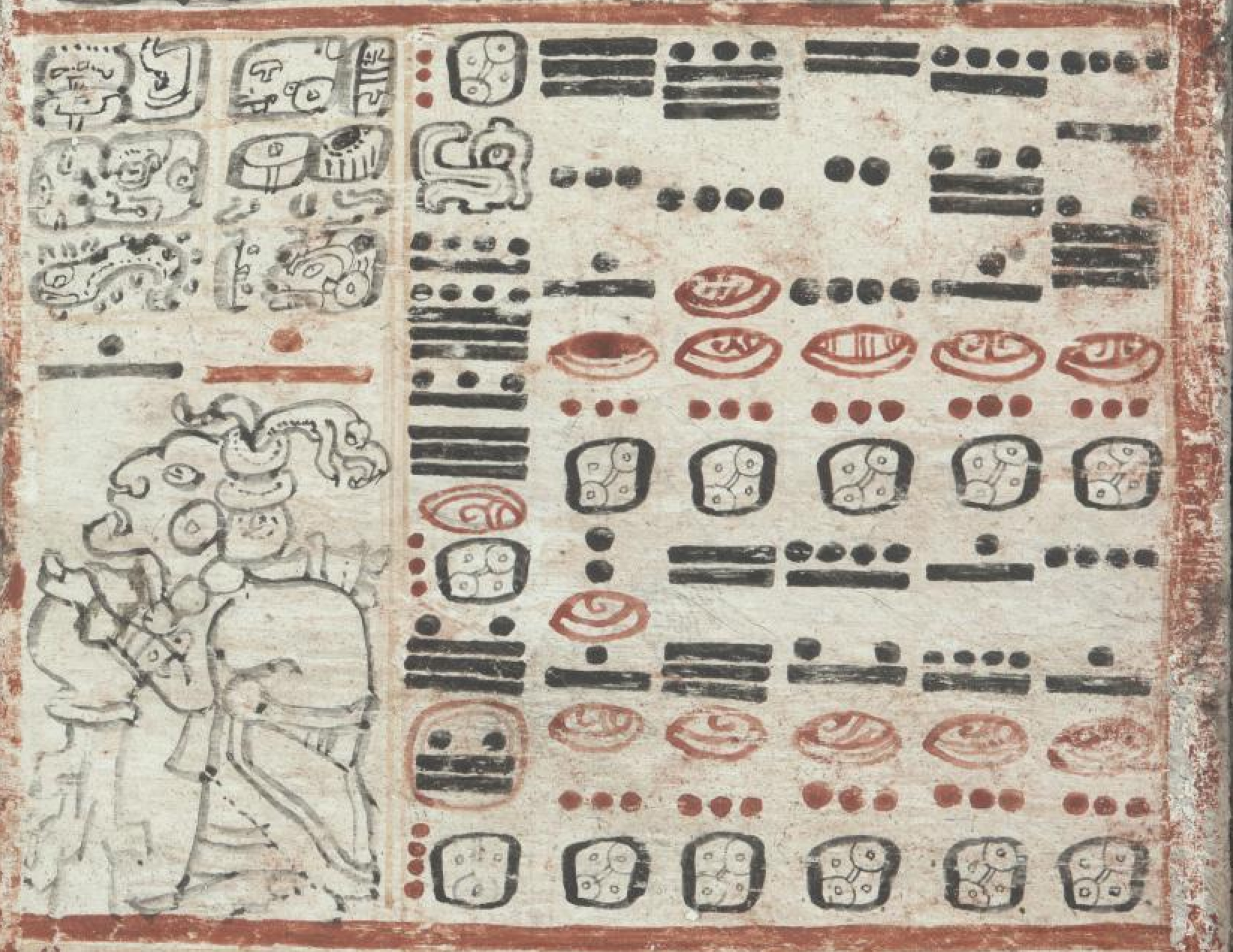
Förstemann proved that in the Maya codices a dot stood for one and a bar for five, and that the numerals counted days with the lowest numeral standing for units, the second for twenties, the third for an approximate year of 360 days and the fourth for 20 of those years. Tatiana Proskouriakoff hypothesized in 1960 that each series of grouped monuments in front of certain temples at Piedras Negras was the accumulated record of a single ruler, and that the earliest contemporary date of each series, marked by the so-called toothache glyph, was the ruler's date of accession to the throne. Phonetic readings based on Landa's alphabet were generally unsuccessful and unaccepted until 1952 when the young Russian Yuri Knorozov announced that he could match glyphs in the Maya codices with the Maya words for items in their accompanying pictures by treating them as simple consonant/vowel syllables. In the fall of 1980 David Stuart, then a ninth grader, deciphered his first hieroglyph while visiting the cave paintings at Naj Tunich, realizing that an eighth-century scribe had used phonetic signs to spell the name of a Maya month.
By the end of the 1990s the Maya hieroglyphs were almost completely readable thanks to a dozen or so persistent scholars, and the older history of the ancient Maya emerged from complete obscurity. There are approximately 300 to 500 logograms in Classic Maya, and many years of work remain before the majority of these are satisfactorily deciphered.
5. Calendars, Mathematics and Astronomy
The Haab served as a civil calendar of 365 days arranged in 18 months of 20 days each, while the Tzolk'in was a sacred calendar of 260 days; the two ran simultaneously. The Long Count, the grandest of these reckonings, went into its next cycle, a Baktun, on 21 December 2012; nothing in the extant writings of the Maya suggests that any kind of cataclysm accompanied that transition.
With these tools the Maya calculated the duration of the solar year and the synodical revolution of Venus with amazing accuracy. The Dresden Codex preserves very precise Venusian and lunar tables together with a method of predicting solar eclipses. Drawing on their knowledge of astronomy and mathematics, the Maya developed one of the most accurate calendar systems in history.
6. Society, Economy and Daily Life
The creation story of the Maya teaches that the first Grandparents of the Maya people were made from white and yellow corn. This agricultural foundation supported the aggregation of people into small farming communities in resource-rich areas including fertile lowlands and wetlands.
Using reprocessed lidar data, researchers estimate that between 9.5 million and 16 million people inhabited the Central Maya Lowlands during the Late Classic period of 600 to 900 CE, across a 95,000-square-kilometer area of rainforest lowlands. Urbanism reached its peak in the Late Classic around 650 to 750 CE before declining between 750 and 900 CE. Nearly all structures were located within five kilometers of a large or medium-sized plaza group, indicating widespread access to civic-ceremonial centers and challenging past assumptions about isolated rural settlements.
A study of more than 35,000 bone and shell fragments from Ceibal showed that in sediment layers after about 2,000 years ago fewer mussels and snails appear and fish, turtle and deer bones become much more common, marking a shift in diet. In sediments dated after 200 CE the researchers found an increase in bones of a river turtle that was not local; the Maya seem to have imported turtles from the Isthmus of Tehuantepec in modern Mexico. The lidar survey revealed more than 64,000 dwellings and structures and raised the estimated population of the area to about 7 to 11 million, along with evidence of intensive agricultural production, extensive road construction and fortifications.
7. Art, Architecture and Belief
Hieroglyphic writing appears in the Maya area by the dawn of the first millennium, when the Maya established the architectural, sculptural and iconographic systems that dominate their artistic production. Around 200 BCE monumentally scaled public buildings were raised at El Mirador, including a three-temple complex on a common platform, an architectural arrangement much used in subsequent times. They began to build ceremonial centers, and by 200 CE these had developed into cities containing temples, pyramids, palaces, courts for playing ball and plazas. Tikal National Park is an outstanding example of the art and human genius of the Maya, and its architectural and artistic expressions contain symbolic elements such as the concept of pyramid-as mountains.
For the ancient Maya jade objects embodied the color blue-green, called yax in the Classic Mayan language, which symbolized new growth, water and primordial places and beings. Jade was the most precious stone for the Maya, and archaeologists often refer to it as Maya gold. In Maya belief the underworld was Xibalba, from which grew the great Tree of Life that came up through the earth and towered into the heavens through thirteen levels to reach the paradise of Tamoanchan. The only ways in which a soul could bypass Xibalba and travel instantly to Tamoanchan were death in childbirth, death as a sacrificial victim, death in warfare, on the ball court, or by suicide.
8. Decline and Transformation
The only real fact about the Classic collapse is that most of the inhabitants of the Central Subregion went elsewhere; some were probably absorbed by still flourishing northern centers such as Uxmal and Kabah, while others may have migrated into the highlands of Chiapas and Guatemala. Although a population explosion and severe ecological abuse of the land must have played their role in the Classic Maya tragedy, the full story of the decline and fall of this civilization remains to be told. The collapse of the dynastic Maya city-states in the central region during the tenth century created a political vacuum, and in Yucatan Chichen Itza fell and was replaced by Mayapan as the dominant center.
9. Legacy and Modern Maya
Despite local differences and more than thirty living languages, the Maya share cultural roots and the common legacy of an accomplished civilization. While archaeological relics may be all that is left of their past, the Maya still exist in the present: more than six million Maya descendants live in modern Central America, where more than 30 languages stemming from ancient Mayan are still spoken.
That continuity survived a deliberate rupture. On 12 July in 1562 the Spanish bishop Diego de Landa burned over forty Maya codices and over 20,000 images and stelae at the church at Mani. Only three books of the Maya escaped the conflagration at Mani — the Madrid Codex, the Dresden Codex and the Paris Codex — and they have provided scholars with a great deal of information on Maya beliefs and especially their calendar. The four extant Maya codices are the Madrid, Paris, Dresden and Grolier codices; none dates earlier than 1100 and they contain a strong phonetic component, a kind of syllabary that can be read as Yucatec Maya.
10. Timeline: from the first villages to the Spanish conquest
- c. 2000–1000 BCEFirst farming communitiesArchaeologically visible agricultural settlements appear as people aggregate into small farming communities in the Maya Lowlands.
- c. 200 BCEEl Mirador risesMonumentally scaled public buildings are raised at El Mirador, including a three-temple complex on a common platform.
- December 8, 36 BCEEarliest Long Count dateA reused stela fragment at Chiapa de Corzo carries the earliest yet identified Long Count date.
- July 8, 292 CEStela 29 at TikalStela 29 at Tikal bears the first Long Count date in the lowlands.
- 378 CEA Teotihuacan-linked warrior arrives at TikalTikal's ruler Chak Toh Ich'ak I dies on the day a foreign warrior from Teotihuacan arrives, and the next ruler has strong Teotihuacan ties.
- March 11, 431 CEPalenque dynasty foundedK'uk' Balam I accedes at Palenque, founding a dynasty that retains control until after 799.
- c. 562 CETikal's ruler capturedWak Chan K'awiil of Tikal is taken captive, apparently by the ruler of Calakmul, beginning a century-long decline at Tikal.
- July 26, 615 CEPakal becomes ruler of PalenqueK'inich Janaab' Pakal I becomes ruler at the age of twelve and reigns sixty-eight years, building the Palace and the Temple of the Inscriptions.
- 695 CETikal's victory pyramidJasaw Chank'awil commemorates his victory over the Kanul kingdom with the great pyramid at Tikal.
- c. 790 CEClassic decline beginsCeremonial activity such as the erection of stelae virtually comes to a standstill in the western Central Subregion, and the paralysis spreads eastward over the next 40 years.
- c. 869 CELast stela at TikalThe last stela is erected at Tikal; the city is subsequently deserted and taken over by squatters.
- January 15, 909 CELast Long Count monumentMonument 101 at Toniná, dedicated on January 15, 909, is the last monument inscribed with a Long Count date in the entire Maya area.
- c. 1250 CEMayapán becomes capitalMayapán is the political capital of a Yucatán confederation with about 12,000 inhabitants, and Chichén Itzá is largely abandoned.
- 1524 CEBattle of UtatlánThe Quiché Maya are defeated at the Battle of Utatlán; the date traditionally marks the end of the Maya civilization.
References (24)
- 1Who were the Maya? — National Geographic Web↩View source
- 2Maya | Dates, Collapse, Facts, Religion, People, Language, & Civilization — Encyclopaedia Britannica Web↩View source
- 3Maya Civilization — World History Encyclopedia WebView source
- 4Maya Area, 1–500 A.D. | Chronology — The Metropolitan Museum of Art, Heilbrunn Timeline of Art History Web↩View source
- 5Maya Area, 1000–1400 A.D. | Chronology — The Metropolitan Museum of Art, Heilbrunn Timeline of Art History Web↩View source
- 6The collapse of Classic Maya civilization (Pre-Columbian civilizations) — Encyclopaedia Britannica Web↩View source
- 7Maya Area, 500–1000 A.D. | Chronology — The Metropolitan Museum of Art, Heilbrunn Timeline of Art History Web↩View source
- 8Ancient Maya Sculpture | Essay — The Metropolitan Museum of Art, Heilbrunn Timeline of Art History WebView source
- 9The Maya calendar and writing system (Pre-Columbian civilizations) — Encyclopaedia Britannica WebView source
- 10Pre-Hispanic City of Chichen-Itza — UNESCO World Heritage Centre Web↩View source
- 11Pre-Hispanic City and National Park of Palenque — UNESCO World Heritage Centre Web↩View source
- 12Ancient Maya City and Protected Tropical Forests of Calakmul, Campeche — UNESCO World Heritage Centre Web↩View source
- 13Tikal National Park — UNESCO World Heritage Centre Web↩View source
- 14The Maya civilization was a mystery. Our family business was solving it. — National Geographic Web↩View source
- 15New Discoveries about the Ancient Maya — Expedition Magazine, Penn Museum Web↩View source
- 16Language and Context (Exploring the Early Americas) — Library of Congress WebView source
- 17Maya Hieroglyphs: A History of the Decipherment — Expedition Magazine, Penn Museum WebView source
- 18Calendar — Smithsonian National Museum of the American Indian, Living Maya Time WebView source
- 19The Maya — Smithsonian National Museum of the American Indian, Living Maya Time WebView source
- 20Modeling the rise and demise of Classic Maya cities: Climate, conflict, and economies of scale — PNAS (Proceedings of the National Academy of Sciences) WebView source
- 21Ancient Maya population may have topped 16 million, Tulane research shows — Tulane University News WebView source
- 22Bones Tell the Tale of a Maya Settlement — Smithsonian Magazine WebView source
- 23Lasers reveal a vast, sophisticated Maya civilization under the Guatemalan jungle — Brown University News 2018 WebView source
- 24Maya Area, 1000 B.C.–1 A.D. | Chronology — The Metropolitan Museum of Art, Heilbrunn Timeline of Art History WebView source