Petra
A city carved into sandstone by the Nabataeans, hidden from the world for centuries.
Overview
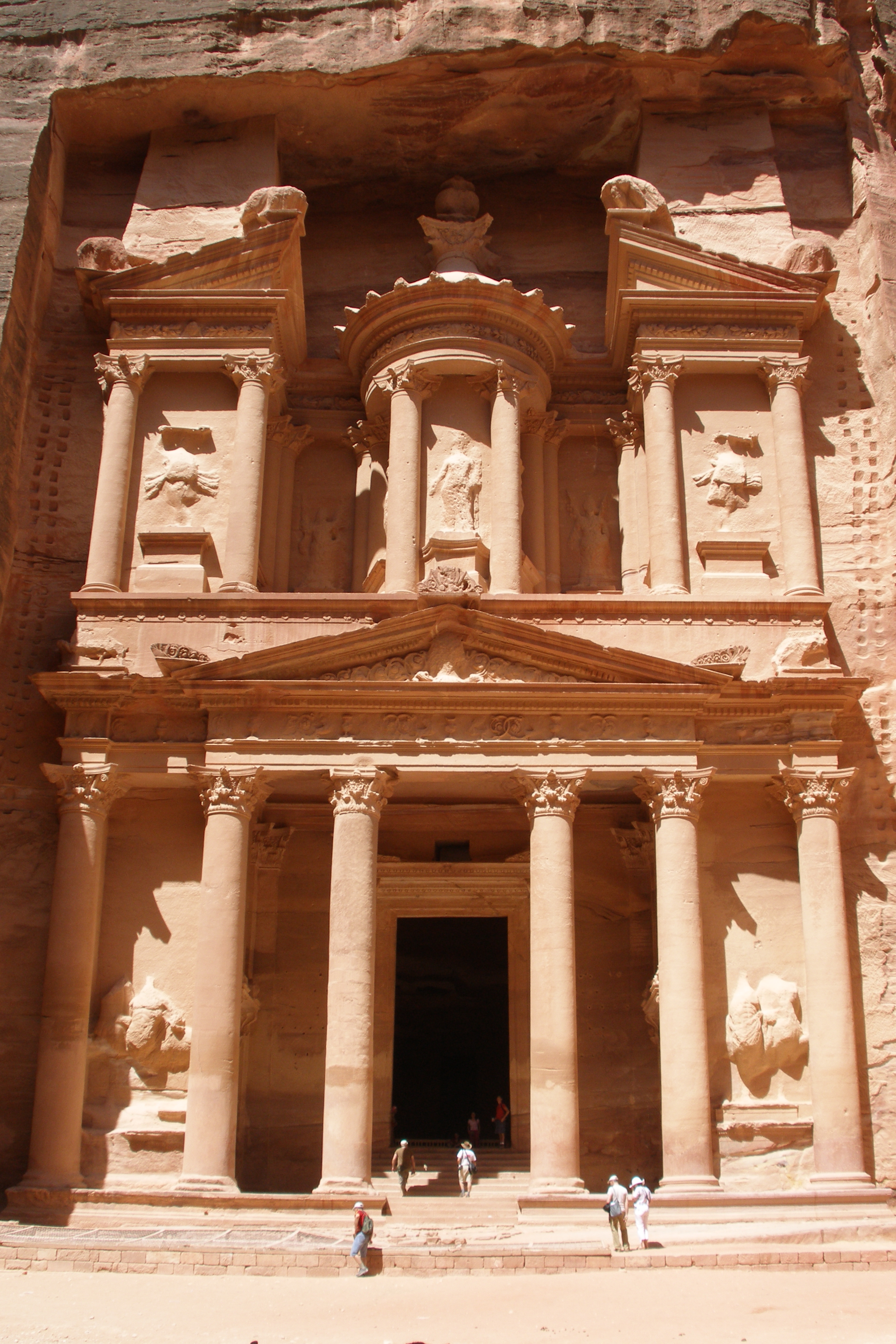
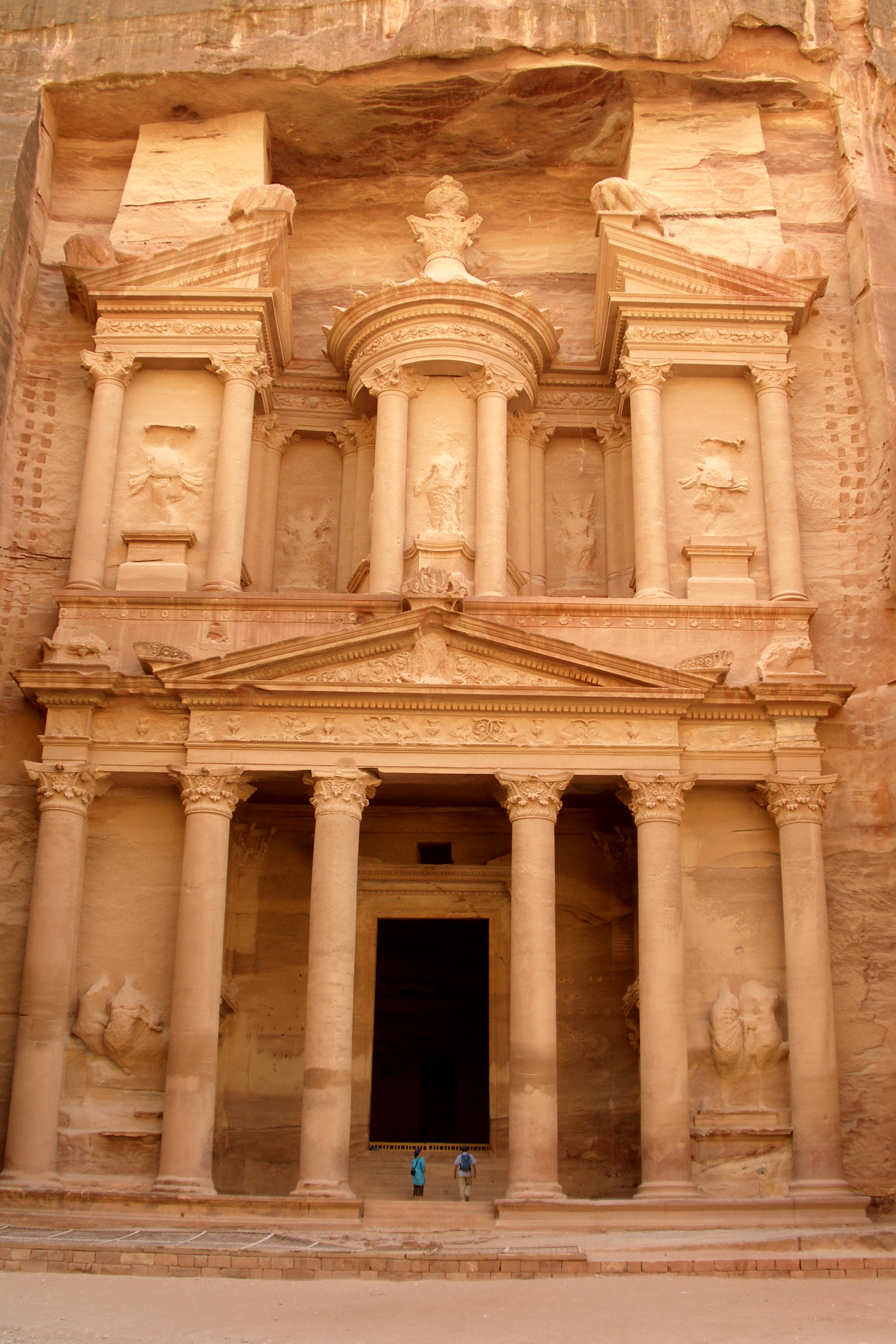
Petra is a symbol of Jordan and the country's most-visited tourist attraction. UNESCO has described it as "one of the most precious cultural properties of man's cultural heritage". Known as the "Rose City" for the colour of the sandstone from which it is carved, it is famous for its rock-cut architecture and water conduit systems.
The area around Petra has been inhabited from as early as 7000 BC. By 7000 BC some of the earliest recorded farmers had settled in Beidha, a Pre-Pottery Neolithic settlement just north of Petra. In the Bronze Age the site is listed in Egyptian campaign accounts and the Amarna letters as Pel, Sela, or Seir. The Iron Age lasted between 1200 and 600 BC; in that time the Petra area was occupied by the Edomites. The configuration of mountains in Petra allowed for a reservoir of water for the Edomites, and this made Petra a stopping point for merchants, making it an outstanding area for trade.
The Nabataeans were one among several nomadic Bedouin tribes that roamed the Arabian Desert and moved with their herds to wherever they could find pasture and water. Current evidence suggests that the Nabataean name for Petra was Raqēmō, variously spelled in inscriptions as rqmw or rqm. Arabic raqama means "to mark, to decorate", so Rekeme could be a Nabataean word referring to the famous carved rock façades. The site was settled by the Nabataeans, a nomadic Arab people, in the 4th century BC, and Petra would later become the capital city of the Nabataean Kingdom in the second century BC. Petra flourished in the 1st century AD, when its Al-Khazneh structure, possibly the mausoleum of Nabataean king Aretas IV, was constructed, and its population peaked at an estimated 20,000 inhabitants. Dushara and al-Uzza were two of the principal deities of the city, which otherwise included many idols from other Nabataean deities such as Allat and Manat.
In 106, when Aulus Cornelius Palma Frontonianus was governor of Roman Syria, the part of the Arabian Peninsula under the rule of Petra was absorbed into the Roman Empire as part of Arabia Petraea. Between 111 and 114, Trajan built the Via Traiana Nova, running from the Syrian border to the Red Sea through Petra. In 125 AD, one of Emperor Hadrian's administrators left marks in Petra, pointed out by documents found at the Dead Sea. Petra declined rapidly under Roman rule, in large part from the revision of sea-based trade routes. The old city of Petra was the capital of the Byzantine province of Palaestina III and many churches from the Byzantine period were excavated in and around Petra; the Byzantine Church is a prime example of monumental architecture in Byzantine Petra.
In the 12th century the Crusaders built fortresses such as the Alwaeira Castle, but were forced to abandon Petra after a while. Two further Crusader-period castles are known in and around Petra: the first is al-Wu'ayra, situated just north of Wadi Musa; the second is on the summit of el-Habis, in the heart of Petra, and can be accessed from the West side of the Qasr al-Bint.
1. Names and Etymology
The site now called Petra appears in the earliest written records under several names. Egyptian campaign accounts and the Amarna letters list it as Pel, Sela, or Seir. These attestations belong to the Bronze Age horizon of the site's documentary history.
Current evidence suggests that the Nabataean name for Petra was Raqēmō. Inscriptions render this name variously as rqmw or rqm.
A separate line of interpretation connects the name to the Arabic root raqama, meaning to mark or to decorate. On this reading Rekeme may have served as a Nabataean word for the carved rock façades that define the site.
An old theory held that Petra might be identified with a place called sela in the Hebrew Bible.
The familiar name derives from the Greek word petra, meaning rock. Because the word is a common noun as well as a designation, the petra mentioned in the account of the expeditions sent by Antigonus against the Nabataeans in 312 BC cannot be taken as a proper name.
2. Early Settlement and the Edomites
Human presence in the Petra area reaches back to the earliest phases of settled agriculture. By 7000 BC some of the earliest recorded farmers had established themselves at Beidha, a Pre-Pottery Neolithic settlement situated just north of Petra.
The area around Petra has been inhabited from as early as 7000 BC, and was settled by the Nabataeans, a nomadic Arab people, in the 4th century BC.
The Iron Age lasted between 1200 and 600 BC; in that time, the Petra area was occupied by the Edomites. Initially, the Edomites were accompanied by Nomads who eventually left, but the Edomites stayed and made their mark on Petra before the emergence of the Nabataens.
The configuration of mountains in Petra allowed for a reservoir of water for the Edomites.
3. The Nabataean Kingdom
The Nabataeans were a nomadic Arab people, counted among the several nomadic Bedouin tribes that roamed the Arabian Desert and moved with their herds to wherever they could find pasture and water. The area around Petra has been inhabited from as early as 7000 BC, and it was this nomadic Arab people who settled it in the 4th century BC.
Settlement did not end their mobility: the Nabataeans remained one among several nomadic Bedouin tribes whose herds followed pasture and water across the Arabian Desert. From this pastoral base they came to occupy the area around Petra, a site already inhabited from as early as 7000 BC. The 4th century BC marks the point at which this nomadic Arab people settled the area.
Petra would later become the capital city of the Nabataean Kingdom in the second century BC. The city's prosperity reached its height in the 1st century AD, when the Al-Khazneh structure was built, possibly as the mausoleum of the Nabataean king Aretas IV, and the population peaked at an estimated 20,000 inhabitants. Current evidence suggests that the Nabataean name for the city was Raqēmō, spelled in inscriptions as rqmw or rqm. The Arabic raqama means "to mark, to decorate", so Rekeme could be a Nabataean word referring to the famous carved rock façades.
Among the principal deities of the city were Dushara and al-Uzza, alongside many idols of other Nabataean deities such as Allat and Manat. A text describing the expeditions that Antigonus sent against the Nabataeans in 312 BC has been understood by some researchers to throw light upon the history of Petra, though the "petra" (Greek for rock) it refers to as a natural fortress and place of refuge cannot be a proper name, and the description implies that no town existed there at the time.
In 130 Hadrian visited the former Nabataean capital, giving it the name of Hadriānī Petra Metropolis, imprinted on his coins. The province's governor, Sextius Florentinus, erected a monumental mausoleum for his son near the end of the al-Hubta (King's Wall) tombs, which had generally been reserved during the Nabataean period for the royal family. An inscription to Liber Pater, a god revered by Emperor Septimius Severus, was found in the temenos of the temple known as Qasr al-Bint, and Nabataean tombs contained silver coins with the emperor's portrait as well as pottery from his reign.
4. Flourishing and Al-Khazneh
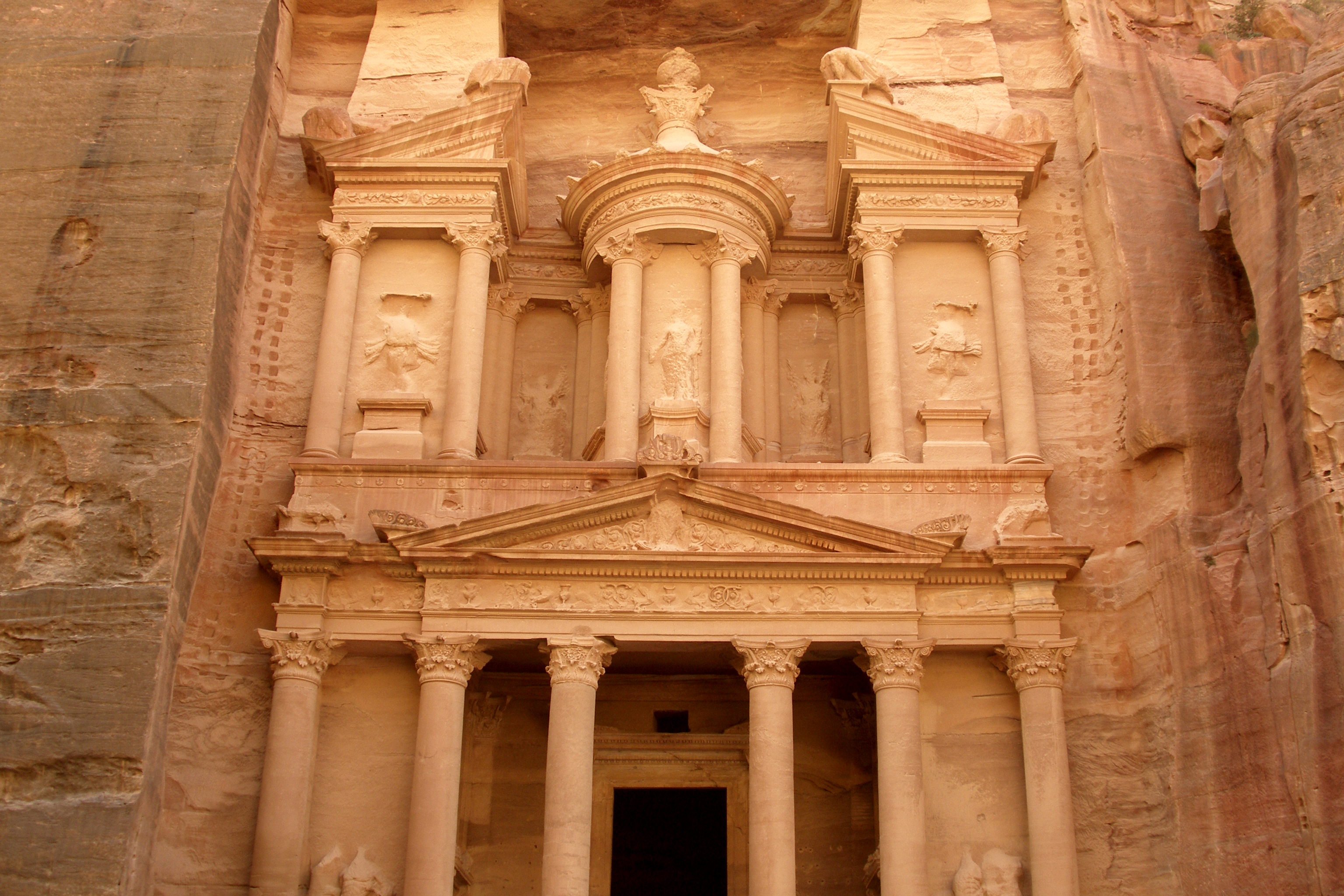
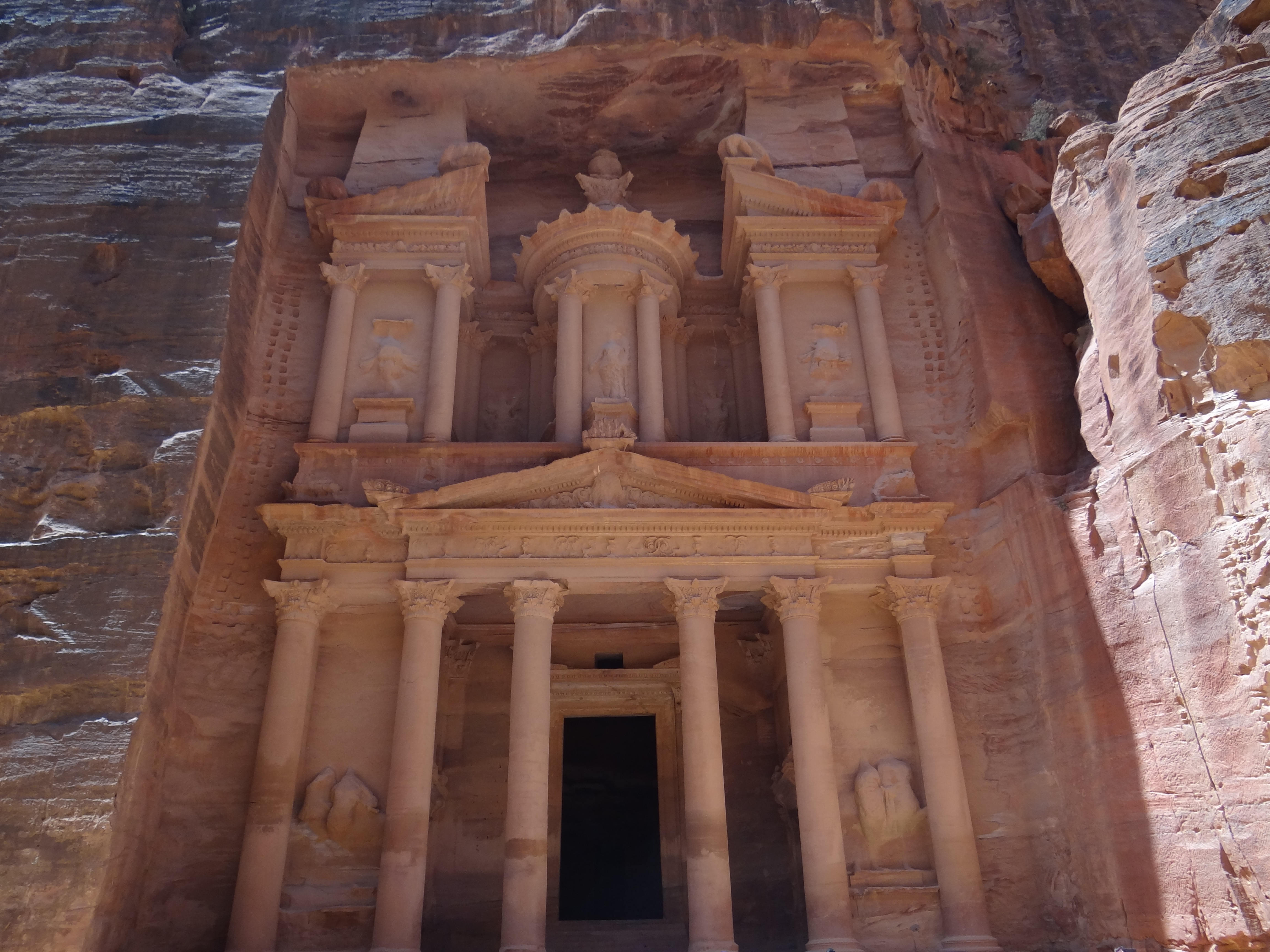
Petra reached the height of its prosperity in the 1st century AD. It was during this period that the city's Al-Khazneh structure was built. The monument is possibly the mausoleum of the Nabataean king Aretas IV. At its peak the population of Petra is estimated to have reached 20,000 inhabitants.
The city is known for its rock-cut architecture and for the water conduit systems that served it. The sandstone from which it is carved gives Petra its colour and its familiar name, the "Rose City". The Nabataeans, a nomadic Arab people, settled the area in the 4th century BC. Petra would later become the capital city of the Nabataean Kingdom in the second century BC.
In 106 the part of the Arabian Peninsula under the rule of Petra was absorbed into the Roman Empire as part of Arabia Petraea, at a time when Aulus Cornelius Palma Frontonianus was governor of Roman Syria. Between 111 and 114 Trajan built the Via Traiana Nova, running from the Syrian border to the Red Sea through Petra. In 125 AD one of Emperor Hadrian's administrators left marks in Petra, pointed out by documents found at the Dead Sea. Petra declined rapidly under Roman rule, in large part from the revision of sea-based trade routes.
The old city of Petra was the capital of the Byzantine province of Palaestina III, and many churches from the Byzantine period were excavated in and around Petra. The Byzantine Church is a prime example of monumental architecture in Byzantine Petra. In the 12th century the Crusaders built fortresses such as the Alwaeira Castle, but were forced to abandon Petra after a while. Two further Crusader-period castles are known in and around Petra: the first is al-Wu'ayra, situated just north of Wadi Musa. The second is on the summit of el-Habis, in the heart of Petra, and can be accessed from the West side of the Qasr al-Bint.
5. Roman and Byzantine Periods
In 106 the portion of the Arabian Peninsula governed from Petra was absorbed into the Roman Empire as the province of Arabia Petraea, an act carried out while Aulus Cornelius Palma Frontonianus was governor of Roman Syria. Roman authority brought new infrastructure to the region: between 111 and 114 Trajan built the Via Traiana Nova, a road running from the Syrian border to the Red Sea that passed through Petra itself.
Imperial attention to the city is recorded in several forms. A Roman bronze coin of Geta depicts the Petra temple together with a statue of Tyche. Marks left by one of Hadrian's administrators in 125 AD survive, and Hadrian's visit in 130 was commemorated by the name Hadriānī Petra Metropolis on his coins. Near the al-Hubta tombs stands the mausoleum of Sextius Florentinus, erected for his son. An inscription to Liber Pater was set up in the temenos of Qasr al-Bint, and Nabataean tombs have yielded silver coins of Septimius Severus.
Elagabalus declared Petra a Roman colony. Continued esteem for the city is suggested by imperial interest in it during the 3rd century. Its decline under Roman rule is attributed largely to revised trade routes that ran by sea rather than through the desert entrepôt.
Under Byzantine administration Petra served as the capital of the province of Palaestina III, where many churches have been excavated. The Byzantine Church stands as a prime example of the city's monumental architecture. The area extending from Petra to Wadi Mujib, together with the Negev and Sinai, was annexed into Palaestina Salutaris.
The Madaba Map omits the section that would have included Petra. The last reference to the city appears in John Moschus's Spiritual Meadow, in the first decades of the 7th century. Petra is absent from the narratives of the Muslim conquest and from early Islamic records.
6. Crusaders and Mamluks
In the 12th century the Crusaders built fortresses in the Petra region such as the Alwaeira Castle but were forced to abandon Petra after a while. Two further Crusader-period castles are known in and around Petra. The first is al-Wu'ayra situated just north of Wadi Musa.
The ruins of Petra were an object of curiosity during the Middle Ages. They were visited by Baibars one of the first Mamluk sultans of Egypt towards the end of the 13th century.
The second Crusader-period castle stands on the summit of el-Habis in the heart of Petra and can be reached from the west side of the Qasr al-Bint.
7. Key dates
- 1200Iron Age Edom The Iron Age lasted between 1200 and 600 BC; in that time, theIron Age Edom The Iron Age lasted between 1200 and 600 BC; in that time, the Petra area was occupied by the Edomites .
8. Frequently asked questions
What was the configuration of the mountains at Petra used for in the Edomite period?
The configuration of mountains in Petra allowed for a reservoir of water for the Edomites3Petra · Wikipedia ↗.
When was the Edomite site on top of Umm el-Biyara established?
The Edomite site excavated at the top of the Umm el-Biyara mountain at Petra was established no earlier than the seventh century BC, in the Iron II period3.
Who were the principal deities of Petra?
What happened to the nomadic companions of the Edomites at Petra?
Initially the Edomites were accompanied by Nomads who eventually left, but the Edomites stayed and made their mark on Petra before the emergence of the Nabataeans3.
Where is the second Crusader-period castle at Petra located?
The second is on the summit of el-Habis, in the heart of Petra, and can be accessed from the West side of the Qasr al-Bint7Petra · Wikipedia ↗.
Why did Petra become an outstanding area for trade?
Its position made Petra a stopping point for merchants, making it an outstanding area for trade3.
References (7)
- 1Petra — Wikipedia WebView source
- 2Petra — Wikipedia WebView source
- 3Petra — Wikipedia Web↩View source
- 4Petra — Wikipedia WebView source
- 5Petra — Wikipedia Web↩View source
- 6Petra — Wikipedia WebView source
- 7Petra — Wikipedia Web↩View source