Brachiosaurus
The towering Late Jurassic sauropod of North America — discovered by Elmer Riggs in 1903, rebuilt in museum halls, and separated at last from its African cousin Giraffatitan.
Brachiosaurus was a giant sauropod dinosaur that lived in western North America during the Late Jurassic, about 155 to 145 million years ago, and was named by Elmer S. Riggs in 1903 from a partial skeleton found in Colorado. Its front limbs were longer than its hind limbs, giving it a steeply inclined body and a giraffe-like feeding style as it browsed high vegetation in the river floodplains of the Morrison Formation. The African species once called Brachiosaurus brancai is now placed in its own genus, Giraffatitan, whose Berlin mount is the tallest mounted dinosaur skeleton in the world.
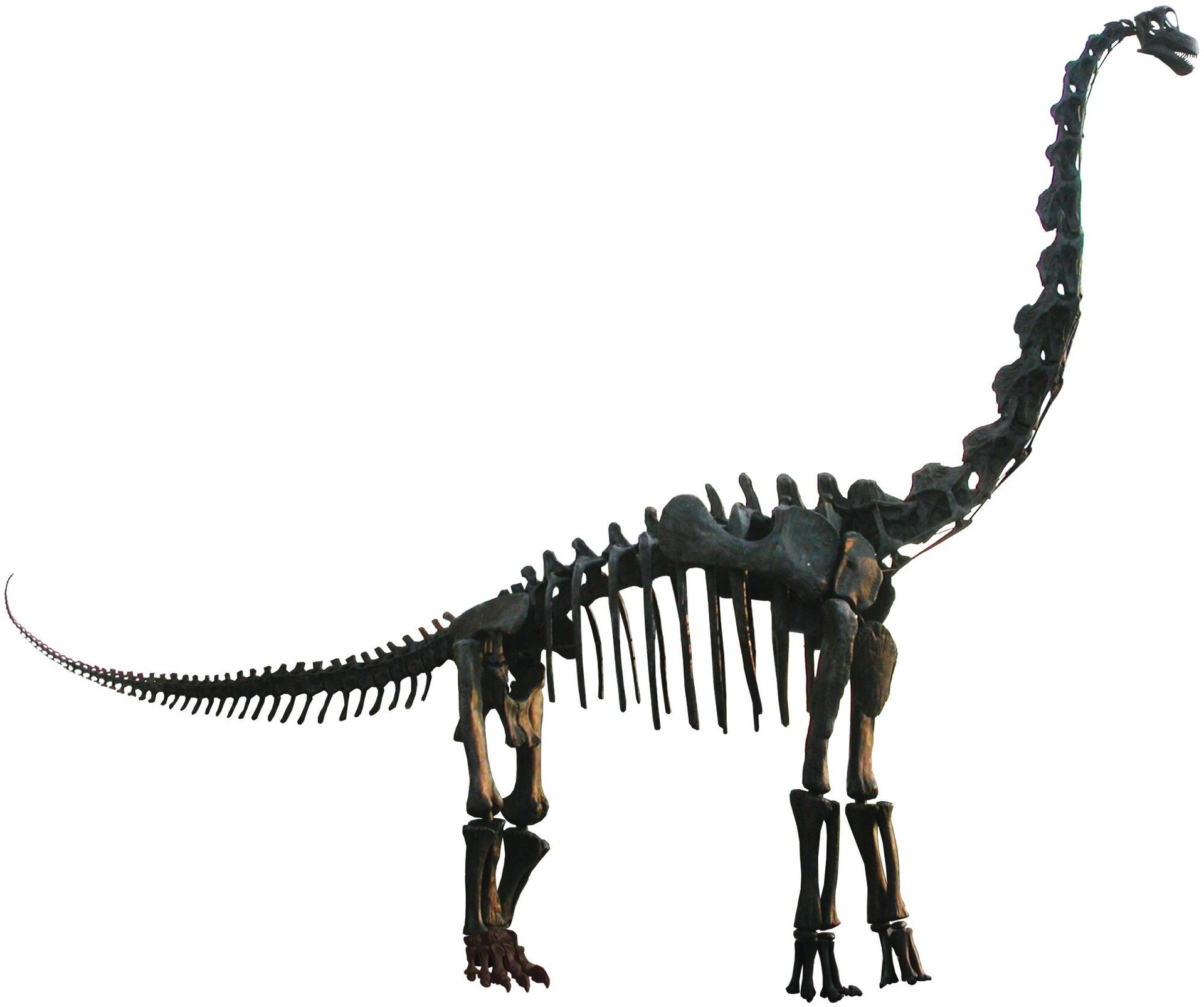
Overview
Brachiosaurus is a genus of sauropod dinosaur that lived in North America during the Late Jurassic. It was herbivorous and walked on four legs, and its fossils have been found in the United States, in Colorado, Utah, Wyoming and Oklahoma. Within the sauropods it is classified in Macronaria, Titanosauriformes and Brachiosauridae.
1. Discovery and Naming
The Field Museum appointed Elmer Riggs as its first palaeontologist in 1898, and he collected dinosaurs across the American West to give the young institution's displays a foundation. In 1900, while excavating what is now known as Riggs Hill in Grand Junction, Colorado, Riggs uncovered the remains of one of the largest land animals ever discovered. The first Brachiosaurus remains were found in Colorado that year by Riggs, a scientist from Chicago, who at first mistook the animal for a Brontosaurus before realising it was much bigger.
Riggs published a short report of the new find in 1901, noting the unusual length of the humerus compared with the femur, the extreme overall size, and the resulting giraffe-like proportions. He proposed the name Brachiosaurus altithorax in recognition of the great size and unusually long humerus of the specimen. The name means "arm lizard," from the Greek for arm, after its unusually long front legs. Riggs first described Brachiosaurus altithorax in 1903 from a partial skeleton that lacked its skull, as often happens with sauropods.
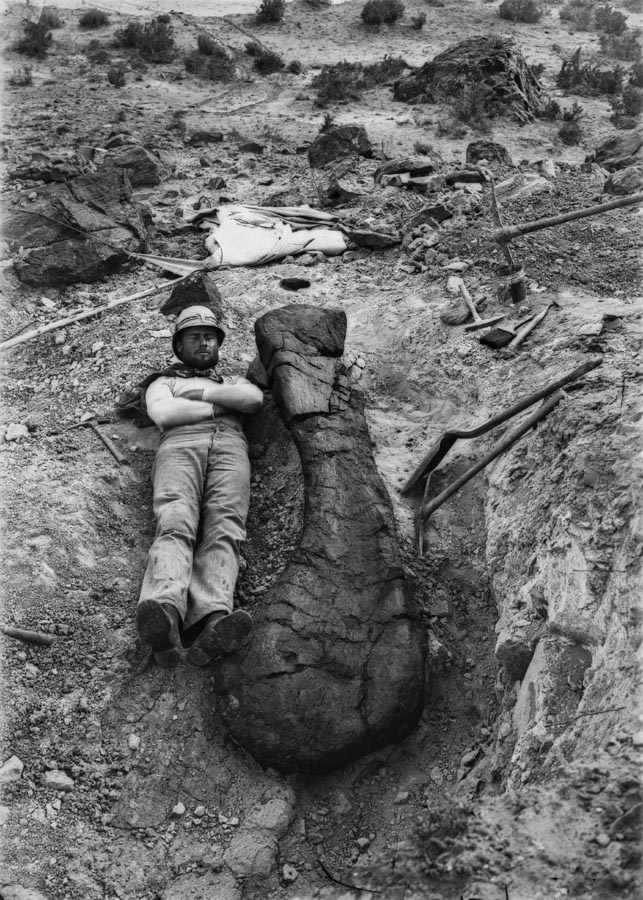

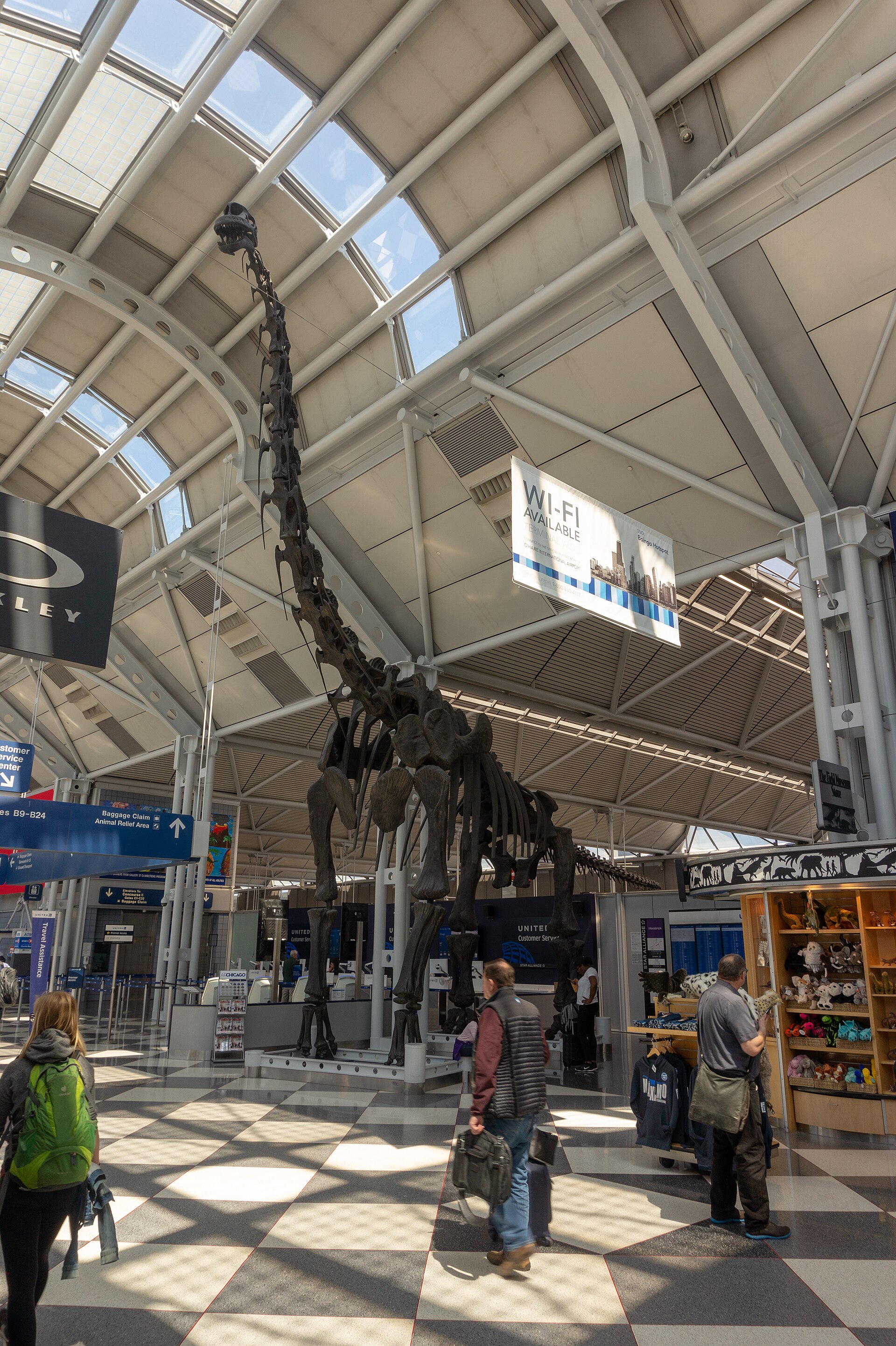
The type specimen is FMNH P25107, a set of postcranial bones held at the Field Museum in Chicago. Its type locality, Riggs Quarry 13 near Fruita, Colorado, lies in the Grand River valley of western Colorado. Riggs is known for discovering and naming the holotype specimen of Brachiosaurus, a cast of which now stands outside the Field Museum in Chicago. The dinosaur he named challenged scientific thinking and became one of the world's most recognizable dinosaurs.
Eleven years after Riggs's description, a German expedition to Tanzania uncovered bones described as a new species of Brachiosaurus, dubbed brancai. The African species, Brachiosaurus brancai, was excavated from Tendaguru in Tanzania by German expeditions between 1909 and 1912 that took the material to Berlin. The Tendaguru expedition shipped 225 tons of fossils to Berlin between 1909 and 1913, and a later project revealed how the contributions of local residents were erased from its records. The Berlin sauropod has been a crowd magnet since it was first displayed in 1937, and the fossils were found not in Europe but in eastern Africa, in what is today Tanzania.
In 1993 the holotype bones were moulded and cast, and the missing bones were sculpted based on material of the related Brachiosaurus brancai, now Giraffatitan, in the Museum für Naturkunde in Berlin. More than 125 years after a remarkable Brachiosaurus fossil was discovered on Riggs Hill, a replica cast is being created for Grand Junction, Colorado, to celebrate the region's palaeontological heritage.
-
1898Riggs joins the Field MuseumThe museum hires its first palaeontologist.4Fossil Vertebrates · Field Museum, Chicago ↗
-
1900Discovery at Riggs HillRiggs excavates at Riggs Hill in Colorado.5Bringing Our Brach Home Project · Museums of Western Colorado ↗
-
1909–1912Tendaguru excavationsThe Tendaguru material is shipped to Berlin.9A re-evaluation of Brachiosaurus altithorax Riggs 1903 and its generic separation from Giraffatitan brancai (Journal of Vertebrate Paleontology 29:3) · Journal of Vertebrate Paleontology ↗
-
1993Holotype moulded and castThe holotype bones are moulded and cast.1Brachiosaurus · Wikipedia ↗
| Element | Detail |
|---|---|
| Type species | Brachiosaurus altithorax2Brachiosaurus (Dino Directory) · Natural History Museum, London ↗ |
| Named by | Elmer S. Riggs, 19032 |
| Type specimen | FMNH P25107, a set of postcranial bones (Field Museum, Chicago)7Brachiosaurus altithorax — taxon record · Paleobiology Database ↗ |
| Type locality | Grand River valley of western Colorado, near Grand Junction (Riggs Quarry 13, Fruita)6Brachiosaurus altithorax, the largest known dinosaur (American Journal of Science, 4th series, vol. 15, 1903) · E. S. Riggs / American Journal of Science ↗ |
| Name meaning | 'arm lizard' — from the Greek for arm, after its unusually long front legs2 |
| Length | 22.0 m (about 72 ft)2 |
2. Description
Brachiosaurus was a sauropod that lived in the Late Jurassic some 152 to 145 million years ago, measured about 22 metres long and weighed an estimated 46,900 kilogrammes, or about 103,400 lb. Body mass estimates of the subadult holotype specimen range from 28.3 to 46.9 metric tons. A 2009 estimate gave 28,688 kg for B. altithorax and 23,337 kg for Giraffatitan brancai.
Brachiosaurus was quadrupedal and walked on four legs. Its front legs were longer than its back legs, giving it a distinctive upward-tilted body posture that, with its long neck, made it well adapted for feeding on tall trees. Riggs described the animal as the largest and longest-limbed of all known land animals, and the only dinosaur known to science in which the humerus is longer than the femur.
The forelimb of the Berlin specimen measured about 4.1 metres from the ground to the shoulder joint, with an upper arm of 2.15 metres, a forearm of 1.30 metres and a foot of 0.65 metres. In the analysis, the neck of Brachiosaurus was regularly kept in a vertical position and did not move much from side to side. All movements of Brachiosaurus that involved considerable fractions of the total body mass must have been slow and smooth, giving the moving animal a somewhat fluid appearance.
No Brachiosaurus skull has been found, so sculptures of the animal usually take Giraffatitan as the model for the head. In 1998 Carpenter and Tidwell described the Felch Quarry skull and formally assigned it to Brachiosaurus of uncertain species, since it is impossible to determine whether it belonged to the species B.
3. Classification and Species
Up to four species besides the type species have been assigned to Brachiosaurus; two of these are no longer considered valid, and a third has become the separate genus Lusotitan.
A detailed study of the bones of both forms found at least 26 distinguishing characters, with the dorsal vertebrae being particularly different between the two species. Taylor concluded that the animals must be considered generically separate, so the genus name Giraffatitan is used for the Tendaguru species in the combination Giraffatitan brancai. The American Brachiosaurus differed from Giraffatitan in having a longer and deeper trunk and probably a longer and taller tail, and in carrying a greater proportion of its mass on the forelimbs.
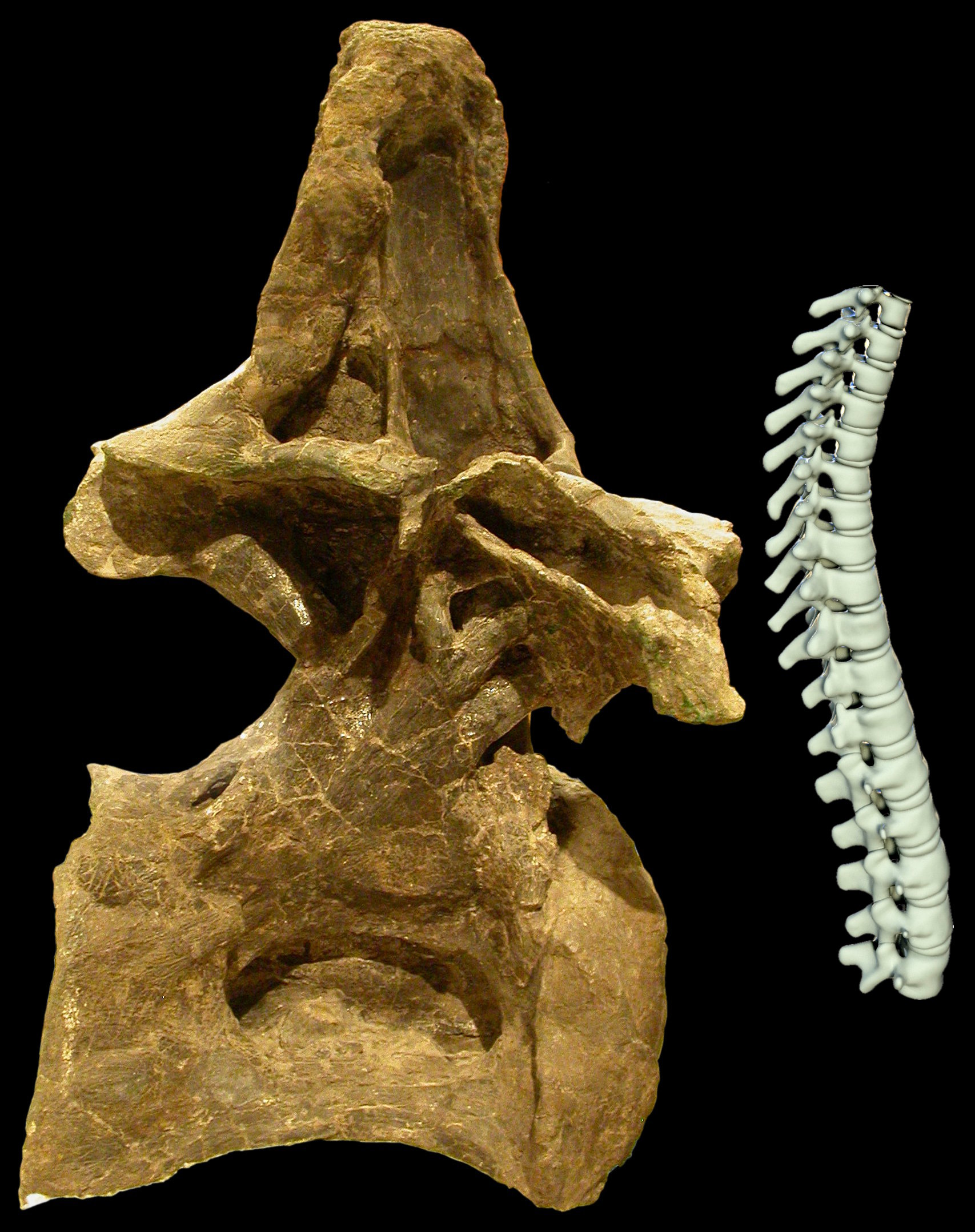
Although the Brachiosaurus holotype was overall a larger animal than the Giraffatitan type, it was probably immature, because its coracoids were not yet fused to its scapulae.
4. Paleobiology and Diet
Brachiosaurus was herbivorous and browsed vegetation high above the ground. It is thought to have fed on leaves from tall trees such as conifers and tree ferns. The animal is regarded as a high browser that may have cropped vegetation as high as 9 metres (30 ft) off the ground.
Brachiosaurus could not chew and swallowed its vegetation whole, digesting tough leaves by hindgut fermentation, in which bacteria in a special section of the intestines broke down the plant matter. Tooth wear, neck articulation and other lines of evidence converge to show that the animal was a browser, in some ways not unlike a giraffe. The overall construction of Brachiosaurus was related to an extreme task, browsing high above the ground, and its versatility was consequently very restricted.
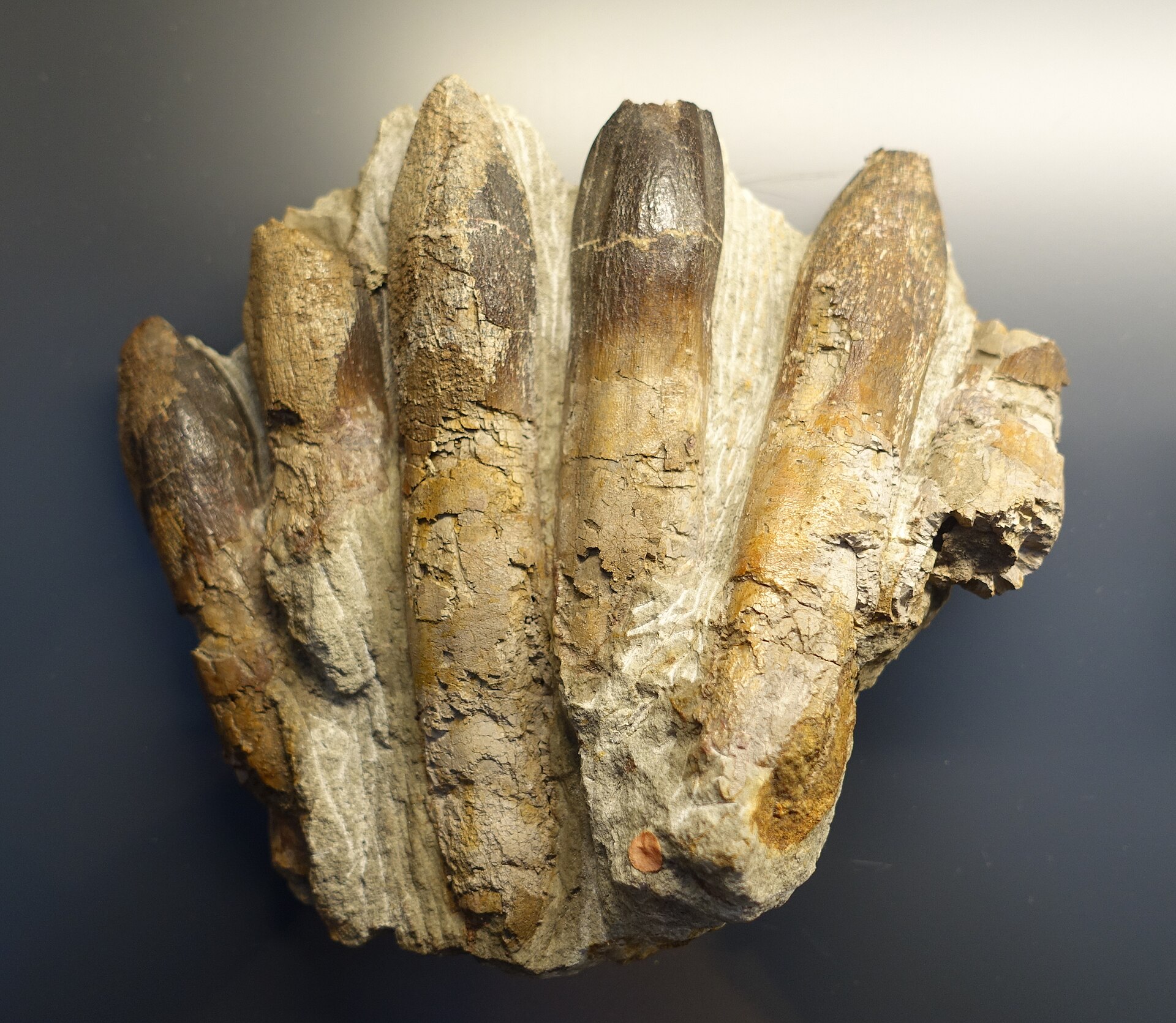
Riggs thought the longer forelegs suggested arboreal food habits, and that the animal may have been able to browse at will on the foliage of trees and shrubs. He described the creature as the giraffe among dinosaurs, comparing it with the kangaroo's place among animals.
Unlike other sauropods, Brachiosaurus was unsuited for rearing on its hindlimbs. A 2011 analysis by Heinrich Mallison found that while several kinds of sauropod could physically perform the rearing stunt, Brachiosaurus would have been dangerously unstable on its hind legs.
5. Habitat and Fossil Range
Brachiosaurus is known from the United States, with remains recorded in Colorado, Utah, Wyoming and Oklahoma. The animal inhabited the river floodplains, lakes and forests of the Morrison Formation of western North America. The genus lived during the Late Jurassic, from the Kimmeridgian to the Tithonian, about 155.6–145.5 million years ago.
The Morrison Formation was deposited during the Late Jurassic, roughly 157 to 150 million years ago, across rivers, floodplains and lakes. In Morrison times the land was covered by ferns, cycads and horsetails, with stands of conifer trees, ginkgoes and tree ferns. The formation is known worldwide for its dinosaur fossils, from predators such as Allosaurus and Ceratosaurus to enormous sauropods including Apatosaurus, Brachiosaurus, Brontosaurus, Camarasaurus and Diplodocus.
The mudstones of the Brushy Basin member contain large amounts of bentonite, a kind of clay that contains volcanic ash. Fossils indicate that the area experienced at least three severe droughts, followed by localized flooding events when the rains returned. The Morrison ecosystem around the Carnegie Quarry was home to numerous dinosaurs, crocodilians, fish, clams, amphibians, reptiles and insects.
Brachiosaurus and Brontosaurus lived at the same time and in the same environment, but Brachiosaurus was much taller, while Brontosaurus ate ground-level vegetation.
6. The Berlin Mount and Giraffatitan
The composite mount of Giraffatitan brancai at the Museum für Naturkunde in Berlin stands 13.27 m (43 ft 6 in) high. Guinness World Records lists it as the tallest mounted dinosaur skeleton, a height measured on 1 June 2007 during the record's certification.
The skeleton was first put on display in 1937 and returned to permanent display at Berlin's natural history museum in 2007 after its remounting. Its bones are 65 per cent original fossils, and the rest are a model of fossil pieces held in the museum's collection that cannot be used in the construction because of their sensitivity.
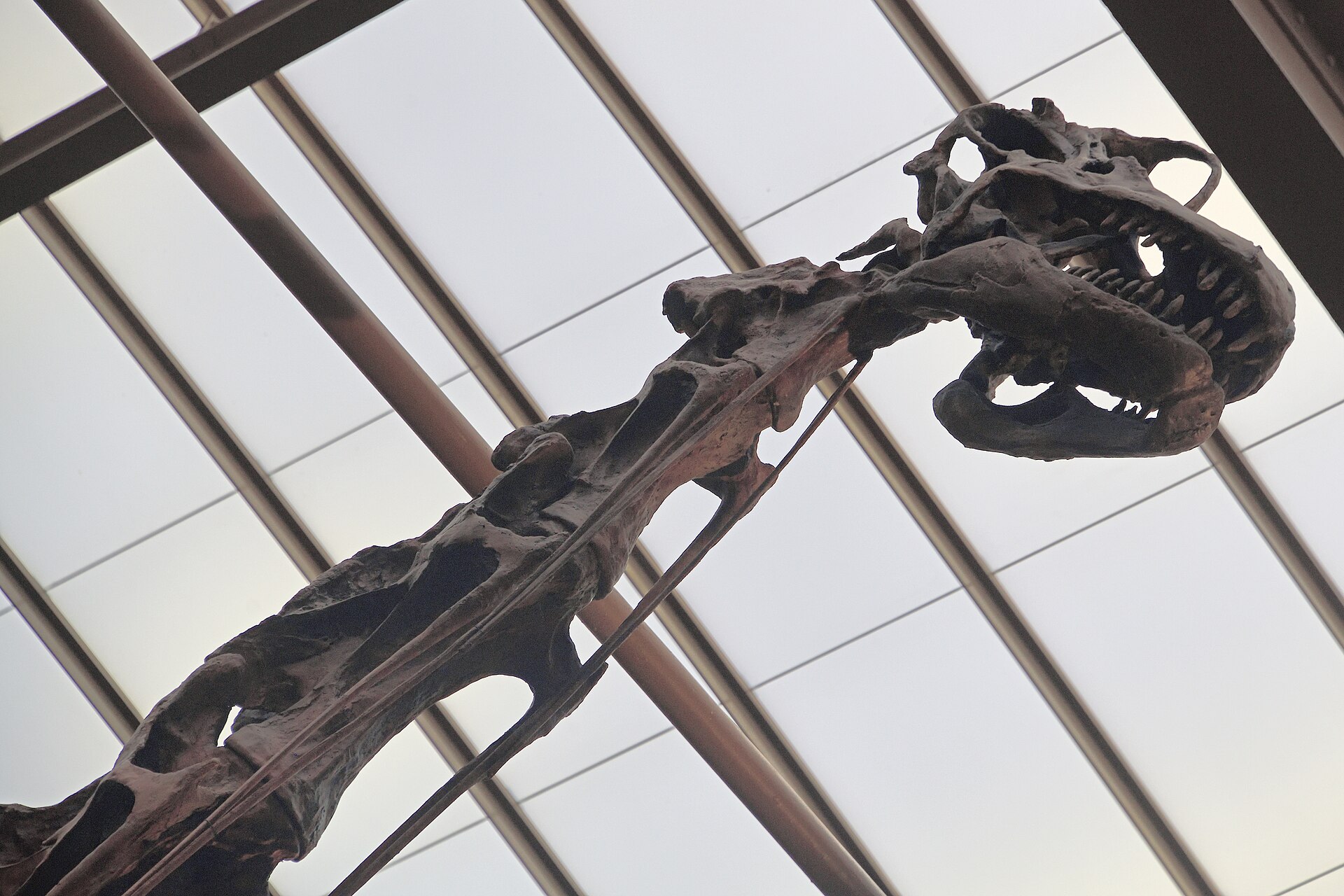
Berlin's World of Dinosaurs exhibition presents the Giraffatitan, the early bird Archaeopteryx and fossils from Tendaguru, telling stories of science, colonial contexts and transformation. The exhibition is based on finds from the Tendaguru Expedition of 1909 to 1913 in what is now Tanzania, a body of material the museum describes as inseparably linked to German colonial rule in East Africa.
The museum is cataloguing fossils and archival material from the Tendaguru Expedition in a research project that examines the entanglements of colonial history, scientific research and museum practice. Some Tanzanian politicians argue that the fossils should return to Africa, part of wider repatriation demands facing natural history museums.
7. Cultural Significance
Among the most iconic of dinosaurs, Brachiosaurus has appeared in popular culture, notably in the 1993 film Jurassic Park.
8. Timeline: from the Morrison Formation to the Giraffatitan split
- early 1877Morrison fossil finds spark the Bone WarsFinds at Garden Park, Colorado; Morrison, Colorado; and Como Bluff, Wyoming opened the scientific study of the Morrison Formation and helped spur the fossil rivalry between O. C. Marsh and E. D. Cope.
- 1883Felch Quarry skull discoveredA sauropod skull found by one of O. C. Marsh's expeditions in Colorado was informally regarded as a Brontosaurus skull, and only much later linked to Brachiosaurus.
- 1900Riggs unearths the type skeletonOn a Field Columbian Museum expedition, Elmer Riggs and his team discovered the partial skeleton of a giant sauropod on what is now Riggs Hill, near Grand Junction, Colorado.
- 1901First report of the new dinosaurRiggs published a short report of the find, noting the unusual length of the humerus compared with the femur and the resulting giraffe-like proportions, but did not yet name the animal.
- 1903Brachiosaurus altithorax is namedRiggs proposed the name Brachiosaurus altithorax in recognition of the great size and unusually long humerus of the specimen, then the largest dinosaur ever discovered.
- 1909–1913Tendaguru expeditionsGerman expeditions to Tendaguru, in what is now Tanzania, excavated enormous sauropod material — some 225 tons of fossils — that was shipped to Berlin.
- 1914Brachiosaurus brancai namedWerner Janensch described the Tendaguru brachiosaur as a second species of Brachiosaurus; he also named Brachiosaurus fraasi, later synonymized with B. brancai.
- 1937Berlin skeleton goes on displayThe composite Giraffatitan skeleton was first exhibited at Berlin's natural history museum, where it remains a crowd magnet.
- 1985Jensen describes the Dry Mesa giantsJames Jensen formally described three huge sauropods from Colorado, among them the brachiosaurid 'Ultrasaurus' macintoshi, based on a dorsal vertebra and referred shoulder material.
- 1988Paul proposes GiraffatitanGregory Paul argued for placing the Tanzanian species in its own sub-genus, Giraffatitan, on the basis of proportional differences from the American type species.
- 1991Ultrasauros renamedBecause the name Ultrasaurus had already been used for another animal, Jensen's genus received the replacement name Ultrasauros, erected by Olshevsky.
- 1993Field Museum casts the holotypeThe holotype bones were moulded and cast, with missing parts sculpted after the related Giraffatitan and Camarasaurus, producing a mounted Brachiosaurus for the Field Museum.
- 1996Ultrasauros sunk into SupersaurusCurtice and colleagues showed the type vertebra was diplodocid and referred it to Supersaurus, making Ultrasauros a junior synonym, while the shoulder blade was referred to Brachiosaurus.
- 1998Skull referred to BrachiosaurusCarpenter and Tidwell described the Felch Quarry skull and formally assigned it to Brachiosaurus of uncertain species.
- 1 June 2007Tallest mounted skeleton measuredThe remounted Berlin skeleton was measured at 13.27 m — 65 per cent of it original fossil bone — and confirmed by Guinness World Records as the tallest mounted dinosaur skeleton.
- 2009Giraffatitan restored as a genusTaylor's re-evaluation found at least 26 anatomical differences separating the American and African forms and concluded that the Tendaguru species must be called Giraffatitan brancai.
References (18)
- 1Brachiosaurus — Wikipedia Web↩View source
- 2Brachiosaurus (Dino Directory) — Natural History Museum, London Web↩View source
- 3Brachiosaurus (Dinosaur Park profile) — George S. Eccles Dinosaur Park, Ogden WebView source
- 4Fossil Vertebrates — Field Museum, Chicago Web↩View source
- 5Bringing Our Brach Home Project — Museums of Western Colorado Web↩View source
- 6Brachiosaurus altithorax, the largest known dinosaur (American Journal of Science, 4th series, vol. 15, 1903) — E. S. Riggs / American Journal of Science 1903 Web↩View source
- 7Brachiosaurus altithorax — taxon record — Paleobiology Database Web↩View source
- 8Field Museum History — Field Museum, Chicago WebView source
- 9A re-evaluation of Brachiosaurus altithorax Riggs 1903 and its generic separation from Giraffatitan brancai (Journal of Vertebrate Paleontology 29:3) — Journal of Vertebrate Paleontology 1903 Web↩View source
- 10Countries demand their fossils back, forcing natural history museums to confront their past — Science (AAAS) JournalView source
- 11Posture and mechanics of the forelimbs of Brachiosaurus brancai (Fossil Record 2:63) — Fossil Record (Copernicus) 1999 WebView source
- 12Exhibit Spotlight: Brachiosaurus altithorax — George S. Eccles Dinosaur Park, Ogden WebView source
- 13The Morrison Formation — U.S. National Park Service WebView source
- 14Jurassic Dinosaurs — U.S. National Park Service WebView source
- 15Morrison Formation (Dinosaur National Monument) — U.S. National Park Service WebView source
- 16Tallest dinosaur skeleton mounted — Guinness World Records WebView source
- 17The World of Dinosaurs — Museum für Naturkunde Berlin WebView source
- 18Jensen's sauropods: Supersaurus, Ultrasaurus and Dystylosaurus in 2019 (SVPCA presentation) — Symposium of Vertebrate Palaeontology and Comparative Anatomy 2019 WebView source