Geyser
How geysers work — the rare hot springs that trap steam until it erupts — the fields where they occur, the thermophiles that live in them, and how scientists monitor them.
A geyser is a rare hot spring whose plumbing holds a constriction that traps pressure until water and steam erupt above ground. Geysers occur in only a few volcanic regions, most notably Yellowstone National Park, Iceland's Haukadalur valley, New Zealand's Rotorua and Russia's Kamchatka peninsula. Research on geyser ecosystems also yielded Thermus aquaticus and the Taq polymerase that made the polymerase chain reaction possible.
In this article
Overview
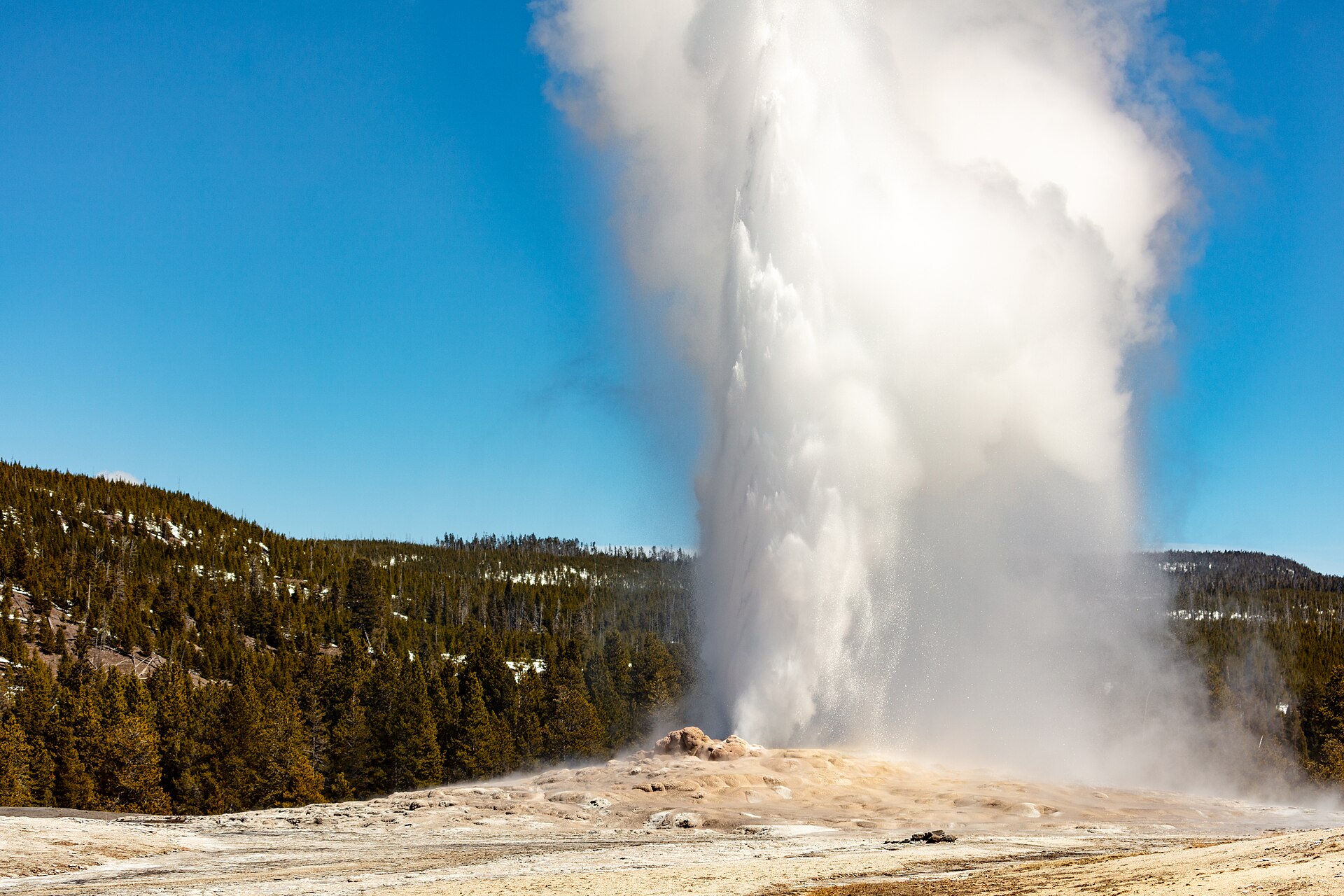
A geyser is a special type of hot spring that from time to time spurts water above ground. It differs from most hot springs by erupting periodically, and its erupting water is generally nearly at boiling for pure water at sea level. Such features are very rare in the world, and they do not exist in Europe outside Iceland.
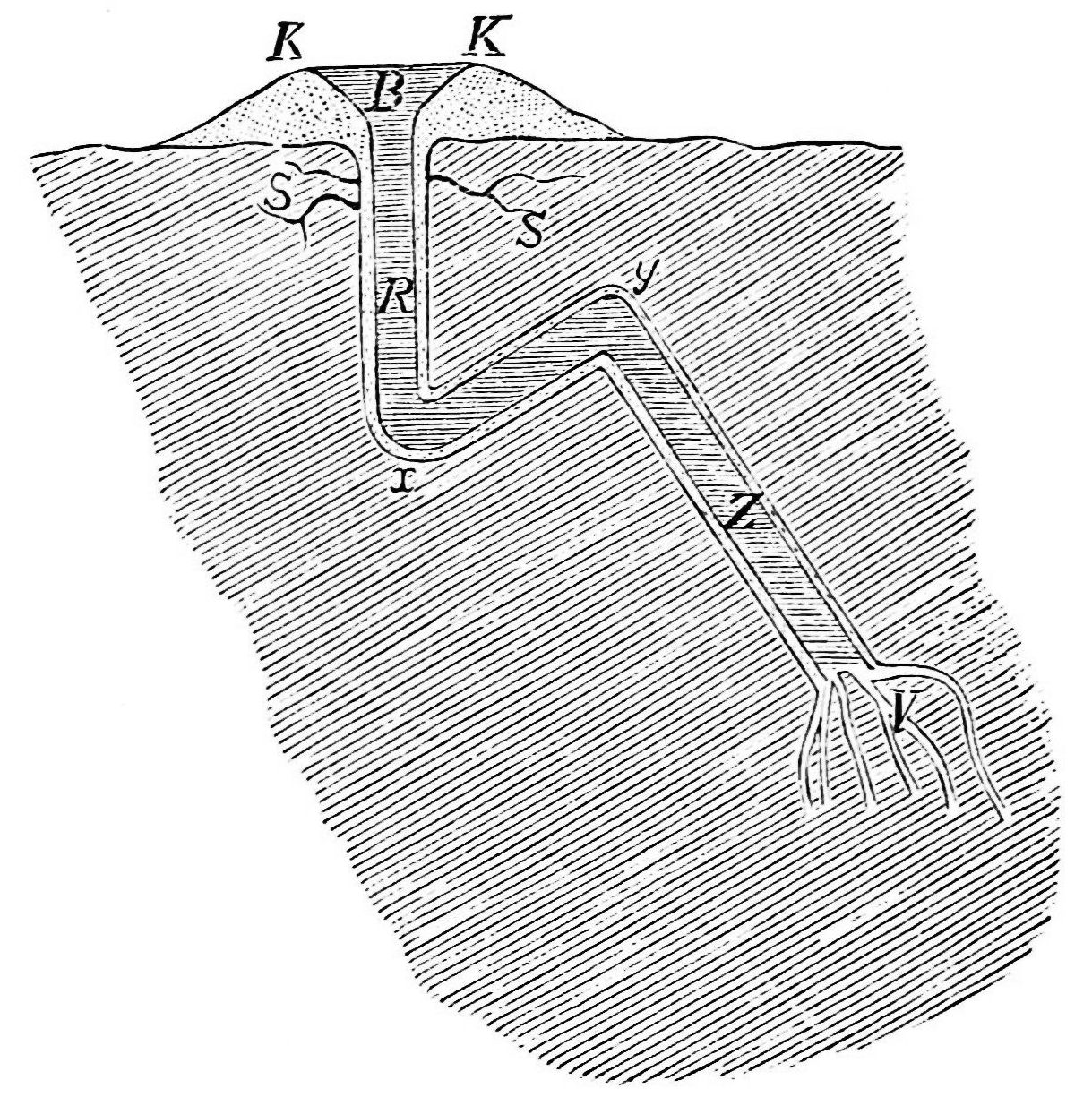
Two conditions underlie every geyser: a subsurface reservoir where hot water can reach boiling temperatures, and a constriction in the conduit that throttles and focuses erupting fluids. The constriction lets pressure build until an eruption releases it. Geysers are therefore just one type of hot spring, set apart from the rest by the plumbing that governs when they erupt.
1. Mechanism of Eruption
Snowmelt and rain move down through rock layers, magma heats the water, the weight of water above builds pressure, and constrictions in the plumbing make water and steam explode with force. Pressure exerted by the enormous weight of the overlying water and rock prevents deep water from boiling. Confined steam bubbles lift water above the vent until the geyser splashes or overflows, which lowers pressure and triggers violent boiling; tremendous amounts of steam force water out of the vent, and the eruption stops when the water reservoir is depleted or the system cools. The rapid transition of water to steam underground drives both geyser eruptions and hydrothermal explosions.
Most geysers are very irregular in their behavior, and each is different in some respects from all others. At the park's elevation water boils at about 93 °C (199 °F), and water deep underground can rise well above that boiling point while remaining liquid under pressure, becoming superheated water with temperatures exceeding 400 °F.
2. Types and Form
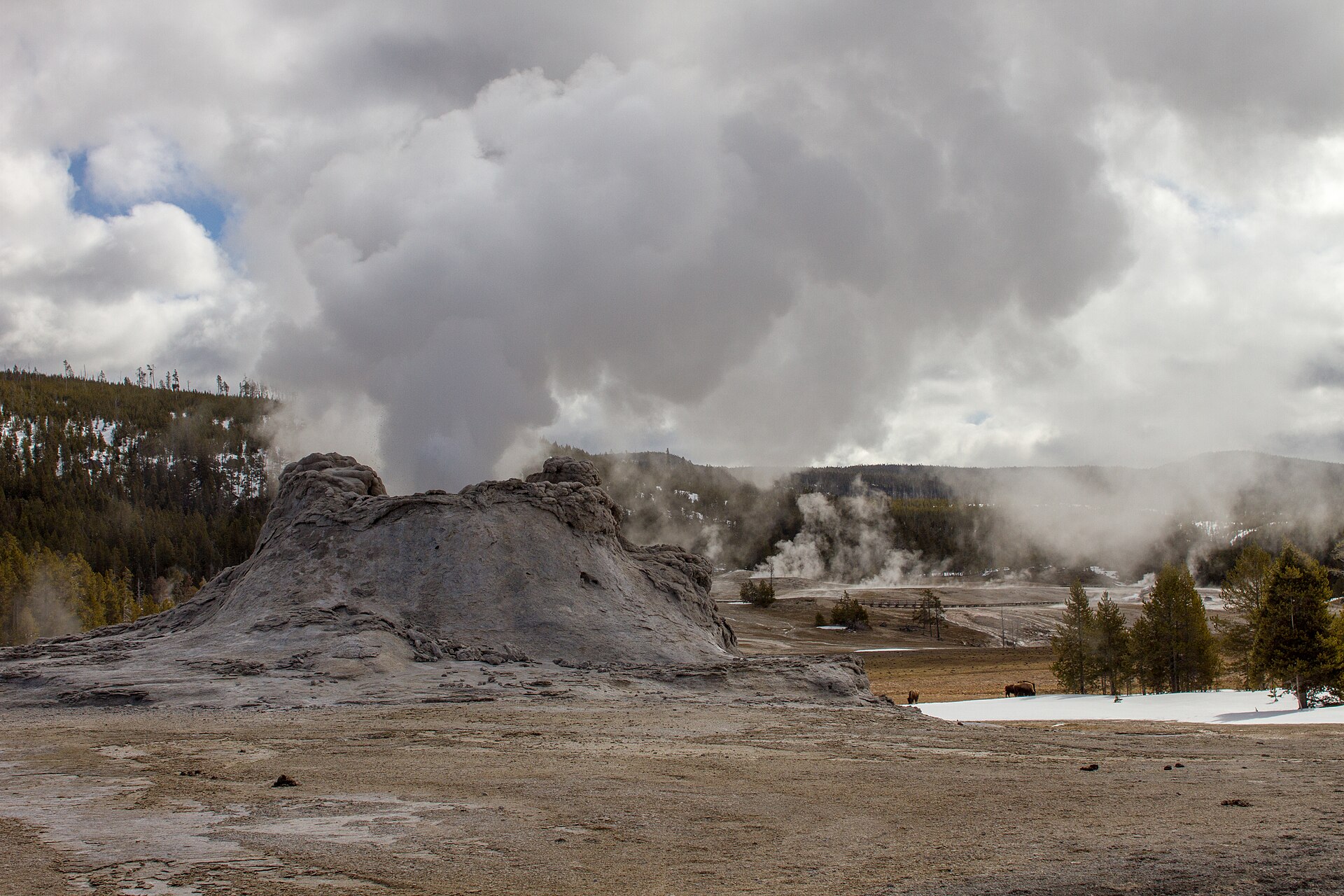
Geysers fall into two broad categories according to the form of their vent and the manner of their eruption. A cone geyser discharges its water as a narrow jet, usually from a mineral cone built up around the opening. A fountain geyser throws water in various directions, typically from a pool rather than a raised cone. The same distinction can be read from the surface itself: eruptions may issue through narrow cones, through large silica structures, or from hot spring pools of the fountain type.
The rock that frames these openings is sinter, a common mineral deposit in thermal areas, made of silica dissolved from rhyolite and left behind when it precipitates from hydrothermal water. At the surface that silica precipitates as siliceous sinter, and deposits with bulbous or cauliflower-like surfaces are known as geyserite. Superheated water takes silica into solution underground and redeposits part of it around the vent, raising the distinctive cone. The same process leaves deposits in cracks, which help the system withstand the pressure required to produce a geyser.
3. Global Distribution
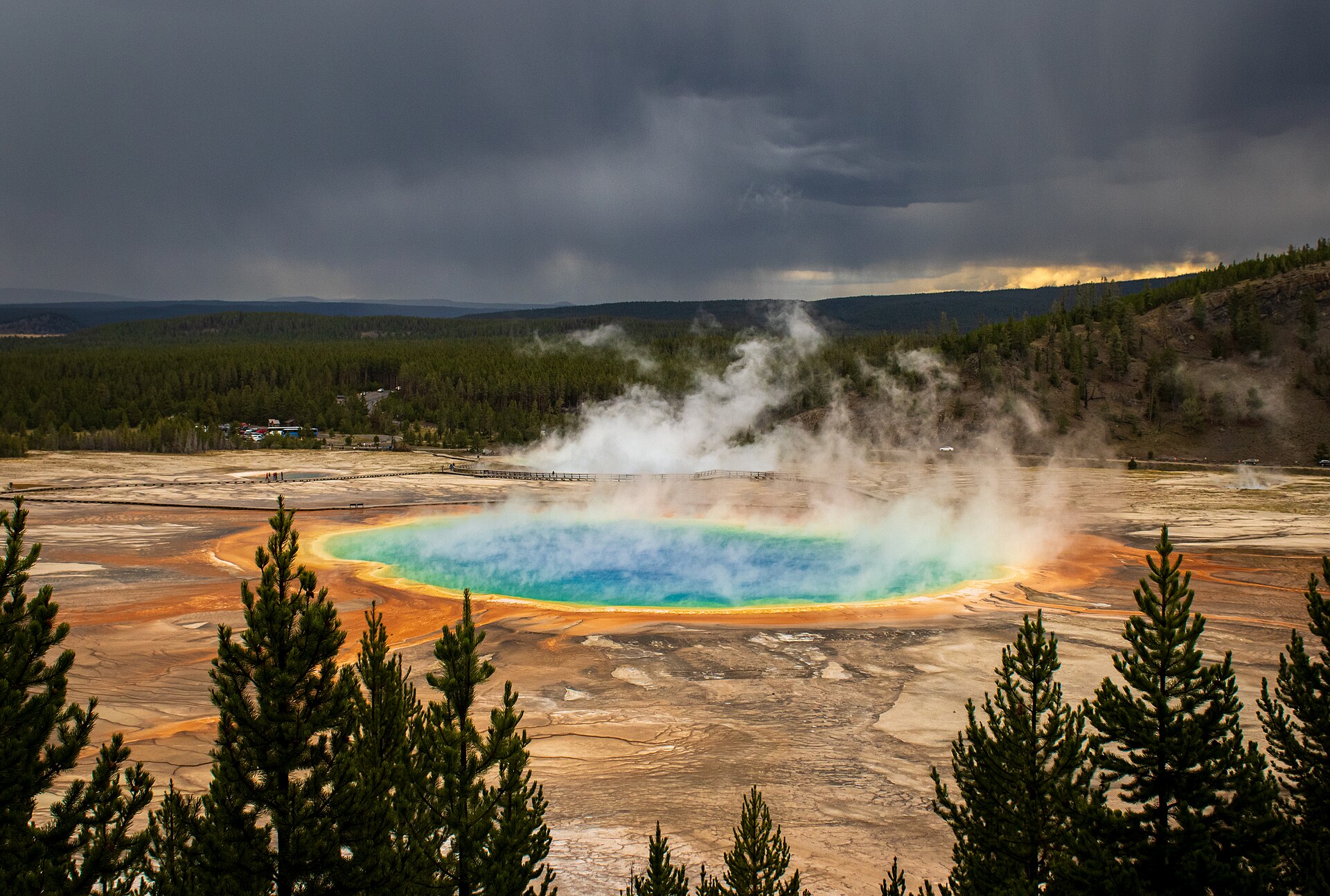
Geysers are rare in the world, and Yellowstone contains more of them than anywhere else on Earth. The park holds more than 10,000 hydrothermal features, among them more than 500 geysers, which amount to about half of the world's geysers. Within one square mile the Upper Geyser Basin holds at least 150 of them. Geysers are especially abundant in the Lower, Midway, and Upper Geyser Basins near Old Faithful, and their intervals vary with changes in the subsurface plumbing.
The park's hydrothermal system is the visible expression of the immense Yellowstone volcano, which releases tremendous heat from an underlying partially molten magma body. The unique thermal features of Yellowstone inspired its establishment in 1872 as the world's first national park.
Among individual vents, Old Faithful is the standard reference point, erupting at average intervals of about 90 minutes for 1.5 to 5 minutes, expelling thousands of gallons of boiling water to heights of 106 to 184 feet (30 to 55 m). Yellowstone was inscribed as a World Heritage site in 1978.
4. Notable Geysers
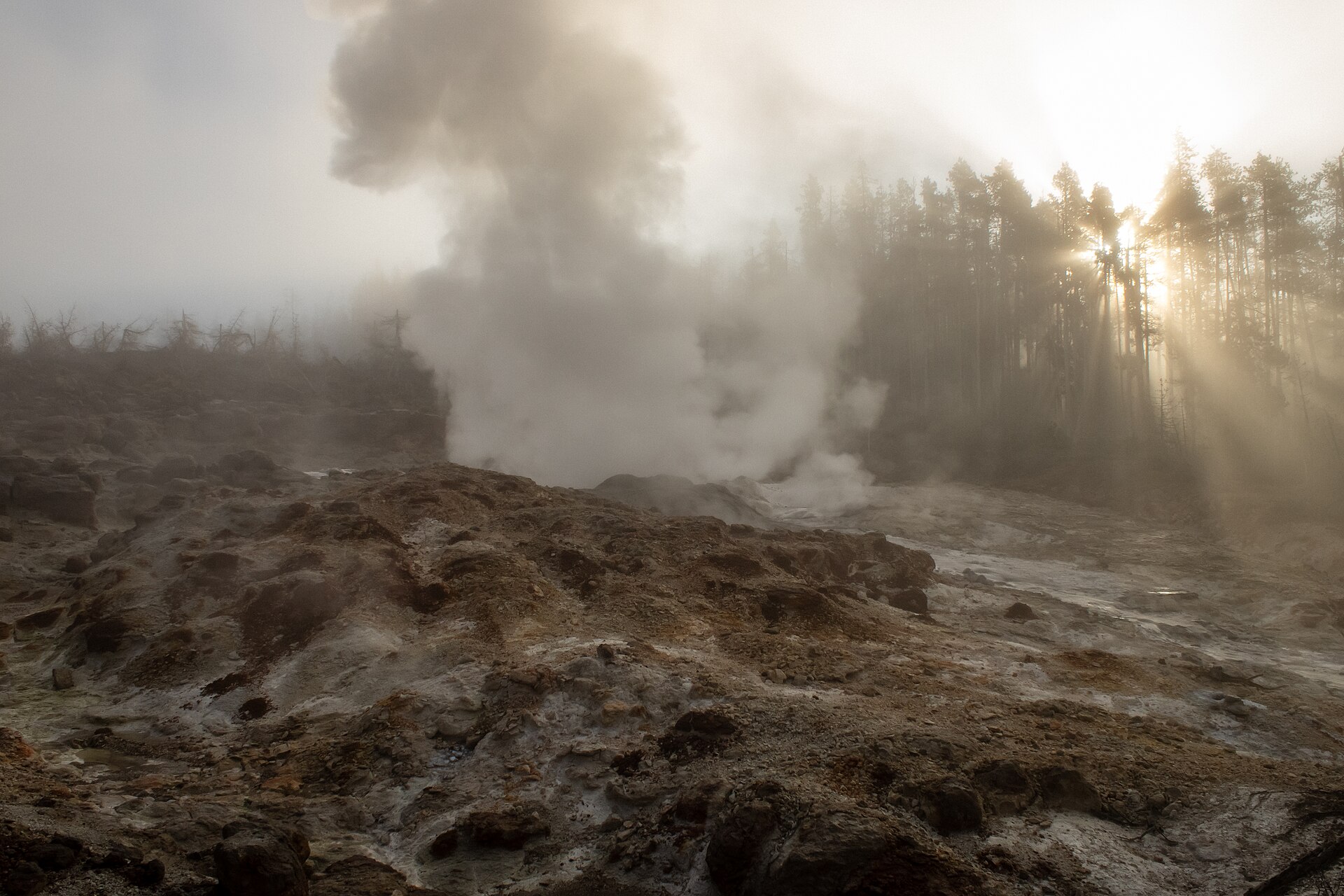
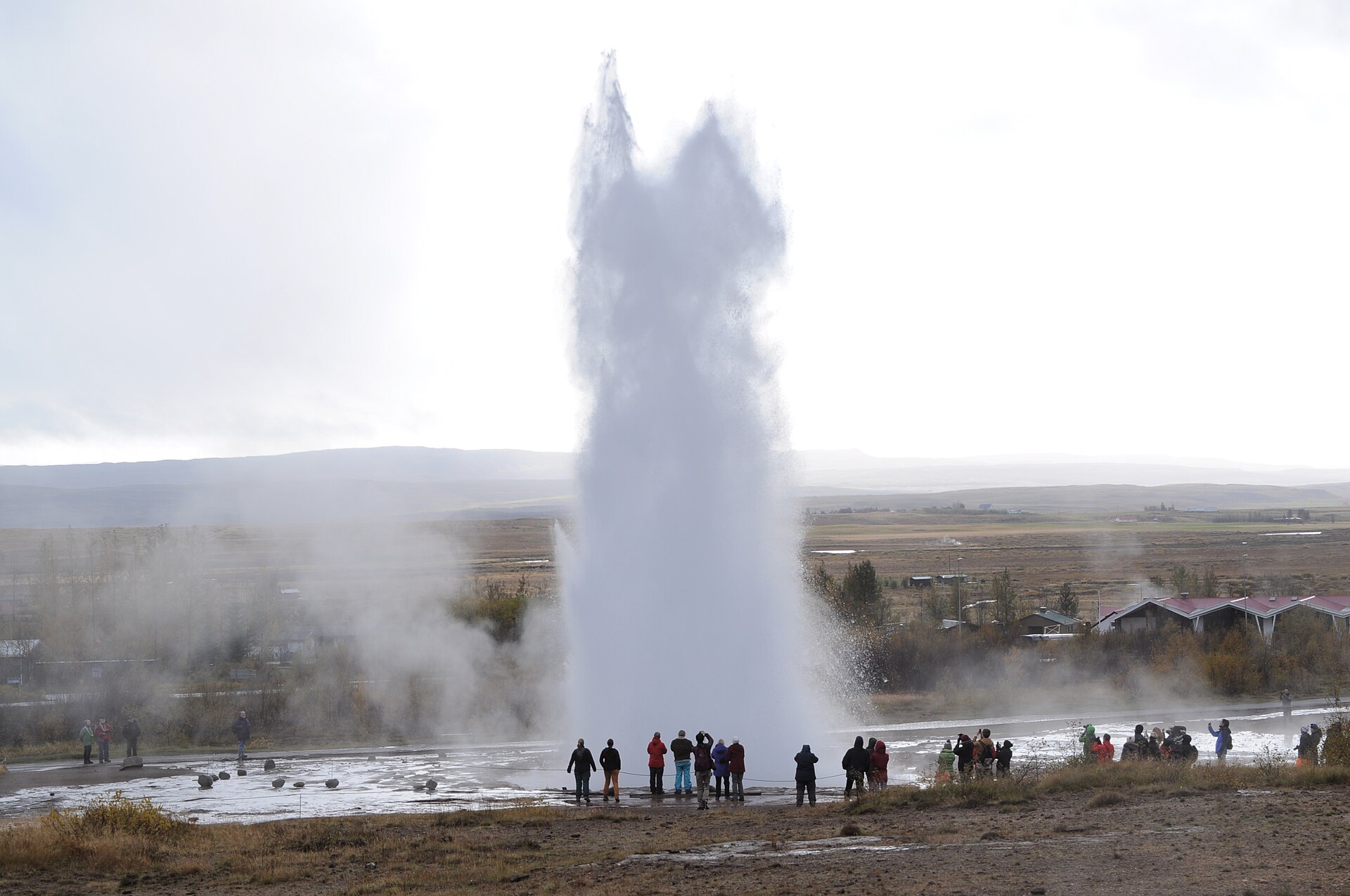
Geysir in Haukadalur is one of the most famous geysers in the world, and its local name gave the word geyser to foreign languages. The Geysir area lies in the western volcanic belt of Iceland, which explains its geothermal activity. When Geysir was most active its eruptions spouted scalding water some 60 to 80 m into the air, and it has risen to 100 metres at its best. Seismic activity has sometimes stirred Geysir, which livened up again after the earthquakes of 2000 but was last known to have erupted in 2016 before settling back into dormancy. Strokkur does not empty between eruptions the way Geysir does, so it quickly refills and erupts at regular intervals, with eruptions that can reach up to 30 m in height every few minutes. Steamboat Geyser in the Norris Geyser Basin is the world's tallest active geyser: major eruptions shoot water more than 300 feet (91 m), plumes have been recorded above 115 m, and minor eruptions reach 6 to 40 feet (2 to 12 m). During the earthquakes of June 2000 the hot springs Konungshver and Blesi started to boil vigorously.
Te Puia in Rotorua is home to the world-famous Rotorua geysers, including the spectacular Pohutu Geyser.
5. Geothermal Regions Beyond Yellowstone
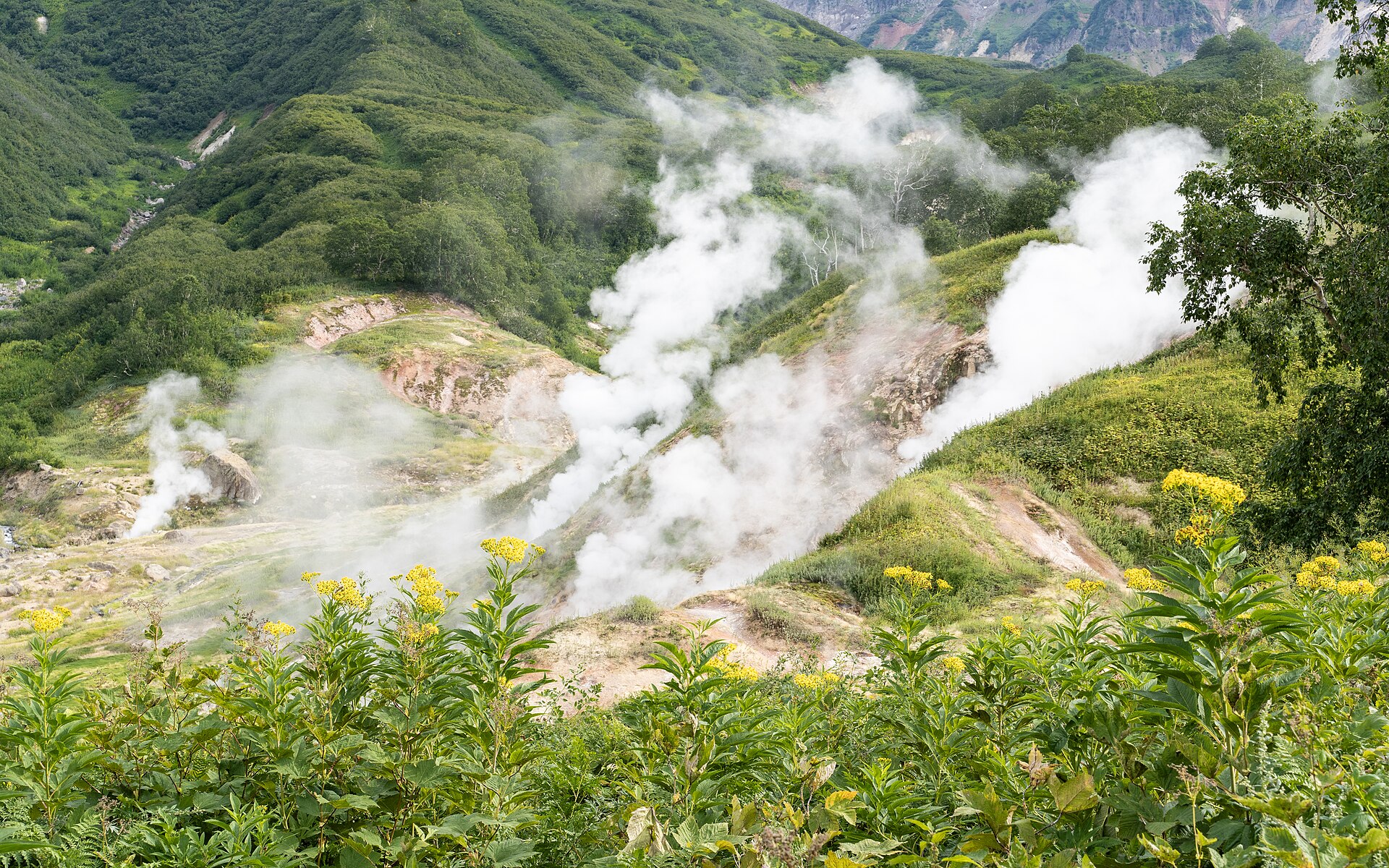
Dolina Geizerov, the second largest geyser field in the world, lies within the Kronotsky Nature Reserve and is part of the Volcanoes of Kamchatka World Heritage site. The geysers of the Valley of Geysers were first discovered in 1941 and remained closed to commercial tourism until 1991 when the area opened to visitors. On 3 June 2007 a landslide buried a number of the valley's hydrothermal features, including the first geyser found there, Pervenets, under an estimated 180 feet (60 m) of debris, and created a natural dam on the Geyser River. The World Heritage Committee inscribed the Volcanoes of Kamchatka on the World Heritage List in 1996.
6. Scientific Study and Biotechnology
In sustained fieldwork from 1965 to 1971 Brock took samples from the hot pots, geyser pools, fumaroles and thermal basins of the Firehole River watershed, finding microbes in all of them, including a previously unknown species he named Thermus aquaticus with his colleague Hudson Freeze. The optimum temperature for growth of Thermus aquaticus is 70 °C and the maximum 79 °C.
In 1976 scientists at Cetus Corp. worked with enzymes from Thermus aquaticus, and Kary Mullis created a procedure called PCR that used the adapted enzymes, named Taq, to replicate DNA with great efficiency and precision. Kary Mullis browsed the culture collection and grew batches of Brock's Thermus aquaticus culture to find the enzyme Taq polymerase, whose heat resistance enabled him to rapidly and inexpensively copy genes.
7. Monitoring and Hazards
Identifying the locations of hydrothermal features and monitoring their heat, water flow, and chemistry provides land managers with data for management decisions. Ground, airborne, and satellite thermal-infrared sensors can map and monitor hydrothermal activity within individual basins or over a broad region.
On 23 July 2024 a hydrothermal explosion beneath Black Diamond Pool in Biscuit Basin sent steam and debris hundreds of feet into the air and destroyed a nearby boardwalk. A rare eruption of Ear Spring on 15 September 2018 ejected foreign objects including coins and trash dating back to the 1930s. Boiling water surges just beneath the thin crust of most geyser basins, and people have been severely burned after breaking through the fragile surface.
8. Timeline of Notable Events
-
15 March 2018Steamboat Geyser resumes activitySteamboat Geyser began a period of more frequent eruptions after three and a half years of dormancy.6Hydrothermal Systems · National Park Service (Yellowstone National Park) ↗
-
2018Steamboat eruption countSteamboat erupted 32 times in 2018.6
-
2019 and 2020Record yearsEach of 2019 and 2020 saw 48 recorded eruptions, the geyser's record years.9Steamboat Geyser · National Park Service (Yellowstone National Park) ↗
-
2021Steamboat slowsSteamboat slowed to 20 eruptions in 2021 and fewer in the years that followed.6
9. Timeline: from the naming of Old Faithful to Steamboat's reawakening
- 1870Washburn expedition names Old FaithfulMembers of the Washburn expedition named Old Faithful Geyser for its consistent performance during their exploration of the Yellowstone region.
- 1872Yellowstone becomes the world's first national parkThe unique thermal features of Yellowstone inspired its establishment in 1872 as the world's first national park.
- 1914Geysir stops eruptingGeysir ceased erupting in 1914 and would remain quiet until a slot was dug through its silica bowl years later.
- 1935A slot is dug through Geysir's silica rimProfessor Trausti Einarsson and a local farmer dug a narrow slot through the rim of Geysir's silica bowl, lowering the water table so that the geyser started erupting again.
- 1941The Valley of Geysers is discoveredThe geysers of the Kamchatka peninsula's Valley of Geysers were first discovered in 1941 and stayed closed to commercial tourism for decades.
- 1954Geysir needs soap to eruptBy 1954 Geysir had ceased to erupt without soap, an intervention that visitors and park staff sometimes used to trigger eruptions.
- 2 September 1961Steamboat Geyser begins a long active phaseSteamboat Geyser began an active phase in 1961 following a 50-year dormancy, the first of several decades of on-and-off activity for the geyser.
- 1963Strokkur is drilled clean and returns to lifeIn 1963 the Strokkur geyser was cleaned with a drill down to 40 m and started erupting again after a dormancy that had lasted since 1907 and continued every 8 to 10 minutes thereafter.
- 1964Thomas Brock stops at YellowstoneDuring a long car trip in 1964 the microbiologist Thomas Brock stopped at Yellowstone and became curious about the microbes living in its hot springs.
- 1969Thermus aquaticus is describedIn 1969 the Journal of Bacteriology published the description of Thermus aquaticus by Thomas Brock and Hudson Freeze, a bacterium isolated from Yellowstone's thermal springs.
- 1978Yellowstone is inscribed as a World Heritage siteUNESCO inscribed Yellowstone National Park as a World Heritage site in 1978 on the basis of natural criteria.
- 1993Mullis receives the Nobel Prize in chemistryKary Mullis, creator of the PCR procedure that used Taq enzymes, was awarded the Nobel Prize in chemistry in 1993 and the field of biotechnology took off.
- 1996The Volcanoes of Kamchatka join the World Heritage ListThe World Heritage Committee inscribed the Volcanoes of Kamchatka in 1996 as one of the most outstanding volcanic regions in the world.
- 17 June 2000Earthquakes stir Iceland's thermal areaLarge earthquakes of magnitude 6.5 shook southern Iceland in June 2000 and Geysir awoke, erupting through the year while the flow of water from the hot springs increased by half.
- 3 June 2007A landslide buries part of the Valley of GeysersA landslide buried hydrothermal features in the Valley of Geysers, including the first geyser found there, Pervenets, under debris that also dammed the Geyser River and created Lake Palanskoye.
- 15 March 2018Steamboat Geyser reawakensSteamboat Geyser had its first major eruption after a 3.5-year dormancy and began a prolific sequence of eruptions that set records for the geyser.
References (20)
- 1Geysers — U.S. Geological Survey WebView source
- 2Development — Hótel Geysir (Geysir, Haukadalur) WebView source
- 3Yellowstone's Active Hydrothermal System — U.S. Geological Survey (Yellowstone Volcano Observatory) WebView source
- 4Yellowstone Hydrothermal Features — National Park Service (Yellowstone National Park) WebView source
- 5Hydrothermal Features — National Park Service (Yellowstone National Park) WebView source
- 6Hydrothermal Systems — National Park Service (Yellowstone National Park) Web↩View source
- 7Old Faithful Geyser — National Park Service (Yellowstone National Park) WebView source
- 8Yellowstone National Park — UNESCO World Heritage Centre (Internet Archive snapshot) ArchiveView source
- 9Steamboat Geyser — National Park Service (Yellowstone National Park) Web↩View source
- 10The 2018 reawakening and eruption dynamics of Steamboat Geyser, the world's tallest active geyser — PNAS (via PubMed Central) 2018 WebView source
- 11Te Puia, Rotorua — Te Puia (New Zealand Māori Arts and Crafts Institute) WebView source
- 12Hot Water Treasures: Russia (Dolina Geizerov) — National Park Service (Yellowstone National Park) WebView source
- 13Volcanoes of Kamchatka — UNESCO World Heritage Centre (Internet Archive snapshot) ArchiveView source
- 14Discovering Life in Yellowstone Where Nobody Thought it Could Exist — National Park Service WebView source
- 15Thermus aquaticus gen. n., a Nonsporulating Extreme Thermophile — Journal of Bacteriology, American Society for Microbiology (via PubMed Central) WebView source
- 16Biotechnology sector materializes from Yellowstone hot springs — U.S. National Science Foundation WebView source
- 17Monitoring Geothermal Systems and Hydrothermal Features — National Park Service WebView source
- 18Geysir Area: Nature and geology — Environment Agency of Iceland (Umhverfisstofnun) WebView source
- 19PCR: The Technology That Launched Biotechnology — U.S. National Science Foundation WebView source
- 20Old Faithful Area — National Park Service (Yellowstone National Park) WebView source