Parthenon
The temple that defined classical proportion — and survived an explosion.
Overview
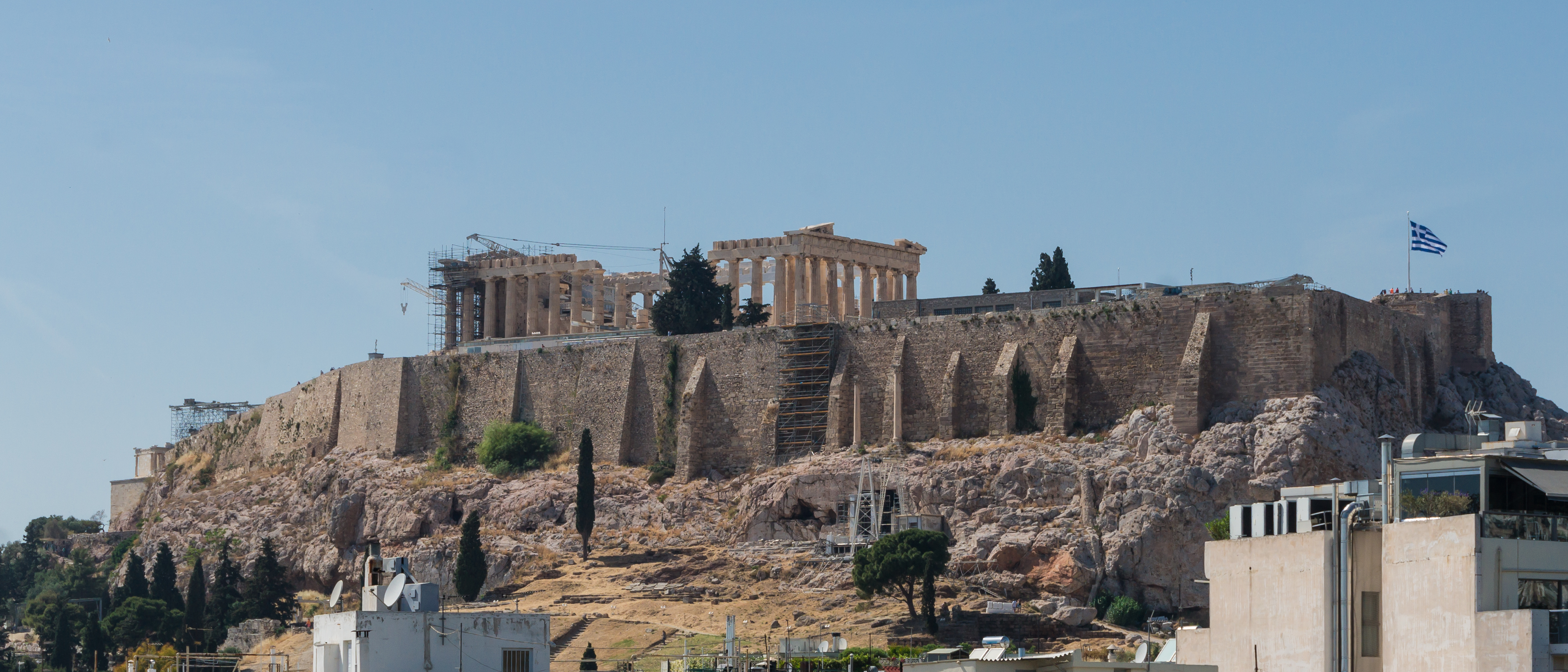
The Parthenon is a former temple on the Athenian Acropolis in Greece that was dedicated to the goddess Athena. Its decorative sculptures are considered some of the high points of classical Greek art. The building is regarded as an enduring symbol of ancient Greece, Western civilisation, and democracy.
The name derives from the Greek parthénos, meaning maiden, girl, or virgin and unmarried woman. The Liddell–Scott–Jones Greek–English Lexicon notes that the word may have described the unmarried women's apartments of a house, though in the Parthenon it appears to have designated a particular room of the temple. Architecturally the building is an octastyle peripteral Doric temple with an Ionic hexastyle amphiprostyle two-chambered cella, raised on the euthynteria and krepis of its precursor, the Older Parthenon.
Although it is a temple in architectural terms and is usually called one, some scholars have argued that it is not really a temple in the conventional sense. A small shrine excavated within the building stands on the site of an older sanctuary probably dedicated to Athena as a way of drawing closer to the goddess, yet the Parthenon apparently never hosted the official cult of Athena Polias, patron of Athens. The work is attributed to Phidias and dated to the mid-fifth century BCE as an offering from the city of Athens to Athena, its tutelary deity; the naos was designed exclusively to accommodate it.
The Older Parthenon was destroyed by the Achaemenids during the Destruction of Athens in 480–479 BC and was afterwards rebuilt by Pericles. It had replaced a Hekatompedon temple, the "hundred-footer", and would have stood beside the archaic temple dedicated to Athena Polias. In the mid-5th century BC, when the Athenian Acropolis became the seat of the Delian League, Pericles initiated the building project that lasted the entire second half of the century. The most important buildings visible on the Acropolis today — the Parthenon, the Propylaia, the Erechtheion and the Temple of Athena Nike — were erected during this period.
Close measurement of the temple in the nineteenth century revealed that it deviates from strict rectilinearity through several optical refinements. The columns exhibit entasis, a swelling that reduces toward the top, a practice in use by the mid-6th century but handled in the Parthenon with a subtler effect at a ratio of 1/550 to 1/600. The Acropolis itself is an ancient citadel on a rocky outcrop above the city of Athens containing the remains of several ancient buildings of great architectural and historical significance, the most famous being the Parthenon; the word Acropolis comes from the Greek akron, "highest point, extremity", and polis, "city".
Ancient Greek architecture is best known for its temples, many of them found throughout the region, with the Parthenon regarded now as in ancient times as the prime example. Deposits of high-quality potter's clay were found throughout Greece and the Islands, with major deposits near Athens. The Elgin Marbles are a collection of Ancient Greek sculptures from the Parthenon and other structures of the Acropolis, removed from Ottoman Greece in the early 19th century and shipped to Britain by agents of Thomas Bruce, 7th Earl of Elgin, and now held in the British Museum in London. The term Parthenon Marbles or Parthenon Sculptures refers to the frieze, metopes and pediments from the Parthenon held in various collections, principally the British Museum and the Acropolis Museum in Athens.
1. Etymology
The name Parthenon derives from the Greek word parthénos, which denotes a maiden, a girl, a virgin or an unmarried woman. The Liddell–Scott–Jones Lexicon holds that the term could refer to the apartments of unmarried women, yet in the case of the Parthenon it appears to have been applied to one particular room. That room, according to the lexicon, was the western cella of the building.
Christopher Pelling has asserted that the name means "temple of the virgin goddess", an interpretation tied to the cult of Athena Parthenos. A further theory proposes that the Parthenon was the room in which the arrephoroi worked. This was a group of four young girls chosen each year to serve Athena, and they wove a peplos that was presented to the goddess during the Panathenaic Festivals.
The building the name attaches to is a former temple on the Athenian Acropolis in Greece, dedicated to the goddess Athena. The Acropolis itself is an ancient citadel on a rocky outcrop above the city of Athens, holding the remains of several ancient buildings of great architectural and historical significance, of which the Parthenon is the most famous. The word Acropolis derives from the Greek akron, meaning highest point or extremity, and polis, meaning city.
In form the Parthenon is an octastyle peripteral Doric temple with an Ionic hexastyle amphiprostyle two-chambered cella. It stands on the euthynteria and krepis of its precursor building, the Older Parthenon. That earlier structure had replaced a Hekatompedon temple, the hundred-footer, and would have stood beside the archaic temple dedicated to Athena Polias, of the city. The Older Parthenon was destroyed by the Achaemenids during the Destruction of Athens in 480–479 BC and was afterwards rebuilt by Pericles.
The present building belongs to the mid-5th century BC, when the Athenian Acropolis became the seat of the Delian League and Pericles initiated a building project that lasted the entire second half of the century. The most important buildings visible on the Acropolis today — the Parthenon, the Propylaia, the Erechtheion and the Temple of Athena Nike — were erected during this period. The temple is attributed to Phidias and dated to the mid-fifth century BCE, an offering from the city of Athens to Athena, its tutelary deity. The naos was designed exclusively to accommodate the statue of the goddess.
Whether the Parthenon was a temple in the conventional sense is contested. Although it is architecturally a temple and is usually called so, some scholars have argued that it is not really a temple in that sense. A small shrine has been excavated within the building, on the site of an older sanctuary probably dedicated to Athena as a way to get closer to the goddess, yet the Parthenon apparently never hosted the official cult of Athena Polias, patron of Athens. In ancient Greek architecture, best known for its temples, the Parthenon is regarded, now as in ancient times, as the prime example. Its decorative sculptures are considered some of the high points of classical Greek art, and the building is an enduring symbol of ancient Greece, Western civilisation and democracy.
Close measurement of the temple in the nineteenth century revealed that it deviates from strict rectilinearity through several optical refinements. The columns exhibit entasis, a swelling that reduces toward the top, a practice in use by the mid-6th century but subtler here, with a ratio of 1/550 to 1/600. Sculptures from the Parthenon and other structures on the Acropolis — the frieze, metopes and pediments — were removed from Ottoman Greece in the early 19th century and shipped to Britain by agents of Thomas Bruce, 7th Earl of Elgin; held principally in the British Museum and the Acropolis Museum in Athens, they are known as the Parthenon Marbles or Parthenon Sculptures, and also as the Elgin Marbles.
2. The Acropolis Setting
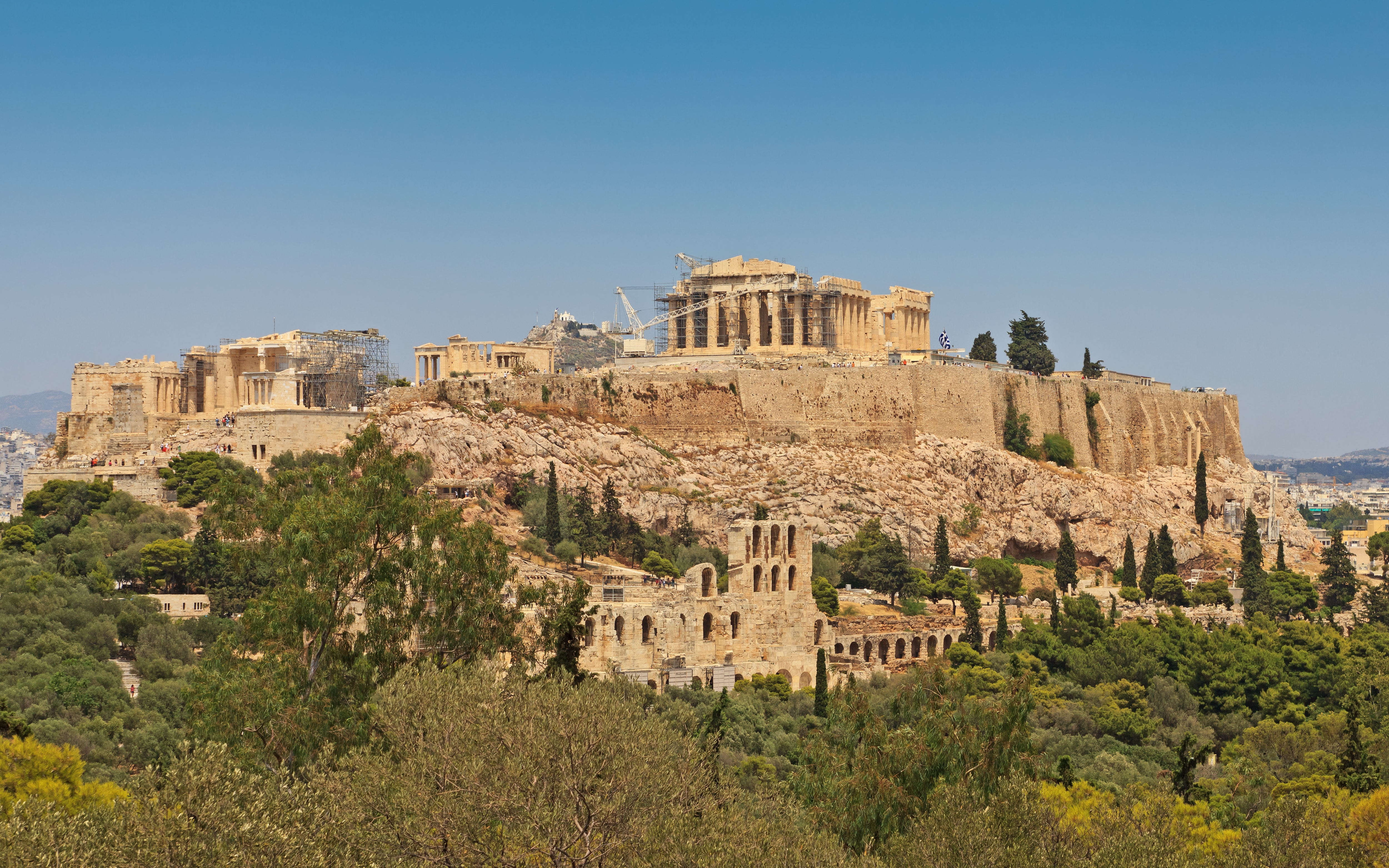
The Acropolis of Athens is an ancient citadel set on a rocky outcrop above the city, and it contains the remains of several ancient buildings, the most famous of which is the Parthenon. The word acropolis derives from the Greek akron, meaning 'highest point, extremity', and polis, meaning 'city'. The term is generic rather than unique, and there are many other acropoleis in Greece. In ancient times the site was also more properly known as Cecropia, named after the legendary serpent-man Cecrops, the supposed first Athenian king.
The temple stood as part of a religious precinct known as the acropolis. Attributed to Phidias and dated to the mid-fifth century BCE, it was an offering from the city of Athens to Athena, its tutelary deity. In the succeeding years Athens grew to control much of the region through its domination of the Delian League, a confederation of Greek states originally designed to protect themselves against the Persians. By 454 BCE the Delian treasury had been relocated to Athens, where the money was funnelled into an ambitious plan to rebuild the city and its destroyed monuments.
The setting also reflects the material resources of the region: deposits of high-quality potter's clay were found throughout Greece and the Islands, with major deposits near Athens. In later history Elgin said that he removed the sculptures with the permission of the Ottoman officials who exercised authority in Athens at the time.
The Parthenon is a former temple on the Athenian Acropolis dedicated to the goddess Athena. Its naos was designed exclusively to accommodate the statue of Athena, the cult image that the building was made to house. The olive-wood xoanon of Athena Polias, bathed in the sea and presented with the peplos, stood in another temple on the northern side of the Acropolis, more closely associated with the Great Altar of Athena. The city cult of Athena based in the Acropolis was supervised by the High Priestess of Athena Polias, chief among the lesser officials such as the plyntrides, arrephoroi and kanephoroi.
In 480 BCE the Persians ransacked the Acropolis, including the pre-Parthenon, which was under construction at the time. The Older or Pre-Parthenon was still being built when the Persians sacked the city and razed the Acropolis. In the mid-5th century BC, when the Athenian Acropolis became the seat of the Delian League, Pericles initiated the building project that lasted the entire second half of the century. The most important buildings visible on the Acropolis today — the Parthenon, the Propylaia, the Erechtheion and the Temple of Athena Nike — were erected during this period.
Although the Parthenon is architecturally a temple and is usually called so, some scholars have argued that it is not really a temple in the conventional sense of the word. The Elgin Marbles are a collection of Ancient Greek sculptures from the Parthenon and other structures of the Acropolis, removed from Ottoman Greece in the early 19th century and shipped to Britain by agents of Thomas Bruce, 7th Earl of Elgin; they are now held in the British Museum in London. The term Parthenon Marbles or Parthenon Sculptures refers to the frieze, metopes and pediments from the Parthenon held in various collections, principally the British Museum and the Acropolis Museum in Athens. The Greek government and supporters of the marbles' return have argued that they were obtained illegally or unethically, that they are of exceptional cultural importance to Greece, and that their cultural value would be best appreciated in a unified public display with the other major Parthenon antiquities in the Acropolis Museum.
3. Older Parthenon
The structure known as the Older Parthenon, or Pre-Parthenon, was still under construction when the Persians sacked the city in 480 BC and razed the Acropolis. In 480 BCE the Persians ransacked the Acropolis of Athens, and the pre-Parthenon stood among the works caught at that moment of incompletion. The building had been raised in place of a Hekatompedon temple, the "hundred-footer". It would have stood beside the archaic temple dedicated to Athena Polias, "of the city".
The Older Parthenon was destroyed by the Achaemenids during the Destruction of Athens in 480–479 BC and was afterwards rebuilt by Pericles.
The temple that replaced it in the mid-5th century BC was raised on the euthynteria and krepis of its precursor building, the Older Parthenon. In that same period, when the Athenian Acropolis became the seat of the Delian League, Pericles initiated a building project that lasted the entire second half of the century.
4. Construction and Historical Context
The Parthenon belongs to a rebuilding campaign that followed the Persian ransacking of the Acropolis in 480 BCE which destroyed the earlier structure on the site known as the pre-Parthenon. By 454 BCE the Delian treasury had been relocated to Athens and the money was funnelled into an ambitious plan to rebuild the city and its destroyed temples including the Parthenon.
In the mid-5th century BC when the Athenian Acropolis became the seat of the Delian League Pericles initiated the building project that lasted the entire second half of the century. The most important buildings visible on the Acropolis today – the Parthenon, the Propylaia, the Erechtheion and the Temple of Athena Nike – were erected during this period.
The structure that preceded the Parthenon, commonly designated the Older or Pre-Parthenon, had not yet been completed when the Persians sacked the city in 480 BC and razed the Acropolis. The same campaign of destruction is described as having caught the pre-Parthenon while it was still under construction.
In its fabric the Parthenon follows the practice of other Greek temples, being raised by post and lintel construction and enclosed by columns — a peripteral arrangement — that carry an entablature.
Although the building is architecturally a temple and is generally so described, some scholars have contended that it does not truly function as a temple in the conventional sense of the term.
5. Function and Cult
Although the Parthenon is architecturally a temple and is usually called so, some scholars have argued that it is not really a temple in the conventional sense of the word. A small shrine has been excavated within the building, on the site of an older sanctuary probably dedicated to Athena as a way to get closer to the goddess. The Parthenon apparently never hosted the official cult of Athena Polias, patron of Athens.
The colossal statue of Athena by Phidias was not specifically related to any cult attested by ancient authors and is not known to have inspired any religious fervour. The naos was designed exclusively to accommodate it.
Like most Greek temples the Parthenon also served as the city treasury.
The olive-wood xoanon of Athena Polias was bathed in the sea and received the presentation of the peplos. The temple housing it stood on the northern side of the Acropolis and was more closely associated with the Great Altar of Athena. The High Priestess of Athena Polias supervised the city cult of Athena based in the Acropolis and was the chief of the lesser officials, among them the plyntrides, arrephoroi and kanephoroi.
The name "Parthenon" is read by Christopher Pelling as meaning the "temple of the virgin goddess", a reference to the cult of Athena Parthenos associated with the temple.
6. Architecture
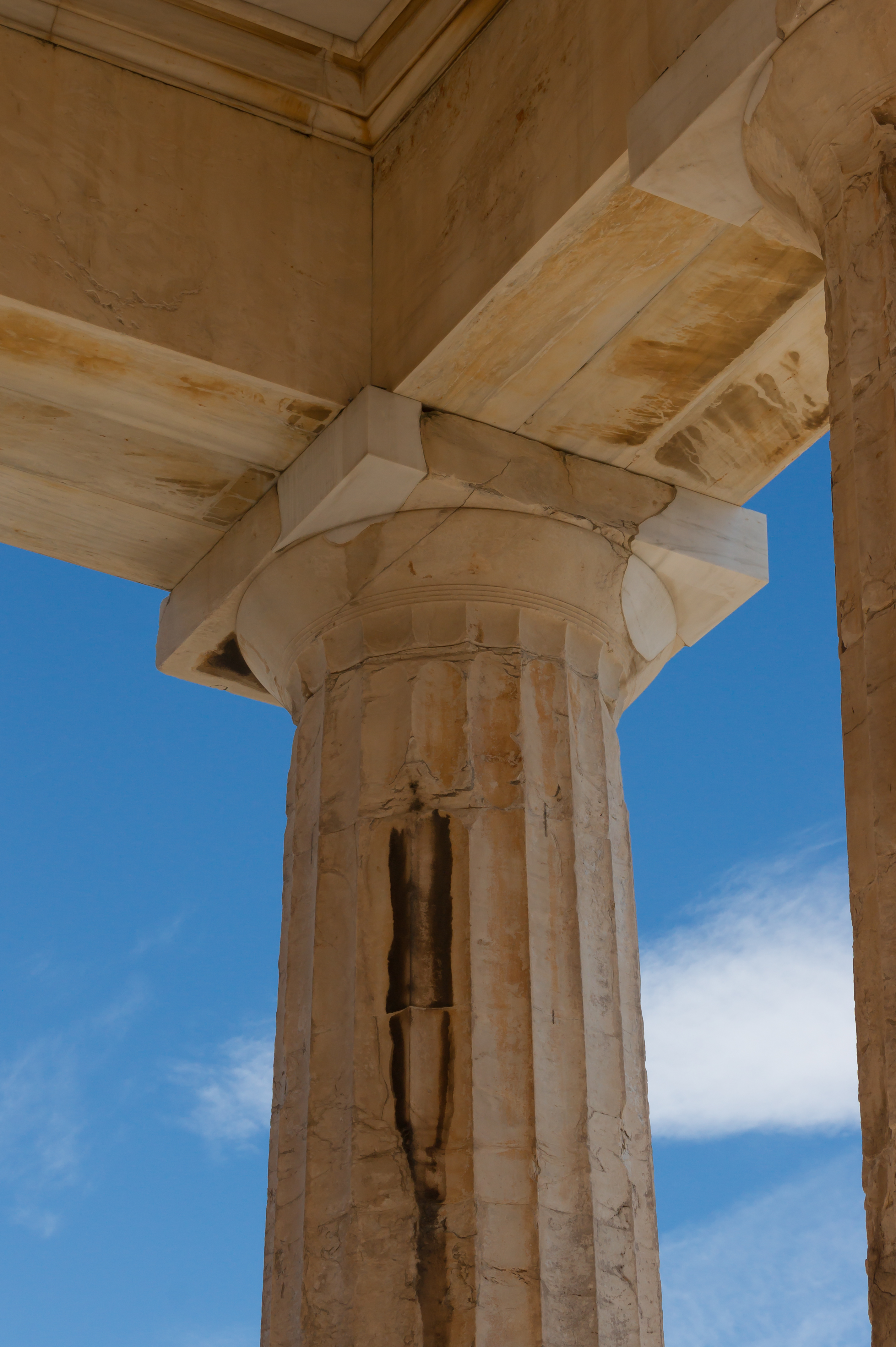
The Parthenon is an octastyle peripteral Doric temple with an Ionic hexastyle amphiprostyle two-chambered cella. In common with other Greek temples it is built using the post and lintel construction, surrounded by columns ('peripteral') carrying an entablature. Its gable-end features eight columns instead of the traditional six. Although octastyle temples were not entirely unknown, their presence in mainland Doric architecture, along with the wider inner masonry structure, the cella, makes the Parthenon unique in its design.
The temple stands on the euthynteria and krepis of its predecessor, the Older Parthenon. That earlier structure had replaced a Hekatompedon temple and would have stood beside the archaic temple dedicated to Athena Polias; it was destroyed by the Achaemenids during the Destruction of Athens in 480–479 BC and then rebuilt by Pericles.
Close measurement of the Parthenon in the nineteenth century revealed that the temple deviated from strict rectilinearity through several optical refinements. In 1878 John Pennethorne's The Geometry and Optics of Ancient Architecture argued that the curvilinear nature of the Parthenon was a deliberate design choice, supporting Penrose's conclusions and corresponding with Vitruvius' account of the Scamilli impares.
Although the Parthenon is architecturally a temple and is usually called so, some scholars have argued that it is not really a temple in the conventional sense of the word. A small shrine has been excavated within the building, on the site of an older sanctuary probably dedicated to Athena as a way to get closer to the goddess, but the Parthenon apparently never hosted the official cult of Athena Polias, patron of Athens.
7. Optical Refinements
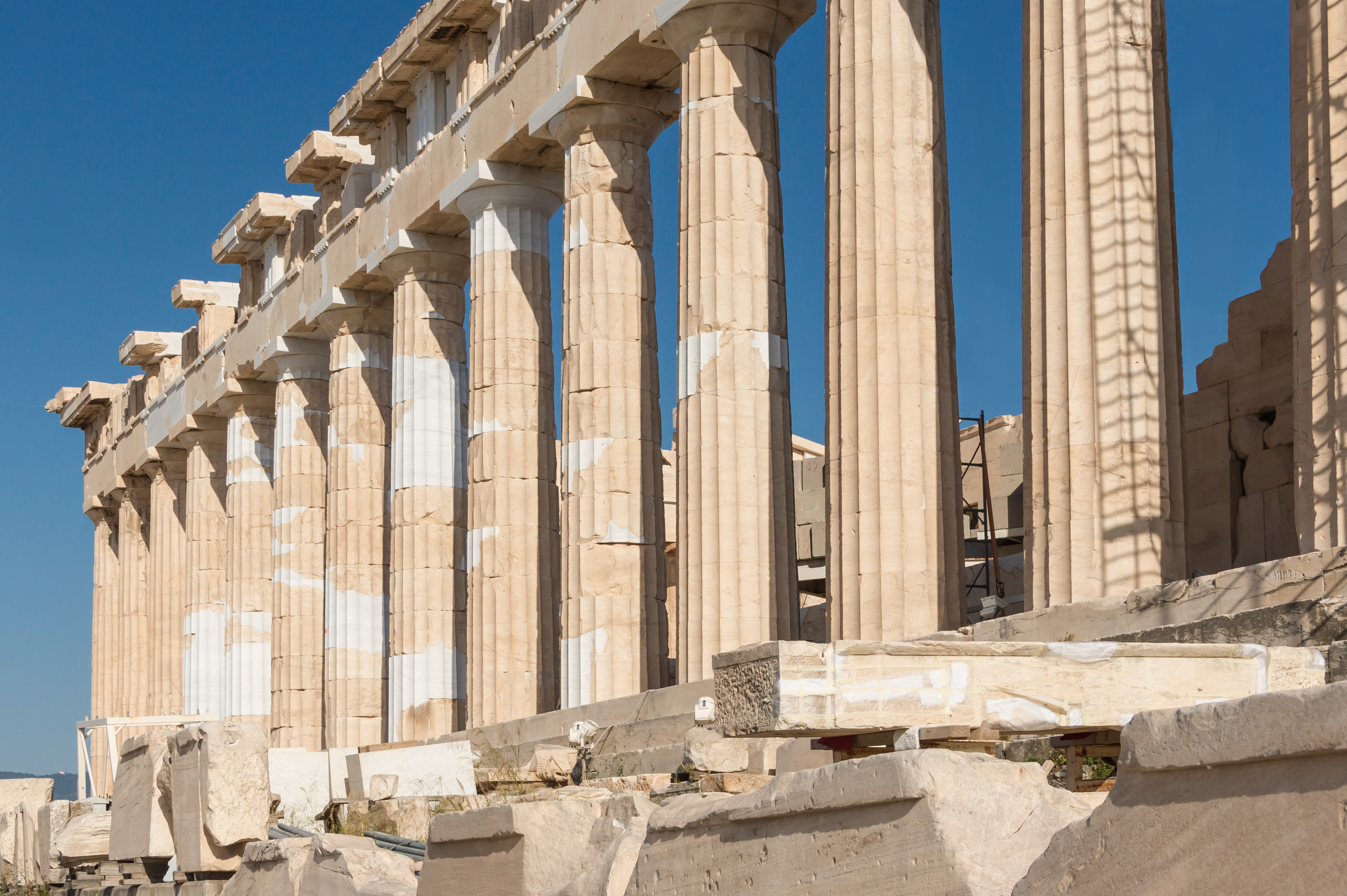
Close measurement of the Parthenon in the nineteenth century revealed that the temple deviated from strict rectilinearity through several optical refinements. The columns exhibit entasis, a swelling that reduces toward the top. The practice was in use by mid-6th century, but in the Parthenon the effect is subtler, with a ratio of 1/550 to 1/600. Scholars have proposed several explanations for the curvatures.
In 1878 John Pennethorne's The Geometry and Optics of Ancient Architecture argued that the curvilinear nature of the Parthenon was a deliberate design choice. His argument supported Penrose's conclusions and corresponded with Vitruvius' account of the Scamilli impares.
The Parthenon stands as a former temple on the Athenian Acropolis in Greece, dedicated to the goddess Athena. That citadel occupies a rocky outcrop above the city of Athens and holds the remains of several ancient buildings of great architectural and historical significance, the most famous of them the Parthenon itself. The name Acropolis derives from the Greek ἄκρον (akron), meaning highest point or extremity, and πόλις (polis), meaning city.
The word Parthenon comes from the Greek parthénos (παρθένος), signifying maiden or girl as well as virgin or unmarried woman. The Liddell–Scott–Jones Greek–English Lexicon notes that the term may have referred to the unmarried women's apartments in a house, though in the Parthenon it appears to have designated a particular room of the temple. Attributed to Phidias and dated to the mid-fifth century BCE, the building was an offering from the city of Athens to Athena, its tutelary deity, and the naos was designed exclusively to accommodate the statue.
Architecturally the Parthenon is an octastyle peripteral Doric temple with an Ionic hexastyle amphiprostyle two-chambered cella. It was built on the euthynteria and krepis of its precursor building, the Older Parthenon, which the Achaemenids destroyed during the Destruction of Athens in 480–479 BC and which Pericles later rebuilt. That earlier structure had replaced a Hekatompedon temple, the "hundred-footer", and would have stood beside the archaic temple dedicated to Athena Polias, "of the city". In the mid-5th century BC, when the Athenian Acropolis became the seat of the Delian League, Pericles initiated the building project that lasted the entire second half of the century; the Propylaia, the Erechtheion and the Temple of Athena Nike were erected during the same period.
Although the Parthenon is architecturally a temple and is usually called so, some scholars have argued that it is not really a temple in the conventional sense of the word. A small shrine has been excavated within the building, on the site of an older sanctuary probably dedicated to Athena as a way to get closer to the goddess, but the Parthenon apparently never hosted the official cult of Athena Polias, patron of Athens. Its decorative sculptures are considered some of the high points of classical Greek art, and the building is regarded as an enduring symbol of ancient Greece, Western civilisation and democracy; in ancient Greek architecture, best known for its temples, it is still treated as the prime example.
The Parthenon Marbles, or Parthenon Sculptures, is the name given to the frieze, metopes and pediments from the building now held in various collections, principally the British Museum and the Acropolis Museum in Athens. The Elgin Marbles are a collection of Ancient Greek sculptures from the Parthenon and other structures of the Acropolis, removed from Ottoman Greece in the early 19th century and shipped to Britain by agents of Thomas Bruce, 7th Earl of Elgin, and now held in the British Museum in London.
8. Later History and Damage
In the final decade of the 6th century AD the Parthenon was converted into a Christian church dedicated to the Virgin Mary. This transformation marked a new phase in the life of a building that stands among the remains of several ancient structures of great architectural and historical significance on the Acropolis of Athens, the most famous of them being the Parthenon itself.
The Parthenon and the other buildings were seriously damaged during the 1687 siege by the Venetians during the Morean War. The destruction came when gunpowder being stored by the Turkish rulers in the Parthenon was hit by a Venetian bombardment and exploded.
The Parthenon is a former temple on the Athenian Acropolis in Greece dedicated to the goddess Athena. It stands within an ancient citadel on a rocky outcrop above the city, a site whose name derives from the Greek words for highest point and city. The building is attributed to Phidias and dated to the mid-fifth century BCE, when it served as an offering from Athens to its tutelary deity. Its naos was designed exclusively to accommodate the cult statue, though a small shrine excavated within the building, on the site of an older sanctuary probably dedicated to Athena, suggests an effort to draw closer to the goddess; the Parthenon apparently never hosted the official cult of Athena Polias, patron of Athens.
Architecturally the Parthenon is an octastyle peripteral Doric temple with an Ionic hexastyle amphiprostyle two-chambered cella. It was built on the euthynteria and krepis of its precursor, the Older Parthenon, which the Achaemenids destroyed during the Destruction of Athens in 480–479 BC and which Pericles later rebuilt. That predecessor had itself replaced a Hekatompedon temple and would have stood beside the archaic temple dedicated to Athena Polias. In the mid-5th century BC, when the Acropolis became the seat of the Delian League, Pericles initiated the building project that lasted the entire second half of the century, and the Propylaia, the Erechtheion and the Temple of Athena Nike rose alongside the Parthenon in the same period.
Close measurement of the temple in the nineteenth century revealed that it deviates from strict rectilinearity through several optical refinements. The columns exhibit entasis, a swelling that reduces toward the top, a practice in use by the mid-6th century but subtler here, with a ratio of 1/550 to 1/600. The curvature of the stylobate is among the refinements recorded. Although the Parthenon is architecturally a temple and is usually called so, some scholars have argued that it is not really a temple in the conventional sense of the word. Its decorative sculptures are considered some of the high points of classical Greek art, and the building is regarded as an enduring symbol of ancient Greece, Western civilisation and democracy; in the history of the discipline it is treated, now as in ancient times, as the prime example of Greek temple architecture.
The name Parthenon comes from the Greek parthénos, meaning maiden or girl as well as virgin or unmarried woman. The Liddell–Scott–Jones Greek–English Lexicon notes that the word may have referred to the unmarried women's apartments in a house, but that in the Parthenon it seems to have been used for a particular room of the temple. Sculptures from the building—the frieze, metopes and pediments—are known as the Parthenon Marbles or Parthenon Sculptures and are held in various collections, principally the British Museum and the Acropolis Museum in Athens. The Elgin Marbles, a collection of Ancient Greek sculptures from the Parthenon and other structures of the Acropolis, were removed from Ottoman Greece in the early 19th century and shipped to Britain by agents of Thomas Bruce, 7th Earl of Elgin, and are now held in the British Museum in London.
9. Elgin Marbles
The Elgin Marbles are a collection of Ancient Greek sculptures from the Parthenon and other structures of the Acropolis of Athens, removed from Ottoman Greece in the early 19th century and shipped to Britain by agents of Thomas Bruce, 7th Earl of Elgin; they are now held in the British Museum in London. From 1801 to 1812 Elgin's agents removed about half the surviving Parthenon sculptures, together with sculptures from the Erechtheion, the Temple of Athena Nike and the Propylaia, sending them to Britain in efforts to establish a private museum.
The Greek government and supporters of the marbles' return to Greece have argued that they were obtained illegally or unethically, that they are of exceptional cultural importance to Greece, and that their cultural value would be best appreciated in a unified public display with the other major Parthenon antiquities in the Acropolis Museum.
The term Parthenon Marbles, or Parthenon Sculptures, is applied to the frieze, metopes and pediments of the Parthenon now dispersed among various collections, principally the British Museum and the Acropolis Museum in Athens.
Elgin maintained that he had removed the sculptures with the permission of the Ottoman officials who exercised authority in Athens at the time.
10. Key dates
- 1687The Parthenon and the other buildings were seriously damaged during the 1687 s…The Parthenon and the other buildings were seriously damaged during the 1687 siege by the Venetians during the Morean War when gunpowder being stored by the Turkish rulers in the Parthenon was hit by a Venetian bombardment and exploded.
- 1801From 1801 to 1812, Elgin's agents removed about half the surviving Parthenon s…From 1801 to 1812, Elgin's agents removed about half the surviving Parthenon sculptures, as well as sculptures from the Erechtheion, the Temple of Athena Nike, and the Propylaia, sending them to Britain in efforts to establish a private museum.
- 1878In 1878, John Pennethorne's The Geometry and Optics of Ancient Architecture ar…In 1878, John Pennethorne's The Geometry and Optics of Ancient Architecture argued that curvilinear nature of the Parthenon was a deliberate design choice, supporting Penrose's conclusions and corresponding with Vitruvius ' account of the Scamilli impares .
- 2011Present building Animation showing the Parthenon in 2011 and a reconstruction…Present building Animation showing the Parthenon in 2011 and a reconstruction of its original appearance In the mid-5th century BC, when the Athenian Acropolis became the seat of the Delian League , Pericles initiated the building project that lasted the entire second half of the
- 2021Architecture Size and exterior Floor plan of the Parthenon The east facade in…Architecture Size and exterior Floor plan of the Parthenon The east facade in March 2021 The Parthenon is an octastyle peripteral Doric temple with an Ionic hexastyle amphiprostyle two-chambered cella .
11. Frequently asked questions
What did the Older Parthenon replace, and what stood beside it?
What did the excavations at the site reveal about the first Parthenon?
The findings of the dig allowed Wilhelm Dörpfeld, then director of the German Archaeological Institute, to assert that a distinct substructure to the original Parthenon existed, which he called Parthenon I, and that it did not lie immediately below the present edifice as previously assumed6. Dörpfeld observed that the three steps of the first Parthenon consisted of two steps of Poros limestone, the same as the foundations, and a top step of Karrha limestone covered by the lowest step of the Periclean Parthenon6.
On what earlier foundations does the present temple stand?
It was built on the euthynteria and krepis of its precursor building, the Older Parthenon3Parthenon · Wikipedia ↗.
Who supervised the building work and the sculpture?
What is meant by the Parthenon Marbles, and where are they held?
The term Parthenon Marbles or Parthenon Sculptures refers to sculptures—the frieze, metopes and pediments—from the Parthenon held in various collections, principally the British Museum and the Acropolis Museum in Athens11Elgin Marbles · Wikipedia ↗.
How large were the chryselephantine statues housed in Greek temples such as the Parthenon?
Many of the largest recorded statues of the age, such as the lost chryselephantine statues of Zeus at the Temple of Zeus at Olympia and Athena at the Parthenon in Athens, were both over 40 feet high and were once housed in temples10Ancient Greek architecture · Wikipedia ↗.
References (12)
- 1Parthenon — Wikipedia WebView source
- 2Parthenon — Wikipedia WebView source
- 3Parthenon — Wikipedia Web↩View source
- 4Parthenon — Wikipedia WebView source
- 5Athena Parthenos — Wikipedia WebView source
- 6Parthenon — Wikipedia Web↩View source
- 7Parthenon — Wikipedia Web↩View source
- 8Parthenon — Wikipedia WebView source
- 9Acropolis of Athens — Wikipedia WebView source
- 10Ancient Greek architecture — Wikipedia Web↩View source
- 11Elgin Marbles — Wikipedia Web↩View source
- 12Parthenon — Wikipedia WebView source