Ibn Sina (Avicenna)
The life, works and legacy of the Persian polymath known in Latin as Avicenna — court physician and vizier, author of the Canon of Medicine, and the philosopher whose system shaped both the Islamic East and Latin scholasticism.
Ibn Sina (c. 980–1037), known in the Latin West as Avicenna, was the preeminent philosopher and physician of the medieval Islamic world, born near Bukhara and schooled in the Greek sciences before serving as court physician and vizier in Hamadan and Isfahan. His encyclopaedic Cure and his Canon of Medicine — which ranked with Hippocrates and Galen in European universities and was printed dozens of times between the fifteenth and the seventeenth centuries — made him a founding authority of both Islamic falsafa and Latin scholasticism. His distinction between essence and existence, his proof of the Necessary Existent, and his Flying Man thought experiment on the soul remained landmarks of philosophy for centuries.
Overview
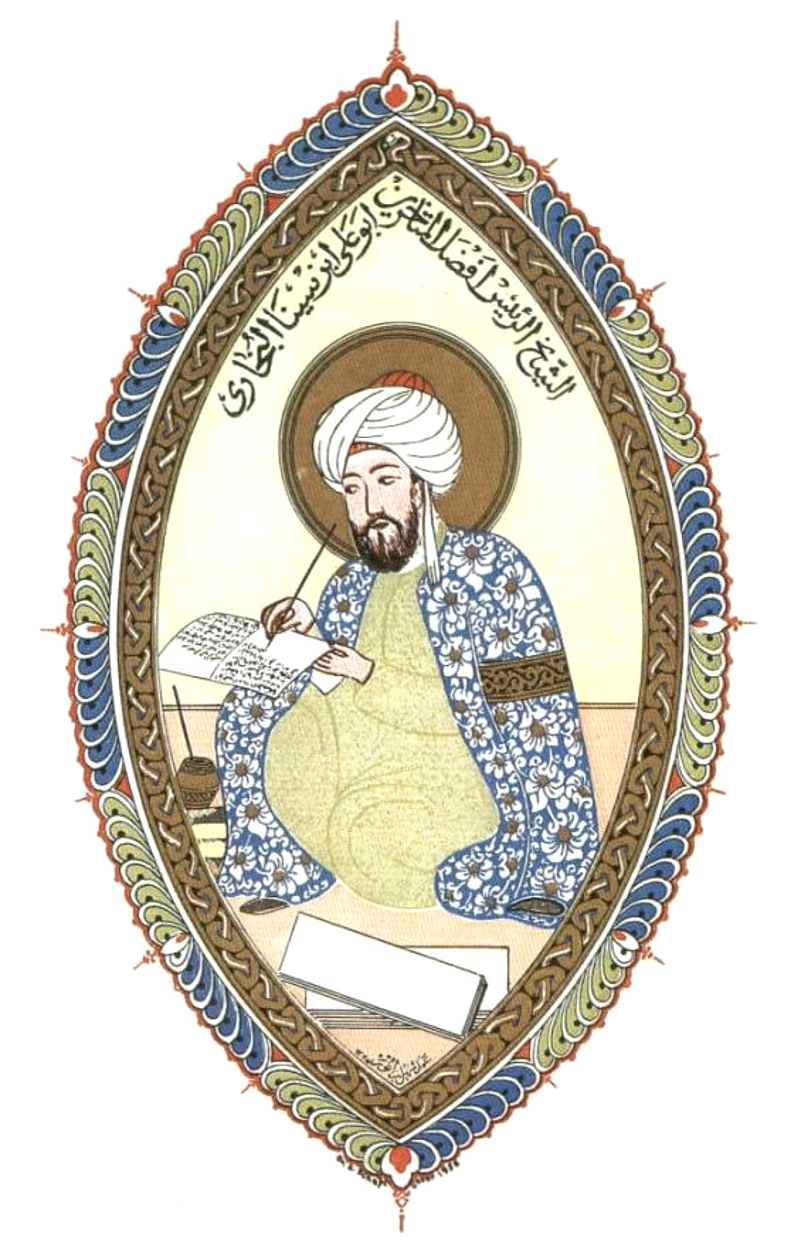
Abū ʿAlī al-Ḥusayn ibn ʿAbd Allāh ibn Sīnā, known in Latin as Avicenna, was a Muslim physician and the most famous and influential of the philosopher-scientists of the medieval Islamic world, particularly noted for his contributions in the fields of Aristotelian philosophy and medicine. He is particularly noted for his contributions in the fields of Aristotelian philosophy and medicine. In Europe he is better known by the Latinized name Avicenna, and he is probably the most significant philosopher in the Islamic tradition. His work combined the disparate strands of Greek late antique and early Islamic thought into a rationally rigorous scientific system.
He belonged to the 10th–11th century and to the medieval Islamic world. His writings ranged across mathematics, geometry, astronomy, physics, metaphysics, philology, music and poetry.
His notable works include the Kitāb al-shifāʾ (The Cure) and the Al-Qānūn fī al-ṭibb (The Canon of Medicine). The Cure is his chief philosophical work.
1. Life and Career
Ibn Sina, known in the Latin West as Avicenna, was born in Afshana, a village near Bukhara. The traditional date given for his birth is 980, near Bukhara, in a region then part of Iran and now within Uzbekistan. His father, originally from Balkh, served the Persian Samanid dynasty as governor of the nearby district of Kharmaythan, and a few years after the boy's birth the family moved to Bukhara.
By his own account Avicenna read and memorized the entire Quran by the age of ten, and the tutor Natili instructed him in elementary logic. By the age of sixteen he had turned to medicine. When the sultan of Bukhara fell ill with an ailment that baffled the court physicians, Avicenna was called to his bedside and cured him, and in gratitude the sultan opened the royal Samanid library to him. His professional career began around the age of seventeen, when he was enrolled as a physician in the service of the Samanid Nuh ibn Mansur, whom he had been summoned to treat.
In 999 the Turkic Qarakhanids effectively put an end to the Samanids and took over Bukhara, and Avicenna, because of his close affiliation with the ruling dynasty, saw fit to flee the city. After the defeat of the Samanids and the death of his father, he began a life of wandering round different towns of Khorasan, acting as a physician and administrator by day while every evening he gathered students for philosophical and scientific discussion. He left Gorganj and travelled south into Khorasan and then west, arriving at Jurjan only to find that the Ziyarid amir Qabus b. Voshmgir, his prospective patron, had died in the meantime.
In Hamadan Avicenna became vizier of Shams al-Dawla; after the latter's death in 1021 he once again sought a patron and became the vizier of the Kakuyid Ala al-Dawla, for whom he wrote an important Persian summa of philosophy, the Book of Knowledge. He secretly corresponded with Ala al-dawla in Isfahan about leaving Hamadan, and the Buyid court, suspecting him of treachery, arrested and imprisoned him in a castle outside Hamadan called Fardajan, where he remained for four months. He finally settled in Isfahan and remained in Ala al-dawla's employ until his death. There he completed his major work, The Cure, along with four further summae of philosophy.
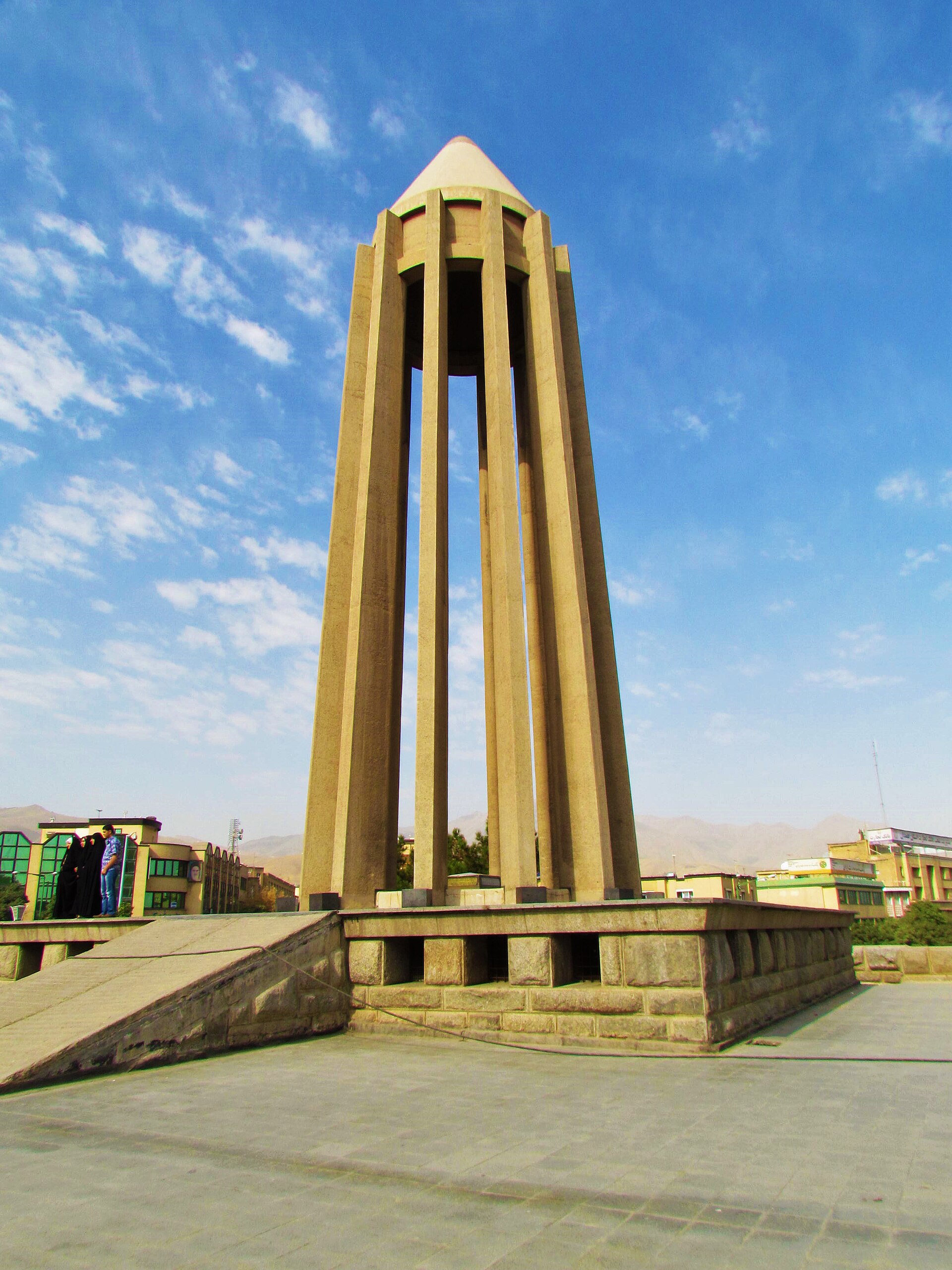
Weakened but indefatigable, Avicenna accompanied Ala al-Dawlah on his march to Hamadan; on the way he took a severe turn for the worse, lingered for a while, and died in the holy month of Ramadan. He died in 1037 in Hamadan, aged 57. He was buried there, and a mausoleum in the city today purports to be his. Across his career he served as court physician, political counselor and administrator to various dynastic rulers, and as vizier in Hamadan and Isfahan.
Born: 980, near Bukhara, Iran [now in Uzbekistan] 1Avicenna | Biography, Books, & Facts · Encyclopaedia Britannica ↗
Birthplace: Afshana, a village near Bukhara 4AVICENNA ii. Biography · Encyclopaedia Iranica ↗
Roles: Court physician, political counselor and administrator to various dynastic rulers; vizier in Hamadan and Isfahan 1
Works: About 450 works written; around 240 have survived 6The works of Ibn Sina in the Süleymaniye Manuscript Library · UNESCO Memory of the World ↗
Died: 1037, Hamadan, Iran (aged 57) 1
Burial: Hamadan; buried there, where a mausoleum in the city today purports to be his 3Ibn Sina [Avicenna] · Stanford Encyclopedia of Philosophy ↗
2. Philosophical System
Ibn Sina, the Avicenna of Latin fame, is arguably the most important representative of falsafa, the Graeco-Arabic philosophical tradition beginning with Plato and Aristotle. In building his system he fuses the Aristotelian tradition he intends to renew with the Neoplatonic idea of emanation. He was primarily a metaphysical philosopher of being, concerned with understanding the self's existence in this world in relation to its contingency, and he may be considered the first major Islamic philosopher.
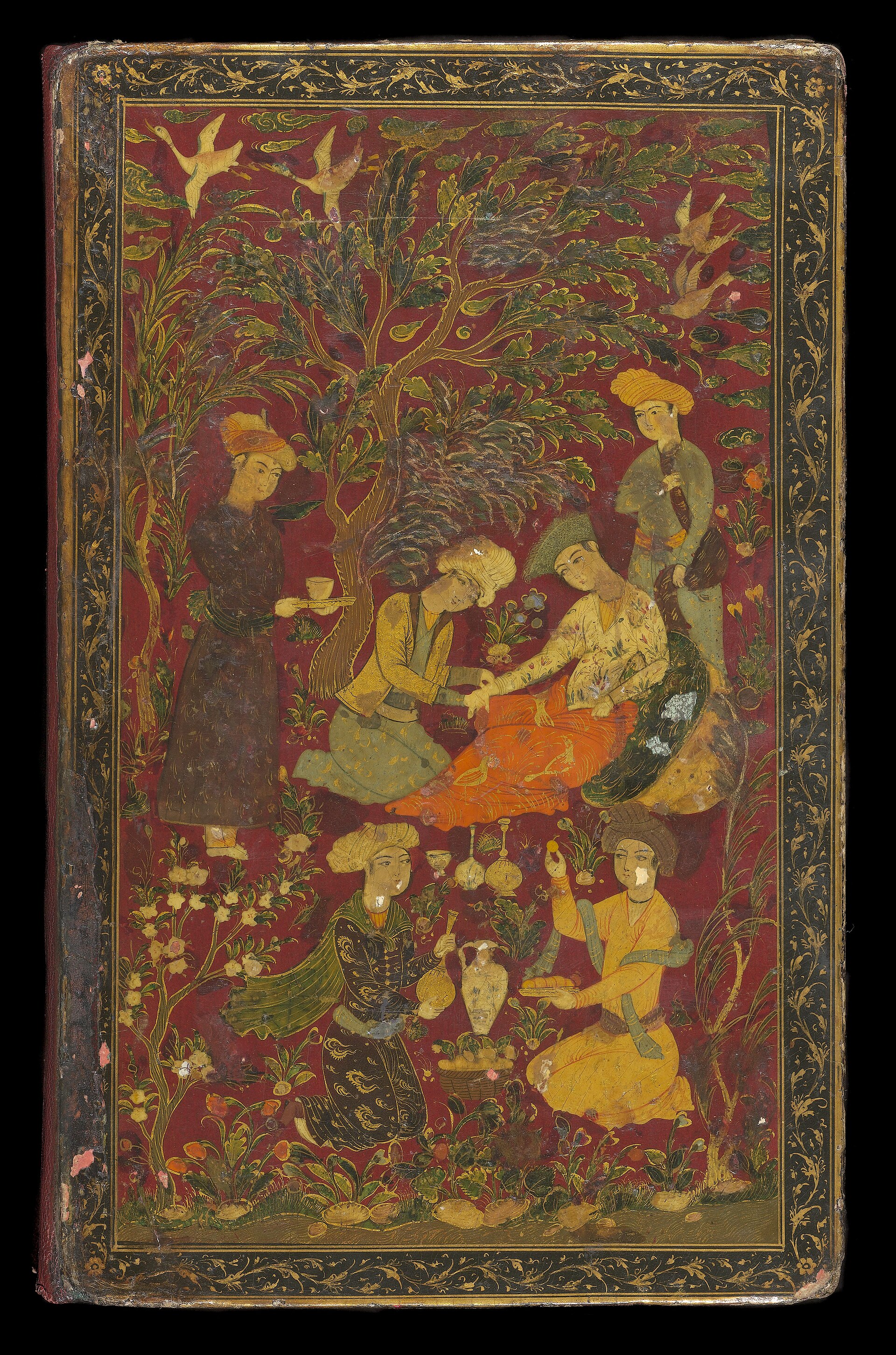
For Avicenna metaphysics is the science of being qua being and therefore the science that explains every being. In his system metaphysics includes theology, cosmology and angelology, and provides a foundation for physics, psychology, prophetology and eschatology.
Among the most influential philosophical doctrines of Arabic origin is the distinction between essence and existence, which the Latin West learned from Avicenna's Metaphysics. His analysis of being reveals two meanings of existence: one that affirms or establishes the existence of something, and one that expresses, without affirming its existence, the reality by virtue of which something is what it is, namely its essence. Considered in themselves, the things that find place in existence are either not necessarily existent, and therefore possible, or necessarily existent. The necessary existent is uncaused, since to have a cause means to exist by virtue of something else, and it is unique, since there can be no second being occupying the same rank of existence. Avicenna explains the creation of the world with the idea of emanation, which he adopted from Arabic Neoplatonic writings and which in Arabic is fayd, literally a flow. His cosmology centralized God as the Creator, the First Cause and the necessary Being from whom emanated the ten intelligences, down to the Active Intelligence that communicated to humans through its divine light.
Avicenna's definition of the soul as a separate substance and his thought experiment of the Flying Man were also influential in the Latin tradition. The so-called flying man argument, found at the beginning of his Treatise on the Soul, asks whether a person created in a perfect state but blind and suspended in the air, unable to perceive anything through his senses, would be able to affirm the existence of his self. The argument prefigures by six hundred years the Cartesian cogito and the modern philosophical notion of the self. The philosophical space that Avicenna articulates for God as the Necessary Existence lays the foundation for his theories of the soul, intellect and cosmos.
Avicenna concluded that while God knows what unfolds in this world, he knows things in a universal manner and only knows kinds of existents and not individuals, a position that drew al-Ghazali's condemnation as amounting to a denial of God's knowledge of particulars.
3. Major Works
Ibn Sina's two most important works are a philosophical encyclopaedia and a medical compendium. The chief philosophical work is the Kitāb al-shifāʾ, or The Cure, a four-part encyclopaedia of logic, physics, mathematics and metaphysics. The chief medical work is the Canon of Medicine, known in Arabic as al-Qānūn fī al-ṭibb.
Avicenna's system survives in no fewer than three philosophical encyclopedias: The Cure, The Salvation, and Pointers and Reminders. In a salubrious climate he completed the Book of the Cure, wrote the Book of Knowledge and the Book of Salvation, and compiled new and more accurate astronomical tables.
4. The Canon of Medicine
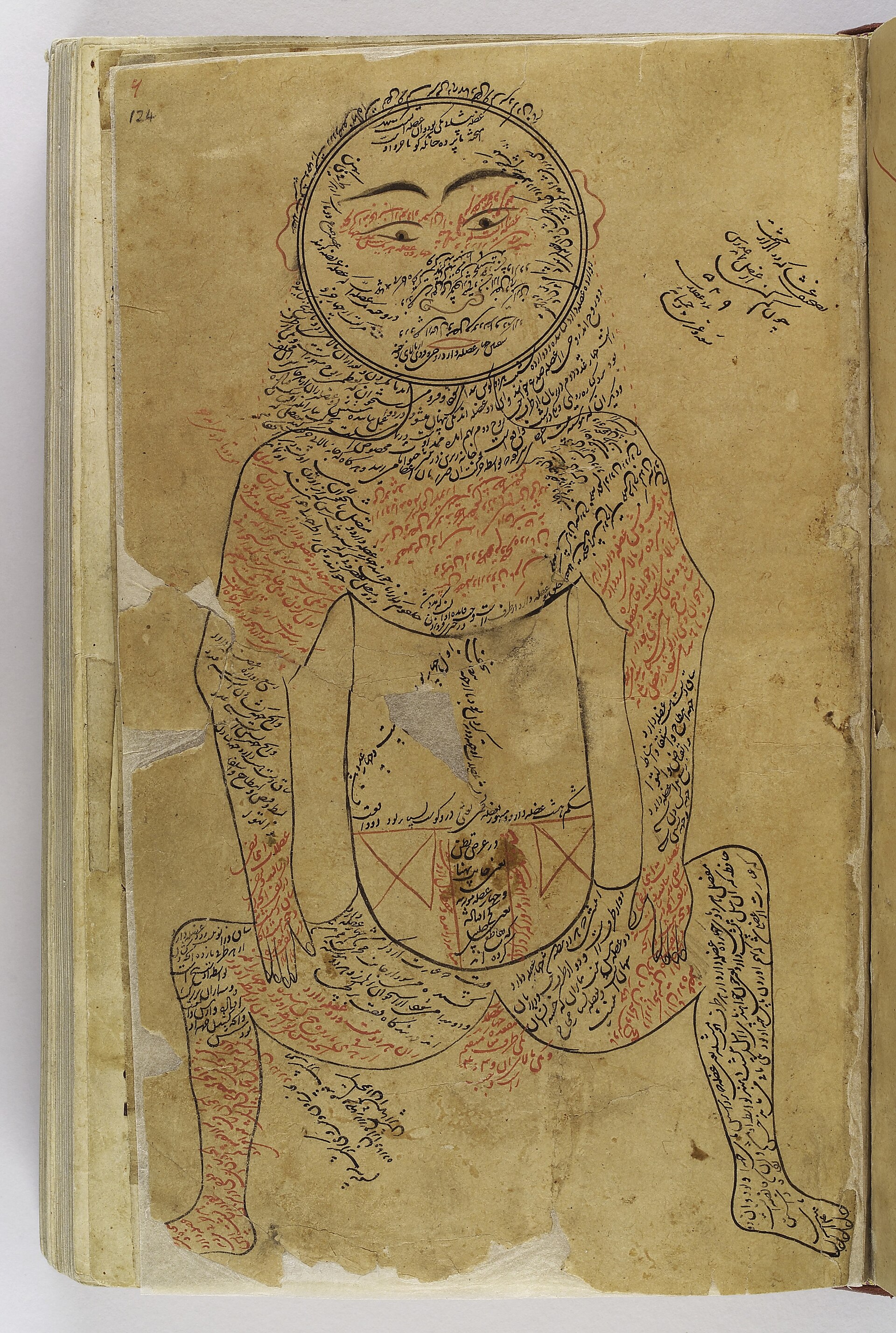
The Canon of Medicine (al-Qānūn fī al-ṭibb) was composed over a lengthy period of time as its author moved westward from Gurgan in northern Iran, where it was begun, to Rayy near modern Teheran and then to Hamadan, where it was completed. Ibn Sina wrote it during a sojourn in Gurgan in the north-east of Iran, bringing together medical knowledge from the Greco-Roman, Chinese and Muslim worlds. It opens with a definition of medicine as a science by which we learn about the conditions of the human body in health and in the absence of health, in order to maintain health or to restore it. The Canon has been accurately described as a monumental unity and the clear and ordered summa of all the medical knowledge of Ibn Sina's time.
The Canon of Medicine was translated as Canon medicinae and provided with a glossary by Gerard of Cremona at Toledo in the second half of the twelfth century. It was a set medical textbook in European universities, with more than thirty-five printings in the 15th and 16th centuries alone. The Canon remained a textbook into the early modern period.
Avicenna's important original contributions include recognition of the contagious nature of tuberculosis, the spread of diseases by water and soil, and the interaction between psychology and health. The Canon described 760 drugs and became the most authentic materia medica of the era. The principles of medicine described by the Canon ten centuries ago are still taught at UCLA and Yale University as part of the history of medicine.
Avicenna holds that medicine borrows basic concepts such as elements, humors, temperaments and faculties from natural philosophy, and that the physician should leave the investigation of such theoretical questions to the natural philosopher.
The Aga Khan Museum has volumes 4 and 5 of the Canon of Medicine in its collection; separated by 22 years, they are among the earliest copies, produced only 15 to 36 years after Ibn Sina's death.
The original Arabic text of the Canon was printed at Rome in 1593 by the Medici press, which like all its products intended the book primarily for export to the East.
The earliest testimony to the Canon's introduction into academic curricula is a syllabus for mastership candidates at the University of Montpellier included in a papal bull of 1309 that recommends the Canon as one of a number of optional textbooks.
The Canon is organized into five books: book 1 covers the basic principles of medicine in four parts; book 2 comprises the materia medica and lists about 800 individual drugs, mostly of vegetable origin; book 3 systematically discusses diseases of particular organs from head to toes; book 4 addresses conditions affecting the body as a whole and ends with a treatise on personal hygiene; and book 5 contains some 650 compounded prescriptions such as theriacs, electuaries, potions and syrups. Between 1500 and 1674 some sixty editions of part or all of the Canon were published in Europe, mostly intended for use in university medical training.
5. Legacy in Europe
Latin translations of Avicenna's work guided the thirteenth-century reception of Aristotle within Western Scholasticism, notably in the writings of Albertus Magnus and Thomas Aquinas.
Western European acquaintance with Avicenna began when Latin versions of some of his Arabic works came out between the mid-twelfth and the late thirteenth century.
In 1527 Paracelsus publicly burned the Canon at a Midsummer-Day bonfire in Basel, the most spectacular onslaught in the growing rejection of Avicenna's authority.
The Suleymaniye Manuscript Library in Istanbul is known to possess manuscript copies of all the surviving works of Ibn Sina, some of which are dated as far back as the eleventh century, and among them 263 manuscripts have different titles.
Today Ibn Sina's portrait hangs in the main hall of the Faculty of Medicine at the University of Paris.
6. Timeline: from Afshana to the printed Canon
- c. 980 (traditional 370/980)Birth in Afshana near BukharaAvicenna was born in Afshana, a village near Bukhara; the traditional date is 980, though the transmitted chronology suggests a date several years earlier.
- c. 997Physician at the Samanid courtAround the age of seventeen Avicenna was enrolled as a physician in the service of the Samanid ruler Nuh ibn Mansur, whom he was summoned to treat.
- 999Fall of the Samanids; Avicenna leaves BukharaThe Qarakhanids took Bukhara and ended Samanid rule; Avicenna, a high functionary of the fallen state, left for Gorganj in Khwarazm.
- 1012Departure from GorganjAvicenna left Gorganj and travelled south into Khorasan and then west, seeking a new patron.
- 1013Meeting with al-Juzjani at JurjanAt Jurjan Avicenna met al-Juzjani, the disciple and companion who would record his autobiography and continue his biography.
- 1015Vizier in HamadanAvicenna was summoned to treat Shams al-dawla in Hamadan and became the Buyid ruler's vizier.
- c. 1023Released from the Fardajan prisonSuspected of treachery for corresponding with Isfahan, Avicenna had been imprisoned in the castle of Fardajan outside Hamadan; he was released after four months.
- c. 1024Settles in IsfahanAvicenna moved to Isfahan and entered the service of the Kakuyid Ala al-dawla, remaining in his employ until his death.
- 1012–1024The Canon of Medicine completedAccording to the Aga Khan Museum, Avicenna completed the Canon of Medicine over a twelve-year period between 1012 and 1024.
- 1037Death at HamadanAvicenna died of colic during a trip to Hamadan and was buried there; a mausoleum in the city today purports to be his.
- 1073Earliest surviving Canon manuscriptsThe Aga Khan Museum's copy of volume 4 of the Canon, dated 1073, is among the earliest surviving copies, produced only 15 to 36 years after Ibn Sina's death.
- second half of the 12th centuryLatin translation at ToledoThe Canon of Medicine was translated into Latin as Canon medicinae by Gerard of Cremona at Toledo in the second half of the twelfth century.
- 1309Entering the universitiesA syllabus for mastership candidates at Montpellier, included in a papal bull of 1309, recommends the Canon among optional textbooks.
- 1472First printed editionThe earliest printed edition of the Canon, consisting only of book 3, appeared in 1472; many complete Latin editions followed.
- 1527Paracelsus burns the CanonParacelsus publicly burned the Canon in the Midsummer-Day bonfire at Basel, a spectacular gesture in the humanist rejection of Arabic medicine.
- 1593Arabic text printed at RomeThe original Arabic text of the Canon was printed at Rome by the Medici press, intended primarily for export to the East.
References (16)
- 1Avicenna | Biography, Books, & Facts — Encyclopaedia Britannica Web↩View source
- 2Avicenna (Ibn Sina) — Internet Encyclopedia of Philosophy WebView source
- 3Ibn Sina [Avicenna] — Stanford Encyclopedia of Philosophy Web↩View source
- 4AVICENNA ii. Biography — Encyclopaedia Iranica Web↩View source
- 5Abu Ali al-Husain ibn Abdallah ibn Sina (Avicenna) — MacTutor History of Mathematics Archive, University of St Andrews WebView source
- 6The works of Ibn Sina in the Süleymaniye Manuscript Library — UNESCO Memory of the World Web↩View source
- 7Ibn Sina's Natural Philosophy — Stanford Encyclopedia of Philosophy WebView source
- 8Ibn Sina's Metaphysics — Stanford Encyclopedia of Philosophy WebView source
- 9Influence of Arabic and Islamic Philosophy on the Latin West — Stanford Encyclopedia of Philosophy WebView source
- 10AVICENNA x. Medicine and Biology — Encyclopaedia Iranica WebView source
- 11Islamic Medical Manuscripts: Catalogue — Medical Encyclopedias (The Canon of Medicine) — U.S. National Library of Medicine WebView source
- 12Achievements Tours: Ibn Sina's Canon of Medicine — Aga Khan Museum WebView source
- 13AVICENNA xiii. The Influence of Avicenna on Medical Studies in the West — Encyclopaedia Iranica WebView source
- 14Medieval Islam (Islamic Culture and the Medical Arts) — U.S. National Library of Medicine WebView source
- 15The Air of History (Part V): Ibn Sina (Avicenna) — The Great Physician and Philosopher — Heart Views (via PubMed Central) WebView source
- 16AVICENNA xii. The Impact of Avicenna's Philosophical Works in the West — Encyclopaedia Iranica WebView source