Stephen Hawking
The Cambridge theoretical physicist who discovered that black holes radiate, transformed cosmology into a public conversation, and lived 55 years with motor neurone disease.
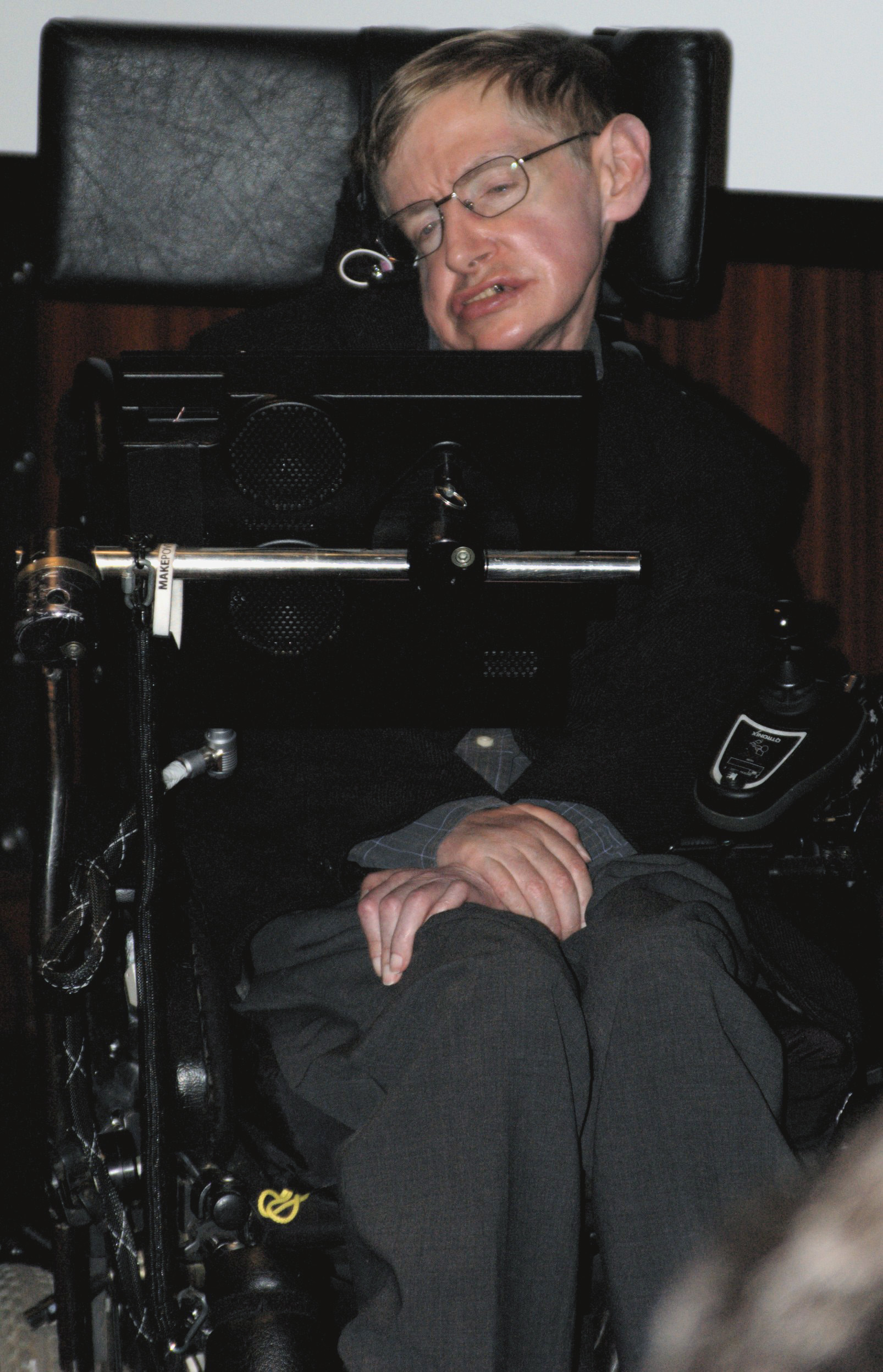
Stephen Hawking (1942–2018) was a British theoretical physicist and cosmologist whose work on singularities, black holes and quantum gravity reshaped modern physics. With Roger Penrose he showed that general relativity implies the universe began in a singularity, and in 1974 he discovered that black holes are not entirely black but emit thermal radiation — now called Hawking radiation — and slowly evaporate. Diagnosed with motor neurone disease at 21 and given only a few years to live, he spent the next five decades at Cambridge, where he held the Lucasian Chair once occupied by Isaac Newton and wrote A Brief History of Time, one of the most widely sold science books ever published.
Overview
Stephen William Hawking was a theoretical physicist and cosmologist. He was born on 8 January 1942 in Oxford, England. He died on 14 March 2018 in Cambridge, England, at the age of 76.
Hawking is known for Hawking radiation, black-hole thermodynamics, singularity theorems, and A Brief History of Time.
His institutional affiliations included the University of Cambridge, the University of Oxford, and the California Institute of Technology as a visiting institution. His doctoral advisor was Dennis Sciama at the University of Cambridge. His PhD thesis was Properties of Expanding Universes (1966).
1. Early Life and Education
Stephen Hawking was born in Oxford during the Second World War, the eldest of four children of Dr Frank Hawking and Eileen Isobel Hawking. The family later moved to St Albans so that the journey to the Institute for Medical Research in Mill Hill was easier.
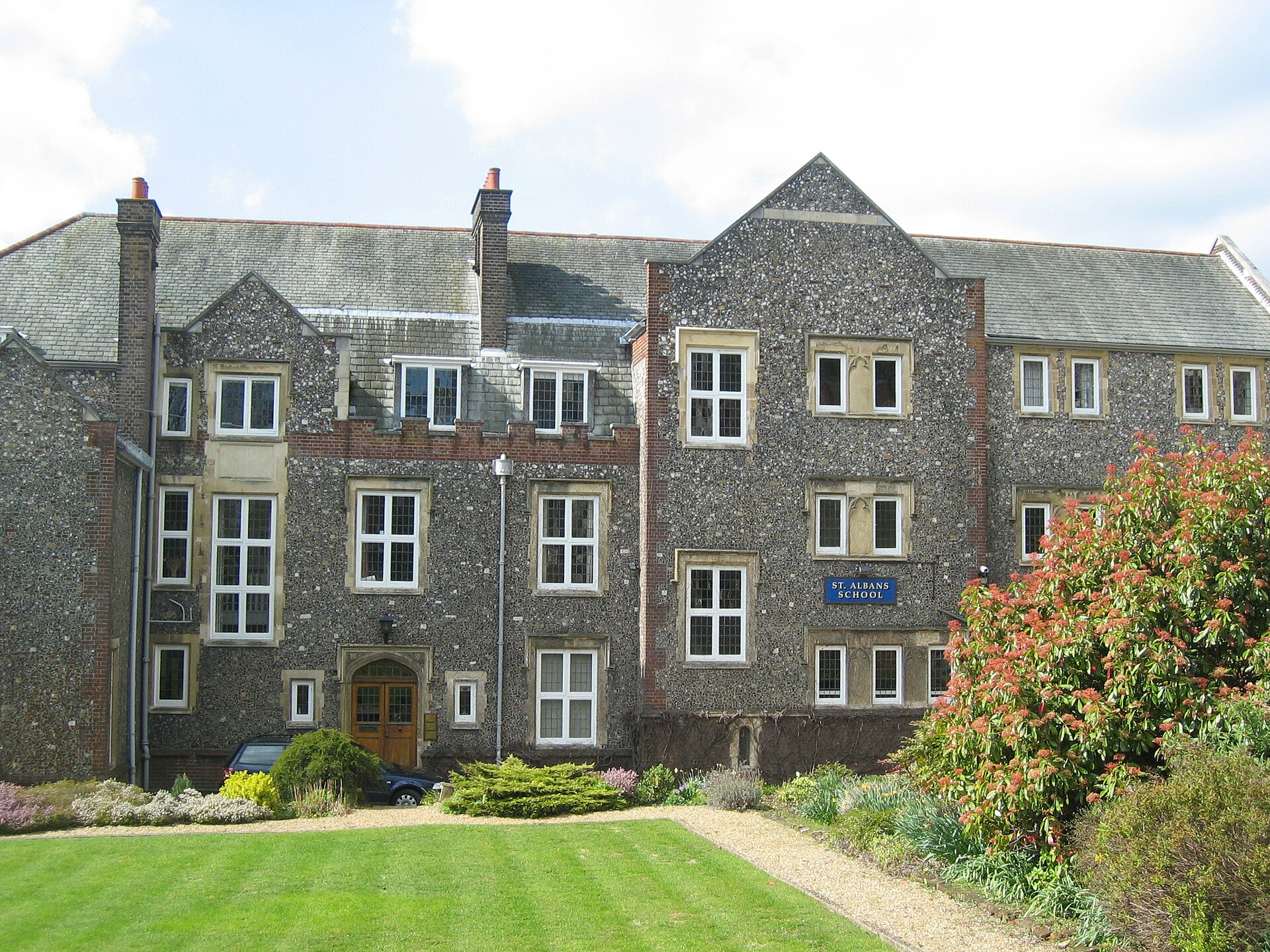
Hawking attended St Albans school from the age of 11. His father wanted him to take the scholarship examination for Westminster public school, but Stephen was ill at the time of the examinations and stayed at St Albans. He admitted to being a late developer, recalling that he was never more than halfway up the class at St Albans School.
In March 1959 Hawking took the scholarship examinations with the aim of studying natural sciences at Oxford, and at University College he specialised in physics in his natural sciences degree. He only just made a First Class degree at Oxford in 1962 and later explained that the prevailing attitude there was very anti-work: you were supposed to be brilliant without effort, or accept your limitations and get a fourth-class degree. In his Oxford finals he came borderline between a first- and second-class degree; convinced that he was seen as a difficult student, he told his viva examiners that if they gave him a first he would move to Cambridge to pursue his PhD. His tutor at University College Oxford, Robert 'Bobby' Berman, observed that it was only necessary for Hawking to know that something could be done, and he could do it without looking to see how other people did it.
Hawking was an active and enthusiastic member of the University College Boat Club, where he coxed, and he maintained a keen lifelong interest in Univ, returning on numerous occasions including a visit in 2016 to meet current physics students. After an adventurous trip through Persia, which included being close to the epicentre of a magnitude 7.1 earthquake, Hawking arrived at Trinity Hall, Cambridge in the autumn of 1962 and planned to study under Fred Hoyle.
2. Illness and Personal Life
During his final year at Oxford, Hawking began to notice that he was becoming clumsy; after he returned home for Christmas in 1962, his mother persuaded him to see a doctor, and in early 1963 he spent two weeks undergoing tests in hospital before motor neurone disease was diagnosed. Shortly after his twenty-first birthday he was diagnosed as suffering from an unspecified incurable disease, later identified as the fatal degenerative motor neurone disease amyotrophic lateral sclerosis, or ALS. The condition slowly and inexorably erodes muscle control but leaves the brain intact, and at the time of diagnosis he was given only two years to live.
Hawking later wrote that he had had motor neurone disease for practically all his adult life, yet it had not prevented him from having a very attractive family and from being successful in his work. He counted himself lucky that his condition progressed more slowly than is often the case.
Stephen and Jane met through mutual college friends at a party in 1962, and they were married in 1965 in the chapel of Trinity Hall, Stephen's Cambridge college. He had become engaged to Jane Wilde in 1964, and she was exceptionally supportive as his condition deteriorated. The couple had three children: Robert, born in 1967; Lucy, born in 1970; and Timothy, born in 1979. The marriage to Jane Wilde, which began in 1965, ended in divorce in 1995; that same year he married Elaine Mason, and that marriage ended in divorce in 2006.
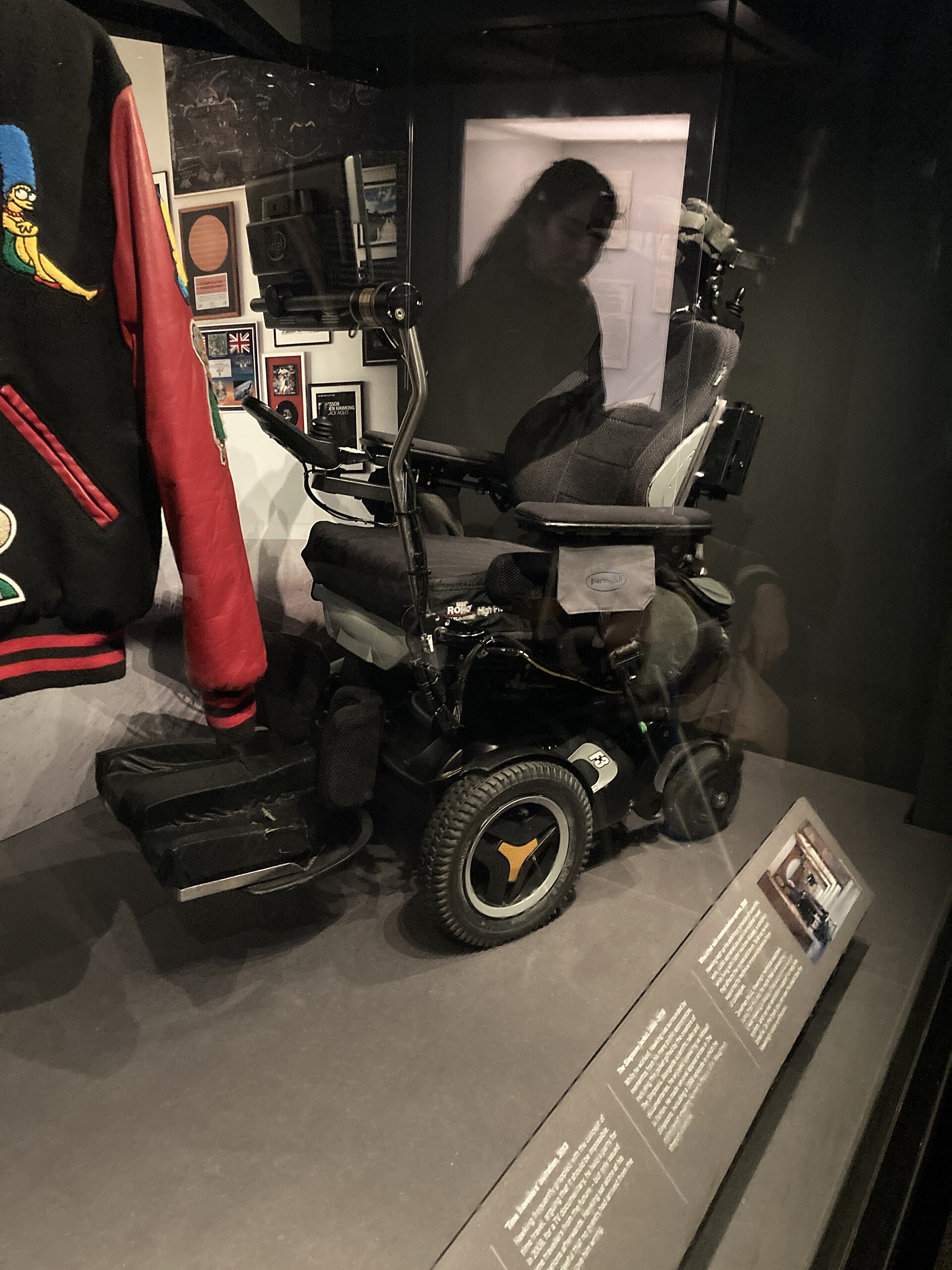
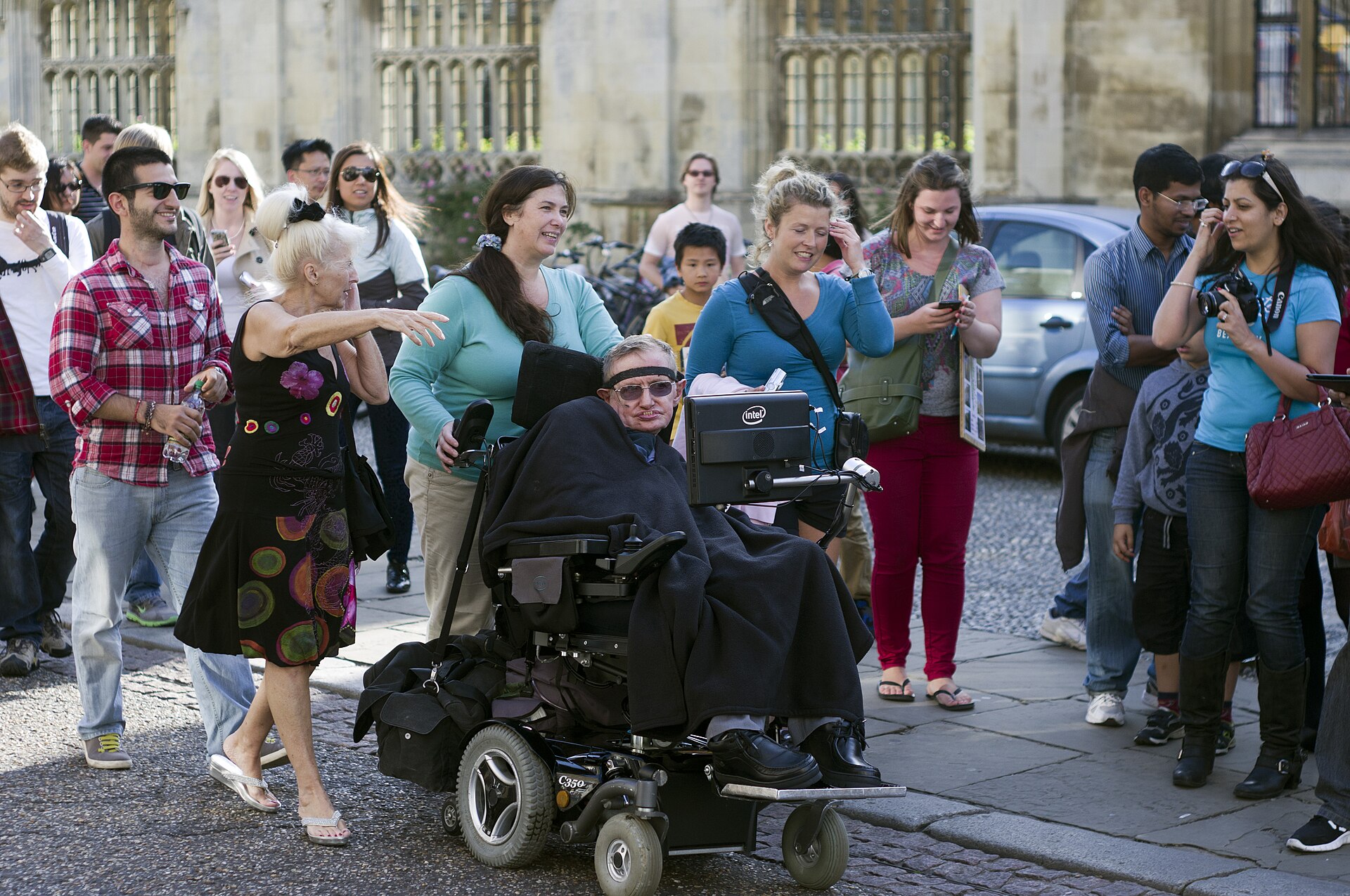
After he finally relented and used a wheelchair, Hawking became notorious for his wild driving along the streets of Cambridge, including the intentional running over of students' toes.
3. Cambridge Career and the Lucasian Chair
Hawking had hoped to study under Fred Hoyle at Cambridge, but Hoyle had too many students and sent him to Dennis Sciama instead, a piece of luck which laid the foundation of his later career. Sciama served as his doctoral advisor at the University of Cambridge.
After completing his doctorate in 1966, Hawking was awarded a fellowship at Gonville and Caius College, Cambridge. He described the College as a constant thread running through his life, having joined it 52 years before his death.
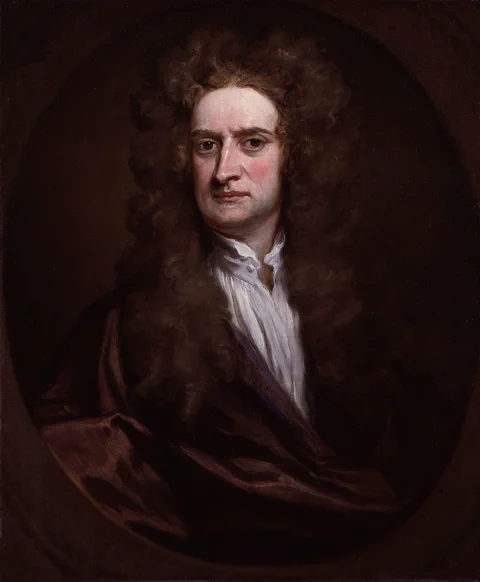
Hawking left the Institute of Astronomy in 1973 to join Cambridge's Department of Applied Mathematics and Theoretical Physics, becoming Professor of Gravitational Physics in 1977 and Lucasian Professor of Mathematics in 1979. He was appointed in 1979 as the 17th holder of the Lucasian Chair of Natural Philosophy, some 310 years after Isaac Newton, and held it with distinction for 30 years until he reached retirement age in 2009, when he moved to a special research professorship funded by the Avery-Tsui Foundation. Former incumbents of the Lucasian Chair include Isaac Newton and Paul Dirac; the man born 300 years to the day after Galileo died now held Newton's chair.
Hawking was a frequent visitor to Caltech, where he did much of his seminal research on black holes during a year-long visit spanning 1974 to 1975, and over the following four decades he returned to the Institute often as a Sherman Fairchild Distinguished Scholar. His 1974–75 Caltech professorship included not only a salary but a car and a new electric wheelchair, as well as a house where he moved in with his wife Jane and their two children Robert and Lucy. In 2007 he founded the Centre for Theoretical Cosmology, of which he was Director of Research until 2014 and then the Dennis Stanton Avery and Sally Tsui Wong-Avery Director of Research.
4. Scientific Work
Hawking's doctoral thesis, 'Properties of expanding universes', demonstrated that a singularity is inevitable provided that certain very general conditions are satisfied. His first major breakthrough came from the realisation that Penrose's theorems concerning the inevitability of singularities in black holes could be applied in reverse, implying the inevitability of the Big Bang singularity and the beginning of time.
Hawking and Roger Penrose first met in 1965, and their many discussions about singularity theorems culminated in a joint paper in 1970 showing that general relativity implied space and time would have a beginning in the Big Bang and an end in black holes. In 1966 Hawking won the Adams Prize for his essay 'Singularities and the Geometry of Space-Time', which formed the basis for his first academic book, co-authored with George Ellis.
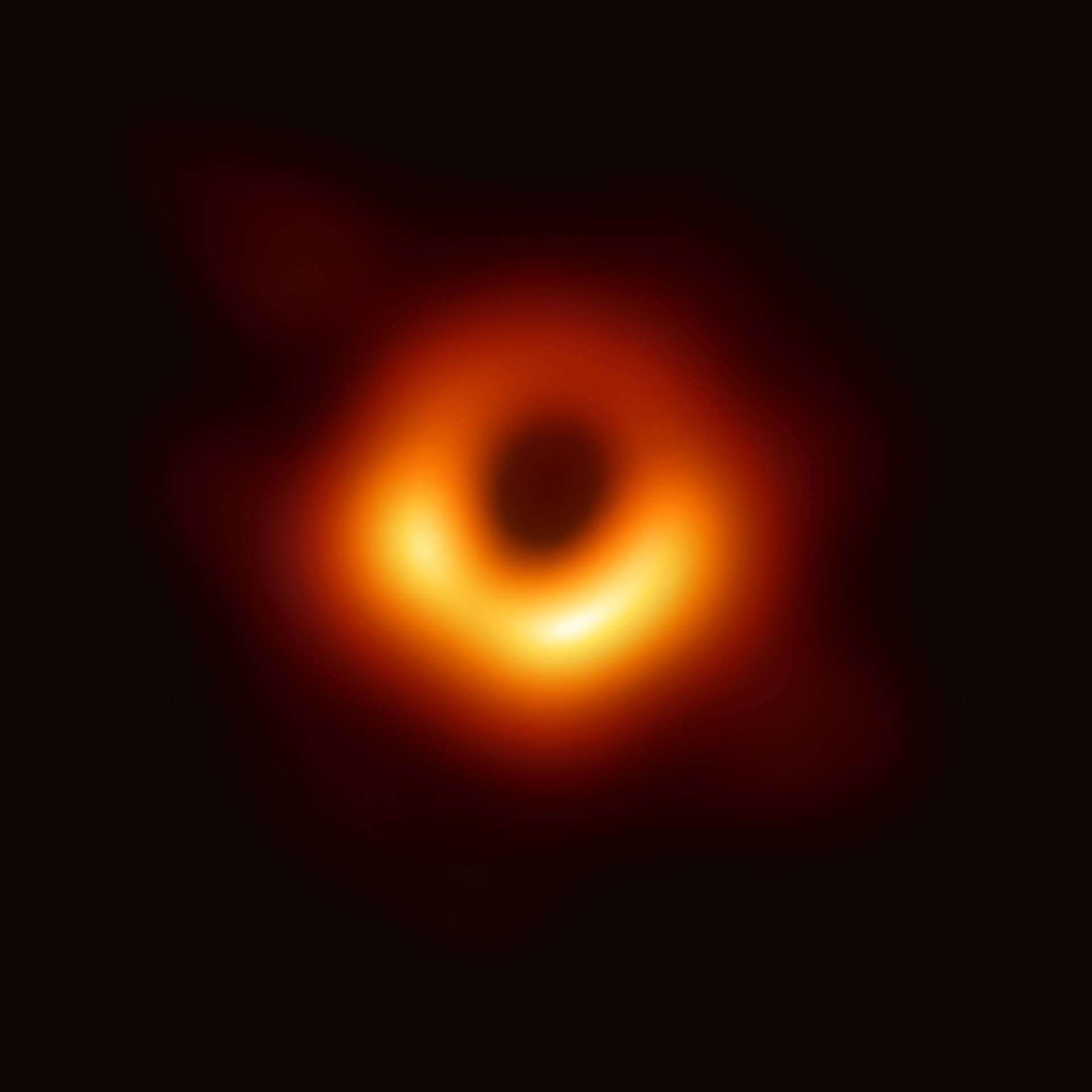
Hawking proved that when black holes merge, the surface area of the final black hole must exceed the sum of the areas of the initial black holes, and he showed that this places limits on the amount of energy that can be carried away by gravitational waves in such a merger. A 1971 letter in Physical Review Letters showed that there is an upper bound to the energy of the gravitational radiation emitted when one collapsed object captures another. The early 1970s saw three crucial developments in classical black hole theory — the cosmic censorship hypothesis, the no hair theorem and the laws of black hole mechanics — with Hawking playing an important role in all of them.
In 1973, finding himself at a loose end after publishing his first book, Hawking decided the next step in his research would be to combine general relativity, the theory of the very large, with quantum theory, the theory of the very small. To his disbelief, it seemed that emissions could emanate from a black hole — that particles could escape, or radiate, from a black hole's event horizon, a revolutionary quantum effect that appeared to make a mockery of the laws of physics.
In 1974 Hawking came up with his most distinctive contribution to science: by linking quantum theory and gravity he showed that a black hole would not be completely black, but would radiate with a well-defined temperature that depended inversely on its mass. In the 1974 Nature letter he argued that any black hole will create and emit particles such as neutrinos or photons at just the rate one would expect if the black hole was a body with a temperature. Of his many contributions to physics, perhaps his most influential idea is Hawking radiation: he showed that according to the laws of quantum mechanics black holes should leak a small amount of radiation, implying that they are mortal and should eventually evaporate entirely.
Hawking initially did not believe that black holes have entropy because they were thought to have zero temperature; after discovering black hole temperature he came to believe it and was able to fix the coefficient in Bekenstein's formula. He realised that black holes must have an entropy equal to one quarter of the area of their event horizon, and some forty-odd years later the precise nature of this entropy is still a puzzle. Taking account of quantum effects in the neighbourhood of a black hole leads to the prediction of Hawking radiation, and to the conclusion that the analogy with the laws of ordinary thermodynamics is more than just formal but represents a true and intimate physical connection.
Hawking's black hole information paradox violates a fundamental tenet of quantum mechanics and has led to decades of furious debate. In 2014 he revised his theory about the information paradox, writing that 'there are no black holes' in the way cosmologists traditionally understand them, and replacing the event horizon with an 'apparent horizon' that would alter according to quantum changes within the black hole. In 2017 he co-authored the paper 'Soft Hair on Black Holes' with Malcolm Perry and Andrew Strominger, which identified how information is not lost but contained within strands surrounding the black hole's event horizon.
Working with Jim Hartle, Hawking applied techniques developed for the quantum dynamics of black holes to the quantum birth of the universe, proposing at a conference in the Vatican in 1981 that the universe began with four space dimensions curled up as a sphere, without any boundary. He recognised that quantum mechanical effects in the very early universe might provide the primordial gravitational seeds around which galaxies and other large-scale structures could later form, a theory of inflationary fluctuations now supported by strong evidence from the COBE, WMAP and Planck satellite observations. He was also one of the first to realise that black holes could form in the early universe due to the great compression of the Big Bang — what are now called primordial black holes.
A posthumous paper written with Thomas Hertog detailed Hawking's last theory on the origin of the universe, based on eternal inflation and arguing there are many universes other than our own; the paper is entitled 'A Smooth Exit From Inflation' and its latest revisions were made ten days before he died.
5. Honours and Recognition
Hawking's recognition began early in his scientific career. He was elected a Fellow of the Royal Society in 1974, at the age of 32, as one of its youngest fellows 10Stephen Hawking (1942–2018) · Nature ↗2Stephen Hawking - Biography · MacTutor History of Mathematics Archive, University of St Andrews ↗. The Eddington Medal of the Royal Astronomical Society followed in 1975, the Hughes Medal in 1976, and the Albert Einstein Medal in 1979 2. In 1982 he was made Commander of the British Empire 2.
Major honours continued through the following decades. He received the Wolf Prize in Physics in 1988, and the next year brought both the Prince of Asturias Awards in Concord and appointment as a Companion of Honour 2. In 2006 he received the Copley Medal of the Royal Society, announced on 24 August 2006 and presented on 30 November 2006 at the Society's annual Anniversary Day; the medal he received had been carried by the British astronaut Piers Sellers on a Space Shuttle mission to the International Space Station 2. The Royal Society awarded him the Copley Medal for his outstanding contribution to theoretical physics and theoretical cosmology 18Professor Stephen Hawking CH CBE FRS · The Royal Society ↗.
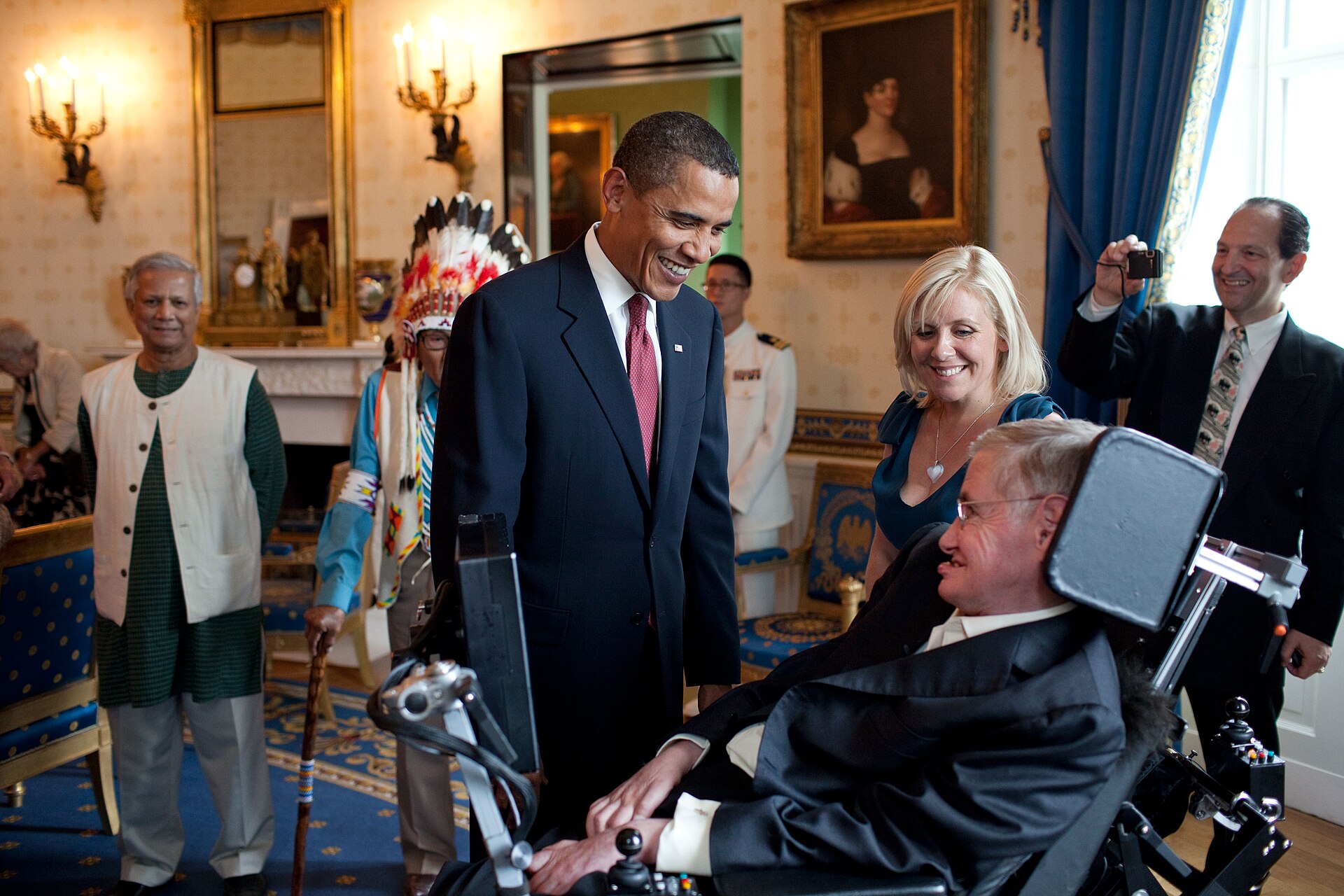
In 2009 Hawking was awarded the US Presidential Medal of Freedom by President Barack Obama, the highest civilian award in the United States, in recognition of persistence and dedication that unlocked new pathways of discovery and inspired everyday citizens 1Stephen Hawking Biography · hawking.org.uk (The Stephen Hawking Estate) ↗. He had lectured at the White House in 1998 and returned in 2009 for the presentation, a very rare honour for any foreigner 8Stephen William Hawking: A Biographical Memoir · arXiv (Biographical Memoirs of Fellows of the Royal Society, Carr et al.) ↗. In 2013 he won one of the two Special Breakthrough Prizes in Fundamental Physics for his discovery of Hawking radiation from black holes and his deep contributions to quantum gravity and quantum aspects of the early universe, an award he especially treasured 1.
The Pontifical Academy of Sciences nominated Hawking on 9 January 1986, listing his field as physics and cosmology and his title as Lucasian Professor of Mathematics 19Stephen W. Hawking · The Pontifical Academy of Sciences ↗. Among the awards it records are the Adams Prize, the Eddington Medal of the Royal Astronomical Society, the Pius XI Medal, the Dannie Heineman Prize, the Maxwell Medal and Prize, the Hughes Medal, the Albert Einstein Medal, the CBE, the Gold Medal of the Royal Astronomical Society, the Wolf Prize in Physics, the Prince of Asturias Awards, the Companion of Honour and the Copley Medal of the Royal Society 19.
| Honour/Award | Year | Source |
|---|---|---|
| Elected Fellow of the Royal Society, aged 32 | 1974 | nature-obit; mactutor-hawking |
| Eddington Medal | 1975 | mactutor-hawking |
| Hughes Medal | 1976 | mactutor-hawking |
| Albert Einstein Medal | 1979 | mactutor-hawking |
| Commander of the British Empire (CBE) | 1982 | mactutor-hawking; cam-hawking |
| Wolf Prize in Physics | 1988 | mactutor-hawking |
| Prince of Asturias Awards | 1989 | mactutor-hawking |
| Companion of Honour | 1989 | mactutor-hawking; cam-hawking |
| Copley Medal | 2006 | cam-hawking; mactutor-hawking |
| US Presidential Medal of Freedom | 2009 | cam-hawking; hawking-org-bio |
| Special Breakthrough Prize in Fundamental Physics | 2013 | hawking-org-bio |
| Nominated to the Pontifical Academy of Sciences | 9 January 1986 | pas-hawking |
| Adams Prize | — | pas-hawking |
| Pius XI Medal | — | pas-hawking |
| Dannie Heineman Prize | — | pas-hawking |
| Maxwell Medal and Prize | — | pas-hawking |
| Gold Medal of the Royal Astronomical Society | — | pas-hawking |
6. Public Life and Popular Writing
Hawking began working on A Brief History of Time from an idea he first had in 1982, and toiled over it for six years. The book became a surprise runaway bestseller which propelled him into an ever-widening public sphere. It was an unlikely bestseller, although it is unclear how many people actually managed to get to the end of it.
His notable books include A Brief History of Time, Black Holes and Baby Universes, The Universe in a Nutshell, A Briefer History of Time and The Grand Design. With his daughter Lucy he co-authored a series of six adventure novels about science, written in order to make science entertaining and accessible to a young readership.
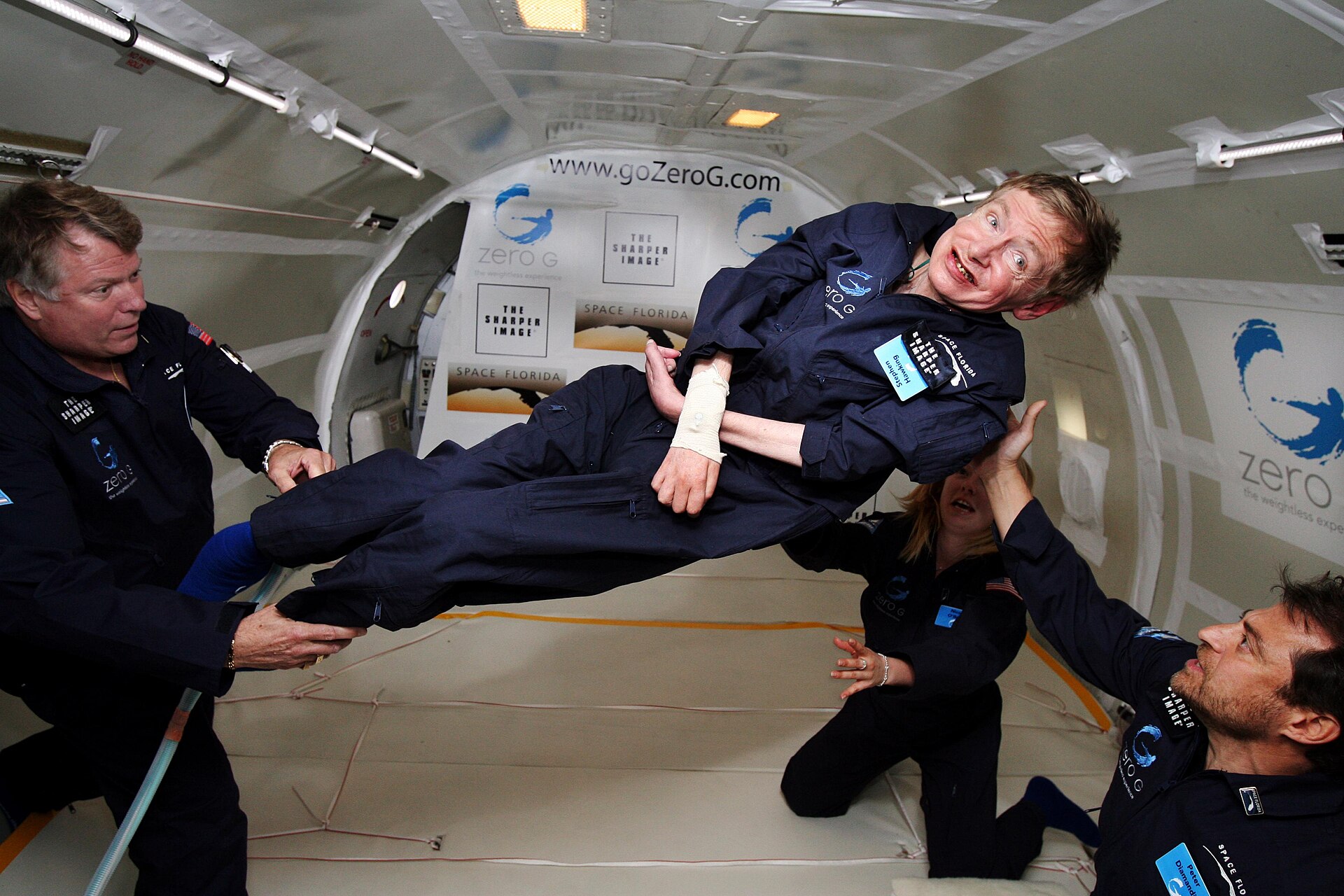
Hawking firmly believed that everyone should have a basic understanding of science in an increasingly scientific and technological world, and he dedicated an enormous amount of time and effort to engaging the general public with science. By making his PhD thesis Open Access, he said he hoped to inspire people around the world to look up at the stars and not down at their feet, to wonder about our place in the universe and to try and make sense of the cosmos.
His public presence extended beyond the page: he starred in Star Trek: The Next Generation as a hologram of his image, and the rock group Pink Floyd used his distinctive synthesised voice for the introduction to Keep Talking on their 1994 album The Division Bell.
In 2014 the film The Theory of Everything, based on the personal memoir of his wife Jane, opened to great critical acclaim and garnered major awards, including an Oscar for Eddie Redmayne, who captured his wit, determination and stubbornness. In October 2018 John Murray published his posthumous popular book Brief Answers to the Big Questions, a project he had begun in his lifetime to bring his writings for a general audience together into one definitive volume.
7. Bets and Debates
In 1975 Thorne and Hawking made their first famous bet, questioning whether the binary star Cygnus X-1 was a black hole; Hawking acknowledged in 1990 that he had lost the bet.
Hawking conceded his bet with Thorne and Preskill about naked singularities upon a technicality, and around the same time the three men agreed another bet on whether information behind the event horizon of a black hole is irretrievably lost.
On 21 July 2004 Hawking gave a talk at a conference in Dublin in which he announced that he was conceding the information bet, presenting John Preskill with a baseball encyclopedia 'from which information can be retrieved at will'; Kip Thorne stubbornly refused to concede.
Hawking also lost a 100 dollar bet with the University of Michigan's Gordon Kane that the Higgs boson would not be discovered at the Large Hadron Collider.
8. Death, Funeral and Legacy
Stephen Hawking's private funeral was held at 2pm on 31 March 2018 at St Mary's, a short distance from Gonville & Caius, the college where he had been a fellow for more than 52 years. His children explained that Cambridge had been chosen as the city that he loved so much and which loved him.
Westminster Abbey announced that a Service of Thanksgiving would be held later in the year, at which his ashes would be interred near the grave of Sir Isaac Newton. At that service Benedict Cumberbatch gave a reading from Wisdom, and Hawking's daughter Lucy gave a reading from Romans.
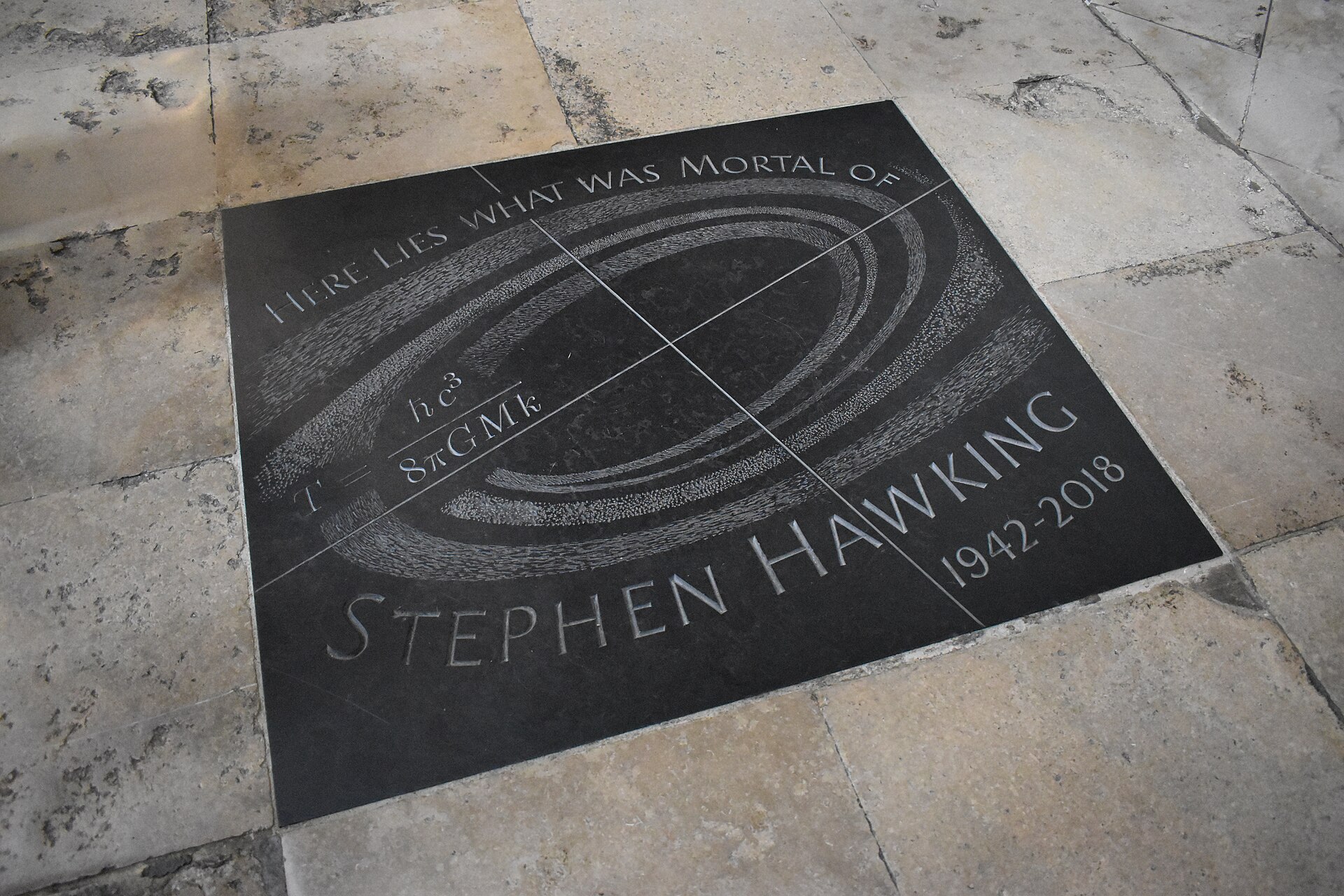
During the committal at Westminster Abbey, his ashes were buried between the graves of Sir Isaac Newton and Charles Darwin.
Gonville & Caius College had funded Hawking's flight back to the United Kingdom from Switzerland when he desperately needed medical help, and it adapted a College house to create the home in which he wrote his bestselling A Brief History of Time. NASA's acting administrator said that Hawking's breakthroughs in physics and astronomy not only changed how we view the cosmos but also played a pivotal role in shaping NASA's efforts to explore our solar system and beyond.
Hawking had been a patron of the Motor Neurone Disease Association since 2008; after his death the charity's website crashed because of an influx of donations.
9. Timeline: from 1942 to Westminster Abbey
- 8 January 1942Born in OxfordStephen William Hawking was born in Oxford while his family was living in north London, 300 years to the day after the death of Galileo Galilei.
- March 1959Scholarship to OxfordHawking took the Oxford scholarship examinations with the aim of studying natural sciences and was awarded an exhibition; at University College he specialised in physics.
- October 1962Graduate study at CambridgeAfter a trip through Persia, Hawking arrived at Trinity Hall, Cambridge to begin research in general relativity and cosmology under Dennis Sciama.
- Early 1963Diagnosed with motor neurone diseaseAfter two weeks of hospital tests, Hawking was diagnosed with motor neurone disease; doctors predicted he would not live long enough to complete his doctorate.
- July 1965Marriage to Jane WildeStephen married Jane Wilde in the chapel of Trinity Hall, his Cambridge college; for as long as he could, Hawking walked, and then used crutches against doctors' advice.
- 1966Doctorate completedAfter completing his doctorate in 1966 Hawking was awarded a fellowship at Gonville and Caius College, Cambridge, where he remained a fellow for the rest of his life.
- 1970The singularity paper with PenroseIn their joint 1970 paper, Hawking and Penrose showed that Einstein's general theory of relativity implied space and time would have a beginning in the Big Bang and an end in black holes.
- 24 May 1971Area theorem in Physical Review LettersPhysical Review Letters published Hawking's letter deriving an upper bound to the energy of the gravitational radiation emitted when one collapsed object captures another — part of the work behind the black-hole area theorem.
- 1 March 1974Hawking radiationNature published the letter 'Black hole explosions?', in which Hawking argued that any black hole will create and emit particles as if it were a hot body, with a temperature inversely proportional to its mass.
- 1974–75A year at CaltechStephen and his family visited Caltech in Pasadena for the academic year 1974 to 1975 as a Sherman Fairchild Distinguished Scholar, Caltech's highest award.
- 1979Lucasian Professor of MathematicsHawking was appointed Lucasian Professor of Mathematics at Cambridge — the chair held by Isaac Newton three centuries earlier — a position he held until 2009.
- Summer 1985Pneumonia in SwitzerlandHawking contracted pneumonia while in Switzerland and a tracheotomy was necessary to save his life; he lost the power of speech and was given a computerised speech synthesiser.
- 1988A Brief History of TimeA Brief History of Time was published and became a surprise bestseller, remaining on the Sunday Times bestseller list for a record-breaking 237 weeks.
- 1995Marriage to Elaine MasonAfter separating from Jane in 1990 and divorcing in 1995, Hawking married Elaine Mason, one of his nurses; the couple divorced in 2006.
- 21 July 2004Conceding the information betAt a conference in Dublin Hawking announced he was conceding his bet on black hole information loss, presenting John Preskill with a baseball encyclopedia 'from which information can be retrieved at will'.
- August 2009Medal of FreedomPresident Obama awarded Hawking the Presidential Medal of Freedom, the United States' highest civilian honour; that same year he retired from the Lucasian chair.
- 2014The Theory of EverythingThe film of his life, based on Jane Hawking's memoir, opened to great critical acclaim; Eddie Redmayne won the Academy Award for Best Actor for his portrayal of Hawking.
- October 2017PhD thesis made Open AccessHawking's 1966 doctoral thesis, 'Properties of expanding universes', was made freely available via Cambridge's Open Access repository, Apollo, where it had been the most requested item.
- 14 March 2018Death at CambridgeStephen Hawking died peacefully at his home in Cambridge aged 76; his ashes were interred in Westminster Abbey on 15 June 2018 between the graves of Isaac Newton and Charles Darwin.
References (30)
- 1Stephen Hawking Biography — hawking.org.uk (The Stephen Hawking Estate) Web↩View source
- 2Stephen Hawking - Biography — MacTutor History of Mathematics Archive, University of St Andrews Web↩View source
- 3Professor Stephen Hawking 1942-2018 — University of Cambridge 1942 BookView source
- 4Caltech Mourns the Loss of Stephen Hawking — California Institute of Technology WebView source
- 5Properties of expanding universes — Apollo – University of Cambridge Repository BookView source
- 6Stephen Hawking, science's brightest star, dies aged 76 — The Guardian 2018 WebView source
- 7RIP Stephen Hawking — University College Oxford BookView source
- 8Stephen William Hawking: A Biographical Memoir — arXiv (Biographical Memoirs of Fellows of the Royal Society, Carr et al.) 2002 Journal↩View source
- 9College mourns Professor Stephen Hawking, 1942-2018 — Gonville & Caius College, Cambridge 1942 BookView source
- 10Stephen Hawking (1942–2018) — Nature 1942 Journal↩View source
- 11A Brief History of Time with Hawking at Caltech — Caltech Archives WebView source
- 12Stephen Hawking, 8 January 1942 – 14 March 2018 — Kavli Institute for Cosmology, University of Cambridge 1942 BookView source
- 13Remembering Stephen Hawking (1942-2018) — American Physical Society (Physical Review D, M. Rocek) 1942 WebView source
- 14Gravitational Radiation from Colliding Black Holes — Physical Review Letters 26, 1344 (American Physical Society) JournalView source
- 15Black hole explosions? — Nature (S. W. Hawking, Nature 248, 30–31, 1974) JournalView source
- 16Stephen Hawking – 2013 Special Breakthrough Prize in Fundamental Physics — Breakthrough Prize Foundation 2013 WebView source
- 17Singularities and Black Holes — Stanford Encyclopedia of Philosophy (E. Curiel) WebView source
- 18Professor Stephen Hawking CH CBE FRS — The Royal Society Web↩View source
- 19Stephen W. Hawking — The Pontifical Academy of Sciences Web↩View source
- 20July 21, 2004: Hawking Concedes Bet on Black Hole Information Loss — APS News (American Physical Society) 2004 WebView source
- 21Funeral date announced for Professor Stephen Hawking — Gonville & Caius College, Cambridge BookView source
- 22Ashes of Stephen Hawking buried in the Abbey — Westminster Abbey WebView source
- 23Stephen Hawking — Westminster Abbey WebView source
- 24NASA Honors Legacy of Renowned Astrophysicist Stephen Hawking — NASA WebView source
- 25Stephen Hawking: Visionary physicist dies aged 76 — BBC News WebView source
- 26The Work of Stephen Hawking in Physical Review — American Physical Society WebView source
- 27A Brief History of Time — Penguin Random House WebView source
- 28Stephen Hawking obituary — The Guardian (Roger Penrose) 2018 WebView source
- 29President Obama Names Medal of Freedom Recipients — The White House (Obama Administration archives) WebView source
- 30Step inside the mind of the young Stephen Hawking as his PhD thesis goes online for first time — University of Cambridge BookView source
 William Shakespeare
 Steve Jobs
 Isaac Newton

