Kingdom of Aksum
The rise and trade of the Aksumite empire of Ethiopia and Eritrea — the Red Sea port of Adulis, the great stelae and royal inscriptions, Ezana and the adoption of Christianity, the coinage and Ge'ez script, and the kingdom's decline and legacy.
The kingdom of Aksum (also spelled Axum) was a trading empire of the northern Ethiopian highlands that flourished from the 1st to the 8th centuries AD, its fleets controlling Red Sea trade through the port of Adulis. It was the first sub-Saharan African state to mint its own coinage and, under King Ezana in the 4th century, the first to adopt Christianity, while its monumental stelae, trilingual royal inscriptions and Ge'ez script remain central to Ethiopian culture. After Arab control of the Red Sea and other pressures eroded its power from the 7th century, Ethiopian emperors continued to be crowned in Aksum, whose monuments were inscribed on the UNESCO World Heritage List in 1980.
Overview
In the 3rd Century AD the Persian philosopher Mani described Axum as one of the four greatest kingdoms in the world, along with Rome, China and Persia. Aksumite kings controlled trade in and out of the Red Sea and were the allies of Roman emperors and Sasanian shahs.
The capital was Aksum, also spelled Axum. Goods reached the kingdom's seaport of Adulis, modern Zula and actually 4 km from the sea, carried to the coast by camel caravans, where they were exchanged for textiles, weapons, iron, glass beads, bronze lamps and glassware brought by Arab merchants.
1. Geography and Origins
The African kingdom of Aksum lay on the northern edge of the highland zone of the Red Sea coast. Aksum was the name of a city and a kingdom covering essentially modern-day northern Ethiopia (Tigray province) and Eritrea, and it was a major naval and trading power from the 1st to the 7th centuries CE.
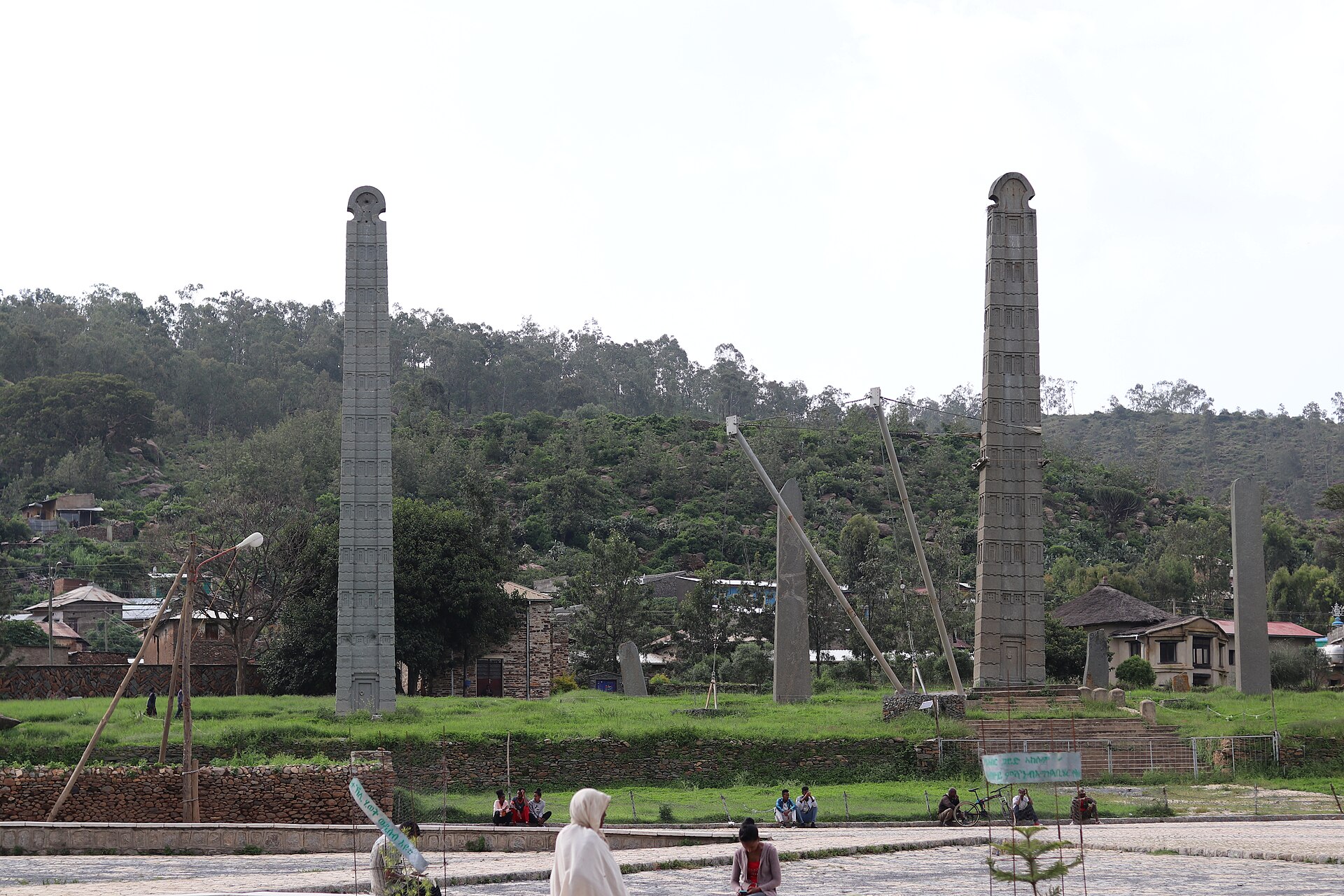
The fertile Hatsebo plain where Aksumite civilization originated began to be populated in the fourth to third centuries B. and the mid-second century A. Aksum, in the highlands of northern Ethiopia, was the centre of the ancient Aksumite kingdom, which stood at the crossroads of Africa, Arabia and the Greco-Roman world as the most powerful state between the Eastern Roman Empire and Persia. Its territory once controlled lies in present-day Ethiopia, Eritrea, Djibouti, Somalia and Somaliland.
South Arabian immigrants arriving in the Ethiopian highlands from across the Red Sea brought a belief in diverse gods, a system of writing and a tradition of monumental stone building that profoundly influenced the region's architecture and religion. The most famous early manifestation of this influence is the 60 x 50-foot stone structure at Yeha in northern Ethiopia, estimated to have been constructed around the fifth or fourth century B.C..
2. Trade and Economy
Aksum stood in command of the ivory trade with Sudan, and its fleets controlled the Red Sea trade through the port of Adulis and the inland routes of north eastern Africa. The kingdom was linked to the Red Sea trade routes by its port city of Adulis, while Aksum itself was situated further inland, perhaps to allow for better control of the ivory that was one of its most lucrative exports. Adulis lay on the Red Sea, at the site of modern Zula.
The exports of Adulis and its region included ivory, tortoiseshell and rhinoceros-horn. Imports into the market of Adulis included undressed cloth from Egypt, robes from Arsinoe, cloaks, linen mantles, flint glass and murrhine, and brass used for ornament and in cut pieces instead of coin.
Aksum's trading partners included most of the major states in the known world: Egypt, South Arabia, the Middle East, India and China, with the Byzantine Romans as perhaps its most important commercial partners. Round coinage was produced for trade with the Roman and Byzantine Empires.
The Periplus of the Erythraean Sea describes Adulis as a port established by law, lying at the inner end of a bay that runs in toward the south, below Ptolemais of the Hunts at a distance of about three thousand stadia. Opposite Mountain Island, on the mainland twenty stadia from shore, lies Adulis, a fair-sized village, from which there is a three-days' journey inland to Coloe, the first market for ivory. From Coloe there is a five days' journey more to the city of the people called Auxumites, to which all the ivory is brought from the country beyond the Nile through the district called Cyeneum, and thence to Adulis.
3. Coinage and Kings
Aksum was the first sub-Saharan African state to mint its own coinage. Its coinage was first issued under King Endybis in the late 3rd century AD.
About 20 kings are known mainly from their coins, which carry the king's name, title and a motto. The gold and silver coins have Greek inscriptions and Sabaean religious symbols and were minted to Roman standard weights.
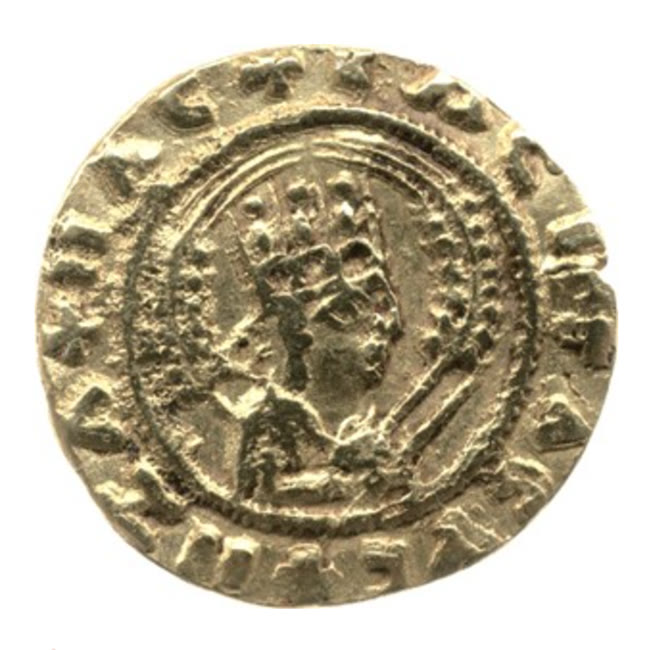
The most common material of the thousands of coins found is bronze. These coins have been recovered as far away as India.
The minting of Aksumite coins begins in the third century A.D.. From this point it is possible to date the individual reigns of Aksumite royalty.
4. Religion and Christianity
Before the arrival of Christianity, the Aksumite kingdom practised an indigenous polytheism whose most important deity was Mahram, the god of war, upheaval and monarchy.
Christianity was adopted in the 4th century following the conversion of King Ezana, who reigned from 320 to 350. The change was made visible in the royal coinage: after his conversion, Ezana had the crescent-and-disk of South Arabian polytheism removed from his coins and replaced with the Christian cross.
The figure credited with introducing the faith was Frumentius, later a saint, who had been kidnapped at Aksum on his way to India and became tutor to the future King Ezana. After the king adopted Christianity as the official religion in 333 AD, Frumentius was rewarded by being consecrated Bishop of Aksum at a ceremony in Alexandria. He had gone to Alexandria to lay the whole affair before the newly appointed patriarch Athanasius, begging him to appoint a bishop for the growing Christian community at Axum.
The introduction of Christianity in the 4th century AD led to the building of churches such as Saint Mary of Zion, which is believed to hold the Ark of the Covenant. In the 5th and 6th centuries the scriptures were translated into Ge'ez, the ancient forerunner of the Ethiopian language Amharic. The Ethiopian branch of Christianity had first emerged in the kingdom of Aksum, in the northern corner of the Ethiopian highlands.
In the 6th century, King Kaleb was recognized as a Christian by the Byzantine emperor Justin I when he sought Kaleb's support against atrocities suffered by fellow Christians in South Arabia; the invasion brought the region into the Aksumite kingdom for the next seven decades. Kaleb sent a force across the Red Sea to subdue the Yemenites, subjugating them as vassals for several decades.
The Nine Saints undertook the massive task of translating the whole Bible into Ge'ez; familiar with both Syriac and Greek, they used a Syrio-Greek text for the purpose. Among the literary achievements the Ethiopian Orthodox Tewahedo Church counts are the works of the Aksumite period of the 5th to 7th centuries.
Although autonomous in its rulings, the Ethiopian church remained connected to the Coptic Church until the mid-20th century. The evangelizers who spread Christianity to the general populace fled to the Ethiopian Orthodox Church because, with the Alexandrian church, it maintained the Monophysite doctrine after it was branded heretical in 451 at the Council of Chalcedon.
5. Script and Inscriptions
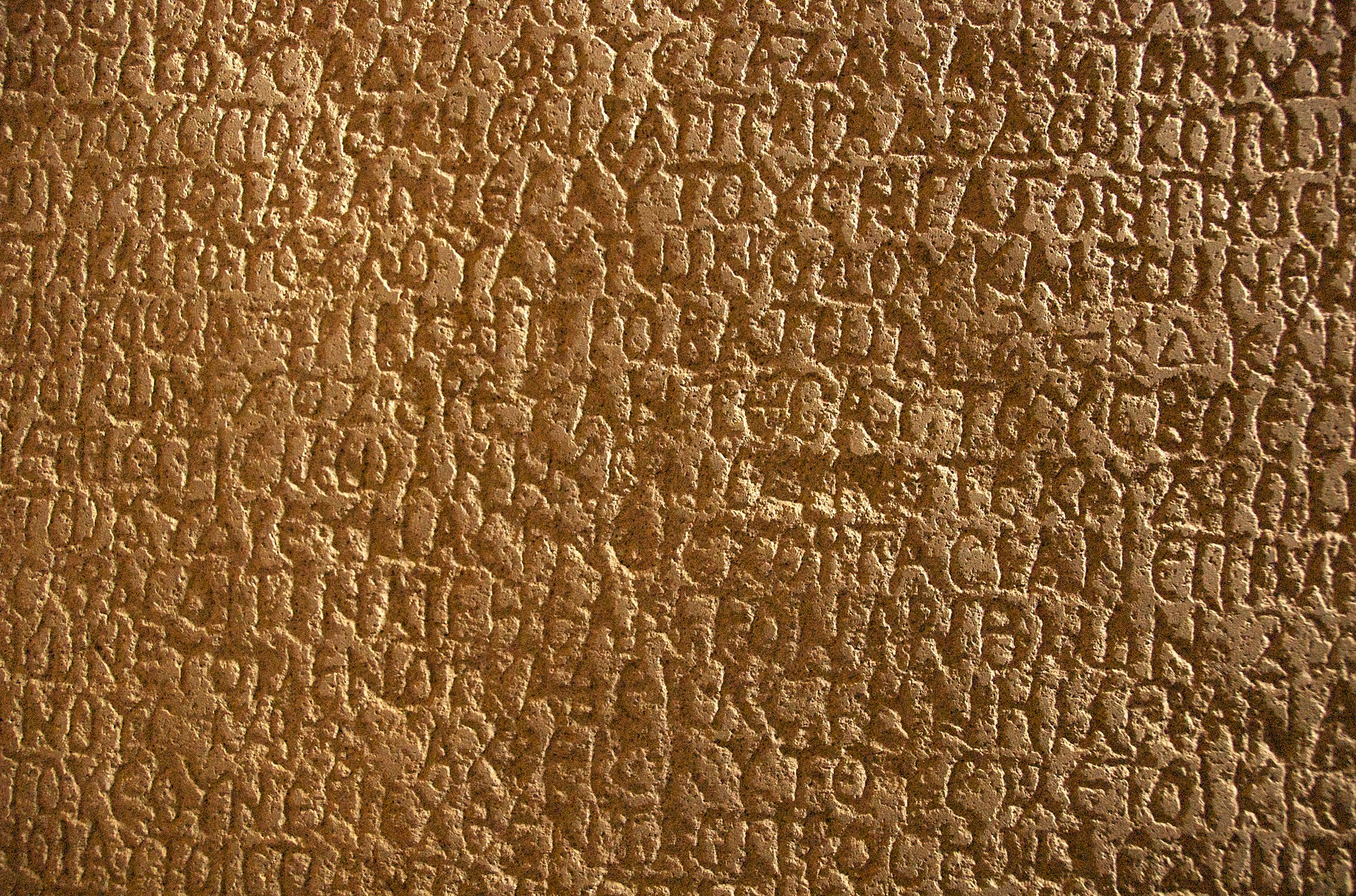
The writing system of Aksum was its own, with the earliest examples preserved on sheets of schist rock slabs dating to the 2nd century CE. This script, called Ge'ez or Ethiopic, was derived from the Sabaean script and evolved into a distinct script read from left to right.
Inscriptions on stone tablets at Aksum include trilingual text in Greek, Sabaean and Ge'ez (Classical Ethiopian) inscribed by King Ezana in the 4th century AD. Ezana's epigraphy also registers a change in religious vocabulary: whereas his earlier inscriptions style him Son of unconquered Mahrem, the inscription after his victory over Nubia uses a new terminology, speaking of the Lord of heaven and earth and describing the destruction of the images in their temples. An inscription of Ezana, king of Axum, from around 325 CE records that he took the field against the Noba (Nubians) through the might of the Lord of All, after they revolted and boasted that he would not cross the Takkaze.
The Ethiopic block of the Unicode Standard occupies the range U+1200 to U+137F, as shown in the character code chart published for Version 18.0 of the standard.
6. Monuments and Stelae
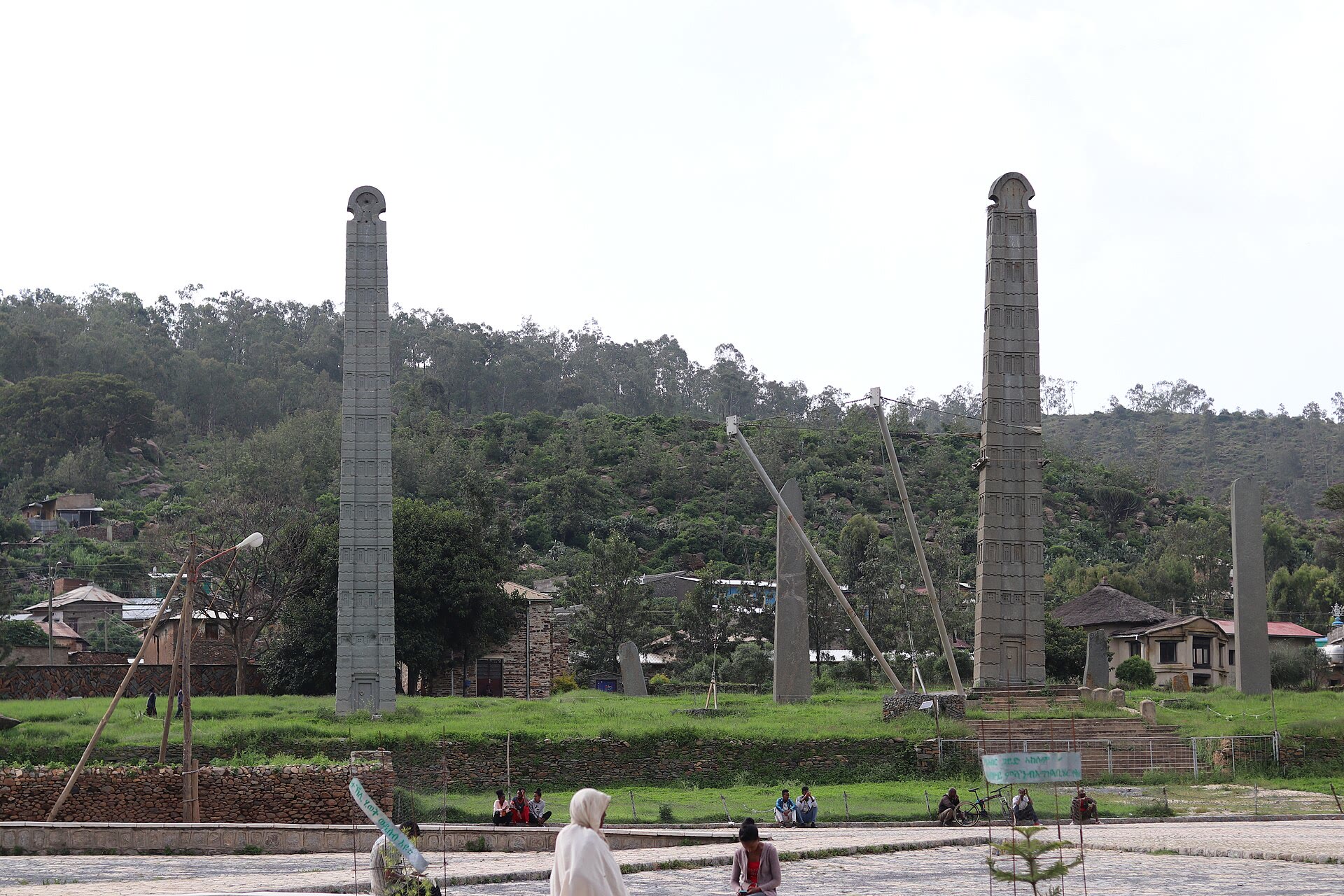
Aksum is perhaps most renowned internationally for its enormous monolithic stelae, erected during the third and fourth centuries A.D. as funerary markers for deceased members of its elite. The largest standing obelisk of Aksum rises to a height of over 23 meters and is carved to represent a nine-storey building of the Aksumites. The multi-storey stelae of the main field at Aksum have been considered as markers of royal graves and form part of a funerary assemblage including numerous hypogean structures.
The Central Field is the site of the largest monolith ever sculpted, 33 metres long, which probably collapsed immediately after its erection in the 3rd or 4th century, destroying the nearby Nafas Machau temple. Many of the stelae of Axum are around 24 metres in height, while one fallen and now broken example measures 33 metres in length and weighs 520 tonnes, making it the largest monolith ever transported anywhere in antiquity.
The archaeological site of Aksum consists of three parts and contains 176 stelae: the Northern Site, the Gudit Stelae Field, named after the Jewish Queen who took power in the 10th century, and the central area where the stele now known as the Aksum Obelisk used to stand. Geo-radar and electrotomographic prospection revealed the existence of several vast funerary chambers beneath the site's modern parking ground. According to the experts, the site of Aksum is a royal necropolis used by several dynasties before the Christian era.
7. Decline and Legacy
The power of the kingdom of Aksum eroded by the end of the 8th century amid Beja migration and Arab Muslim control of the Red Sea.
The decisive blow to Aksum was the ascendance of the Arab Muslims, who became the region's dominant power in the seventh century and assumed naval control of the Red Sea. With the spread of Islam in the 7th century the Ethiopian Church fell into something of a decline, although there was a revival in the 13th century.
Ethiopian emperors continued to be crowned in Aksum long after its political decline in the 10th century.
The Kebra Negest recounts the visit of the Queen of Sheba to King Solomon in Jerusalem and her return to Ethiopia with a son whom she named Menelik. Aksum is also described as the birthplace of the biblical Queen of Sheba.
8. Heritage Status and the Returned Obelisk
The city, also spelled Axum, served as the centre of the Aksumite kingdom. Its most impressive monuments are its monolithic obelisks, royal tombs and palace ruins dating to the 6th and 7th centuries AD, while several stelae in the town date between the 3rd and 4th centuries AD.
The returned obelisk stands 24 metres tall and weighs 160 tons. It was looted in 1937 and returned home after more than six decades in Rome. The first phase of the re-installation of the Aksum Obelisk at its original location at the World Heritage site in Aksum was completed on 12 June 2008 with the mounting of the first block.
The re-installation project was funded by the Italian Government and conducted by UNESCO contractor Croci Associati. It used an innovative high-technology approach described as a technical feat of colossal scale.
9. Timeline: from the first millennium BCE to the re-erected obelisk
- 5th–4th century BCEThe temple at YehaSouth Arabian influence in the Ethiopian highlands is seen in the 60 x 50-foot stone structure at Yeha, estimated to have been built around the fifth or fourth century B.C.
- mid-2nd century BCEAksumite kingdom takes shapeThe fertile Hatsebo plain where Aksumite civilization originated developed into a kingdom between the mid-second century B.C. and the mid-second century A.D.
- 1st century CEAksum rises as a trading powerAxum first rose to prominence in the 1st Century AD, trading its rich natural resources through its Red Sea port Adulis.
- 2nd century CEEarliest Ge'ez inscriptionsThe earliest examples of the Ge'ez or Ethiopic script are found on sheets of schist rock slabs dating to the 2nd century CE.
- late 3rd century CEFirst Aksumite coinsKing Endybis becomes the first Aksumite king to issue coins; Aksumite gold of his reign dates to the late 3rd century AD.
- 3rd–4th century ADThe great stelae erectedThe multi-storey stelae of the main field at Aksum are dated indirectly to the 3rd or 4th century AD and are considered markers of royal graves.
- c. 330 CEConversion of King EzanaFrumentius, later consecrated the first Bishop of Aksum at Alexandria, converts King Ezana, and Christianity becomes the religion of the Aksumite court.
- mid-4th century CECampaign against MeroeEzana I responds to an attack from Nubia with a large force and sacks Meroe, leaving Axum dominant in the region.
- c. 480 CEThe Nine Saints arriveNine anti-Chalcedonian monks from the Eastern Roman Empire, later called the Nine Saints, arrive at Axum; they spread Christianity and monasticism and translate the Bible into Ge'ez.
- early 6th century CEKaleb's Yemen campaignAnother period of great Axum expansion comes under Kaleb I, whose forces cross the Red Sea and subdue the Yemenites as vassals for decades.
- 7th century CEMuslim dominance cuts Red Sea tradeIncreasing Muslim dominance of the region cuts off Aksum's access to international trade, contributing to the kingdom's decline.
- 1937Obelisk looted to RomeItaly's fascist dictator Benito Mussolini loots the Axum obelisk in 1937 during Italy's brief occupation of Ethiopia.
- 1980UNESCO World Heritage inscriptionAksum is inscribed on the UNESCO World Heritage List.
- April 2005Obelisk returns to EthiopiaThe first section of the 1,700-year old obelisk arrives back in Ethiopia, nearly 70 years after Italian troops seized it in 1937.
- 12 June 2008Obelisk re-installation beginsThe first phase of the re-installation of the Aksum Obelisk, also known as Stele 2, is completed at its original location, with the first of three blocks mounted.
References (17)
- 1Obelisk points to ancient Ethiopian glory — BBC News WebView source
- 2African Money — American Numismatic Society WebView source
- 3The Kingdom of Aksum — National Geographic Society (Education) WebView source
- 4Kingdom of Axum — World History Encyclopedia WebView source
- 5The kingdom of Aksum — Smarthistory (essay by the British Museum) WebView source
- 6Foundations of Aksumite Civilization and Its Christian Legacy (1st–8th Century) — The Metropolitan Museum of Art (Heilbrunn Timeline of Art History) WebView source
- 7Aksum — UNESCO World Heritage Centre WebView source
- 8The Periplus of the Erythraean Sea — Internet Ancient History Sourcebook, Fordham University WebView source
- 9The Story of Africa — Ethiopia & Nubia — BBC World Service WebView source
- 10The Establishment of the Ethiopian Church (Pre-Christian Times; The Introduction of Christianity) — Ethiopian Orthodox Tewahedo Church (Prof. Sergew Habele Selassie) WebView source
- 11Ethiopian Church History — Ethiopian Orthodox Tewahedo Church WebView source
- 12Accounts of Meröe, Kush, and Axum — Internet Ancient History Sourcebook, Fordham University WebView source
- 13Ethiopic Range: 1200–137F (The Unicode Standard, Version 18.0) — Unicode, Inc. WebView source
- 14The Giant Stelae of Aksum in the Light of the 1999 Excavations — Palethnologie (Bertrand Poissonnier) 1999 WebView source
- 15Major archaeological discoveries in Aksum — UNESCO World Heritage Centre WebView source
- 16First phase of Aksum Obelisk re-installation successfully completed — UNESCO World Heritage Centre WebView source
- 17Obelisk arrives back in Ethiopia — BBC News WebView source