Armillary Sphere
The ringed model of the celestial sphere — from Ptolemy and the Chinese hun-yi to the observatories of Ulugh Beg and Tycho Brahe and the museum armillaries of early modern Europe.
An armillary sphere is an astronomical instrument built from rings, or armillae, that models the great circles of the celestial sphere around a small Earth at its centre. Used in antiquity by Ptolemy and described in the Almagest, it was developed in China as the hun-yi, where Zhang Heng built an equatorial armillary sphere and Su Song's clock tower carried one that turned with the hours, and in the Islamic world, where Ulugh Beg's Samarkand observatory worked with a large armillary among its instruments. Medieval teaching used it to demonstrate the Ptolemaic cosmos, Tycho Brahe abandoned the largest classical armillaries for equatorial ones after finding that flexing ruined their accuracy, and demonstrational spheres were commercially produced and collected into the museums of Oxford, Cambridge, Greenwich, Washington and London.
Overview
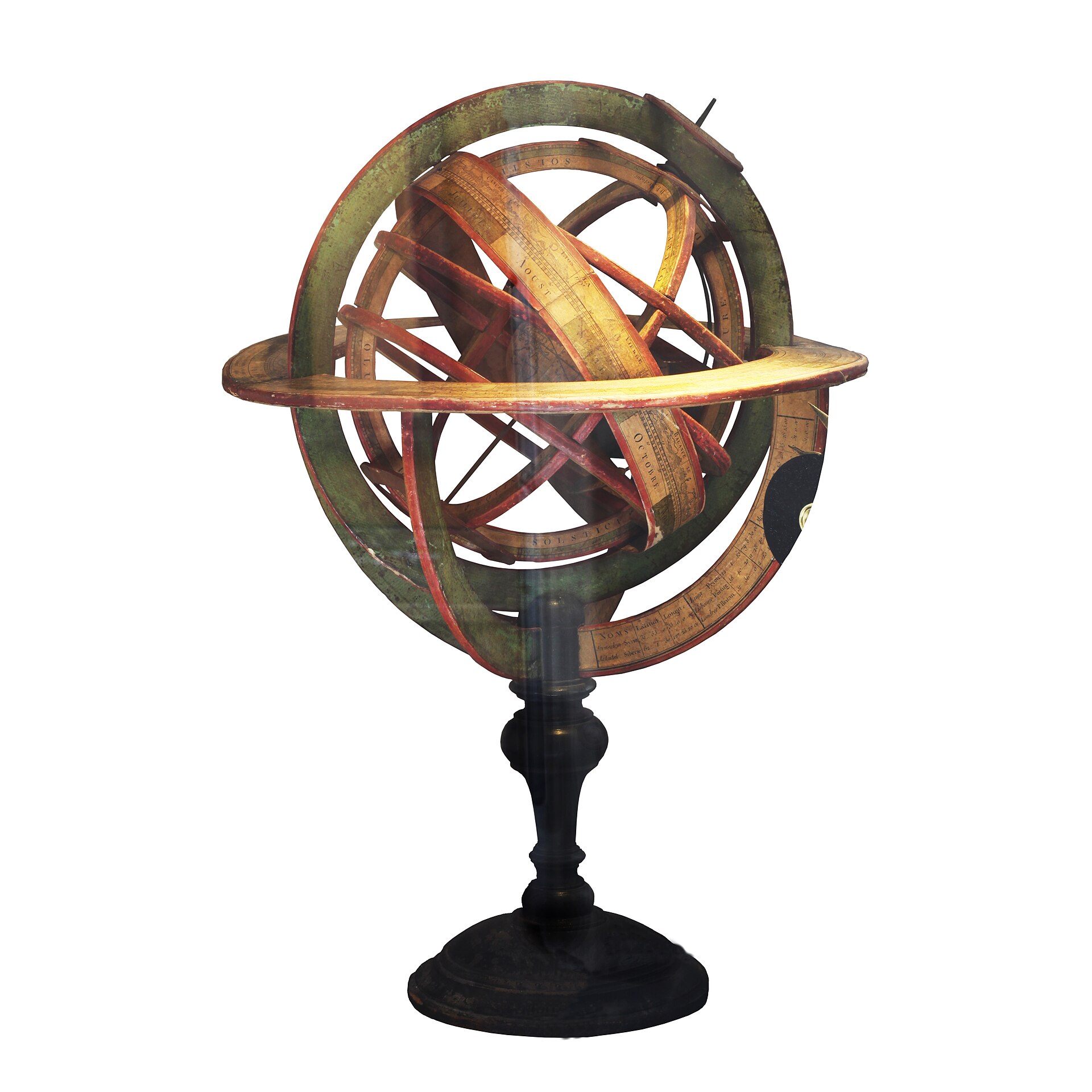
An armillary sphere is an early astronomical device for representing the great circles of the heavens. It takes the form of a skeleton celestial globe, its circles divided into degrees for angular measurement. The name derives from the Latin armillae, meaning rings, the great circles used for plotting astronomical coordinates.
The instrument is a model of objects in the sky, built as a spherical framework of rings centred on the Earth. In this it differs from a celestial globe, which is a smooth sphere whose principal purpose is to map the constellations.
1. Structure and Principal Circles
The most elaborate instruments carry a horizon ring, a meridian, an equatorial ring and two smaller rings representing the Tropics of Cancer and Capricorn to the north and south. The ecliptic, or Zodiac, ring touches those circles and crosses the celestial equator at the equinoxes, standing for the annual pathway of the Sun. Inside the primary sphere are two movable brass rings on short axes at the ecliptic poles, representing the orbs of the Sun and the Moon.
At the centre sits a small sphere representing the Earth, in one Smithsonian instrument an ivory ball. In the Greenwich sphere attributed to Giovan Battista Giusti's workshop the centre holds a small brass sphere. The Earth is held stationary while the rings about it turn once in roughly 24 hours.
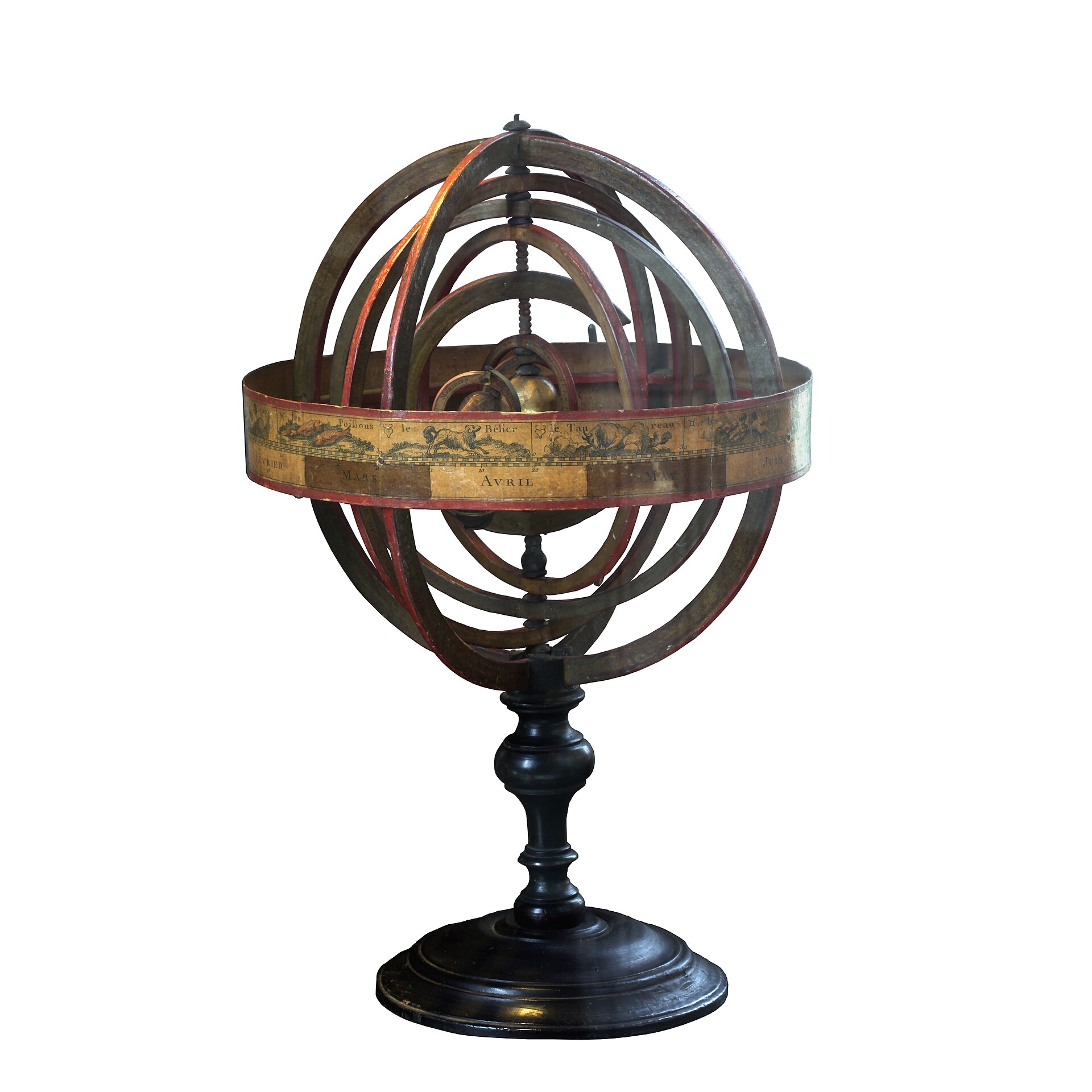
The celestial sphere rotates about a stationary Earth and acts as a reference system for locating the stars from a geocentric perspective. The instrument could model the movements of the heavens and also carry out calculations such as the times of sunrise and sunset and the altitude of the Sun or stars.
2. Origins and Early History
Observational armillary spheres were written about by ancient astronomers such as Claudius Ptolemy and by medieval scholars working within the Islamic world, who described instruments larger than the demonstrational kind. Ptolemy made astronomical observations from Alexandria in Egypt during the years AD 127 to 141, the first of them dated exactly to 26 March of the year 127 in the reign of Hadrian. Such observational devices were known in the Islamic world and were introduced to Europe through that culture. The earliest known complete armillary sphere with nine circles is believed to have been the meteoroskopion of the Alexandrine Greeks, dating from about AD 140 in the Roman era. Ptolemy's instrument, the astrolabon, had diametrically disposed tubes upon the graduated circles. The Arabs employed similar instruments with diametric sight rules or alidades, and those made by Moors in Spain in the 12th century were likely the prototypes of all later European armillary spheres. Al-Battani made his remarkably accurate astronomical observations at Antioch and ar-Raqqah in Syria.
Demonstrational armillaries were known in Western Europe from the later Middle Ages onwards and were commercially produced in the 16th, 17th and 18th centuries. For most of the second half of the 20th century the Whipple Museum dated its armillary sphere to about 1450 and treated it as one of the earliest surviving demonstrational armillaries. The museum now thinks that its modest-looking armillary, bought for a small sum in 1928 from a London antique shop, is the oldest surviving instrument of its kind in the world.
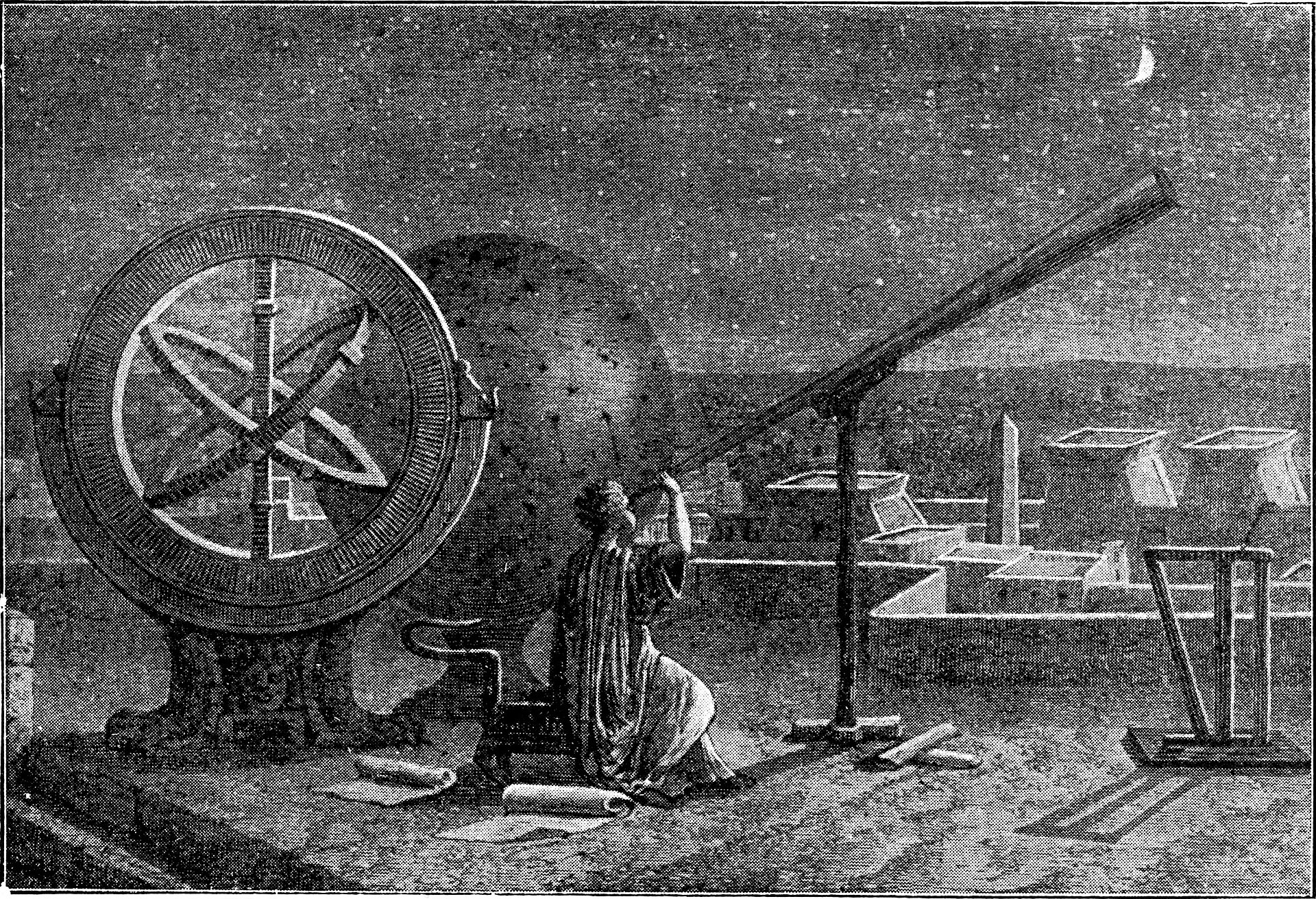
The Beijing Ancient Observatory traces back to the Sitian Tai and Taishi Yuan established by Guo Shoujing and Wang Xun in the Yuan dynasty, and the observatory itself dates to the year 1442, one of the oldest in the world, used by astronomers during the Ming and Qing dynasties before the invention of the telescope. It stands on a platform about 50 feet high built on part of the old Ming dynasty city wall, and the eight instruments displayed on it date to the Qing dynasty. The Jesuit Ferdinand Verbiest was put in charge of the observatory by the emperor and in 1673 had some of the instruments from the 1400s rebuilt.
At Samarkand, evidence of settlements goes back to 1500 BC, and the city had its most significant development in the Temurid period of the 14th and 15th centuries.
3. Forms and Uses
Armillary spheres were made in two broad classes, one demonstrational and one observational. Smaller spheres, of the kind represented by the Oxford example, were generally used for demonstration, while much larger instruments were constructed for observation and measurement. The large observational instruments carried sights positioned opposite each other on pairs of rings, an arrangement that allowed celestial coordinates to be established.
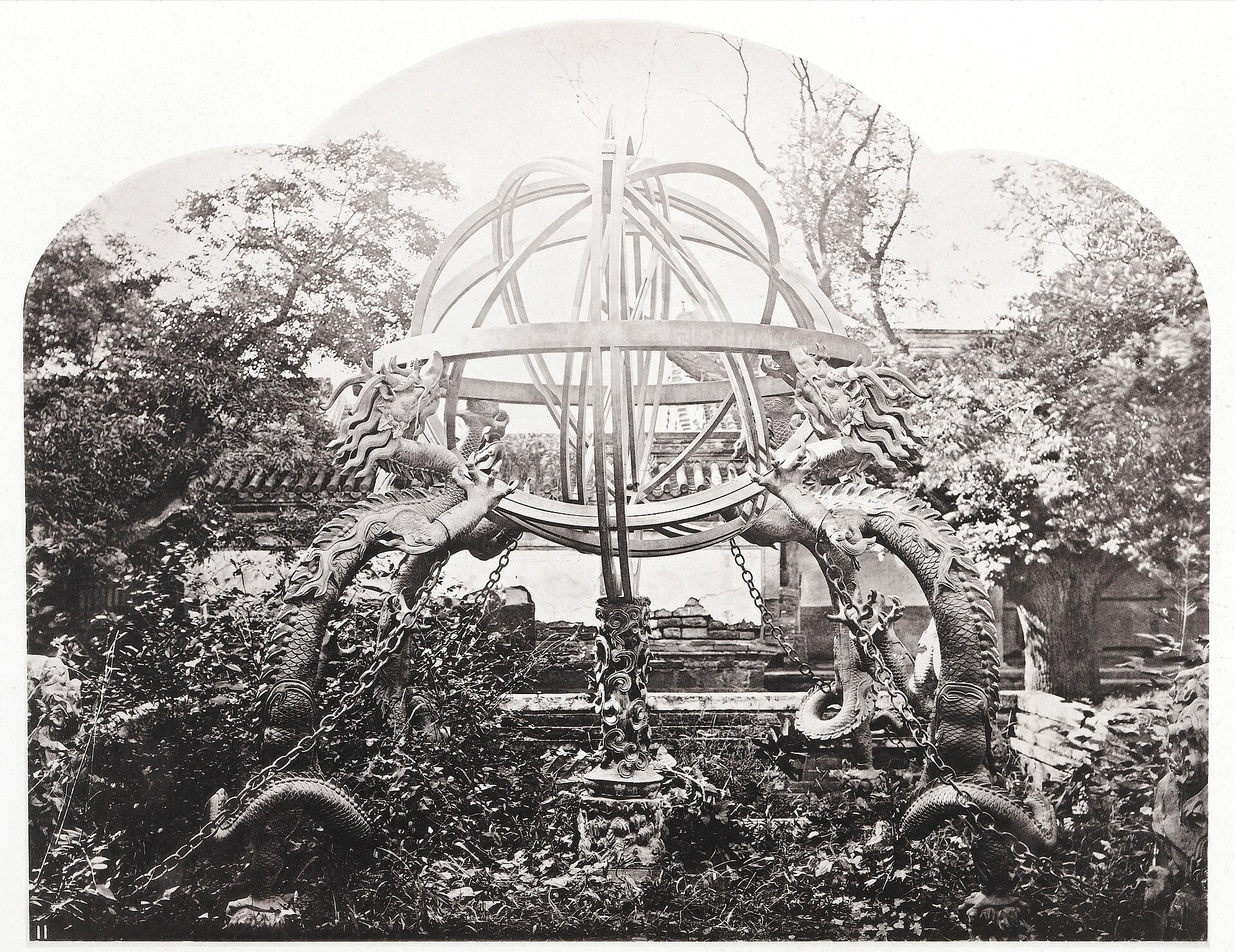
In medieval times the armillary sphere served as a teaching instrument, used to instruct priests in calculating the hours of prayer at sunrise and sunset. The instrument also carried a symbolic charge: portraits of noblemen often included an armillary sphere to suggest wisdom and learning.
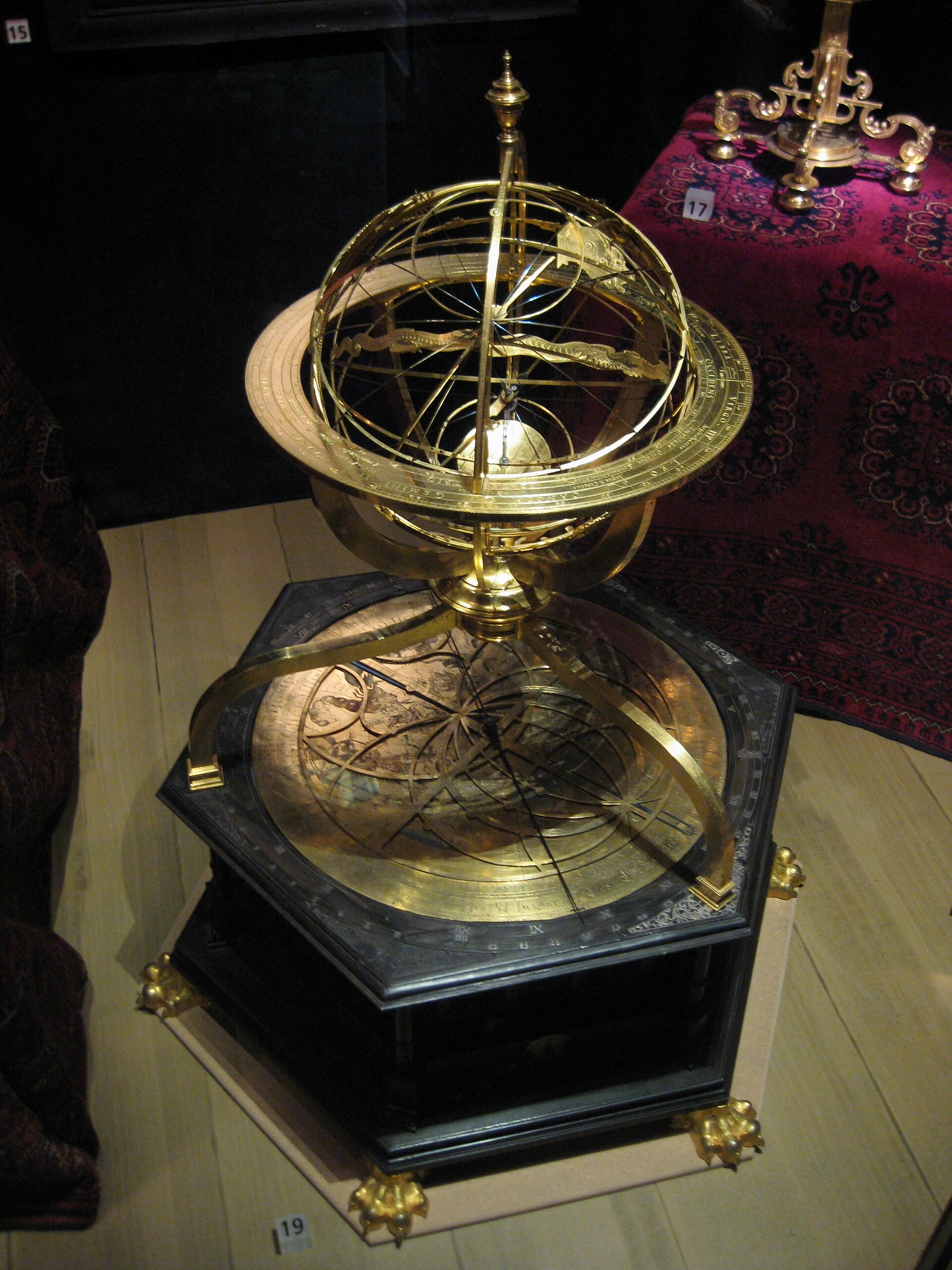
Very few examples of the instrument survive from earlier than the 16th century. One reason may be that delicate spheres of rings, even when made of brass, are less likely to be preserved than flat instruments such as astrolabes. Medieval texts often refer to instruments that could be either armillary spheres or celestial globes, and texts that specifically describe the construction and use of armillary spheres seem to be less common.
4. Surviving Instruments
A small number of armillary spheres from the early modern period survive in public collections, and their records preserve details of construction, attribution and provenance that would otherwise be lost. The Whipple Museum holds Wh.0336, a Ptolemaic armillary sphere of the 15th century, English by assumption, made of brass and oak. Its ten celestial features run from the primum mobile and the solstitial colure to the right and oblique horizons, and its rings include the Arctic circle, the tropics of Cancer and Capricorn, the equator and an ecliptic circle divided into twelve sections with abbreviated names of the zodiac. The instrument was probably designed to be held by a handle extending from the southern pole.2Ptolemaic armillary sphere (Wh.0336) · Whipple Museum of the History of Science, University of Cambridge ↗
The Oxford Museum of the History of Science preserves object 45453, an Italian sphere made in Rome in 1588 and signed by Carlo Plato, distinguished by a Moon carried on a separate ring and by stars shown as pointers.4Armillary sphere (object 45453) · History of Science Museum, University of Oxford ↗
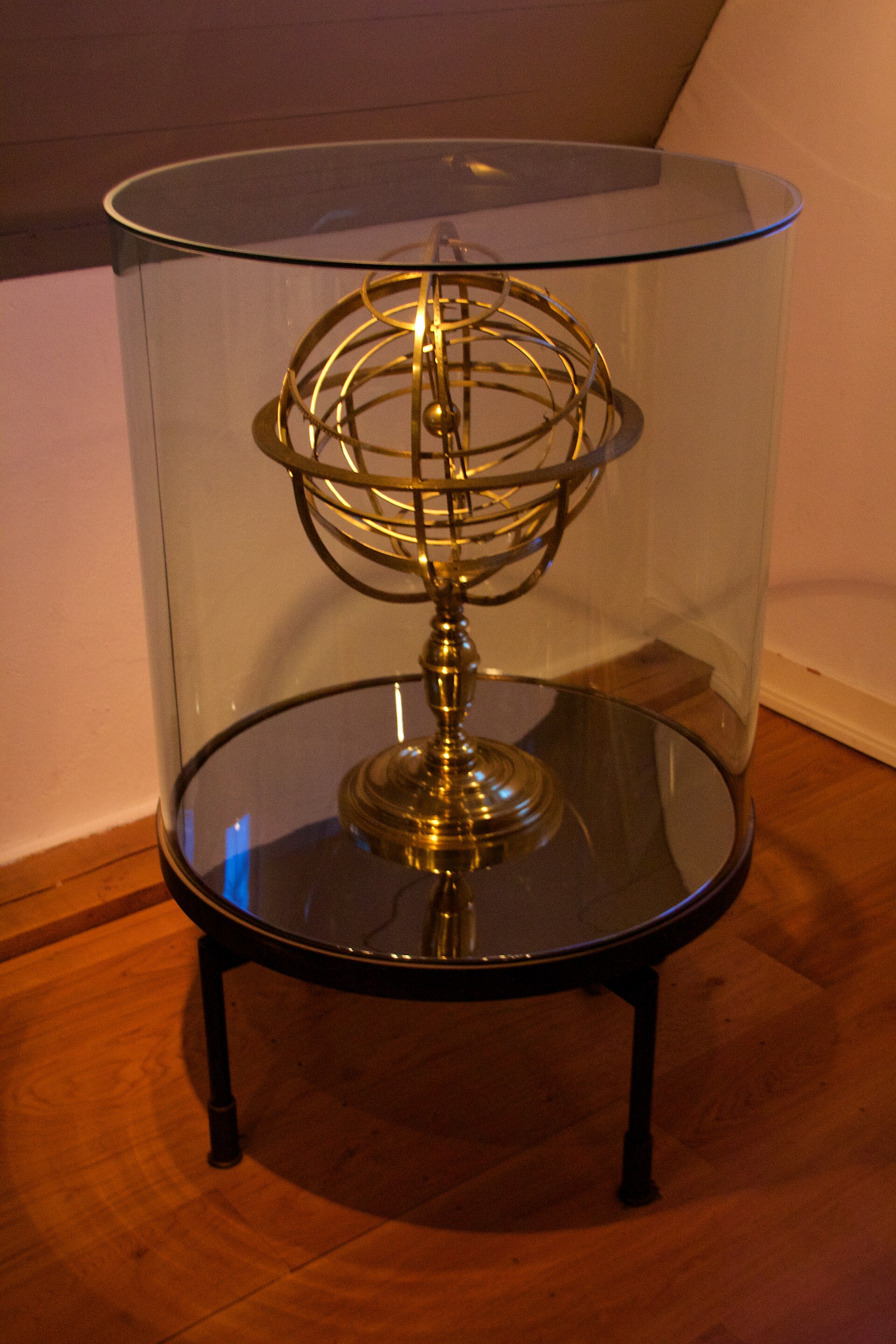
The Smithsonian holds PH.327302, attributed to Caspar Vopel of Cologne about 1550, a brass instrument with an ivory ball for the Earth measuring 26.5 cm by 13 cm. It shows the relative positions of the equator and the ecliptic together with other important astronomical circles, and an inscription on the Tropic of Cancer refers to Caspar Vopel of Cologne, who taught mathematics and made mathematical instruments.6Armillary Sphere (PH.327302) · National Museum of American History, Smithsonian Institution ↗
At Greenwich, AST0617 is a sphere by Caspar Vopel dated 1547, brass and bronze, measuring 400 by 230 by 228 mm, with a gilt terrestrial globe at the centre mounted on the polar axis. The record cross-references a Caspar Vopel armillary sphere of 1543 whose globe it describes as almost identical, and notes that the primary sphere consists of eight brass rings, two of which represent the colures and carry graduated scales at their rims.15Armillary sphere (AST0617) · Royal Museums Greenwich, National Maritime Museum ↗
Greenwich AST0626 is of unknown maker, dated by the record to about 1575, made of bronze with a diameter of 202 mm, and its horizon ring was punched in the workshop of Giovan Battista Giusti, who worked from 1556 until about 1575 in Italy. The mounting of the zodiacal band is wrong.5Armillary sphere (AST0626) · Royal Museums Greenwich, National Maritime Museum ↗
Greenwich AST0618 was made by Gualterus Arsenius in 1568 in brass, measuring 360 mm by 260 mm with a mass of 4.2 kg, and stands on four columns in the form of two male and two female figures. A compass is set in the centre of the base plate, and a small terrestrial globe is mounted on the ecliptic axis so that its poles point towards the equatorial poles of the armillary sphere; the labelled continents show America separate from Asia.16Armillary sphere (AST0618) · Royal Museums Greenwich, National Maritime Museum ↗
The Science Museum's 1880-47 is a German instrument of the 16th century, mounted on a brass twined stand, measuring 450 mm overall and weighing 2.9 kg, and depicts the Earth-centred cosmos of Ptolemy.14Ptolemaic armillary sphere (1880-47) · Science Museum Group Collection ↗
5. Observational Armillaries and Great Observatories
Tycho Brahe's observatory on the island of Hven, Uraniborg, was built from 1576 to 1580 and stands as the first custom-built observatory in modern Europe. There he erected an armillary sphere of 1.6 metre radius in 1581. He rapidly gave up on using large versions of the classical armillary sphere because he found their accuracy compromised by flexing and bending under the weight of the components. His great equatorial armillary, an armillary sphere reduced to its bare essentials, was built in 1585 with a diameter of 3 metres and had an estimated accuracy of 38.6 seconds of arc. His observations of stellar and planetary positions were noteworthy both for their accuracy and quantity, far surpassing those of any predecessor or contemporary.
Ulugh Beg had begun building a madrasah at Samarkand in 1417 to push forward the study of astronomy, completed in 1420, and then appointed the best scientists he could find as lecturers. Construction of his observatory at Samarkand began in 1428; the building was circular with three levels, fitted with a quadrant so large that part of the ground had to be removed to fit it, a marble sextant, a triquetram and an armillary sphere. The Zij-i Sultani star catalogue was published in 1437 and gives the positions of 992 stars. The major monuments of the historic town of Samarkand include the Registan mosque and madrasas, the Bibi-Khanum Mosque and the Gur-Emir ensemble, as well as Ulugh-Beg's Observatory.
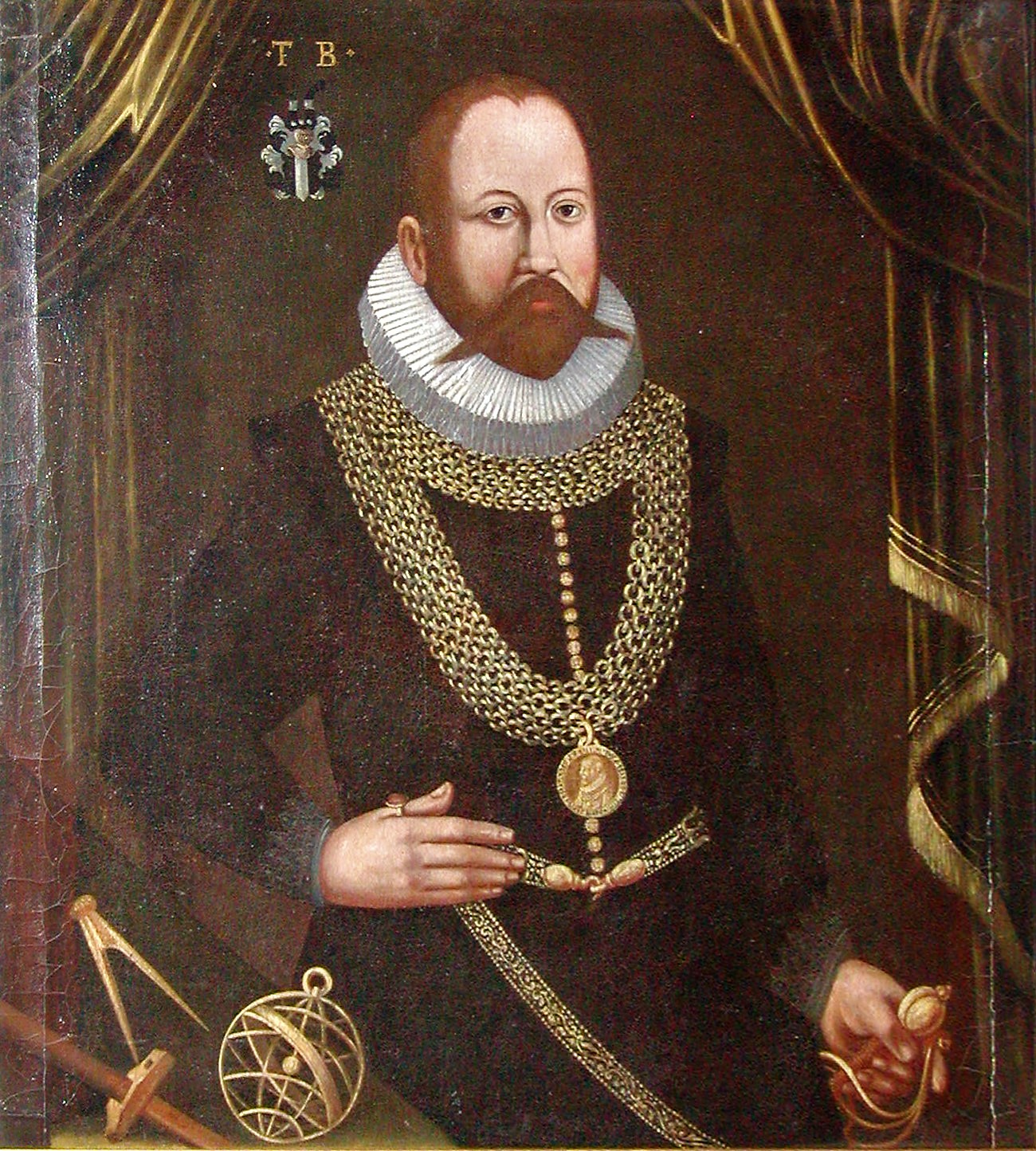
From 1669 to 1674 Verbiest designed six new astronomical instruments similar to those of Tycho Brahe, among them the Equatorial Armillary Sphere and the Ecliptic Armillary Sphere. In the Qianlong reign the emperor ordered the construction of the last instrument, the New Armilla or Jiheng Armillary Sphere. An instrument invented by Guo Shoujing in the Yuan dynasty can measure the position of the sun and can also be used during solar eclipses.
6. Armillary Spheres in China
Zhang Heng appears to have been the first person in China to construct an equatorial armillary sphere, a system of rings corresponding to the great circles of the celestial sphere, with a central tube used to line up stars and planets. In the work Hun-i chu he described the universe with the image of a hen's egg: the sky round as a crossbow pellet and the Earth like the yolk of the egg, lying alone at the centre. His catalogue counted 2,500 stars, not including those which sailors observe, plus 11,520 very small stars.
The high official Su Song lived from 1020 to 1101 and is famous for having designed and constructed a mechanical clock tower almost 40 feet high by adding a chain-driven mechanism to the existing water-powered clock. An astronomical clock tower built about a thousand years ago in central China during the Northern Song dynasty used water power to drive complex gears that tracked the time, the phases of the moon and the positions of the stars. At the top of the tower was a mechanically rotated armillary sphere that showed the changing location of the planets and stars.
7. Timeline
-
2nd century BCEHipparchus and a sphere of four ringsIt is stated that Hipparchus used a sphere of four rings, one of the simpler ring instruments that came before the complete armillary sphere. 1Armillary sphere · Encyclopaedia Britannica ↗
-
1543Copernicus and the De revolutionibusThe Almagest was not superseded until a century after Copernicus presented his heliocentric theory in the De revolutionibus of 1543 and transformed the subject. 9Ptolemy · MacTutor History of Mathematics Archive, University of St Andrews ↗
-
1728Fire destroys Tycho's great globeAll of Tycho's instruments except his great globe were destroyed in the aftermath of the Bohemian civil war, and a fire at Copenhagen destroyed the great globe in 1728 and left only Tycho's published writings as a record of the instruments. 3Tycho Brahe (1546-1601) · High Altitude Observatory, NSF National Center for Atmospheric Research (UCAR) ↗
8. Timeline: from Hipparchus to the museum armillaries
- 2nd century BCEHipparchus and a sphere of four ringsIt is stated that Hipparchus used a sphere of four rings, one of the simpler ring instruments that came before the complete armillary sphere.
- AD 127Ptolemy begins observing at AlexandriaThe first observation by Ptolemy that can be dated exactly was made at Alexandria on 26 March of the year 127 at the start of a long series of astronomical observations.
- about AD 140The earliest complete armillary sphereThe earliest known complete armillary sphere with nine circles is believed to have been the meteoroskopion of the Alexandrine Greeks, dating from about AD 140 in the second century.
- 1092Su Song's mechanised armillary designSu Song's New Design for a Mechanised Armillary Sphere and Celestial Globe of 1092 described the water-powered clock tower whose top level carried a rotating armillary sphere.
- 1417Ulugh Beg's madrasah at SamarkandUlugh Beg began building a madrasah at Samarkand in 1417 to push forward the study of astronomy, and completion followed in 1420 with the best scientists he could find appointed as lecturers.
- 1428Construction of the Samarkand observatoryUlugh Beg built an observatory at Samarkand, with construction beginning in 1428; the building was circular in shape and had three levels.
- 1437The Zij-i Sultani star catalogueThe star catalogue produced by Ulugh Beg and his collaborators at Samarkand, the Zij-i Sultani, was published in 1437 and gives the positions of 992 stars.
- 1442The Beijing Ancient ObservatoryThe Ancient Observatory in Beijing dates to the year 1442 and is one of the oldest observatories in the world, used by astronomers during the Ming and Qing dynasties.
- 1543Copernicus and the De revolutionibusThe Almagest was not superseded until a century after Copernicus presented his heliocentric theory in the De revolutionibus of 1543 and transformed the subject.
- 1547A Vopel armillary for GreenwichCaspar Vopel made an armillary sphere in 1547 whose gilt terrestrial globe shows a fantastical random distribution of lands and seas.
- 1581Tycho Brahe's armillary sphereTycho Brahe built an armillary sphere of 1.6 metre radius in 1581 and soon found that large classical armillaries lost accuracy through flexing and bending.
- 1585Tycho's great equatorial armillaryTycho's great equatorial armillary, built in 1585 with a diameter of 3 metres, was an armillary sphere reduced to its bare essentials and had an estimated accuracy of 38.6 seconds of arc.
- 1588The Carlo Plato armillary of RomeAn armillary sphere made in Rome in 1588 and signed by Carlo Plato, now held in Oxford, carries the Moon on a separate ring and a number of stars as individual pointers.
- 1728Fire destroys Tycho's great globeAll of Tycho's instruments except his great globe were destroyed in the aftermath of the Bohemian civil war, and a fire at Copenhagen destroyed the great globe in 1728 and left only Tycho's published writings as a record of the instruments.
- 1928Whipple buys the oldest surviving armillaryRobert Whipple purchased the museum's armillary sphere for a small sum from a London antique shop in 1928 and it is now thought to be the oldest surviving instrument of its kind.
References (20)
- 1Armillary sphere — Encyclopaedia Britannica Web↩View source
- 2Ptolemaic armillary sphere (Wh.0336) — Whipple Museum of the History of Science, University of Cambridge Book↩View source
- 3Tycho Brahe (1546-1601) — High Altitude Observatory, NSF National Center for Atmospheric Research (UCAR) 1546 Web↩View source
- 4Armillary sphere (object 45453) — History of Science Museum, University of Oxford Book↩View source
- 5Armillary sphere (AST0626) — Royal Museums Greenwich, National Maritime Museum Web↩View source
- 6Armillary Sphere (PH.327302) — National Museum of American History, Smithsonian Institution Web↩View source
- 7Astronomy 2e, 2.1 The Sky Above — OpenStax, Rice University WebView source
- 8Armillary Spheres and Teaching Astronomy — Whipple Museum of the History of Science, University of Cambridge BookView source
- 9Ptolemy — MacTutor History of Mathematics Archive, University of St Andrews Web↩View source
- 10Al-Battani — MacTutor History of Mathematics Archive, University of St Andrews WebView source
- 11History of the Observatory — Beijing Planetarium / Beijing Ancient Observatory WebView source
- 12Beijing's Ancient Observatory — NASA Goddard Space Flight Center (Blueshift) 2010 WebView source
- 13Samarkand - Crossroad of Cultures — UNESCO World Heritage Centre WebView source
- 14Ptolemaic armillary sphere (1880-47) — Science Museum Group Collection 1880 Web↩View source
- 15Armillary sphere (AST0617) — Royal Museums Greenwich, National Maritime Museum Web↩View source
- 16Armillary sphere (AST0618) — Royal Museums Greenwich, National Maritime Museum Web↩View source
- 17Ulugh Beg — MacTutor History of Mathematics Archive, University of St Andrews WebView source
- 18Zhang Heng — MacTutor History of Mathematics Archive, University of St Andrews WebView source
- 19China in 1000 CE: Technological Advances during the Song — Asia for Educators, Columbia University WebView source
- 20Su Song: Awe-inspiring Scientist in Ancient China — Science and Technology Daily 2024 WebView source