Seismograph
The instrument that turned the shaking of the Earth into a written record — from Zhang Heng's bronze dragons to broadband sensors on the Moon and Mars.
A seismograph records the ground motions of earthquakes as a seismogram, using the principle of inertia: a suspended mass stays still while the frame of the instrument moves with the ground. The line runs from Zhang Heng's seismoscope of about 132 CE and the mercury tubes of Luigi Palmieri in 1855 to Filippo Cecchi's first true seismograph of 1875 and John Milne's worldwide network of horizontal pendulum instruments after 1897. In the twentieth century the Wood-Anderson torsion seismometer and Charles Richter's magnitude scale made earthquakes measurable, the World-Wide Standardized Seismograph Network standardized global recording from 1961, and seismometers have since been deployed on the Moon and Mars.
In this article
- 1Overview
- 2Operating Principle
- 3Instrument Classes and Sensitivity
- 4Early Instruments and the Seismoscope
- 5Nineteenth-Century Development
- 6John Milne and the First Worldwide Networks
- 7National Networks and Observatories
- 8The Caltech Seismo Lab and Magnitude Scales
- 9The World-Wide Standardized Seismograph Network
- 10Planetary Seismology
- 11Reading a Seismogram: Waves, Location and Measurement
- 12Seismology and the Earth's Interior
- 13Modern Instruments and Public Monitoring
- 14Key Dates
- 15Timeline: from the Han seismoscope to planetary seismology
- 16Frequently asked questions
- 17Knowledge graph
Overview
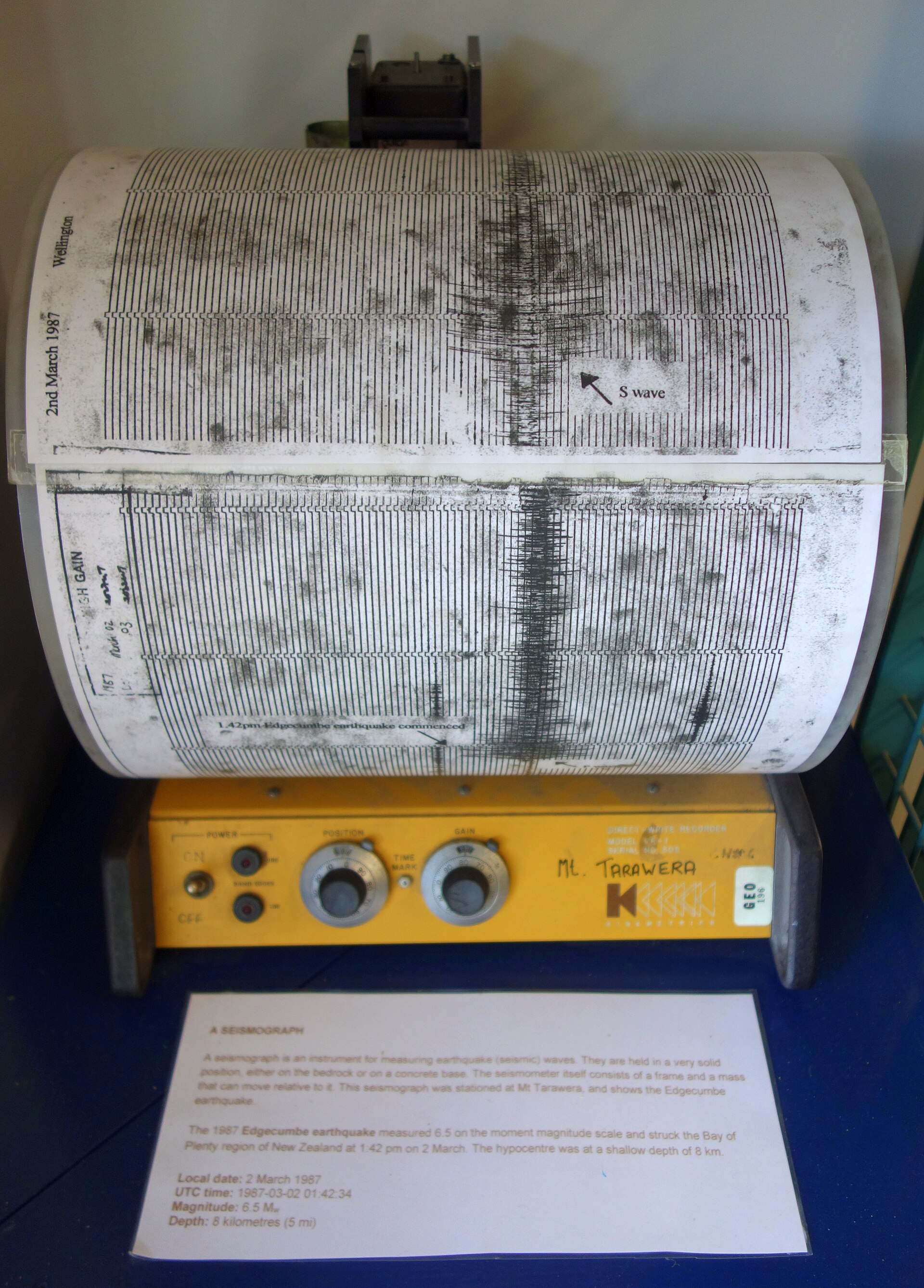
A seismograph is an instrument that makes a record of seismic waves caused by an earthquake, explosion, or other Earth-shaking phenomenon. The record it produces is a seismogram, the trace shown on a display screen or paper printout.
The terms seismograph and seismometer are often used interchangeably, but only a seismograph possesses the capacity to record the phenomena it detects. A seismometer is a very sensitive instrument that can detect movements of the Earth's surface, and a seismograph is the instrument used to record and measure the vibrations of the ground. Traditional seismographs combined a sensing element called a seismometer with an amplifier and a hardcopy display unit.
1. Operating Principle
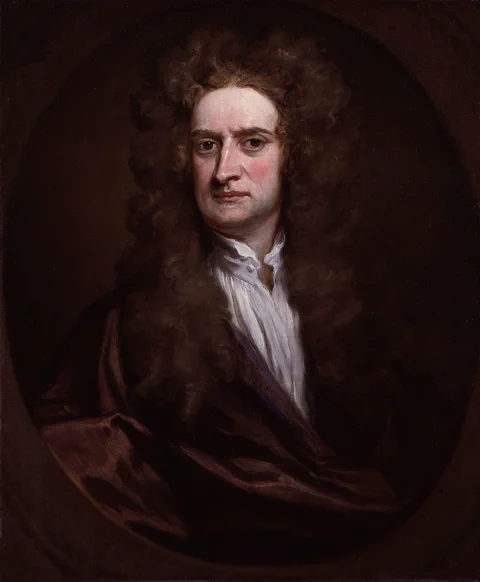
Almost all seismometers are based on the principle of inertia, in which a suspended mass tends to remain still when the ground moves. In practice a seismograph has a base fixed in the ground and a heavy weight hanging free, so that when the ground shakes the base shakes too while the hanging weight does not, and the difference in position between the two is what is recorded. A seismometer is called inertial because it rests on Newton's first law, that a body at rest will remain at rest.
In the AS-1 seismometer a magnet hangs from a spring on a boom, and when the ground vibrates the boom moves while the mass stays at rest and stretches the spring. Because the spring will eventually pull the mass, the seismometer needs damping, supplied by oil or by a magnetic damping system.
Most modern seismometers work electromagnetically, with a permanent magnet as the mass and a case carrying windings of fine wire in which small electric signals are generated. In modern seismographs the display is replaced or augmented by a digitizer, and the data stream may be sent to a central facility by radio, telephone or the Internet.
2. Instrument Classes and Sensitivity
Seismographs are built in distinct classes according to the ground motion they are meant to capture. Short-period, long-period and broadband seismographs divide the work of ordinary observation, while low-gain strong-motion instruments are reserved for large nearby earthquakes. The division follows the behaviour of the waves themselves: high-frequency seismic waves attenuate most severely, so an instrument intended for local earthquakes must respond to different frequencies than one recording distant events.
The performance of the classes differs sharply. Short-period seismographs magnify ground motion several hundred thousand times and can detect movements too small for a human being to feel, whereas strong-motion seismographs apply magnification of less than 100x and are sensitive to ground acceleration during large nearby earthquakes. Modern systems amplify and record ground motion as a function of time, typically at periods between 0.1 and 100 seconds.
3. Early Instruments and the Seismoscope
The seismoscope stands at the beginning of seismic instrumentation as a device of indication rather than record: it announced that the ground had shaken without preserving any account of the oscillations in time. Its most celebrated form is associated with Zhang Heng, who lived from 78 to 139 CE and worked as a Chinese mathematician, astronomer and geographer. His instrument, dating to roughly the second century of the common era, belongs to the earliest stratum of earthquake observation.
As the ancient texts describe it, the device was an urn-like vessel, apparently cylindrical, with a central pendulum suspended within and eight dragons' heads arranged around its upper circumference, each holding a ball. A tremor unbalances the pendulum and activates a set of levers inside, whereupon one of the eight dragons releases a bronze ball into a toad's mouth to announce the direction of the quake. The History of the Later Han Dynasty is the source of this description.
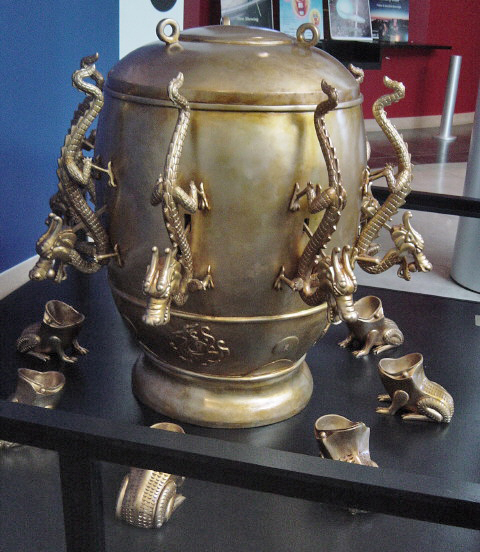
The instrument is credited in the record with detecting an earthquake in February of the year 138 at a distance of about 600 kilometers from Luoyang, then the capital of China. Interest in Zhang Heng's work and in replications of his seismoscope revived with the rise of the science of seismology in the late nineteenth century. The Didong Yi was first reconstructed by a Japanese scholar in 1875, and a widely known model was redesigned by the Chinese museum researcher Wang Zhenduo in 1951 for display. None of the older replicas could detect an earthquake, and scholars disagree about the exact scientific principles described in the ancient texts.
4. Nineteenth-Century Development
By the close of the eighteenth century, Ascanio Filomarino had already constructed a mechanical seismograph capable of recording the amplitude of seismic waves, the incoming direction of an earthquake and its starting time.
Luigi Palmieri, who lived from 1807 to 1896, was appointed Director of the Vesuvius Observatory in 1855, and in that same year designed a seismograph composed of several U-shaped tubes filled with mercury, each oriented toward a different point of the compass. He went on to realize the first model of an electromagnetic seismograph. The uninterrupted use of his electromagnetic seismograph at the observatory marked the first step toward geophysical surveillance of the Mt.
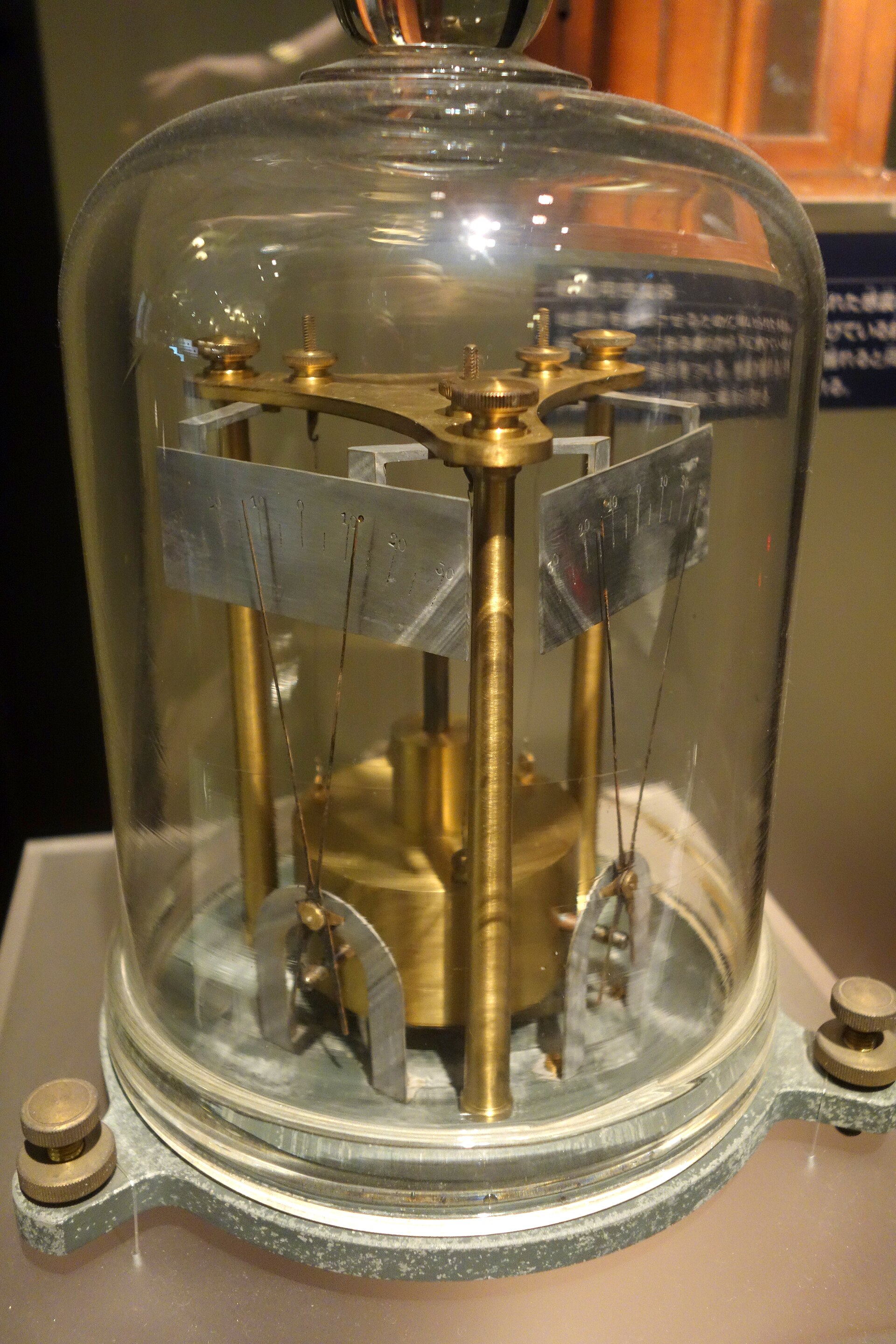
Italian seismologists regard the first true seismograph as the instrument created in 1875 by the physicist Filippo Cecchi, which recorded the relative motion of pendulums with respect to the ground as a function of time.
5. John Milne and the First Worldwide Networks
John Milne had his first experience of an earthquake on the night of his arrival in Tokyo, and he came to devote the greater part of his time to the subject with the co-operation of the Japanese government.
Milne designed one of the first reliable seismographs and travelled widely in Japan to set up 968 seismological stations for a survey of the country's earthquakes.
The Kew Observatory instrument was one of the first devices in the worldwide network of horizontal-pendulum seismographs established from 1897 by Milne and the British Association.
This horizontal pendulum design detected small vibrations from distant earthquakes, and observations from similar instruments in different locations could be compared in order to determine earthquake epicentres and reveal the interior structure of the Earth.
6. National Networks and Observatories
After the British Association for the Advancement of Science suggested it, the Government of Canada established seismograph stations in eastern and western Canada, purchasing two Milne seismographs; the instrument installed at Toronto in September of 1897 became the first to record continuously in Canada. The second Milne instrument was serial number ten of the original group of its design and began operations in Victoria, British Columbia on January 1 of 1899, recording on paper moving at 250 mm per hour. In 1905 responsibility for seismological observations in Canada passed to the newly created Dominion Observatory, and in January of 1906 a pair of Bosch-Omori photographic seismographs began operation in Ottawa and captured the great San Francisco earthquake of that year. Until 1927 stations in Canada could only detect large distant earthquakes, with weaker events of magnitude under 5 1/2 beyond their reach.
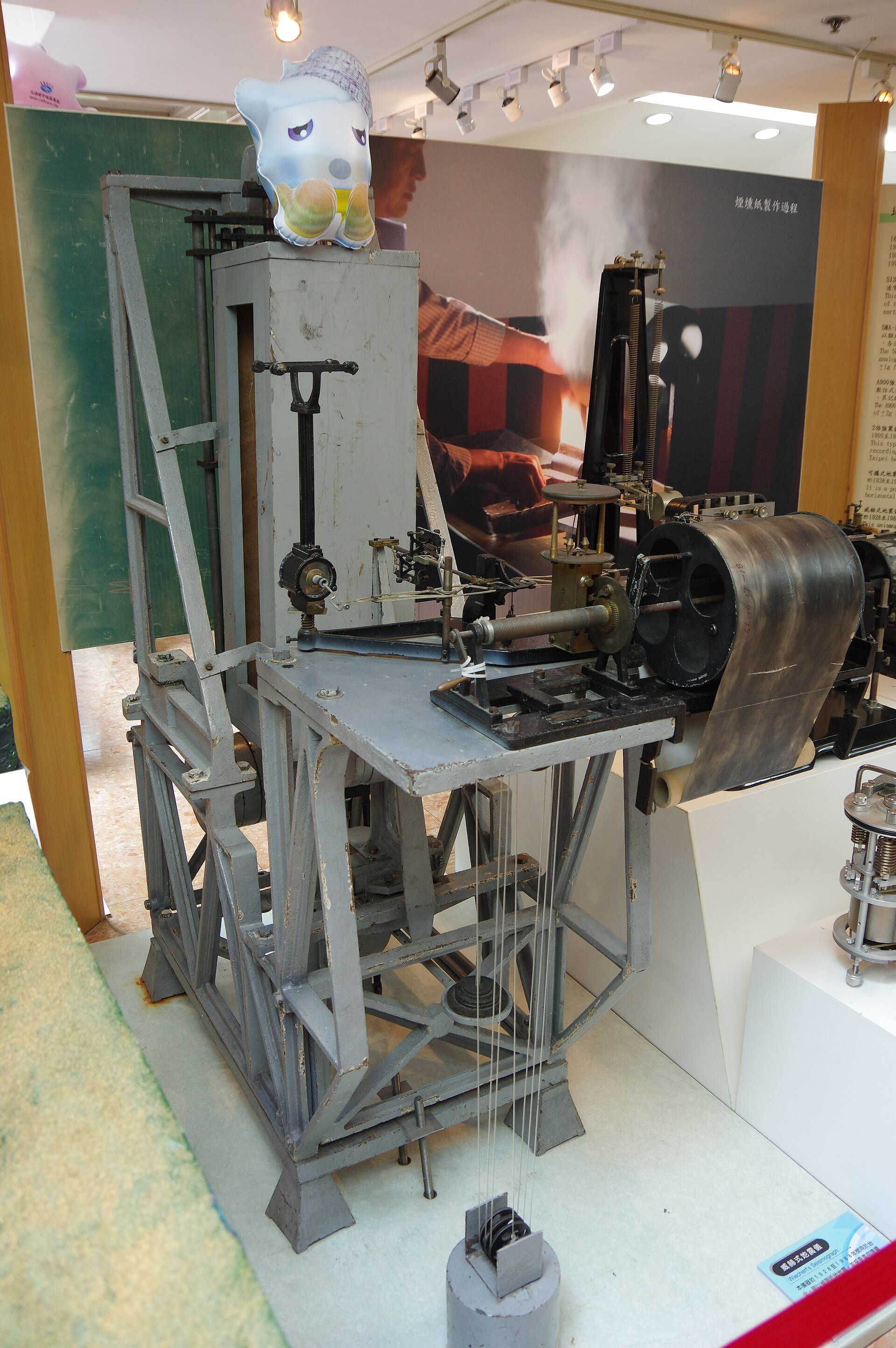
Switzerland is the first country to establish an official and permanent organisation for monitoring earthquakes, followed by Japan and Italy. The Erdbebenkommission, the Swiss earthquake commission, was established in 1878 at the annual meeting of the Swiss Society of Nature Sciences in Bern. On 1 April 1914 the Swiss seismic service, from then on known as the Swiss Seismological Service, became an official institution instead of a task manned by volunteers. The first Swiss earthquake surveillance station opened at Degenried in 1911 with a Mainka horizontal seismometer and a Wiechert vertical seismometer, and in 1922 a universal seismometer developed by Alfred De Quervain and August Piccard and weighing 21 tonnes began operation at the Degenried station near Zurich.
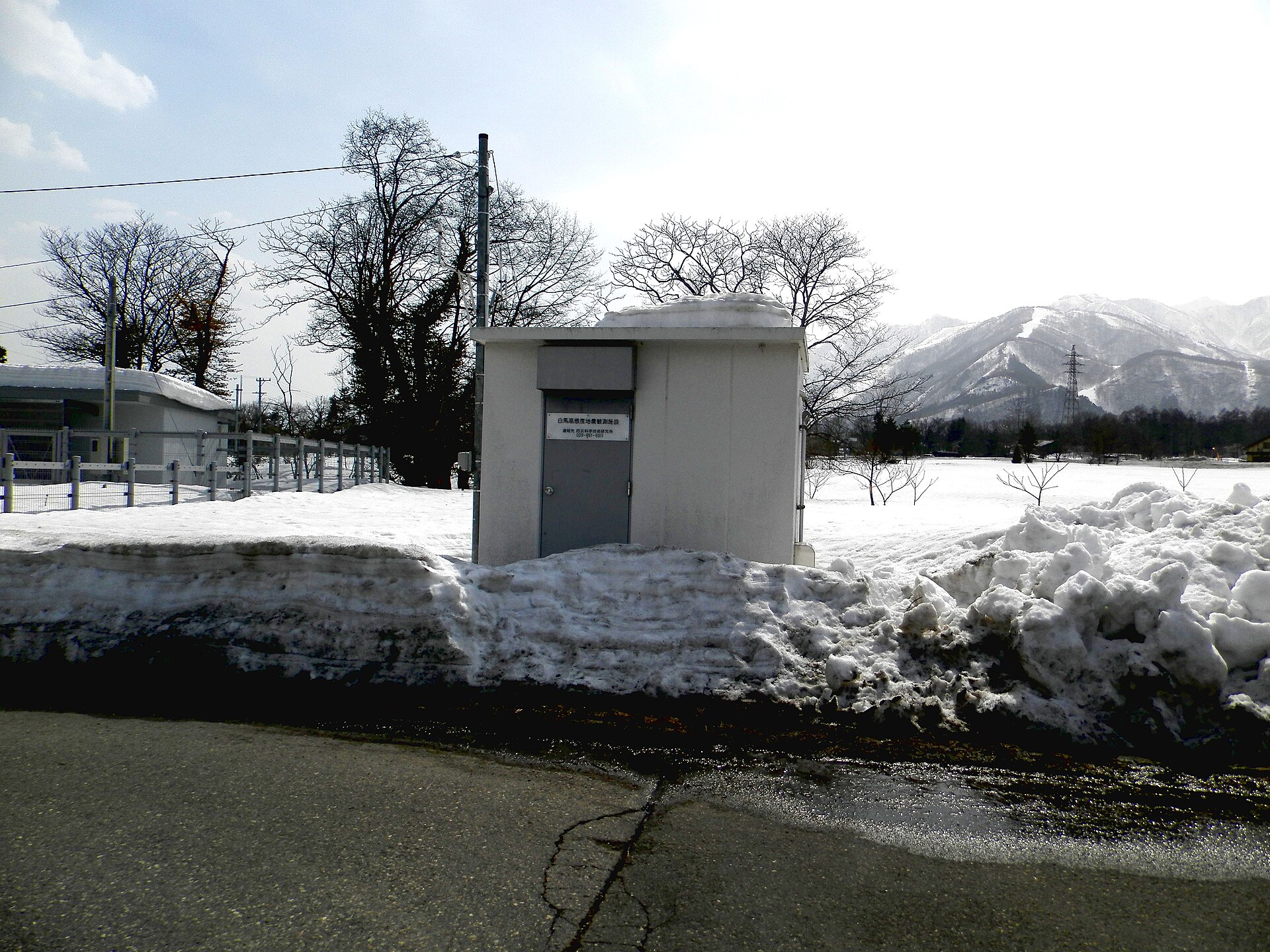
More than 20 metric tons of the old universal seismograph were turned into 13 kilograms in the digital broadband network, whose instruments record signals ten thousand times smaller. The modern Swiss national seismic network encompasses more than 200 stations whose data are transmitted in real time instead of being collected station by station.
7. The Caltech Seismo Lab and Magnitude Scales
The Seismo Lab was founded in 1921 by the prominent seismologist Harry Wood, and it reached its centennial milestone a century later. Charles Richter joined the staff in 1927. Beno Gutenberg joined Caltech in 1930 and in 1946 became the director of the lab. In 1937 the Seismo Lab, its programs and most of its personnel were transferred from the Carnegie Institution to Caltech. The Seismo Lab and the United States Geological Survey began a cooperative program that developed into the Southern California Seismic Network.
Wood worked with the Mount Wilson Observatory astronomer John Anderson to develop the Wood-Anderson torsion seismometer, originally completed in 1922 and destined to become the standard for the field with examples in use to this day.
Hugo Benioff constructed advanced instruments for detecting seismic waves, including the Benioff seismograph in 1932 and a strain instrument for detecting the stretching of the Earth. The Valdivia quake allowed Benioff, Press and Stewart Smith to observe and measure the so-called free oscillation, the ringing of the Earth, for the first time.
The Richter magnitude scale was developed in 1935 by Charles F. Richter of the California Institute of Technology as a mathematical device to compare the size of earthquakes. Richter's original definition held only for California earthquakes occurring within 600 km of a particular type of seismograph, the Wood-Anderson torsion instrument. The moment magnitude scale, which replaced the Richter scale as the world standard, was developed in 1979 by Thomas Hanks of the USGS and Hiroo Kanamori of Caltech and is based on seismic moment. The seismic moment is the product of the rigidity of the rock, the area of the fault that slipped and the distance the fault moved, so stronger rock or a larger rupture produces a larger magnitude.
In 1977 the federal government launched the National Earthquake Hazards Reduction Program, making the USGS the lead agency for federal seismic monitoring.
8. The World-Wide Standardized Seismograph Network
From 1961 to 1996 the Albuquerque Seismological Laboratory installed and operated the World-Wide Standardized Seismograph Network. Each station of the network carried three Benioff short-period sensors and three Sprengnether Press-Ewing long-period sensors along with recording, timing and calibration equipment.
Approximately 3.7 million single-day record film chips covering the period from 1962 to 1978 were created from the station records. Two almost complete copies of the film chips still exist, at the Albuquerque Seismological Laboratory and at the Lamont-Doherty Earth Observatory.
9. Planetary Seismology
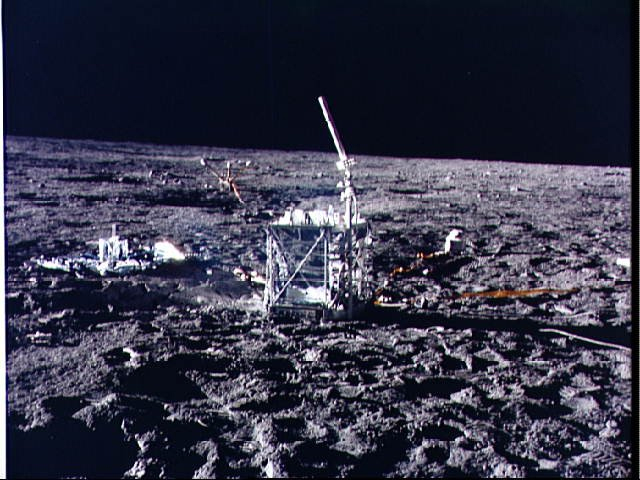
The seismometer left on the Moon by Apollo 11 returned data for just three weeks, yet in that span it recorded moonquakes and traced how seismic waves travel through the lunar body, giving the first detailed view of the Moon's internal structure. Through the 340-hour lunar night, when temperatures can plummet to minus 170 degrees Celsius, a radioisotope heater kept the instrument above minus 54 degrees — the first major use of nuclear energy in a NASA manned mission. More advanced seismometers deployed at four further Apollo landing sites transmitted until September of 1977, and each measured all three components of ground displacement.
On Mars, the seismometer SEIS was a round, dome-shaped instrument that sat on the Martian surface and took the planet's pulse. A suite of wind, pressure, temperature and magnetic field sensors helped fine-tune the seismometer's measurements of surface vibrations generated by dust storms and dust devils.
10. Reading a Seismogram: Waves, Location and Measurement
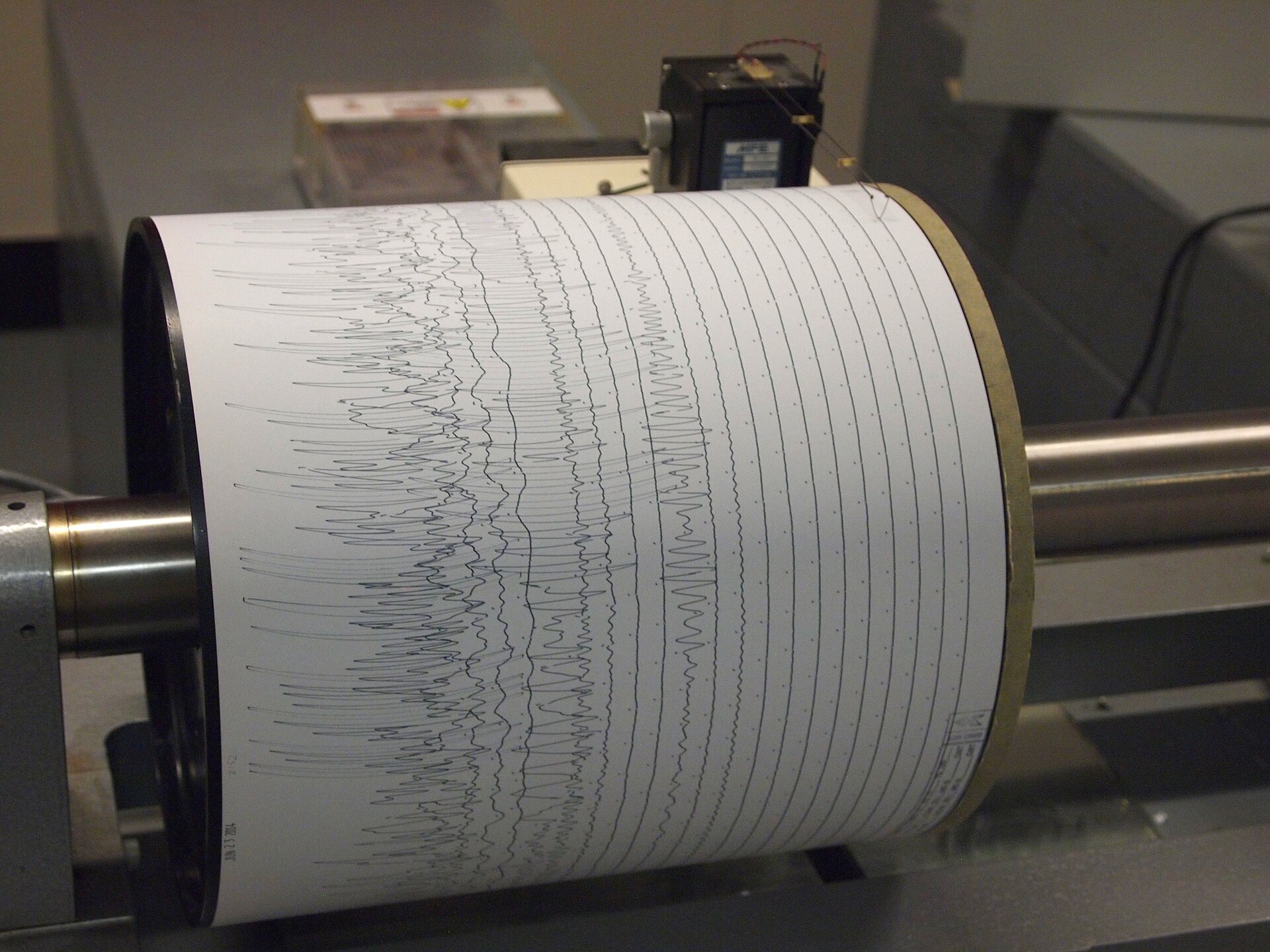
A seismogram is the record of the ground motions produced by seismic waves, set down by the seismograph or seismometer. Among the waves it captures are S-waves, transverse waves whose motion is perpendicular to the direction of travel and which are slower than P-waves. Because S-waves do not travel through fluids, they do not exist in the Earth's liquid outer core.
The record also serves as the basis for locating an earthquake. The time difference between the arrivals of the P- and S-waves at a seismometer determines the distance of the earthquake from that station. Once the distance is known from three stations, circles drawn around each station intersect at the location of the earthquake.
Intensity and magnitude describe different things. Intensity is a qualitative measure of the strength of shaking, determined from the observed effects on people, objects and buildings. Earthquake magnitude is a measure of the energy released, estimated from the amplitude of ground motion, and it does not depend on distance from the epicentre. Magnitude scales are logarithmic: each whole number increase represents a tenfold increase in the measured amplitude, while in energy terms it corresponds to about 32 times more energy release.
The Modified Mercalli Intensity Scale currently used in the United States was developed in 1931 by the American seismologists Harry Wood and Frank Neumann and has 12 increasing levels of intensity designated by Roman numerals.
11. Seismology and the Earth's Interior
Inge Lehmann trained in mathematics at Copenhagen and Cambridge and analysed how energy from earthquakes travels through the Earth. While studying a large New Zealand earthquake of 1929 she noticed seismic waves appearing in unexpected locations, as if deflected off a boundary in the Earth's core. In 1936 she proposed that the Earth's core has two parts, a solid metal inner core surrounded by a liquid outer core, overturning the accepted theory of an entirely liquid core.
12. Modern Instruments and Public Monitoring
The Raspberry Shake classroom seismograph is based on the Raspberry Pi computer and integrates sensitive monitoring sensors with easy-to-use software.
13. Key Dates
-
132 CEZhang Heng seismoscopeZhang Heng's seismoscope is dated to this year.
-
138Recorded detection near LuoyangA detection near Luoyang was recorded.
-
1855Palmieri at Vesuvius ObservatoryLuigi Palmieri was appointed Director of the Vesuvius Observatory and realized the first model of electromagnetic seismograph.9Luigi Palmieri: first scientific bases for geophysical surveillance in Mt. Vesuvius area · Annals of Geophysics (Istituto Nazionale di Geofisica e Vulcanologia) ↗
-
1875Cecchi's seismograph, Milne's Tokyo professorship, Didong Yi reconstructionFilippo Cecchi produced the first true seismograph; Milne held a Tokyo professorship; the first reconstruction of the Didong Yi was made.
-
1878Swiss ErdbebenkommissionThe Swiss Erdbebenkommission was established.
-
1894Milne's return to EnglandMilne returned to England.
-
1897Milne–British Association worldwide network; Toronto Milne instrumentThe worldwide network of seismographs was established by Milne and the British Association; the Kew Observatory instrument was one of the first devices in it.12Horizontal pendulum seismograph designed by John Milne and operated at Kew Observatory (1939-385) · Science Museum Group Collection ↗
-
1899Victoria Milne instrumentThe Victoria Milne instrument was installed.
-
1905Dominion ObservatoryThe Dominion Observatory was founded.
-
1906Ottawa Bosch-Omori instruments; San Francisco earthquakeIn January a pair of Bosch-Omori photographic seismographs began operation in Ottawa and captured the great San Francisco earthquake of that year.20Early History of the Canadian Seismograph Network · Natural Resources Canada, Earthquakes Canada ↗
-
1911Degenried stationThe Degenried station was established.
-
1914Swiss Seismological ServiceThe Swiss Seismological Service was founded.
-
1921Founding of the Seismo LabThe Seismo Lab was founded.
-
1922Wood-Anderson torsion seismometer; De Quervain–Piccard universal seismometerThe Wood-Anderson torsion seismometer and the De Quervain–Piccard universal seismometer were introduced.
-
1927Richter joins the Seismo Lab; limit of Canadian detectionRichter joined the Seismo Lab; the limit of Canadian detection was reached.
-
1930Gutenberg joins CaltechGutenberg joined Caltech.
-
1931Modified Mercalli scaleThe Modified Mercalli scale was introduced.
-
1932Benioff seismographThe Benioff seismograph was developed.
-
1935Richter scaleThe Richter scale was introduced.
-
1936Lehmann's two-part coreLehmann proposed the two-part core.
-
1937Transfer of the Seismo Lab to CaltechThe Seismo Lab was transferred to Caltech.
-
1946Gutenberg becomes directorGutenberg became director.
-
1951Wang Zhenduo modelWang Zhenduo produced a model.
-
1961–1996WWSSNThe WWSSN operated during this period.
-
1977National Earthquake Hazards Reduction ProgramThe National Earthquake Hazards Reduction Program was established.
-
1979Moment magnitude scaleThe moment magnitude scale was introduced.
14. Timeline: from the Han seismoscope to planetary seismology
- about 132 CEZhang Heng's seismoscopeThe Chinese scholar Zhang Heng invented an early seismic instrument, the seismoscope, which made no time record of ground oscillations but indicated that shaking had occurred.
- the year 138A distant earthquake detectedThe device is recorded as detecting an earthquake in February of the year 138 about 600 kilometers away from Luoyang, then the capital of China.
- 1840The Comrie seismometerAfter a series of earthquakes struck near Perthshire, Scotland, in 1839, a seismometer with an inverted pendulum was installed near Comrie in 1840.
- 1855Palmieri's mercury seismographThe Italian scientist Luigi Palmieri designed a seismograph of U-shaped mercury tubes whose electrical contacts stopped a clock and started a recording drum, indicating time, relative intensity and duration.
- 1875Milne appointed in TokyoJohn Milne accepted the position of professor of geology and mining at the Imperial College of Engineering in Tokyo, beginning the Japanese chapter of his career.
- 1880The Seismological Society of JapanAfter a severe earthquake at Yokohama near Tokyo, James Alfred Ewing, Thomas Gray and John Milne organized the Seismological Society of Japan, under whose auspices various forerunners of today's seismograph were invented.
- September of 1897Canada's first recording stationTwo Milne seismographs were purchased for Canada, and the first, installed at Toronto in September of 1897, became the first instrument to record continuously in the country.
- 1897A worldwide network of Milne seismographsInstruments of Milne's horizontal pendulum design were installed at observatories around the world, and the Kew Observatory instrument was one of the first devices of the network established from 1897.
- 1898The Kew Observatory instrumentThe Milne horizontal pendulum seismograph began a long run at Kew Observatory, operating there until 1925, when it was retired in favour of more sensitive Golitsyn seismographs.
- 1 April 1914Switzerland's official seismic serviceWith the entry into force of the federal act, the Swiss seismic service changed from a task manned by volunteers into an official institution, the Swiss Seismological Service.
- 1922The Wood-Anderson torsion seismometerThe Wood-Anderson torsion seismometer, developed by Harry Wood and John Anderson, was completed and became the standard instrument for recording local earthquakes.
- 1932A six-station network in southern CaliforniaBy 1932 six instruments of the Seismo Lab's southern California network were in place and the routine publication of a station bulletin had begun.
- 1935The Richter scaleCharles F. Richter of the California Institute of Technology introduced the concept of earthquake magnitude, and the scale became the world standard for measuring the size of earthquakes.
- 1960The Earth rings like a bellThe Valdivia earthquake allowed Benioff, Press and Stewart Smith to observe and measure the free oscillation of the Earth for the first time.
- 25 August 1969The Apollo 11 seismometer falls silentThe seismic package deployed on the Moon by Apollo 11 stopped responding at 0400 UT after returning data for just three weeks, probably overheating in the midday sun.
- 1977Federal earthquake monitoring in the United StatesThe federal government launched the National Earthquake Hazards Reduction Program, making the USGS the lead agency for federal seismic monitoring.
15. Frequently asked questions
What is the difference between a seismograph and a seismometer?
The two terms are often used interchangeably, but only a seismograph possesses the capacity to record the phenomena it detects 1Seismograph | Definition & Facts · Encyclopaedia Britannica ↗.
How does a seismometer actually sense ground motion?
Almost all seismometers are based on the principle of inertia, where a suspended mass tends to remain still when the ground moves 4How are earthquakes detected, located and measured? · British Geological Survey ↗. The relative motion between the boom and the mass is proportional to the shaking and generates a tiny electric current that the seismograph converts into a seismogram 2Seismometers · IRIS / NSF SAGE (EarthScope Consortium) ↗.
What did the Apollo 11 seismometer achieve on the Moon?
The Apollo 11 seismic experiment detected moonquakes and studied the propagation of seismic waves through the Moon, providing the first detailed look at the Moon's internal structure 17Apollo 11 Seismic Experiment · NASA Science ↗. Four seismometers were deployed — three long-period and one short-period vertical — and returned data for three weeks 17.
How much power and data did the InSight seismometer SEIS require?
SEIS operated on up to 8.5 watts of power and returned as much as 38 megabits of data per day 18InSight Science Instruments · NASA Science ↗.
References (22)
- 1Seismograph | Definition & Facts — Encyclopaedia Britannica Web↩View source
- 2Seismometers — IRIS / NSF SAGE (EarthScope Consortium) Web↩View source
- 3How we record earthquakes — Natural Resources Canada, Earthquakes Canada WebView source
- 4How are earthquakes detected, located and measured? — British Geological Survey Web↩View source
- 5The Science of Earthquakes — U.S. Geological Survey WebView source
- 6Zhang Heng | Inventor, Scientist, Engineer — Encyclopaedia Britannica WebView source
- 7Chinese Seismoscope (replica), PH.321329 — National Museum of American History, Smithsonian Institution WebView source
- 8China Resurrects World's Earliest Seismograph — China.org.cn (Xinhua News Agency) WebView source
- 9Luigi Palmieri: first scientific bases for geophysical surveillance in Mt. Vesuvius area — Annals of Geophysics (Istituto Nazionale di Geofisica e Vulcanologia) Web↩View source
- 10Milne, John (Dictionary of National Biography, 1927 supplement) — Wikisource (Oxford University Press DNB) 1927 BookView source
- 11John Milne | Seismologist, Geologist, Inventor — Encyclopaedia Britannica WebView source
- 12Horizontal pendulum seismograph designed by John Milne and operated at Kew Observatory (1939-385) — Science Museum Group Collection 1939 Web↩View source
- 13Caltech's Seismo Lab Celebrates 100 Years at the Forefront of Earthquake Science — California Institute of Technology, Division of Geological and Planetary Sciences WebView source
- 14The Severity of an Earthquake — U.S. Geological Survey WebView source
- 15Earthquake Magnitude, Energy Release, and Shaking Intensity — U.S. Geological Survey WebView source
- 16The Albuquerque Seismological Lab WWSSN film chip preservation project — U.S. Geological Survey Publications Warehouse (Seismological Research Letters) WebView source
- 17Apollo 11 Seismic Experiment — NASA Science Web↩View source
- 18InSight Science Instruments — NASA Science Web↩View source
- 19Inge Lehmann — Oxford University Museum of Natural History BookView source
- 20Early History of the Canadian Seismograph Network — Natural Resources Canada, Earthquakes Canada Web↩View source
- 21History of the Swiss Seismological Service — Swiss Seismological Service (SED), ETH Zurich WebView source
- 22A Brief History of the Seismo Lab — Seismological Laboratory, California Institute of Technology WebView source
 Isaac Newton
 Genghis Khan
 The Cold War