Water Clock
The clepsydra from Egyptian temple bowls and the Karnak clepsydra to Ctesibius, the Chinese clock towers of Zhang Heng and Su Song, and al-Jazari's automata.
A water clock, or clepsydra, measures time by the regulated flow of water into or out of a vessel. Known in Egypt by the New Kingdom and described by Vitruvius, the device was refined into float-driven dials in the Greek and Roman world, into great water-driven astronomical clock towers in China, and into al-Jazari's elephant and castle clocks in the Islamic world. Its accuracy was always limited by the physics of falling water, which later mechanical clocks overcame.
In this article
- 1Overview
- 2Etymology and Naming
- 3Operating Principle and Design
- 4Egyptian Origins and the Karnak Clock
- 5Greek and Roman Development
- 6The Klepsydra in Athenian Law and Civic Life
- 7Public Clocks of the Greek World
- 8Chinese Water Clocks and Su Song's Tower
- 9Islamic Automaton Clocks: al-Jazari
- 10Later Use, Decline and Legacy
- 11Key Dates
- 12Frequently Asked Questions
- 13Timeline: from Egyptian temples to al-Jazari
- 14Knowledge graph
Overview
A clepsydra is an ancient device for measuring time by the gradual flow of water. The Greeks named such vessels clepsydras, or water thieves, a term drawn from the Greek kleptein, to steal, and hydor, water. Water clocks were among the earliest timekeepers that did not depend on observing celestial bodies.
1. Etymology and Naming
The Greek word klepsydra is formed from the terms for thief and water, and the device is accordingly rendered as a thief of water.
2. Operating Principle and Design
A water clock depends on a force that acts constantly and continuously over long periods, and in most designs that force is gravity. The simplest form is the outflow type: a vessel discharges water slowly and steadily, and lines marked on the interior register the passage of time. In the inflow type the upper vessel is kept constantly filled so that the level, and therefore the drain rate, stays constant, while a float in the lower vessel can drive a geared mechanism that displays the time on a dial. More sophisticated clocks poured water in and raised a floating drum that turned a cog, whose regulated movement could be measured.
The principal drawback of the device is that the flow rate decreases as the depth of water in the vessel decreases, which makes the remaining level an unreliable indicator of time. Because the rate of flow is very difficult to control accurately, a water clock could never achieve excellent accuracy. The rate of drainage also varies with temperature and humidity, and in cold climates the water could freeze, which limited the utility of water clocks in northern Europe.
3. Egyptian Origins and the Karnak Clock
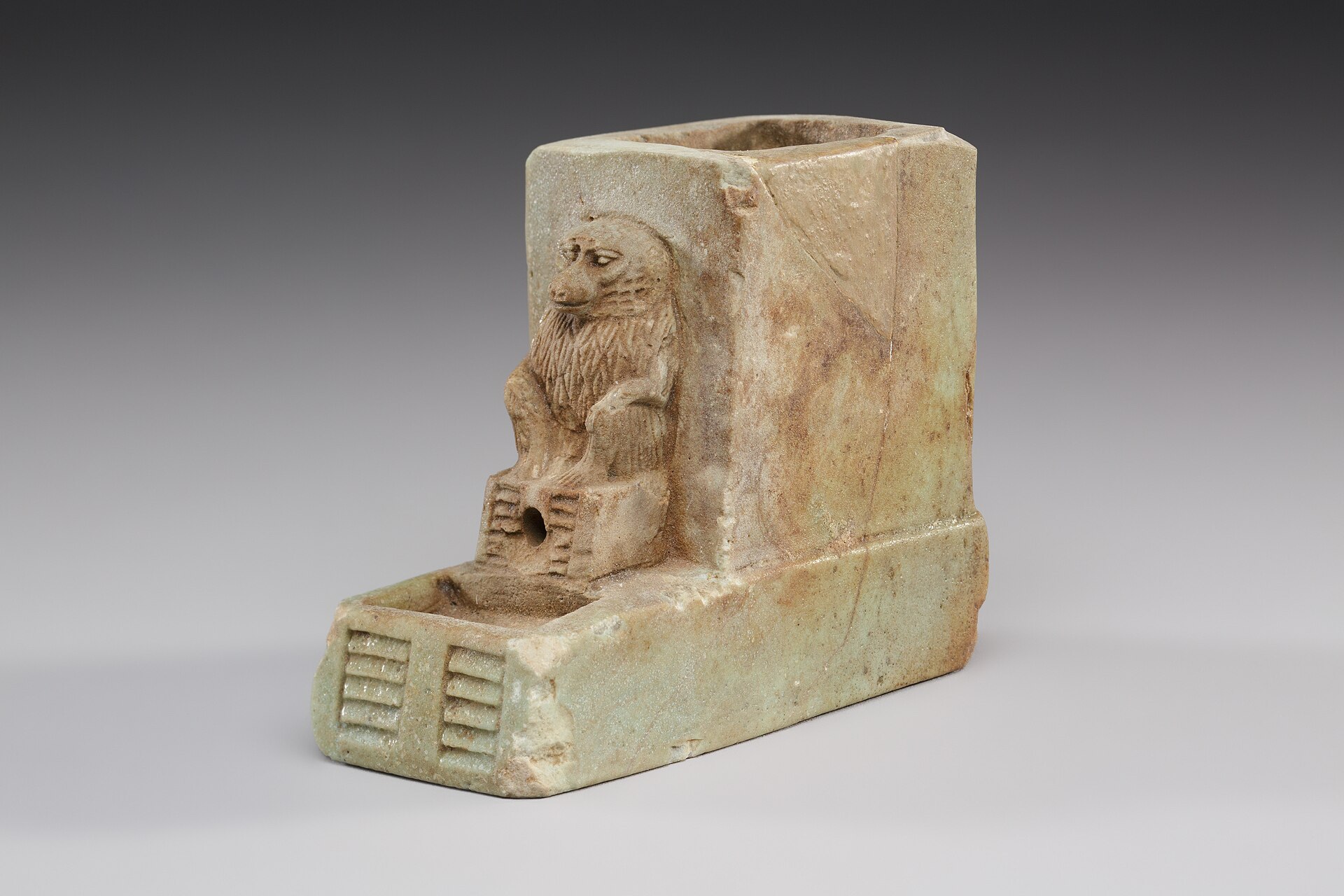
Water clocks served as timekeeping instruments in ancient Egypt from at least the New Kingdom until the end of pharaonic history. The invention and establishment of the water clock in Egypt seems at first glance to be one of the best-documented developments in the history of ancient technology. Three-dimensional scanning of the fragmentary Egyptian clocks is indispensable for investigating their development and the knowledge of fluid dynamics that existed around 1500 BCE.
A fragment of a basalt clepsydra in the British Museum carries the registration number EA938 and shows on its exterior surface Philip Arrhidaeus offering to the deities Min, Sekhmet and an unidentified goddess. A basalt fragment of an Egyptian clepsydra shown by the Institute for the Study of the Ancient World measures 34 cm high and 30 cm wide and dates to about 320 BCE. The Karnak clock inscribed for Amenhotep III, the best-preserved Egyptian example, is made of calcite (alabaster) or travertine and has an external height of 34.5 cm, an upper diameter of 46 cm and a lower diameter of 26 cm.
4. Greek and Roman Development
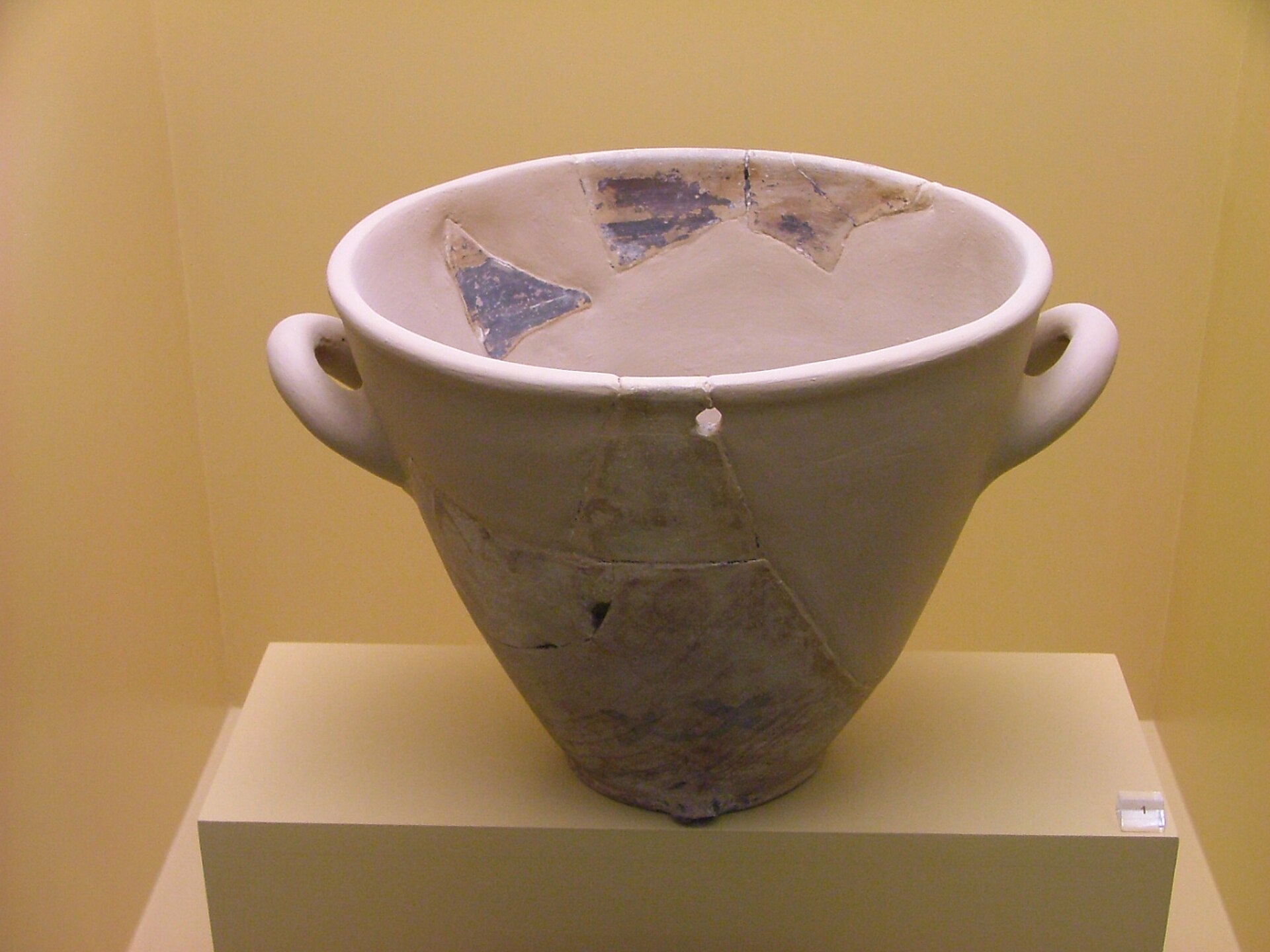
The Greeks named these vessels clepsydras, or water thieves, and began using them about 325 BCE; they were stone vessels with sloping sides letting water drip at a nearly constant rate from a small hole near the bottom. Other clepsydras were cylindrical or bowl-shaped containers designed to fill slowly with water entering at a constant rate and marked inside to measure the passage of hours. Simple outflow klepsydras were known on a small scale as early as the 14th century BCE, and Vitruvius does not credit Ctesibius with their invention.
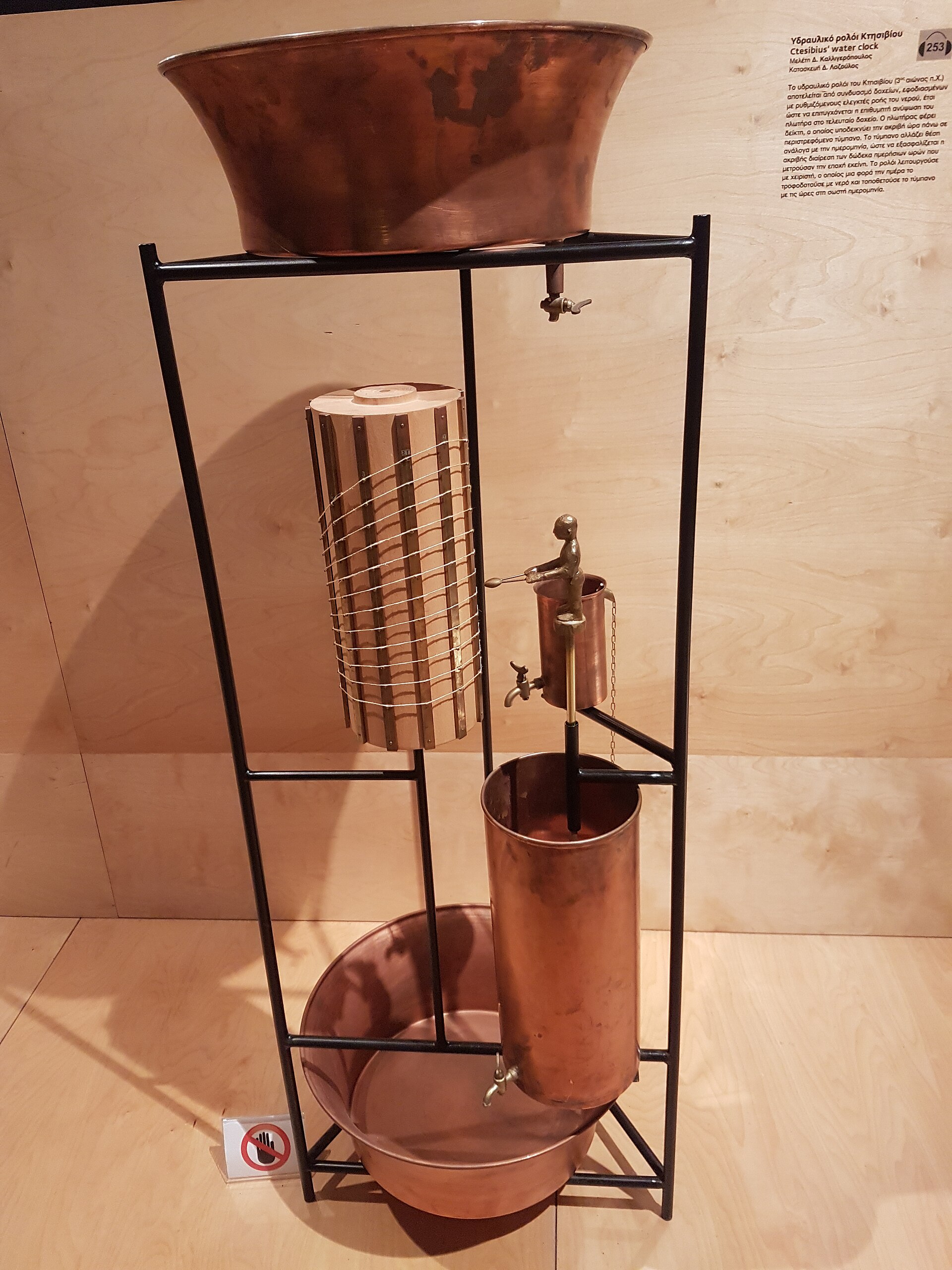
Ctesibius of Alexandria was the first to investigate the properties of the wind and of pneumatic power, applying his discovery of compressed air to hydraulic machines, to automata driven by enclosed water, and above all to water dials. In his water dial water flows evenly through a small perforation and raises an inverted bowl called the phellos or tympanum, connected to a rule and toothed drum wheels producing measured motion; hours are marked on columns or pillars, and a figure holding a wand rises from below to point at them through the day. The flow was regulated by a pair of fitted cones, one convex and one concave, which a rod drew together or apart to increase or diminish the stream. The first sophisticated water clocks are attributed to Ctesibius around 280 BCE, while Archimedes is credited with improving their accuracy.
The anaphoric dial turns a wheel painted with the zodiac, driven by a pliable brass chain carrying a phellos raised by water at one end and a counterpoise of sand at the other; as the phellos rises, the falling sand counterpoise turns the axis and the zodiac wheel, adjusting the hours to the seasons. At the winter solstice the tongue of the dial bears the full weight of the running water, so it passes with great velocity and the hours are shortened. The Romans invented a clepsydra made of a cylinder into which water dripped from a reservoir, with a float giving readings against a scale on the cylinder wall; siphons made such designs more accurate. More elaborate mechanized water clocks were developed between 100 BCE and 500 CE by Greek and Roman horologists and astronomers; some rang bells and gongs, others opened doors and windows to show little figures of people, or moved pointers, dials and astrological models of the universe.
5. The Klepsydra in Athenian Law and Civic Life
In the Athenian law courts a water clock known as the klepsydra fixed how long a single speech could last, about six minutes. The klepsydra was commonly used in the Athenian law courts from the end of the fifth century until at least the end of the fourth century BCE.
In suits involving sums from one thousand to five thousand drachmas the rebuttal speech received two measures of water, while the main argument was allowed seven.
6. Public Clocks of the Greek World
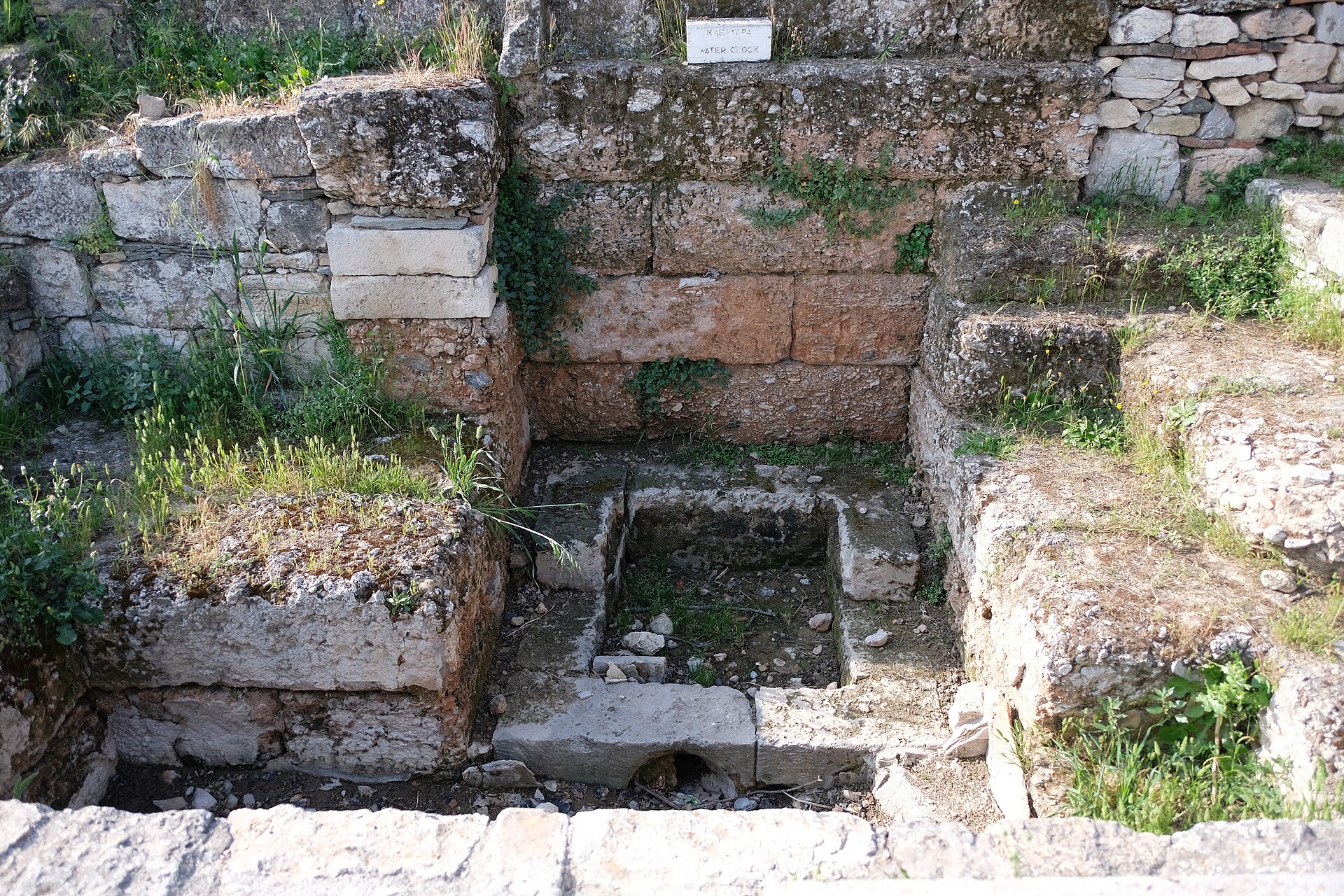
Large public water clocks often measured a whole day, such as the clock in the 4th-century BCE agora of Athens, which held 1000 litres of water. The Agora water clock was built at the end of the 4th century BCE as a monumental outflow klepsydra, best understood by comparison with the better-preserved example at Oropos.
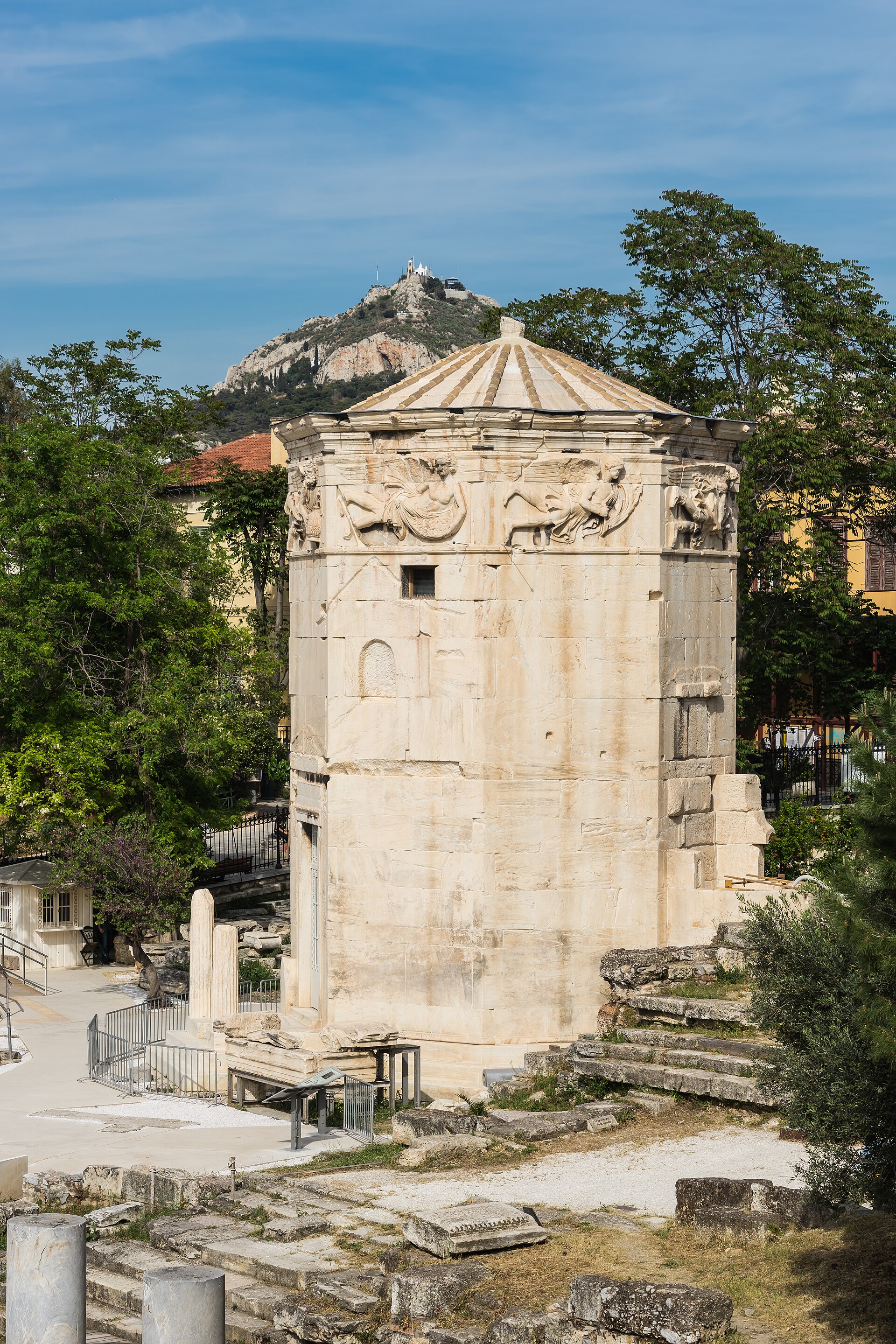
The Tower of the Winds in Athens, built by Andronicus in the 2nd century BCE, contained a large water clock in addition to nine sundials on its outer walls.
7. Chinese Water Clocks and Su Song's Tower
The stairstep water clocks developed in China around 200 BCE consisted of identical bowls arranged in a series of steps, an arrangement that maintained a nearly constant flow rate and a more uniform measure of time. Under the Han dynasty Chinese rulers sought advances in science and technology, and the Han used water clocks and sundials alongside paper and the seismograph.
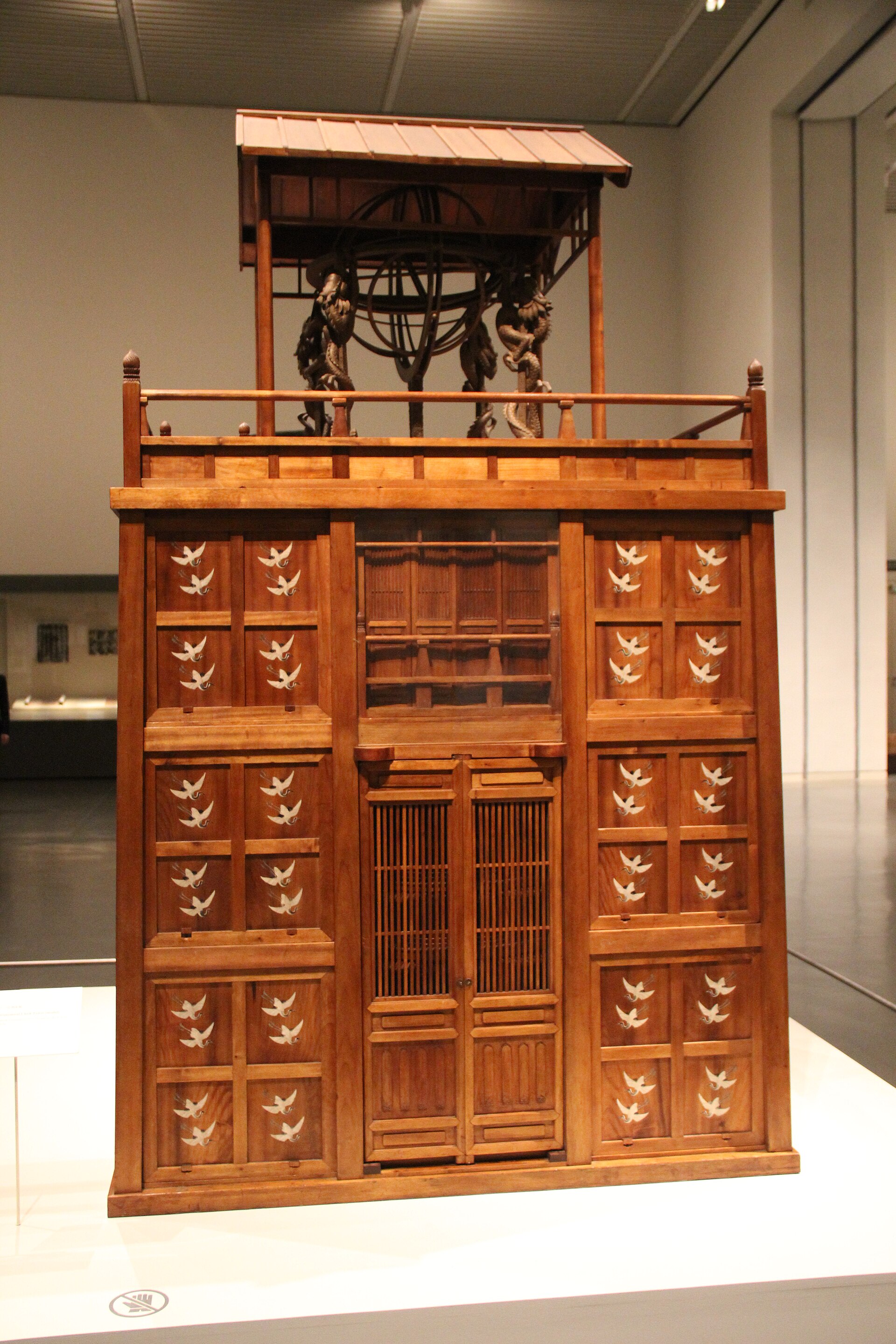
Su Song's tower housed an armillary sphere, a celestial globe and an ensemble of wheels with figurines that gave aural and visual indications of the time of day, all driven by a water-powered large gear wheel.
8. Islamic Automaton Clocks: al-Jazari
Al-Jazari is remembered above all for his automaton designs, among them water-operated automatons, and for the Book of the Knowledge of Ingenious Mechanical Devices. A folio of that book showing the Elephant Clock is held in the Metropolitan Museum of Art, which dates it to the year 1315 CE.
In the elephant clock, every half hour the bird on the dome whistled, the man below dropped a ball into the dragon's mouth, and the driver hit the elephant with his goad.
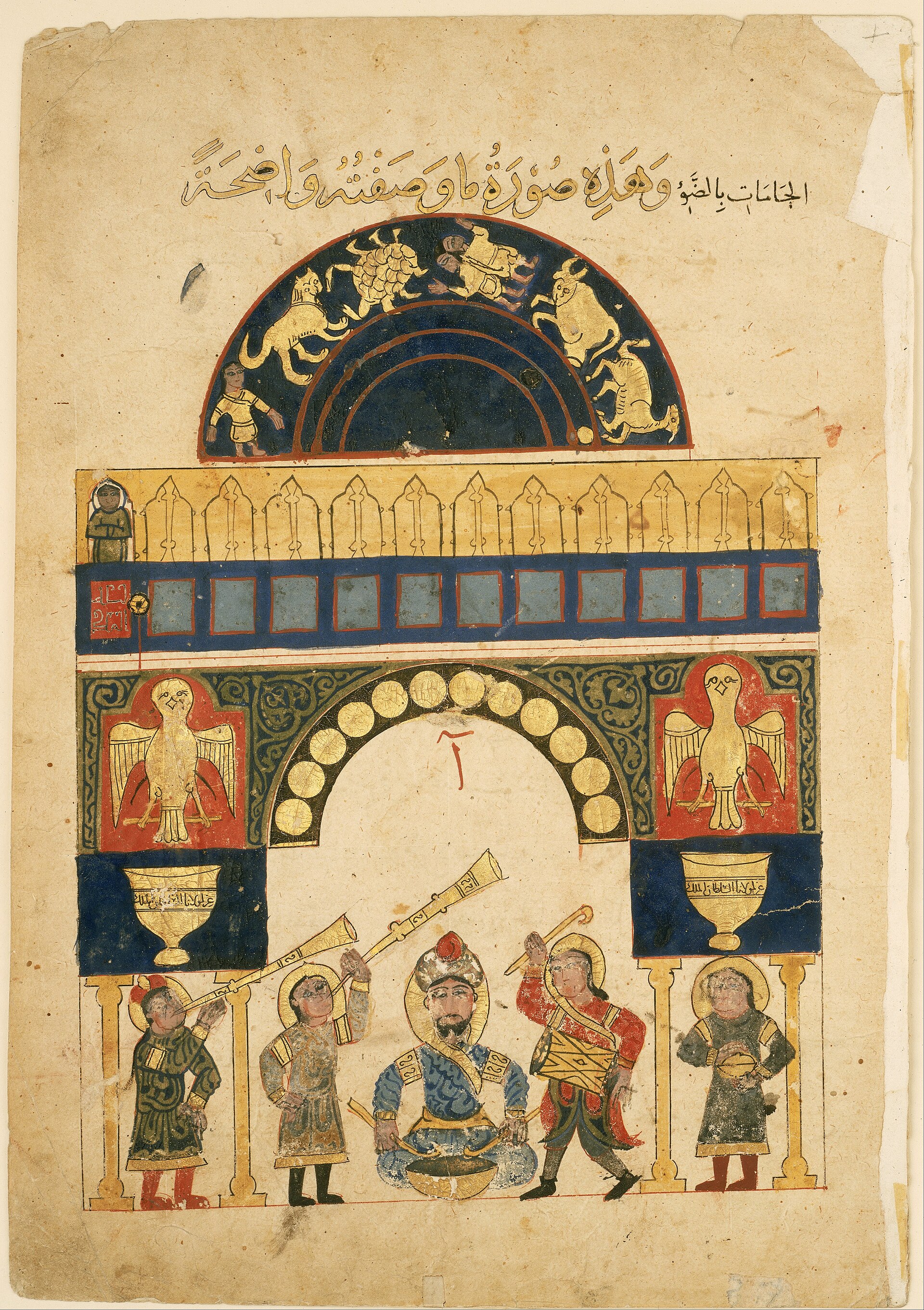
In al-Jazari's Castle Clock a ball drops from the falcons' beaks into the vases, small doors open and close, a moon moves across the face, and musicians play every hour.
9. Later Use, Decline and Legacy
Medieval doctors used clepsydras to determine their patients' pulse rates, and the devices remained in service as late as the 16th century, when astronomers such as Tycho Brahe and Galileo employed them.
Working replicas of the giant Elephant Water Clock and the Castle Clock of al-Jazari are displayed in the technology gallery of the Museum of Science and Technology in Islam at KAUST. The Science Museum's scale model of Su Song's water-balance escapement was made by the museum workshops in 1965 and is listed among the museum's time measurement objects.
10. Key Dates
-
about 1550–1069 BCEEarliest preserved Egyptian water clocksThe earliest preserved water clocks in Egypt date to the New Kingdom.17Measuring time: hours · Digital Egypt for Universities, University College London ↗
-
14th century BCECompensating vessel designEgyptian specimens used a vessel with a smaller cross-sectional area at the bottom, which partly compensated for the decreased flow of water.1Clepsydra · Encyclopaedia Britannica ↗
-
end of the 4th century BCEAgora water clockThe Agora water clock was built as a monumental outflow klepsydra, best understood by comparison with the better-preserved example at Oropos.11Notes on a Water Clock in the Athenian Agora · American School of Classical Studies at Athens (Hesperia) ↗
11. Frequently Asked Questions
Where can working replicas of al-Jazari's clocks be seen?
Working replicas of the giant Elephant Water Clock and the Castle Clock of al-Jazari are displayed in the technology gallery of the Museum of Science and Technology in Islam at KAUST.15Technology cluster · Museum of Science and Technology in Islam, KAUST ↗
Where is the best-preserved Egyptian water clock?
It was found in a burial cachette in the court of the seventh pylon at Karnak, and it carries catalogue number JE 37525.5Water Clocks · Ancient Egyptian Astronomy database, McMaster University ↗
What does the name "clepsydra" literally mean?
The word is derived from the Greek words for thief and water, and the device is commonly translated as the thief of water.1
How much water did the water clock in the Athenian agora hold?
The Agora water clock had a capacity of about 6.4 litres, equal to two choes.10An Athenian Clepsydra · American School of Classical Studies at Athens (Hesperia) ↗
How tall was Su Song's clock tower and what drove it?
Su Song's tower, built in 1088 CE with a water-driven escapement invented about 725 CE, stood over 30 feet tall and carried an armillary sphere, a celestial globe and a panelled frontage.2A Walk Through Time — Early Clocks · National Institute of Standards and Technology (NIST) ↗
When did al-Jazari live and whom did he serve?
Al-Jazari lived from 1136 to 1206 and worked in the service of the Artuqid rulers.14The Elephant Clock, folio from a Book of the Knowledge of Ingenious Mechanical Devices by al-Jazari · Museum With No Frontiers (Discover Islamic Art) ↗
What was the latest documented use of a water clock?
Water clocks were still used to time irrigational flow in Algeria as late as the 20th century.1
12. Timeline: from Egyptian temples to al-Jazari
- c. 1600 BCEEarliest Egyptian water clocksWorld History Encyclopedia places the earliest Egyptian water clocks in use at about 1600 BCE.
- around 1500 BCEA water clock buried with Amenhotep IOne of the oldest known water clocks was found in the tomb of the Egyptian pharaoh Amenhotep I, buried around 1500 BCE.
- about 1400 BCELimestone klepsydra at KarnakA limestone outflow klepsydra found at the Karnak temple in Egypt dates to about 1400 BCE and has sloping sides that keep the rate of flow nearly even.
- 450 BCEFirst klepsydra used in AthensThe klepsydra, the water timekeeping device, came into use in Athens.
- around 280 BCECtesibius builds the first sophisticated water clockThe first sophisticated water clocks are attributed to Ctesibius around 280 BCE, and Archimedes is credited with improving their accuracy.
- around 200 BCEChinese stairstep water clocksThe stairstep water clocks developed in China around 200 BCE used identical bowls arranged in a series of steps to maintain a nearly constant flow rate.
- 159 BCEFirst water clock set up in RomeA water clock was set up in Rome during the second century BCE.
- 100 BCE to 500 CEAge of mechanized water clocksMore elaborate mechanized water clocks were developed between 100 BCE and 500 CE by Greek and Roman horologists and astronomers.
- 50 BCETower of the Winds built in AthensThe Tower of the Winds, with its large water clock and nine sundials, was constructed in Athens by Andronicus.
- about 725 CEWater-driven escapement inventedThe mechanism of the later Chinese clock tower incorporated a water-driven escapement invented about 725 CE.
- 1088 CESu Song's astronomical clock towerOne of the most elaborate clock towers was built by Su Sung and his associates in 1088 CE.
- 1136 to 1206Life of al-JazariAl-Jazari, the engineer whose Book of the Knowledge of Ingenious Mechanical Devices describes the elephant and castle clocks, is recorded as living from 1136 to 1206.
- around 1250A complex water clock at the French courtA more complex water clock device is depicted at the court in Paris around 1250.
- 1315 CEElephant clock folio copiedA folio of al-Jazari's Book showing the Elephant Clock, now in the Metropolitan Museum of Art, is dated to Hegira 715 or the year 1315.
- 20th centuryClepsydras timing irrigation in AlgeriaAs late as the 20th century clepsydras were used to time irrigational flow in Algeria.
References (17)
- 1Clepsydra — Encyclopaedia Britannica Web↩View source
- 2A Walk Through Time — Early Clocks — National Institute of Standards and Technology (NIST) Web↩View source
- 3Fragmentary Waterclock (Klepsydra) — Dickinson College Commentaries WebView source
- 4Water clocks — Cabinet, University of Oxford BookView source
- 5Water Clocks — Ancient Egyptian Astronomy database, McMaster University Web↩View source
- 6The Karnak Clepsydra and its Successors: Egypt's Contribution to the Invention of Time Measurement — Refubium, Freie Universität Berlin WebView source
- 7clepsydra (EA938) — The British Museum WebView source
- 8Fragment of Egyptian Clepsydra Representing Philip Arrhidaeus — Institute for the Study of the Ancient World, New York University WebView source
- 9Ancient Timekeeping — World History Encyclopedia WebView source
- 10An Athenian Clepsydra — American School of Classical Studies at Athens (Hesperia) Web↩View source
- 11Notes on a Water Clock in the Athenian Agora — American School of Classical Studies at Athens (Hesperia) Web↩View source
- 12Zhang Heng — MacTutor History of Mathematics Archive, University of St Andrews WebView source
- 13Astronomical Clock of Su Song (1020-1101) — Cabinet, University of Oxford BookView source
- 14The Elephant Clock, folio from a Book of the Knowledge of Ingenious Mechanical Devices by al-Jazari — Museum With No Frontiers (Discover Islamic Art) Book↩View source
- 15Technology cluster — Museum of Science and Technology in Islam, KAUST Web↩View source
- 16Scale model of Su Song's Water-Balance Escapement — Science Museum Group Collection WebView source
- 17Measuring time: hours — Digital Egypt for Universities, University College London Web↩View source