Gobi Desert
The great Asian desert and steppe of Mongolia and northern China — its climate, landforms, Silk Road history and its Cretaceous dinosaur fossils.
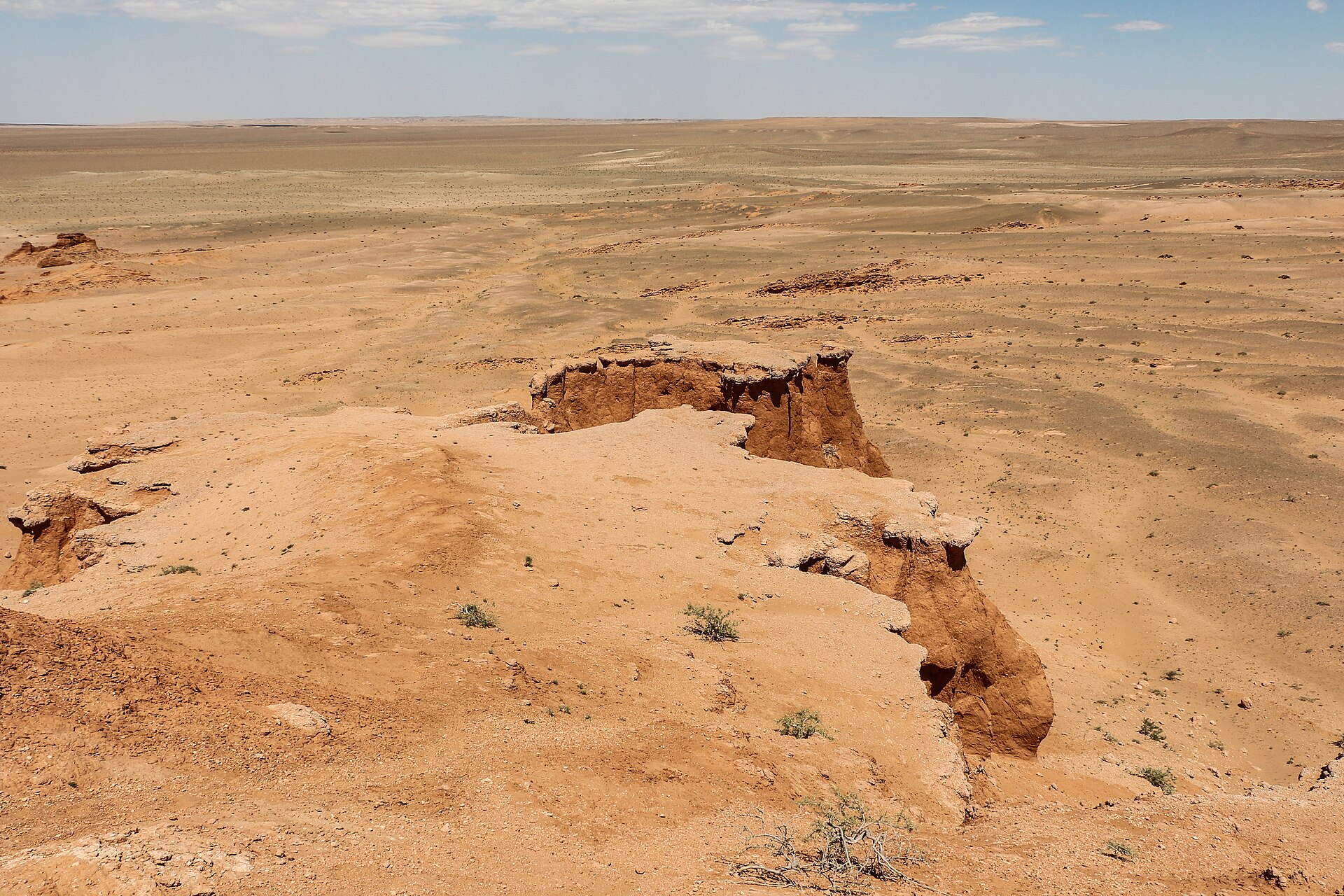
The Gobi is a vast desert and semi-desert region of East Asia covering about 1.3 million square kilometres across southern Mongolia and northern China, lying on a high plateau behind the Himalaya and Tibetan Plateau. Its basins preserve some of the world's richest Cretaceous dinosaur beds, including the Flaming Cliffs of Bayanzag where Protoceratops and Velociraptor were first found, and later spectacular specimens of oviraptorosaurs, alvarezsaurids, tyrannosaurs and azhdarchid pterosaurs. The desert also carries a long human history of Silk Road caravan towns, Mongol herding and modern mining, and its margins are a test case for desertification control.
In this article
- 1Overview
- 2Geography and Physical Setting
- 3Climate
- 4Human Use, Trade and Desertification
- 5Conservation and Wildlife
- 6Fossil Sites and Formations
- 7Dinosaurs of the Gobi
- 8Nemegt Basin Assemblage Data
- 9Fossil Preservation
- 10Timeline: from the first Gobi expeditions to recent dinosaur discoveries
- 11Knowledge graph
Overview
The Gobi is a cold desert and grassland region of southern Mongolia and northern China, and the sixth-largest desert on Earth. It extends across Mongolia and China and covers an area of 1,295,000 km2. Its name derives from a Mongolian word for dryland, while the borrowed Chinese term describes rocky semi-deserts rather than sandy ones.
1. Geography and Physical Setting
The Gobi stretches roughly 1,600 km from southwest to northeast and 800 km from north to south. Its surface lies on a plateau standing 910 to 1,520 m above sea level. That elevation tempers the air over the desert.
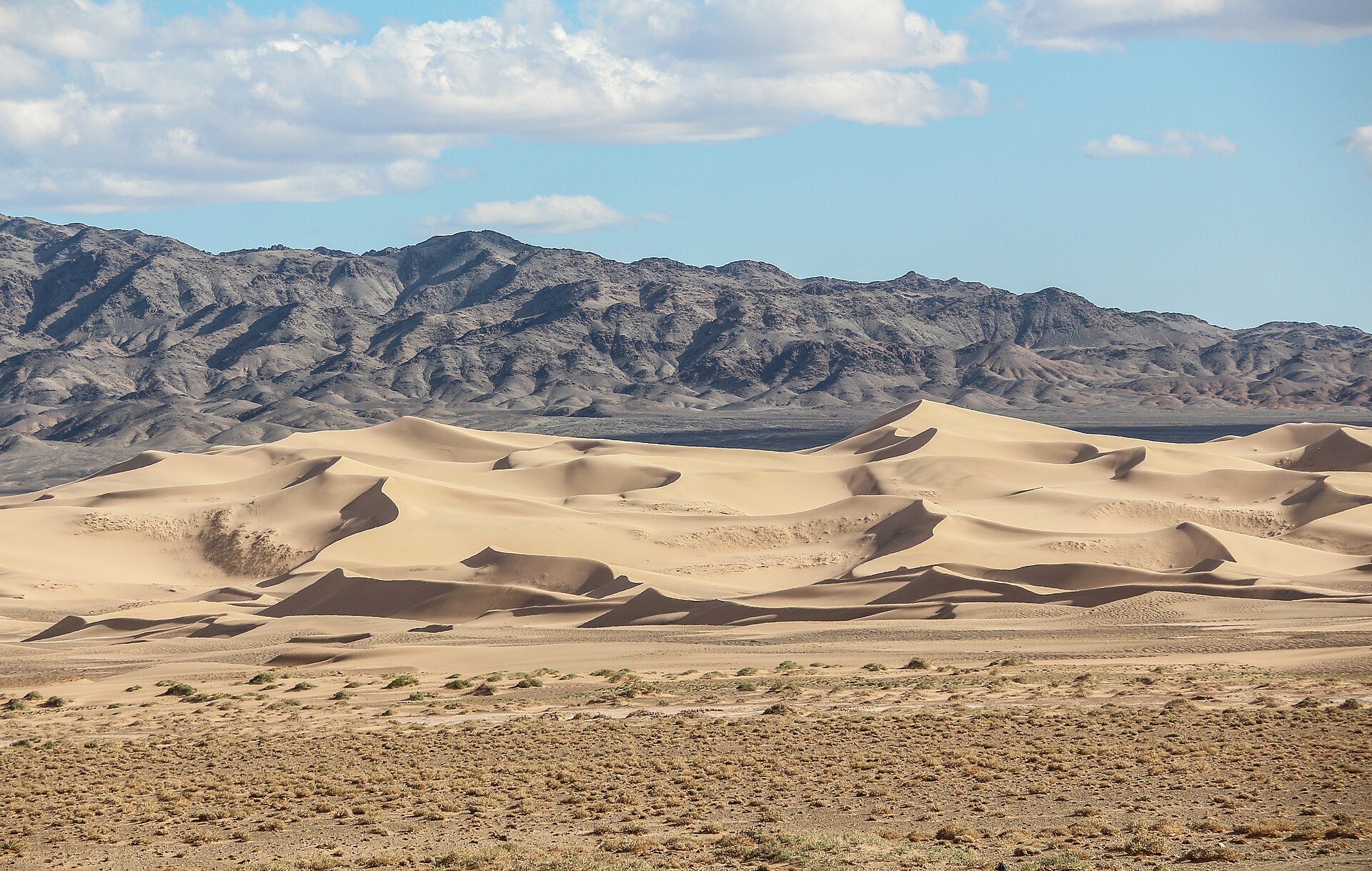
Sand accumulates in named dune fields, among them Khongoryn Els.
2. Climate
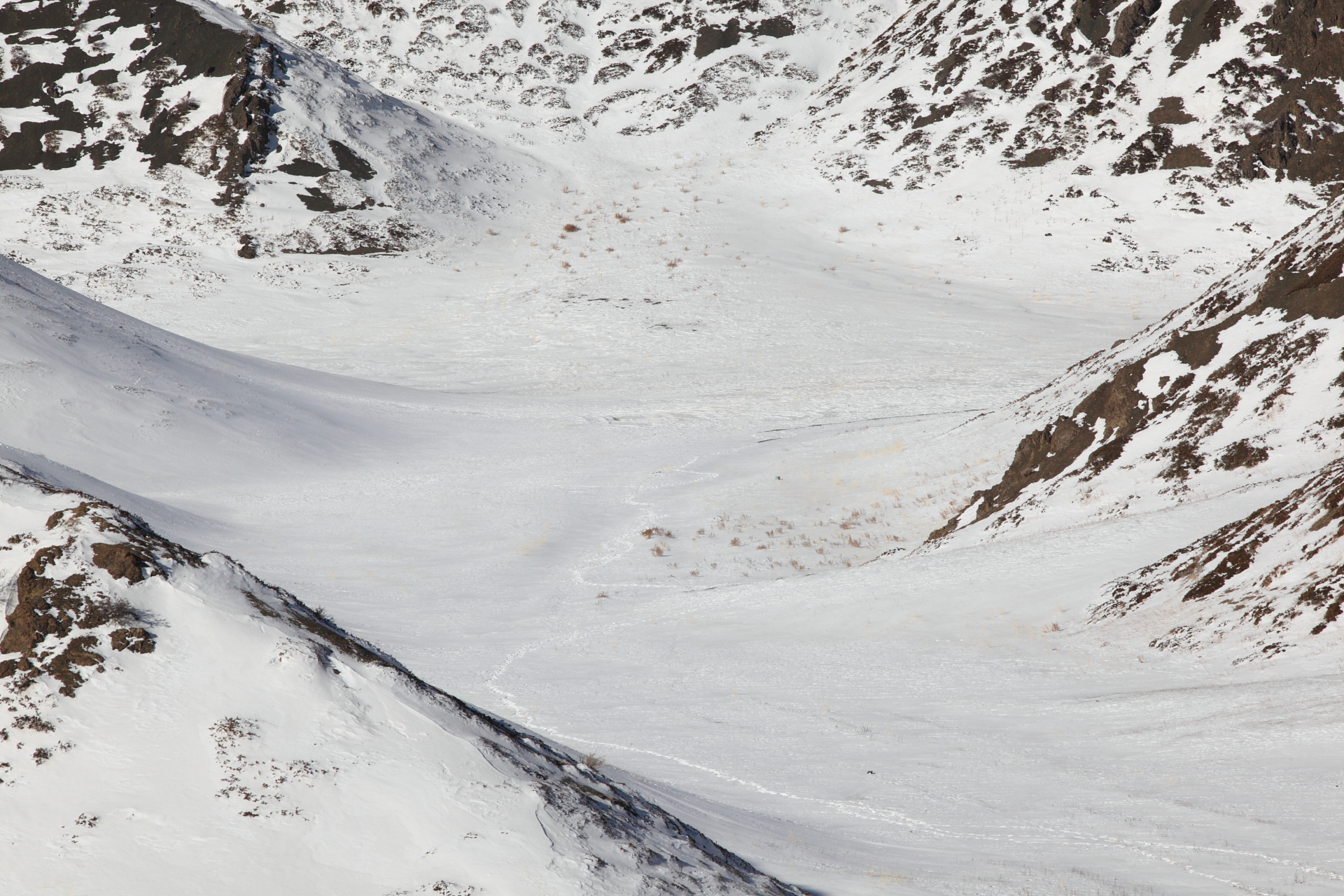
The Great Gobi is highly continental in character, fenced off from the sea by mountains that deny it any maritime moderation. Its annual precipitation is about 194 mm. Siberian steppe winds drive temperatures from about minus 40 degrees Celsius in winter to 45 degrees Celsius in summer. Daily swings can reach as much as 35 degrees Celsius.
3. Human Use, Trade and Desertification
The desert has long been crossed by trade routes, among them the road from Kalgan at the Great Wall to Ulaanbaatar and the route from Jiuquan to Hami.
Desertification is consuming 3,600 km2 of grassland a year. China has answered with the Three-North Shelter Forest Program, known as the Green Great Wall, begun in 1978 and planned through 2050.
Traditional livestock farming on state-owned rangelands supports one-fifth of Mongolia's population and underpins rural livelihoods. The UN General Assembly declared 2026 the International Year of Rangelands and Pastoralists at Mongolia's initiative.
4. Conservation and Wildlife
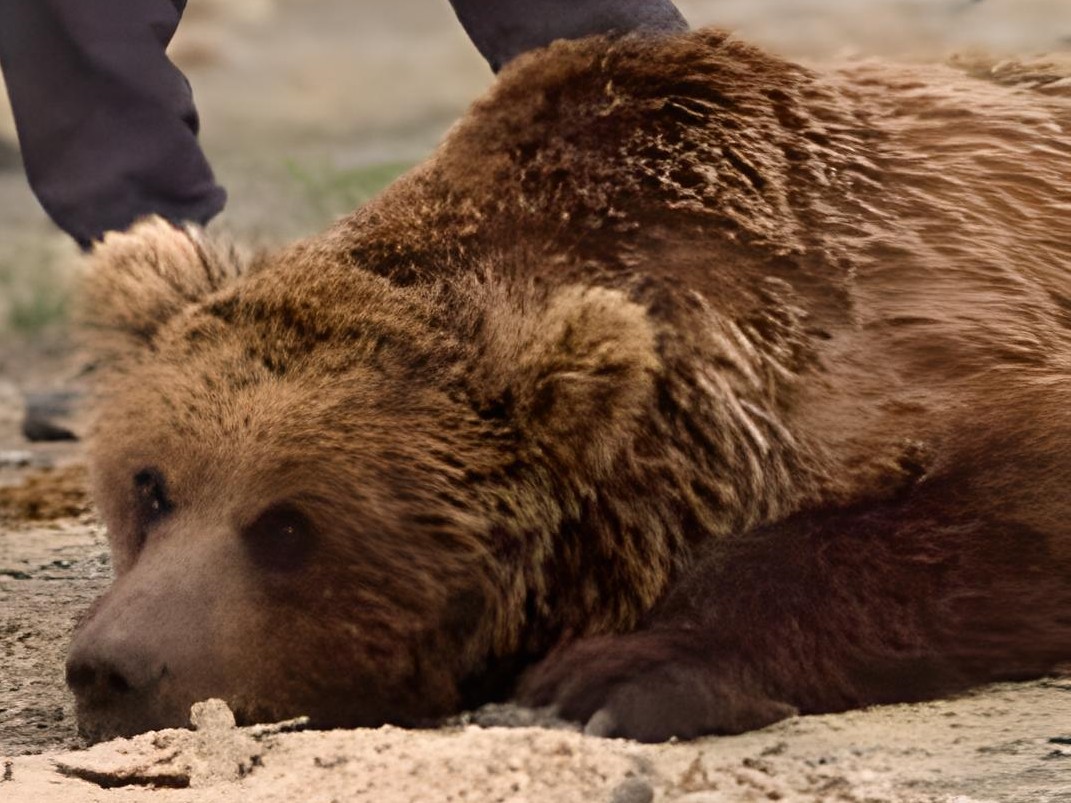
The Gobi bear, known as Mazaalai, is a critically endangered subspecies of brown bear confined to the Mongolian Gobi. It is distinguished by a small body size, with adult males reaching about 96 to 138 kilograms and females about 51 to 78 kilograms. The subspecies shows a unique adaptation to hot desert climates and carries very low genetic diversity. Its diet draws only about 8 percent animal protein, supplemented by roots, berries and occasional rodents. Fewer than 50 individuals persist within about 23,600 square kilometres near water, isolated by desert, grazing and settlements.
The Great Gobi Strictly Protected Area was established in 1975 and covers 6,839,160 hectares; it joined the World Network of Biosphere Reserves in 1991. The reserve shelters snow leopard, Siberian ibex, wild Bactrian camel, Gobi bear, Asiatic wild ass, argali and goitered gazelle. Gobi bear hunting was banned in 1959, supplementary feeding began in 1985, and a 2021 genetic study estimated 31 individuals.
5. Fossil Sites and Formations
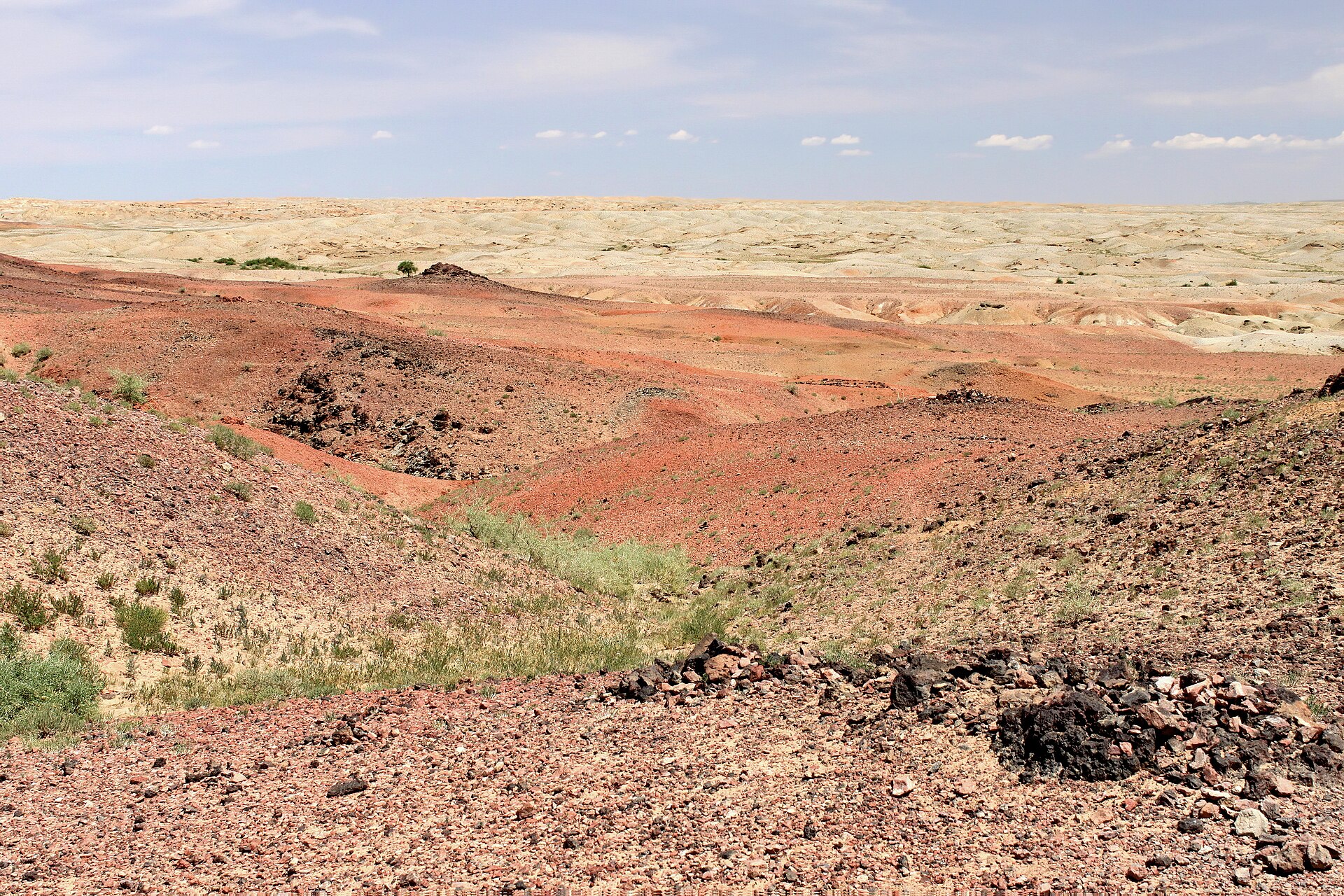
The Gobi's Upper Cretaceous record is preserved in three major formations — the Nemegt, Baruungoyot and Djadochta. The Djadokhta Formation preserves Protoceratops alongside Udanoceratops, while Bagaceratops is known from the Baruungoyot Formation. The Bayanshiree Formation spans the Cenomanian to Santonian interval. Two azhdarchid specimens from the upper beds of that formation came from the Burkhant and Bayshin Tsav localities. In the Nemegt Basin an interactive map gives GPS locations for 358 dinosaur skeletons, colour coded by taxon.
The Valley of Lakes is an elongate depression of about 500 km in Central Mongolia whose Eocene to Miocene sediments record Cenozoic cooling and aridification. Isotope data point to an early Oligocene aridification in Central Asia at about 31 Ma. A second regional aridification at about 25 Ma coincides with a marked late Oligocene mammal turnover.
6. Dinosaurs of the Gobi
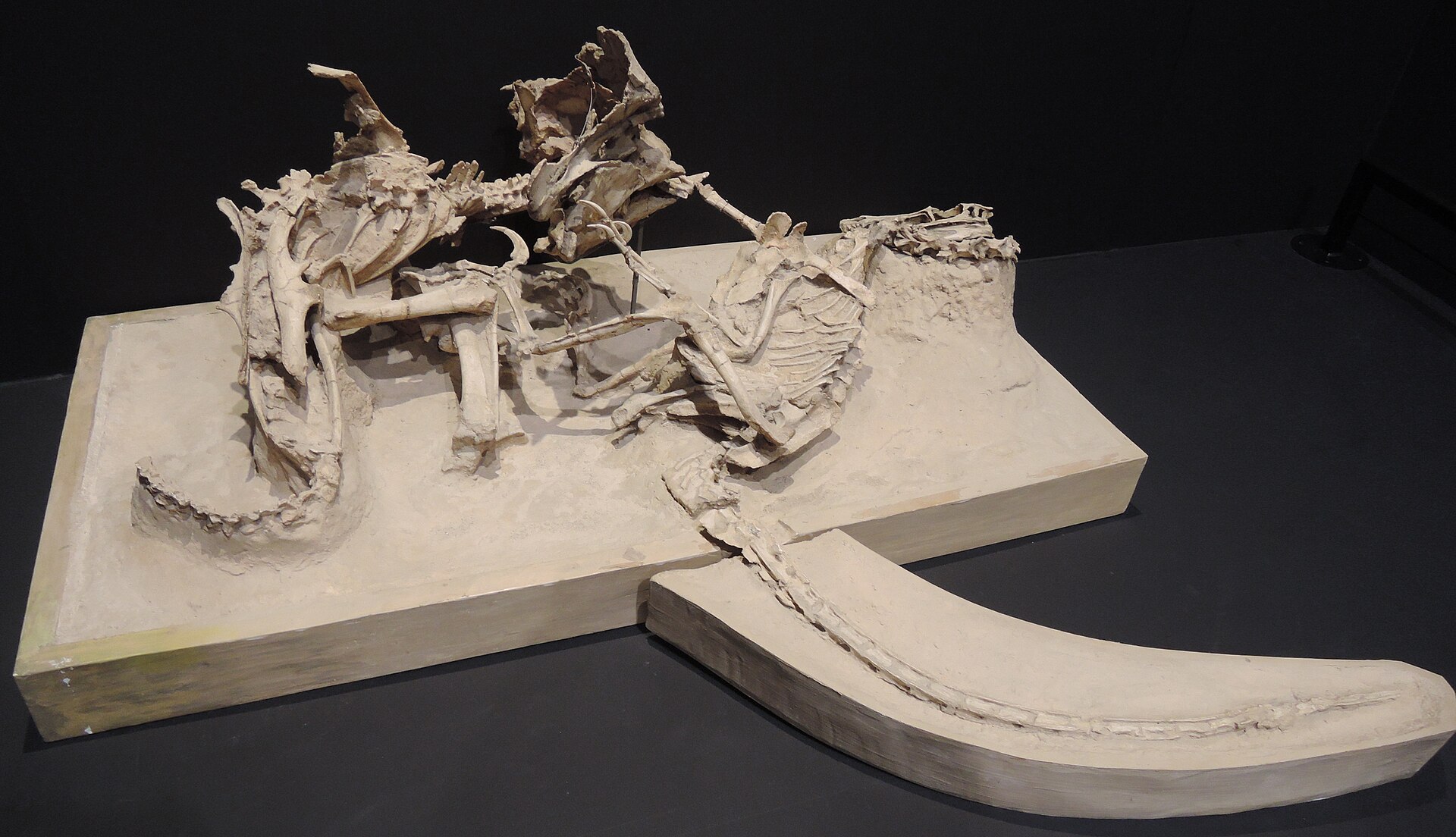
Velociraptor was a sickle-clawed dromaeosaur of Late Cretaceous central and eastern Asia, measuring 1.8 metres in length and 45 kg and living between 74 and 70 million years ago. Ossified tail tendons served to maintain balance, supporting swift and agile predation on small herbivores. The animal carried a fine feather covering and disappeared about 70 million years ago. Popular depictions have exaggerated its size to twice its real dimensions, a figure modelled on Deinonychus. Endocranial reconstruction by X-ray computed microtomography revealed a wide range of sound detection and raven-like hearing, with an inner ear resembling that of flightless birds, and pointed to an active predator that scavenged when the opportunity arose.
Protoceratops was a four-legged herbivore of Late Cretaceous China and Mongolia equipped with shearing teeth and a horny beak, reaching 400 kg. The species was named Protoceratops andrewsi in 1923 by Granger and Gregory. One specimen was fossilised at the moment of an attack by a Velociraptor, and skeletons ranging from hatchlings to adults have been collected since the 1920s. Limb characters of subadults are intermediate between the bipedal Psittacosaurus and the quadrupedal adult. A geometric morphometric study of 29 skulls found no clear separation between hypothetical males and females, undercutting claims of sexual dimorphism and attributing the variation to ontogeny and individual difference. Another specimen preserving four mid-sized juveniles indicates size-clustered aggregation, though the evidence for dinosaur sociality has been cautioned as overstated.
Oviraptorosaurs radiated across China and Mongolia, bearing pennaceous feathers and mostly toothless keratinous beaks. Oviraptorids are the best-known and most species-rich group but are confined to China and Mongolia. A newly described oviraptorid with a reduced arm of only two functional digits points to a Gobi niche less reliant on long grasping forelimbs.
Alvarezsaurids are distinguished by greatly shortened forelimbs with an enlarged medial digit and by long specialised hind limbs. Nemegt specimens were scarce after the 1993 report on Mononykus olecranus, but three new specimens were subsequently found together with oviraptorid skeletons in a small multi-species assemblage. Nemegtonykus was placed among the parvicursorines in a polytomy with other Gobi taxa.
Tyrannosaurines have been collected in China and Mongolia and across western North America from Alaska to Texas, varying from long-snouted medium forms to a dwarf Arctic species. Their integument was scaly with high tactile sensitivity, and their jaw neurovasculature was bird-like. Alioramus altai from the Maastrichtian of Mongolia was a small gracile long-snouted carnivore whose skull is extreme in pneumatisation and ornamentation compared with other tyrannosaurids and carries eight discrete horns, yet it followed the same ontogenetic sequence as Tyrannosaurus and Albertosaurus. Tyrannosaurinae endured for 14 million years.
Pterosaurs are rare in Mongolian Mesozoic deposits relative to the abundance of dinosaurs. Two azhdarchids come from the upper Bayanshiree Formation at Burkhant and Bayshin Tsav: Gobiazhdarcho tsogtbaatari with a wingspan of 3.0 to 3.5 metres, and Tsogtopteryx mongoliensis of a Hatzegopteryx lineage with a wingspan under 2 m. Azhdarchids are recognised by elongate neck vertebrae with vestigial neural spines, and they were the most widespread Late Cretaceous pterosaurs.
7. Nemegt Basin Assemblage Data
Dinosaur community data were compiled for eleven fossil localities in the Late Cretaceous Nemegt Basin of Mongolia9A dinosaur community composition dataset for the Late Cretaceous Nemegt Basin of Mongolia · Data in Brief via PMC ↗. The dataset includes nearly 500 skeletons identified to species and allows comparison with other ecosystems worldwide9.
| measure | value | source |
|---|---|---|
| dinosaur community data | eleven fossil localities in the Nemegt Basin | pmc-nemegt-community |
| skeletons identified to species | nearly 500 | pmc-nemegt-community |
8. Fossil Preservation
The first known ferromanganese-mineralised fungal mycelia preserved in dinosaur bone were recovered from long bones of Late Cretaceous dinosaurs in the Gobi Desert, within the Nemegt Formation. The remains occur as a biofilm on the wall of the marrow cavity that penetrates the osteon channels. Mineral phases of this kind enhance the fossilisation of fungal remains and can serve as indicators of the geochemistry of dinosaur burial sites.
9. Timeline: from the first Gobi expeditions to recent dinosaur discoveries
- 1920sAmerican Museum expeditions reach the GobiRoy Chapman Andrews of the American Museum of Natural History led several palaeontological expeditions to the Gobi Desert during the 1920s.
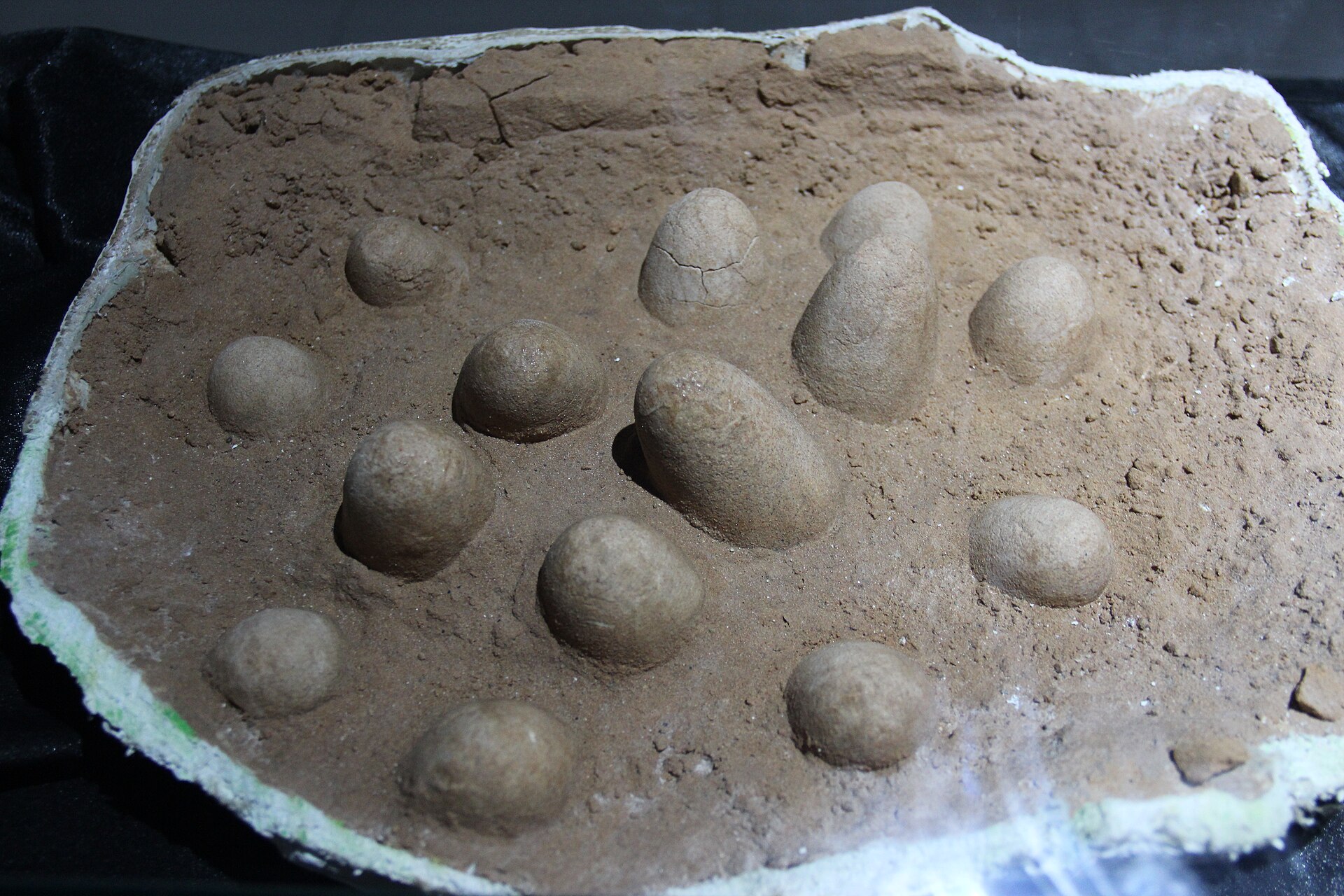
- 1923First dinosaur eggs found at the Flaming CliffsTwenty-six eggs averaging 23 centimetres in length were uncovered in 1923 and are counted among the first dinosaur eggs ever recognised.
- 1924Velociraptor named from Mongolian materialOsborn named Velociraptor mongoliensis in 1924 on the basis of specimens from Mongolia.
- 1959Gobi bear hunting bannedHunting of the Gobi bear was prohibited in 1959 as an early step in protecting the subspecies.
- 1975Great Gobi Strictly Protected Area establishedThe Great Gobi was established as a national Strictly Protected Area in 1975 and later became a biosphere reserve.
- 1978Green Great Wall programme beginsChina began the Three-North Shelter Forest Program in 1978 to slow desertification across the north.
- 1985Supplementary feeding for Gobi bearsSince 1985 a supplemental feeding program has supplied pellets at waterholes in the Great Gobi strict protected areas.
- 1990Great Gobi nominated as a biosphere reserveUNESCO records 1990 as the year of nomination for the Great Gobi Biosphere Reserve.
- 1991Great Gobi joins the World Network of Biosphere ReservesThe reserve joined the World Network of Biosphere Reserves in 1991 as one of the largest in the network, covering 6,839,160 hectares.
- 1993Mononykus reported from the Nemegt FormationThe initial report on Mononykus olecranus in 1993 remained the main record of alvarezsaurids in the Nemegt Formation for years.
- 9 March 1996Mongolia ratifies the desertification conventionMongolia ratified the UN Convention to Combat Desertification under Annex II for Asia.
- 1997Petroglyphs recorded in southern MongoliaIn 1997 prehistoric petroglyphs were found in Southern Mongolia.
- 2004Wild camel breeding centre opensThe wild camel breeding centre at Zakhyn Us was established in 2004 about twenty kilometres from the reserve.
- 2021Genetic study estimates 31 Gobi bearsA long-term genetic study published in 2021 estimated the Gobi bear population at 31 animals.
- 2024Mongolia reaches upper-middle-income statusMongolia became an upper-middle-income country in 2024 after three decades of reform.
- 2026International Year of Rangelands and PastoralistsThe UN General Assembly declared 2026 the International Year of Rangelands and Pastoralists, an initiative of the Government of Mongolia.
References (17)
- 1Gobi Desert — Wikipedia WebView source
- 2Great Gobi — UNESCO Man and the Biosphere Programme WebView source
- 3Mongolia — UNCCD WebView source
- 4FAO in Mongolia — FAO WebView source
- 5Gobi bear — Wikipedia WebView source
- 6A new alvarezsaurid dinosaur from the Nemegt Formation of Mongolia — Scientific Reports via PMC WebView source
- 7Appendicular skeleton of Protoceratops andrewsi — PeerJ via PMC WebView source
- 8Azhdarchid pterosaur diversity in the Bayanshiree Formation, Upper Cretaceous of the Gobi Desert — PeerJ via PMC WebView source
- 9A dinosaur community composition dataset for the Late Cretaceous Nemegt Basin of Mongolia — Data in Brief via PMC Web↩View source
- 10Geochemistry and mineralogy of the Oligo-Miocene sediments of the Valley of Lakes, Mongolia — Palaeobiodiversity and Palaeoenvironments via PMC WebView source
- 11Fungal Ferromanganese Mineralisation in Cretaceous Dinosaur Bones from the Gobi Desert, Mongolia — PLOS ONE via PMC WebView source
- 12Velociraptor — Encyclopaedia Britannica WebView source
- 13Velociraptor — Natural History Museum WebView source
- 14Protoceratops — Natural History Museum WebView source
- 15Flaming Cliffs — Wikipedia WebView source
- 16A new tyrannosaur with evidence for anagenesis and crocodile-like facial sensory system — Scientific Reports via PMC WebView source
- 17Mongolia — World Bank WebView source