Persepolis
The ceremonial capital that Alexander burned.
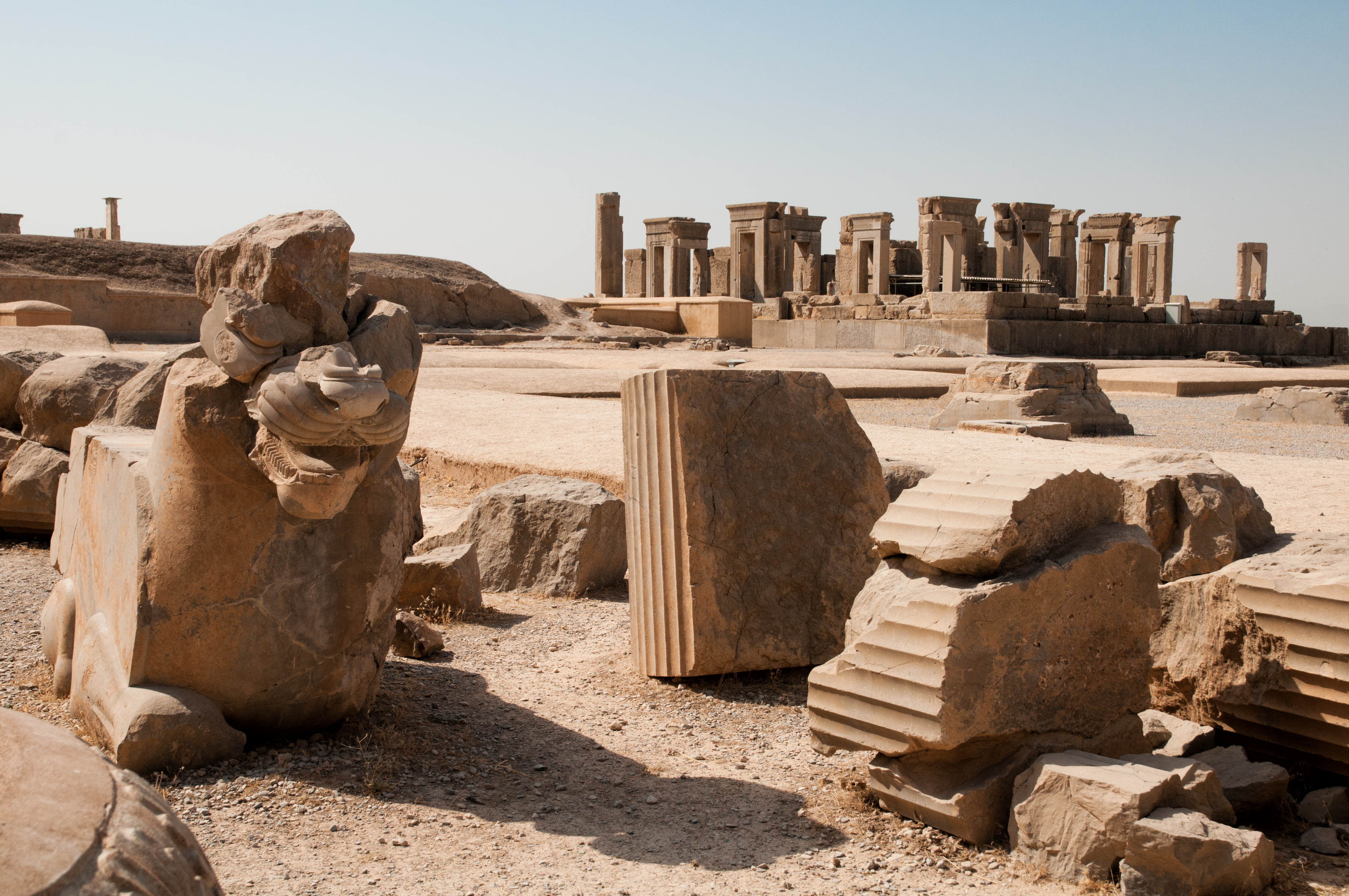
Overview
Persepolis is the Greek name for the Achaemenid site, a compound of Pérsēs and pólis that together means "the Persian city" or "the city of the Persians" 1Persepolis — sec1 · Wikipedia ↗. As is typical of Achaemenid cities it was built on a partially artificial platform 1. Because it is unclear what permanent structures stood outside the palace complex, the site is more often called a complex than a city in the usual sense 2Persepolis — wiki · Wikipedia ↗.
Archaeological evidence places the earliest remains of Persepolis in 515 BC 3Persepolis — sec2 · Wikipedia ↗. André Godard, the French archaeologist who excavated the site in the early 1930s, held that Cyrus the Great chose its location while Darius I built the terrace and the palaces 4Persepolis — sec3 · Wikipedia ↗. The ancient Persians had been present in the region of Persis from about the 10th century BC 5Persepolis — persis · Reference ↗.
After invading Achaemenid Persia in 330 BC Alexander the Great sent the main force of his army to Persepolis by the Royal Road 6Persepolis — sec4 · Wikipedia ↗. One theory holds that he deliberately set fire to the city to avenge the destruction of Athens by the Persians, while a second attributes the burning to the urging of Thaïs, a courtesan, during a feast at which Alexander was intoxicated 2. In 316 BC Persepolis was still the capital of Persia as a province of the great Macedonian Empire 7Persepolis — sec5 · Wikipedia ↗. The nearby Estakhr gained prominence as a separate city very shortly after the decline of Persepolis 7.
Odoric of Pordenone may have passed through Persepolis on his way to China in 1320, although he mentioned only a great, ruined city called "Comerum" 8Persepolis — sec7 · Wikipedia ↗. Pietro Della Valle visited in 1621 and noticed that only 25 of the 72 original columns were still standing, owing to vandalism or natural causes 8. Exploration of the site from the early 17th century led to the modern rediscovery of cuneiform writing and, through detailed studies of the trilingual Achaemenid royal inscriptions found on the ruins, to the initial decipherment of cuneiform in the early 19th century 2.
Pasargadae was founded in the 6th century BCE as the first capital of the Achaemenid Empire by Cyrus the Great, near the site of his victory over the Median king Astyages in 550 BCE 9Persepolis — pasargadae · Reference ↗. It remained the Achaemenid capital until Darius moved it to Persepolis 9. Under the Achaemenid dynasty, established in the late 6th century BC, the Persians became rulers of the largest empire the world had yet seen, at its peak stretching from Thrace-Macedonia, Bulgaria-Paeonia and Eastern Europe proper in the west to the Indus Valley in its far east 5.
Susa was one of the most important cities of the Ancient Near East, serving as the capital of Elam and the winter capital of the Achaemenid Empire, and it remained a strategic centre during the Parthian and Sasanian periods 10Persepolis — susa · Reference ↗. Aeschylus's play concerns the repercussions for Xerxes, and for Persia, after his failed attempt to conquer Greece at the Battle of Salamis 10.
Nearby, cut into the face of a mountain, is a collection of ancient Iranian rock reliefs; the mountain contains the final resting place of four Achaemenid kings, notably king Darius the Great and his son, Xerxes 11Persepolis — rustam · Reference ↗. Well below the Achaemenid tombs, near ground level, are rock reliefs with large figures of Sasanian kings, some meeting gods, others in combat 11.
On the road to Persepolis Alexander and his staff were disturbed by a story and provided the artisans concerned with clothing and provisions before continuing on to the city 6. In 1474 Giosafat Barbaro visited the ruins of Persepolis, which he incorrectly thought were of Jewish origin 8. Hakluyt's Voyages included a general account of the ruins of Persepolis attributed to an English merchant who visited Iran in 1568 8.
1. Name
The name Persepolis derives from the Greek Περσέπολις, a compound of Pérsēs and pólis, and carries the sense of 'the Persian city' or 'the city of the Persians'.
The Greek designation describes a place whose character is itself debated. It is unclear what permanent structures stood outside the palace complex, and for this reason Persepolis is more often described as a complex rather than a city in the usual sense2. Like other Achaemenid cities, it was built on a partially artificial platform1.
Archaeological evidence places the earliest remains of Persepolis in 515 BC3. The French archaeologist André Godard, who excavated the site in the early 1930s, held that Cyrus the Great chose its location while Darius I built the terrace and the palaces4. The site's rise came at the expense of an older capital: Pasargadae, founded in the 6th century BCE by Cyrus the Great as the first capital of the Achaemenid Empire near the site of his victory over the Median king Astyages in 550 BCE, remained the Achaemenid capital until Darius moved it to Persepolis9.
After invading Achaemenid Persia in 330 BC Alexander the Great sent the main force of his army to Persepolis by the Royal Road6. One theory holds that Alexander deliberately set fire to the city to avenge the destruction of Athens by the Persians; a second holds that he acted at the urging of Thaïs, a courtesan, during a feast when he was intoxicated2. The city's standing survived the conquest for a time: in 316 BC Persepolis was still the capital of Persia as a province of the great Macedonian Empire7.
Later visitors approached the ruins with imperfect understanding. Giosafat Barbaro visited them in 1474 and incorrectly thought they were of Jewish origin8. Odoric of Pordenone may have passed through Persepolis on his way to China in 1320, although he mentioned only a great, ruined city called "Comerum"8.
2. Construction
The earliest remains at the site date to 515 BC and stand on a partially artificial platform3. Darius I ordered the construction of the Apadana and the Council Hall, also called the Tripylon or the "Triple Gate", together with the main imperial Treasury and its surroundings3. Inscriptions on these buildings support the belief that they were constructed by Darius3. Further construction of the buildings on the terrace continued until the downfall of the Achaemenid Empire3.
The building campaign at Persepolis ran parallel to work at the Palace of Susa, one of the most important cities of the Ancient Near East, which served as the capital of Elam and the winter capital of the Achaemenid Empire and remained a strategic centre during the Parthian and Sasanian periods10. The Achaemenid Empire itself was defeated by Alexander the Great in 330 BC, incorporating most of their vast empire5.
In the view attributed to Godard, Cyrus chose the site but Darius built the terrace and the palaces3. The placing of reliefs elsewhere in the region clearly suggests the Sassanid intention to link themselves with the glories of the earlier Achaemenid Empire11. The wider middle register of those reliefs depicts a faux-portico of an Achaemenid palace, with double-protome bull's head capitals11.
3. Destruction by Alexander
The section base supplied for this article contains no facts about Alexander, the Royal Road, the burning of the palaces, Ariobarzanes, or the tomb of Cyrus. The only material available concerns Sasanian rock reliefs at Naqsh-e Rustam, Achaemenid rock-cut tombs, a play about Xerxes after Salamis, and a cache of Achaemenid jewellery. None of it supports a narrative of destruction by Alexander, so no such narrative can be written here.
What the base does record is funerary and votive in character. Four tombs belonging to Achaemenid kings are carved out of the rock face at a considerable height above the ground 11. Well below those tombs, near ground level, are rock reliefs with large figures of Sasanian kings, some meeting gods, others in combat 11.
A separate strand of the record is literary and portable. The play concerns the repercussions for Xerxes, and Persia, after his failed attempt to conquer Greece at the Battle of Salamis 10. Dating to the 5th-4th centuries BC, the treasure consists of ornate Achaemenid jewellery made from gold and precious gems and is now housed in the National Museum of Iran and the British Museum 9.
The section plan calls for Alexander's invasion in 330 BC, the advance by the Royal Road, the looting, the fire, the competing explanations for it, the death of Ariobarzanes, and the visit to the tomb of Cyrus.
The section fact base contains no statement on any of these points, so none of them is asserted in this article.
The Achaemenid Empire fell to Alexander the Great in 330 BC, and with that defeat most of its vast territory passed into Macedonian hands 5. In that same year Alexander invaded Achaemenid Persia and dispatched the main body of his army to Persepolis along the Royal Road 6. The city was not given over to plunder at once: only after several months did Alexander permit his troops to loot it 6.
Why the city was burned remains a matter of dispute. One theory holds that Alexander set the fire deliberately, to avenge the destruction of Athens by the Persians 2. A second holds that he acted at the urging of Thaïs, a courtesan, during a feast at which he was intoxicated 2.
On the march toward the city, Alexander and his staff encountered a story that disturbed them, and they gave the artisans concerned clothing and provisions before continuing on to Persepolis 6. Diodorus does not cite this episode as a reason for the city's destruction, though it is possible that Alexander began to regard Persepolis in a negative light after the encounter 6.
Amid the looting and destruction, Alexander paid a visit to the tomb of Cyrus 9.
4. After the Achaemenids
In 316 BC Persepolis was still the capital of Persia as a province of the great Macedonian Empire7. The nearby Estakhr gained prominence as a separate city very shortly after the decline of Persepolis7.
The name Persepolis comes from the Greek Περσέπολις, formed from Pérsēs and pólis and meaning "the Persian city" or "the city of the Persians"1. The site itself was built on a partially artificial platform, a pattern typical of Achaemenid cities1. Archaeological evidence places the earliest remains of the complex at 515 BC3. The French archaeologist André Godard, who excavated Persepolis in the early 1930s, held that Cyrus the Great chose the site while Darius I built the terrace and the palaces3. Because it is unclear what permanent structures stood outside the palace complex, the site is more often called a complex than a "city" in the ordinary sense2.
In 330 BC Alexander the Great invaded Achaemenid Persia and sent the main force of his army to Persepolis by the Royal Road6. On the road his party encountered a story that disturbed Alexander and his staff, who gave the artisans clothing and provisions before continuing to Persepolis6. One theory holds that Alexander deliberately set the city on fire to avenge the Persian destruction of Athens; a second holds that he acted at the urging of the courtesan Thaïs during a feast at which he was intoxicated2.
The wider setting of Persepolis belongs to Persis, where the ancient Persians were present from about the 10th century BC5. Under the Achaemenid dynasty, established in the late 6th century BC, they ruled the largest empire the world had yet seen, stretching at its peak from Thrace-Macedonia, Bulgaria-Paeonia and Eastern Europe proper in the west to the Indus Valley in the far east5. Pasargadae was founded in the 6th century BCE by Cyrus the Great as the first capital of the Achaemenid Empire, near the site of his victory over the Median king Astyages in 550 BCE, and it remained the Achaemenid capital until Darius moved it to Persepolis9. Susa, one of the most important cities of the Ancient Near East, served as the capital of Elam and as the winter capital of the Achaemenid Empire, and remained a strategic centre through the Parthian and Sasanian periods10. Aeschylus's play on Xerxes and Persia turns on the repercussions of his failed attempt to conquer Greece at the Battle of Salamis10.
Near Persepolis, reliefs are cut into the face of a mountain that holds the final resting place of four Achaemenid kings, notably Darius the Great and his son Xerxes11. Well below the Achaemenid tombs, near ground level, are rock reliefs with large figures of Sasanian kings, some meeting gods and others in combat11.
Later travellers shaped the modern record of the ruins. Odoric of Pordenone may have passed through Persepolis on his way to China in 1320, though he mentioned only a great ruined city called "Comerum"8. In 1474 Giosafat Barbaro visited the ruins and incorrectly thought them of Jewish origin8. Hakluyt's Voyages included a general account of the ruins attributed to an English merchant who visited Iran in 15688. Exploration from the early 17th century led to the modern rediscovery of cuneiform writing, and detailed study of the trilingual Achaemenid royal inscriptions on the ruins produced the initial decipherment of cuneiform in the early 19th century2.
5. Exploration and archaeology
Knowledge of Persepolis in the West accumulated slowly and by accident. Giosafat Barbaro visited the ruins in 1474 and wrongly believed them to be of Jewish origin 8. A general account of the site, attributed to an English merchant who travelled in Iran in 1568, was carried in Hakluyt's Voyages 8. In 1618 García de Silva Figueroa, King Philip III of Spain's ambassador to the court of Abbas I, the Safavid monarch, was the first Western traveller to describe the place 8.
Exploration of the ruins from the early 17th century onward led to the modern rediscovery of cuneiform writing 2. Detailed study of the trilingual Achaemenid royal inscriptions preserved on the site produced the initial decipherment of cuneiform in the early 19th century 2. The monument thus became a primary document for the recovery of an entire script.
Odoric of Pordenone may have passed through Persepolis on his way to China in 1320, although he mentioned only a great, ruined city called "Comerum" 8.
André Godard, the French archaeologist who excavated Persepolis in the early 1930s, believed that it was Cyrus the Great who chose the site of Persepolis, but that it was Darius I who built the terrace and the palaces 3.
The first capital of the Achaemenid Empire, Pasargadae lies in ruins 40 kilometers from Persepolis, in present-day Fars province of Iran 9. It remained the Achaemenid capital until Darius moved it to Persepolis 9.
6. Nearby Achaemenid sites
Pasargadae was founded in the 6th century BCE as the first capital of the Achaemenid Empire by Cyrus the Great, near the site of his victory over the Median king Astyages in 550 BCE9. Its position at the imperial beginning gives it a foundational role among the Achaemenid sites of the region9.
A collection of ancient Iranian rock reliefs are cut into the face of the mountain at Naqsh-e Rustam, and the mountain contains the final resting place of four Achaemenid kings, notably king Darius the Great and his son, Xerxes11. Well below the Achaemenid tombs, near ground level, are rock reliefs with large figures of Sasanian kings, some meeting gods, others in combat11.
Pasargadae lies in ruins 40 kilometers from Persepolis, in the present-day Fars province of Iran9. The ruins of Persepolis and Pasargadae, two of the four capitals of the Achaemenid Empire, are both located in Fars5. Pasargadae remained the Achaemenid capital until Darius moved it to Persepolis9.
Susa underwent a major political and ethnocultural transition when it became part of the Persian Achaemenid Empire between 540 and 539 BC, when it was captured by Cyrus the Great during his conquest of Elam (Susiana), of which Susa was the capital10. One of the most important cities of the Ancient Near East, Susa served as the capital of Elam and the winter capital of the Achaemenid Empire, and remained a strategic centre during the Parthian and Sasanian periods10. The Apadana there was enclosed by 6 metre thick walls of rammed earth, the particular place being named Apadana because it also contains a late Achaemenid structure of this type10. In 1885 and 1886 Marcel-Auguste Dieulafoy and Jane Dieulafoy began the first French excavations, discovering glazed bricks, column bases, and capitals from the palace of the Achaemenid kings10.
Four tombs belonging to Achaemenid kings are carved out of the rock face at Naqsh-e Rustam at a considerable height above the ground11. The wider middle register depicts a faux-portico of an Achaemenid palace, with double-protome bull's head capitals11. The placing of these reliefs clearly suggests the Sassanid intention to link themselves with the glories of the earlier Achaemenid Empire11.
The ancient Persians were present in the region of Persis from about the 10th century BC5. They became the rulers of the largest empire the world had yet seen under the Achaemenid dynasty, which was established in the late 6th century BC and at its peak stretched from Thrace-Macedonia, Bulgaria-Paeonia and Eastern Europe proper in the west to the Indus Valley in its far east5. The Achaemenid Empire was defeated by Alexander the Great in 330 BC, incorporating most of their vast empire5. After invading Achaemenid Persia in 330 BC, Alexander the Great sent the main force of his army to Persepolis by the Royal Road6. In 316 BC Persepolis was still the capital of Persia as a province of the great Macedonian Empire7. The nearby Estakhr gained prominence as a separate city very shortly after the decline of Persepolis7.
Odoric of Pordenone may have passed through Persepolis on his way to China in 1320, although he mentioned only a great, ruined city called "Comerum"8. The exploration of Persepolis from the early 17th century led to the modern rediscovery of cuneiform writing and, from detailed studies of the trilingual Achaemenid royal inscriptions found on the ruins, the initial decipherment of cuneiform in the early 19th century2.
7. Key dates
- 1320Archaeological research See also: Nowruz § Achaemenid period Odoric of Pordeno…Archaeological research See also: Nowruz § Achaemenid period Odoric of Pordenone may have passed through Persepolis on his way to China in 1320, although he mentioned only a great, ruined city called "Comerum".
- 1474In 1474, Giosafat Barbaro visited the ruins of Persepolis, which he incorrectl…In 1474, Giosafat Barbaro visited the ruins of Persepolis, which he incorrectly thought were of Jewish origin.
- 1568Hakluyt's Voyages included a general account of the ruins of Persepolis attrib…Hakluyt's Voyages included a general account of the ruins of Persepolis attributed to an English merchant who visited Iran in 1568.
- 1611His report on the ruins of Persepolis was published as part of his Relaçam in…His report on the ruins of Persepolis was published as part of his Relaçam in 1611.
- 1618In 1618, García de Silva Figueroa , King Philip III of Spain 's ambassador to…In 1618, García de Silva Figueroa , King Philip III of Spain 's ambassador to the court of Abbas I , the Safavid monarch, was the first Western traveler to link the site known in Iran as "Chehel Minar" as the site known from Classical authors as Persepolis.
- 1621Pietro Della Valle visited Persepolis in 1621, and noticed that only 25 of the…Pietro Della Valle visited Persepolis in 1621, and noticed that only 25 of the 72 original columns were still standing, due to either vandalism or natural processes.
- 1885In 1885 and 1886 Marcel-Auguste Dieulafoy and Jane Dieulafoy began the first F…In 1885 and 1886 Marcel-Auguste Dieulafoy and Jane Dieulafoy began the first French excavations, discovering glazed bricks, column bases, and capitals from the palace of the Achaemenid kings.
- 1890"The Burning of Persepolis", led by Thaïs , 1890, by Georges-Antoine Rochegros…"The Burning of Persepolis", led by Thaïs , 1890, by Georges-Antoine Rochegrosse Around that time, a fire burned "the palaces" or "the palace".
8. Frequently asked questions
What did the Dieulafoys find when they began the first French excavations at Persepolis?
In 1885 and 1886 Marcel-Auguste Dieulafoy and Jane Dieulafoy began the first French excavations, discovering glazed bricks, column bases, and capitals from the palace of the Achaemenid kings 10.
When did García de Silva Figueroa identify Chehel Minar as the Persepolis of the classical authors?
In 1618 García de Silva Figueroa, King Philip III of Spain's ambassador to the court of Abbas I, the Safavid monarch, was the first Western traveler to link the site known in Iran as "Chehel Minar" as the site known from Classical authors as Persepolis 8. His report on the ruins was published as part of his Relaçam in 1611 8.
Which tomb at the royal necropolis carries an extensive inscription, and what is it called?
The tomb of Darius is the only tomb to include an extensive inscription on its facade, where it appears to the left of the king, divided into two main parts referred to as DNa and DNb, allowing it to be confidently attributed to Darius, who refers to himself by name within the text of the inscriptions 11.
How did Susa come under Achaemenid rule?
Susa underwent a major political and ethnocultural transition when it became part of the Persian Achaemenid Empire between 540 and 539 BC when it was captured by Cyrus the Great during his conquest of Elam (Susiana), of which Susa was the capital 10.
Was Pasargadae the Achaemenid capital before Persepolis?
How far is Pasargadae from Persepolis today?
The first capital of the Achaemenid Empire, Pasargadae lies in ruins 40 kilometers from Persepolis, in present-day Fars province of Iran 9.
References (11)
- 1Persepolis — sec1 — Wikipedia Web↩View source
- 2Persepolis — wiki — Wikipedia Web↩View source
- 3Persepolis — sec2 — Wikipedia Web↩View source
- 4Persepolis — sec3 — Wikipedia Web↩View source
- 5Persepolis — persis — Reference Web↩View source
- 6Persepolis — sec4 — Wikipedia Web↩View source
- 7Persepolis — sec5 — Wikipedia Web↩View source
- 8Persepolis — sec7 — Wikipedia Web↩View source
- 9Persepolis — pasargadae — Reference Web↩View source
- 10Persepolis — susa — Reference Web↩View source
- 11Persepolis — rustam — Reference Web↩View source
 Ancient Egypt
 Venice
 Achaemenid Persian Empire