Silkworm
The story of the silkworm and its silk: domestication in China, sericulture from mulberry leaf to reeled filament, the spread of the craft to Korea, Japan, India and Byzantium, the Silk Road, and the fibre's afterlife in medicine and industry.
The silkworm, Bombyx mori, is a domesticated moth whose larvae spin a single continuous cocoon filament of fibroin glued with sericin, a fibre that humans have reeled and woven for thousands of years. Domesticated in China from the wild moth Bombyx mandarina, it spread with sericulture to Korea, Japan, India, Central Asia and, by the sixth century CE, the Byzantine Empire, where monks brought eggs to Justinian and broke the long Chinese and Persian monopoly. Silk became the currency and prestige fabric of the Silk Road, then the engine of the Japanese and Indian silk industries and the great mills of Lyon. Today it is studied as a biomaterial, and silk fibroin is used in sutures, wound dressings and scaffolds.
Overview
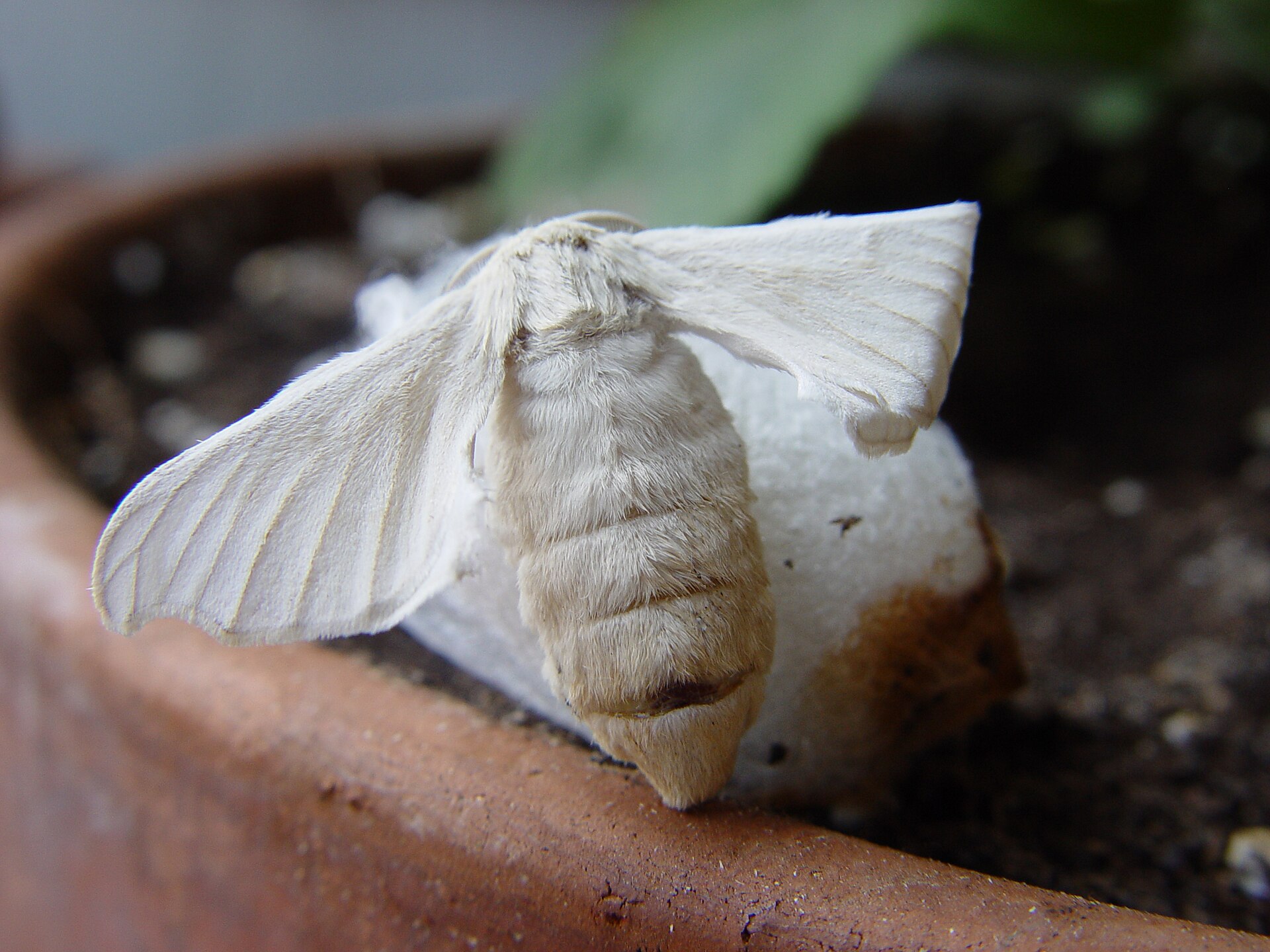
The silkworm is the larva of Bombyx mori, the domesticated silkworm moth, a species whose closest relative is Bombyx mandarina, the Chinese wild silkworm. Silk itself is a natural protein fibre that the caterpillar secretes in the fluid state as a single filament. The insect is reared in captivity, and its silk is obtained from the cocoon in which the larva develops.
Centuries of selection have left Bombyx mori entirely dependent on humans for survival, unable to fly and no longer existing in the wild.
1. Life Cycle and Biology
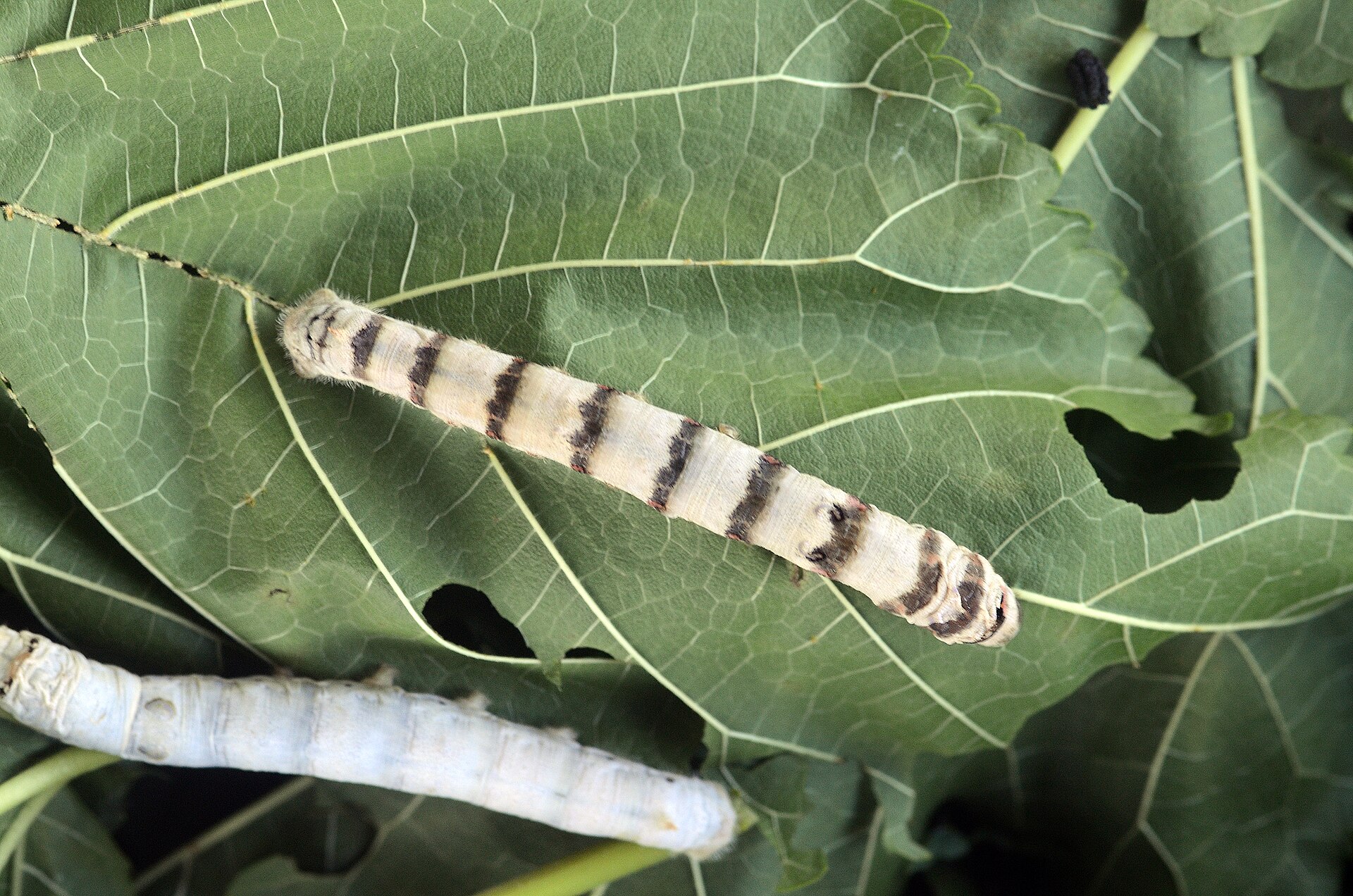
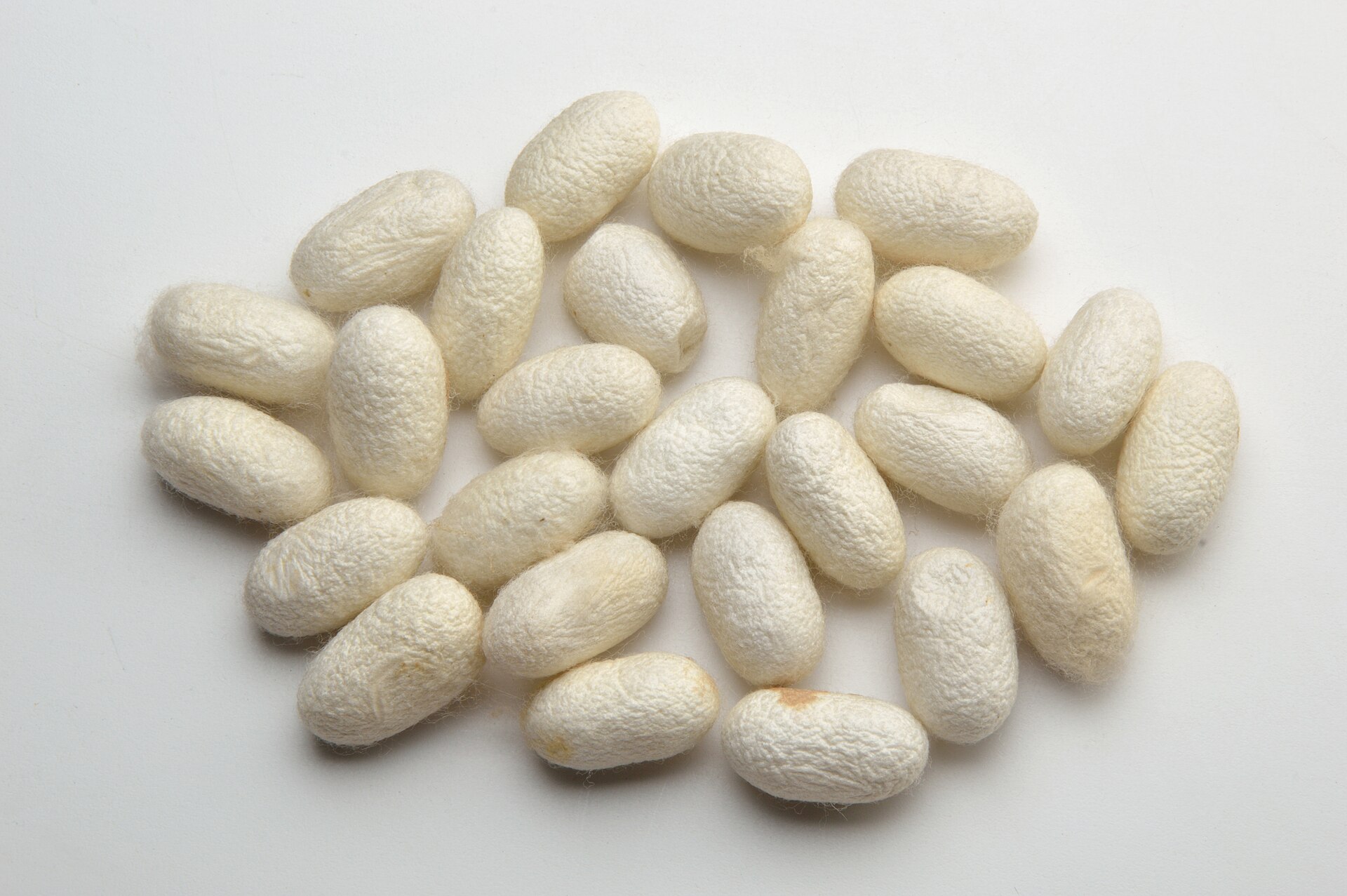
The silkworm passes through four life stages comprising the egg, silkworm, pupa and moth, and humans interfere with this cycle at the cocoon stage to obtain the silk, a continuous filament of commercial importance. Silkworm eggs hatch into larvae in about 14 days, and there are five larval instars before pupation in a species that feeds almost exclusively on mulberry leaves. The larvae enclose themselves in a cocoon made of raw silk produced by the salivary glands, and the final molt from larva to pupa takes place inside this protective cocoon. The cocoon is composed of about 70 percent fibroin and about 30 percent sericin.
The silk glands of Bombyx mori are structured like tubes consisting of a posterior, middle and anterior section, with the middle section short and measuring 3-4 mm in diameter. Cocoon shape is peculiar to the given species, with Japanese varieties peanut-shaped, Chinese elliptical, European longer elliptical and polyvoltine varieties spindle-like in appearance. The whole weight of a single cocoon is influenced by silkworm species, rearing season and harvest conditions, with pure breeds ranging from 2.2 to 1.5 g and hybrid breeds from 2.5 to 1.8 g.
2. The Cocoon and Silk Fibre
The silk filament is a continuous thread of great strength that measures from 500 to 1500 metres in length. A single specimen can produce a 0.025 mm thick thread over 900 metres long. Several such filaments are twisted together to make a thread thick enough for weaving. Making raw silk is labour-intensive because over 100 kg of mulberry leaves are needed for 1 kg of silk, and China produces about 70 percent of the world's supply.
Silk fibroin is a widely used tissue-biocompatible protein that was admitted as a biomaterial by the United States Food and Drug Administration in 1993 for biomedical use. Silk fibres are commercially used in many areas of the economy, play an essential role in the textile industry, and are also used in medical applications such as sutures and skin wound dressings.
Silk sericin has traditionally been linked to immunogenic and inflammatory effects, so removing the sericin protein from the cocoon is considered essential to increasing the biocompatibility and biodegradability of silk fibres.
A silk fibroin solution is generally used to produce scaffolds, sponges, hydrogels, films and electrospun mats, which have applications in skin wound healing.
3. Sericulture and Reeling
Sericulture is a composite enterprise that joins agriculture, animal husbandry, cottage industry and pure textile activity into a single chain, and the quality of the finished silk depends on every phase of that chain. Rearing the silkworm is itself a demanding process in which temperature, humidity, leaf quality, the rearing house and disease control all bear on the success of a crop. The mulberry plant has been selected and improved for leaf yield and quality across many environments and has spread throughout the world. Because the work is labour-intensive, sericulture provides gainful employment and economic development to rural people in developing countries, improves their quality of life, supports anti-poverty programmes and discourages migration to urban areas.
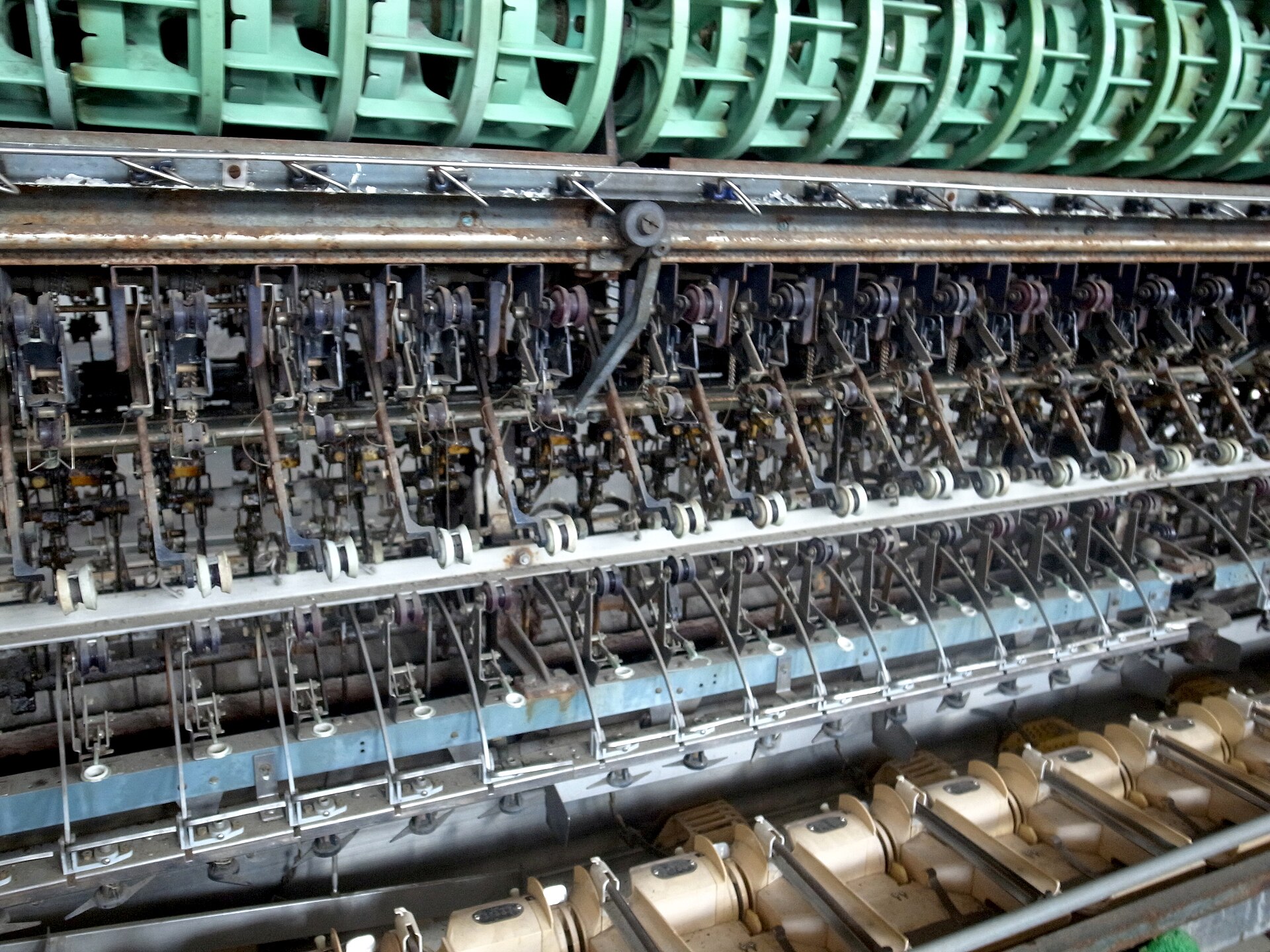
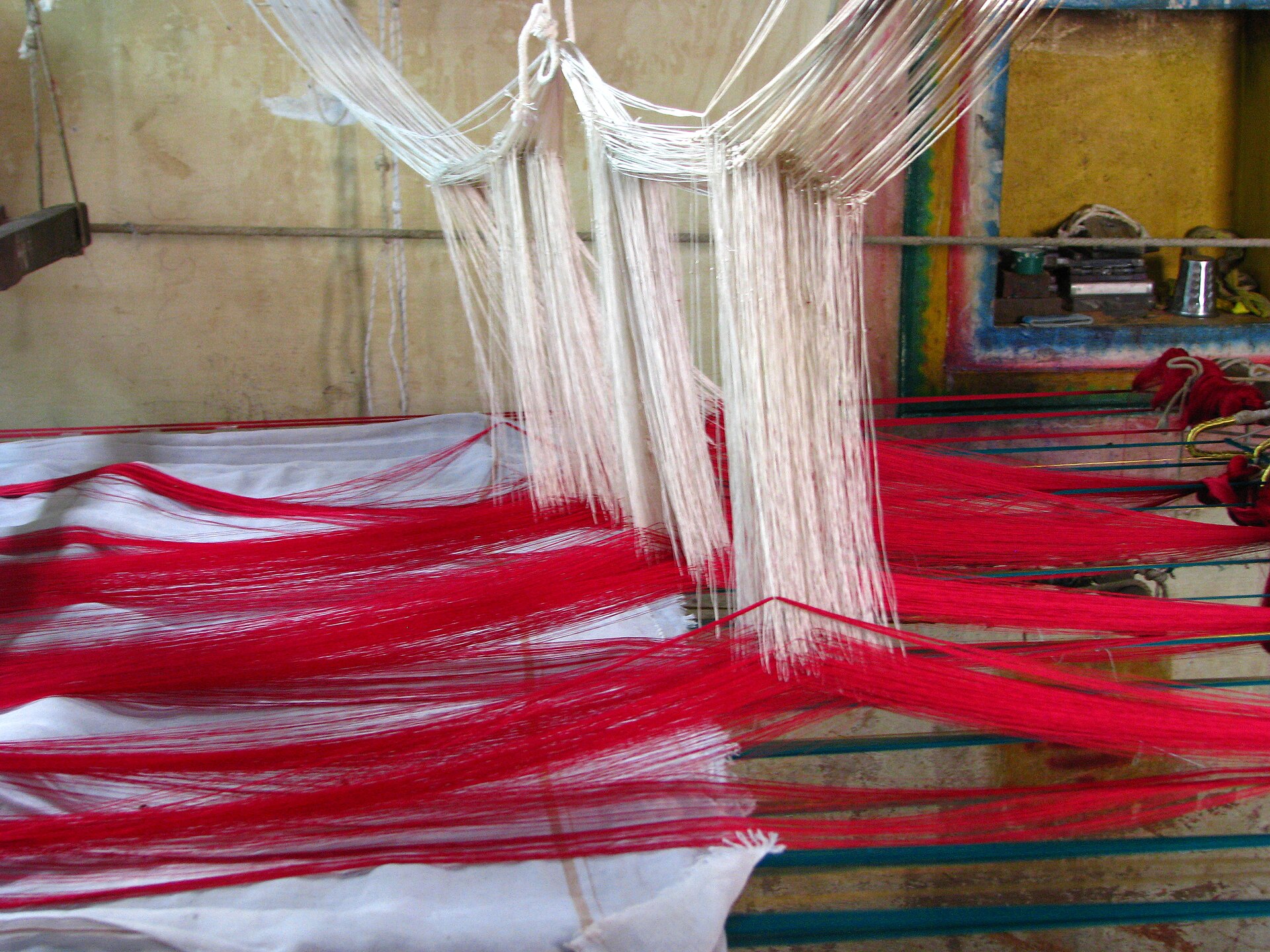
In sericulture the larva is killed in the cocoon by steam or hot air in the chrysalis stage before its metamorphosis, and sustained heat processing softens the hardened sericin so that the filament can be unwound. Silk reeling is the process by which a number of cocoon baves are reeled together to produce a single thread, achieved by unwinding filaments from a group of cooked cocoons in a warm water bath and winding the thread onto a fast moving reel. The reeling process forms a compact, untwisted and undegummed silk thread by combining the required number of silk filaments drawn from as many separate cocoons; the raw material is composed of extremely fine continuous silk filament of great length, unlike other natural textile fibres.
Beyond silk, sericulture yields by-products such as mulberry fruits rich in minerals and vitamins, ayurvedic and herbal medicines prepared from mulberry roots, bark and leaves, and termite-resistant mulberry timber.
4. Domestication and Genetics
Under the gene flow at bottleneck model, the domestication of the silkworm Bombyx mori was estimated to have begun roughly 7,500 years ago. The population bottleneck in the domesticated silkworm during its domestication was estimated to have ended about 3,984 years ago. Coalescent simulation analysis indicated that bi-directional gene flow occurred between domesticated and wild silkworms during the course of domestication.
A single-base-pair-resolution genetic variation map of the silkworm was constructed from 40 domesticated and wild silkworms, each sequenced to roughly threefold coverage. Domesticated silkworms are clearly genetically differentiated from wild silkworms yet retain large amounts of genetic variability, suggesting a short domestication event involving a large number of individuals. Signals of selection were detected at 354 candidate genes that may have been important during silkworm domestication, including some with enriched expression in the silk gland, midgut and testis.
Evidence indicates that sericulture began about 5,000 years ago, along with the domestication of the mulberry. Under human selection the domesticated silkworm Bombyx mori has evolved complete dependence on humans for survival, tolerating crowding and handling while losing the ability to fly, and more than 1000 inbred domesticated strains are maintained worldwide.
The wild silkworm is widely distributed in the Chinese provinces of Jiangsu and Zhejiang and can also be found in Anhui and Shandong, areas that are also the main regions of sericulture.
5. History and Spread
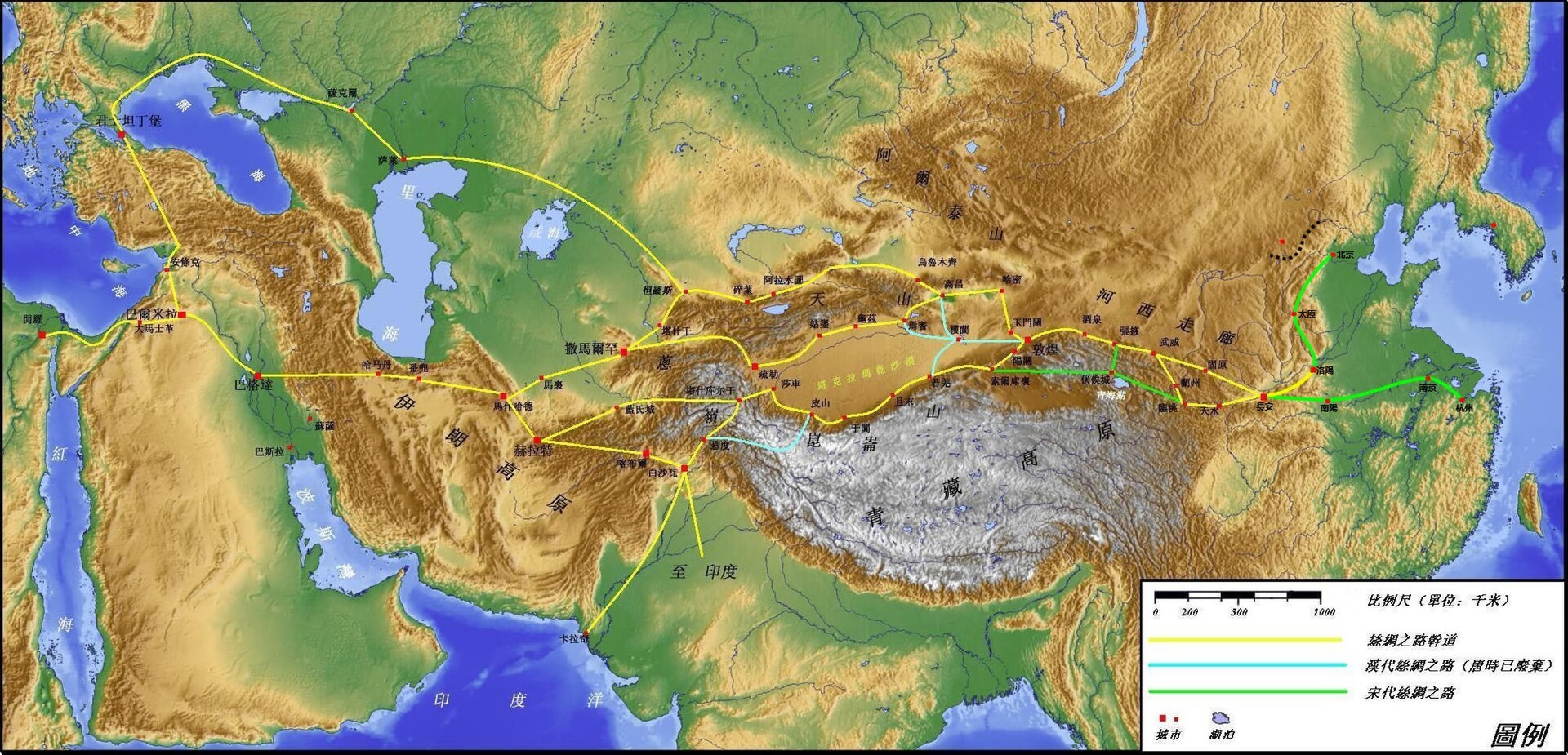
The Silk Road was a network of ancient trade routes formally established during the Han Dynasty of China in 130 BCE which linked regions of the ancient world in commerce until 1453 CE. The secret of silk making reached Europe around AD 550 through the Byzantine Empire, when monks working for the emperor Justinian I smuggled silkworm eggs to Constantinople inside hollow canes. Several kinds of wild silk are produced by caterpillars other than the mulberry silkworm, and they have been known and spun in China, South Asia and Europe since ancient times.
In Lyon a workshop in the Croix-Rousse district has been working from 1854 and has been protected as a Historical Monument since 1996.
Legend credits Chinese Empress Shiling Ti with discovering silk in her tea cup around 2640 BC, and the earliest authentic reference to silk appears in the Chronicles of Chou-King of 2200 BC. The first country after China to learn the secret of silk was Korea, where Chinese immigrants began sericulture around 1200 BC, before the industry spread to Japan.
Sericulture comprises the cultivation of mulberry leaves, the tending of silkworms, the gathering of threads from their cocoons and the weaving of silk, and it first appears in the Chinese archaeological record around 3600 BCE. Procopius records that about the same time certain monks came from India and promised the emperor Justinian that the Romans would no longer buy silk from the Persians.
6. Global Production and Trade
Silk occupies a small place in the world's textile economy, accounting for about 0.2 percent of textile production worldwide. Production is concentrated in Asia, which supplies over 95 percent of total global silk output. More than 40 countries take part in silk production. China is the leading supplier, while India is the second largest producer and the largest consumer.
Commercial silk is not a single material but a family of five major types, each obtained from a different species of silkworm and each tied to its own food plants: mulberry, oak tasar, tropical tasar, muga and eri.
7. India's Silk Industry
The Central Silk Board is a statutory body set up under an Act of Parliament of 1948 and established on 9 April 1949 as the sole organisation for comprehensive sericulture research and development in India. The Board marked its platinum jubilee with the unveiling of a commemorative coin by the Union Minister of Textiles at Mysuru, celebrating 75 years of service to India's silk industry.
India now ranks as the world's second-largest silk producer, its share of global production having risen from 6 percent in 1949 to 42 percent in 2023 as raw silk output grew from 1,242 to 38,913 metric tonnes. India's annual raw silk production had stood at 26,480 MT in 2013-14 before the 2023-24 gain, while output in the north-eastern states also expanded. The production of 3A-4A grade import substitute bivoltine raw silk increased to 9,675 MT during 2023-24 from 2,559 MT in 2013-14 showing growth in import-substitute output.
Efficiency in Indian silk production improved markedly: renditta fell from 17 to 6.47, and raw silk yield per hectare rose to 110 kg in 2023-24 from 95.93 kg in 2013-14, part of a wider rise in mulberry productivity per hectare from 15 kg. Estimated employment generation in the Indian silk sector increased to about 94.80 lakh persons during 2023-24 from 78.50 lakh persons in 2013-14 as the sector expanded.
Silk export earnings grew from ₹0.41 crores in 1949-50 to ₹2,028 crores in 2023-24 and reached over 80 countries.
8. Heritage Sites
The Tomioka Silk Mill and Related Sites form a historic sericulture and silk mill complex established in the late 19th and early 20th century in Gunma prefecture, north-west of Tokyo. The property consists of four sites that correspond to the different stages in the production of raw silk, among them a reeling plant whose machinery and industrial expertise were imported from France, an experimental farm for cocoon production, a sericulture school, and a cold-storage facility for silkworm eggs. The Tomioka Silk Mill and its related sites became the centre of innovation for the production of raw silk and marked Japan's entry into the modern industrialized era, making the country the world's leading exporter of raw silk, notably to Europe and the United States. Tomioka Silk Mill and Related Sites is a serial property inscribed on the World Heritage List in 2014 under criteria (ii) and (iv).
9. Timeline: from clay-cocoon China to the modern silk industry
- About 7500 years agoSilkworm domestication begins in ChinaGenetic modelling of the domestication bottleneck places the start of silkworm domestication at about 7500 years ago, with the bottleneck ending about 3984 years ago.
- c. 3600 BCESericulture appears in the archaeological recordSericulture — the cultivation of mulberry, the tending of silkworms, the gathering of threads from their cocoons and the weaving of silk — first appears in the archaeological record of ancient China.
- c. 2700 BCEEarliest known woven silkThe earliest known examples of woven silk date to about this time and come from the site of Qianshanyang in China.
- About 1200 BCESericulture reaches KoreaChinese immigrants started sericulture in Korea around 1200 BCE, and the industry later spread to Japan.
- 130 BCEHan China formally opens the Silk RoadThe trade routes that linked the regions of the ancient world in commerce from 130 BCE to 1453 CE were formally established during the Han Dynasty of China.
- c. 550 CESilkworm eggs reach ConstantinopleMonks from Serinda brought silkworm eggs to the emperor Justinian; the eggs were hatched into worms that fed on mulberry leaves, and silk making began in the Roman Empire.
- 1453 CEThe Silk Road closesThe Ottoman Empire boycotted trade with the west and closed the overland routes, turning Europeans towards the sea routes of the Age of Discovery.
- 1872Tomioka Silk Mill built in JapanThe Japanese government built the state model mechanised silk mill at Tomioka with machinery and industrial expertise imported from France, making it a decisive element in the renewal of Japanese sericulture.
- 9 April 1949India's Central Silk Board is establishedThe Central Silk Board, a statutory body set up under an Act of Parliament of 1948, began work to shape the sericulture industry; India's raw silk production then stood at 1,242 metric tonnes a year.
- 1993Silk fibroin admitted as a biomaterialThe U.S. Food and Drug Administration admitted silk fibroin as a biomaterial, opening the way for its later use in wound dressings, scaffolds and other medical devices.
- 1996Lyon's last family silk workshop protectedThe Mattelon silk-weaving workshop in the Croix-Rousse district of Lyon, in operation from 1854, was listed as a protected Historical Monument.
- 2004Draft silkworm genome completedThe draft genome sequences of the domesticated silkworm were completed, followed by a new assembly and resequencing data that opened silkworm functional and evolutionary genomics to wider study.
- 21 June 2014Tomioka inscribed on the World Heritage ListThe Tomioka Silk Mill and Related Sites were inscribed on the UNESCO World Heritage List on criteria (ii) and (iv) at the Doha session of the World Heritage Committee.
- 2023India's share of world silk production reaches 42 per centIndia ranked as the second largest silk producer worldwide, with its share of global production rising from 6% in 1949 to 42% in 2023.
- 2023-24India's raw silk output reaches 38,913 tonnesIndia's annual raw silk production rose to 38,913 metric tonnes in 2023-24, with estimated employment of about 94.80 lakh persons in the sericulture and silk sector.
References (21)
- 1Bombyx mori — Wikipedia WebView source
- 2Complete Resequencing of 40 Genomes Reveals Domestication Events and Genes in Silkworm (Bombyx) — PubMed Central (PMC3951477), National Library of Medicine WebView source
- 3Silk — An Introduction — International Sericultural Commission (ISC) WebView source
- 4Silk — Wikipedia WebView source
- 5Silk in Antiquity — World History Encyclopedia WebView source
- 6Silk Fibroin Biomaterials and Their Beneficial Role in Skin Wound Healing — PubMed Central (PMC9775069), National Library of Medicine WebView source
- 7Silk Reeling and Testing Manual — Chapter 2: Characteristics of the Cocoon — Food and Agriculture Organization of the United Nations (FAO) WebView source
- 8Silk Reeling and Testing Manual — Chapter 1: Introduction — Food and Agriculture Organization of the United Nations (FAO) WebView source
- 9Key Components — International Sericultural Commission (ISC) WebView source
- 10Annex 1: Mulberry, an exceptional forage available almost worldwide — Food and Agriculture Organization of the United Nations (FAO) WebView source
- 11Introduction — sericulture and silkworm genetic resources — Food and Agriculture Organization of the United Nations (FAO) WebView source
- 12Silk Reeling and Testing Manual — Chapter 6: Raw Silk Reeling — Food and Agriculture Organization of the United Nations (FAO) WebView source
- 13Demographic history and gene flow during silkworm domestication — PubMed Central (PMC4236568), National Library of Medicine WebView source
- 14Silk Road — World History Encyclopedia WebView source
- 15Mattelon Silk Workshop — Only Lyon — Lyon Convention and Visitors Bureau WebView source
- 16Evolution of Silk — International Sericultural Commission (ISC) WebView source
- 17Procopius: The Roman Silk Industry, c. 550 — Internet Medieval Sourcebook, Fordham University WebView source
- 18Silk — Central Silk Board, Ministry of Textiles, Government of India WebView source
- 19Union Textiles Minister unveils commemorative coin to celebrate Platinum Jubilee of Central Silk Board — Press Information Bureau, Government of India BookView source
- 20Year End Review 2024 of Ministry of Textiles — Press Information Bureau, Government of India 2024 BookView source
- 21Tomioka Silk Mill and Related Sites — UNESCO World Heritage Centre WebView source
 Ibn Battuta
 Hagia Sophia
 Tiger