Mangrove Forest
Salt-tolerant trees that hold tropical coastlines together, flooded twice a day and rooted in low-oxygen mud.
Mangrove forests are salt-tolerant evergreen ecosystems that occupy the intertidal zone along tropical and subtropical coastlines, lagoons, estuaries, rivers and deltas. Roughly 80 species of mangrove trees share adaptations to low-oxygen soil and daily tidal flooding, most visibly a dense tangle of prop roots. They stabilise coastlines against storm surges and erosion, shelter fish, and cover an estimated 14.8 million hectares worldwide.
In this article
Overview
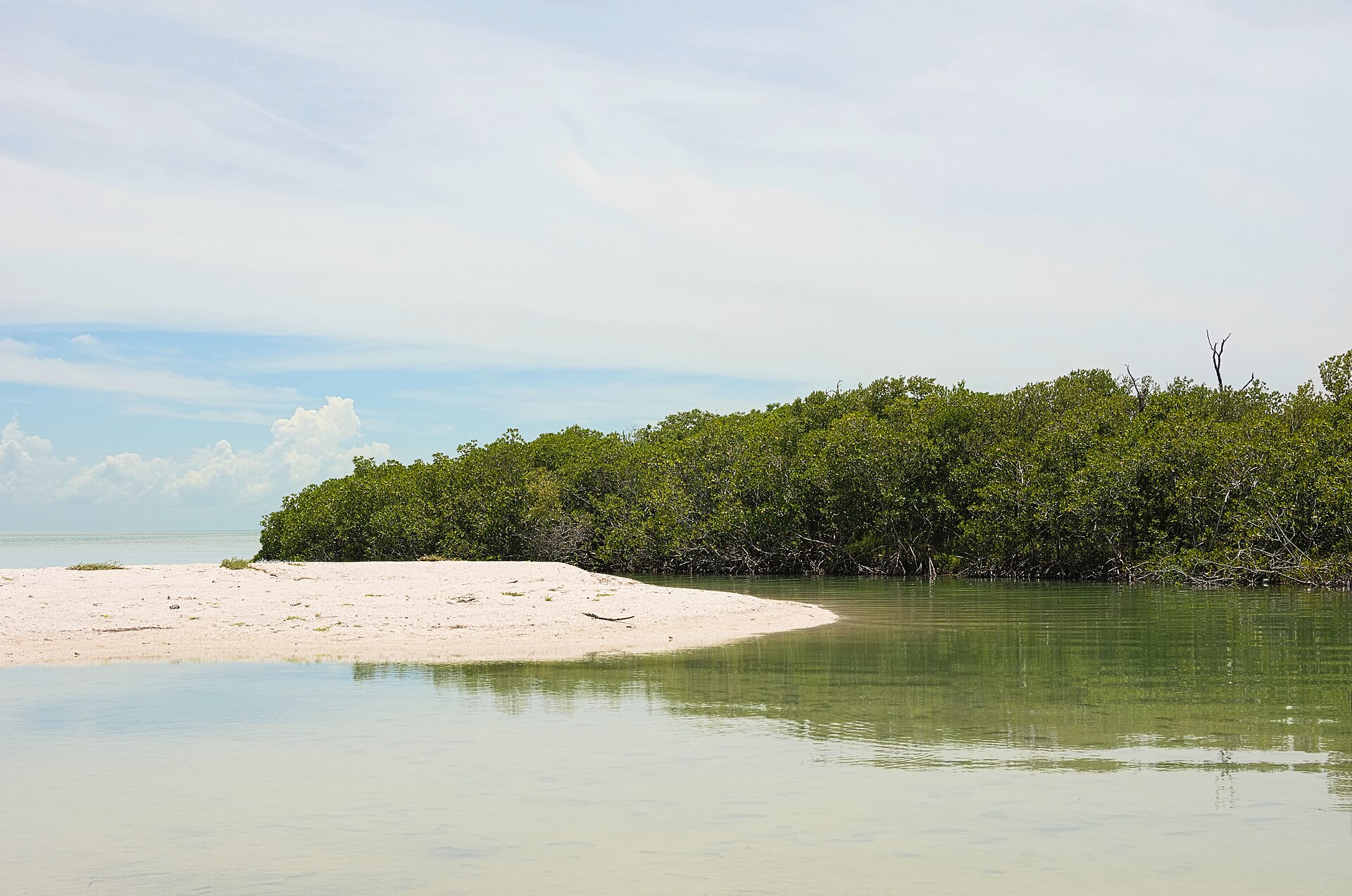
A mangrove forest is a salt-tolerant ecosystem dominated by evergreen trees or shrubs and occupying the coastal intertidal zone. It develops at the land-sea interface along tropical and subtropical coastlines, lagoons, estuaries, rivers and deltas. The biome is also known as the mangal, a saline woodland of depositional coastal settings where fine sediments gather in areas sheltered from high-energy wave action.
1. Distribution and Extent
Mangrove forests are confined to tropical and subtropical latitudes near the equator, a distribution shaped by the trees' inability to withstand freezing temperatures. Across this range mangroves cover an estimated 14.8 million hectares worldwide. The extent of the formation is matched by its internal variety: mangrove structure, species composition and ecological characteristics vary widely, as do the ways in which they are used and valued by humans.
The species count reflects this diversity. According to Hogarth, among the recognised mangrove species about 70 species in 20 genera from 16 families constitute the true mangroves. True mangroves are the species that occur almost exclusively in mangrove habitats.
2. Physical Setting
Mangrove forests occupy depositional coastal settings sheltered from high-energy wave action, where fine sediments gather into low-oxygen soil. The dense tangle of prop roots standing above the water slows the movement of tidal waters, so that sediments settle out of the water and build up the muddy bottom. Once established, these roots also provide oyster habitat and further slow water flow, enhancing sediment deposition in areas where it is already occurring. The tidal regime is equally formative: the habitat is flooded at least twice per day.
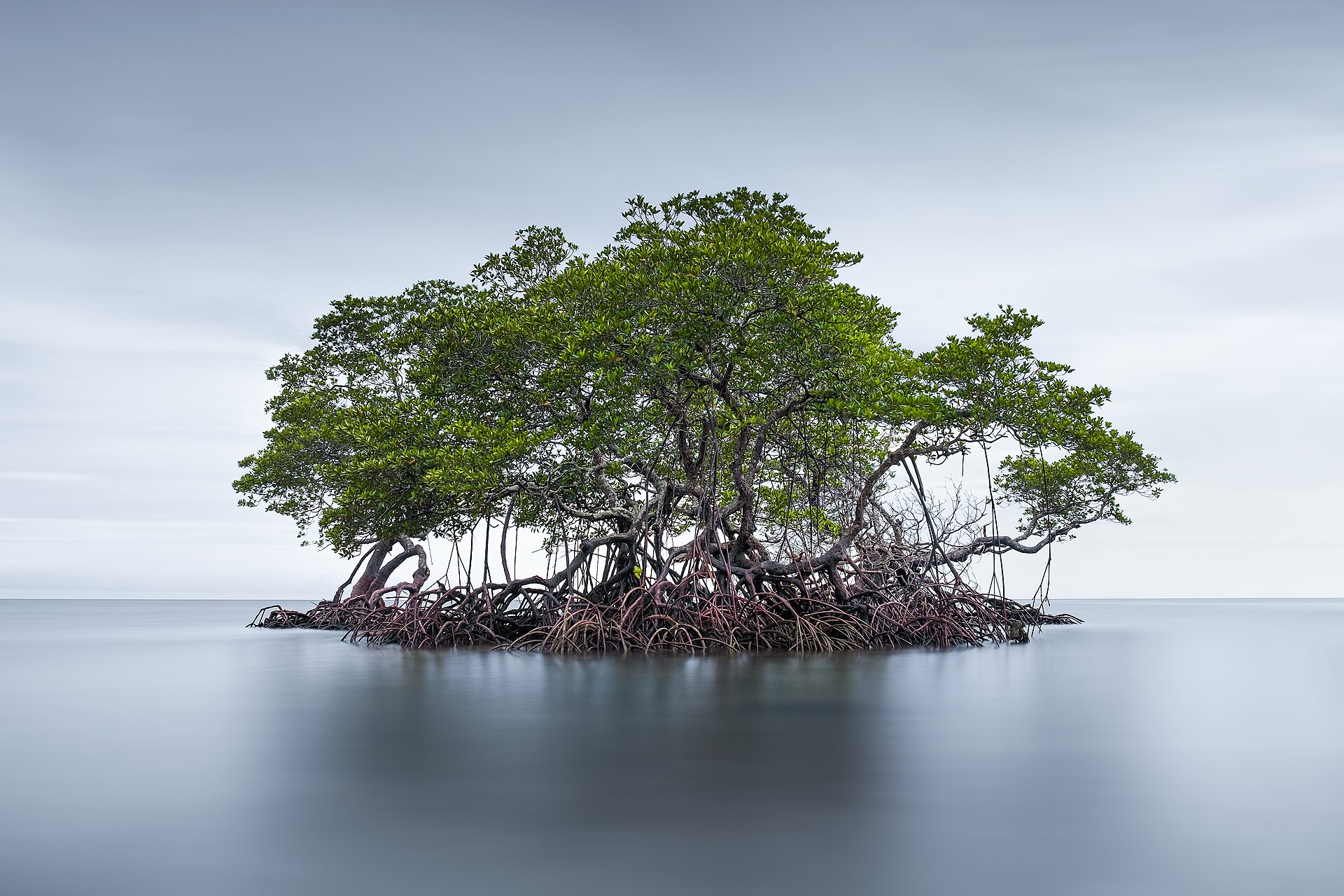
Salinity across these settings ranges from brackish water to about 9 percent salinity. Mangroves meet the resulting stress through specialised root structures: pneumatophores, or aerial roots, allow the plants to absorb gases directly from the atmosphere and other nutrients such as iron from the inhospitable soil. The red mangrove survives in the most inundated areas by propping itself above the water level with stilt roots and absorbing air through lenticels in its bark. Salt taken up with water is managed in part by exclusion and in part by sacrifice: one study found that the roots of the Indian mangrove Avicennia officinalis exclude 90 to 95 percent of the salt in the water taken up by the plant, depositing the excluded salt in the cortex of the root, while under the sacrificial leaf concept salt that does accumulate in the shoot concentrates in old leaves, which the plant then sheds.
3. Roots and Oxygen Uptake
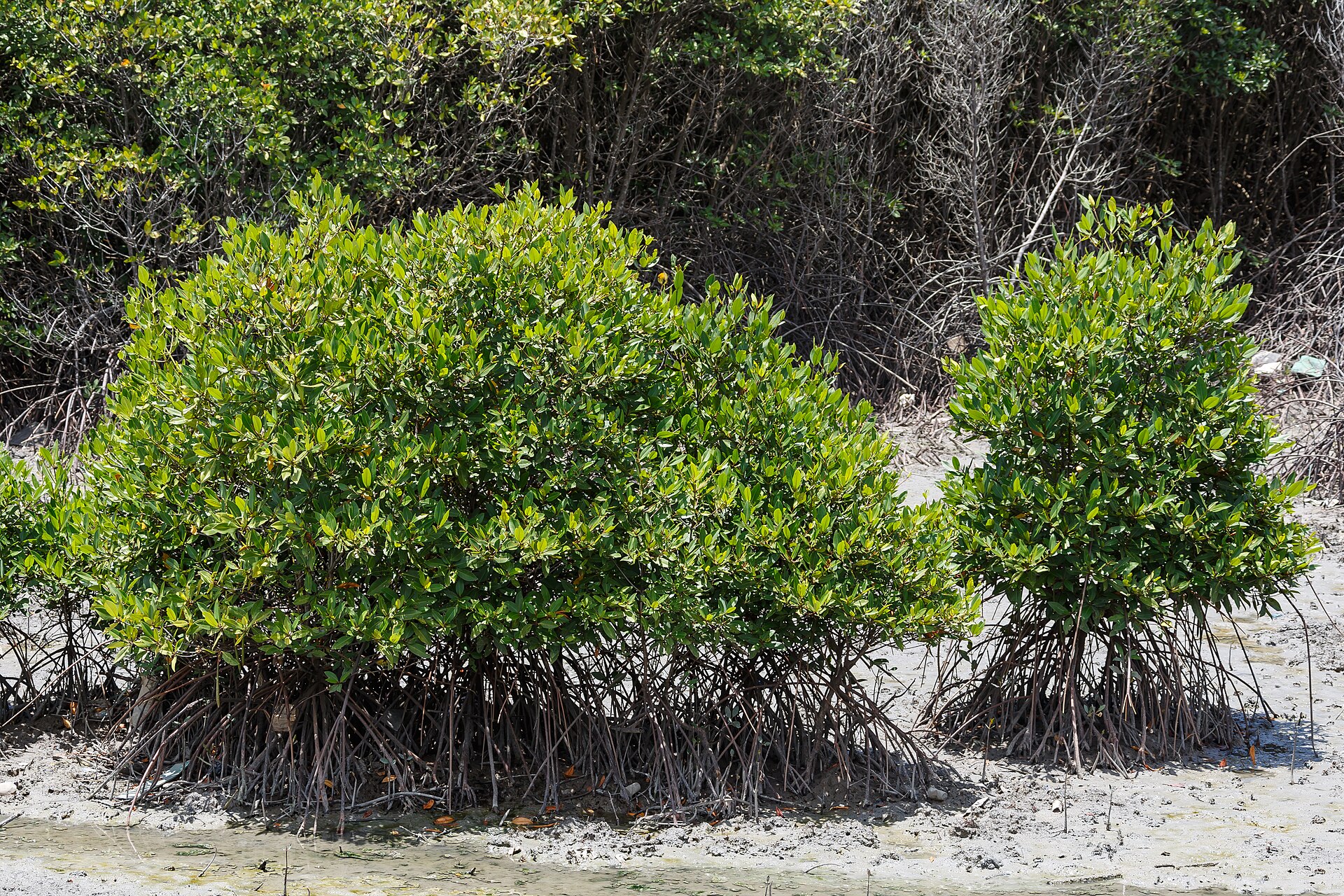
Mangrove trees form a dense tangle of prop roots that makes them appear to stand on stilts. These roots slow tidal water so that sediment settles and builds the muddy bottom. The trees also develop specialised structures for taking in extra oxygen. Red mangroves rely on stilt roots and on lenticels in the bark, while black mangroves, which grow on higher ground, send up pneumatophores that function like straws. Aerial roots of this kind absorb gases and nutrients such as iron.
4. Salt Tolerance
Mangroves are halophytes, and they meet saltwater immersion and wave action with a complex salt filtration system together with a complex root system. In the red mangrove the roots are significantly impermeable and highly suberised, so that they work as an ultrafiltration mechanism keeping sodium salts out of the rest of the plant. The roots of the Indian mangrove Avicennia officinalis were found in one study to exclude 90 to 95 percent of the salt in the water taken up by the plant, depositing the excluded salt in the cortex of the root.
5. Reproduction and Establishment
Mangrove reproduction is distinguished by vivipary, in which seeds germinate while still attached to the parent tree. The resulting propagule is effectively a ready-made photosynthetic seedling rather than a dormant seed. When the mature propagule drops into the water it can be carried great distances, and in some species propagules remain buoyant and viable for up to a year.
Establishment transforms the local physical environment. Once rooted, mangrove roots furnish habitat for oysters and slow the flow of water, which enhances sediment deposition in places where deposition is already under way.
6. Species and Classification
Mangroves are a group of trees and shrubs that live in the coastal intertidal zone3What is a mangrove forest? · NOAA National Ocean Service ↗. Within this group, true mangroves are distinguished as the species that occur almost exclusively in mangrove habitats2Mangrove · Wikipedia ↗.
| Category | Count | Habitat note |
|---|---|---|
| Total mangrove tree species | about 80 | — |
| True mangroves (per Hogarth) | about 70 species in 20 genera from 16 families | occur almost exclusively in mangrove habitats |
7. Ecological and Coastal Functions
Mangrove forests stabilise the coastline, reducing erosion from storm surges, currents, waves and tides. Their stands also defend coasts against waves, storm surges, tsunamis and erosion. Beyond this protective role, coastal guidelines address the further question of how far mangroves also keep pace with sea level rise.
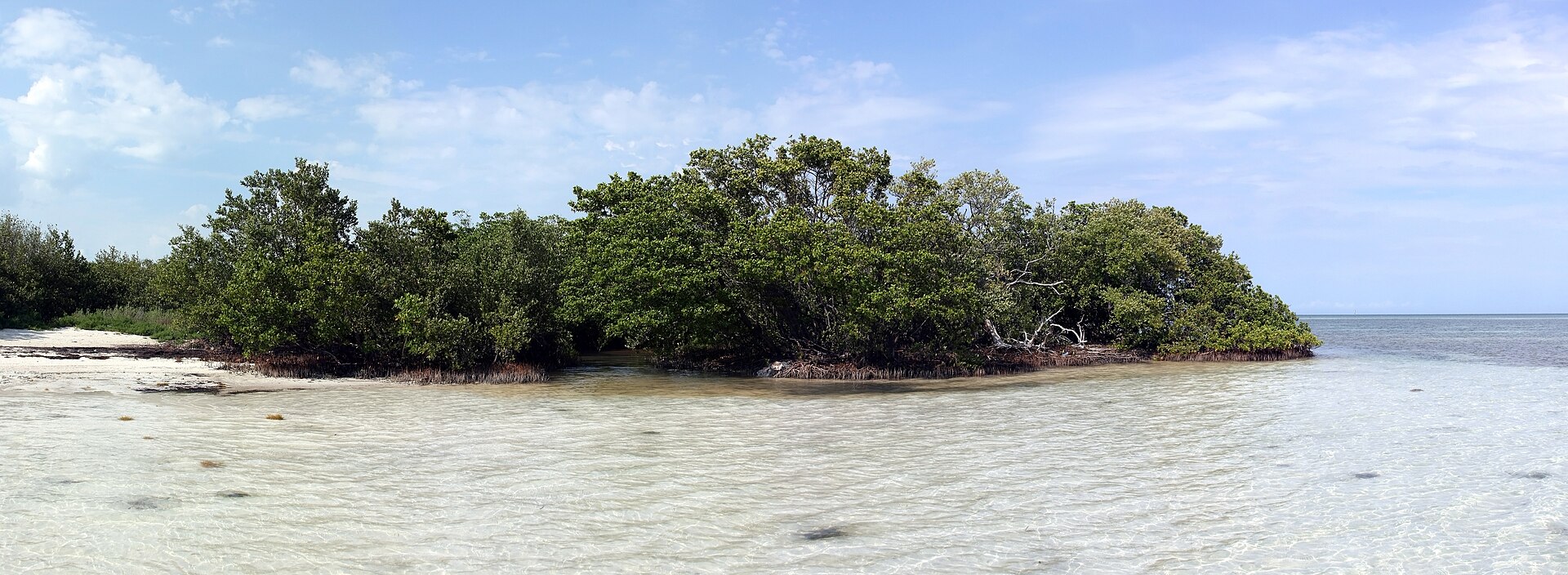
The intricate root system of mangroves makes these forests attractive to fish and other organisms seeking food and shelter from predators. This same root structure offers refuge from predators as well as a source of food.
8. Human Value and Threats
Mangrove ecosystems yield goods and services that underpin the livelihoods, well-being and security of coastal communities, and the ways people use and value these systems vary from place to place. That dependence makes the pressure on mangroves a human question as much as an ecological one. Loss of mangrove cover continues as a result of human activity, with a global annual deforestation rate estimated at 0.9 million hectares.
Marine and coastal ecosystems face threats from irresponsible human activities, among them pollution, coastal and offshore industrial development, and unsustainable or illegal fishing practices.
9. Monitoring and Restoration
Monitoring of mangrove extent and health has been transformed by remote sensing technologies and global data, which have been used since 2010 to assess the areas, conditions and deforestation rates of mangroves around the world. Such assessments supply the baseline against which change can be tracked and restoration judged.
The success of mangrove restoration may depend heavily on engagement with local stakeholders and on careful assessment that growing conditions suit the species chosen. Restoration outcomes therefore hinge on stakeholder engagement and site assessment rather than on planting effort alone.
10. Timeline
- 1952Mangrove ecology becomes a field of studyThe structural and salinity adaptations of mangrove trees move from scattered observation into systematic coastal study.
- 1980Global mapping of mangrove extent beginsNational forest inventories and coastal surveys begin to record mangrove areas as a distinct forest type in tropical countries.
- 2000Blue carbon enters the climate agendaThe carbon held in waterlogged mangrove soils is recognised as a distinct contribution to coastal carbon budgets.
- 2010Remote sensing takes over the global assessmentSatellite data begin to be used to assess the area, condition and deforestation rate of mangroves worldwide.
- 2014Coastal defence guidelines publishedWetlands International publishes guidelines for coastal managers on the role of mangroves against waves, storms, tsunamis, erosion and sea level rise.
- 2015The true mangroves are enumeratedHogarth's count classifies about 70 species in 20 genera from 16 families as true mangroves.
- 2018Global Mangrove Watch established as a toolSatellite-based mapping becomes a standing tool for measuring mangrove extent and change worldwide.
- 2020FAO reports 14.8 million hectaresThe global mangrove area is estimated at 14.8 million hectares, with structure and species composition varying widely between regions.
- 2024Global Mangrove Alliance coordinates restorationConservation organisations coordinate through a single alliance to halt loss and restore degraded mangrove coasts.
- 2026Restoration scales with local assessmentRestoration success is found to depend heavily on stakeholder engagement and on matching species to site conditions.
11. Frequently asked questions
How many species of mangrove trees are there in total?
There are about 80 species of mangrove trees, all of them growing in low-oxygen soil where slow water lets fine sediment settle3.
Why do mangrove forests grow only near the equator?
They are restricted to tropical and subtropical latitudes because they cannot withstand freezing temperatures3.
How salty is the water mangroves can tolerate?
The saline conditions tolerated by mangrove species range from brackish water through pure seawater at 3 to 4 percent salinity, up to water over twice the salinity of ocean seawater at up to 9 percent2.
How do mangroves cope with limited fresh water in salty soils?
Because fresh water is limited in salty intertidal soils, mangroves limit the amount of water they lose through their leaves2.
What is a propagule and how long can it survive at sea?
Who is working to conserve and restore mangroves?
The Global Mangrove Alliance describes itself as a coordinated, multidisciplinary approach to mangrove conservation and restoration at a scale that matters, uniting stakeholders from government, academia, non-profit organisations and industry6Global Mangrove Alliance · Global Mangrove Alliance ↗.
References (6)
- 1Mangroves — Food and Agriculture Organization of the United Nations WebView source
- 2Mangrove — Wikipedia Web↩View source
- 3What is a mangrove forest? — NOAA National Ocean Service Web↩View source
- 4Mangroves for coastal defence — Wetlands International WebView source
- 5Global Mangrove Watch — UN Environment Programme World Conservation Monitoring Centre WebView source
- 6Global Mangrove Alliance — Global Mangrove Alliance Web↩View source
 Apollo 11
 International Space Station
 Saturn