Masada
A desert fortress and the last stand of the Sicarii.
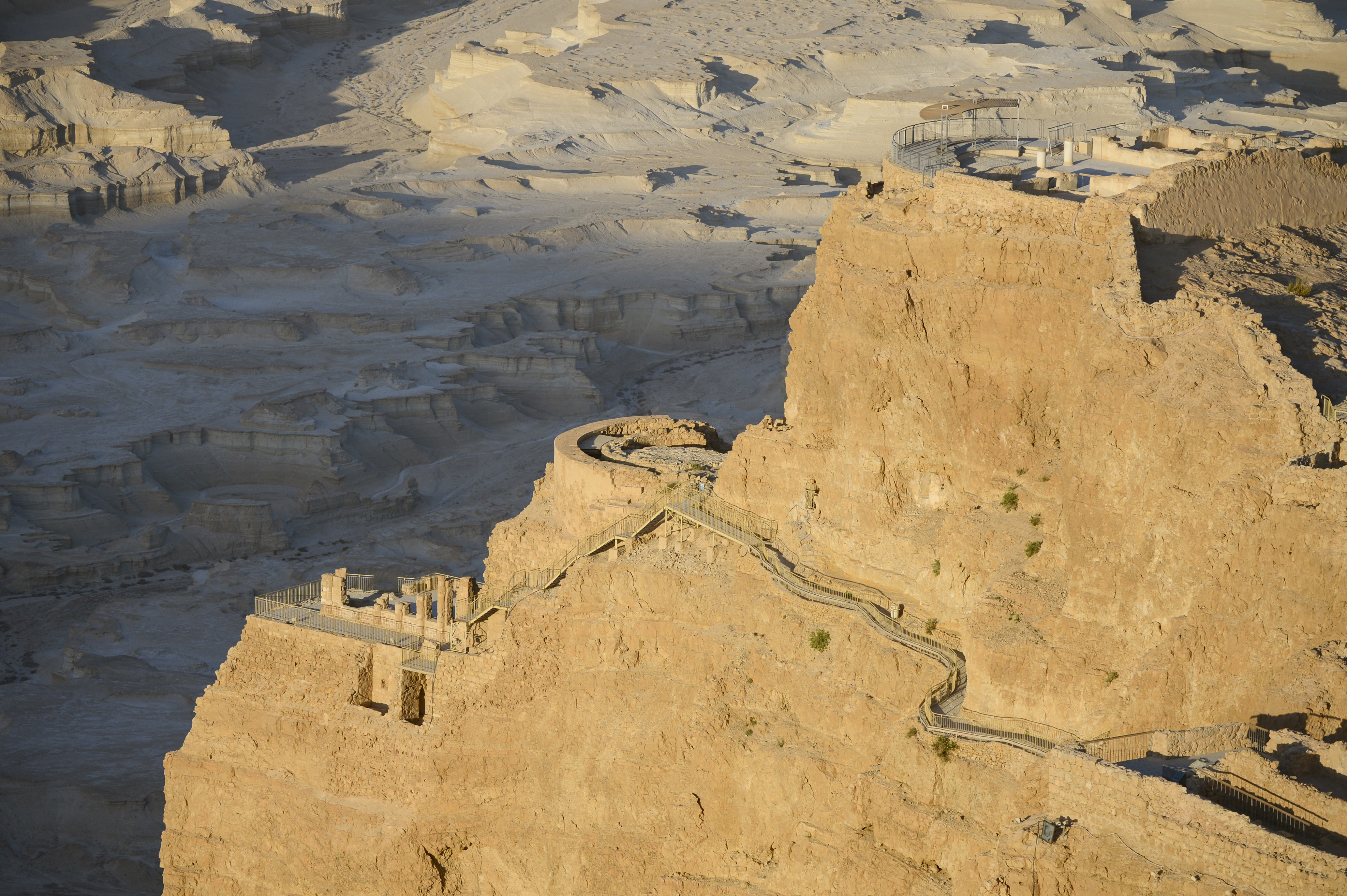
Overview
Masada is a plateau site most renowned for its role during the First Jewish–Roman War (66–73 AD), when it became the final holdout of Jewish rebels following the destruction of Jerusalem 1Masada — wiki · Wikipedia ↗. Today it is a UNESCO World Heritage Site recognized for its siege works, and one of Israel's most popular tourist attractions, drawing around 750,000 visitors a year 1. Almost all historical information about the site comes from the first-century Jewish Roman historian Josephus 2Masada — sec2 · Wikipedia ↗.
The most significant remains at the site date to the reign of Herod the Great, King of Judaea under Roman administration, who transformed Masada into a fortified desert refuge early in his rule 1. Horvat Mazad underwent significant expansion beginning during his reign (37–4 BCE), developing into a larger fortified complex 3Masada — mazad · Reference ↗. Josephus writes that Herod the Great captured the site in the power struggle that followed the death of his father Antipater in 43 BC 2, and that the fortress survived the siege of the last Hasmonean king Antigonus II Mattathias, who ruled with Parthian support 2.
Herod built a 4 m (13 ft) high casemate wall around the plateau totaling 1,300 m (4,300 ft) in length, reinforced by many towers 4Masada — sec1 · Wikipedia ↗. These served both defensive purposes and as storage areas, a design characteristic of Iron Age Israelite fortifications that was revived during the reign of Herod 3.
In 66 CE a group of Jewish rebels, the Sicarii, overcame the Roman garrison of Masada with the aid of a ruse 5Masada — sec5 · Wikipedia ↗. According to Josephus, the Sicarii were an extremist Jewish splinter group antagonistic to a larger grouping of Jews referred to as the Zealots, who carried the main burden of the rebellion 5. A road in the region is believed to have been the route taken by Legio V Macedonica during the First Jewish–Roman War, after the legion camped at Emmaus in 68 CE, before advancing to lay siege to Jerusalem 6Masada — mazruq · Reference ↗.
Masada was last occupied during the Byzantine period, when a small church was established at the site 7Masada — sec6 · Wikipedia ↗. The Aramaic common noun marda, "fortress", corresponds in meaning to the Greek name of another desert monastery of the time, Kastellion, and is used to describe that site in the vita of St Sabbas, but it is used as a proper name only for the monastery at Masada, as can be seen from the vita of St Euthymius 7.
The site of Masada was identified in 1838 by Americans Edward Robinson and Eli Smith, and in 1842 by American missionary Samuel W. 8Masada — sec7 · Wikipedia ↗ Masada was extensively excavated between 1963 and 1965 by an expedition led by Israeli archaeologist and former military Chief-of-Staff Yigael Yadin 8. The meter-high circumvallation wall that the Romans built around Masada can be seen, together with eight Roman siege camps just outside this wall 8.
Finds at Horbat Mazruq include domestic artifacts such as a tabun (clay oven), basalt mortars, grinding stones, Hasmonean and Herodian lamps, and cooking pots, which are consistent with assemblages from first-century BCE to CE Jerusalem, Jericho, Masada, and refuge caves 6. Rachel Bar Nathan have announced the discovery of remains of a 2,000-year-old Roman basilica complex dating to the reign of Herod the Great 9Masada — park · Reference ↗; they dated the earliest structure, featuring Corinthian columns and a row of pedestals, to Herod 9.
1. Geography and Setting
The cliff of Masada is, geologically speaking, a horst 1.
The site's occupation belongs to a much longer chronology than its geology. Herod, whose reign is dated 37–4 BC, transformed Masada into a fortified desert refuge early in his rule 1.
In 73 AD the Roman governor of Judaea, Lucius Flavius Silva, headed the Roman legion X Fretensis and laid siege to Masada 5.
The remains of a maximum of 28 people were unearthed at Masada, possibly 29 including a foetus 8.
Yadin published a book in 1966 for the general public, "מצדה" ("Masada") 8.
The Monastery of Marda: Masada in the Byzantine Period appeared in the Bulletin of the Anglo-Israel Archaeological Society; 2001/2002, Vol. 7.
The plateau's most substantial remains belong to the reign of Herod the Great, King of Judaea under Roman administration 1. According to Josephus, Herod had already seized the stronghold in the power struggle that followed the death of his father Antipater in 43 BC 2. Horvat Mazad underwent significant expansion beginning during his reign (37–4 BCE), developing into a larger fortified complex 3. Herod enclosed the plateau with a 4 m (13 ft) high casemate wall running 1,300 m (4,300 ft) in length and reinforced by many towers 4; the casemates served both defensive purposes and as storage areas, a design characteristic of Iron Age Israelite fortifications that was revived during his reign 3.
Almost all historical information about Masada comes from the first-century Jewish Roman historian Josephus 2. In 66 CE a group of Jewish rebels, the Sicarii, overcame the Roman garrison of Masada with the aid of a ruse 5. Josephus describes the Sicarii as an extremist Jewish splinter group antagonistic to a larger grouping of Jews referred to as the Zealots, who carried the main burden of the rebellion 5. Masada is most renowned for its role during the First Jewish–Roman War (66–73 AD), when it became the final holdout of Jewish rebels following the destruction of Jerusalem 1.
The site was identified in 1838 by Americans Edward Robinson and Eli Smith, and in 1842 by American missionary Samuel W. 8. Masada was extensively excavated between 1963 and 1965 by an expedition led by Israeli archaeologist and former military Chief-of-Staff Yigael Yadin 8. The meter-high circumvallation wall that the Romans built around Masada can be seen, together with eight Roman siege camps just outside this wall 8.
Masada was last occupied during the Byzantine period, when a small church was established at the site 7. The Aramaic common noun marda, "fortress", corresponds in meaning to the Greek name of another desert monastery of the time, Kastellion, and is used to describe that site in the vita (biography) of St Sabbas, but it is used as a proper name only for the monastery at Masada, as can be seen from the vita of St Euthymius 7.
In the Christian Bible Herod the Great is described as the coordinator of the Massacre of the Innocents 10Masada — great · Reference ↗; most other New Testament references to "Herod" are either to his son Herod Antipas, such as the events leading to the executions of John the Baptist and Jesus of Nazareth in Matthew 14, or to his grandson Herod Agrippa in Acts 12 10. Upon Herod's death the Romans divided his kingdom among three of his sons and his sister, his son Herod Antipas receiving the tetrarchy of Galilee and Peraea 10.
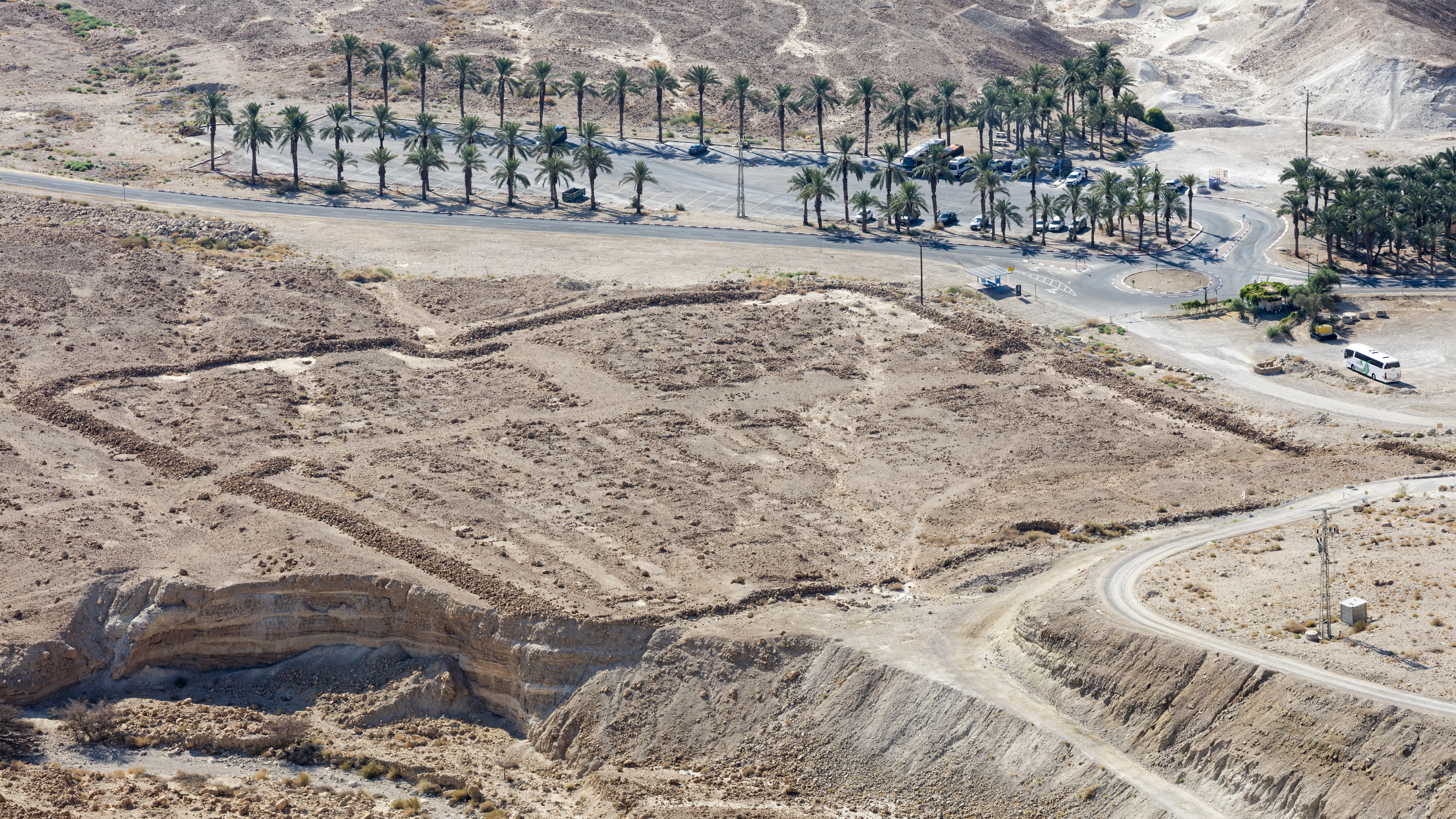
2. Herodian Palace-Fortress
According to Josephus, between 37 and 31 BC Herod the Great built a large fortress on the plateau as a refuge for himself in the event of a revolt and erected two palaces with an endless food supply 2. The Herodian palace-fortress includes a caldarium (hot room) in a northern Roman-style public bath 2.
These structures served both defensive purposes and as storage areas, a design characteristic of Iron Age Israelite fortifications that was revived during the reign of Herod 3.
Josephus further writes that Herod the Great captured the site in the power struggle that followed the death of his father Antipater in 43 BC 2. The fortress survived the siege of the last Hasmonean king Antigonus II Mattathias, who ruled with Parthian support 2.
Almost all historical information about Masada comes from the first-century Jewish Roman historian Josephus 2. The most significant remains at the site date to the reign of Herod the Great, King of Judaea under Roman administration, who transformed Masada into a fortified desert refuge early in his rule 1.
Herod built a 4 m (13 ft) high casemate wall around the plateau totaling 1,300 m (4,300 ft) in length, reinforced by many towers 4. Horvat Mazad underwent significant expansion beginning during the reign of Herod the Great (37–4 BCE), developing into a larger fortified complex 3.
Masada is most renowned for its role during the First Jewish–Roman War (66–73 AD), when it became the final holdout of Jewish rebels following the destruction of Jerusalem 1. In 66 CE a group of Jewish rebels, the Sicarii, overcame the Roman garrison of Masada with the aid of a ruse 5. According to Josephus, the Sicarii were an extremist Jewish splinter group antagonistic to a larger grouping of Jews referred to as the Zealots, who carried the main burden of the rebellion 5. The ramp was complete in the spring of 73, after probably two to three months of siege, allowing the Romans to breach the wall of the fortress with a battering ram on April 16 5.
Masada was last occupied during the Byzantine period, when a small church was established at the site 7. The Aramaic common noun marda, "fortress", corresponds in meaning to the Greek name of another desert monastery of the time, Kastellion, and is used to describe that site in the vita (biography) of St Sabbas, but it is used as a proper name only for the monastery at Masada, as can be seen from the vita of St Euthymius 7.
The site of Masada was identified in 1838 by Americans Edward Robinson and Eli Smith, and in 1842 American missionary Samuel W. — the record of the identification is cut off at that point 8. Masada was extensively excavated between 1963 and 1965 by an expedition led by Israeli archaeologist and former military Chief-of-Staff Yigael Yadin 8.
3. First Jewish–Roman War and Siege
In 66 CE a group of Jewish rebels known as the Sicarii overcame the Roman garrison of Masada with the aid of a ruse.1 Josephus describes the Sicarii as an extremist Jewish splinter group antagonistic to the larger grouping of Jews called the Zealots, who carried the main burden of the rebellion.5
Josephus says the Sicarii raided nearby Jewish villages including Ein Gedi, where they massacred 700 women and children.2
In 73 AD the Roman governor of Judaea, Lucius Flavius Silva, headed the Roman legion X Fretensis and laid siege to Masada.1 A group known as the Sicarii led by Eleazar ben Ya'ir defended the site against the Roman Tenth Legion under Silva.1
The Romans employed the X Legion with auxiliary units and Jewish prisoners of war, totaling some 15,000, of whom an estimated 8,000 to 9,000 were fighting men.1 The legion surrounded Masada, building a circumvallation wall and then a siege ramp against the western face of the plateau.1
The ramp was complete in the spring of 73 after probably two to three months of siege, allowing the Romans to breach the wall with a battering ram on April 16.1 A giant siege tower with a battering ram was constructed and moved laboriously up the completed ramp.1
According to Josephus the siege, from 73 to 74 CE at the end of the First Jewish–Roman War, ended in the mass suicide of the 960 Sicarii rebels hiding there.1 Eric Cline believes Josephus is retelling a similar event that happened to him during the Siege of Yodfat.1
Almost all historical information about Masada comes from the first-century Jewish Roman historian Josephus.2 Masada is most renowned for its role during the First Jewish–Roman War (66–73 AD), when it became the final holdout of Jewish rebels following the destruction of Jerusalem.1
The Romans laid siege by building a circumvallation wall and a massive ramp.1 The meter-high circumvallation wall that the Romans built around Masada can be seen, together with eight Roman siege camps just outside this wall.8 The surrounding Roman siege works and bases remain visible and are among the most intact examples of Roman military engineering.1 The Roman siege installations as a whole, especially the attack ramp, are the best preserved of their kind, and the reason for declaring Masada a UNESCO World Heritage site.8
The most significant remains at the site date to the reign of Herod the Great, King of Judaea under Roman administration.1 The site of Masada was identified in 1838 by Americans Edward Robinson and Eli Smith, and in 1842 by American missionary Samuel W.8
This indicates that the remains may belong to non-Jewish Roman soldiers or civilians who occupied the site before or after the siege.8
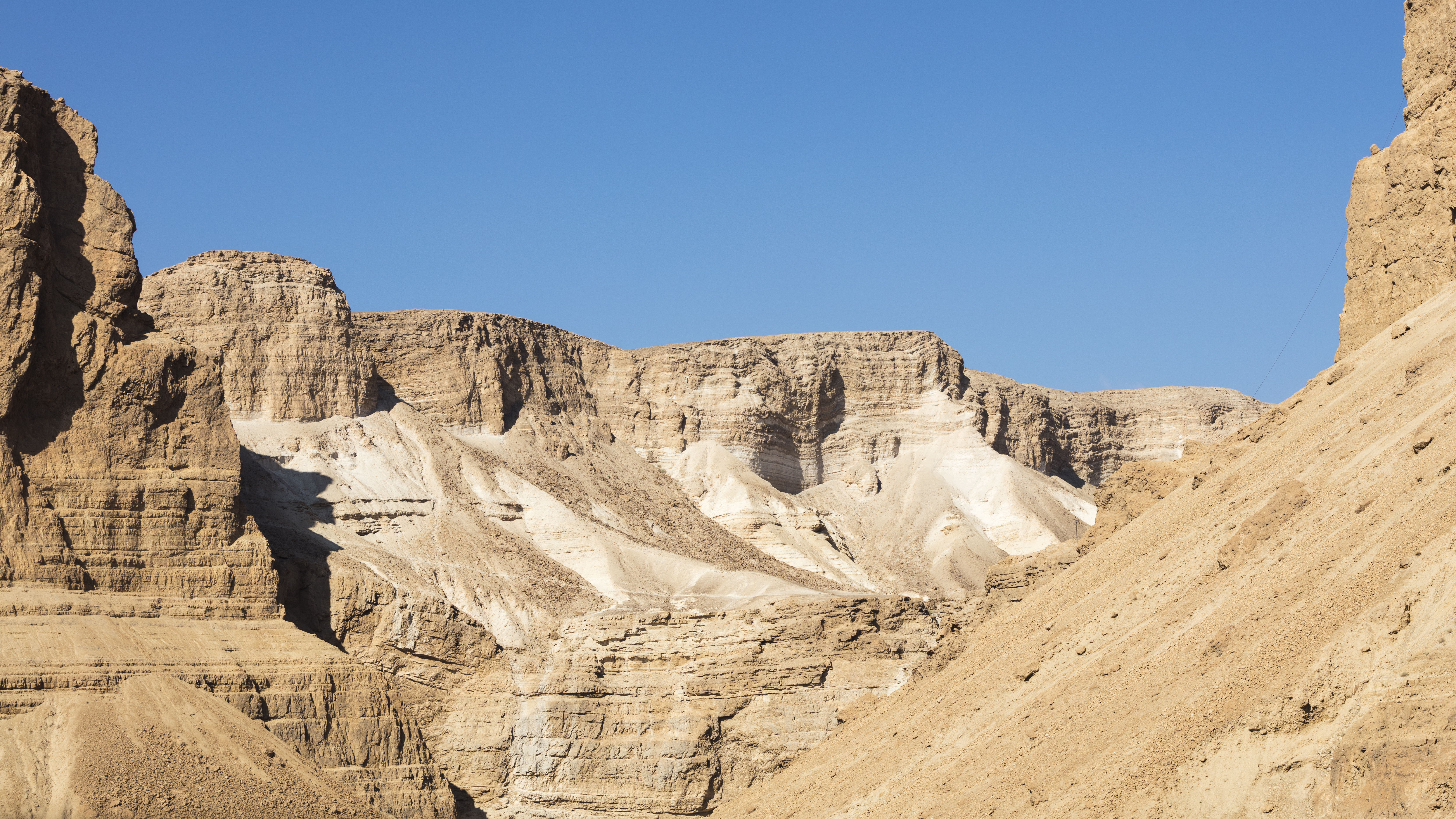
4. Archaeology and Excavation
The site of Masada was identified in 1838 by Americans Edward Robinson and Eli Smith, and in 1842 by American missionary Samuel W. 8 Initial digs followed these identifications. 8
Masada was extensively excavated between 1963 and 1965 by an expedition led by Israeli archaeologist and former military Chief-of-Staff Yigael Yadin. 8 Yadin published a book in 1966 for the general public titled "מצדה" ("Masada"). 8
The remains of a maximum of 28 people were unearthed at Masada, possibly 29 including a foetus. 8 This indicates that the remains may belong to non-Jewish Roman soldiers or civilians who occupied the site before or after the siege. 8
The site's most significant remains belong to the reign of Herod the Great, King of Judaea under Roman administration from 37–4 BC, who transformed Masada into a fortified desert refuge early in his rule 1. Horvat Mazad underwent significant expansion beginning during that same reign, developing into a larger fortified complex 3. Herod built a 4 m (13 ft) high casemate wall around the plateau totaling 1,300 m (4,300 ft) in length, reinforced by many towers 4. These served both defensive purposes and as storage areas, a design characteristic of Iron Age Israelite fortifications that was revived during the reign of Herod 3.
Almost all historical information about Masada comes from the first-century Jewish Roman historian Josephus 2. Josephus writes that Herod the Great captured it in the power struggle that followed the death of his father Antipater in 43 BC 2, and that the site survived the siege of the last Hasmonean king Antigonus II Mattathias, who ruled with Parthian support 2. In 66 CE a group of Jewish rebels, the Sicarii, overcame the Roman garrison of Masada with the aid of a ruse 5; according to Josephus the Sicarii were an extremist Jewish splinter group antagonistic to a larger grouping of Jews referred to as the Zealots, who carried the main burden of the rebellion 5. Masada is most renowned for its role during the First Jewish–Roman War (66–73 AD), when it became the final holdout of Jewish rebels following the destruction of Jerusalem 1.
The meter-high circumvallation wall that the Romans built around Masada can be seen, together with eight Roman siege camps just outside this wall 8. A road in the surrounding landscape is believed to have been the route taken by Legio V Macedonica during the First Jewish–Roman War, after the legion camped at Emmaus in 68 CE, before advancing to lay siege to Jerusalem 6. Finds at Horbat Mazruq include domestic artifacts such as a tabun (clay oven), basalt mortars, grinding stones, Hasmonean and Herodian lamps, and cooking pots, which are consistent with assemblages from first-century BCE to CE Jerusalem, Jericho, Masada, and refuge caves 6.
Masada was last occupied during the Byzantine period, when a small church was established at the site 7. The Aramaic common noun marda, "fortress", corresponds in meaning to the Greek name of another desert monastery of the time, Kastellion, and is used to describe that site in the vita (biography) of St Sabbas, but it is used as a proper name only for the monastery at Masada, as can be seen from the vita of St Euthymius 7.
Work elsewhere in the region bears on the Herodian horizon: at Ashkelon National Park, remains of a 2,000-year-old Roman basilica complex dating to the reign of Herod the Great have been announced, and the earliest structure there, featuring Corinthian columns and a row of pedestals, was dated to Herod 9. Study of ancient plant material from the site has been framed under the heading "6 millennia old but 'almost fresh,' Masada seeds unravel barley's origins" 11Masada — sec8 · Wikipedia ↗.
5. Byzantine Monastery of Marda
Masada was last occupied during the Byzantine period, when a small church was established at the site7. The community that settled there is remembered as the Byzantine monastery of Marda7.
The name Marda derives from an Aramaic common noun meaning "fortress"7. In meaning this noun corresponds to the Greek name Kastellion, which designates another desert monastery of the time7. That Greek name is used to describe the other site in the vita, or biography, of St Sabbas7. As a proper name, however, marda is applied only to the monastery at Masada, a usage visible in the vita of St Euthymius7.
The monastery has been treated in scholarship under the title The Monastery of Marda: Masada in the Byzantine Period, published in the Bulletin of the Anglo-Israel Archaeological Society in 2001/20027.
6. Legacy and Conservation
The meter-high circumvallation wall that the Romans built around Masada can still be seen, together with eight Roman siege camps just outside this wall 8. The Roman siege installations as a whole, and especially the attack ramp, are the best preserved of their kind 8. It is this survival that is the reason for declaring Masada a UNESCO World Heritage site 8.
In modern times the story of Masada was interpreted as a symbol of heroism that became influential in early Israeli national identity 1.
Almost all historical information about Masada comes from the first-century Jewish Roman historian Josephus 2. Josephus further writes that Herod the Great captured it in the power struggle that followed the death of his father Antipater in 43 BC 2. The site survived the siege of the last Hasmonean king Antigonus II Mattathias, who ruled with Parthian support 2. The most significant remains at the site date to the reign of Herod the Great, King of Judaea under Roman administration 1.
Horvat Mazad underwent significant expansion beginning during the reign of Herod the Great (37–4 BCE), developing into a larger fortified complex 3. Herod built a 4 m (13 ft) high casemate wall around the plateau totaling 1,300 m (4,300 ft) in length, reinforced by many towers 4. These served both defensive purposes and as storage areas, a design characteristic of Iron Age Israelite fortifications that was revived during the reign of Herod 3.
In 66 CE a group of Jewish rebels, the Sicarii, overcame the Roman garrison of Masada with the aid of a ruse 5. According to Josephus, the Sicarii were an extremist Jewish splinter group antagonistic to a larger grouping of Jews referred to as the Zealots, who carried the main burden of the rebellion 5. Masada is most renowned for its role during the First Jewish–Roman War (66–73 AD), when it became the final holdout of Jewish rebels following the destruction of Jerusalem 1.
The site of Masada was identified in 1838 by Americans Edward Robinson and Eli Smith, and in 1842 by the American missionary Samuel W. 8 Masada was extensively excavated between 1963 and 1965 by an expedition led by Israeli archaeologist and former military Chief-of-Staff Yigael Yadin 8. Masada was last occupied during the Byzantine period, when a small church was established at the site 7. The Aramaic common noun marda, "fortress", corresponds in meaning to the Greek name of another desert monastery of the time, Kastellion, and is used to describe that site in the vita of St Sabbas, but it is used as a proper name only for the monastery at Masada, as can be seen from the vita of St Euthymius 7.
7. Key dates
- 1838Identification and initial digs The site of Masada was identified in 1838 by A…Identification and initial digs The site of Masada was identified in 1838 by Americans Edward Robinson and Eli Smith, and in 1842, American missionary Samuel W.
- 1963Yigael Yadin expedition Masada was extensively excavated between 1963 and 1965…Yigael Yadin expedition Masada was extensively excavated between 1963 and 1965 by an expedition led by Israeli archaeologist and former military Chief-of-Staff Yigael Yadin .
- 1966Yadin published a book in 1966 for the general public, "מצדה" ("Masada").Yadin published a book in 1966 for the general public, "מצדה" ("Masada").
- 2001The Monastery of Marda: Masada in the Byzantine Period , Bulletin of the Anglo…The Monastery of Marda: Masada in the Byzantine Period , Bulletin of the Anglo-Israel Archaeological Society; 2001/2002, Vol.
8. Frequently asked questions
What did Herod build around the plateau?
Herod built a 4 m (13 ft) high casemate wall around the plateau totaling 1,300 m (4,300 ft) in length, reinforced by many towers 4.
How did the Romans finally get through the fortress wall?
Once the ramp was complete, a giant siege tower with a battering ram was constructed and moved laboriously up it, allowing the Romans to breach the wall of the fortress with a battering ram on April 16 5.
Where does most of what we know about Masada come from?
Almost all historical information about Masada comes from the first-century Jewish Roman historian Josephus 2.
What did the Sicarii do beyond holding the fortress?
Josephus said that the Sicarii raided nearby Jewish villages including Ein Gedi, where they massacred 700 women and children 5.
What happened to Herod's kingdom after his death?
Upon Herod's death the Romans divided his kingdom among three of his sons and his sister, with his son Herod Antipas receiving the tetrarchy of Galilee and Peraea 10.
What has been found at Horbat Mazruq?
Finds at Horbat Mazruq include domestic artifacts such as a tabun (clay oven), basalt mortars, grinding stones, Hasmonean and Herodian lamps, and cooking pots, consistent with assemblages from first-century BCE to CE Jerusalem, Jericho, Masada, and refuge caves 6.
References (11)
- 1Masada — wiki — Wikipedia Web↩View source
- 2Masada — sec2 — Wikipedia Web↩View source
- 3Masada — mazad — Reference Web↩View source
- 4Masada — sec1 — Wikipedia Web↩View source
- 5Masada — sec5 — Wikipedia Web↩View source
- 6Masada — mazruq — Reference Web↩View source
- 7Masada — sec6 — Wikipedia Web↩View source
- 8Masada — sec7 — Wikipedia Web↩View source
- 9Masada — park — Reference Web↩View source
- 10Masada — great — Reference Web↩View source
- 11Masada — sec8 — Wikipedia Web↩View source
 Jerusalem
 Mount Fuji
 Volcano