QR code
The two-dimensional matrix barcode invented at Denso Wave in 1994 — how it works, how it spread from car parts to billions of scans, and what keeps it secure.
The QR code is a two-dimensional matrix barcode invented in 1994 by a two-person team led by Masahiro Hara at Denso Wave, a Japanese automotive component manufacturer, to track parts at high speed on the factory floor. Named for “quick response”, it can hold up to 7,089 numeric characters and uses three position-detection patterns for fast reading from any angle plus Reed–Solomon error correction that restores data even when a symbol is dirty or damaged. Denso Wave kept the patent but chose not to exercise it, the code became an ISO/IEC international standard in 2000, and native scanning in smartphone cameras turned it into a universal link between the physical and the digital world — used today for payments, tickets, product information and, in GS1’s Ambition 2027 programme, the next generation of retail barcodes.
Overview
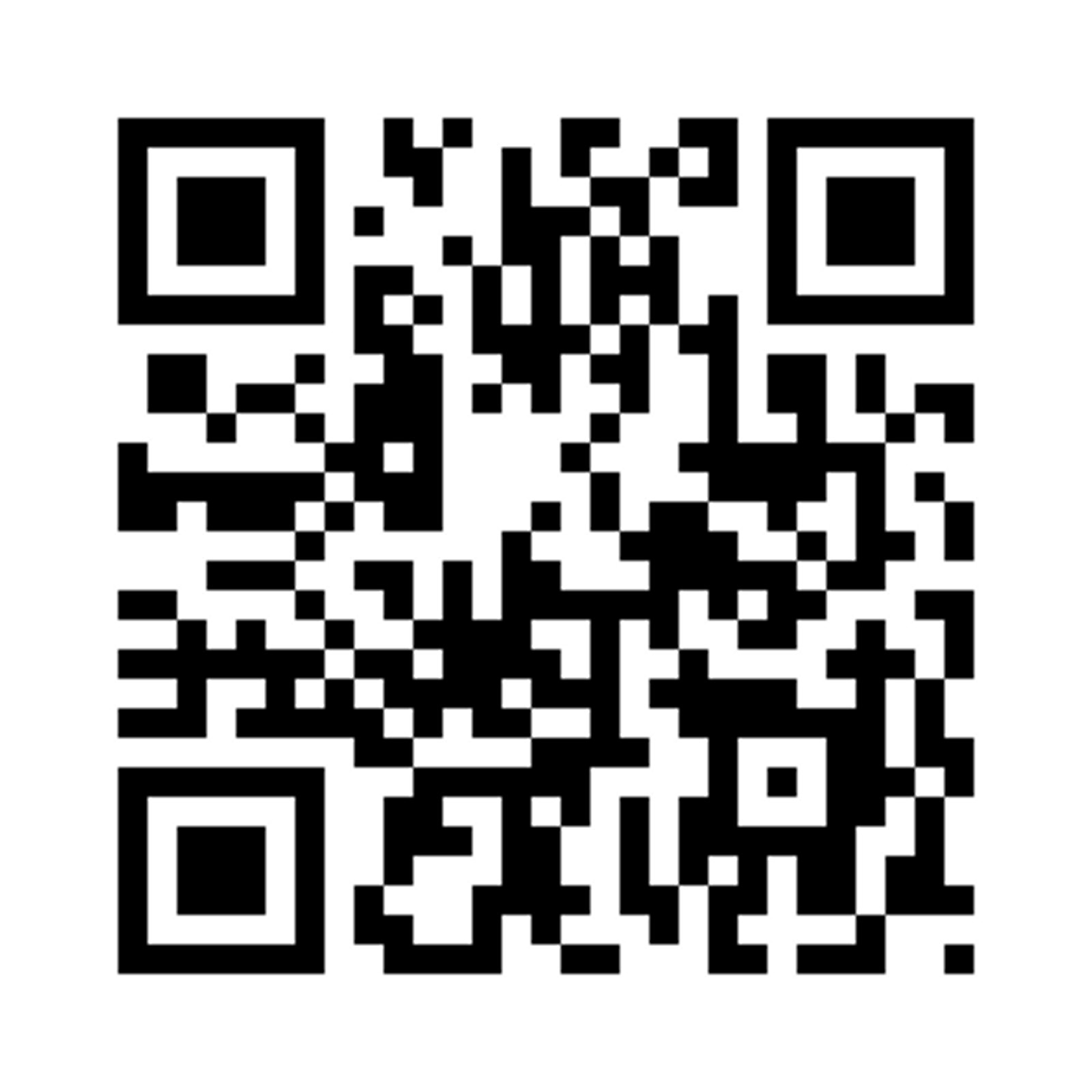
A QR code is a two-dimensional matrix barcode. It was developed in 1994 at Denso Wave, then a division of Denso Corporation, in Japan. Its original purpose was the high-speed tracking of automotive parts during manufacturing. The name is an abbreviation of Quick Response, a phrase chosen to reflect the emphasis on high-speed reading.
The code was invented by Masahiro Hara and a two-person team at Denso Wave. It is patented by Denso Wave, but the company has not exercised its rights, leaving the code free to use.
1. History and Development
The QR code is a two-dimensional matrix barcode, and its origins lie in the factory floor rather than the consumer market. Its original purpose was the high-speed tracking of automotive parts during manufacturing, a task for which the linear barcodes of the day were poorly suited. In 1992, manufacturing sites asked Masahiro Hara — then working on barcode scanners and OCR devices at Denso — for scanners that could read codes faster, which set the QR code project in motion. The difficulty was concrete: because each barcode holds only about 20 characters, factory workers sometimes had to scan around 1,000 barcodes a day, which made the work less efficient than intended.

A team led by Masahiro Hara at Denso Wave set out to track car-manufacturing parts more effectively and developed the square two-dimensional code released in 1994 as the QR code. The inventor is recorded as Masahiro Hara and a two-person team at Denso Wave, and the team that developed the QR code was indeed tiny: Masahiro Hara led a two-person team. The code was developed in 1994, at Denso Wave (then a division of Denso Corporation), Japan. Britannica notes the QR code was developed in 1994 by Denso Wave — a Denso division under Toyota Motor Corporation — to track automobile parts during assembly. Denso Wave announced the release of the QR Code in 1994; the letters QR stand for “quick response”, reflecting the focus on high-speed reading.
The design brief was to ease barcode reading for Denso's manufacturing staff, to carry large amounts of information efficiently, and to be used freely by people everywhere. After a year and a half of trial and error, the team finished a code that could carry about 7,000 numerals, plus kanji characters, and be read more than ten times faster than other codes. The QR code lets scanners find and interpret its information 20 times faster than earlier matrix codes, opening countless possibilities for linking physical and digital life. Denso Wave lists the QR code's main features as high data capacity, small print size, kanji and kana support, resistance to dirt and damage, 360° readability and the structured append feature.
Denso Wave published the QR Code specifications so anyone could use them freely, and though it retained the patent rights it declared it would not exercise them — a decision that helped the code spread worldwide. The code was patented by Denso Wave, with rights not exercised, leaving it free to use. Denso Wave holds several QR code patents but exercises them only in a limited way, waiving its rights to a key patent for standardized codes to encourage widespread use. “QR Code” is a registered trademark of Denso Wave Incorporated.
Smaller variants followed the original code: the Micro QR Code, made a Japanese (JIS) standard in 2004, and the iQR Code with rectangular modules in 2008. Denso Wave also created the Micro QR Code for tracking small objects; it comes in four versions from 11×11 to 17×17 modules. The smallest variant, the Micro QR Code, spans 11×11 to 17×17 modules and holds up to 35 numerals. Micro QR Code needs only one orientation-detection pattern and a margin as narrow as two modules, and its largest version (M4, 17×17 modules) stores up to 35 numerals.
A rectangular variant, the rMQR Code (ISO/IEC 23941:2022), holds up to 361 numerals in as little as 7×43 modules. The rectangular rMQR Code was designed for narrow spaces where the conventional QR code cannot be printed, and holds more data than Micro QR Code. ISO/IEC 18004 is the international standard that defines the QR code symbology: its characteristics, encoding methods, symbol formats, error-correction rules and reference decoding algorithm. Under the standard, the largest QR code (Version 40) is a 177×177 matrix that can hold 7,089 numeric or 4,296 alphanumeric characters, while the smallest (Version 1) is 21×21.
QR code use took off among the Japanese public in 2002, when mobile phones with a built-in QR code reader went on sale. In 2014 the QR code development team received the European Inventor Award's Popular Prize, chosen by public vote among the finalists. According to Britannica, Masahiro Hara was inspired to create the QR code while playing go, the Japanese board game of black and white stones on a grid. Apple's iPhones can scan QR codes with the built-in Camera app or Code Scanner, without installing anything extra.
Looking ahead, GS1's Ambition 2027 sets an initial goal that retail point-of-sale scanners worldwide can read and process both old linear and new 2D barcodes by the end of 2027. The retail transition is framed as GS1 Ambition 2027: retail POS scanners to read 2D barcodes by end of 2027.
2. Technical Specifications
The QR code is a two-dimensional matrix barcode, a form defined by its arrangement of data in two dimensions rather than the single line of an ordinary barcode 1QR Code · Encyclopædia Britannica ↗. Its name abbreviates Quick Response, a reference to the high-speed reading the design was intended to make possible 2History of QR Code · DENSO WAVE INCORPORATED (QRcode.com) ↗. The symbology is specified in forty symbol versions, numbered from 1 to 40, each with a different number of modules 14Information capacity and versions of QR Code · DENSO WAVE INCORPORATED (QRcode.com) ↗. The smallest symbol, Version 1, is a 21×21 grid, while the largest, Version 40, is 177×177, with every successive version adding four modules per side 14.
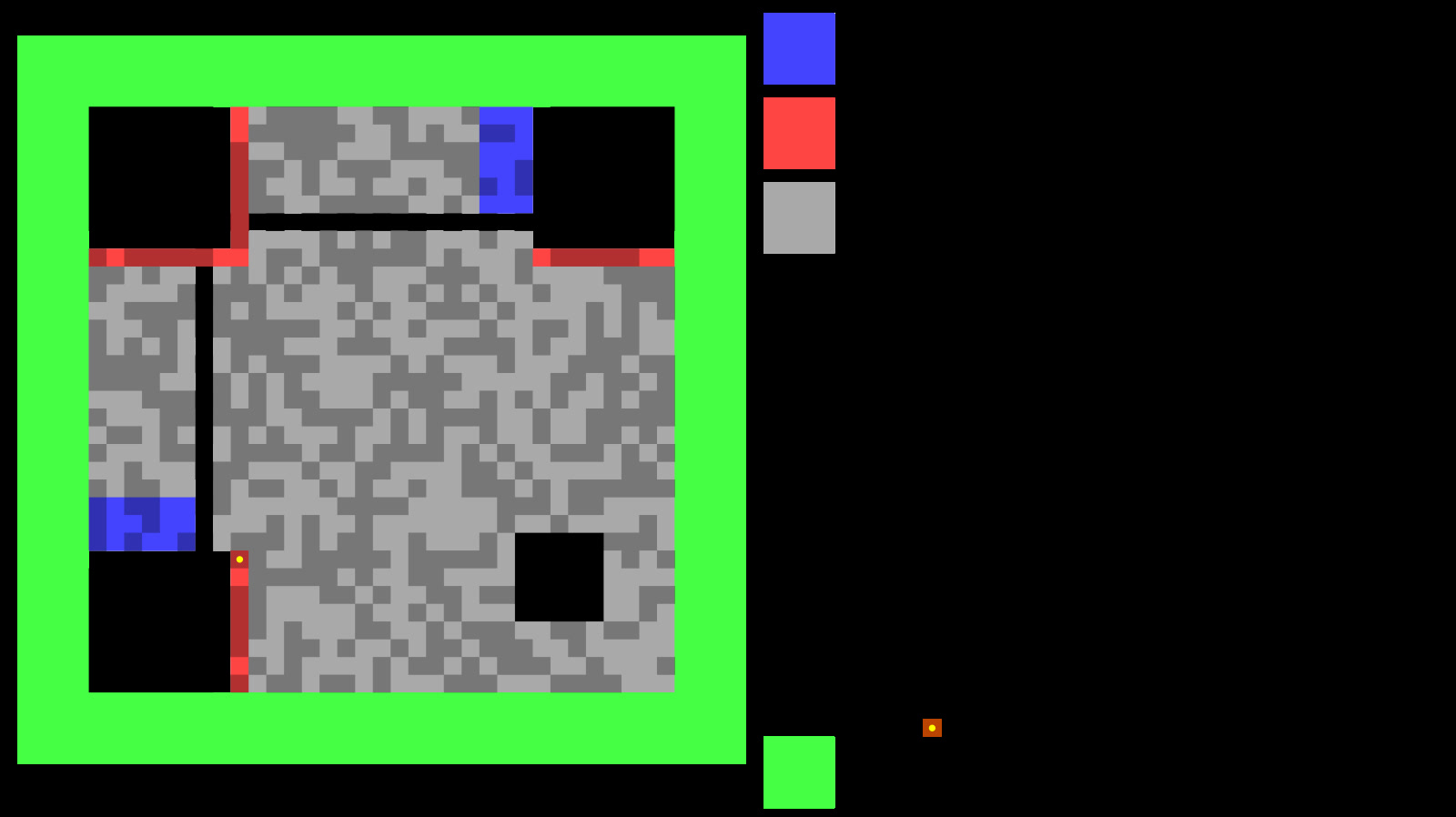
Capacity scales with the symbol version. At the top of the range, Version 40 can hold 7,089 numeric characters, 4,296 alphanumeric characters, 2,953 binary characters or 1,817 kanji characters 8DENSO WAVE Develops “rMQR Code”, a new rectangular QR Code that can even be printed in long, narrow spaces (news release) · DENSO WAVE INCORPORATED ↗. Four standard encoding modes are used across the symbology: numeric, alphanumeric, byte/binary and kanji 7QR code · Wikipedia ↗. Error correction allows the data to be restored if the symbol becomes dirty or damaged, and it is selectable across four levels 15Error correction feature · DENSO WAVE INCORPORATED (QRcode.com) ↗. These levels are designated L, M, Q and H, corresponding to recovery capacities of approximately 7 percent, 15 percent, 25 percent and 30 percent respectively 8.
Reading depends on three position-detection patterns, which allow the code to be scanned quickly from any angle 1. These patterns sit in three corners of every QR code 4Masahiro Hara, Motoaki Watabe, Tadao Nojiri, Takayuki Nagaya, Yuji Uchiyama — European Inventor Award (Popular Prize 2014) · European Patent Office (EPO) ↗. The international standard governing the symbology is ISO/IEC 18004, first published in 2000, whose fourth edition dates to 2024 16ISO/IEC 18004:2024 — QR code bar code symbology specification · International Electrotechnical Commission (IEC) Webstore ↗. A rectangular variant, the rMQR Code, is specified under ISO/IEC 23941:2022 and can carry up to 361 numerals in a footprint as small as 7×43 modules 8.
| Feature | Details |
|---|---|
| Type | Two-dimensional matrix barcode 1 |
| Symbol versions | 1 to 40 (21×21 to 177×177 modules) 14 |
| Maximum capacity (Version 40) | 7,089 numeric / 4,296 alphanumeric / 2,953 binary / 1,817 kanji characters 8 |
| Error correction levels | L ≈ 7%, M ≈ 15%, Q ≈ 25%, H ≈ 30% 8 |
| International standard | ISO/IEC 18004 (4th edition 2024; first published 2000) 16 |
| Key scanning feature | Three position-detection patterns for fast reading from any angle 1 |
3. Error Correction
A QR code is a two-dimensional matrix barcode whose design includes an error-correction capability, allowing the original data to be restored if the symbol becomes dirty or damaged. Four selectable levels are defined, labelled L, M, Q and H, corresponding to progressively greater tolerance. The scheme rests on the Reed–Solomon code, which was originally developed against noise in satellite and space-probe communications and which corrects errors at the byte level. Because of this, even a code that is partially smeared or damaged can yield its original data.
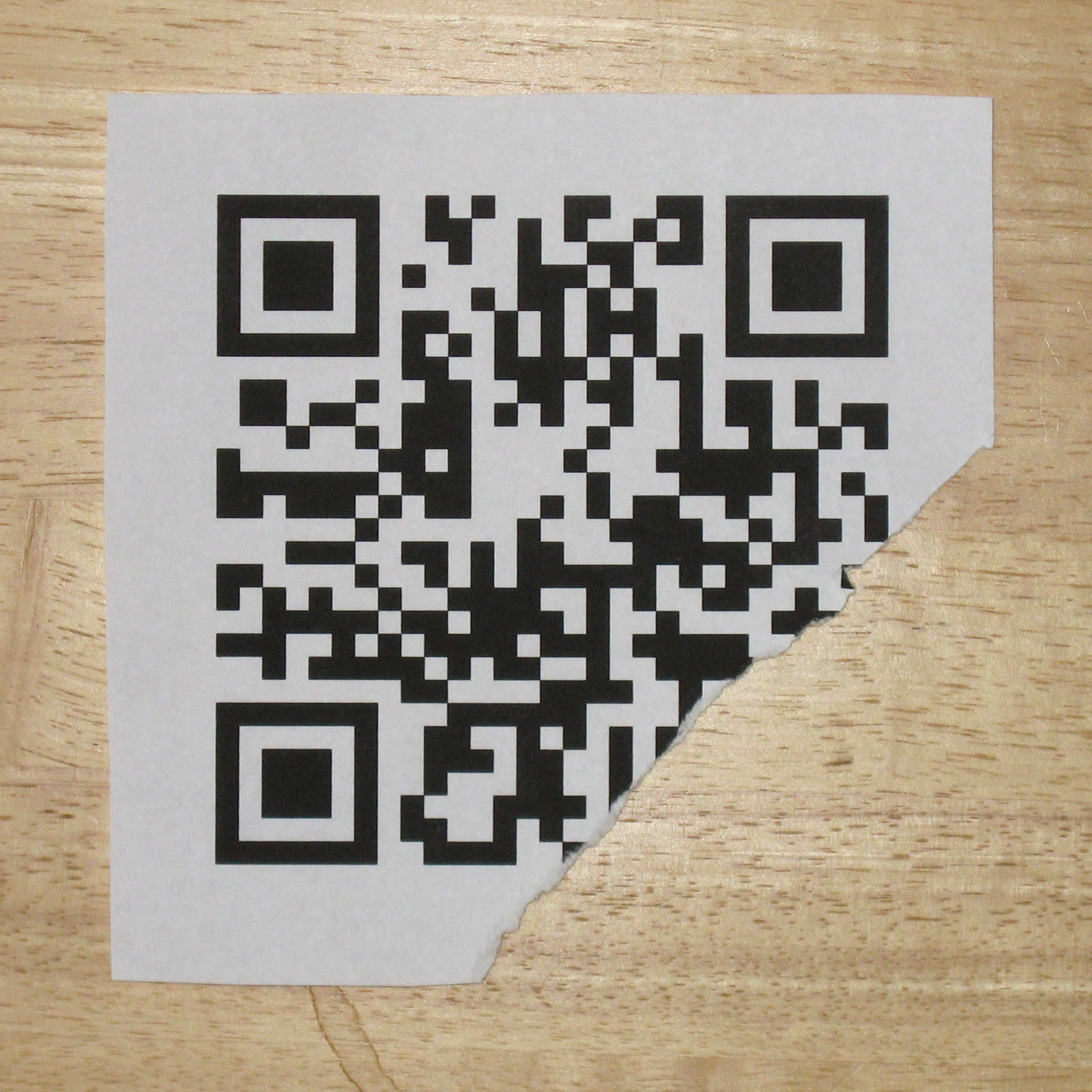
The choice of level is a practical one. Factories where codes are exposed to dirt often adopt the higher Q or H levels, while clean environments handling large amounts of data can afford the lighter L level. Level M is the most commonly chosen. The distinction matters most where conventional markings fail: unlike stained barcodes, a QR code with error correction can still be read accurately even when part of it is stained or missing.
Error correction is not an optional accessory but part of the symbology itself. The international standard ISO/IEC 18004 defines the QR code's characteristics, encoding methods, symbol formats, error-correction rules and reference decoding algorithm. The current edition, ISO/IEC 18004:2024, is the fourth edition, published in August 2024, and carries the formal title “QR code bar code symbology specification”. Denso Wave lists resistance to dirt and damage among the code's main features, alongside high data capacity, small print size, kanji and kana support, 360° readability and the structured append feature.
4. Variants
The smallest member of the family is the Micro QR Code, a variant created for tracking small objects. It comes in four versions spanning 11×11 to 17×17 modules, and its largest version stores up to 35 numerals. Where a full QR code relies on three position-detection patterns, the Micro QR Code needs only one orientation-detection pattern, together with a margin as narrow as two modules. These reductions make the symbol practical where space is at a premium.
The rectangular rMQR Code was designed for narrow spaces in which the conventional QR code cannot be printed, and it holds more data than the Micro QR Code. It can be printed in long, narrow spaces while keeping the scan speed and data capacity of the QR code. In as little as 7×43 modules it stores up to 361 numerals. The variant is specified as ISO/IEC 23941:2022 and received ISO certification, so it can be used freely around the world, like the original QR code.
5. Standards and Patents
The QR code is a two-dimensional matrix barcode whose technical definition rests on an international standard. ISO/IEC 18004 is the international standard that defines the QR code symbology: its characteristics, encoding methods, symbol formats, error-correction rules and reference decoding algorithm. The current edition of the standard, ISO/IEC 18004:2024 (the fourth edition, published in August 2024), carries the formal title “QR code bar code symbology specification”. The standard was first published in 2000.
The code itself is patented by Denso Wave, yet its rights are not exercised, leaving it free to use. Denso Wave published the QR Code specifications so anyone could use them freely, and though it retained the patent rights it declared it would not exercise them — a decision that helped the code spread worldwide. Denso Wave holds several QR code patents but exercises them only in a limited way, waiving its rights to a key patent for standardized codes to encourage widespread use. The name itself remains protected: “QR Code” is a registered trademark of Denso Wave Incorporated.
6. Adoption and Impact
The QR code is a two-dimensional matrix barcode, and its spread followed the tools that could read it. Use took off among the Japanese public in 2002, when mobile phones with a built-in QR code reader went on sale. The code stores up to around 7,000 characters and is now used worldwide, especially as a key technology for cashless payment. Scanning is now native to the devices most people already carry: the code is built into iPhone (iOS 11+) and Android camera apps. Android and iOS devices (since iOS 11) can scan QR codes natively, after a period when third-party scanner apps were required.
QR codes date from the 1990s, but in the UK they truly came to prominence during the COVID lockdowns, from ordering food to proving vaccination status. After the pandemic broke out, many pubs and restaurants quickly installed QR code systems for menus, ordering and payment. The BBC described QR codes as a technology from the 1990s that proved extremely useful in the Covid era, from menus to payments. A US restaurant co-founder told the BBC that five years of future technology adoption was compressed into five months during the pandemic.
7. Retail and Payment Applications
Retail scanning is moving toward two-dimensional symbologies under GS1's Ambition 2027, an initial goal that point-of-sale scanners worldwide be able to read and process both old linear and new 2D barcodes by the end of 2027. A QR code with GS1 Digital Link extends product packaging into an online gateway to information such as ingredients, allergens, nutrition and sustainability details. The demand behind such richer codes comes from consumers, brands, retailers and regulators alike, all of whom want to know more about products and to gain access to more information from packaging. The distinction matters because traditional barcodes are usually scanned by companies for supply-chain systems, while QR codes are usually scanned by consumers to open a product-information webpage.
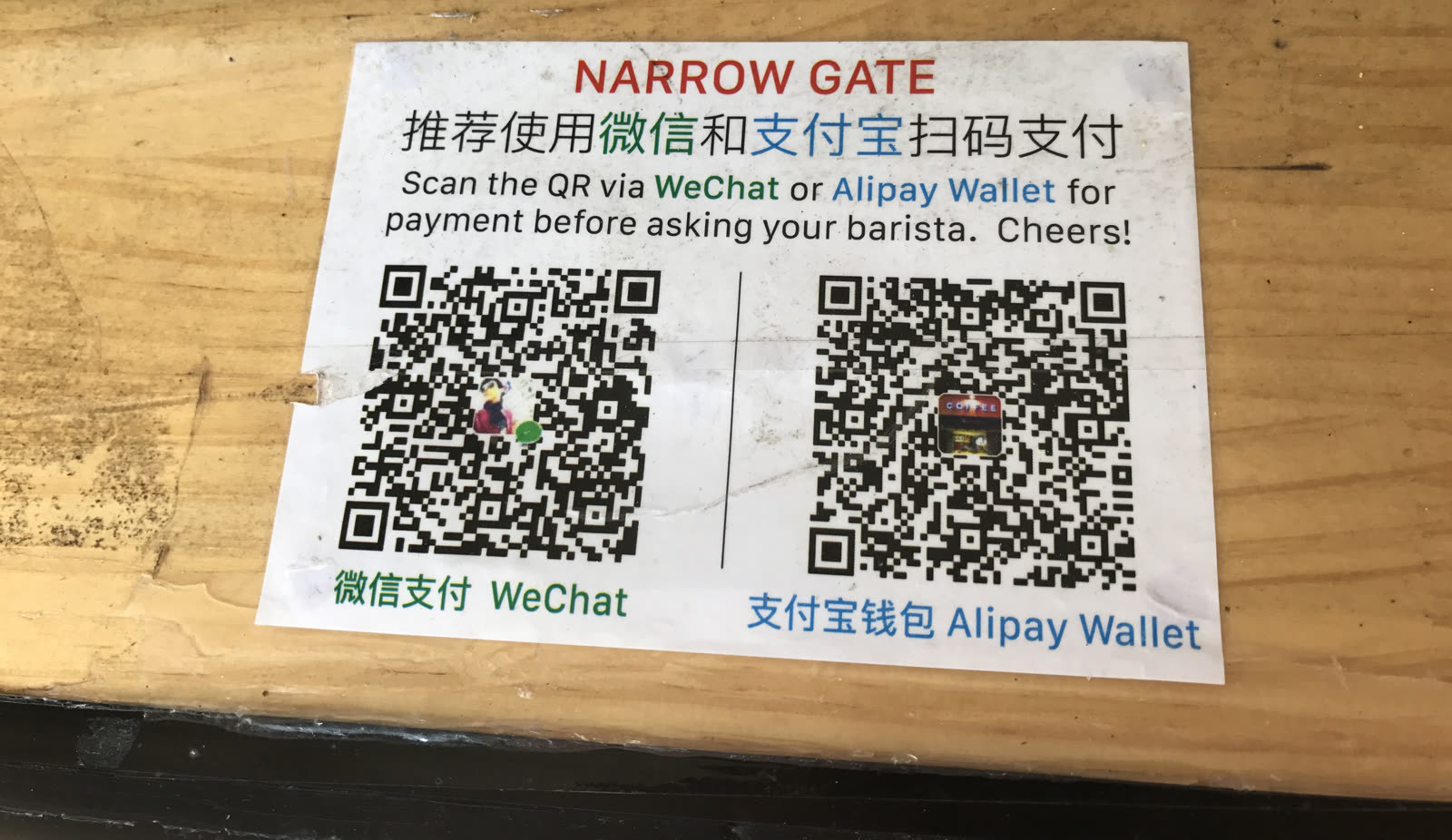
QR codes are increasingly used for touchless payments, where EMV QR Code technology lets merchants offer many payment options with a single code at checkout. The EMV QR Code Specifications consist of two specifications covering the two types of QR payment: consumer-presented mode and merchant-presented mode. In merchant-presented mode, the merchant displays the QR code and the consumer scans it with a mobile device. The QR code's capacity of up to around 7,000 characters has helped make it a key technology for cashless payment worldwide.
8. Security Concerns
The QR code's convenience has a darker side. Criminals increasingly embed QR codes in phishing emails — a technique sometimes called “quishing” 17QR Codes - what's the real risk? · UK National Cyber Security Centre (NCSC) ↗. Not all phishing-detection tools scan images, so a QR code pointing to a malicious site can slip through email defences 17. The FBI's 2022 alert warned that criminals tamper with QR codes to send victims to malicious sites that steal login and financial information 22Cybercriminals Tampering with QR Codes to Steal Victim Funds (PSA I-011822-PSA, 18 January 2022) · FBI Internet Crime Complaint Center (IC3) ↗. The Bureau has also warned about a scam in which criminals mail unsolicited packages containing a QR code to trick recipients 23Unsolicited Packages Containing QR Codes Used to Initiate Fraud Schemes (PSA, 31 July 2025) · U.S. Federal Bureau of Investigation (FBI) ↗.
Defensive habits matter. The NCSC recommends using the QR scanner built into your phone rather than a scanner app downloaded from an app store 17. After scanning a QR code, check the URL to confirm it is the intended site and looks authentic, since malicious domains often imitate real addresses with typos 22. The FBI advises taking precautions before scanning any QR code that arrives through unsolicited messages or packages 23.
Criminals increasingly embed QR codes in phishing emails — a technique sometimes called “quishing” 17.
Not all phishing-detection tools scan images, so a QR code pointing to a malicious site can slip through email defences 17.
The FBI has warned about a scam in which criminals mail unsolicited packages containing a QR code to trick recipients 23.
The FBI's 2022 alert warned that criminals tamper with QR codes to send victims to malicious sites that steal login and financial information 22.
After scanning a QR code, check the URL to confirm it is the intended site and looks authentic, since malicious domains often imitate real addresses with typos 22.
The NCSC recommends using the QR scanner built into your phone rather than a scanner app downloaded from an app store 17.
9. Key Facts
The QR code is a two-dimensional matrix barcode developed in 1994 at Denso Wave, then a division of Denso Corporation, in Japan. The letters QR stand for “quick response”, a name reflecting the design focus on high-speed reading. It was created to ease barcode reading for Denso's manufacturing staff, built to carry large amounts of information efficiently and to be used freely by people everywhere. Masahiro Hara led the small team behind it, a two-person effort.
The symbology is defined by the international standard ISO/IEC 18004, first published in 2000 and now in its fourth edition, issued in 2024. That standard sets out the code's characteristics, encoding methods, symbol formats, error-correction rules and reference decoding algorithm. Its current edition carries the formal title “QR code bar code symbology specification”.
QR codes come in 40 symbol versions, each with a different number of modules. Version 1, the smallest, is a 21×21 grid, while Version 40, the largest, is 177×177; every version up adds four modules per side. At its maximum, Version 40 holds 7,089 numeric, 4,296 alphanumeric, 2,953 binary or 1,817 kanji characters.
Error correction allows the symbol to be restored if it becomes dirty or damaged, and four selectable levels are available. These are L at roughly 7%, M at roughly 15%, Q at roughly 25% and H at roughly 30%. Factories where codes get dirty often use the higher Q or H levels, clean environments with large amounts of data can use L, and Level M is the most commonly chosen. The Reed–Solomon code behind this capability was originally developed against noise in satellite and space-probe communications, and it corrects errors at the byte level.
Smaller variants followed the original code: the Micro QR Code, made a Japanese (JIS) standard in 2004, and the iQR Code with rectangular modules in 2008. The Micro QR Code spans 11×11 to 17×17 modules and holds up to 35 numerals. The rectangular rMQR Code, specified in ISO/IEC 23941:2022, holds up to 361 numerals in as little as 7×43 modules. It was designed for narrow spaces where the conventional QR code cannot be printed, and it holds more data than the Micro QR Code. The rMQR Code received ISO certification, so it can be used freely around the world, like the original QR code.
Denso Wave published the QR Code specifications so anyone could use them freely, and though it retained the patent rights it declared it would not exercise them — a decision that helped the code spread worldwide. The company holds several QR code patents but exercises them only in a limited way, waiving its rights to a key patent for standardized codes to encourage widespread use.
10. Timeline: from car parts to a global standard
- 1992Denso asks Hara to build a faster barcode readerMasahiro Hara, working on barcode scanners and OCR devices at Denso, is asked by manufacturing sites for a faster way to read codes; he concludes the barcode itself is the limit and starts a two-person project to design a new two-dimensional code.
- 1994QR Code releasedAfter a year and a half of development, Denso Wave announces the QR Code: a square two-dimensional code able to carry roughly 7,000 numerals and read more than ten times faster than comparable codes. 'QR' stands for quick response.
- 1997Adopted as an AIM International standardThe QR Code is approved as an AIM standard for use in the automatic identification industry, its first formal standard outside Denso Wave.
- 1999Standardized in Japan as JIS X 0510The QR Code is approved as a standard 2D code by the Japanese Industrial Standards and made a standard 2D symbol on the Japan Automobile Manufacturers Association's EDI standard transaction forms.
- 2000Becomes an ISO/IEC international standardThe QR Code is approved by the International Organization for Standardization as one of its international standards, opening the way to global use.
- 2002Camera phones bring QR codes to the public in JapanMobile phones with a built-in QR Code reader go on sale, letting people reach a website or obtain a coupon simply by scanning a code; use of the QR Code becomes widespread among the Japanese public.
- 2004Micro QR Code becomes a JIS standardThe compact Micro QR Code, which needs only one orientation-detection pattern and can be printed in very small spaces, is made a JIS standard.
- 2008iQR Code releasedDenso Wave releases the iQR Code, a smaller-footprint variant that can also use rectangular modules for places where a long, narrow shape fits better.
- 2014QR code team wins the European Inventor Award Popular PrizeMasahiro Hara and the Denso Wave team are awarded the Popular Prize of the European Inventor Award, chosen by public vote among the finalists.
- 2017Smartphone cameras learn to scan QR codes nativelyApple's iOS 11 adds native QR code scanning, followed by Android, so that phone cameras can read codes without any third-party scanner app.
- 2020The COVID-19 pandemic accelerates QR adoption worldwideLockdowns push pubs, restaurants and other venues to install QR code systems for menus, ordering, payments and contact-tracing check-ins, dramatically widening everyday use of the code.
- May 2022rMQR Code standardized as ISO/IEC 23941:2022Denso Wave's rectangular Micro QR Code, printable in long, narrow spaces while keeping QR-level scan speed and capacity, is released with ISO certification as ISO/IEC 23941:2022.
- 15 August 2024ISO/IEC 18004:2024 (4th edition) publishedA new edition of the QR code symbology standard is published, with enhanced encoding efficiency, improved error correction and refined structured append functionality; it supersedes the 2015 edition.
- End of 2027 (target)GS1 targets 2D barcodes at retail checkoutsUnder GS1's Ambition 2027 ('Sunrise 2027'), retail point-of-sale scanners worldwide are to be able to read both old linear barcodes and new 2D codes such as QR Code with GS1 Digital Link by the end of 2027.
11. Frequently asked questions
What exactly is a QR code?
Who invented the QR code, and when?
Why was the QR code created in the first place?
What does the name “QR code” mean?
QR stands for “Quick Response,” reflecting the focus on high-speed reading 2.
How much data can a QR code hold?
References (23)
- 1QR Code — Encyclopædia Britannica Web↩View source
- 2History of QR Code — DENSO WAVE INCORPORATED (QRcode.com) Web↩View source
- 3QR Code development story — DENSO WAVE INCORPORATED Web↩View source
- 4Masahiro Hara, Motoaki Watabe, Tadao Nojiri, Takayuki Nagaya, Yuji Uchiyama — European Inventor Award (Popular Prize 2014) — European Patent Office (EPO) 2014 Web↩View source
- 525th Anniversary of the QR Code (news release) — DENSO WAVE INCORPORATED WebView source
- 6What is a QR Code? — DENSO WAVE INCORPORATED (QRcode.com) WebView source
- 7QR code — Wikipedia Web↩View source
- 8DENSO WAVE Develops “rMQR Code”, a new rectangular QR Code that can even be printed in long, narrow spaces (news release) — DENSO WAVE INCORPORATED Web↩View source
- 9Types of QR Code — DENSO WAVE INCORPORATED (QRcode.com) WebView source
- 10ISO/IEC 18004:2015 — QR Code bar code symbology specification (withdrawn; revised by ISO/IEC 18004:2024) — International Organization for Standardization (ISO) 2015 WebView source
- 11One Good Fact about QR Codes (board game inspiration) — Encyclopædia Britannica WebView source
- 12Scan a QR code with your iPhone or iPad — Apple Inc. (Apple Support) WebView source
- 13Solution provider 2D readiness — GS1 Ambition 2027 / Sunrise 2027 — GS1 (ref.gs1.org) 2027 WebView source
- 14Information capacity and versions of QR Code — DENSO WAVE INCORPORATED (QRcode.com) Web↩View source
- 15Error correction feature — DENSO WAVE INCORPORATED (QRcode.com) Web↩View source
- 16ISO/IEC 18004:2024 — QR code bar code symbology specification — International Electrotechnical Commission (IEC) Webstore 2024 Web↩View source
- 17QR Codes - what's the real risk? — UK National Cyber Security Centre (NCSC) Web↩View source
- 18How Covid turbocharged the QR revolution — BBC News WebView source
- 192D barcodes (GS1 standards for QR Code and GS1 DataMatrix) — GS1 WebView source
- 202D barcodes for your Retail business — GS1 WebView source
- 21EMV QR Codes — EMVCo WebView source
- 22Cybercriminals Tampering with QR Codes to Steal Victim Funds (PSA I-011822-PSA, 18 January 2022) — FBI Internet Crime Complaint Center (IC3) 2022 Web↩View source
- 23Unsolicited Packages Containing QR Codes Used to Initiate Fraud Schemes (PSA, 31 July 2025) — U.S. Federal Bureau of Investigation (FBI) 2025 Web↩View source
 Steve Jobs
 Artificial Intelligence
 Dubai
