Nuclear Fusion
The physics, history and machines of nuclear fusion — from the reactions that power the Sun to tokamaks, ITER and the laser ignition breakthrough at the National Ignition Facility.
Nuclear fusion is the process in which light nuclei combine to form heavier ones, releasing energy — the reaction that powers the Sun and stars. After decades of research with magnetic confinement devices such as tokamaks and with laser-driven inertial confinement, fusion reached historic milestones: the first controlled release of fusion power at JET in 1991, a record 59 megajoules announced in early 2022, and scientific energy breakeven at the National Ignition Facility on 5 December 2022. ITER, the world's largest tokamak, is being assembled in southern France to demonstrate ten-fold energy gain.
In this article
Overview
Fusion is the energy source of the Universe, occurring in the core of the Sun and stars.
The Sun is a 4.5 billion-year-old yellow dwarf star, a hot glowing ball of hydrogen and helium at the center of our solar system. At those temperatures hydrogen atoms move in constant agitation and collide fast enough that electrostatic repulsion is overcome and the atoms fuse.
The proton-proton chain is the fusion reaction that takes place in the Sun, in which pairs of protons combine in a sequence that eventually forms helium-4 nuclei. Fusion requires overcoming the Coulomb repulsion that exists between the positively charged nuclei, which demands a significant input of energy.
Its core reaches about 27 million degrees Fahrenheit (15 million degrees Celsius), hot enough to sustain nuclear fusion. Reproducing fusion on Earth has proved difficult, as scientists have struggled to create a controllable, non-destructive way of harnessing the energy released during fusion, largely because of the extreme conditions involved.
1. Physical Principles
Fusion requires very high temperature, sufficient plasma particle density and sufficient confinement time to hold the plasma within a defined volume. The positively charged nuclei that must combine repel one another through the Coulomb force, and overcoming that repulsion demands a significant input of energy. In the core of the Sun, temperatures reach 15,000,000 degrees Celsius, and hydrogen atoms move in constant agitation and collide fast enough that electrostatic repulsion is overcome and the atoms fuse.
At fusion temperatures hydrogen is a plasma, and the plasma must be sufficiently contained for fusion to continue. The plasma particles in a fusion device are heated, that is sped up, by different types of auxiliary heating methods.

In 1955 John D. Lawson demonstrated that the conditions for fusion reactions relied on three vital quantities: temperature, density and confinement time. Lawson's result is basically the same figure of merit used by today's fusion scientists — the triple product of particle density, confinement time and temperature.
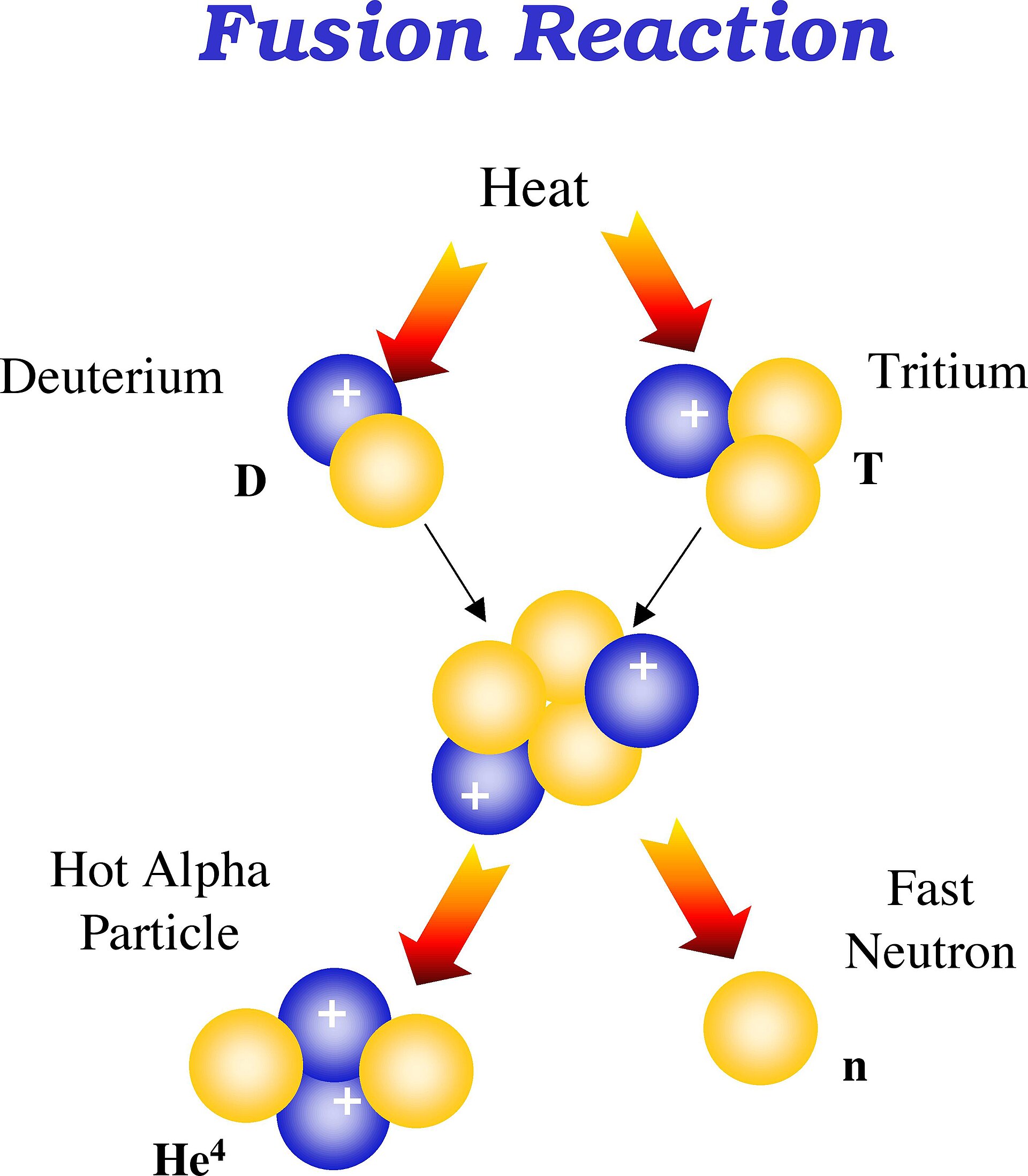
Of the possible pairings of light elements, the deuterium-tritium reaction has been identified as the most achievable and the most efficient. The fusion of deuterium and tritium produces one helium nucleus, one neutron and great amounts of energy. In deuterium-tritium fusion a nucleus of deuterium combines with one of tritium to form helium-4 and a neutron, and most of the energy released is carried as a high-energy neutron.
Most fusion research involves two isotopes of hydrogen known as deuterium and tritium.
2. Fuel Cycle and Engineering Challenges
Tritium has a half-life of about 12.3 years, so efficient tritium breeding and extraction techniques are essential to sustaining fusion reactions in a practical D-T reactor. ITER is conducting experiments to test tritium breeding blankets and fuel cycle technologies, although further research is needed to demonstrate feasibility at large scale. A future fusion plant will need fusion energy gain Q of 15 to 30 together with a duty factor greater than 0.5 and tritium self-sufficiency with a tritium breeding ratio exceeding one.
One of the primary challenges in fusion reactor design is managing the heat and particle exhaust from the plasma, accomplished in tokamaks through a component called the divertor. A fusion plasma inside a tokamak is created and confined by strong magnetic fields, and the energy produced by fusion in the plasma is absorbed as heat in the walls of the vessel.
3. Magnetic Confinement and the Tokamak
First developed by Soviet research in the late 1960s, the tokamak has been adopted around the world as the most promising configuration for magnetic fusion.
By the mid-1950s fusion machines were operating in the Soviet Union, the United Kingdom, the United States, France, Germany and Japan. The first small-size fusion devices, built between the 1950s and the 1970s, were basic machines without sophisticated control systems or technology.
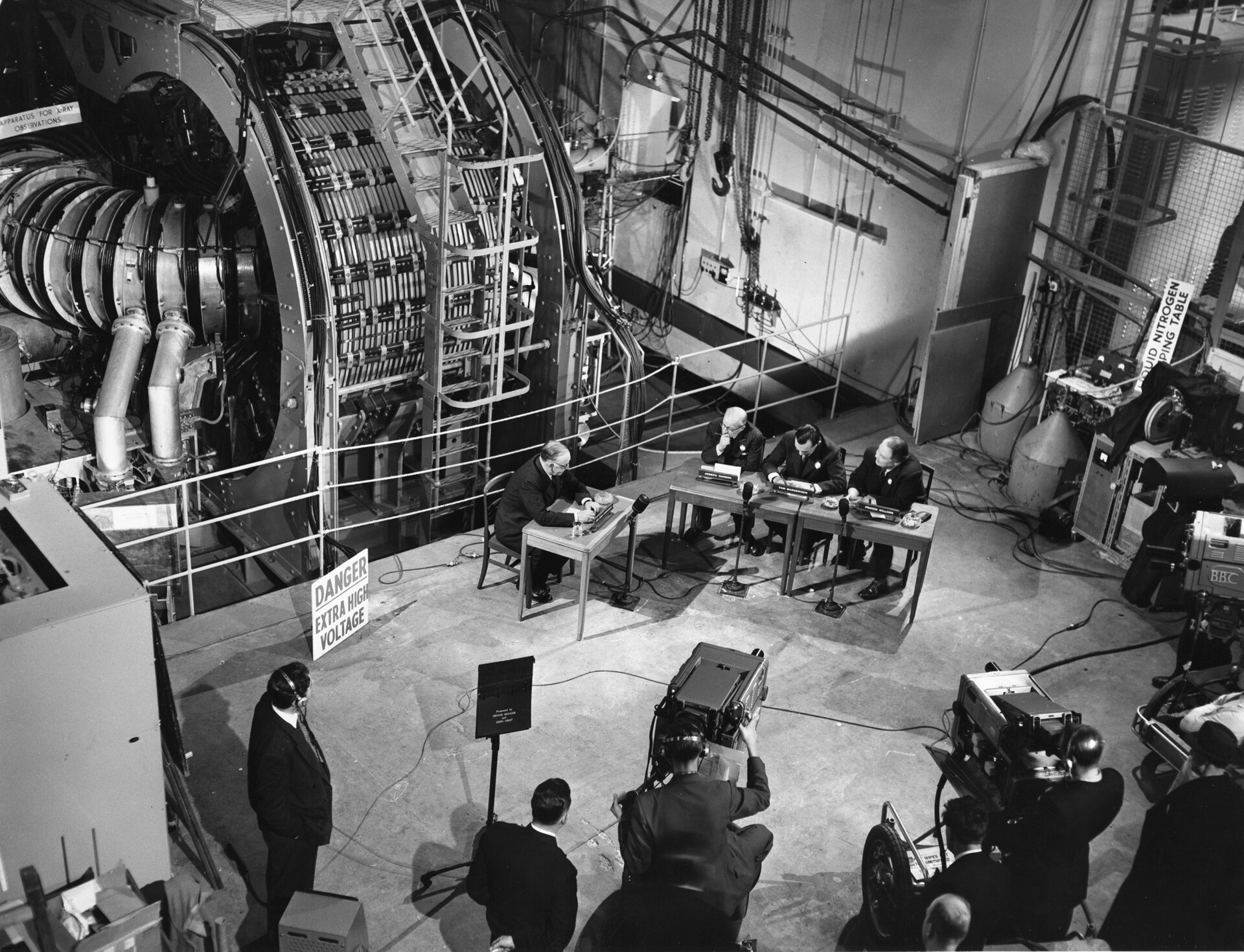
A major breakthrough occurred in 1968 in the Soviet Union, where researchers achieved temperature levels and plasma confinement times never attained before, in a machine called a tokamak. At the Third International Conference on Plasma Physics and Controlled Nuclear Fusion Research, held in August 1968 in Akademgorodok near Novosibirsk, the Soviet physicist Lev Artsimovitch announced that electron temperature of more than 10 million degrees had been attained and held in the plasma for 10 to 20 thousandths of a second. That result was considerably better than the Princeton stellarator had achieved, where plasmas had never been hotter than one million degrees and confinement time never exceeded one thousandth of a second. The conference was known informally as the Plasma Olympics.
The breakthrough in verifying the Soviet tokamak results finally came on 22 July 1969, when a British team in Moscow recorded totally unambiguous evidence of Thomson scattering. Mike Forrest recalled being a member of the four-person team sent by British authorities to Moscow to verify results that had been met with considerable skepticism by fusion laboratories outside the Soviet Bloc. The respected science journal Nature held its Centenary Edition until the T3 scattering results had reached them, and the story even made it to the UK House of Lords.
The world's first tokamak device was the Russian T1 tokamak at the Kurchatov Institute in Moscow. A new generation of larger tokamaks — JET in Europe, JT-60 in Japan, TFTR in the United States and T-15 in the Soviet Union — was built to study plasmas in conditions as close as possible to those of a fusion power plant.
On 5 September 2021 a large high-temperature superconducting electromagnet for the SPARC demonstration device was ramped up to a field strength of 20 tesla, the most powerful magnetic field of its kind ever created on Earth. The magnet demonstration helps resolve the greatest uncertainty in the quest to build a world-first fusion power plant that produces more power than it consumes, according to the project leaders at MIT and Commonwealth Fusion Systems. The high-temperature superconductor design achieves in a smaller device the performance that would be achieved in an apparatus 40 times larger in volume using conventional low-temperature superconducting magnets.
4. Inertial Confinement and the National Ignition Facility
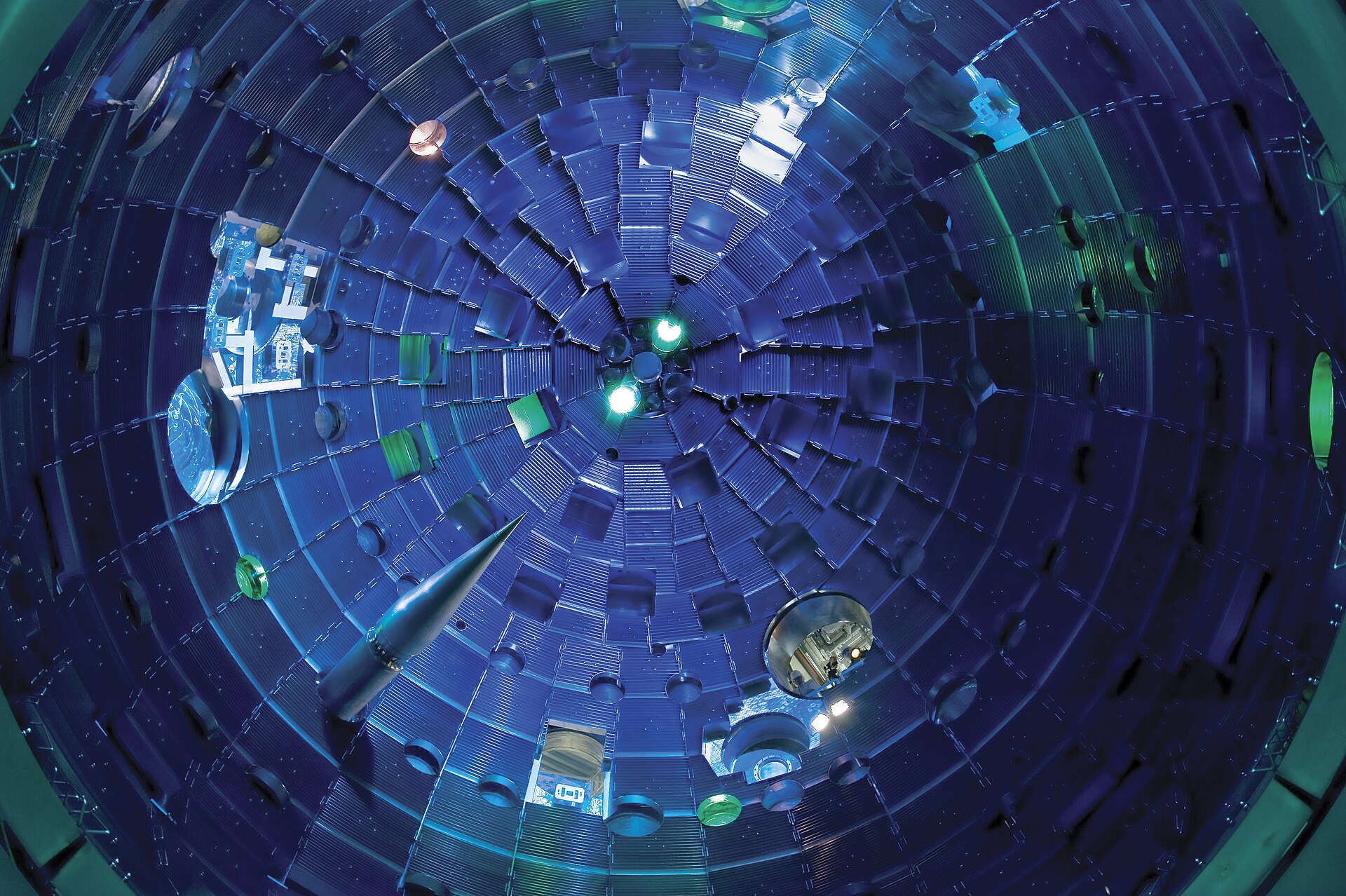
At the National Ignition Facility, fusion is pursued by inertial confinement: a countdown reaching zero, a shot director's call of "Shot!", and 192 lasers firing 2.05 megajoules of ultraviolet energy into a cylinder holding a tiny fuel capsule. In late 2022, researchers at the facility, at Lawrence Livermore National Laboratory in California, achieved the first laboratory fusion ignition. It was the middle of the night on 5 December 2022, and pre-shot simulations had predicted a slightly better than 50-50 chance of reaching break-even. The shot yielded 3.15 megajoules of fusion energy from 2.05 megajoules of laser energy. The milestone was also known as scientific energy breakeven, because it produced more energy from fusion than the laser energy used to drive it.
On 30 July 2023 the NIF laser again delivered 2.05 megajoules of energy to the target, resulting in 3.88 megajoules of fusion energy output. On 8 October 2023 NIF achieved fusion ignition for a third time, with 1.9 megajoules of laser energy resulting in a 2.4 megajoule fusion energy yield. The shot of 7 April 2025 produced an unprecedented 8.6 megajoules of fusion energy, with the lasers firing 2.08 megajoules into the target for a target gain greater than four — ignition for the eighth time.
A high-quality, custom-made high-density carbon diamond capsule was at the heart of the 7 April 2025 shot. The record result was enabled by continuous gradient doping, in which a small amount of tungsten is gradually added to the vanishingly thin layers of synthetic diamond during capsule fabrication. The first full-scale test of continuous doping was conducted on 23 February 2025, in an experiment that produced 5 megajoules of fusion energy.
The achievement of fusion ignition at Lawrence Livermore National Laboratory was announced by the U.S. Department of Energy and its National Nuclear Security Administration as a major scientific breakthrough decades in the making. Officials said the breakthrough would pave the way for advancements in national defense and the future of clean power.
On 8 August 2021 an experiment produced 1.35 megajoules of energy, about 70 percent of the 1.92 MJ of laser energy absorbed by the target.
JET delivered its final pulse, number 105,842, on 18 December 2023, concluding a run that began with its first pulse on 25 June 1983 at Culham in Oxfordshire.
5. Major Facilities and Records
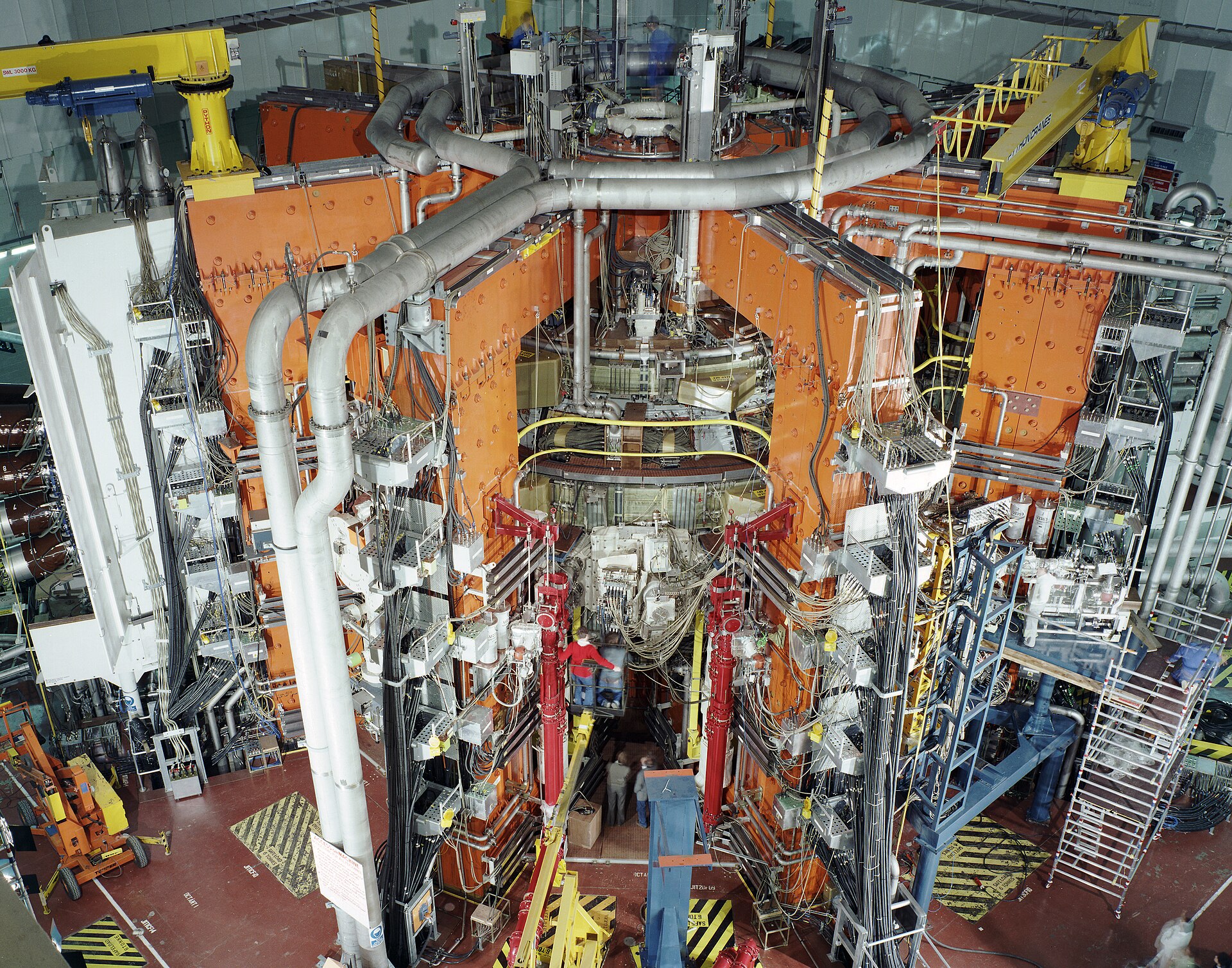
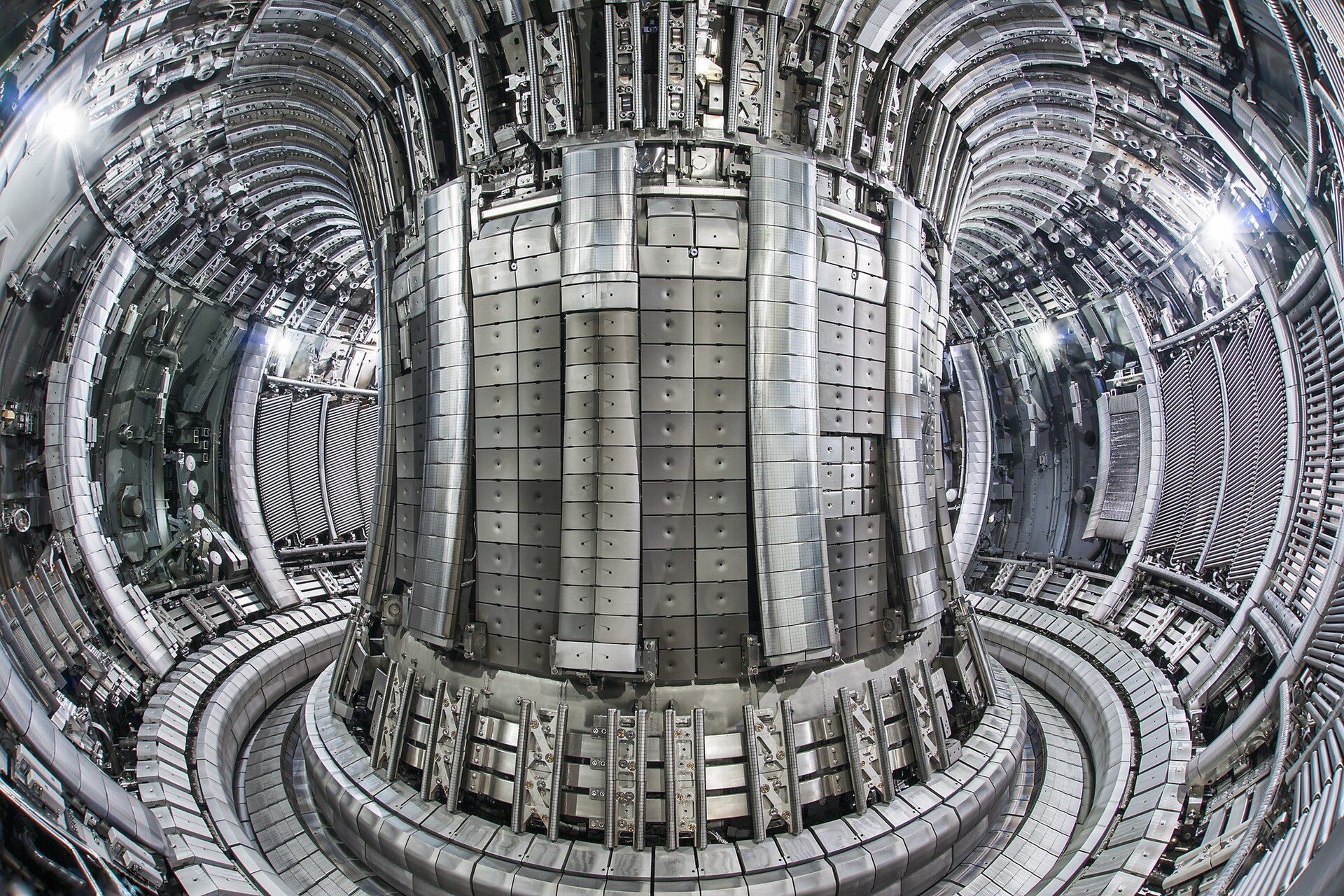
The largest magnetic fusion experiment in the world until the end of its operation in late 2023 was the Joint European Torus, a tokamak operated from 1983 to 2023 as a joint European project at Culham, near Oxford in the United Kingdom 17JET Participation · Max Planck Institute for Plasma Physics ↗. In 2022, EUROfusion scientists at Oxford announced 59 megajoules of sustained fusion energy over five seconds, more than doubling the previous records achieved at the UK Atomic Energy Authority site in 1997 and using the same fuel mixture intended for commercial fusion power plants 18Fusion energy record demonstrates powerplant future · UK Atomic Energy Authority (GOV.UK) ↗. In its final deuterium-tritium experiments, JET consistently produced high fusion power for five seconds and set a record of 69 megajoules from a mere 0.2 milligrams of fuel 19JET's final tritium experiments yield new fusion energy record · UK Atomic Energy Authority (GOV.UK) ↗.
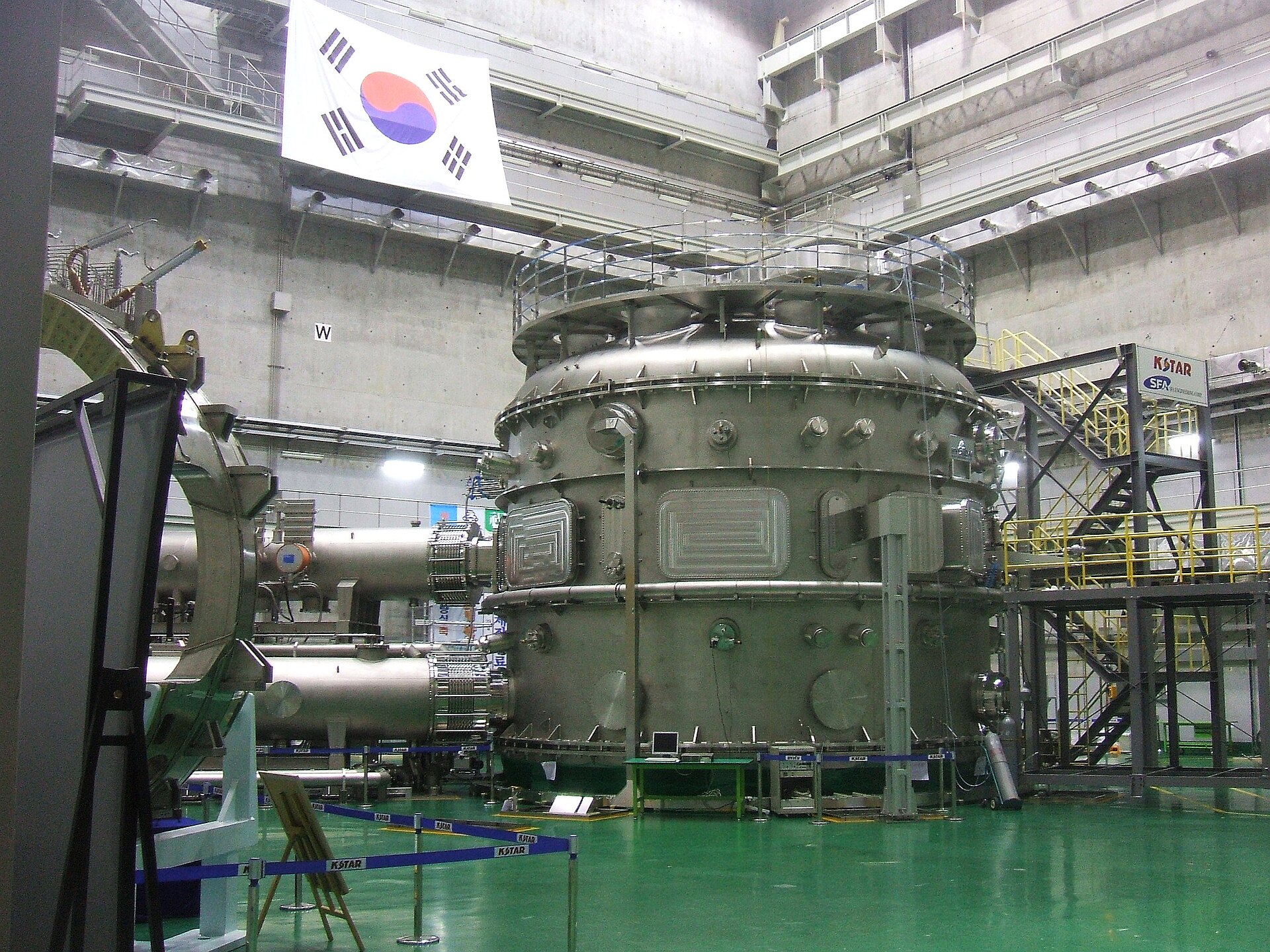
The WEST tokamak at the CEA Cadarache site in southern France sustained its plasma for 1,337 seconds on 12 February, more than 22 minutes, smashing the previous record for plasma duration achieved with a tokamak 20Nuclear fusion: WEST beats the world record for plasma duration! · CEA (French Alternative Energies and Atomic Energy Commission) ↗. JT-60SA, a collaboration between Europe and Japan, is the world's largest operating tokamak 860 years of progress · ITER Organization ↗. The Wendelstein 7-X stellarator at the Max Planck Institute for Plasma Physics in Germany is the world's largest optimized stellarator, designed to demonstrate steady state plasma confinement 6IAEA World Fusion Outlook 2025 · International Atomic Energy Agency ↗.
| Facility | Location/Programme | Key record or specification | Source |
|---|---|---|---|
| JET | Culham, UK; joint European project | 105,842 pulses | govuk-record-2022; govuk-jet-2024; govuk-jet-final |
| NIF | Lawrence Livermore National Laboratory, California | April 2025 record yield | llnl-record-2025 |
| ITER | 34 nations, southern France | One million components and ten million parts | iter-few-lines |
| WEST | CEA Cadarache, France | 1,337 seconds of plasma duration in February 2025 | cea-west |
| JT-60SA | Europe-Japan collaboration | World's largest operating tokamak | iter-60-years |
| Wendelstein 7-X | Max Planck Institute for Plasma Physics, Germany | World's largest optimized stellarator | iaea-wfo-2025 |
JET demonstrated sustained fusion over five seconds at high power and set a world record in 2021 during that campaign.19 A record 69.26 megajoules of heat was released in a single JET pulse.8
6. ITER
ITER takes its name from the Latin for "The Way," and it stands among the most ambitious energy projects in the world, with 34 nations collaborating to build the world's largest tokamak in southern France. Its design calls for a ten-fold return on power in the plasma (Q=10), meaning 500 MW of fusion power drawn from 50 MW of input heating power. The machine will not convert the heating power it produces into electricity, but as the first fusion experiment in history to achieve net energy gain across the plasma, it is intended to prepare the way for machines that can.
The primary objective of ITER is the investigation and demonstration of burning plasmas, in which the energy of the helium nuclei produced by the fusion reactions is sufficient to maintain the temperature of the plasma.
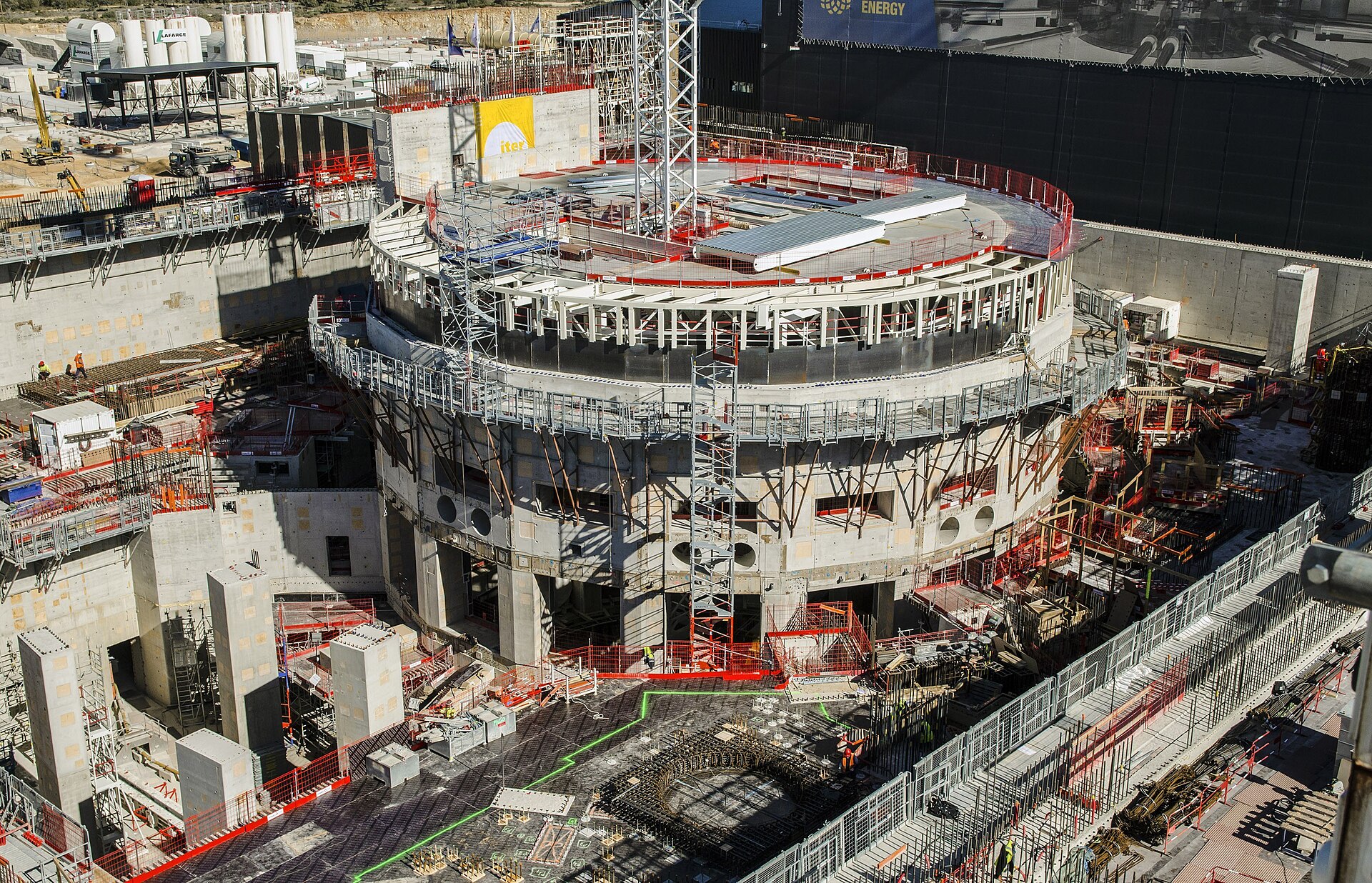
The scale of the undertaking is measured in its parts: the ITER tokamak comprises one million components and ten million parts. The ITER building was handed over to the ITER Organization in March 2020 for the start of machine assembly, a phase marked by the installation of the 1,250-tonne cryostat base in May 2020 as its first major event.
ITER was set in motion at the Geneva Superpower Summit in November 1985, when General Secretary Gorbachev of the Soviet Union proposed to US President Ronald Reagan a collaborative international project to develop fusion energy for peaceful purposes. One year later, an agreement was reached that the European Union (Euratom), Japan, the Soviet Union and the USA would jointly pursue the design for a large international fusion facility, ITER. The final design was approved by the Members in 2001; China and the Republic of Korea joined the project in 2003 and India followed in 2005 before construction began. The ITER Agreement was signed at the Elysée Palace in Paris on 21 November 2006 by Ministers from the seven ITER Members.
7. Historical Development
The modern understanding of fusion as a stellar energy source emerged only gradually. For more than four decades, from 1880 until 1920, the gravitational contraction model of Hermann von Helmholtz and William Thomson prevailed. In 1919 Jean Perrin, a professor of physical chemistry in Paris, first proposed that the fusion of hydrogen into helium was the energy source of the Sun and stars. Eddington said in 1920 that the energy of the Sun and stars could scarcely be other than the subatomic energy known to exist abundantly in all matter.
The theoretical foundations were completed in the following two decades. In 1938 Hans Bethe proved that fusion produces the enormous energy emitted by stars, and he proposed two different processes, both of which result in hydrogen nuclei fusing with helium nuclei. It was only in 1939 that Bethe provided a detailed description of the complex and lengthy fusion process that enables Sun-like stars to shine.

The JET tokamak was operated from 1983 to 2023 as a joint European project in Culham, near Oxford in the United Kingdom. In 1991 JET achieved the world's first controlled release of fusion power. The world record for fusion power in a magnetic confinement fusion device is held by the European tokamak JET, which in 1997 produced 16 MW of fusion power from a total input heating power of 24 MW; that peak, achieved briefly, has not been surpassed in recent experiments.
The ITER Organization was officially established on 24 October 2007, and the first teams had already arrived on site in Saint Paul-lez-Durance in late 2005 after the site decision.
More recent milestones have extended both plasma duration and fusion yield. In February 2025 the WEST tokamak sustained a plasma for 1,337 seconds, more than 22 minutes.
8. Current Status and Outlook
The United States Department of Energy has supported fusion energy research since the 1950s and continues to support advances today, while the UK Atomic Energy Authority's mission is to lead the delivery of sustainable fusion energy to maximise scientific and UK economic benefit.
Over 60 years, fusion research has increased key fusion plasma performance parameters by a factor of 10,000, and research is now less than a factor of 10 away from producing the performance needed for a fusion power plant.
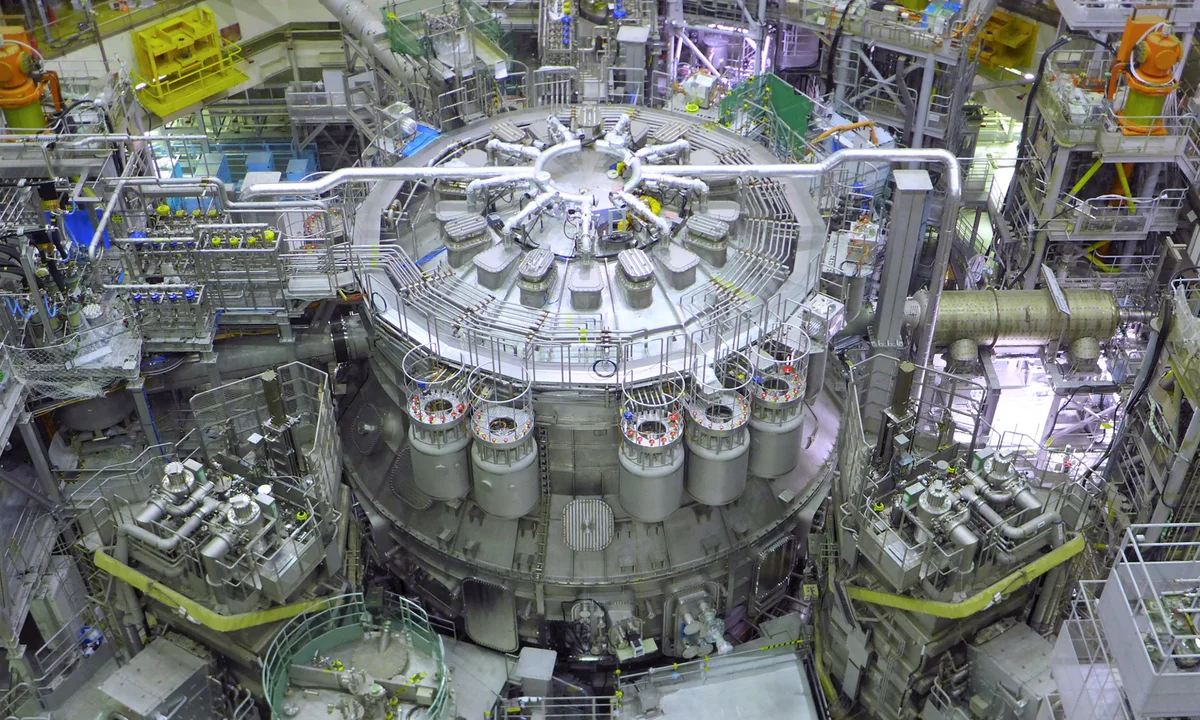
A number of concrete projects now point toward power production. Commonwealth Fusion Systems' ARC plant in Chesterfield County, Virginia targets an output of 400 MW(e) and grid connection in the early 2030s, and General Fusion aims to build a magnetized target fusion plant by the early to mid-2030s. In the United Kingdom, the UK Atomic Energy Authority runs the fusion machine MAST-Upgrade, a Mega Amp Spherical Tokamak, and acts as a fusion partner for the STEP programme; characterization activities are in progress at the future home of STEP, on the site of a former West Burton coal-fired power station that is currently being demolished.
Fusion research is now a global enterprise: nearly 40 countries operate active fusion programmes, private investment worldwide has surpassed US $10 billion, and more than 160 fusion devices are operational, under construction or planned.
9. Timeline: from Eddington to ignition
- 1919Perrin proposes fusion as the Sun's energy sourceJean Perrin, a professor of physical chemistry in Paris, proposed that the fusion of hydrogen into helium was the energy source of the Sun and stars.
- 1920Eddington makes the case from the starsArthur Eddington concluded that the energy of the Sun and stars could scarcely be other than subatomic energy that exists abundantly in all matter.
- 1938Bethe explains energy production in starsHans Bethe proved that fusion produces the enormous energy emitted by stars, proposing two processes in which hydrogen nuclei fuse into helium nuclei.
- 1955Lawson sets the conditions for fusionJohn D. Lawson demonstrated that the conditions for fusion reactions relied on temperature, density and confinement time — the basis of today's triple product.
- August 1968The T-3 tokamak stuns the Plasma OlympicsAt the conference in Akademgorodok, Lev Artsimovitch announced electron temperature of more than 10 million degrees held in the T-3 tokamak plasma for 10 to 20 thousandths of a second.
- 22 July 1969British team verifies the tokamak resultsIn Moscow, a four-person team sent by British authorities recorded totally unambiguous evidence of Thomson scattering, confirming the Soviet results and turning world fusion research toward tokamaks.
- 25 June 1983JET produces its first pulseThe Joint European Torus at Culham began operation, starting a run that would end with pulse number 105,842 in December 2023.
- November 1985The Geneva summit sets ITER in motionAt the Geneva Superpower Summit, General Secretary Gorbachev proposed to US President Ronald Reagan a collaborative international project to develop fusion energy for peaceful purposes.
- 1991First controlled release of fusion powerJET succeeded in releasing energy through nuclear fusion for the first time in the history of fusion research.
- 1997JET sets the deuterium-tritium recordJET produced 16 MW of fusion power from a total input heating power of 24 MW (Q=0.67) — a world record for fusion power in a magnetic confinement device.
- 21 November 2006ITER Agreement signed in ParisMinisters from the seven ITER Members signed the ITER Agreement at the Elysée Palace; the ITER Organization was officially established on 24 October 2007.
- 5 September 2021A 20-tesla magnet for SPARCMIT and Commonwealth Fusion Systems ramped a large high-temperature superconducting electromagnet to 20 tesla, the most powerful magnetic field of its kind ever created on Earth.
- 5 December 2022NIF achieves fusion ignitionThe National Ignition Facility delivered 2.05 megajoules to a fuel target and produced 3.15 MJ of fusion energy — the first laboratory demonstration of scientific energy breakeven.
- 2023JET's final experiments set an energy recordIn its final deuterium-tritium experiments, JET consistently produced high fusion power for five seconds, resulting in a record 69 megajoules using 0.2 milligrams of fuel.
- 12 February 2025WEST holds a plasma for 22 minutesThe CEA's WEST machine maintained a plasma for more than 22 minutes, smashing the previous record for plasma duration achieved with a tokamak.
- 7 April 2025NIF sets the target-gain recordA NIF shot produced a record fusion yield of 8.6 megajoules from 2.08 MJ of laser energy, a target gain greater than four and ignition for the eighth time.
References (27)
- 1What is Fusion? — ITER Organization WebView source
- 2Sun: Facts — NASA Science WebView source
- 3Nuclear fusion — Energy Education, University of Calgary WebView source
- 4Making fusion work — ITER Organization WebView source
- 5Lawson's magic formula — ITER Organization WebView source
- 6IAEA World Fusion Outlook 2025 — International Atomic Energy Agency 2025 Web↩View source
- 7What is a tokamak? — ITER Organization WebView source
- 860 years of progress — ITER Organization Web↩View source
- 9August 1968: A revolution in fusion — ITER Organization 1968 WebView source
- 10Science collaboration in the time of the Cold War — ITER Organization WebView source
- 11MIT-designed project achieves major advance toward fusion energy — MIT News 2021 WebView source
- 12Star Power: Blazing the Path to Fusion Ignition — Lawrence Livermore National Laboratory WebView source
- 13Lawrence Livermore National Laboratory achieves fusion ignition — Lawrence Livermore National Laboratory WebView source
- 14Target Breakthrough Enabled Fusion Record at NIF — Lawrence Livermore National Laboratory WebView source
- 15DOE National Laboratory Makes History by Achieving Fusion Ignition — U.S. Department of Energy WebView source
- 16Pioneering JET delivers final plasma — UK Atomic Energy Authority (GOV.UK) WebView source
- 17JET Participation — Max Planck Institute for Plasma Physics Web↩View source
- 18Fusion energy record demonstrates powerplant future — UK Atomic Energy Authority (GOV.UK) Web↩View source
- 19JET's final tritium experiments yield new fusion energy record — UK Atomic Energy Authority (GOV.UK) Web↩View source
- 20Nuclear fusion: WEST beats the world record for plasma duration! — CEA (French Alternative Energies and Atomic Energy Commission) Web↩View source
- 21In a Few Lines — ITER Organization WebView source
- 22History — ITER Organization WebView source
- 23The long path to discovery — ITER Organization WebView source
- 24Hans Bethe – Facts — Nobel Prize Outreach 1967 WebView source
- 25Fusion Energy Sciences — U.S. Department of Energy WebView source
- 26About us — UK Atomic Energy Authority — UK Atomic Energy Authority (GOV.UK) WebView source
- 27DOE Explains... Fusion Reactions — U.S. Department of Energy WebView source