Axolotl
A Mexican salamander that never grows up, regrows lost limbs, and is now critically endangered in the wild.
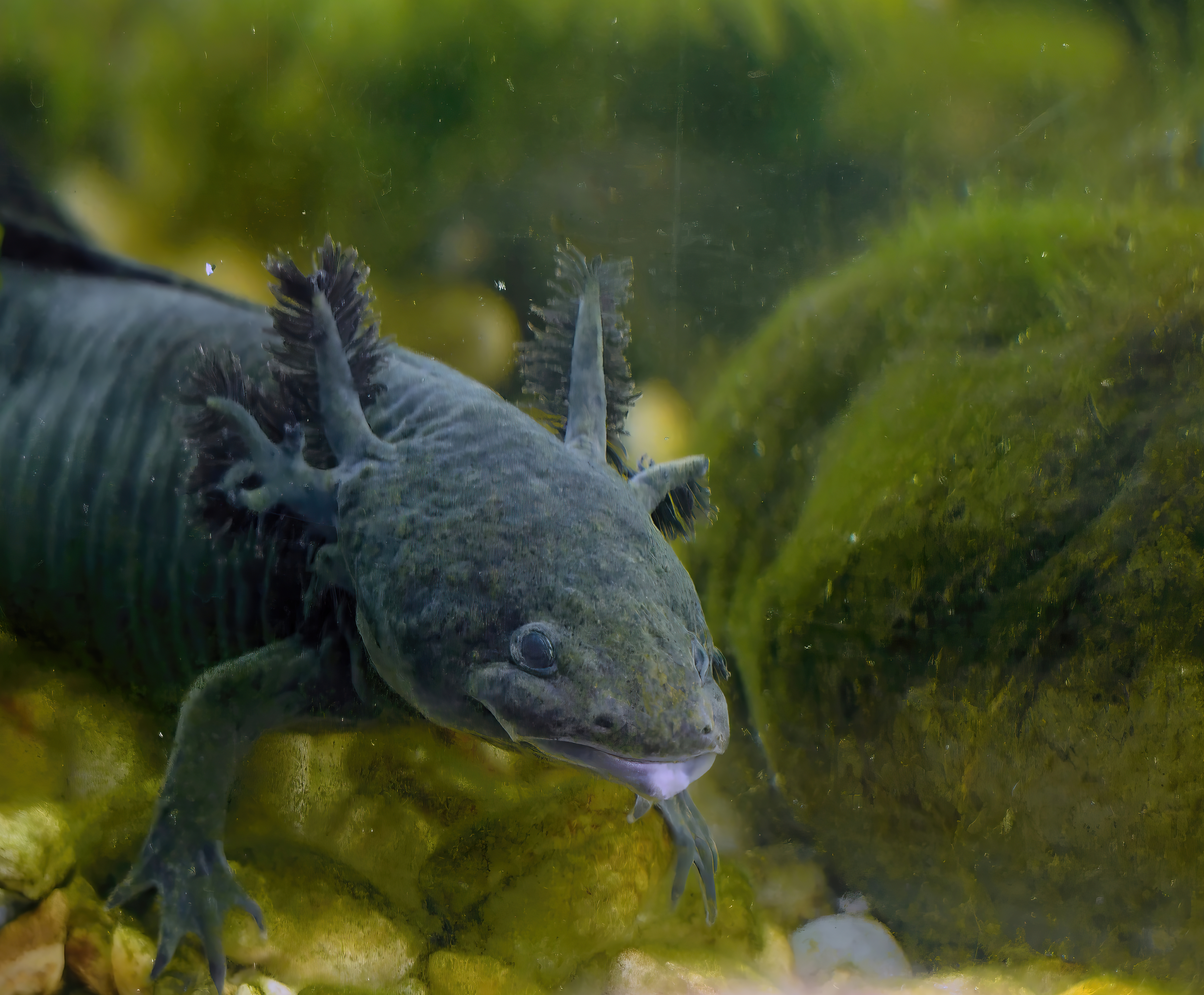
The axolotl, Ambystoma mexicanum, is a mole salamander native to the lakes of the Valley of Mexico. It is neotenic, reaching sexual maturity without metamorphosis, so adults stay fully aquatic with feathery external gills, and it can regenerate lost limbs. It lived in the lakes of Xochimilco and Chalco and is presumed to have inhabited Texcoco and Zumpango. The species is Critically Endangered with a decreasing population, while a robust pet trade keeps it common in captivity.
In this article
- 1Quick answers
- 2What is an axolotl?
- 3Why is it called a water monster?
- 4How big does an axolotl get?
- 5How long do axolotls live?
- 6What do axolotls eat?
- 7Why do axolotls never grow up?
- 8How does an axolotl regenerate a lost limb?
- 9Why are axolotls endangered?
- 10How many axolotls are left in the wild?
- 11Are axolotls dangerous or poisonous?
- 12Where do axolotls live?
- 13Why are pet axolotls pink?
- 14Is the axolotl used in scientific research?
- 15The axolotl in Aztec legend
- 16Timeline
- 17Knowledge graph
Quick answers
How big is an axolotl? About 25 cm long (up to 30 cm in some sources), weighing 50-200 g.
How long do axolotls live? 10 to 15 years in the wild.
Critically Endangered; fewer than 1,000 remain in the wild.
They are harmless to humans and not poisonous.
What do axolotls eat? Molluscs, worms, insect larvae, crustaceans and small fish.
Why do axolotls stay young? Neoteny: they reach sexual maturity without metamorphosing.
Where do axolotls live? Only in what remains of Lake Xochimilco, inside Mexico City.
Can I keep one as a pet? Yes, widely bred in captivity, but most countries ban cross-border trade.
1. What is an axolotl?
The axolotl, Ambystoma mexicanum, is a species of mole salamander. The axolotl is a salamander of the family Ambystomatidae, notable for its permanent retention of larval features such as external gills.
Of the two lakes, Chalco and Xochimilco, where these animals are historically native, only Xochimilco, at an elevation of about 2,274 metres, remains. Axolotls are amphibians that spend their whole lives underwater.
Axolotl limbs are underdeveloped and possess long, thin digits.
2. Why is it called a water monster?
According to legend, the axolotl is the Aztec god of fire and lightning, Xolotl, who disguised himself as a salamander to avoid being sacrificed.
3. How big does an axolotl get?
Axolotls reach up to 30 centimetres long and weigh around 50 to 200 grams.
Ambystoma mexicanum grows to about 25 cm (10 inches) long and is dark brown with black speckling. The axolotl is a carnivore with an average lifespan in the wild of 10 to 15 years and a size of up to 12 inches.
In the wild axolotls are mostly grayish-brown, while lighter specimens, especially white bodies with pink gills, are usually bred as pets.
4. How long do axolotls live?
Axolotls can live 10 to 15 years in the wild, reaching sexual maturity after about a year.
The species is found only in Lake Xochimilco, within Mexico City, where it is classified as a critically endangered species. A large captive population of axolotls exists, used extensively in research because of their unusual ability to regenerate body parts including limbs, gills and parts of their eyes and brains.
5. What do axolotls eat?
Axolotls are often the top predators in their native habitats and eat whatever they can get their jaws on, including molluscs, worms, insect larvae, crustaceans and even some small fish.
With a decreasing population of around 50 to 1,000 adult individuals, the species is assessed as critically endangered by the IUCN and listed under Appendix II of CITES. Axolotls can regenerate lost limbs and have a life cycle that allows them to stay young their whole lives, a phenomenon called neoteny.
Though they keep external gills, adults also have functional lungs and can breathe through their skin. Axolotls retain external gills, a tail and a body fin, and lack movable eyelids.
6. Why do axolotls never grow up?
It is neotenic, reaching sexual maturity without undergoing metamorphosis, and the adults remain fully aquatic with obvious external gills. The ability may relate to the axolotl's refusal to go through metamorphosis.
They keep their frilly external gills and other juvenile features and stay living in the water for their entire lifecycle. They do go some way to developing lungs, but they are also able to breathe through their skin. Axolotls retain feathery external gills and long, tadpole-like tails instead of metamorphosing.
Unlike other salamanders, most amphibians replace water-breathing gills for air-breathing lungs and grow lids for their eyes as they metamorphose. If staying in the water was better for axolotl survival and they matured sexually before metamorphosis, it made sense to keep their water-adapted features.
Though axolotls develop functional lungs, they use prominent feathery gills to breathe underwater. Unlike other salamanders, axolotls are neotenic, meaning they keep juvenile characteristics into adulthood and remain aquatic their entire life.
7. How does an axolotl regenerate a lost limb?
The axolotl can regenerate almost any body part, including brain, heart, jaws, limbs, lungs, ovaries, spinal cord, skin and tail. The characteristic of the axolotl that attracts the most attention is its unusual healing ability; axolotls do not heal by scarring but are capable of tissue regeneration. Axolotls have the remarkable ability to regenerate parts of their bodies, including limbs, eyes and even parts of their brains.
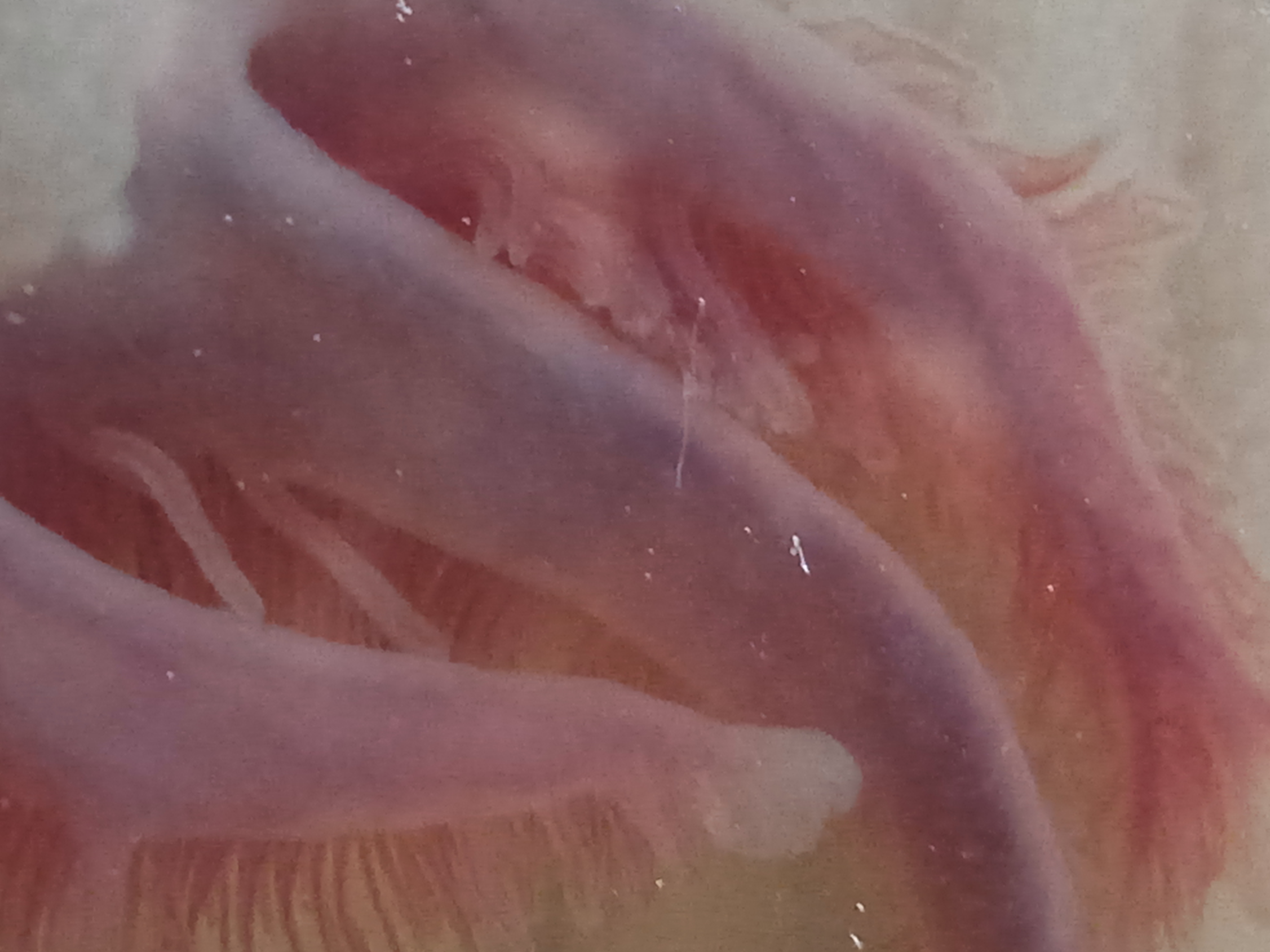
This ability makes the axolotl an excellent research organism to study in the search for regenerative medicine. Axolotls can regrow lost limbs and other body parts like organs and parts of their central nervous systems. Research labs around the world are trying to understand this trait, which is one reason there are so many captive axolotls.
In most animals, including people, there are genes only active during development that direct the growth of organs and limbs; once adulthood is reached these genes are silenced. For axolotls it appears these genes may get activated again when there is an injury, and which genes and how is the subject of ongoing research.
The 32 billion base pair long sequence of the axolotl genome was published in 2018, the largest animal genome completed at the time. Although the axolotl genome is about ten times the size of the human genome, it encodes a similar number of proteins: 23,251 compared with about 20,000 in humans.
8. Why are axolotls endangered?
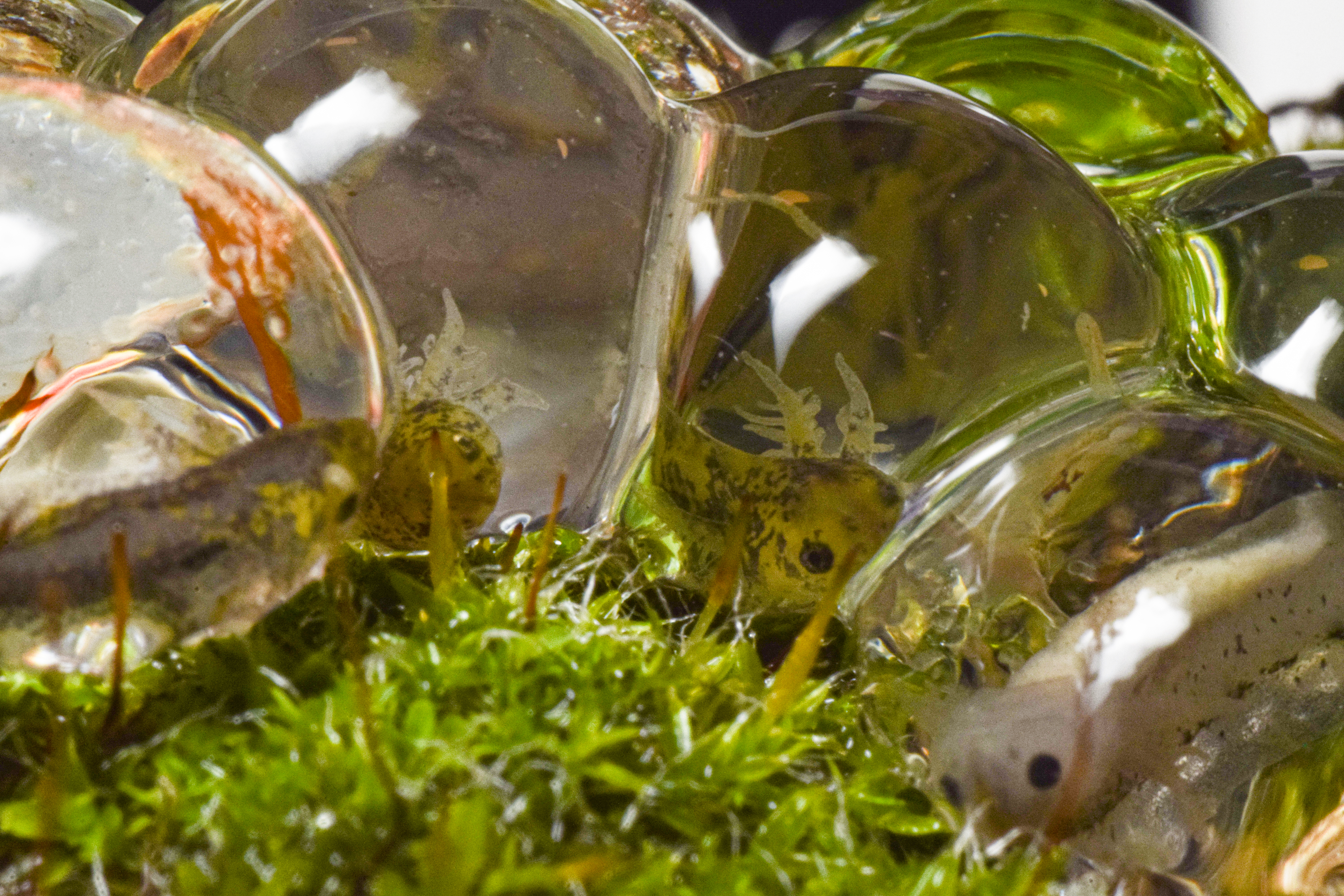
Axolotls are almost extinct in their native habitat, largely due to the introduction of predatory fishes and habitat loss. Wild axolotls have been driven to near extinction by the introduction of invasive species such as tilapia and carp.
Axolotl populations have declined considerably due to habitat loss driven by Mexico City's urbanisation, water pollution, and invasive species such as carp and tilapia. Once naturally occurring in a series of lakes and wetlands in the Mexican Central Valley, axolotl populations now live in just three isolated sites in the southern part of Mexico City.
Some are concerned that axolotls may escape captivity and interbreed with native salamanders. In most countries axolotls cannot be traded across international borders, partly because of poaching concerns.
The axolotl was assessed as Vulnerable in 1996 and 2004, then Critically Endangered in 2006 and 2010, with a 2019 assessment confirming the same status.
9. How many axolotls are left in the wild?
Ecologists estimate that fewer than 1,000 axolotls exist in the wild, and the IUCN has classified the axolotl as critically endangered since 2006.
Many thousands of axolotls are housed in research laboratories, zoos or personal collections as pets. The overall wild population has low genetic diversity and lives in unconnected aquatic habitats.
10. Are axolotls dangerous or poisonous?
Axolotls are paedomorphic or neotenic aquatic salamanders, meaning they retain certain larval characteristics in the adult, reproductive state.
11. Where do axolotls live?

Axolotls are native to lakes and wetlands in southern Mexico City, particularly Lake Xochimilco and Lake Chalco. Ambystoma mexicanum is historically found in Lakes Chalco and Xochimilco of the Valley of Mexico near Mexico City.
Axolotls were known to inhabit the smaller lakes of Xochimilco and Chalco and are presumed to have inhabited the larger lakes of Texcoco and Zumpango.
Wild axolotls live in Lake Xochimilco, part of the remnants of a once vast, interconnected wetland ecosystem surrounding Mexico City. The waters are dotted with chinampas, artificial islands or floating farms that local people use to grow vegetables and that also provide critical axolotl habitat.
As Mexico City has expanded, many chinampa plots have been abandoned or repurposed, putting the axolotl's last wild refuge at serious risk. Ecologists at the National Autonomous University of Mexico launched the Chinampa Refugio Project to restore chinampas as safe havens for axolotls while supporting sustainable agriculture.
12. Why are pet axolotls pink?
Wild axolotls are brown-grey, but are sometimes bred to be pink.
Pet axolotls are popular in China and Japan. As aquarium technology developed, axolotls became a common exhibit in zoos and public aquariums, as well as an occasional pet in home aquariums.
13. Is the axolotl used in scientific research?
The animals used in research today are genetically distinct from the natural populations that are critically endangered. Research animals have been bred in captivity for nearly 100 years, with genes from a tiger salamander transferred into their genomes.
Their youthful traits include feathery gills sprouting from their heads like a mane, webbed feet, a dorsal fin that runs down the length of their body, and a tail.
Pollution and wastewater runoff from Mexico City have created oxygen-poor water, while invasive carp and tilapia introduced to the lake in the 1960s and 70s compete with axolotls for food and feed on their eggs.
14. The axolotl in Aztec legend
Axolotls originally inhabited a system of interconnected wetlands and lakes in the highlands of Mexico.
15. Timeline
- 1798First scientific descriptionShaw and Nodder describe the species as Gyrinus mexicanus, now Ambystoma mexicanum.
- 1960s-70sCarp and tilapia introducedInvasive carp and tilapia are introduced to Lake Xochimilco, competing with axolotls for food and feeding on their eggs.
- 1996IUCN lists the axolotl as VulnerableThe IUCN assessment classifies the axolotl as Vulnerable (first assessment).
- 2006IUCN lists the axolotl as Critically EndangeredThe IUCN assessment classifies the axolotl as Critically Endangered (uplisted).
- 2018The genome is publishedThe 32 billion base pair axolotl genome is published, the largest animal genome completed at the time.
- 2019IUCN lists the axolotl as Critically EndangeredThe IUCN assessment classifies the axolotl as Critically Endangered (latest assessment).
References (10)
- 1Axolotl — Wikipedia WebView source
- 2Axolotl — Encyclopaedia Britannica WebView source
- 3Ambystoma mexicanum — Animal Diversity Web, University of Michigan WebView source
- 4Axolotl — National Geographic Kids WebView source
- 5Axolotl — National Geographic WebView source
- 6Axolotls: amphibians that never grow up — Natural History Museum, London WebView source
- 7Axolotl — San Diego Zoo Wildlife Alliance WebView source
- 8Research Organism Superheroes: Axolotls — NIGMS / NIH 2024 WebView source
- 9Axolotl Fact Sheet: Population & Conservation Status — San Diego Zoo Wildlife Alliance Library WebView source
- 10Axolotl conservation — Conservation International WebView source
 Megalodon
 Penguin
 Woolly Mammoth