Neptune
The eighth and most distant planet: its mathematical discovery in 1846, the ice giant's winds and weather, its rings and moons, and the Voyager 2, Hubble, Keck and Webb observations that revealed it.
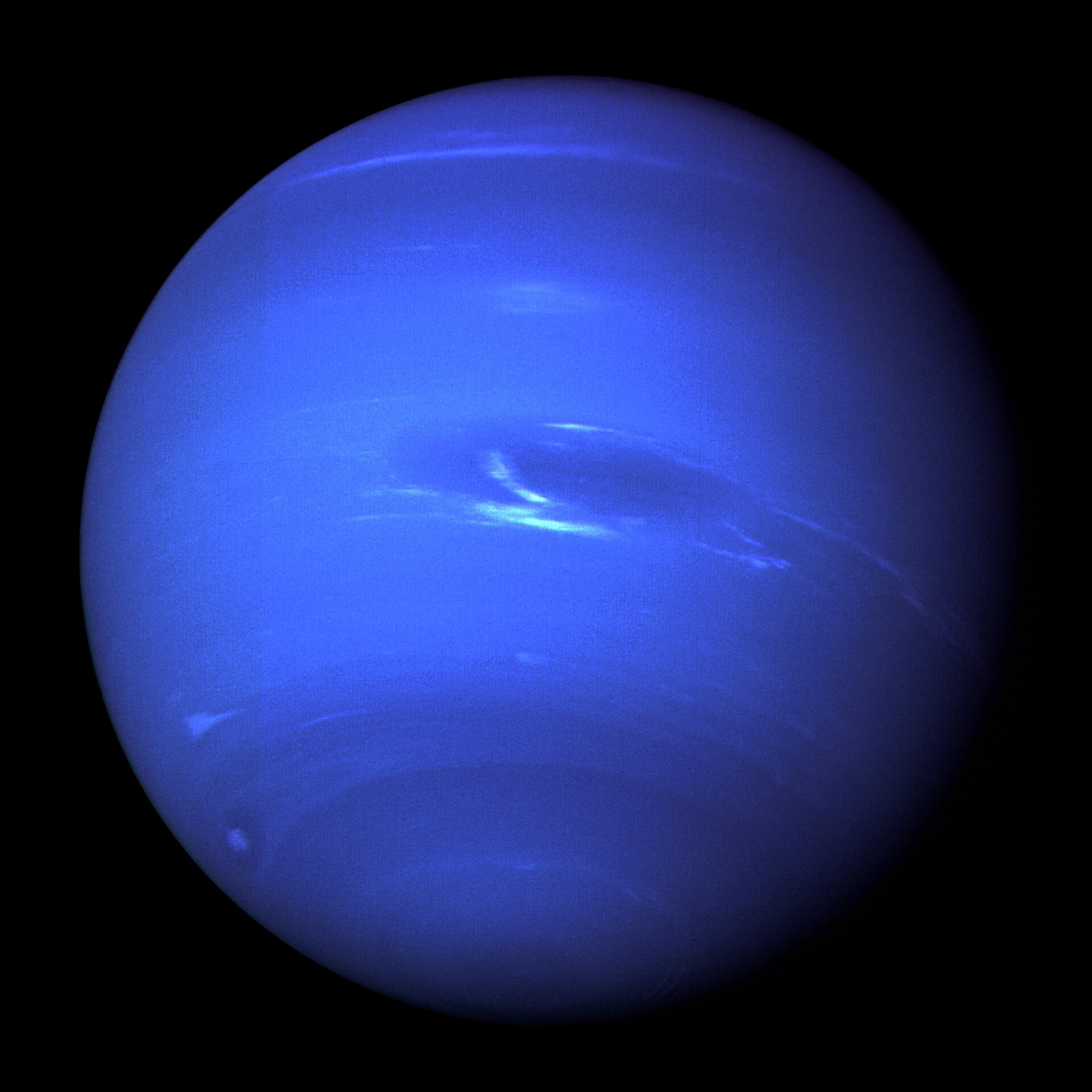
Neptune is the eighth and most distant planet of the solar system and one of the two ice giants, orbiting the Sun every 165 Earth years at about 30 astronomical units. It was the first planet found through mathematical prediction, observed by Johann Galle at the Berlin Observatory in 1846 after Urbain Le Verrier calculated its position. Dark, cold and whipped by supersonic winds, it has 16 known moons, five main rings with four prominent arcs, and a magnetic field tipped about 47 degrees from its rotation axis. Voyager 2 remains the only spacecraft to have visited it up close, in 1989, while Hubble, Keck and the James Webb Space Telescope continue to track its storms, clouds and auroras.
Overview
The discovery followed mathematical calculations of the planet's predicted position from perturbations in the orbit of Uranus.
It is more than 30 times as far from the Sun as Earth, and it is the only planet in our solar system not visible to the naked eye.
Neptune is the fourth-largest planet. Scientists think there might be an ocean of super hot water under its cold clouds, kept from boiling away by incredibly high pressure.
1. Discovery and Prediction
The discovery of Uranus in 1781 raised the count of known planets to seven, and as astronomers tracked the new world they found irregularities in its orbit that Newton's law of universal gravitation could not fully explain. Until 1846 no theory of Uranus accounted satisfactorily for its movements; Bouvard's tables of 1821 had adhered closely to the observations available at the time, yet twenty years later a discrepancy of two minutes had been observed. By 1845 Uranus had completed nearly one full revolution around the Sun, and Urbain Le Verrier in Paris and John Couch Adams in Cambridge independently calculated the location of the postulated planet. Adams had carried out a study essentially equivalent to Le Verrier's, though less elaborate, and had sent it to Airy.
In 1845 Arago presented the problem to Le Verrier, who demonstrated that the observed perturbations of Uranus could not be explained by the actions of Jupiter and Saturn, whatever modifications might be made to the masses of those planets. Le Verrier published a first memoir on the subject in December 1845, a second in June 1846, and the predicted position of the hypothetical planet in August 1846, less than a month before its discovery. His perturbation analysis showed remarkable computational skill: he had taken his approximations to the seventh order, involving 469 distinct terms. In a third memoir appearing on 31 August 1846 he fixed the exact position of the unknown planet and gave its apparent diameter. On 18 September 1846 Le Verrier wrote to Johann Galle at the Berlin Observatory asking him to look for the planet at the position he predicted.

Galle searched for the new planet on the same evening he received Le Verrier's letter and found it that night within one degree of the predicted position, confirming it as a planet the following night. Based on Le Verrier's calculations, Galle used the Fraunhofer telescope at the Berlin Observatory on the night of 23-24 September 1846 and made the first observations of the new planet, only 1 degree from its calculated position. Using those calculations, Galle and his assistant d'Arrest located an object in the sky via the telescope of the Berlin Observatory in the position predicted by Le Verrier and, by tracking it, established that it was a planet following the predicted orbit. Neptune's existence had been predicted mathematically before it was observed, making it the first planet to be predicted via the laws of physics before it could be identified in the sky.
German astronomer Johann Galle discovered the planet on 23 September 1846, and at the time the discovery doubled the size of the known solar system. Adams and Le Verrier met for the first time in Oxford in June 1847, following the discovery of Neptune.
2. Physical Characteristics
| Property | Value |
|---|---|
| Type | Ice giant |
| Mean distance from Sun | 2.8 billion miles (4.5 billion kilometers); about 30 astronomical units |
| Equatorial diameter | 30,775 miles (49,528 kilometers) |
| Orbital period | About 165 Earth years (60,190 Earth days) |
| Rotation period | About 16 hours |
| Rings | At least five main rings (Galle, Leverrier, Lassell, Arago, Adams) and four prominent ring arcs |
3. Orbit, Rotation, and Seasons
Neptune completes a single orbit around the Sun in about 165 Earth years, a span equivalent to 60,190 Earth days. Its rotation is far brisker: one day on the planet takes about 16 hours.
Neptune's axis of rotation is tilted 28 degrees with respect to its orbital plane, a figure similar to the axial tilts of Mars and Earth. That tilt gives the planet four seasons, and because its year is so long, each of those seasons lasts for over 40 years.
Pluto's highly eccentric orbit brings it inside Neptune's orbit for a 20-year period every 248 Earth years, most recently from 1979 to 1999. The two bodies can never collide, because for every three laps Neptune takes Pluto makes two.
Neptune orbits at an average distance of 2.8 billion miles (4.5 billion kilometers) from the Sun, with sunlight taking 4 hours to reach it.
The planet is about four times wider than Earth in diameter.
4. Interior and Atmosphere
Neptune is one of the two ice giants of the outer solar system, and 80% or more of its mass is a hot dense fluid of water, methane and ammonia above a small rocky core. Of the giant planets it is the densest.
The atmosphere is made up mostly of hydrogen and helium with just a little bit of methane. The methane absorbs other colors but reflects blue, giving the ice giants their similar hue.
Its wildly active and chaotic atmosphere features methane clouds.
Absorption of red light by methane in Neptune's atmosphere gives the planet its distinctive aqua color.
5. Magnetic Field
The main axis of Neptune's magnetic field is tipped over by about 47 degrees compared with the planet's rotation axis, and the field itself is about 27 times more powerful than Earth's. Voyager 2 found that this magnetic field is also significantly offset from the planet's center. Auroras arise when energetic particles trapped in a planet's magnetic field strike the upper atmosphere and release energy as a signature glow, and NASA's James Webb Space Telescope captured bright auroral activity on Neptune for the first time.
6. Storms and Atmospheric Activity
The first close view of Neptune's atmosphere came from Voyager 2, which discovered a Great Dark Spot among the planet's features. It was the first big surprise of the flyby, a dark spot very similar to the Great Red Spot on Jupiter. The encounter returned more than 9,000 photographs of Neptune, its moons and its rings.
Immense dark storms on Neptune were first discovered in the late 1980s by Voyager 2, and since then only Hubble has had the sharpness in blue light to track these elusive features, finding two dark storms in the mid-1990s that then vanished. By the time Hubble looked at Neptune in 1994 the two Voyager-era storms had disappeared. Unlike Jupiter's Great Red Spot, which has been visible for at least 200 years, Neptune's dark vortices only last a few years, and the storm first seen in 2015 was the first one photographed as it was dying. Hubble captured time-lapse images of a large dark storm shrinking out of existence, the oval-shaped spot contracting from 3,100 miles across its long axis to 2,300 miles across over the observation period. In September 2018 Hubble uncovered a giant storm in Neptune's northern hemisphere roughly 4,600 miles across, and a smaller dark spot that appeared nearby in January 2020 was about 3,900 miles across.
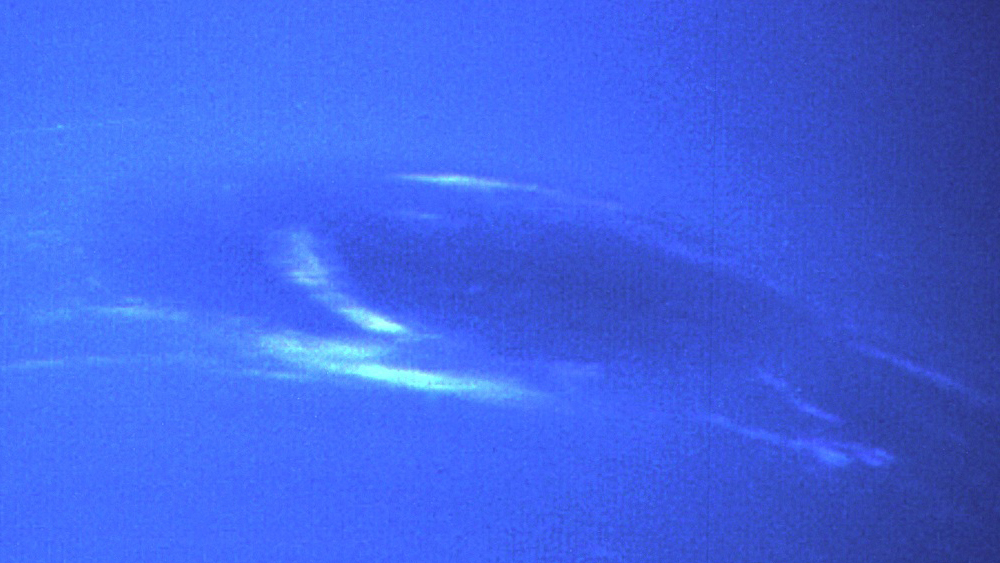
In 2017 a Keck Observatory team spotted a storm system nearly the size of Earth near Neptune's equator, a region where no bright cloud had ever been seen before. That system was about 9,000 kilometers in length — one third of the size of Neptune's radius — spanning at least 30 degrees in both latitude and longitude. A huge, high-pressure dark vortex anchored deep in Neptune's atmosphere may be what causes colossal cloud cover: as gases rise up in a vortex they cool down, and a condensable gas condenses out and forms methane clouds, just as water does on Earth. A UC Berkeley-led study revealed a connection between Neptune's disappearing clouds and the solar cycle: when the Sun emits more intense ultraviolet light, more clouds appear on Neptune about two years later. For the first time in nearly three decades of observations, clouds seen on Neptune all but vanished, with Keck and Hubble images from 1994 to 2022 showing clouds nearly gone except at the south pole.
Many images of Neptune returned during the 1989 Voyager 2 flyby show the planet as a much deeper blue, an effect produced when the Voyager team tweaked the images to better reveal clouds. Researchers in 2024 re-processed those images, and the result showed Neptune and Uranus to look much more alike than many had thought.
Neptune is the windiest world in the solar system: its winds can be three times stronger than Jupiter's and nine times stronger than Earth's, whipping clouds of frozen methane at more than 1,200 miles per hour (2,000 kilometers per hour).
7. Rings and Arcs
Neptune possesses at least five main rings, which, moving outward from the planet, are named Galle, Leverrier, Lassell, Arago and Adams. Within this system lie four prominent ring arcs. The arcs are concentrations of particles embedded within the narrow Adams ring, the outermost of six tenuous rings discovered by Voyager.
The four arcs in the Adams ring are named Liberté, Egalité, Fraternité and Courage. Their persistence is anomalous: the laws of motion would predict that they should spread out evenly rather than remain clumped together, and scientists now believe that the gravitational effects of the moon Galatea stabilize them.
In 1984 three telescopes in South America recorded an occultation of a star near Neptune; because the occultation was recorded only on ingress, it was attributed to the existence of a partial ring or ring arc. In 2005 scientists using the Keck Observatory took images of Neptune's outer rings and found that some of the ring arcs had deteriorated.
8. Moons
Neptune has 16 known moons, of which Triton is the largest. Triton was discovered by the English merchant and astronomer William Lassell on Oct. 10, 1846, just 17 days after a Berlin observatory discovered the planet. The moon did not officially receive the name Triton until Nereid was discovered in 1949 by Gerard Kuiper.
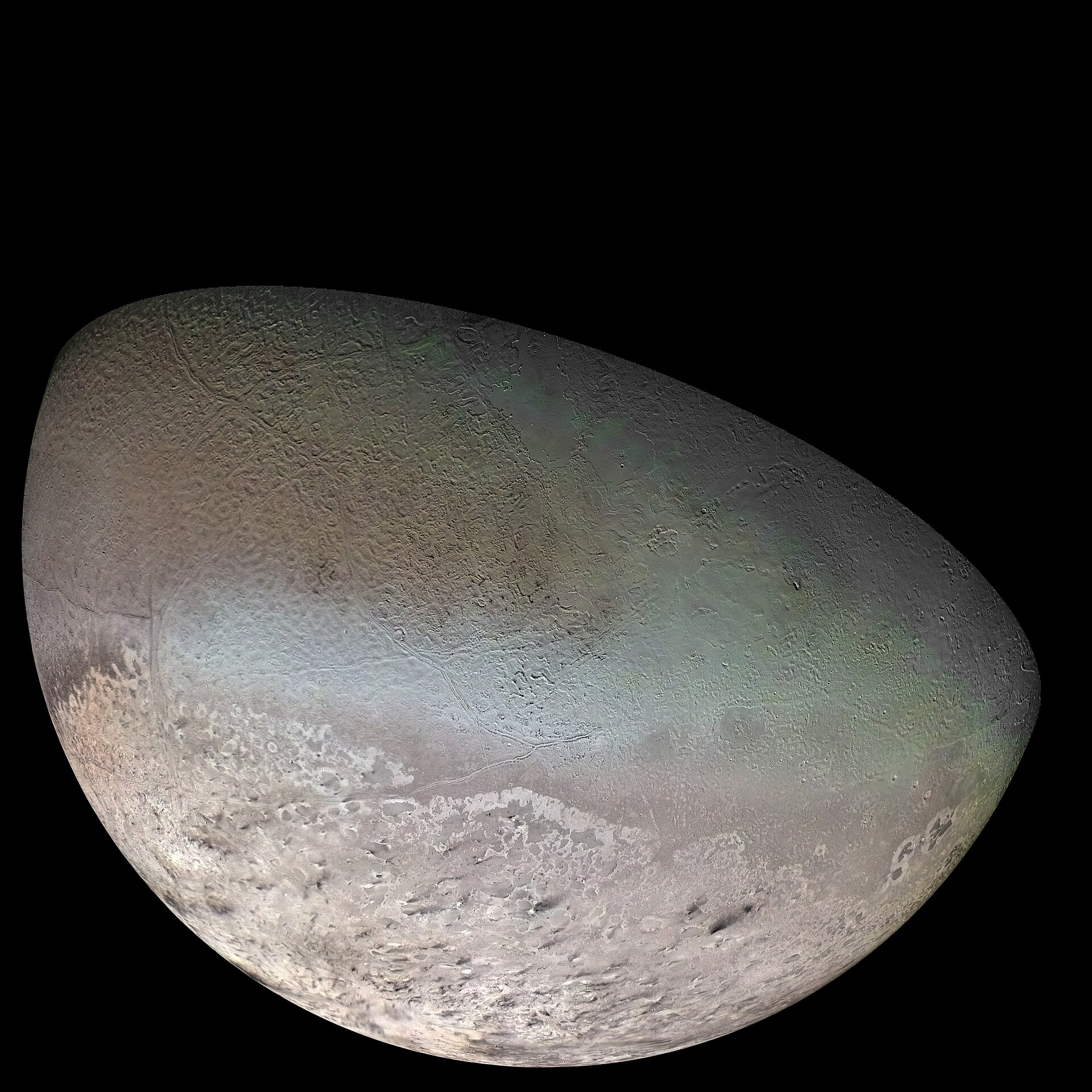
Triton circles Neptune in a retrograde orbit, the only large moon in the solar system known to move in a direction opposite to its planet's rotation, which suggests it may once have been an independent object captured by Neptune. Covered in a frozen sheen of condensed nitrogen, it reflects an average of 70 percent of the sunlight that strikes it. Its surface temperature is around minus 391 degrees Fahrenheit (minus 235 degrees Celsius), making it the coldest surface Voyager 2 measured. Voyager 2 found geysers of icy material rising more than 5 miles (8 kilometers) from the moon and spewing dark material into Triton's tenuous atmosphere. The surface is believed to be young, having been remodeled by melting with relatively few impact craters, and scientists suggest that Triton, with its icy surface, bright poles, varied terrain and cryo-volcanos, is a Pluto-like object that Neptune pulled into orbit.
Gerard Kuiper, the Dutch-American astronomer for whom the Kuiper Belt is named, found Neptune's third-largest moon, Nereid, in 1949, but missed Proteus because it is too dark and too close to Neptune for telescopes of that era. Although Larissa had been spotted in 1981 it was Voyager 2 that confirmed its existence. In 2002 astronomers using improved observing techniques discovered four new moons orbiting Neptune — Laomedeia, Neso, Sao and Halimede — and Psamathe was found in 2003 by ground-based telescopes.
Voyager 2's first discovery of its encounter was the moon later named Proteus, orbiting about 73,000 miles from Neptune and, with a diameter of 260 miles, larger than the known moon Nereid.
9. Exploration
Neptune has been visited up close only once: in 1989 NASA's Voyager 2 returned a wealth of information about the planet and its moons and confirmed that the giant world had faint rings. Voyager 2 is the only spacecraft ever to visit Uranus and Neptune, and the probe is now in interstellar space beyond the heliopause.
The encounter was the last planetary stop of the mission: the Voyager 2 flyby of Neptune and its large moon Triton. Passing about 3,408 miles above Neptune's north pole, the spacecraft made its closest approach to any planet since leaving Earth in 1977, then passed about 25,000 miles from Triton about five hours later. The most intensive near encounter phase began on August 24 and lasted five days, with a close approach of 4,900 kilometers (3,400 miles).
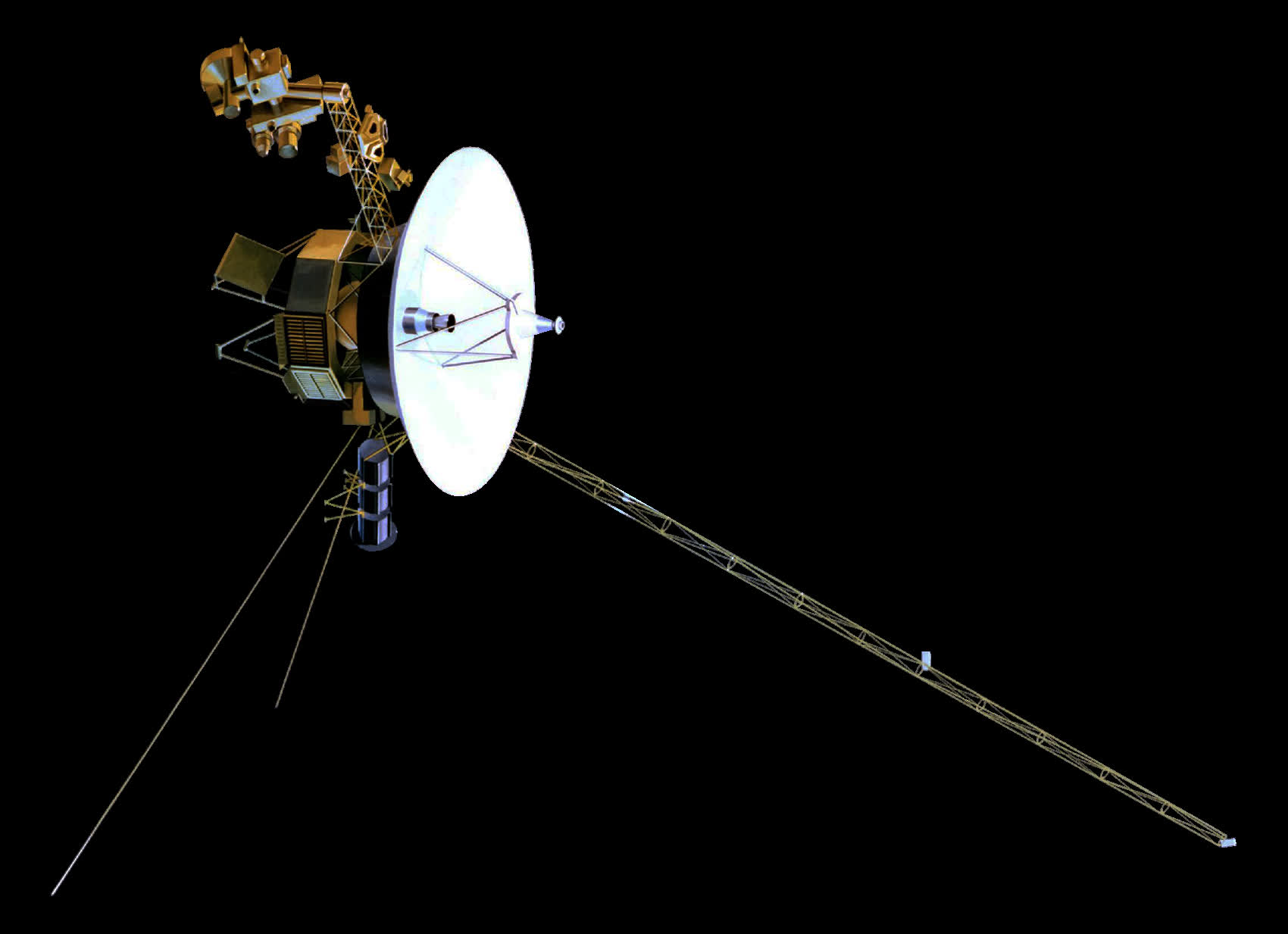
When Voyager 2 began observing Neptune its images were already four times better than those obtained by Earth-based telescopes. It started observing Neptune in June 1989 and continued for six months. Voyager 2 found Triton to be the coldest surface it measured.
The path to Neptune ran through Uranus: Voyager 2 became the first spacecraft to investigate that planet and used its gravity to alter course for Neptune. Six years after its twin, Voyager 2 crossed the heliopause — the boundary between the heliosphere and the interstellar medium — on 5 November 2018 and it is expected to continue returning data from interstellar space until about 2025 and possibly beyond.
Other spacecraft have crossed Neptune's orbit without stopping. Pioneer 10 did so in 1983 and is headed toward the red star Aldebaran. New Horizons followed in 2014 while bound for the first close encounter with distant Pluto. It reached Neptune's orbit — nearly 2.75 billion miles from Earth — in a record eight years and eight months after its January 2006 launch. New Horizons captured a view of Neptune and Triton on 10 July 2014 from about 2.45 billion miles (3.96 billion kilometers) away — more than 26 times the distance between Earth and the Sun — with a 967-millisecond exposure by its LORRI camera.
-
1983Pioneer 10 crosses Neptune's orbitPioneer 10 crossed the orbit of Neptune in 1983 becoming the first human-made object to travel beyond the orbits of the planets, and it is headed toward the red star Aldebaran 18Neptune: Exploration · NASA Science ↗.
-
January 1986Voyager 2 at UranusIn January 1986 Voyager 2 became the first spacecraft to investigate Uranus and used that planet's gravity to alter its trajectory to explore Neptune, the outermost planet of the solar system 1030 Years Ago: Voyager 2 Explores Neptune · NASA History ↗.
-
5 June 1989Neptune observations beginVoyager 2 began to observe Neptune on June 5 1989 at a distance of 73 million miles, when its images were already four times better than those obtained by Earth-based telescopes 10.
-
25 August 1989Closest approachOn 25 August 1989 Voyager 2 made its last planetary encounter, a dramatic flyby of Neptune and its large moon Triton 20Universe Newsletter, September 2019 (Voyager 2 at Neptune) · NASA Jet Propulsion Laboratory ↗.
-
25 August 2014New Horizons crosses Neptune's orbitNew Horizons traversed the orbit of Neptune on 25 August 2014 as its last major crossing en route to becoming the first probe to make a close encounter with distant Pluto 21NASA's New Horizons Spacecraft Crosses Neptune's Orbit En Route to Historic Pluto Encounter · Johns Hopkins University Applied Physics Laboratory ↗.
-
5 November 2018Voyager 2 reaches the heliopauseSix years after its twin, Voyager 2 crossed the heliopause — the boundary between the heliosphere and the interstellar medium — on 5 November 2018 and it is expected to continue returning data from interstellar space until about 2025 and possibly beyond 10.
10. Timeline: from Galileo's misplaced star to Webb's ring portrait
- 1612 and 1613Galileo records Neptune as a fixed starGalileo recorded Neptune as a fixed star during observations with his small telescope in 1612 and 1613; its slow motion against the background stars kept him from recognizing it as a planet.
- 1821Bouvard's tables of UranusAlexis Bouvard constructed tables of Uranus's motion that adhered closely to recent observations; within twenty years a discrepancy of two minutes had been observed, suggesting the attraction of an unknown planet.
- 1845Arago sets Le Verrier on the Uranus problemFrancois Arago asked Le Verrier to work on the irregularities in Uranus's orbit; Le Verrier published his first memoir on the subject in December 1845.
- 31 August 1846Le Verrier publishes the predicted positionIn a third memoir on Uranus appearing on 31 August 1846, Le Verrier fixed the exact position of the unknown planet and gave its apparent diameter.
- 23-24 September 1846Galle and d'Arrest observe the predicted planetOn the night of Sept. 23-24, 1846, Johann Gottfried Galle used the Fraunhofer telescope at the Berlin Observatory and made the first observations of the new planet, only 1 degree from its calculated position.
- 10 October 1846Lassell discovers TritonWilliam Lassell spotted Triton on Oct. 10, 1846, just 17 days after a Berlin observatory discovered Neptune; the moon did not officially receive its name until Nereid was discovered in 1949.
- 1949Kuiper discovers NereidDutch-American astronomer Gerard Kuiper found Neptune's third-largest moon, Nereid, in 1949.
- 20 August 1977Voyager 2 lifts offNASA's Voyager 2 lifted off on Aug. 20, 1977, from Kennedy Space Center in Florida; it would become the only spacecraft to visit Uranus and Neptune.
- 1983Pioneer 10 crosses Neptune's orbitPioneer 10 crossed the orbit of Neptune and became the first human-made object to travel beyond the orbits of the planets of our solar system.
- 1984First evidence of a ring systemAstronomers found evidence for the existence of a ring system around Neptune.
- 25 August 1989Voyager 2's closest approach to NeptunePassing about 3,408 miles above Neptune's north pole, Voyager 2 made its closest approach to any planet since leaving Earth, then passed about 25,000 miles from Triton about five hours later.
- 12 July 2011Neptune completes its first orbit since discoveryNeptune arrived at the same location in space where it was discovered nearly 165 years earlier, and Hubble took anniversary pictures of the blue-green planet.
- 2013A fourteenth moon found in archival Hubble imagesA scientist studying Neptune's ring arcs in archival Hubble Space Telescope images found a previously unknown 14th moon of Neptune, provisionally designated S/2004 N 1.
- 25 August 2014New Horizons crosses Neptune's orbitNASA's Pluto-bound New Horizons spacecraft traversed the orbit of Neptune, matching precisely the 25th anniversary of Voyager 2's encounter, after capturing distant images of Neptune and Triton in July.
- 21 September 2022Webb's first image of NeptuneNASA's James Webb Space Telescope took its first image of Neptune and captured the clearest view of the planet's rings in more than 30 years.
References (23)
- 1175 Years Ago: Astronomers Discover Neptune, the Eighth Planet — NASA History WebView source
- 2Neptune Facts — NASA Science WebView source
- 3Neptune — NASA Science WebView source
- 4Le Verrier (Dictionary of Scientific Biography entry) — MacTutor History of Mathematics Archive, University of St Andrews WebView source
- 5Urbain Jean Joseph Le Verrier — MacTutor History of Mathematics Archive, University of St Andrews WebView source
- 6Today in Physics History: Neptune — University of Maryland Department of Physics WebView source
- 7Neptune Completes Its First Circuit Around The Sun Since Its Discovery — NASA Science (Hubble) WebView source
- 8John Couch Adams — MacTutor History of Mathematics Archive, University of St Andrews WebView source
- 9Clouds On Neptune Perform a Surprise Disappearing Act — W. M. Keck Observatory WebView source
- 1030 Years Ago: Voyager 2 Explores Neptune — NASA History Web↩View source
- 11NASA's Webb Captures Neptune's Auroras For First Time — NASA Science (Webb) WebView source
- 12Voyager 2: First To Visit All Four Giants — NASA Science WebView source
- 1325 Years After Neptune: Reflections on Voyager — NASA Jet Propulsion Laboratory WebView source
- 14Hubble Sees Neptune's Mysterious Shrinking Storm — NASA Science (Hubble) WebView source
- 15Neptune Dark Spot — NASA Science (Hubble) WebView source
- 16New Storm Makes Surprise Appearance on Neptune — W. M. Keck Observatory WebView source
- 17The rings of Neptune (chapter, arXiv:1906.11728) — arXiv (Cornell University) 1906 JournalView source
- 18Neptune: Exploration — NASA Science Web↩View source
- 19New Webb Image Captures Clearest View of Neptune's Rings in Decades — NASA Science (Webb) WebView source
- 20Universe Newsletter, September 2019 (Voyager 2 at Neptune) — NASA Jet Propulsion Laboratory 2019 Web↩View source
- 21NASA's New Horizons Spacecraft Crosses Neptune's Orbit En Route to Historic Pluto Encounter — Johns Hopkins University Applied Physics Laboratory Web↩View source
- 22Neptune Moons: Facts — NASA Science WebView source
- 23NASA's New Horizons Spacecraft Crosses Neptune Orbit En Route to Historic Pluto Encounter — NASA WebView source
 Great Wall of China
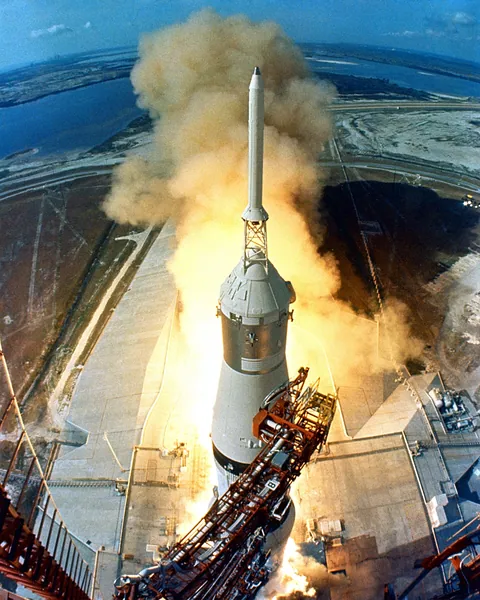 Apollo 11
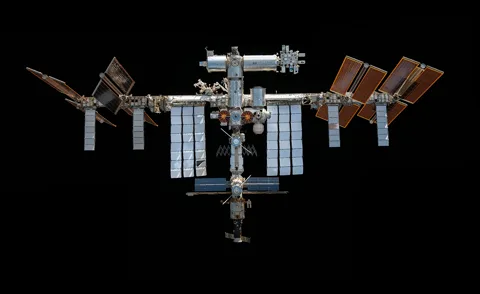 International Space Station