Origami
The story of origami, the Japanese art of folding paper: its roots in ceremonial wrapping and Heian court etiquette, the oldest printed folding books, its transformation into a modern art by Akira Yoshizawa, its mathematics of axioms and crease patterns, and the engineers who now fold spacecraft, robots and metamaterials.
Origami is the art of folding objects out of paper, developed in Japan from older paper-folding traditions and named from the Japanese words oru (to fold) and kami (paper). Documented in court ceremony and formal wrapping from the Heian period, it produced the first printed folding books in the Edo era: the Senbazuru Orikata of 1797 and the private Kayara-gusa compilation of 1845. In the twentieth century it was remade as an art form by Akira Yoshizawa, whose wet folding and diagramming notation spread worldwide, and as a mathematical discipline whose seven Huzita-Hatori axioms, flat-foldability questions and fold-and-cut theorem connect paper to geometry, computer science and engineering, from airbags and medical stents to NASA's starshade and self-folding robots. The folded crane remains its emblem, and through Sadako Sasaki and the Children's Peace Monument in Hiroshima it became a global symbol of peace.
In this article
- 1Overview
- 2Early History and the Origins of Paper Folding
- 3Earliest Folding Instructions and Manuscripts
- 4The Crane, Sadako Sasaki and the Hiroshima Memorial
- 5Paper: Washi
- 6Techniques and Styles
- 7Origami and Mathematics
- 8Applications in Science, Engineering and Design
- 9Modern Masters and the Spread of Origami
- 10Origami as Art, Education and Exhibition
- 11Timeline
- 12Timeline: from paper in Japan to folded spacecraft
- 13Frequently asked questions
- 14Knowledge graph
Overview
Origami is the art of folding objects out of paper to create both two-dimensional and three-dimensional subjects. The term derives from the Japanese oru, meaning to fold, and kami, meaning paper, and it has become the generic description of this art form. Most origami is folded from a single square sheet, although rectangles and other nonsquare sheets are used in the modular and composite styles.
1. Early History and the Origins of Paper Folding
The folding of paper in Japan goes back centuries, arising probably within religious ceremonies and among court nobles as a pastime. The origins of origata are traced to the Heian period between 794 and 1185, when styles of wrapping were developed for poetry, money and fans, and the techniques were taught exclusively through oral transmission in schools such as the Ogasawara School. By the 17th century much of the Japanese population was folding birds, animals and boxes.
Paper folding was also practised in Europe and had become well established there by the 19th century. Lister argues that the word origami was coined in Japan as long ago as the Western middle ages, while Hatori Koshiro suggests the late 12th Century. In Japan the term origami came into use in place of the older word orikata by 1880.
2. Earliest Folding Instructions and Manuscripts
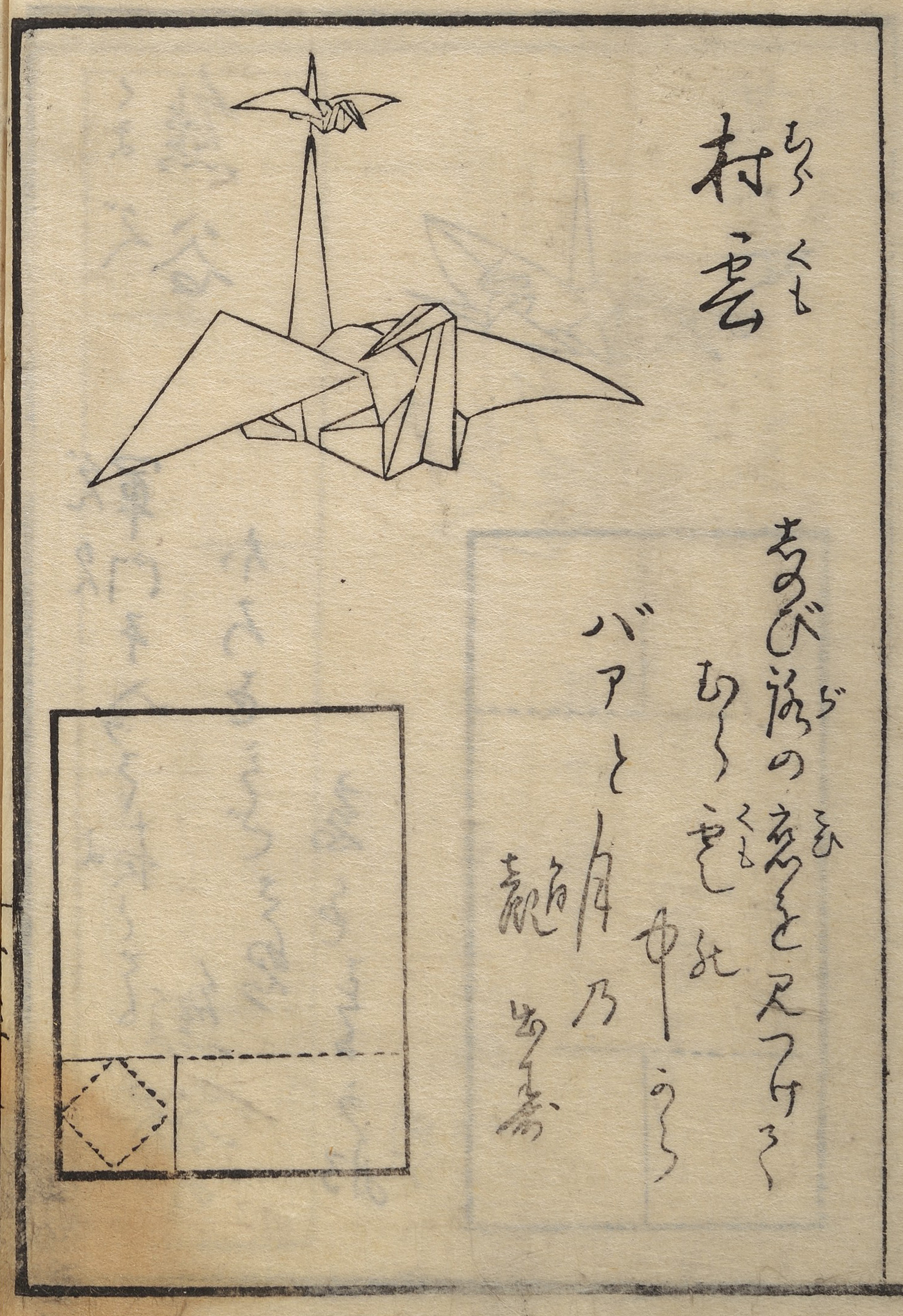
Among the earliest books of origami instructions are Tsutsumi-no Ki by Sadatake Ise, a 1764 book of 13 ceremonial folds dealing with ceremonial folding and knotting rather than recreation, and Sembazuru Orikata by Akisato Rito, with 49 linked cranes. Sembazuru Orikata instructs the folder to make multiple cranes from a single sheet of strong paper cut into smaller squares connected at the corners. The basic design of the classic crane had been known as a single fold long before 1797 and so predates the Sembazuru Orikata. Hiden senbazuru orikata was published in Japan in 1797. The related Chushingura Orikata, two printed sheets issued in the same year as the Senbazuru Orikata, shows figures from a famous play.
The Kayara-gusa is a private manuscript compilation in 233 volumes, never printed or published, with volumes 27 and 28 on paperfolding. The only copy is held by the Asahi newspaper library in Osaka. The name Kan no mado is widely used in the West but appears to come from a misreading of characters on the back of the Library of Congress facsimile, where the correct reading would be Fuyuno Mado, meaning Winter Window. Because the paperfolding occupies volumes 27 and 28 of the second section, called the Kayara-gusa, Lister says the preferred name is Kayara-gusa rather than Kan no mado. A facsimile was hand-copied around 1920 for Professor Frederick Starr of Chicago University, passed with his papers into the Library of Congress, and was found there in March 1960 after a search prompted by Gershon Legman and the Brossmans.
3. The Crane, Sadako Sasaki and the Hiroshima Memorial
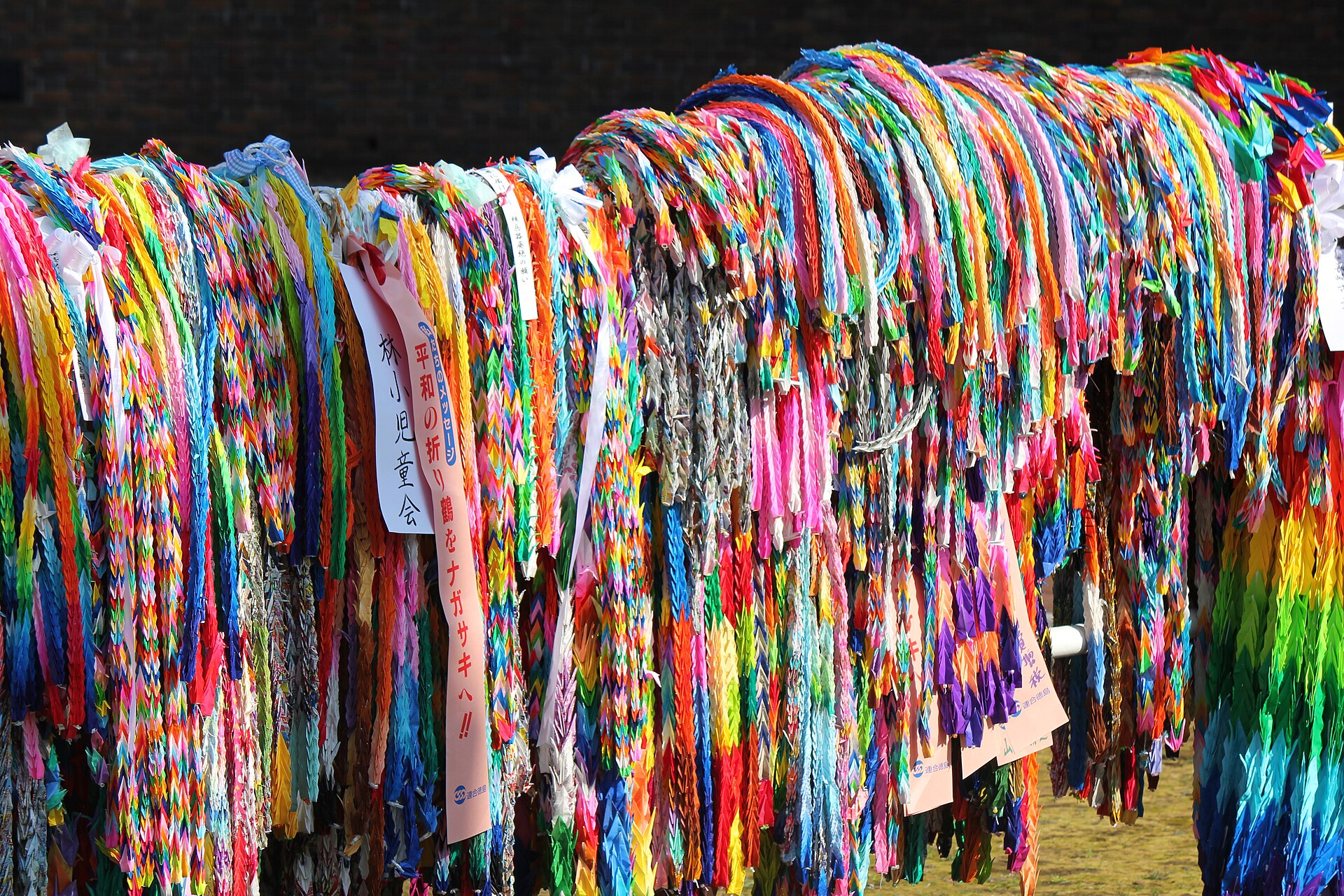
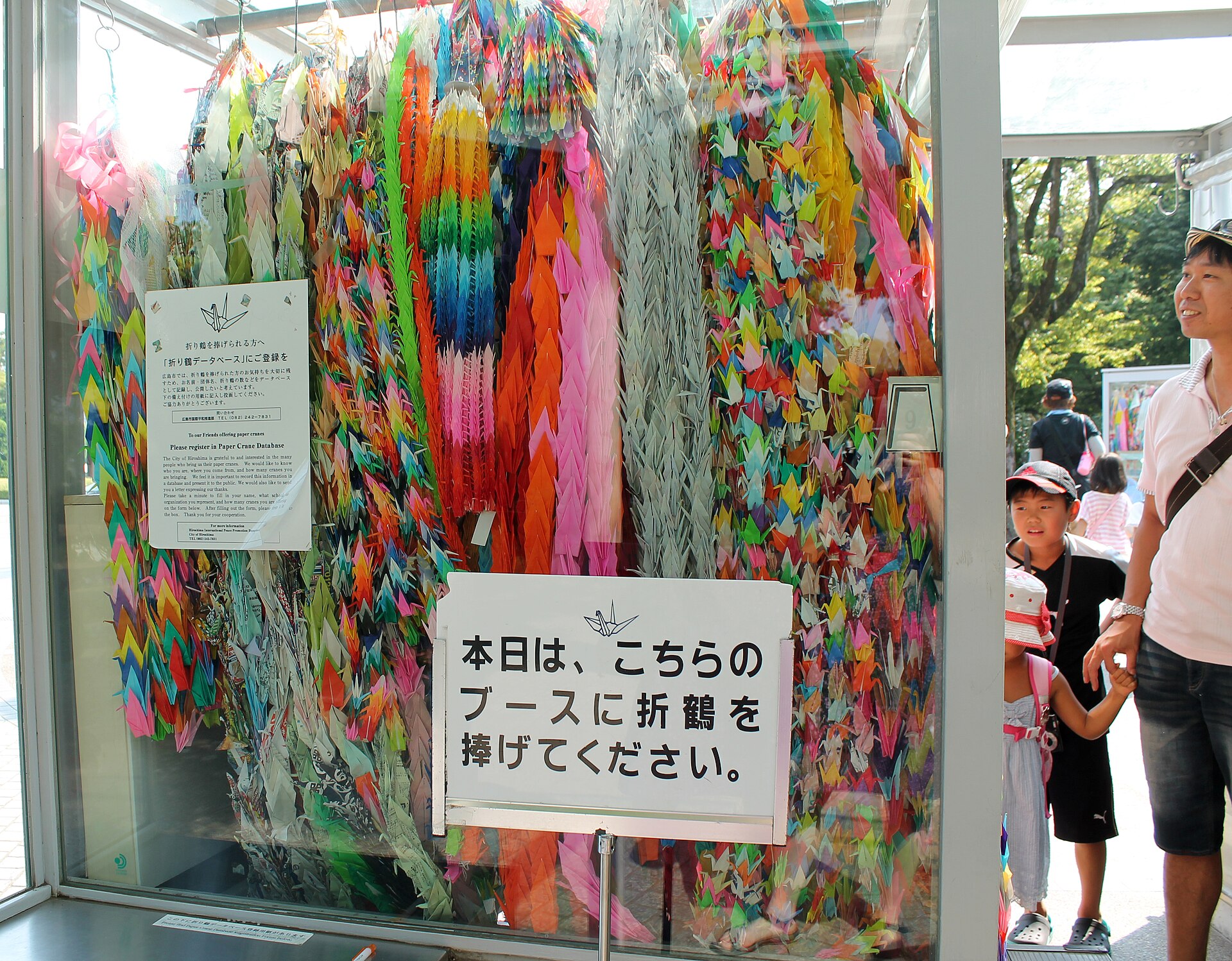
Sadako Sasaki was two years old when she was exposed to the atomic bomb, and she showed no apparent injuries as she grew up. Nine years later, in the sixth grade, she fell ill and was diagnosed with leukemia at the Hiroshima Red Cross Hospital. Classmates of Sadako Sasaki launched a nationwide fundraising campaign for a memorial to her and the other children killed by the bomb, and 1958 saw the statue installed in Hiroshima Peace Memorial Park.
4. Paper: Washi
Washi is the traditional paper of Japanese origami, tougher than ordinary wood-pulp paper and made from gampi, mitsumata or paper mulberry fibres. Washi craftsmanship is the traditional practice of making paper by hand from the fibres of the paper mulberry plant, which are separated and soaked in clear river water before being filtered through a bamboo screen. Hand-made washi is used for letter writing, books and documents, and for home interiors such as paper screens, room dividers and sliding doors.
Most inhabitants of the practising washi communities take part in the process, from cultivating and harvesting the mulberry plant to creating new washi products that promote the craft at home and abroad. Washi knowledge and skills are transmitted within craftspeople's families, through preservation associations and by local municipalities, with practising families and their employees learning under washi masters who inherited the techniques from their parents.
In 2025 UNESCO inscribed Japan's washi craftsmanship of traditional hand-made paper on the Representative List of the Intangible Cultural Heritage of Humanity.
5. Techniques and Styles
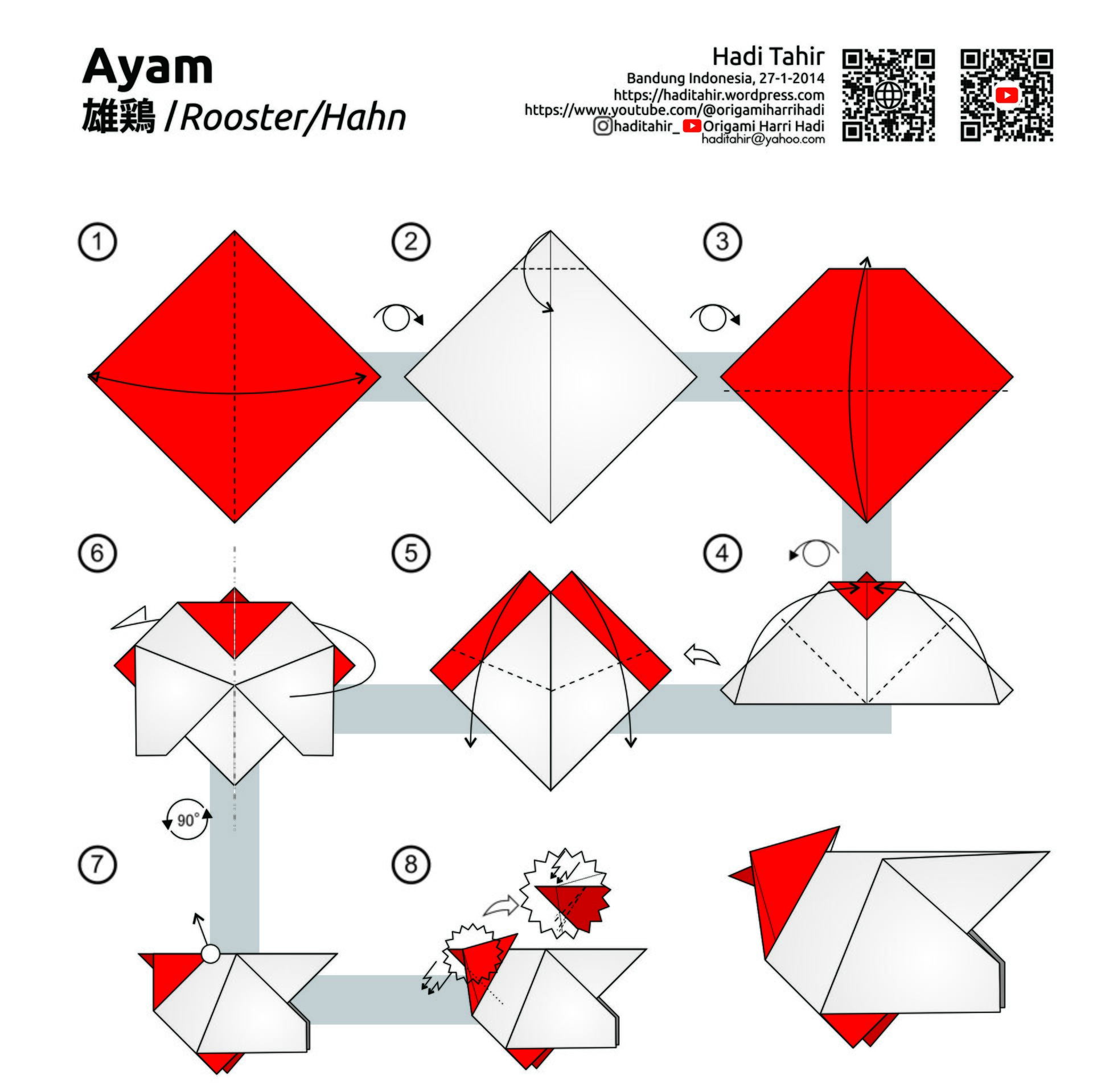
Cutting was traditionally part of origami, though most modern folders avoid it; the practice survives in the Rokoan style of connected cranes. Wet folding, a technique invented by Akira Yoshizawa, uses paper carrying a water-soluble glue that is dampened before folding and hardens as it dries. In unit origami, squares are folded into identical modules that interlock to build symmetric solids, tessellations and boxes. Tomoko Fuse popularized modular origami, which brought mathematical attention to the art of folding paper.
6. Origami and Mathematics
Origami construction is governed by the seven Huzita-Justin axioms, which set out what can be built from single creases that align points and lines. At the first international meeting on origami science, Humiaki Huzita and Benedetto Scimemi described six fundamentally different ways to make a single crease.
Any graph of straight line segments drawn in the plane can be produced by folding a sheet and making one straight cut, a result originally developed by Erik Demaine, Martin Demaine and Anna Lubiw.
7. Applications in Science, Engineering and Design
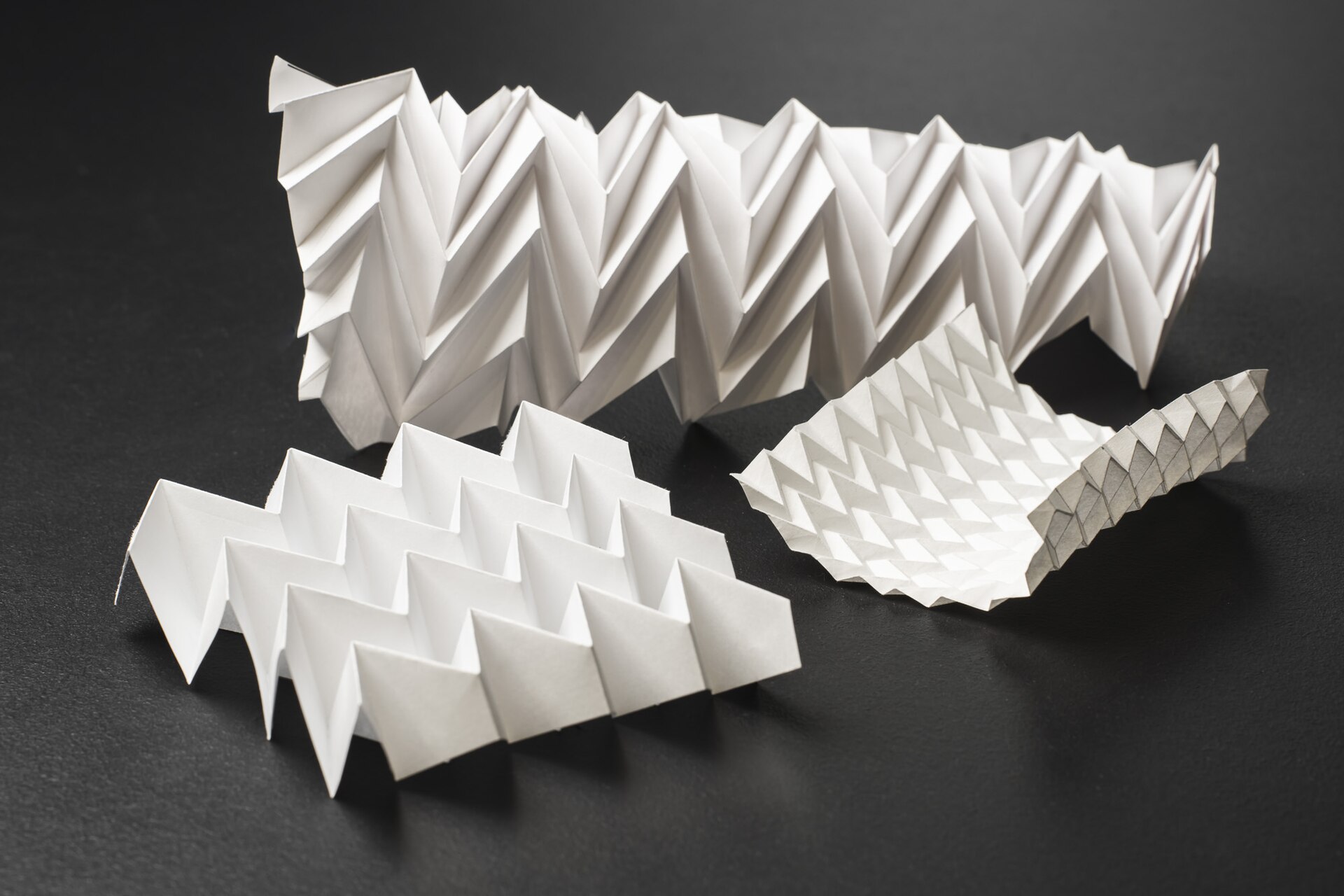
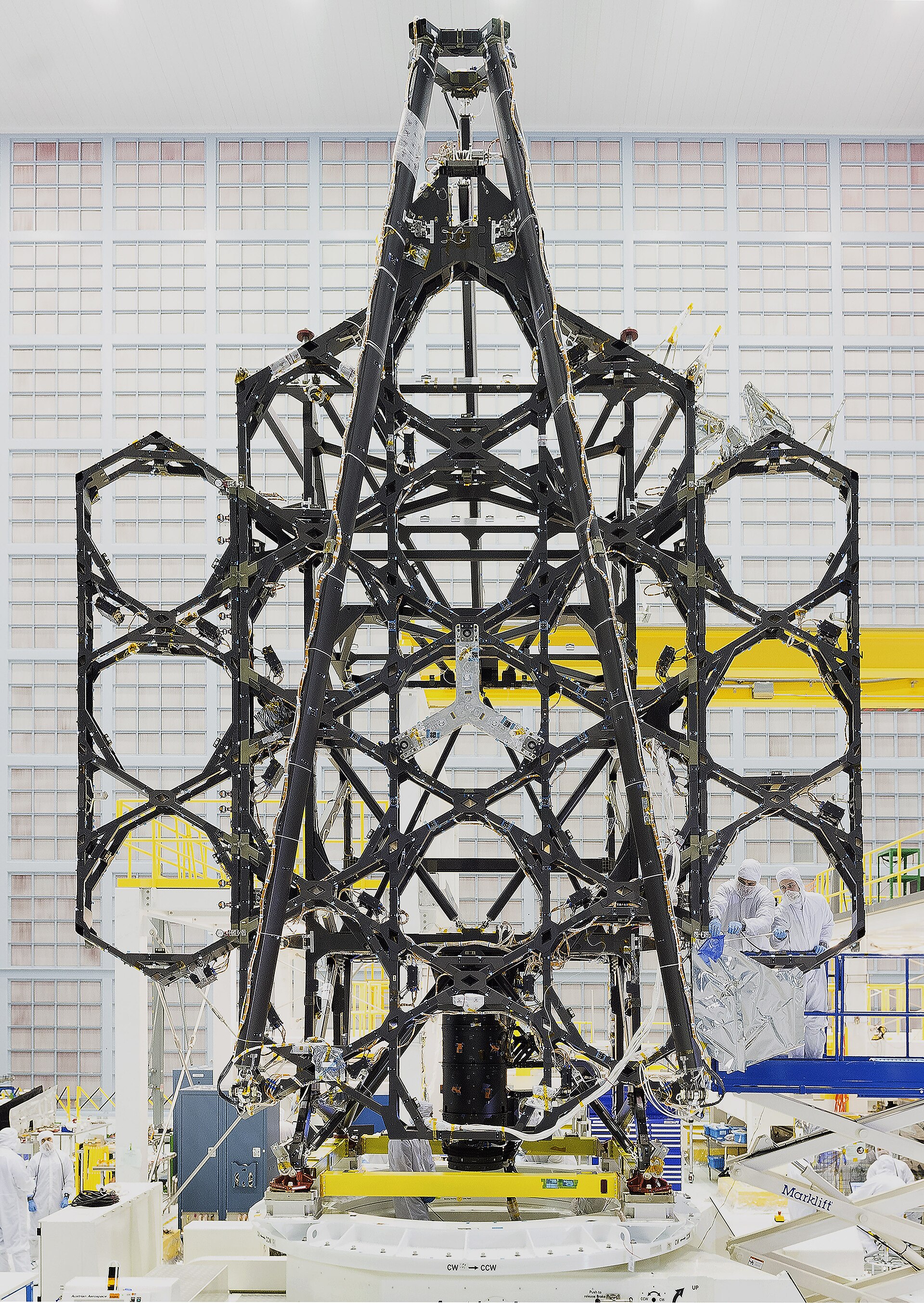
Origami methods have been borrowed for the folding of automobile air bags and of large space telescopes, and related principles may govern the folding of proteins. Because manufacturers often prefer to build a product from a single piece of material, determining whether and how a shape can be folded becomes a problem of optimization. Origami accordingly raises research questions in algorithm complexity and optimization, and it finds uses that range from work at the molecular scale to manufacturing and space applications. Its principles now reach into furniture making, architecture, robotics design, engineering and medical solutions. Optical systems that combine multiple mirror reflections, meanwhile, demand tedious graphic layout work to size the mirrors correctly and to keep ray bundles unobstructed.
NASA has pursued starshade technology through a focused activity known as S5, an effort to bring the technology to Technical Readiness Level 5 (TRL5). An occulter placed inside a telescope is known as a coronagraph, whereas an occulter placed outside the telescope is called a starshade. A starshade deployment animation depicts the change from the stowed configuration to the deployed configuration, including the eventual jettison of the Petal Launch and Unfurl Subsystem. A simulation video shows the translation of out-of-band starlight, known as the Arago spot, in the telescope camera used for lateral sensing and formation flying maneuvers.
MIT researchers presented a printable origami robot that begins as a flat sheet of plastic, folds itself up when heated, and measures roughly a centimeter from front to back. The tiny robot weighs about a third of a gram, can swim, climb an incline, cross rough terrain and carry twice its own weight, and apart from the self-folding sheet its only component is a permanent magnet on its back. The design was motivated by a hypothetical medical scenario in which tiny material sheets injected into the body would travel to an intervention site, fold themselves up and later dissolve. For outside control, the researchers placed the robot on a rectangular stage with an electromagnet at each of its four corners and varied the fields rapidly enough that the robot moved nearly four body lengths a second.
At Harvard's John A. Paulson School of Engineering and Applied Sciences, researchers showed they can tune the rigidity and floppiness of an origami structure by changing how densely extra folds are added and how they are patterned across the material. The findings appeared in the Proceedings of the National Academy of Sciences. Mahadevan, the senior author, said the study probes the percolation of rigidity, meaning how floppiness changes with the density of redundant folds in a system. Siheng Chen said folding a structure in a particular pattern can encode information into the material, and that rearranging the spatial organization of folds allows that information to be stored and erased, laying the ground for origami memory usable in mechanical computation.
8. Modern Masters and the Spread of Origami
Akira Yoshizawa introduced the diagramming notation known as the Yoshizawa-Randlett system, and his early career unfolded through a series of modest and then prominent displays: a small exhibition at the Utsunomiya Education Hall in 1950, held in connection with a teachers' conference, was followed by his first major exhibition in the Ginza in 1955 with sponsorship from Tokyo Electric Power. Gershon Legman, an American on the point of moving to France, discovered Yoshizawa for the West in 1953 and arranged for an exhibition of his models at the Stedelijk Museum in Amsterdam in the autumn of 1955, drawing on models from the Ginza display. Robert Harbin's book Paper Magic, which quoted a letter from Gershon Legman, carried news of Yoshizawa's folding through the English-speaking world from 1956 onward, and Western enthusiasts quickly took up his new way of folding. Lillian Oppenheimer of New York, founder of the Origami Center, made Yoshizawa a vice-president of that organization and in April 1959 travelled to Japan to visit him. A school photograph from 1925 shows Yoshizawa at the age of fourteen, shortly after he left home for Tokyo, where he could afford only one year of high school and continued his education at evening classes.
Origami was relatively unknown in the United States until Lillian Oppenheimer discovered the flapping bird at a family gathering in the late 1940s, an encounter that triggered a fascination dominating the rest of her long life. She sought out and taught folders in the New York area and began corresponding with paperfolders around the world, gradually gathering a small group of dedicated people through the 1950s and 1960s. Michael Shall, a young teacher from Pennsylvania, founded The Friends of The Origami Center of America with Alice Gray, Robert Neale, Florence Temko and other folders, and in 1980 the organization was incorporated as a volunteer-run, tax-exempt educational and cultural arts body. The Friends bought Lillian Oppenheimer's supplies business in 1987 and became OrigamiUSA on the first of July in 1994, after its founder died in 1992 at the end of a long life devoted to origami.
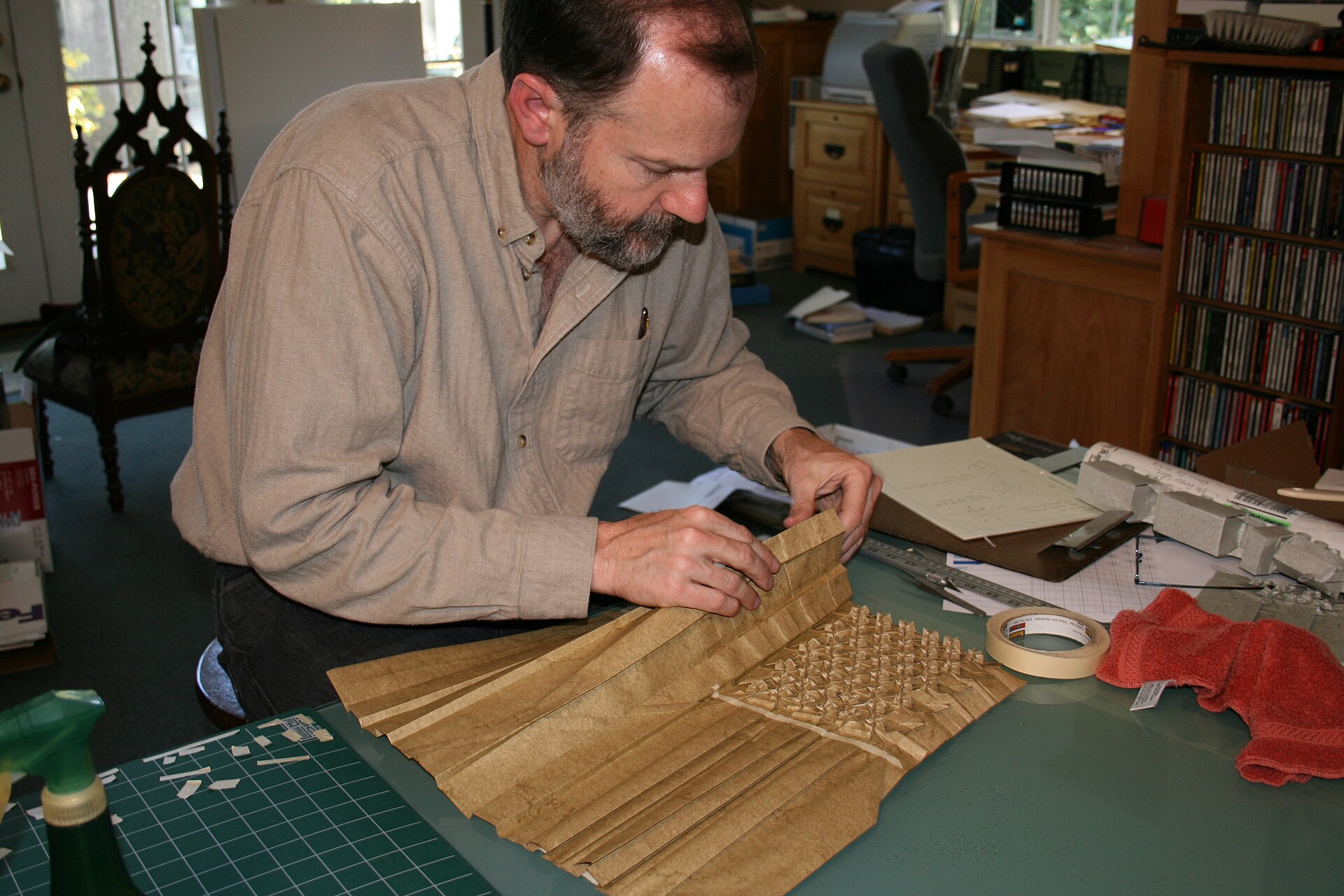
OrigamiUSA reports over 1600 members in 49 states and 19 countries and has local-area groups in cities across the United States and Canada. It is based at the American Museum of Natural History in New York City, where it operates autonomously thanks to the generosity of the museum's trustees. It runs classes, workshops and an annual convention, and publishes a quarterly magazine, instruction booklets and an annual collection of original models that runs to some 300 pages. Lang is recognized as one of the world's leading masters of origami, having studied the art for more than fifty years and catalogued and diagrammed over 800 designs. Lang pioneered the cross-disciplinary marriage of origami with mathematics, has consulted on engineering uses ranging from air-bag design to expandable space telescopes, and in 2011 was elected an Honorary Member of the British Origami Society.
9. Origami as Art, Education and Exhibition
In Japan the first kindergarten was established in 1875 and origami was promoted for early childhood education, with origami subjects listed among the activities in the kindergarten's 1877 regulations. Origami was not regarded as art until the middle of the 20th century, when folders around the world began experimenting with different styles, techniques and materials, and it is now a sophisticated international art form worthy of museum exhibition and scholarship. Folding Paper: The Infinite Possibilities of Origami was the first museum exhibition devoted to the history of paper folding, the work of leading origami artists, and the links between origami and mathematics, science and design. The exhibition examined the relationship between origami and art, science and mathematics, and demonstrated its impact in areas as diverse as space exploration, medical research and fashion design.
10. Timeline
-
First–second centuries CEPaperfolding beginsPaperfolding originated in the region of modern-day China and Korea as paper manufacturing processes were refined.14Origami: History & Traditional Patterns · United States Air Force Academy Library ↗
-
Fourteenth–fifteenth centuriesSamurai cultureOrigami spread through samurai culture.14
-
Seventeenth–eighteenth centuriesWider societyOrigami reached wider society.14
-
1920Starr facsimileA facsimile was hand-copied for Professor Frederick Starr of Chicago University.6Kayaragusa, alias "Kan no mado" · British Origami Society (David Lister collection) ↗
-
March 1960Facsimile foundThe facsimile was found at the Library of Congress after a search prompted by Gershon Legman and the Brossmans.6
11. Timeline: from paper in Japan to folded spacecraft
- 7th centuryPaper reaches JapanBy the seventh century paper had been introduced to Japan from China via the Korean Peninsula, and the Japanese later developed washi in the Heian period.
- 794-1185Heian court foldingDuring the Heian period paper folding was a ceremonial part of court culture, and letters were folded or twisted into patterns according to the correspondent and the purpose of the missive.
- 1697Origata tehon albumThe Metropolitan Museum's album Models of Paper Folding, dated to the third month of 1697; it records the initiation of a pupil into the art of origata by an Ogasawara master.
- 1764Tsutsumi-no KiTwo of the earliest known books of written folding instructions include Tsutsumi-no Ki by Sadatake Ise, which deals with ceremonial folding rather than recreation.
- 1797Hiden senbazuru orikataHiden senbazuru orikata, published in Japan in 1797; it is the oldest known technical book on origami for play and describes folding multiple connected cranes from one sheet.
- 1845The Kayara-gusa compilationThe private manuscript compilation known in the West as Kan no mado, whose two volumes on paperfolding are held in the Osaka Asahi newspaper library, is understood to have been put together in 1845 by a private compiler.
- 1911Akira Yoshizawa is bornAkira Yoshizawa, described as the father of modern origami, was born in 1911 and died in 2005; his work made paperfolding a modern art.
- 25 October 1955Sadako Sasaki diesBelieving that folding paper cranes would help her recover, Sadako Sasaki kept folding them to the end and died on October 25 1955 after an eight-month struggle with leukemia.
- autumn of 1955Yoshizawa shown in AmsterdamGershon Legman arranged an exhibition of Yoshizawa's models at the Stedelijk Museum in Amsterdam in the autumn of 1955 with models from the Ginza display.
- 1958Children's Peace MonumentThree years after Sadako's death the Children's Peace Monument was installed in Hiroshima Peace Memorial Park, built with funds donated from all over Japan.
- March 1960The Starr copy is foundA hand-written facsimile made around 1920 for Professor Frederick Starr reached the Library of Congress in Washington and was found there in March 1960 by a search prompted by Gershon Legman.
- 1977Sadako's story goes globalThe global dissemination of Sadako's story began with the 1977 publication of Sadako and the Thousand Paper Cranes by Eleanor Coerr in the United States.
- 1980Friends of the Origami Center incorporatedThe Friends of The Origami Center of America, founded by Michael Shall with Alice Gray, Robert Neale and others, was incorporated in 1980 as an all-volunteer non-profit organization.
- 1 July 1994Renamed OrigamiUSAThe Friends of The Origami Center of America was renamed OrigamiUSA on the first of July in 1994 and continues to share paperfolding from its New York headquarters.
- June 2015MIT's self-folding robotMIT researchers presented a printable origami robot that folds itself up from a flat sheet of plastic when heated and measures about a centimeter from front to back.
- September 2018NASA's S5 starshade activityIn September 2018 NASA's Astrophysics Division approved the plan to implement the S5 activity addressing starlight suppression, formation sensing and control, and deployment accuracy and shape stability.
12. Frequently asked questions
Where did paper folding first appear?
Paperfolding originated in the region of modern-day China and Korea around the first and second centuries CE, as paper manufacturing processes were refined 14. During the Heian period from 794 to 1185 it became a ceremonial part of court culture, and letters were folded or twisted into patterns depending on the correspondent and the purpose of the missive 14.
How did origami move from the samurai to ordinary people?
Origami spread through samurai culture in the fourteenth and fifteenth centuries and reached wider society in the seventeenth and eighteenth centuries 14. By the Edo period origata had become prominent even among commoners, and the art of paper folding so popular today is described as having evolved from origata 3Models of Paper Folding (Origata tehon) · The Metropolitan Museum of Art ↗.
What is senbazuru, and what does the crane mean in Japan?
Senbazuru is a bundle of cranes strung together, and gathering a thousand is believed to make a wish come true 8Prayers for Peace Embodied in Origami Cranes · Government of Japan (Highlighting Japan) ↗. For the Japanese the crane stands for longevity and good fortune, and senbazuru is a way of expressing heartfelt wishes such as recovery from illness 8.
What happened to Sadako Sasaki, and how did her story become known worldwide?
Sadako kept folding paper cranes in the belief that they would help her recover, and she died in October of 1955 after an eight-month struggle with the disease 7Paper Cranes and Children's Peace Monument · City of Hiroshima ↗. Eleanor Coerr's book Sadako and the Thousand Paper Cranes was published in the United States in 1977 and carried the story of the girl and her cranes around the world 8.
What happens to the cranes sent to Hiroshima today?
The Children's Peace Monument is also known as the Tower of a Thousand Cranes, and around ten million paper cranes, weighing about ten tons, arrive from around the world each year 8. The City of Hiroshima launched the Paper Crane Recycling and Circulation Project in 2012 to turn offered cranes into new forms 8.
What can be folded that ordinary geometric construction cannot?
Origami constructions can solve angle trisection and cube duplication, two tasks that the traditional rules of geometric construction cannot handle 15Origami · Wolfram MathWorld ↗. A sufficiently large square sheet can wrap any polyhedron, and flat-folding one square can cover any connected polygonal region of the plane 15.
References (20)
- 1Origami | Art, History & Techniques — Encyclopaedia Britannica ArchiveView source
- 2Folding Paper: The Infinite Possibilities of Origami — Japanese American National Museum WebView source
- 3Models of Paper Folding (Origata tehon) — The Metropolitan Museum of Art Archive↩View source
- 4Errors and misconceptions about the history of paperfolding — British Origami Society (David Lister collection) WebView source
- 5History of Origami — Robert C. Williams Museum of Papermaking, Georgia Tech ArchiveView source
- 6Kayaragusa, alias "Kan no mado" — British Origami Society (David Lister collection) Web↩View source
- 7Paper Cranes and Children's Peace Monument — City of Hiroshima Archive↩View source
- 8Prayers for Peace Embodied in Origami Cranes — Government of Japan (Highlighting Japan) Web↩View source
- 9Mathematics and Art 6. Origami — American Mathematical Society (Feature Column) WebView source
- 10Math & Science Posts — Robert J. Lang Origami WebView source
- 11Starshade Technology Development — NASA Science (Exoplanet Exploration Program) WebView source
- 12Centimeter-long origami robot — MIT News (Massachusetts Institute of Technology) 2015 WebView source
- 13Using origami memory to encode geometric information in floppy structures — Harvard John A. Paulson School of Engineering and Applied Sciences BookView source
- 14Origami: History & Traditional Patterns — United States Air Force Academy Library Web↩View source
- 15Origami — Wolfram MathWorld Web↩View source
- 16Origami — Wikipedia WebView source
- 17Washi, craftsmanship of traditional Japanese hand-made paper — UNESCO Intangible Cultural Heritage WebView source
- 18About Robert J. Lang — Robert J. Lang Origami WebView source
- 19The Art of Akira Yoshizawa — British Origami Society (David Lister collection) WebView source
- 20History — OrigamiUSA WebView source
 Saturn
 The Milky Way
 The Big Bang