Theory of Relativity
Einstein's two theories of space, time and gravity — the special relativity of 1905, the general relativity of 1915, and the century of experiments that confirmed them.
The theory of relativity is Albert Einstein's reworking of space, time and gravitation, published in two stages: the special theory of 1905, built on the principle of relativity and the constancy of the speed of light, and the general theory of 1915, which describes gravity as the curvature of spacetime and culminates in Einstein's field equations. Special relativity predicts time dilation, length contraction and the mass-energy relation E = mc², while general relativity predicts the perihelion shift of Mercury, the bending of light and gravitational waves. From the 1919 eclipse expeditions to the GPS correction, the Hulse-Taylor binary pulsar, Gravity Probe B, the LIGO detection of gravitational waves in 2015 and the first image of a black hole in 2019, the theory has passed every high-precision test so far.
In this article
- 1Overview
- 2Special Relativity: Postulates and Origins
- 3Consequences of Special Relativity
- 4Mass-Energy Equivalence
- 5General Relativity: Field Equations and Equivalence Principle
- 6Classical Tests of General Relativity
- 7Modern Tests and Technological Consequences
- 8Gravitational Waves and Black Holes
- 9Timeline: from 1905 to the first image of a black hole
- 10Knowledge graph
Overview
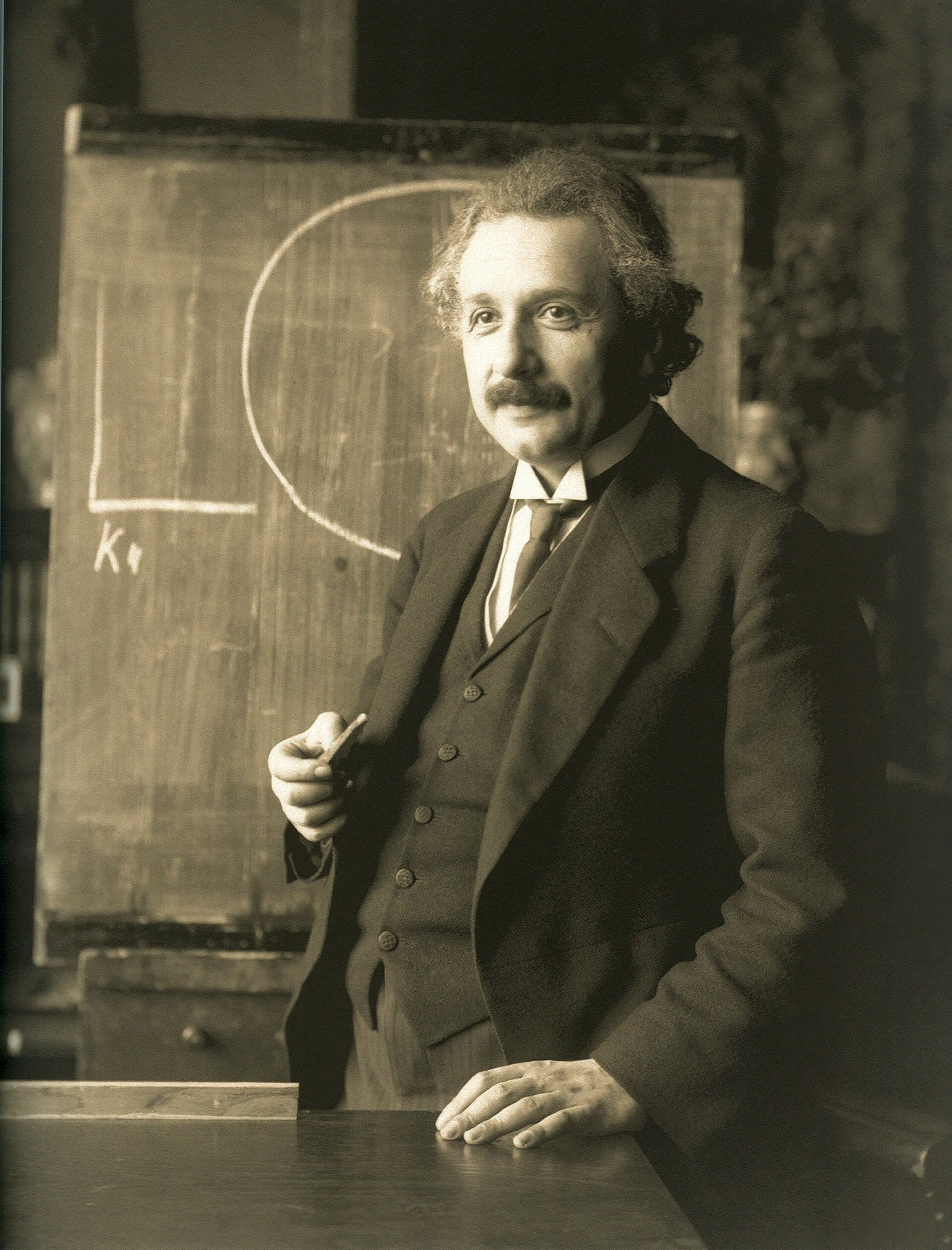
The theory of relativity was formulated by Albert Einstein. Einstein received the 1921 Nobel Prize in Physics in 1922, cited for the law of the photoelectric effect. He was the sole recipient of that prize.
The theory comprises two parts. Special relativity dates to 1905. General relativity followed in November 1915.
General relativity relates distortions of spacetime to mass, energy, momentum and pressure.
1. Special Relativity: Postulates and Origins
Special relativity rests on two postulates. The first holds that the laws of physics are the same in all inertial frames of reference. The second holds that the speed of light c is a constant, independent of the relative motion of the source. Einstein raised the principle of relativity to the status of a postulate and added a second postulate that light is always propagated in empty space with a definite velocity c, independent of the motion of the emitting body. He argued that the same laws of electrodynamics and optics will be valid for all frames of reference for which the equations of mechanics hold good.
The theory was reached in 1905, in the paper On the Electrodynamics of Moving Bodies, headed with the date June 30 1905. That paper opens with asymmetries in Maxwell's electrodynamics for moving bodies, and with the example of the reciprocal electrodynamic action of a magnet and a conductor, where the observable phenomenon depends only on their relative motion. The two postulates sufficed for a simple and consistent theory of the electrodynamics of moving bodies based on Maxwell's theory, making the introduction of a luminiferous ether superfluous.
The Michelson-Morley experiment demonstrated that the speed of light in a vacuum is independent of the motion of the Earth about the Sun.
2. Consequences of Special Relativity
Two events are defined as simultaneous if an observer measures them as occurring at the same time, but they are not necessarily simultaneous to all observers. Observers moving with a moving rod would find two clocks not synchronous, while observers in the stationary system would declare them synchronous, so no absolute significance attaches to simultaneity.
Time dilation is the phenomenon of time passing slower for an observer who is moving relative to another observer. Proper time is the time measured by an observer at rest relative to the event being observed. In 1971 the American physicists Joseph Hafele and Richard Keating verified time dilation at low relative velocities by flying extremely accurate atomic clocks around the Earth on commercial aircraft. NIST physicists measured the gravitational time-dilation effect at a scale of 33 centimeters, demonstrating that a person ages faster a couple of steps higher on a staircase. The NIST researchers also observed that time passes more slowly when moving, at speeds comparable to a car traveling about 20 miles per hour.
Proper length is the distance between two points measured by an observer who is at rest relative to both points. Length contraction is the shortening of the measured length of an object moving relative to the observer's frame. Close to the speed of light, distances measured are not the same when measured by different observers.
3. Mass-Energy Equivalence
The mass-energy relation is written E = mc², and for an object at rest the correct form of the equation is the rest energy E0 = mc². The symbol c stands for the speed of light in a vacuum, and all light must obey the speed limit of 186,000 miles (300,000 kilometers) per second. This relation first showed that energy is related to the mass of an object at rest.
In September 1905, as a brief sequel to the paper containing the basic concepts of the special theory of relativity, Einstein derived the equation forever associated with his name. He reported that if a body emits a certain amount of energy, then the mass of that body must decrease by a proportionate amount. In a letter he explained that the relativity principle together with Maxwell's equations demands that mass be a direct measure for the energy contained in bodies, and that light transfers mass.
Einstein showed that the law of conservation of energy is valid relativistically if energy is defined to include a relativistic factor. Mass can be destroyed to release energy, and the broad implications were not completely recognized for some years after they were published.
4. General Relativity: Field Equations and Equivalence Principle
Einstein's equations relate distortions of spacetime to mass, energy, momentum and pressure. They are the cornerstone of general relativity and describe how the distortions of spacetime are connected with the properties of whatever matter is present. In general relativity mass is joined by energy, momentum and pressure as sources of gravity. The field equations were published on 25 November 1915.
The weak equivalence principle states that the trajectory of a freely falling test body is independent of its internal structure and composition, so that two different bodies dropped in a gravitational field fall with the same acceleration. The Einstein equivalence principle states that the weak equivalence principle is valid, that the outcome of any local non-gravitational experiment is independent of the velocity of the freely-falling reference frame, and that it is also independent of where and when in the universe it is performed.
Physicists describe the Einstein equivalence principle as the heart and soul of gravitational theory, because if it is valid then the effects of gravity must be equivalent to living in a curved spacetime. Einstein described gravity as a deformation in space caused by the presence of massive objects, similar to a heavy ball warping a sheet of rubber. He called his idea that space is like a fabric stretched across the universe the spacetime continuum.
5. Classical Tests of General Relativity
General relativity accounted for a long-standing anomaly in the orbit of Mercury: an unexplained advance of its perihelion amounting to 43 arcseconds per century. Radar ranging can measure Mercury's distance to about 20 meters, a precision of 1 part in 9 billion.
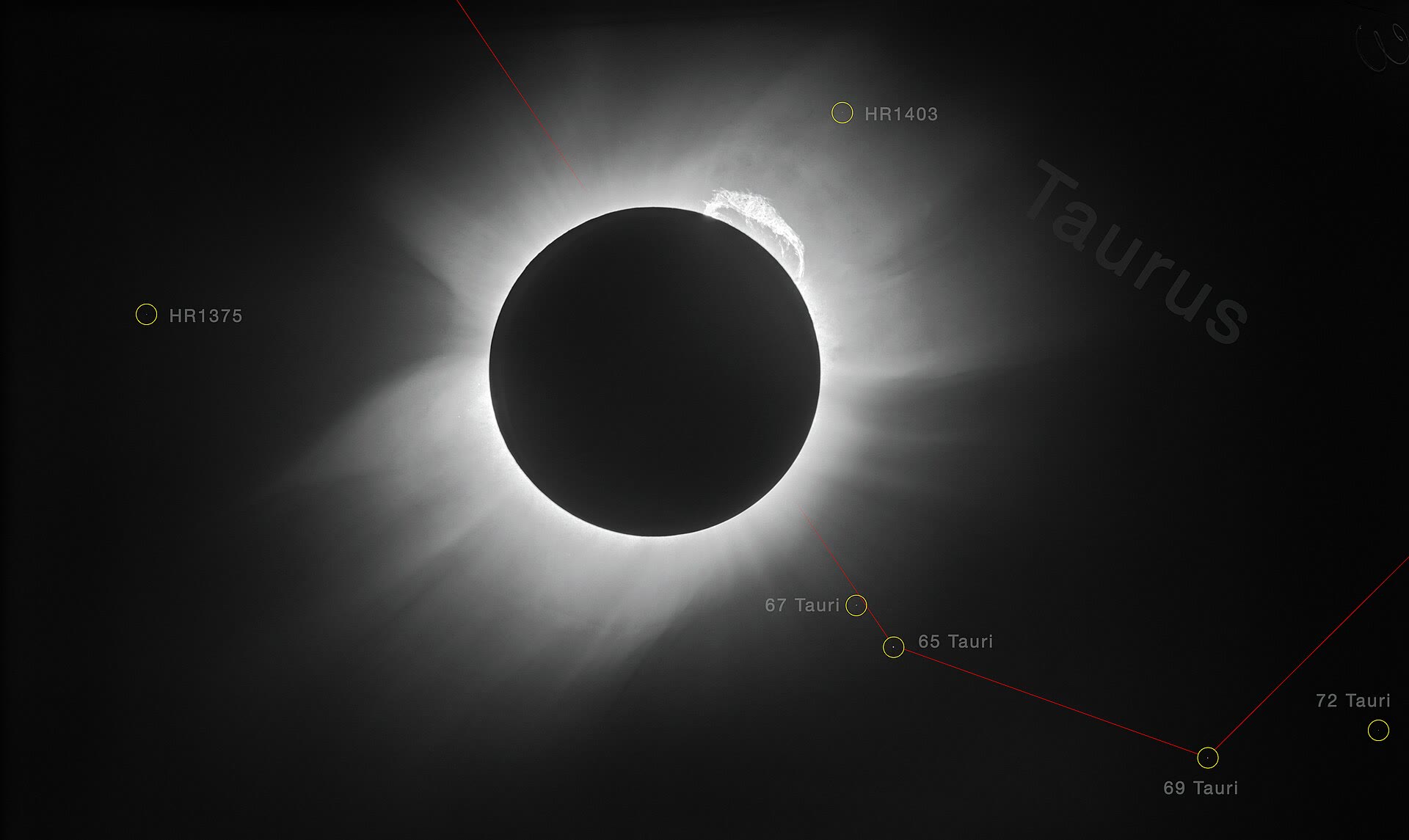
General relativity predicted that light passing a massive object would be deflected, and the bending of starlight by the Sun was confirmed by the 1919 eclipse expeditions. On 29 May 1919 the astronomer Sir Arthur Eddington verified Einstein's general theory of relativity by observing the apparent deflection of stars during a solar eclipse. The result rested on measurements by two UK-led expeditions, one to the island of Principe off the west coast of Africa and the other to Sobral in Brazil. When the results were announced at a joint meeting of the Royal Astronomical Society and the Royal Society in November 1919, Einstein became world famous within days. Those early experiments had only 30 percent accuracy.
The first high-precision gravitational redshift measurement was the series of Pound-Rebka-Snider experiments of 1960 to 1965, which reached about one percent accuracy. The Shapiro time-delay measurements with the Cassini spacecraft agreed with general relativity to about a thousandth of a percent. The Cassini experiment confirmed Einstein's prediction to 20 parts per million, after the Viking landers had reached one part per thousand. It confirmed general relativity with a precision 50 times greater than previous measurements.
6. Modern Tests and Technological Consequences
The Global Positioning System offers the most familiar everyday demonstration of relativistic timekeeping. The GPS Space Segment consists essentially of 24 satellites carrying atomic clocks, with four satellites in each of six orbital planes. The standard clock in orbit beats too fast, primarily because its frequency is gravitationally blueshifted, and for GPS satellites the combined relativistic effect makes the satellite clocks tick faster by about 38 microseconds each day. Unless these relativistic effects are accounted for, the errors accumulate at about 10 km per day.
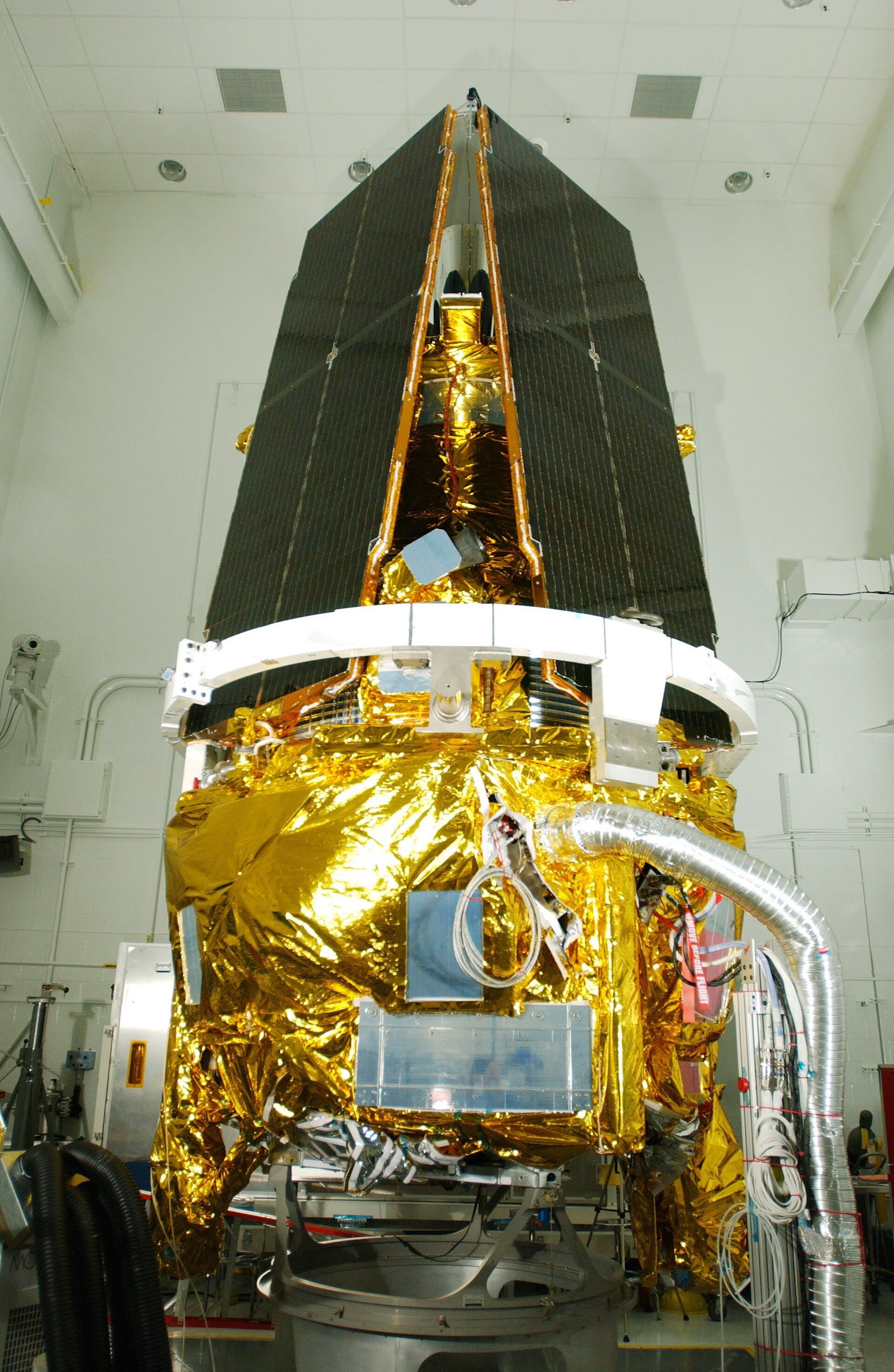
Gravity Probe B was a space experiment testing two fundamental predictions of general relativity, the geodetic and frame-dragging effects, with cryogenic gyroscopes in Earth orbit. It carried four gyroscopes pointed at the star IM Pegasi and collected science data from 28 August 2004 to 14 August 2005. The weighted average of all four gyroscopes gave a geodetic drift rate of -6,601.8 milliarcseconds per year and a frame-dragging drift rate of -37.2 milliarcseconds per year, against the predicted values of -6,606.1 and -39.2 milliarcseconds per year. In 2011 scientists announced tiny changes caused by Earth, because of its gravity, dragging space-time around it.
The binary pulsar provided a different and equally searching test. Its orbit period is declining as the two bodies spiral together, a reduction of about 75 millionths of a second per year, and the theoretically calculated value from relativity agrees with the observed orbital change to within about one half of a percent. The discovery was made in 1974 by Russell Hulse and Joseph Taylor using the 300-m radio telescope at Arecibo, and it was rewarded with the 1993 Nobel Prize in Physics. The periastron shift of the binary pulsar's orbit is 4 degrees per year, far larger than the relativistic shift of Mercury. The good agreement between observation and theory is an indirect proof of the existence of gravitational waves.
7. Gravitational Waves and Black Holes
Einstein predicted the existence of gravitational waves in a 1916 paper written the year after the final formulation of the field equations of general relativity, and found that the linearized weak-field equations had wave solutions. Gravitational waves spread at the speed of light and are always created when a mass accelerates, such as a pair of black holes rotating around each other.
The first direct detection of gravitational waves occurred on 14 September 2015 and was announced on 11 February 2016 by the LIGO Scientific Collaboration and Virgo Collaboration. The source was two merging black holes of about 30 solar masses each, 1.3 billion light-years away. As the waves passed, they changed the distance between mirrors separated by 4 kilometers by roughly one thousandth the diameter of a proton. At 09:50:45 UTC the two LIGO detectors simultaneously observed a transient gravitational-wave signal sweeping upward in frequency from 35 to 250 Hz. The observation was the first direct detection of gravitational waves and the first observation of a binary black hole merger.
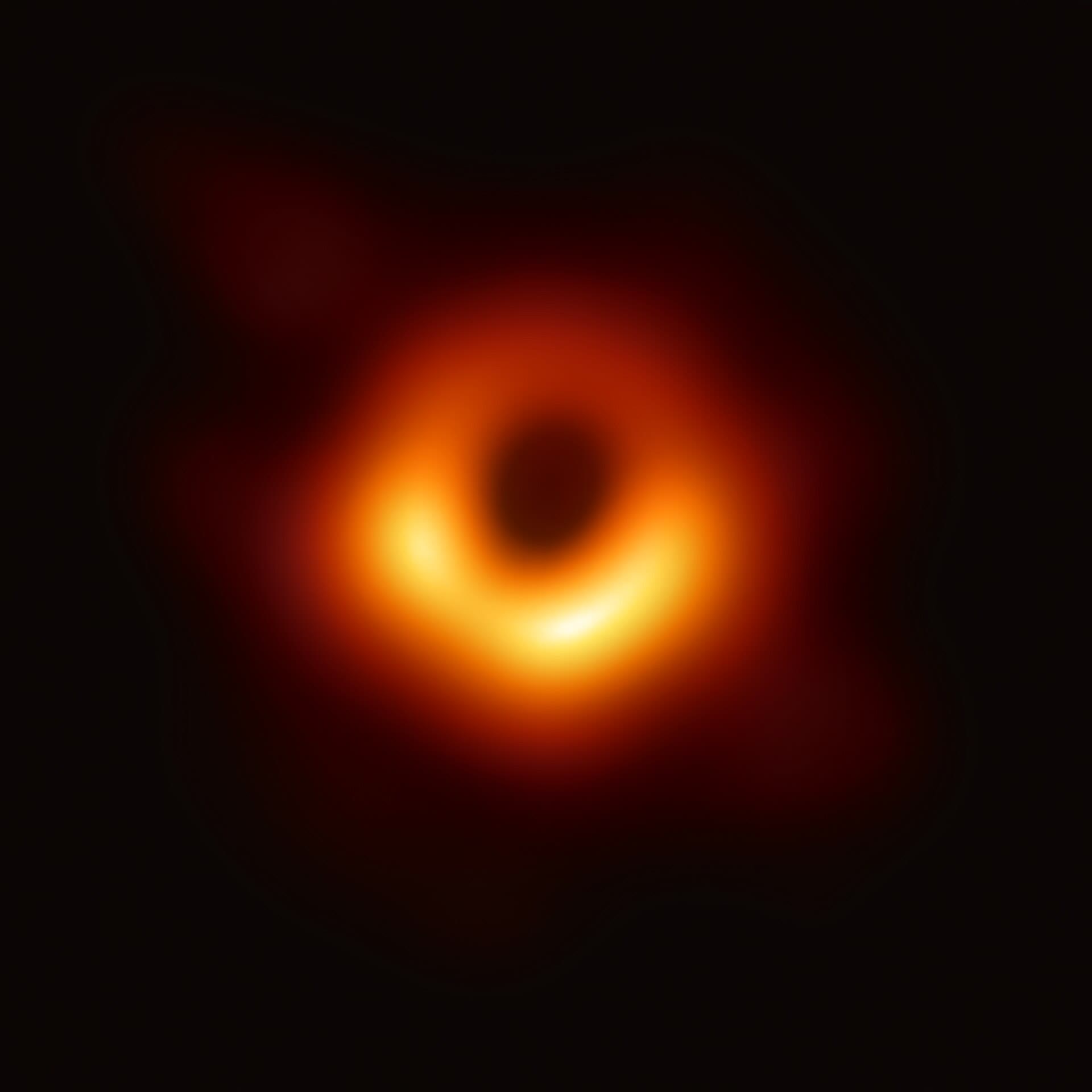
In 2019 the Event Horizon Telescope collaboration unveiled the first image of a black hole's event horizon, the border defining its point of no return for nearby material. The image shows the shadow of the supermassive black hole at the center of the galaxy M87, 6.5 billion times the mass of the Sun and some 55 million light-years from Earth. Eight ground-based radio telescopes around the globe operated together as one telescope the size of the entire planet to catch the shadow. The very existence of black holes, extremely dense objects from which no light can escape, is a prediction of general relativity.
8. Timeline: from 1905 to the first image of a black hole
- June 1905Special relativity publishedEinstein's paper On the Electrodynamics of Moving Bodies, dated June 30 1905, set out the special theory of relativity.
- September 1905Mass-energy equivalenceEinstein submitted a brief September sequel to his special-relativity paper, deriving by kinematics and the electromagnetic energy-momentum relation the equation forever associated with his name.
- 1907Equivalence principle adoptedEinstein used the principle of equivalence as a basic element in his development of general relativity.
- 25 November 1915Field equations publishedEinstein published the field equations of gravity, the heart of general relativity, in the Proceedings of the Royal Prussian Academy of Science.
- 1915Mercury's perihelion explainedGeneral relativity accounted for the anomalous advance of Mercury's perihelion of 43 arcseconds per century.
- 1916Gravitational waves predictedIn 1916, the year after the final formulation of the field equations, Einstein predicted gravitational waves from the linearized weak-field equations.
- 29 May 1919Eclipse confirms light bendingEddington observed the deflection of starlight during a solar eclipse; the results, announced in November 1919, made Einstein world famous within days.
- 1922Einstein receives Nobel PrizeAlbert Einstein received his Nobel Prize one year later, in 1922, for his services to theoretical physics and the law of the photoelectric effect.
- 1960-1965Pound-Rebka-Snider redshift testThe experiments measured the gravitational redshift of gamma-ray photons in a tower at Harvard University to about one percent accuracy.
- 1971Hafele-Keating clock experimentAmerican physicists Joseph Hafele and Richard Keating verified time dilation by flying atomic clocks around the Earth on commercial aircraft.
- 1974Binary pulsar discoveredRussell Hulse and Joseph Taylor discovered the binary pulsar PSR B1913+16 using the 300-m radio telescope at Arecibo; its measured orbital decay became an indirect proof of gravitational waves.
- 2003Cassini tests general relativityRadio links with the Cassini spacecraft near the Sun confirmed the theory to 20 parts per million, fifty times better than previous measurements.
- 4 May 2011Gravity Probe B resultsThe final analysis of the four gyroscopes confirmed the geodetic effect and measured frame-dragging.
- 14 September 2015First direct detection of gravitational wavesLIGO detected gravitational waves from two merging black holes; the discovery was announced on 11 February 2016.
- 10 April 2019First image of a black holeThe Event Horizon Telescope unveiled the first image of a black hole's event horizon, the shadow of the supermassive black hole in M87.
- 2020Nobel Prize for black holesThe Nobel Prize in Physics went to Roger Penrose, Reinhard Genzel and Andrea Ghez for discoveries about black holes and the centre of the Milky Way.
References (24)
- 1Albert Einstein – Facts — Nobel Prize Outreach (NobelPrize.org) 1921 WebView source
- 2100 Years of General Relativity — NASA Goddard Space Flight Center (Blueshift) 2015 WebView source
- 3Einstein's equation — Einstein Online, Max Planck Institute for Gravitational Physics WebView source
- 428.1 Einstein's Postulates – College Physics 2e — OpenStax (Rice University) WebView source
- 5On the Electrodynamics of Moving Bodies (English translation) — University of Pittsburgh (J. D. Norton, Einstein course materials); reset text of the English translation WebView source
- 628.2 Simultaneity and Time Dilation – College Physics 2e — OpenStax (Rice University) WebView source
- 7NIST Pair of Aluminum Atomic Clocks Reveal Einstein's Relativity at a Personal Scale — National Institute of Standards and Technology (NIST) 2010 WebView source
- 828.3 Length Contraction – College Physics 2e — OpenStax (Rice University) WebView source
- 928.6 Relativistic Energy – College Physics 2e — OpenStax (Rice University) WebView source
- 1010 Things Einstein Got Right — NASA Science WebView source
- 11September, 1905: Energy and Mass are Equivalent (This Month in Physics History) — American Physical Society (APS News) 1905 WebView source
- 12The Confrontation between General Relativity and Experiment (Living Rev. Relativity 17, 4) — Living Reviews in Relativity (Springer) 2014 JournalView source
- 13What is gravity? — European Space Agency WebView source
- 14Solar System Dynamics – Relativity Studies (Mercury) — NASA Jet Propulsion Laboratory WebView source
- 15World celebrates centenary of confirmation of relativity — Royal Astronomical Society WebView source
- 16Saturn-Bound Spacecraft Tests Einstein's Theory — NASA Jet Propulsion Laboratory WebView source
- 17Relativity in the Global Positioning System (Living Reviews in Relativity) — Springer / Living Reviews in Relativity (Neil Ashby) 2003 JournalView source
- 18Gravity Probe B – Mission Status: Final Results — Stanford University (Gravity Probe B) WebView source
- 19The Nobel Prize in Physics 1993 – Press release — Nobel Prize Outreach (NobelPrize.org) 1993 WebView source
- 20Observation of Gravitational Waves from a Binary Black Hole Merger (Phys. Rev. Lett. 116, 061102) — American Physical Society (Physical Review Letters) JournalView source
- 21The Nobel Prize in Physics 2017 – Press release — Nobel Prize Outreach (NobelPrize.org) 2017 WebView source
- 22GW150914 — LIGO (Caltech/MIT) WebView source
- 23Black Hole Image Makes History; NASA Telescopes Coordinated Observations — NASA Science WebView source
- 24The Nobel Prize in Physics 2020 – Press release — Nobel Prize Outreach (NobelPrize.org) 2020 WebView source
 Kuwait
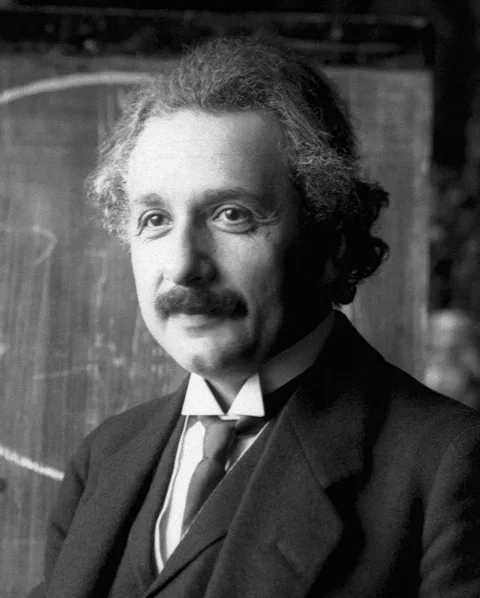 Albert Einstein
 The Moon

